Supply Fill and Drift Eliminators Manufacturers: A Complete Guide
Cooling tower performance depends heavily on the quality and design of internal components. Among the most important are cooling tower fill and drift eliminators. Fill provides the surface area required for efficient heat and mass transfer, while drift eliminators reduce the amount of water droplets carried out of the tower with the exhaust air.
For industrial plants, HVAC systems, power stations, data centers, chemical facilities, and process cooling applications, choosing reliable supply fill and drift eliminators manufacturers can have a direct impact on cooling efficiency, water consumption, maintenance costs, and equipment service life.
This guide explains how cooling tower fill and drift eliminators work, what materials and designs are available, how to select a manufacturer, and what buyers should consider before placing an order.
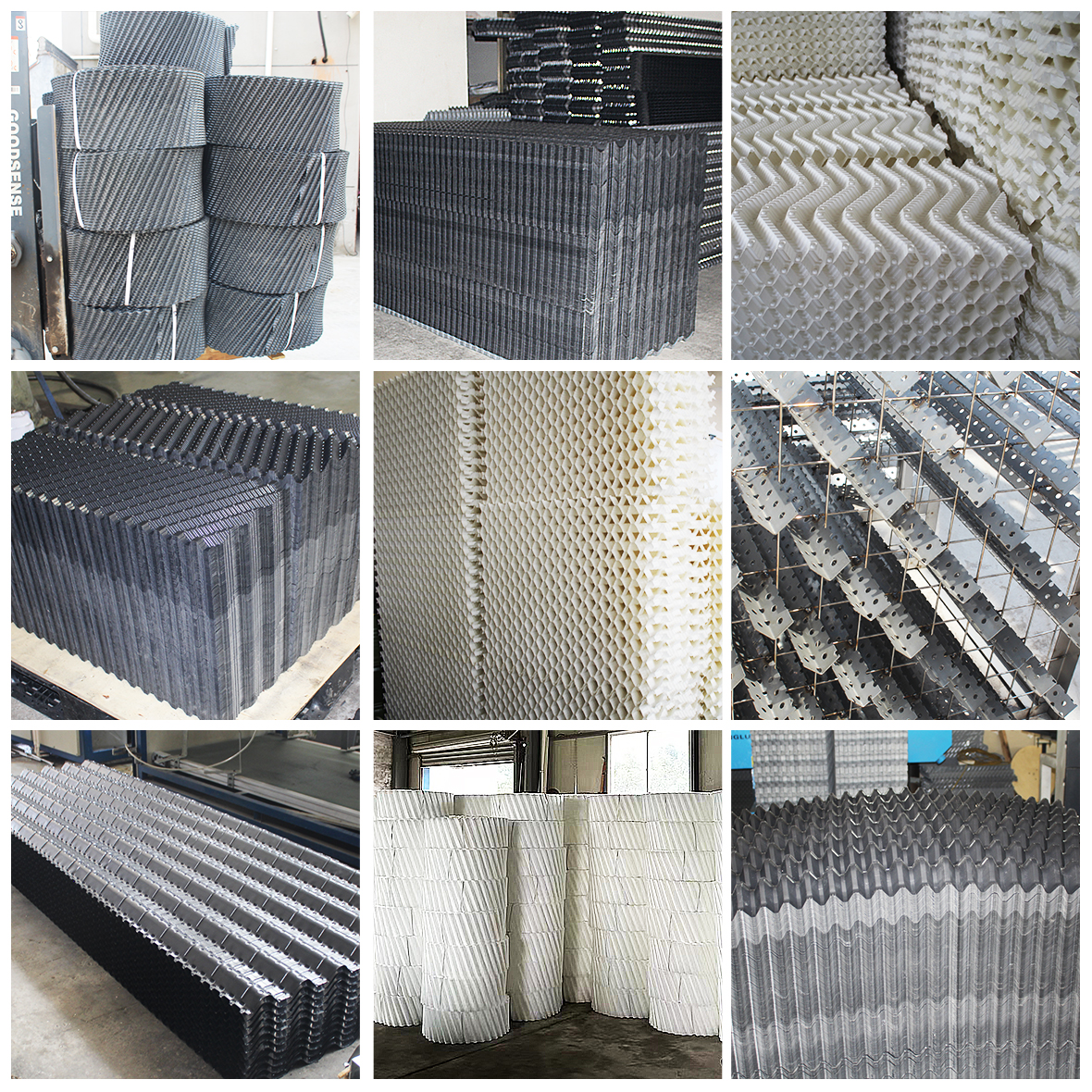
What Are Cooling Tower Fill and Drift Eliminators?
Cooling tower fill and drift eliminators perform different functions, but they work together inside an evaporative cooling tower.
Understanding Cooling Tower Fill
Cooling tower fill is the heat-transfer media installed inside a cooling tower. It increases the contact area between circulating water and air, allowing heat to transfer more effectively.
Main Functions of Cooling Tower Fill
A properly designed cooling tower fill can:
Increase water-to-air contact area
Improve evaporation efficiency
Enhance heat transfer
Reduce the required tower size
Support lower cold-water temperatures
Improve cooling capacity
Optimize water distribution
Depending on the tower design, fill may be manufactured as film fill or splash fill.
Understanding Drift Eliminators
A cooling tower drift eliminator is installed above the water distribution and fill section. Its main purpose is to capture water droplets suspended in the outgoing air stream.
Why Drift Control Matters
Without an effective drift eliminator, fine water droplets can escape from the cooling tower. This can result in:
Higher water loss
Increased chemical consumption
Wet areas around the tower
Potential corrosion problems
Mineral deposits near the tower
Environmental and operational concerns
High-quality drift eliminators therefore contribute to both water conservation and reliable cooling tower operation.
Why Buy Fill and Drift Eliminators From Specialized Manufacturers?
Selecting a specialized manufacturer instead of a general plastic-product supplier can provide significant advantages.
Engineering Experience
Experienced cooling tower manufacturers understand the relationship between airflow, water loading, pressure drop, heat transfer, and drift performance.
This allows them to design components for specific tower operating conditions rather than simply supplying standard plastic sheets.
Application-Based Product Selection
Different cooling towers require different internal components.
For example, an HVAC cooling tower may use a different fill configuration from a high-temperature industrial cooling tower. Similarly, a counterflow tower may require a different drift eliminator design from a cross-flow tower.
Common Application Factors
Manufacturers should consider:
Water temperature
Airflow rate
Water flow rate
Cooling range
Approach temperature
Air velocity
Water quality
Chemical concentration
Tower configuration
Operating temperature
Types of Cooling Tower Fill Supplied by Manufacturers
Manufacturers generally offer several types of fill to meet different cooling requirements.
PVC Cooling Tower Fill
PVC fill is one of the most widely used choices for evaporative cooling towers.
It offers a useful combination of:
PVC film fill is commonly used in HVAC and industrial cooling applications where operating temperatures remain within the material's recommended range.
PP Cooling Tower Fill
Polypropylene is another important material for cooling tower fill.
PP can be particularly useful in applications where higher temperature resistance or specific chemical resistance is required.
PVC vs. PP Fill
The choice between PVC and PP should not be based on material price alone. Buyers should evaluate:
Operating temperature
Water chemistry
Fire requirements
Mechanical strength
Expected service life
Cleaning frequency
Total operating cost
Splash Fill
Splash fill uses specially shaped bars, grids, or modules to break water into smaller droplets.
It is often considered for applications involving:
When Splash Fill May Be Better
Where water quality is poor, a splash-fill design may offer better resistance to blockage than a closely spaced film-fill structure.
Types of Cooling Tower Drift Eliminators
A reliable manufacturer should offer more than one drift eliminator configuration.
Blade-Type Drift Eliminators
Blade-type eliminators use curved or angled passages to change the direction of the air-water mixture.
As the airflow changes direction, water droplets collide with the surfaces and drain back into the tower.
Multi-Pass Drift Eliminators
Multi-pass designs create several directional changes for the air stream.
Advantages
They can provide:
However, the actual performance depends on blade geometry, air velocity, spacing, and operating conditions.
Cellular Drift Eliminators
Cellular or honeycomb-style designs use interconnected passages to separate water droplets from exhaust air.
They can provide efficient drift reduction while maintaining a compact structure.
Materials Used by Fill and Drift Eliminator Manufacturers
Material selection is one of the most important purchasing decisions.
PVC
PVC is widely used for cooling tower fill and drift eliminators because it offers good corrosion resistance and economical production.
It is particularly common in standard HVAC and industrial cooling towers.
PP
PP offers improved temperature capability in many applications and can be useful when PVC is unsuitable.
FRP
Fiberglass-reinforced plastic can be used for cooling tower components requiring greater structural strength or resistance to demanding environments.
How Should Buyers Choose the Material?
Consider the complete operating environment instead of focusing on material specifications alone.
Important factors include:
Maximum operating temperature
Water chemistry
UV exposure
Mechanical loading
Fire regulations
Cleaning chemicals
Expected service life
How Manufacturers Improve Cooling Tower Fill Performance
Modern cooling tower fill is not simply a collection of plastic sheets. Geometry plays a critical role in performance.
Film Pattern Design
The surface pattern determines how water spreads across the fill.
A good pattern can encourage the formation of a thin, uniform water film, increasing contact between air and water.
Flute Height and Spacing
The dimensions of the fill channels affect:
Airflow resistance
Water distribution
Heat-transfer area
Fouling resistance
Pressure drop
Balancing Heat Transfer and Fouling
Very dense fill may provide a large theoretical surface area, but it can become more difficult to clean if the circulating water contains solids.
Therefore, the highest surface area is not always the best solution.
How Drift Eliminator Design Affects Tower Performance
Drift eliminators must achieve a balance between drift capture and airflow resistance.
Drift Capture Efficiency
The primary objective is to remove suspended water droplets from the air before the air exits the tower.
Pressure Drop
An overly restrictive drift eliminator can increase fan power requirements.
Optimizing Airflow
Manufacturers should consider the relationship between:
Air velocity + blade geometry + pressure drop + droplet capture efficiency
A well-designed eliminator provides effective drift control without unnecessarily restricting airflow.
Key Factors When Choosing Supply Fill and Drift Eliminators Manufacturers
Finding a supplier is easy. Finding a manufacturer capable of supplying the right product is more important.
1. Product Manufacturing Capability
Check whether the company actually manufactures cooling tower fill and drift eliminators or simply resells products from other suppliers.
A direct manufacturer can often provide:
Customized dimensions
OEM production
Private labeling
Material selection
Mold development
Technical support
2. Product Range
A strong manufacturer should ideally offer multiple solutions.
Recommended Product Categories
Look for suppliers offering:
3. Quality Control
Quality control should cover the entire manufacturing process.
Important checks may include:
4. Customization Capability
Cooling towers vary significantly in size and configuration.
A manufacturer that can customize fill blocks and drift eliminators can provide a better fit than a supplier offering only fixed-size products.
What Information Should Buyers Provide?
To receive an accurate quotation, buyers should provide as much technical information as possible.
Cooling Tower Fill Information
Useful specifications include:
Fill type
Fill dimensions
Sheet thickness
Material
Block size
Flute height
Operating temperature
Water quality
Required quantity
Drift Eliminator Information
For drift eliminators, provide:
Why Measurements Matter
Even a high-quality fill or eliminator can perform poorly if it does not fit correctly inside the cooling tower.
Fill and Drift Eliminators for Cross-Flow Towers
Cross-flow cooling towers require internal components designed around horizontal airflow and water distribution.
Cross-Flow Fill
Water flows vertically downward while air moves horizontally through the fill.
The fill must provide adequate surface area while allowing sufficient airflow.
Cross-Flow Drift Eliminators
Drift eliminator design must account for the tower's airflow path and outlet configuration.
Manufacturers with cross-flow tower experience can help buyers select suitable profiles and dimensions.
Fill and Drift Eliminators for Counterflow Towers
In counterflow cooling towers, air moves upward while water moves downward.
Counterflow Fill Design
Because air and water move in opposite directions, fill geometry plays a major role in maximizing heat and mass transfer.
Counterflow Drift Control
Drift eliminators are typically positioned above the spray and fill section to capture entrained water droplets before the air exits the tower.
Why System Matching Matters
The fill, spray nozzles, air inlet, fan, and drift eliminator should be considered as one airflow and water-distribution system.
Changing one component can affect the performance of the others.
Common Problems With Low-Quality Cooling Tower Fill
Choosing the lowest-priced product can create hidden costs.
Deformation
Poor-quality material may deform under temperature or mechanical stress.
Blockage
Improper fill geometry can increase fouling and make cleaning difficult.
Poor Water Distribution
Uneven surfaces may prevent water from spreading uniformly.
Short Service Life
Low-quality raw materials can reduce resistance to heat, chemicals, and aging.
Hidden Replacement Costs
A cheaper fill may require more frequent replacement, increasing:
Labor costs
Downtime
Shipping costs
Installation expenses
Production losses
This is why buyers should evaluate total cost of ownership rather than purchase price alone.
Common Problems With Poor Drift Eliminators
Excessive Drift Loss
If the eliminator cannot effectively capture droplets, water loss increases.
High Pressure Drop
An unsuitable design may restrict airflow and increase fan energy consumption.
Structural Damage
Thin or poorly supported components may crack, deform, or become loose during operation.
Fouling
Dust, algae, scale, and other contaminants can accumulate on eliminator surfaces.
Cleaning Considerations
A good drift eliminator should be designed for practical inspection and cleaning.
How to Compare Cooling Tower Fill Manufacturers
A structured comparison can make purchasing decisions easier.
Product Quality
Compare:
Technical Support
Evaluate whether the supplier can help with:
Product selection
Tower measurements
Replacement planning
Installation guidance
Technical documentation
Production Capacity
For large industrial projects, production capacity and delivery reliability are important.
Questions to Ask the Manufacturer
Before ordering, buyers can ask:
Are you a direct manufacturer?
What materials do you use?
Can you produce custom sizes?
What cooling tower models are supported?
Can you provide samples?
What is the production lead time?
How are products packed for export?
What quality inspections are performed?
How to Compare Drift Eliminator Manufacturers
The same purchasing principles apply to drift eliminators.
Evaluate the Design
Ask for technical drawings, dimensions, and product specifications.
Check Installation Compatibility
Confirm that the eliminator profile matches the existing support structure.
Review Performance Data
Where available, request information about:
Avoid Comparing Only by Appearance
Two drift eliminators may look similar while having very different airflow characteristics.
Engineering data is more useful than visual similarity.
Manufacturing and Export Considerations
International buyers should also consider packaging and transportation.
Packaging
Cooling tower fill is lightweight but bulky. Efficient packing can significantly affect freight costs.
Manufacturers should use packaging that protects the fill from:
Crushing
Bending
Moisture
Contamination
Transportation damage
Container Loading
Because fill and drift eliminators occupy considerable volume, container optimization is important for international orders.
Export Documentation
Depending on the destination, buyers may require:
Commercial invoice
Packing list
Certificate of origin
Product specifications
Shipping documents
Inspection documents
A professional manufacturer should be familiar with export procedures.
Maintenance and Replacement of Cooling Tower Fill
Even high-quality fill requires regular inspection.
Inspect for Fouling
Look for:
Scale
Sludge
Biological growth
Mineral deposits
Blocked channels
Check for Physical Damage
Inspect for:
Cracks
Deformation
Brittleness
Collapsed sections
Loose modules
When Should Fill Be Replaced?
Replacement depends on operating conditions rather than a universal fixed period.
If the fill is severely damaged, blocked, deformed, or no longer provides effective water distribution, replacement may be more economical than continued cleaning.
Maintenance and Replacement of Drift Eliminators
Drift eliminators should also be inspected regularly.
Signs of Replacement
Consider replacement when you find:
Cleaning
Regular cleaning can help maintain airflow and reduce pressure drop.
However, cleaning methods should be compatible with the eliminator material.
The Future of Cooling Tower Fill and Drift Eliminators
Cooling tower component manufacturing is increasingly focused on efficiency, durability, and resource conservation.
Higher Heat-Transfer Efficiency
New fill geometries are being developed to increase heat-transfer performance without dramatically increasing pressure drop.
Lower Drift Emissions
Modern eliminator designs focus on capturing smaller droplets while maintaining efficient airflow.
More Durable Materials
Material development is also moving toward improved resistance to:
Higher temperatures
Chemical exposure
UV radiation
Mechanical stress
Long-term aging
Smarter Cooling Tower Design
Future cooling systems will increasingly optimize fill, drift eliminators, fans, motors, pumps, and water distribution as an integrated system.
Why Choosing the Right Manufacturer Matters
The right supply fill and drift eliminators manufacturers can provide more than replacement components. A capable manufacturer can help optimize the internal design of a cooling tower.
From material selection and fill geometry to drift eliminator design and export packaging, every detail can influence system performance.
For buyers, the best supplier is not necessarily the one offering the lowest unit price. A better choice is a manufacturer that combines consistent product quality, engineering knowledge, customization capability, reliable delivery, and responsive technical support.
Conclusion
Cooling tower fill and drift eliminators are essential components for efficient evaporative cooling. Fill improves heat and mass transfer by increasing water-air contact, while drift eliminators recover entrained water droplets and help reduce water loss.
When searching for reliable supply fill and drift eliminators manufacturers, buyers should evaluate material quality, product design, manufacturing capability, customization, technical support, quality control, packaging, and long-term operating performance.
Whether you need PVC cooling tower fill, PP fill, splash fill, film fill, cross-flow fill, counterflow fill, or cooling tower drift eliminators, choosing a specialized and experienced manufacturer can help improve cooling performance while reducing maintenance and replacement costs.
The most effective purchasing strategy is to match the component design to the actual cooling tower operating conditions. With the right manufacturer and correctly selected components, cooling towers can achieve more stable heat transfer, better water management, and longer service life.


