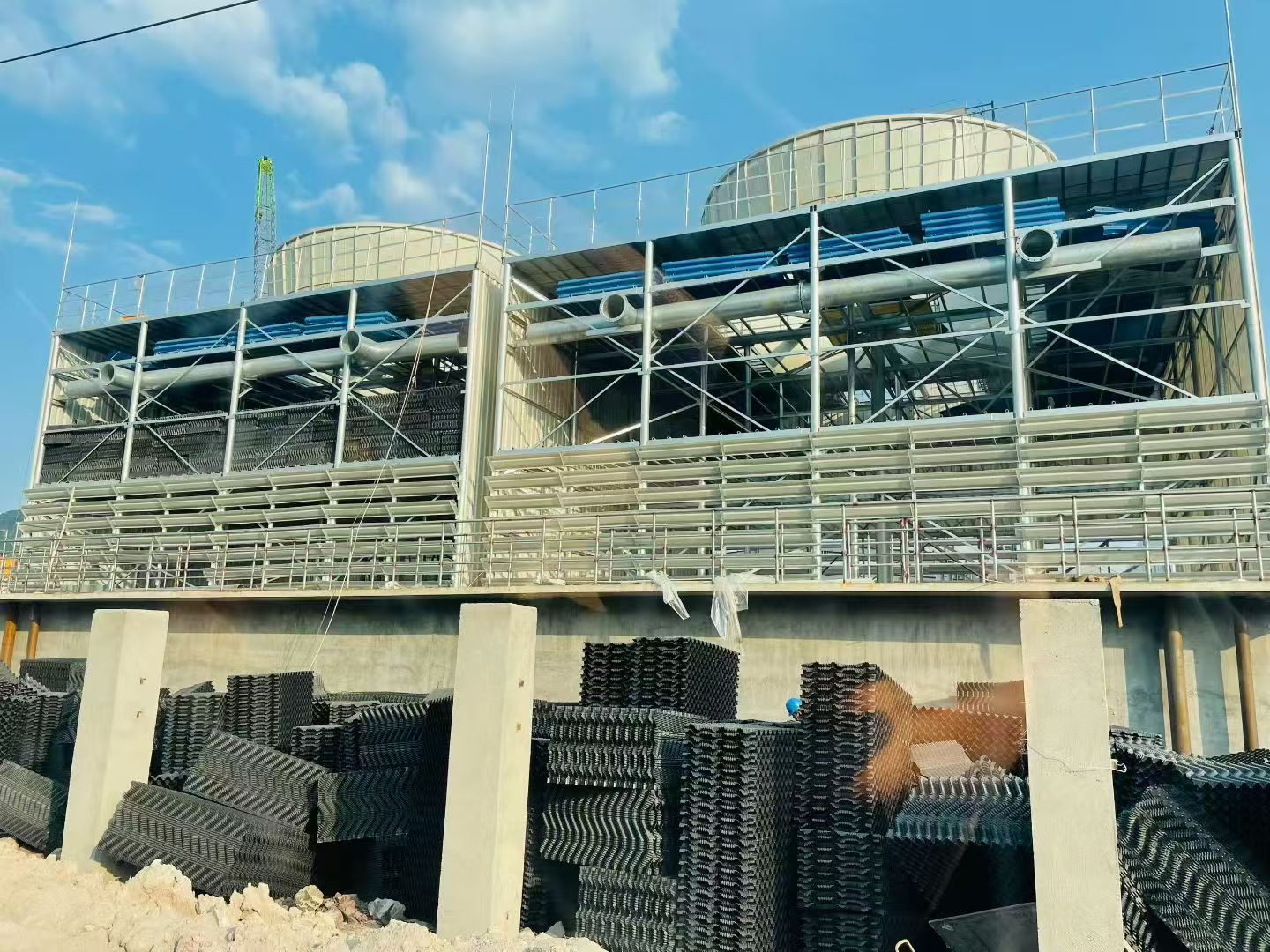
Cooling tower fill is a critical component for efficient heat transfer. It increases the contact area between hot circulating water and air, helping the tower remove heat through evaporation. However, fill can lose performance when it becomes clogged, scaled, damaged, or biologically fouled.
Proper cooling tower fill maintenance helps maintain thermal performance, airflow, water distribution, and equipment reliability. Whether your tower uses PVC film fill, PP fill, or splash fill, regular cleaning and inspection can extend service life and help identify when replacement is necessary.
This guide explains how to maintain fill for cooling tower applications, including cleaning, inspection, troubleshooting, and replacement.
Why Cooling Tower Fill Maintenance Matters
Cooling tower fill operates continuously in a challenging environment. It is exposed to circulating water, air, minerals, chemicals, biological growth, and suspended solids.
Over time, the fill can develop:
When these problems accumulate, water cannot distribute properly across the fill and air may have difficulty passing through it.
The result can be reduced cooling tower heat transfer, higher cold-water temperatures, increased fan load, and reduced overall cooling capacity.
How Often Should Cooling Tower Fill Be Inspected?
There is no single inspection schedule suitable for every cooling tower. Inspection frequency depends on water quality, operating conditions, tower type, environmental conditions, and water treatment.
As a practical approach, operators should:
Visually monitor fill condition during routine maintenance.
Inspect fill more thoroughly during scheduled tower shutdowns.
Check for fouling after unusual water-quality events.
Inspect more frequently in towers with high suspended solids or biological activity.
Inspect fill whenever cooling performance declines unexpectedly.
A maintenance log can help identify gradual changes in fill condition and thermal performance.
Cooling Tower Fill Inspection Checklist
A proper cooling tower fill inspection should cover both the physical condition of the fill and its operating environment.
1. Check for Scale
Mineral scale can build up on PVC or PP fill surfaces. Thick deposits reduce effective surface area and restrict water flow.
Look for:
Heavy scaling may indicate that the water treatment program needs attention.
2. Look for Biological Growth
Algae, slime, and other biological deposits can accumulate on cooling tower fill.
Biological fouling can block passages and reduce the effective air-water contact area.
If biological growth is recurring, investigate the underlying water treatment and tower operating conditions rather than relying only on repeated cleaning.
3. Inspect for Physical Damage
Check the fill for:
Cracked sheets
Broken splash bars
Collapsed packs
Deformed sheets
Missing sections
Loose supports
Excessive brittleness
Physical damage can reduce the effective fill area and may also affect water and airflow distribution.
4. Check Water Distribution
Even clean fill cannot perform correctly if water distribution is poor.
Inspect:
Spray nozzles
Distribution pipes
Headers
Clogged outlets
Uneven water flow
Blocked or damaged cooling tower nozzles can cause dry areas and concentrated water flow through other areas of the fill.
5. Inspect Air Passages
Air must move through the fill for effective evaporative cooling.
Check for debris, excessive fouling, collapsed fill, or other obstructions that could restrict airflow.
How to Clean Cooling Tower Fill
The correct cleaning method depends on the fill material, contamination, and manufacturer's recommendations.
Step 1: Shut Down and Isolate the Tower
Before cleaning, follow the site's safety procedures and isolate relevant equipment.
Cooling towers can contain moving fans, electrical equipment, chemicals, contaminated water, and elevated structures. Maintenance personnel should use appropriate lockout/tagout and personal protective equipment procedures.
Step 2: Remove Loose Debris
Start by removing leaves, dirt, mud, and other loose material.
Avoid using aggressive tools that could damage PVC film sheets or splash-fill components.
Step 3: Flush the Fill
Low- or moderate-pressure water can be used to remove loose deposits and sediment.
High-pressure washing should be used cautiously. Excessive pressure can deform or damage thin film-fill sheets and may force debris deeper into the fill pack.
Step 4: Use an Appropriate Cleaning Solution
For mineral scale or biological fouling, a suitable cleaning chemical may be required.
The chemical must be compatible with the cooling tower fill material, including PVC or PP, as well as other tower components.
Always follow the chemical supplier's instructions and site water-treatment procedures.
Step 5: Rinse Thoroughly
After chemical cleaning, rinse the fill and surrounding components thoroughly according to the applicable cleaning procedure.
Residual chemicals should not be allowed to create unwanted water chemistry problems when the tower returns to operation.
Cleaning Film Fill vs. Splash Fill
The cleaning approach can vary according to fill type.
Film fill has closely spaced passages designed to maximize surface area. It can provide excellent thermal performance but may be more sensitive to blockage from scale, mud, and biological growth.
Splash fill creates repeated water breakup and is often selected for applications where suspended solids or fouling are concerns. Its open configuration can make certain maintenance operations easier.
Neither type is universally suitable for every application. Water quality and tower operating conditions should guide fill selection.
When Should Cooling Tower Fill Be Replaced?
Cleaning is not always enough. Cooling tower fill replacement may be necessary when the fill has suffered significant physical or thermal deterioration.
Consider replacement when you find:
Severe Fouling
If deposits cannot be removed effectively without damaging the fill, replacement may be more practical.
Cracked or Brittle Fill
Aged plastic fill can become brittle or physically damaged. Cracked sheets and broken splash bars can reduce performance.
Collapsed Fill Packs
Collapsed or deformed fill can restrict airflow and prevent proper water distribution.
Permanent Blockage
If passages remain blocked after cleaning, the fill may no longer provide the required heat-transfer area.
Reduced Cooling Performance
A persistent increase in cold-water temperature may indicate that the fill or another cooling tower component requires inspection.
However, poor performance can also result from fan problems, nozzle blockage, inadequate airflow, excessive water loading, or water-treatment issues. Do not assume the fill is the only cause.
How to Choose Cooling Tower Fill Replacement
When replacing fill, matching the original dimensions alone is not enough.
Consider the following factors:
| Factor | What to Check |
| Tower type | Crossflow or counterflow |
| Fill type | Film, splash, or hybrid |
| Material | PVC or PP |
| Dimensions | Length, width, height, and pack configuration |
| Operating temperature | Maximum water temperature |
| Water quality | Scale, solids, algae, and fouling |
| Water loading | Circulating water flow |
| Airflow | Existing fan and tower configuration |
| Support system | Existing fill supports and spacing |
| Thermal duty | Required cooling performance |
For retrofit projects, suppliers may provide OEM-compatible cooling tower fill or aftermarket replacement fill designed around the existing tower configuration.
How to Extend Cooling Tower Fill Service Life
Good water management is one of the most effective ways to protect cooling tower fill.
Recommended practices include:
Maintain appropriate water treatment.
Control scale formation.
Manage biological growth.
Remove debris regularly.
Inspect and clean nozzles.
Maintain proper water distribution.
Monitor cooling performance.
Avoid unnecessarily aggressive pressure washing.
Inspect fill supports and structural components.
Replace damaged fill before failures become widespread.
Preventive maintenance is generally more effective than waiting until severe fouling causes a major loss of cooling capacity.
Common Cooling Tower Fill Maintenance Problems
Why is my cooling tower fill turning brown or black?
Discoloration may result from biological growth, dirt, sediment, chemical deposits, or other contaminants. The cause should be identified before selecting a cleaning method.
Can pressure washing damage cooling tower fill?
Yes. Excessive pressure can damage thin PVC film fill, deform sheets, or break components. Cleaning pressure should be appropriate for the fill design and condition.
Can clogged fill reduce cooling capacity?
Yes. Fouled fill can restrict airflow, interfere with water distribution, and reduce the effective heat-transfer area.
Should I clean or replace cooling tower fill?
If the fill is structurally sound and deposits can be removed safely, cleaning may restore performance. Severely damaged, brittle, collapsed, or permanently blocked fill may require replacement.
How do I know which replacement fill to buy?
Provide the cooling tower model, fill type, dimensions, material, operating temperature, water flow, and photos of the existing fill. These details help identify a compatible replacement.
Cooling Tower Fill Maintenance for Long-Term Performance
A well-maintained fill for cooling tower systems can provide reliable heat transfer for years. Regular inspection helps operators identify fouling and physical damage before they become major problems, while appropriate cleaning can restore water and airflow passages.
When fill has reached the end of its useful service life, selecting the correct replacement is equally important. PVC film fill, PP film fill, and splash fill have different characteristics and should be matched to the tower's design and water conditions.
For industrial cooling tower operators, maintenance should therefore be viewed as a complete process: inspect, clean, monitor, and replace when necessary.
Power Tower Cooling Technology (Shaoxing) Co.,Ltd supplies PVC cooling tower fill, PP fill, splash fill, film fill, and cooling tower fill replacement solutions for industrial and commercial cooling tower applications.
Internal Links for Other CoolingTowerParts
Cooling Tower reducer
Cooling Tower Nozzles
Cooling Tower Drift Eliminators
Cooling Tower Louvers
Cooling Tower Fan Blades
Cooling Tower Motors


