How Can Cooling Tower Fan Manufacturers Ensure Long-Term Performance?
Cooling tower fans are essential components in industrial cooling systems. They provide the airflow required to remove heat from circulating water and maintain stable operating temperatures in power plants, chemical factories, steel mills, HVAC systems, and other industrial facilities. Because cooling tower fans often operate for long hours under demanding environmental conditions, their manufacturing quality has a direct impact on equipment reliability, energy efficiency, and maintenance costs.
For buyers, selecting experienced cooling tower fan manufacturers is not simply about finding a supplier with competitive prices. It is about choosing a manufacturer capable of providing durable materials, reliable aerodynamic designs, accurate manufacturing processes, and effective quality control.
So, how can cooling tower fan manufacturers ensure long-term performance? The answer involves several important factors, including material selection, blade design, structural strength, dynamic balancing, corrosion protection, manufacturing inspection, and technical support.
This article explores the key manufacturing practices that help cooling tower fans achieve stable performance and longer service life.
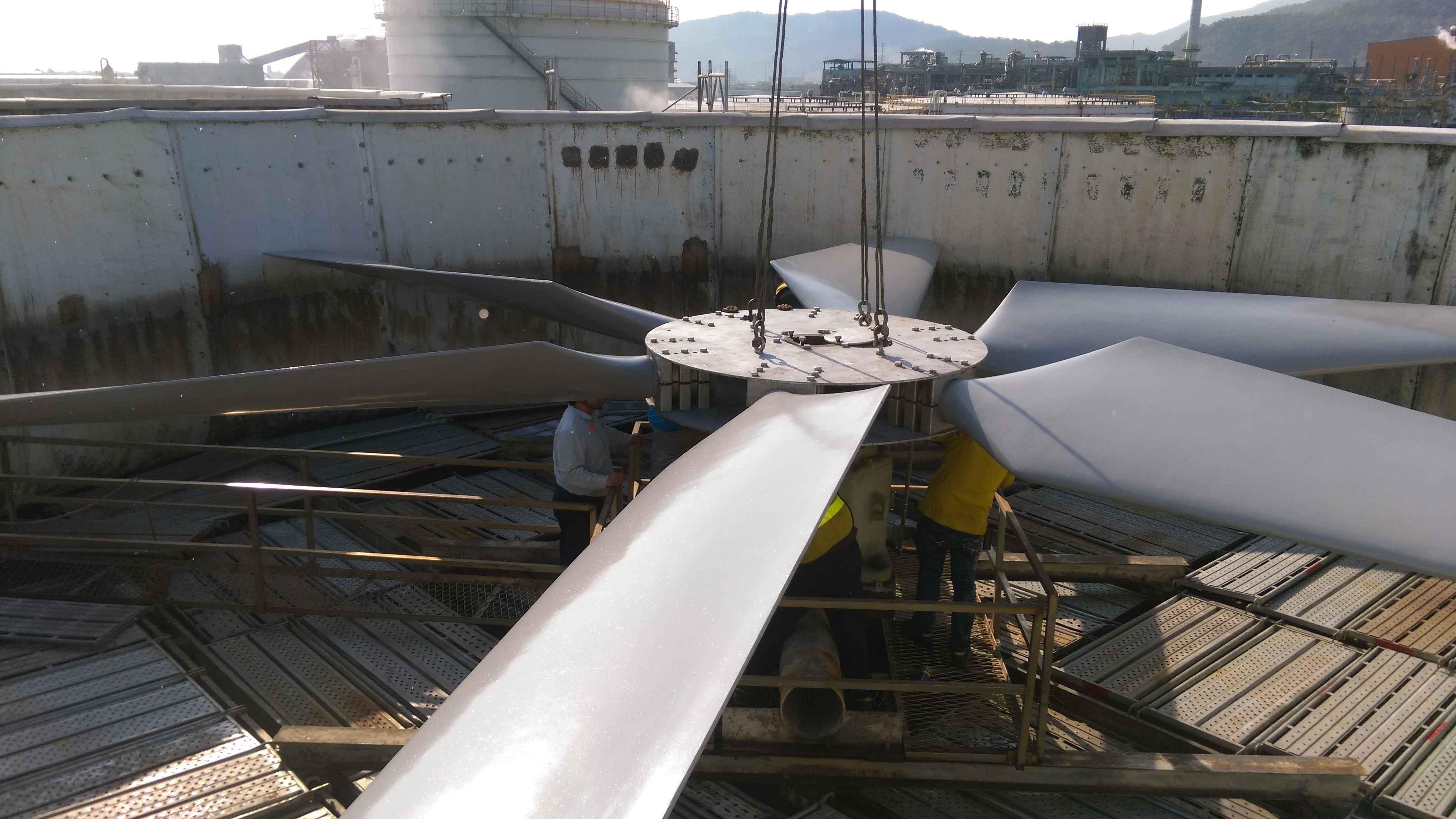
Why Is Long-Term Performance Important for Cooling Tower Fans?
Cooling tower fans are exposed to continuous mechanical loads, moisture, temperature changes, and potentially corrosive environments. Any weakness in fan design or manufacturing can gradually affect operating performance.
A poorly manufactured fan may experience excessive vibration, blade deformation, corrosion, connection failures, or reduced airflow. These problems can increase maintenance expenses and interrupt industrial production.
Maintaining Stable Airflow Performance
The primary function of a cooling tower fan is to move air through the cooling tower. Stable airflow helps maintain effective heat exchange between water and air.
If fan performance deteriorates, the cooling tower may experience insufficient airflow and higher outlet water temperatures.
How Does Fan Design Affect Airflow?
Several design parameters influence cooling tower fan performance:
Fan diameter and blade length.
Blade pitch angle.
Aerodynamic blade profile.
Number of fan blades.
Rotational speed.
Fan stack dimensions and clearance.
System air resistance.
Professional manufacturers evaluate these parameters together to develop a suitable fan configuration.
Reducing Unexpected Equipment Failures
Cooling tower fans operate as part of a larger mechanical system that includes motors, gearboxes, shafts, bearings, and supporting structures.
Excessive vibration or an unbalanced fan can increase mechanical stress on connected components.
Manufacturers can reduce these risks through accurate production, reliable blade connections, proper balancing, and appropriate structural design.
Controlling Long-Term Operating Costs
A durable cooling tower fan can reduce the frequency of replacement and maintenance.
Although a high-quality fan may have a higher initial purchase price, its long-term value can be greater when it offers reliable operation, lower maintenance requirements, and consistent aerodynamic performance.
1. How Does Material Selection Improve Cooling Tower Fan Durability?
Material selection is one of the most important factors influencing cooling tower fan service life.
Different industrial environments create different challenges. For example, chemical plants may expose fan blades to corrosive substances, while power stations may require equipment capable of continuous operation under demanding mechanical loads.
Experienced cooling tower fan manufacturers select materials according to the actual application rather than relying on a single material for every project.
FRP Cooling Tower Fan Blades
FRP, or Fiberglass Reinforced Plastic, is widely used in industrial cooling tower fan manufacturing.
FRP combines reinforcing fibers with a resin matrix to create a relatively lightweight material with useful mechanical strength and corrosion resistance.
Advantages of FRP Fan Blades
Good resistance to moisture and many corrosive environments.
Relatively low weight.
High strength-to-weight ratio.
Flexible blade design possibilities.
Reduced rotating mass compared with some heavier metal constructions.
Suitable for large industrial cooling tower applications.
FRP blades are commonly used in chemical plants, power stations, wastewater treatment facilities, and industrial cooling systems.
How Can Manufacturers Improve FRP Quality?
Manufacturers should pay attention to resin selection, fiber distribution, reinforcement structure, curing conditions, and surface finishing.
An inconsistent manufacturing process may result in internal defects, uneven thickness, or insufficient mechanical strength.
Professional production procedures should include material inspection and dimensional verification.
Aluminum Alloy Cooling Tower Fan Blades
Aluminum alloy is another popular material for industrial cooling tower fans.
It offers a good balance between mechanical strength, weight, and manufacturing flexibility.
Key Manufacturing Considerations
To improve aluminum fan blade durability, manufacturers should control:
Aluminum blades are suitable for many industrial applications where customers require reliable mechanical performance and convenient maintenance.
Choosing the Right Material for Different Environments
Application Environment | Suggested Material Consideration |
Chemical processing | Corrosion-resistant FRP |
Power generation | FRP or suitable aluminum alloy |
General industrial cooling | FRP or aluminum alloy |
High-moisture environments | Materials with suitable moisture and corrosion resistance |
Specialized high-temperature systems | Materials selected according to actual temperature limits |
The final selection should always consider chemical compatibility, operating temperature, blade loading, and the manufacturer's engineering recommendations.
2. How Can Aerodynamic Blade Design Extend Service Life?
Aerodynamic design influences more than airflow efficiency. It also affects blade loading, motor power requirements, noise, and mechanical stress.
A poorly designed blade may create unnecessary aerodynamic resistance, increase operating loads, and reduce overall system reliability.
Optimizing Cooling Tower Fan Blade Profiles
The blade profile determines how air moves across the fan surface.
Manufacturers use aerodynamic design principles to develop blade shapes that provide the required airflow while controlling power consumption and operating loads.
Why Is Blade Geometry Important?
Important blade geometry parameters include:
Blade length.
Chord width.
Blade thickness.
Twist distribution.
Leading-edge shape.
Trailing-edge shape.
Blade pitch angle.
A suitable combination helps improve airflow distribution and reduce unnecessary aerodynamic losses.
Controlling Cooling Tower Fan Blade Angles
Blade pitch is one of the most important factors affecting axial fan performance.
A larger pitch angle generally increases aerodynamic loading, but it may also increase shaft power requirements. An excessively small pitch angle may fail to deliver the required airflow.
How Should Manufacturers Determine Blade Pitch?
Manufacturers should consider:
Required airflow volume.
Fan diameter.
Rotational speed.
Cooling tower resistance.
Motor power.
Blade aerodynamic characteristics.
Operating temperature and air density.
For replacement projects, the original fan operating conditions should be evaluated before modifying blade pitch.
Selecting the Appropriate Number of Blades
The number of blades influences aerodynamic loading, airflow characteristics, vibration behavior, and noise.
More blades do not automatically mean better cooling performance.
Manufacturers should evaluate blade count together with fan diameter, rotational speed, blade profile, and required airflow.
3. Why Is Structural Strength Essential for Long-Term Fan Performance?
Cooling tower fans rotate at relatively high speeds and experience continuous centrifugal and aerodynamic forces.
The blade, hub, mounting components, and supporting structures must withstand these forces throughout operation.
Strengthening the Fan Hub Assembly
The fan hub connects the blades to the central rotating structure.
It is a critical component because it transfers mechanical loads from the blades to the drive shaft or supporting assembly.
Important Hub Design Factors
Manufacturers should evaluate:
Hub material and thickness.
Blade mounting structure.
Bolt quantity and specifications.
Connection strength.
Shaft interface dimensions.
Corrosion protection.
Rotational speed and mechanical loading.
A properly designed hub helps maintain stable blade positioning and reduces the risk of connection-related failures.
Preventing Blade Deformation
Fan blades experience centrifugal forces and aerodynamic pressure during operation.
If the blade structure is insufficiently strong, deformation may gradually affect fan clearance, airflow, and operating stability.
How Can Manufacturers Improve Blade Strength?
They can optimize reinforcement structures, blade thickness, material distribution, and connection design.
For FRP blades, fiber orientation and resin quality are particularly important. For aluminum blades, alloy properties and manufacturing consistency should receive careful attention.
Ensuring Reliable Fasteners and Connections
Bolts, nuts, mounting plates, and other connection components must be suitable for the operating environment.
Incorrect fastener selection or improper installation torque may lead to loosening and increased vibration.
Manufacturers should provide appropriate connection specifications and assembly instructions.
4. How Does Dynamic Balancing Improve Cooling Tower Fan Reliability?
Fan balancing is one of the most important quality-control procedures in cooling tower fan manufacturing.
An unbalanced fan can generate excessive vibration, which may affect bearings, gearboxes, motors, shafts, and supporting structures.
Understanding Static and Dynamic Balancing
Static balancing identifies uneven mass distribution that causes a rotating component to favor a particular position.
Dynamic balancing evaluates mass distribution during rotation and helps identify imbalance that generates vibration.
Why Is Dynamic Balancing Important?
Proper balancing can help:
Reduce operating vibration.
Lower mechanical stress.
Protect bearings and gearboxes.
Improve operating stability.
Reduce unnecessary maintenance.
Support longer equipment service life.
The appropriate balancing method and acceptance criteria depend on fan dimensions, operating speed, configuration, and applicable standards.
Maintaining Consistent Blade Weight
For multi-blade cooling tower fans, significant differences in individual blade weight can contribute to imbalance.
Manufacturers should control blade dimensions, material distribution, and finished product weight.
Blade Matching and Assembly Inspection
Before final assembly, blades should be checked for consistency.
The manufacturer should also verify blade pitch, mounting positions, and assembly accuracy to help maintain balanced operation.
5. How Can Manufacturers Prevent Corrosion and Environmental Damage?
Cooling towers create a humid environment because water continuously circulates and evaporates.
Depending on the industrial process, the surrounding air may also contain chemical substances, dust, or other contaminants.
These conditions can gradually damage fan materials and mechanical connections.
Applying Suitable Surface Protection
Surface protection can improve resistance to environmental exposure and help maintain the appearance and condition of fan components.
Common Protection Methods
Suitable protective coatings.
Corrosion-resistant fasteners.
Appropriate resin systems for FRP components.
Surface sealing where required.
Proper drainage and moisture management.
The protection method should be selected according to the actual operating environment.
Selecting Corrosion-Resistant Components
Even when the fan blades are corrosion-resistant, other components may still be vulnerable.
For example, bolts, brackets, hub components, and connecting hardware can experience corrosion if unsuitable materials are selected.
Manufacturers should consider the complete fan assembly rather than evaluating blade material alone.
Considering UV and Temperature Exposure
Outdoor cooling towers may expose fan blades to sunlight and changing temperatures.
Manufacturers should select materials and protective systems suitable for the expected environmental conditions.
For FRP products, resin formulation and surface protection can influence resistance to ultraviolet exposure and environmental aging.
6. How Do Manufacturing Processes Affect Cooling Tower Fan Quality?
A reliable fan design must be supported by consistent manufacturing processes.
Even when the design specifications are correct, poor production control can result in dimensional errors, internal defects, weak connections, and inconsistent performance.
Standardizing Production Procedures
Professional cooling tower fan manufacturers should establish clear procedures for every production stage.
Key Manufacturing Stages
Raw material preparation.
Mold preparation or metal forming.
Blade manufacturing.
Curing or machining.
Surface treatment.
Dimensional inspection.
Hub and blade assembly.
Balancing and final inspection.
Packaging and shipment.
Each stage should have appropriate quality-control requirements.
Improving FRP Blade Manufacturing
FRP fan blade manufacturing requires careful control of fiber reinforcement, resin distribution, and curing conditions.
Why Is Curing Control Important?
Insufficient or inconsistent curing may affect the mechanical properties of the finished blade.
Manufacturers should control curing time, temperature, and production conditions according to the selected resin system.
Maintaining Accurate Manufacturing Dimensions
Dimensional consistency is essential for replacement cooling tower fans.
Blade length, mounting holes, hub dimensions, and connection positions must match the approved drawings.
Incorrect dimensions can create installation difficulties or affect mechanical performance.
7. What Quality Control Tests Should Cooling Tower Fan Manufacturers Perform?
Quality inspection is essential for ensuring that manufactured products meet their technical requirements.
A professional manufacturer should establish inspection procedures covering raw materials, individual components, and completed fan assemblies.
Raw Material Inspection
Before production, materials should be checked against approved specifications.
Important Inspection Items
Material grade.
Fiber and resin specifications.
Metal composition where applicable.
Material appearance.
Surface condition.
Supplier quality documentation.
Blade Dimension and Appearance Inspection
Finished blades should be inspected for dimensional accuracy and visible defects.
Typical inspection items include:
Fan Assembly and Balancing Inspection
The assembled fan should be checked for proper blade positioning, pitch consistency, connection security, and balancing requirements.
Additional Performance Verification
Depending on the project, manufacturers may also provide:
Rotational speed verification.
Vibration measurements.
Airflow or performance testing.
Mechanical connection inspection.
Documentation of inspection results.
Not every manufacturer performs every test on every product. Buyers should confirm which inspections are included in the manufacturing and delivery process.
8. How Can Cooling Tower Fan Manufacturers Reduce Noise and Vibration?
Noise and vibration are important considerations in industrial cooling tower operation.
Excessive noise may affect nearby workers and surrounding communities, while vibration can contribute to mechanical wear.
Optimizing Blade Aerodynamic Design
Blade shape, tip geometry, pitch angle, and rotational speed all influence aerodynamic noise.
Manufacturers can optimize these parameters to achieve the required airflow with acceptable noise levels.
Reducing Unnecessary Airflow Resistance
Poorly designed fan blades may generate additional turbulence and aerodynamic losses.
Improved blade profiles and suitable fan stack configurations can help reduce unnecessary airflow disturbance.
Improving Mechanical Stability
Vibration can originate from several sources, including:
Fan imbalance.
Incorrect blade pitch.
Loose mounting bolts.
Shaft misalignment.
Bearing wear.
Gearbox problems.
Structural resonance.
Manufacturers can reduce manufacturing-related vibration risks through accurate assembly and balancing.
Selecting Suitable Operating Speeds
Higher fan speeds may increase airflow, but they can also increase power consumption and noise.
The optimal operating speed should be selected according to the cooling tower's actual cooling demand and mechanical design.
9. Why Is Compatibility Between Fans, Motors, and Gearboxes Important?
A cooling tower fan does not work independently. Its performance depends on the entire drive system.
An incorrectly matched motor or gearbox may cause excessive mechanical loading, insufficient airflow, or unstable operation.
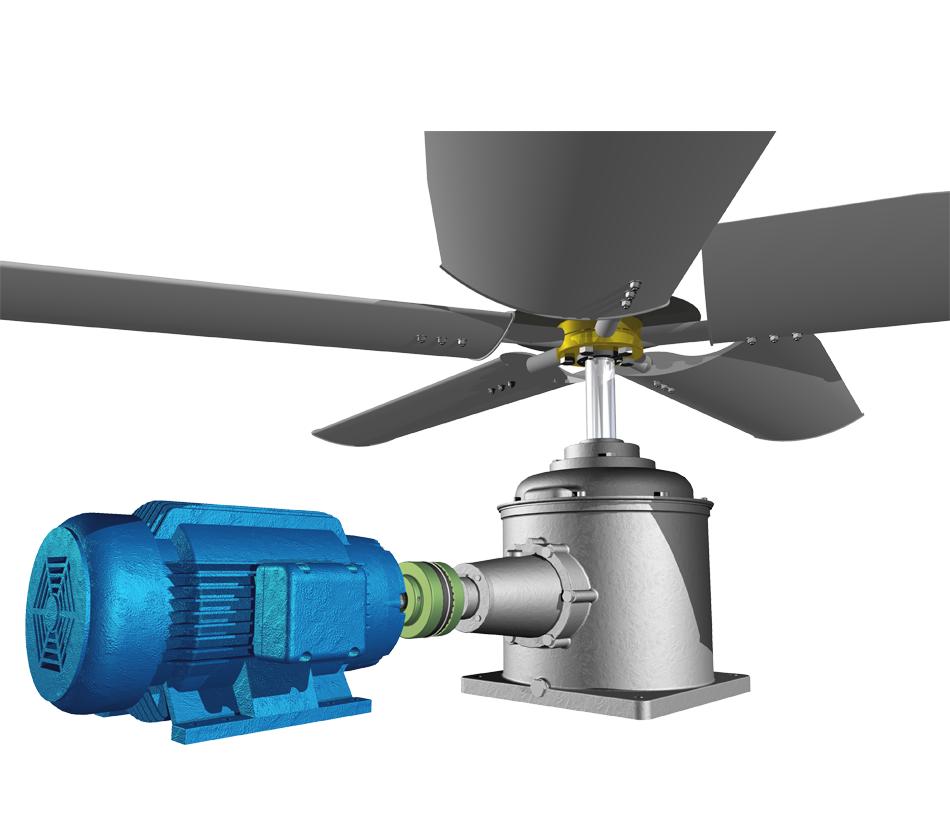
Matching Fan Power Requirements With Motor Capacity
The fan's required shaft power should be evaluated at the specified operating point.
Manufacturers need to consider airflow, static pressure, rotational speed, and aerodynamic efficiency when calculating power requirements.
Avoiding Motor Overload
A fan with excessive blade pitch or an unsuitable aerodynamic design may require more power than expected.
The motor must be selected with appropriate capacity and operating margins based on engineering calculations and applicable electrical requirements.
Selecting the Correct Gearbox
Gearboxes are commonly used in industrial cooling tower fan drive systems.
The gearbox must provide suitable speed reduction and transmit the required torque reliably.
Important selection factors include:
Supporting VFD Operation
Variable frequency drives allow cooling tower fans to operate at different speeds according to cooling demand.
A properly designed fan and drive system can help reduce energy consumption during periods of lower load.
However, manufacturers and system integrators should consider minimum operating speed, motor cooling, vibration, and resonance during VFD operation.
10. How Should Cooling Tower Fan Manufacturers Support Long-Term Maintenance?
Long-term performance does not depend on manufacturing quality alone. Correct installation and routine maintenance are also essential.
Professional manufacturers can help customers maintain their equipment by providing technical documentation, installation guidance, and replacement-part support.
Providing Clear Installation Instructions
Incorrect installation may reduce fan performance and increase mechanical stress.
Manufacturers should provide relevant technical drawings and assembly recommendations.
Important Installation Checks
Confirm the fan diameter and installation clearance.
Verify hub and shaft compatibility.
Check blade mounting positions.
Set the specified blade pitch.
Tighten fasteners according to approved requirements.
Confirm fan alignment.
Inspect the surrounding structure.
Verify operating direction.
Recommending Regular Inspection
Cooling tower operators should establish maintenance schedules based on operating conditions and manufacturer recommendations.
Inspection Item | Purpose |
Fan blades | Identify cracks, deformation, and surface damage |
Fan hub | Check connections and structural condition |
Fasteners | Identify loosening or corrosion |
Bearings | Monitor wear and lubrication |
Gearbox | Check oil condition and operating temperature |
Motor | Monitor current, temperature, and vibration |
Fan balance | Identify abnormal vibration |
Providing Replacement Parts and Technical Assistance
For international buyers, access to compatible replacement components is particularly important.
A professional supplier should be able to provide replacement blades, hub assemblies, mounting hardware, and other related parts according to the original specifications.
This support can simplify maintenance planning and reduce unnecessary equipment downtime.
11. How To Choose Reliable Cooling Tower Fan Manufacturers?
Selecting the right supplier is an important decision for industrial cooling tower projects.
A low quotation does not necessarily represent the best long-term value. Buyers should evaluate technical capabilities, product quality, customization experience, and after-sales support.
Check Industry Experience
Manufacturers with cooling tower industry experience are more likely to understand fan aerodynamics, blade materials, hub structures, and drive-system requirements.
Questions Buyers Should Ask
How long have you manufactured cooling tower fans?
Do you produce FRP and aluminum alloy fan blades?
Can you customize fan diameter and blade pitch?
Do you manufacture fan hub assemblies?
Can you supply replacement fans for existing cooling towers?
What quality inspection procedures do you follow?
Can you provide technical drawings?
Evaluate Customization Capabilities
Different cooling towers may require different fan dimensions and structural configurations.
A capable manufacturer should offer flexible solutions for OEM projects, replacement applications, and special industrial requirements.
Important Customization Services
Customized fan diameter.
Different blade materials.
Adjustable blade pitch.
Customized blade quantity.
Special hub dimensions.
Complete fan assemblies.
OEM production.
Replacement fan manufacturing.
Review Export and Delivery Experience
International procurement involves more than product manufacturing.
Buyers should evaluate packaging quality, production lead times, export documentation, shipping arrangements, and communication efficiency.
A manufacturer with international project experience can help simplify purchasing and delivery coordination.
12. What Are the Future Development Trends in Cooling Tower Fan Manufacturing?
The cooling tower industry is increasingly focused on energy efficiency, equipment reliability, and intelligent operation.
Manufacturers are adapting their product designs and production methods to meet these changing requirements.
Advanced Composite Materials
FRP and other composite materials offer opportunities for lightweight fan structures and improved corrosion resistance.
Future product development will continue to focus on material consistency, mechanical strength, and longer-term environmental durability.
More Efficient Fan Blade Designs
Aerodynamic optimization is becoming increasingly important.
Manufacturers are improving blade profiles, pitch configurations, and structural designs to achieve better airflow performance and reduce unnecessary power consumption.
Intelligent Cooling Tower Operation
Smart sensors and automated control systems can monitor fan speed, vibration, motor current, and operating temperatures.
Combined with VFD technology, these systems can help operators adjust fan operation according to actual cooling demand.
Customized Solutions for Global Industrial Projects
International buyers increasingly require fans that fit specific cooling tower models and operating environments.
Manufacturers with engineering, production, and OEM capabilities will be better positioned to serve distributors, contractors, and industrial end users.
FAQ About Cooling Tower Fan Manufacturers
1. How Long Can an Industrial Cooling Tower Fan Last?
The service life of an industrial cooling tower fan depends on material quality, manufacturing standards, operating conditions, installation accuracy, and maintenance practices.
There is no universal service-life figure for every fan. Regular inspection and proper maintenance can help extend its useful operating life.
2. Which Material Is Best for Cooling Tower Fan Blades?
FRP and aluminum alloy are two widely used materials.
FRP offers lightweight construction and good corrosion resistance, while aluminum alloy provides a useful balance of strength and weight. The best choice depends on environmental conditions, mechanical requirements, and project specifications.
3. Why Do Cooling Tower Fans Experience Excessive Vibration?
Common causes include fan imbalance, incorrect blade pitch, loose fasteners, shaft misalignment, bearing damage, and gearbox problems.
Operators should investigate the complete fan and drive system rather than assuming that vibration always originates from the blades.
4. How Can Cooling Tower Fan Manufacturers Improve Energy Efficiency?
Manufacturers can optimize blade profiles, fan diameter, blade pitch, and material selection. Proper matching between the fan, motor, and gearbox also helps improve overall system efficiency.
VFD-compatible fan systems can further reduce energy consumption when operating conditions allow variable-speed control.
5. Can Manufacturers Customize Cooling Tower Fan Blades?
Yes. Professional cooling tower fan manufacturers can customize blade length, diameter, material, pitch angle, profile, and mounting dimensions according to project requirements.
Customers should provide technical drawings and operating parameters to support accurate design.
6. Why Is Fan Balancing Necessary?
Fan balancing helps reduce vibration caused by uneven mass distribution. Proper balancing can reduce mechanical stress on bearings, motors, gearboxes, and supporting structures.
It is an important part of cooling tower fan quality control.
7. What Information Should Buyers Provide When Ordering Replacement Fans?
Buyers should provide the original fan diameter, blade quantity, material, blade pitch, hub dimensions, motor power, rotational speed, and relevant installation drawings.
Photographs of the existing fan assembly can also help manufacturers understand the replacement requirements.
Conclusion
Ensuring long-term performance requires cooling tower fan manufacturers to pay attention to every stage of product development, from material selection and aerodynamic design to manufacturing, balancing, and final inspection.
High-quality FRP or aluminum alloy blades, reliable hub assemblies, accurate blade pitch, proper dynamic balancing, and suitable corrosion protection all contribute to stable fan operation.
However, manufacturing quality is only part of the equation. Correct motor and gearbox matching, professional installation, and regular maintenance are equally important for achieving long-term reliability.
For industrial cooling tower owners, distributors, and engineering contractors, choosing an experienced cooling tower fan manufacturer means investing in more than a replacement component. It means obtaining a reliable solution designed to support continuous cooling performance, reduce unexpected maintenance, and improve the overall operating efficiency of industrial cooling systems.
If you are looking for customized cooling tower fan blades, FRP fan assemblies, aluminum alloy fans, or replacement fan hubs, work with a professional manufacturer that can provide suitable technical specifications, consistent product quality, and dependable support for your industrial projects.


