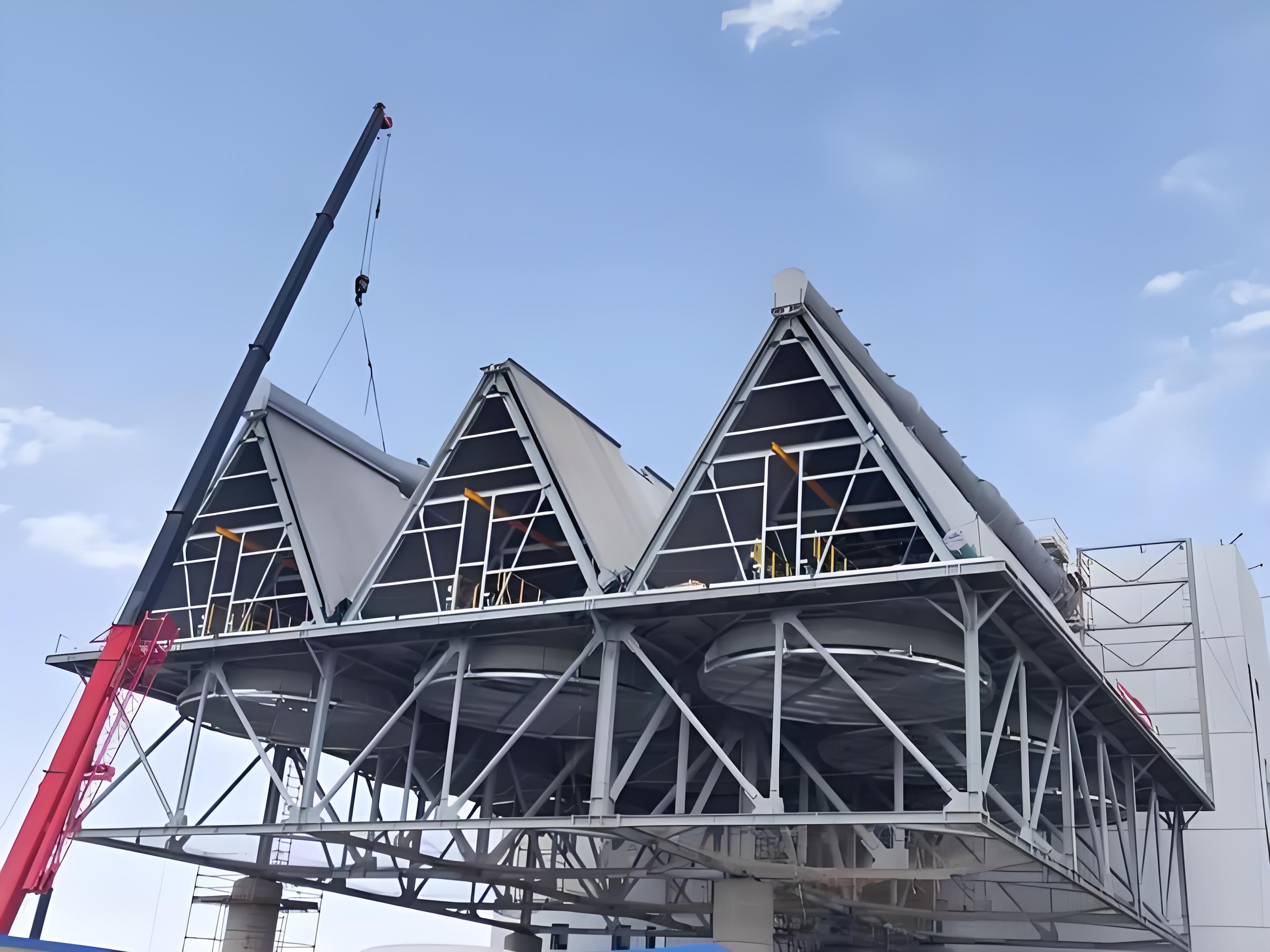
Cooling tower fan blade pitch adjustment is an important maintenance procedure for optimizing airflow, cooling performance, and motor operation. The blade pitch angle determines how the fan moves air through the cooling tower. If the angle is too low, the fan may not deliver enough airflow. If the angle is too high, the fan may draw excessive power, overload the motor, or operate outside its designed performance range.
For industrial cooling towers, correct fan blade pitch adjustment helps maintain reliable heat rejection, reduce unnecessary energy consumption, and protect fan drive components. However, the correct angle depends on the fan design, blade profile, rotational speed, motor capacity, and manufacturer's specifications.
This guide explains how cooling tower fan blade pitch works, when adjustment may be necessary, how to inspect blade angles, and which safety and performance factors to consider.
1. What Is Cooling Tower Fan Blade Pitch?
Cooling tower fan blade pitch is the angle at which a fan blade is positioned relative to a defined reference plane or direction of rotation. The exact measurement convention varies by fan design and manufacturer.
Most mechanical-draft cooling towers use axial fans to move air through the fill and other internal components. The fan creates airflow that supports evaporation and heat transfer between circulating water and air.
Blade pitch affects several operating parameters:
Airflow volume: The amount of air passing through the cooling tower.
Motor load: The power required to rotate the fan and move air.
Cooling capacity: The tower's ability to reject heat under given operating conditions.
Fan efficiency: How effectively the fan converts input power into useful airflow.
Mechanical loading: The forces acting on the blades, hub, shaft, and drive system.
The relationship between blade pitch and performance is not identical for every fan. Adjustments should follow the fan manufacturer's instructions rather than a universal angle recommendation.
2. Why Is Cooling Tower Fan Blade Pitch Adjustment Important?
Correct fan blade pitch helps the cooling tower operate within its intended performance range.
Improve Airflow and Cooling Performance
An appropriate pitch setting helps the fan deliver the airflow required by the cooling tower design. Insufficient airflow can contribute to higher cold-water temperatures and reduced heat rejection.
However, poor cooling can also result from blocked fill, uneven water distribution, excessive recirculation, or high ambient wet-bulb temperatures. Fan pitch should not be changed without checking these factors.
Prevent Motor Overload
Increasing blade pitch often increases the fan's aerodynamic load, although the exact response depends on the fan and system. Excessive load can cause high motor current, overheating, or protective trips.
Support Energy Efficiency
A correctly configured fan can provide the required airflow without unnecessary power consumption. The goal is not to maximize blade pitch, but to achieve the required cooling performance within the fan's approved operating limits.
Reduce Mechanical Problems
Incorrect or inconsistent blade settings can contribute to vibration, uneven loading, and reduced equipment reliability. Proper adjustment and inspection help protect the fan assembly and drive components.
3. When Should Cooling Tower Fan Blade Pitch Be Checked?
Inspect fan blade pitch when any of the following conditions occur:
Cooling tower performance falls below the expected level.
Motor current rises unexpectedly.
The fan trips on overload protection.
Blade replacement or fan hub maintenance has been completed.
Unusual vibration or noise develops.
Blade angles appear inconsistent across the fan.
The cooling tower undergoes a retrofit or operating-capacity change.
Before adjusting pitch, inspect the fan blades, hub, fasteners, motor, gearbox or belt drive, and surrounding airflow path. Check for damaged blades, loose hardware, dirt buildup, and mechanical misalignment.
4. How to Adjust Cooling Tower Fan Blade Pitch
The exact procedure varies by manufacturer and fan model. The following steps provide a general overview, not a substitute for the equipment-specific service manual.
Step 1: Shut Down and Isolate the Equipment
Stop the fan and apply the site's lockout/tagout procedures. Isolate the electrical supply and verify that the fan cannot start unexpectedly.
Allow rotating components to stop completely. Use appropriate fall protection and personal protective equipment when accessing elevated fan assemblies.
Step 2: Identify the Fan Specifications
Locate the fan nameplate, model information, installation drawings, and service manual.
Confirm the manufacturer's specified pitch angle or adjustment method, measurement reference, rotational direction, maximum motor load, and applicable operating limits.
Do not assume that two fans with similar diameters use the same pitch setting.
Step 3: Inspect the Fan Assembly
Examine the blades and hub for cracks, corrosion, deformation, looseness, and other damage. Check the mounting hardware and inspect the drive system.
Damaged blades or hubs should be repaired or replaced according to the manufacturer's requirements before any adjustment is attempted.
Step 4: Measure the Existing Blade Pitch
Use the measurement method and reference points specified by the fan manufacturer. A dedicated pitch gauge or angle-measuring tool may be required.
Record the angle of each blade at the prescribed measurement location. Blade geometry can vary along the blade span, so measurements taken at different locations may not be comparable.
If the existing settings differ from the manufacturer's specifications, determine whether the variation is intentional or indicates an installation problem.
Step 5: Adjust the Blade Angles
If adjustment is permitted, follow the manufacturer's procedure for loosening, repositioning, and securing the blades.
Maintain the required pitch across all blades and use the specified tightening sequence and torque values. Do not estimate torque or force blades into position.
If the hub design, blade retention mechanism, or required adjustment procedure is unclear, contact the manufacturer or a qualified service technician.
Step 6: Check Clearances and Mechanical Condition
Before restarting, verify blade clearance, fastener security, hub condition, and the absence of tools or loose objects.
Confirm that the fan rotates in the correct direction and that all guards and access covers are installed.
Step 7: Test Fan Operation
Restart the equipment according to the approved commissioning procedure.
Monitor:
Motor current and electrical power.
Fan vibration and noise.
Rotational speed.
Airflow, where measurable.
Cooling tower hot-water and cold-water temperatures.
Motor and drive operating conditions.
Compare the results with the manufacturer's limits and the tower's design requirements. Stop the equipment if abnormal vibration, excessive current, or other unsafe conditions occur.
5. Common Cooling Tower Fan Blade Pitch Problems
| Problem | Possible cause | Recommended action |
| Insufficient airflow | Incorrect pitch, low fan speed, obstruction | Verify pitch, speed, and airflow path |
| High motor current | Excessive pitch, mechanical drag, electrical issue | Check fan settings, drive system, and motor |
| Uneven blade angles | Incorrect adjustment or assembly | Measure all blades using the specified reference |
| Excessive vibration | Damaged blades, imbalance, loose hardware | Inspect the complete rotating assembly |
| Poor cooling performance | Fan issue, blocked fill, poor water distribution | Assess the entire cooling tower system |
Increasing blade pitch is not always the correct solution to low cooling performance. Diagnosis should consider fan speed, motor condition, fill blockage, water flow, and ambient conditions.
6. Best Practices for Fan Blade Pitch Maintenance
To maintain reliable cooling tower fan operation, follow these practices:
Follow manufacturer specifications: Use the approved pitch setting and measurement method for the exact fan model.
Keep blade angles consistent: Check every blade after adjustment or replacement.
Monitor motor load: Record current and power under comparable operating conditions.
Inspect fasteners and blades: Look for cracks, corrosion, looseness, and wear.
Maintain the entire fan system: Check the motor, gearbox, belts, bearings, shaft, and fan stack as applicable.
Document every adjustment: Record the original pitch, final setting, measured current, vibration, and operating conditions.
For replacement projects, confirm that new blades match the original fan's design, hub arrangement, material, and operating requirements.
7. Frequently Asked Questions
What is the correct cooling tower fan blade pitch angle?
There is no single correct angle for every cooling tower fan. The required setting depends on the fan model, blade design, rotational speed, and operating conditions. Always use the manufacturer's specifications.
Does increasing fan blade pitch improve cooling tower performance?
It may increase airflow in some operating conditions, but it can also increase motor load. Excessive pitch can cause overload and reduce overall efficiency. Adjustment must remain within approved operating limits.
How often should cooling tower fan blade pitch be checked?
Inspect pitch during scheduled maintenance, after blade replacement, following hub repairs, and whenever unusual current, vibration, or cooling performance changes occur. Follow the manufacturer's maintenance schedule.
Can I adjust fan blade pitch while the cooling tower is running?
No. Blade pitch adjustment must be performed with the fan stopped and safely isolated according to site procedures and the manufacturer's instructions.
Should I replace or adjust damaged fan blades?
Damaged blades should be evaluated against the manufacturer's repair and replacement requirements. Pitch adjustment cannot correct cracks, structural damage, or an unsuitable replacement blade.
Conclusion
Cooling tower fan blade pitch adjustment plays an important role in airflow control, motor load management, and cooling tower performance. Correct settings help the fan meet its design requirements while avoiding unnecessary mechanical and electrical stress.
For safe and effective results, identify the exact fan model, follow the manufacturer's pitch specifications, measure blade angles consistently, and verify motor current and vibration after adjustment. If the cause of poor performance is uncertain, inspect the complete cooling tower system before changing the fan settings.
Looking for cooling tower fan blades or replacement components? Contact CoolingTowerPart.com with your fan model, blade dimensions, hub configuration, and operating requirements to discuss suitable replacement options for industrial cooling tower maintenance and retrofit projects.
Recommended internal links for CoolingTowerPart.com:


