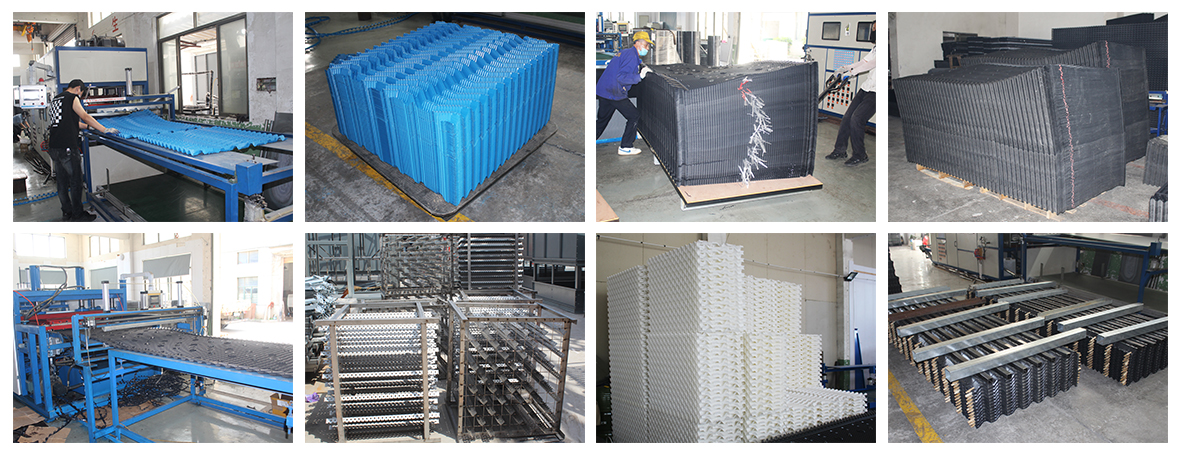
Cooling tower fill media is essential for efficient heat transfer, proper water distribution, and reliable cooling tower operation. Over time, scale, biological growth, dirt, and other deposits can accumulate on fill surfaces, reducing cooling performance and increasing maintenance requirements.
When cooling tower fill becomes dirty or clogged, facility managers face an important decision: should they clean the existing fill media or replace it with new material?
The answer depends on the fill's condition, the type of contamination, operating conditions, and the cost of maintenance compared with replacement. This guide compares cooling tower fill media replacement vs. cleaning, explains the advantages and disadvantages of each option, and helps industrial buyers choose the most cost-effective solution.
1. What Is Cooling Tower Fill Media?
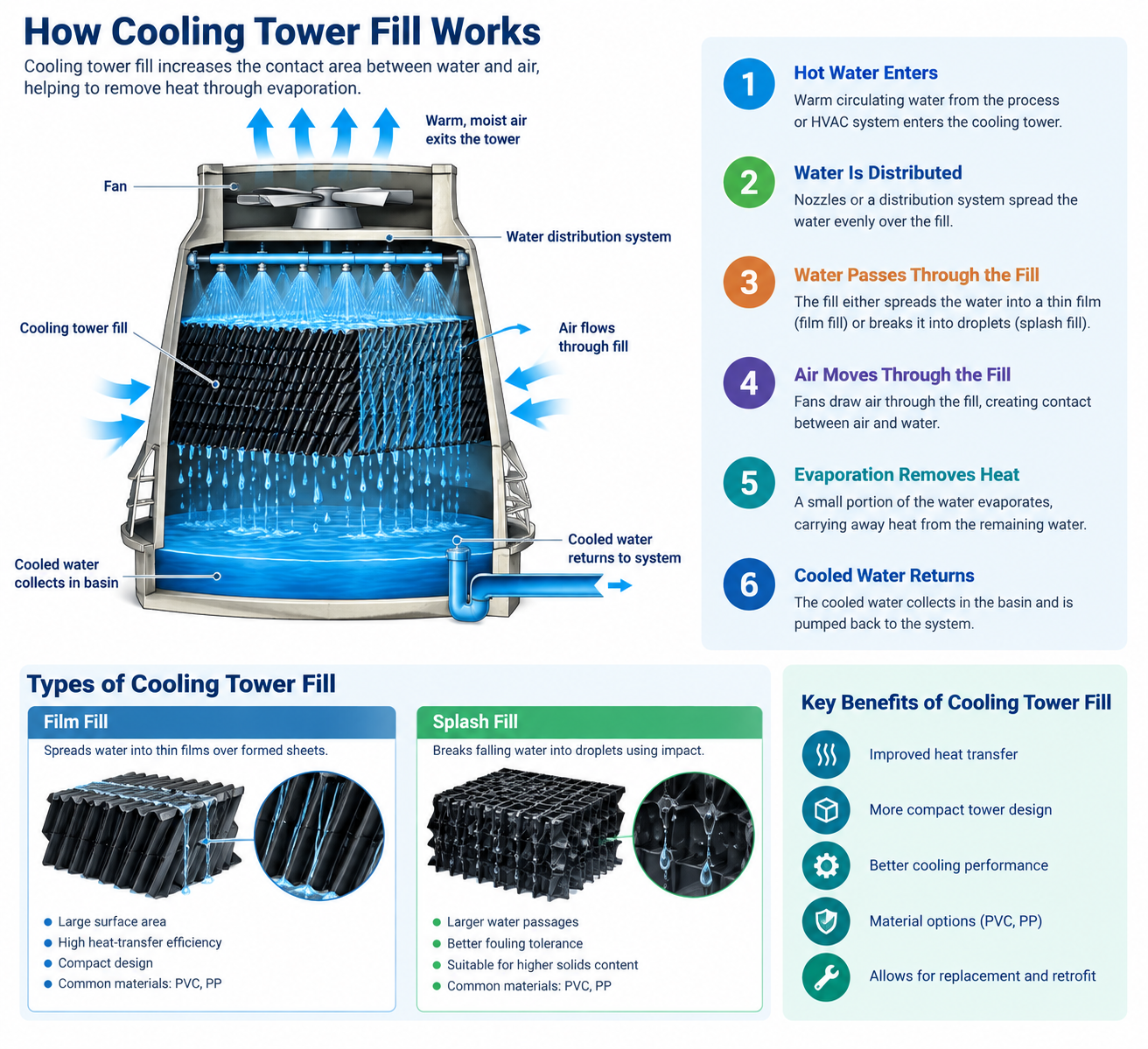
Cooling tower fill media increases the contact area between circulating water and air, allowing heat to transfer more effectively. It is commonly installed in industrial cooling towers, HVAC systems, power plants, manufacturing facilities, and process cooling applications.
The main types include:
PVC film fill: Closely spaced sheets provide a large surface area for heat transfer. It is widely used in applications with suitable water quality.
PP film fill: Polypropylene fill can offer improved temperature resistance in suitable grades and operating environments.
Splash fill: Bars, grids, or other structures break falling water into droplets. It is often considered for systems with higher suspended-solids levels or greater fouling risks.
Over time, deposits can restrict water passages and airflow. Physical damage and material degradation can also reduce fill performance, making maintenance or replacement necessary.
2. Cooling Tower Fill Cleaning: When Is It the Better Choice?
Cooling tower fill cleaning removes accumulated deposits and restores unobstructed water and airflow passages when the underlying fill remains in good condition.
Benefits of Cleaning Cooling Tower Fill
Lower initial cost: Cleaning usually costs less than a complete replacement when contamination is removable and the fill remains structurally sound.
Less material waste: Keeping serviceable fill in operation avoids unnecessary disposal and replacement material.
Potentially shorter maintenance time: Cleaning may be completed during a planned maintenance window, depending on the level of contamination and the cleaning method.
Improved cooling performance: Removing scale, slime, and debris can restore effective heat transfer and water distribution.
When Should You Clean Cooling Tower Fill?
Cleaning is generally worth considering when:
Fill passages are blocked by removable dirt or biological growth.
Mineral deposits are relatively light and can be removed safely.
PVC or PP sheets remain intact and retain their original shape.
The fill support structure is stable.
Cooling performance is likely to improve after cleaning.
The cleaning method must match the fill material and type of deposit. Aggressive chemicals, unsuitable cleaning agents, or excessive water pressure can damage plastic sheets and bonded fill packs.
Cooling towers can harbor Legionella bacteria. Cleaning should follow the facility's water-management plan, applicable safety procedures, and appropriate worker protection requirements.
3. Cooling Tower Fill Replacement: When Is It Necessary?
Cooling tower fill media replacement involves removing some or all of the existing fill and installing suitable new material.
Although replacement normally requires a higher initial investment, it may provide better long-term value when the original fill is severely damaged or cannot be restored through cleaning.
Benefits of Replacing Cooling Tower Fill
Restored fill geometry: New fill can restore the intended passage spacing and water-contact surfaces when old sheets have collapsed or deformed.
Improved heat-transfer potential: Replacing severely fouled or deteriorated fill can help recover cooling performance, provided other tower components are operating correctly.
Reduced recurring maintenance: New fill may reduce repeated cleaning and repair costs when the existing media has reached the end of its useful service life.
Opportunity to upgrade: A replacement project allows operators to evaluate alternative fill materials or configurations that better suit their water quality and operating conditions.
Signs Your Cooling Tower Fill Needs Replacement
Consider replacement when inspection identifies:
Cracked, brittle, or chemically degraded fill sheets
Collapsed, warped, or permanently deformed fill packs
Heavy mineral scale that cannot be safely removed
Persistent blockage despite appropriate cleaning
Damaged fill supports or unstable pack assemblies
Poor cooling performance that continues after other causes have been investigated
Before replacing the fill, check the spray nozzles, water distribution system, fan, airflow passages, and water-treatment conditions. These components can produce similar performance problems.
4. Cooling Tower Fill Cleaning vs. Replacement: Key Differences
| Comparison Factor | Fill Cleaning | Fill Replacement |
| Initial cost | Generally lower | Generally higher |
| Main purpose | Remove deposits and debris | Replace damaged or deteriorated media |
| Best application | Serviceable fill with removable contamination | Severely damaged or persistently fouled fill |
| Material waste | Usually lower | Higher due to removed material |
| Installation work | Cleaning and inspection | Removal, fitting, and installation |
| Long-term value | Depends on cleaning effectiveness | May be better when repeated cleaning is ineffective |
| Performance improvement | Depends on deposit removal | Depends on fill design and overall tower condition |
Neither option is always better. The correct decision depends on the condition of the fill, operating requirements, and total maintenance costs.
5. Which Option Is More Cost-Effective?
To compare cooling tower fill cleaning vs. replacement, look beyond the immediate service cost.
Cleaning may be the more economical choice when deposits are removable and the fill retains its structural integrity. However, repeated cleaning can become expensive if contamination returns quickly or performance remains poor.
Replacement may have a higher initial cost but can be more economical when the existing fill requires frequent maintenance or no longer performs adequately.
A practical cost comparison should include:
Cleaning labor and cleaning materials
Replacement fill media and freight
Removal and disposal of old fill
Installation labor and additional repairs
Downtime and production interruption
Expected future maintenance requirements
Example: If a fill pack is structurally sound but covered with removable dirt, cleaning may restore its performance at relatively low cost. If the sheets are brittle, collapsed, and heavily scaled, spending money on repeated cleaning may provide little benefit, making replacement the more practical investment.
Actual savings depend on the system and should be estimated using inspection findings and project quotations.
6. How to Decide Between Cleaning and Replacement
Follow these steps to make an informed decision.
Step 1: Inspect the Fill Media
Check for scale, slime, debris, cracks, deformation, and blocked passages. Inspect multiple sections because damage may vary across the tower.
Step 2: Identify the Cause of Poor Performance
Review cooling-water temperatures, water flow, airflow, and operating conditions. Check nozzles, fans, distribution basins, and other components before attributing the problem entirely to fill media.
Step 3: Evaluate Cleaning Feasibility
Determine whether the deposits can be removed without damaging the material. If appropriate, test a suitable cleaning method on a limited section before proceeding with a larger area.
Step 4: Compare Total Costs
Estimate the cost of cleaning and any follow-up maintenance against the full cost of replacement. Include labor, materials, shipping, downtime, and disposal.
Step 5: Select Suitable Replacement Fill if Needed
If replacement is justified, choose the fill type, material, dimensions, and configuration based on the tower design, water quality, temperature, and performance requirements.
7. How to Choose Replacement Cooling Tower Fill Media
When cleaning is no longer effective, selecting the correct replacement fill is essential.
Material compatibility: PVC is widely used in standard cooling applications, while PP may be suitable for certain higher-temperature environments. Confirm material-grade limits and chemical compatibility with the manufacturer.
Fill configuration: Film fill is generally suited to applications where high heat-transfer efficiency and suitable water quality can be maintained. Splash fill may be preferable where suspended solids and fouling are greater concerns.
Dimensions and installation: Confirm fill block size, sheet spacing, flute geometry, support arrangement, and installation space.
Cooling tower compatibility: For Marley, BAC, EVAPCO, SPX, or other equipment, verify the actual model and original fill configuration. Do not assume compatibility based on the brand name alone.
Supplier support: Choose a qualified cooling tower fill manufacturer or supplier that can provide technical specifications, dimensional confirmation, packaging information, and support for replacement or retrofit projects.
Frequently Asked Questions
Is it better to clean or replace cooling tower fill?
Cleaning is generally preferable when the fill is structurally sound and deposits can be removed safely. Replacement is more appropriate when the fill is cracked, deformed, severely degraded, or persistently blocked.
How often should cooling tower fill be cleaned?
Cleaning frequency depends on water quality, operating conditions, contamination levels, and the facility's maintenance plan. Regular inspections help determine when cleaning is necessary.
Can cleaning restore cooling tower efficiency?
Yes, when removable deposits are responsible for reduced heat transfer or blocked passages. However, fan problems, poor water distribution, and other mechanical issues may also affect performance.
Can I replace only part of the cooling tower fill?
Yes, if the damage is localized and the remaining fill is serviceable. Replacement sections must match the existing configuration and provide appropriate water and airflow distribution.
Does new cooling tower fill reduce energy costs?
It may help reduce avoidable energy consumption when the existing fill causes excessive airflow resistance or poor thermal performance. Actual savings depend on the original condition and the entire cooling tower system.
Conclusion
Choosing between cooling tower fill media replacement and cleaning depends on the severity of fouling, the structural condition of the fill, and the total cost of maintaining the system.
Cleaning is often the most economical solution for serviceable fill with removable deposits. Replacement is usually more appropriate when the media is damaged, permanently deformed, heavily degraded, or unable to deliver acceptable performance after cleaning.
For industrial cooling tower maintenance and retrofit projects, inspect the existing fill carefully, investigate other possible causes of poor cooling, and compare the long-term costs of both options. When replacement is necessary, select compatible PVC film fill, PP film fill, or splash fill based on the actual operating requirements.
Recommended internal links for CoolingTowerPart.com:


