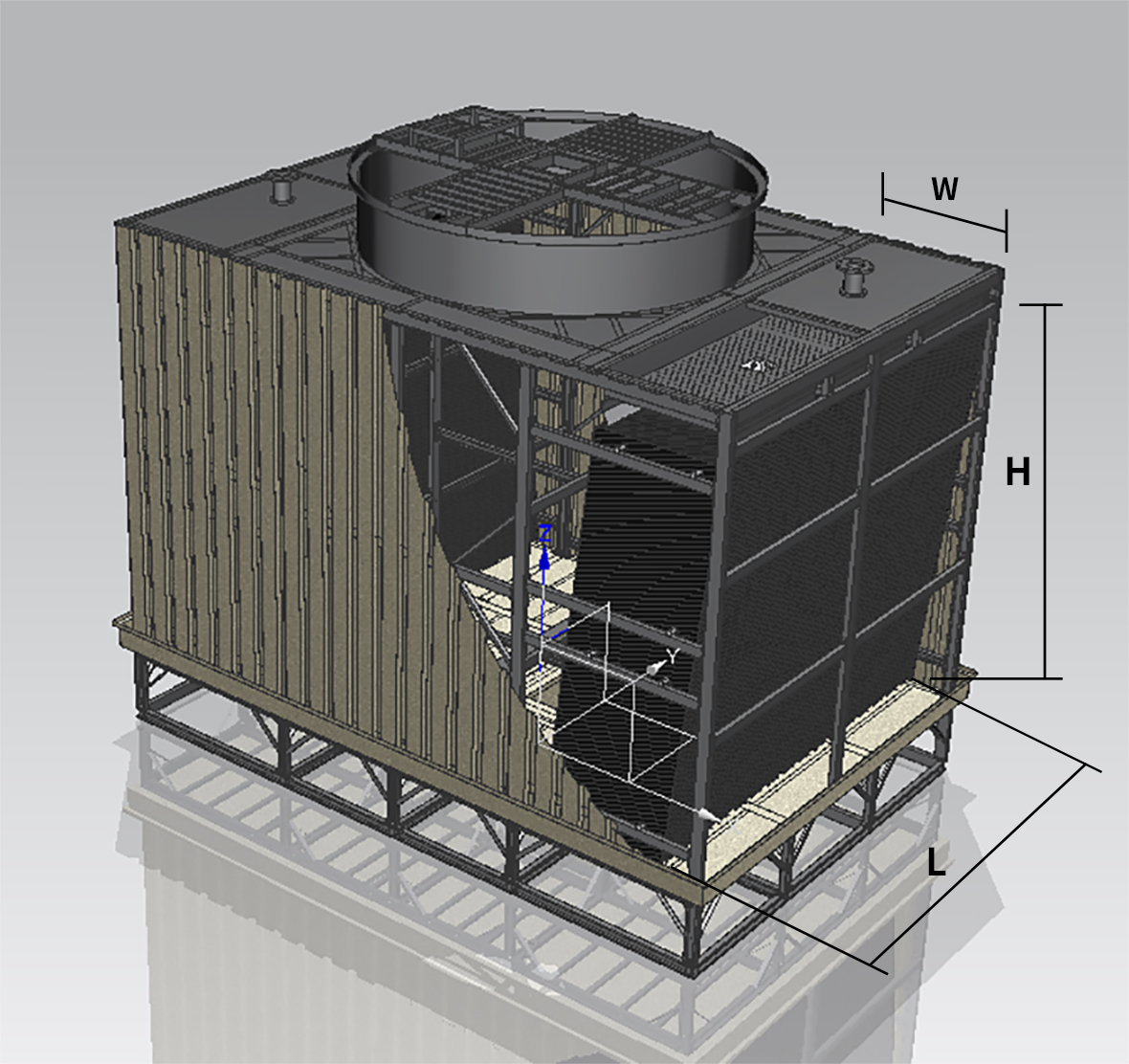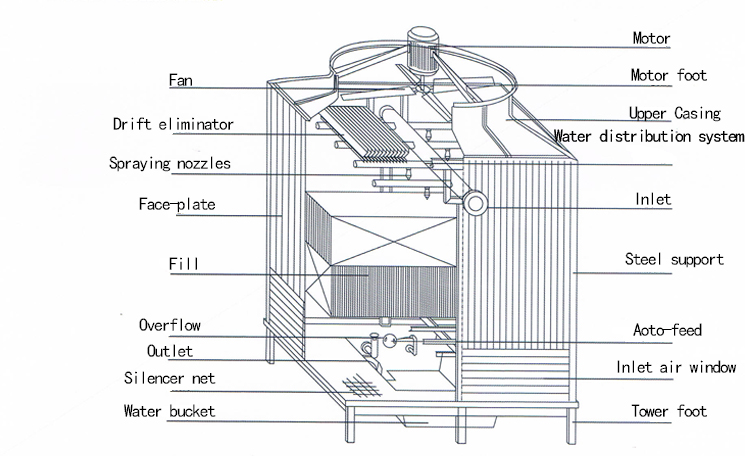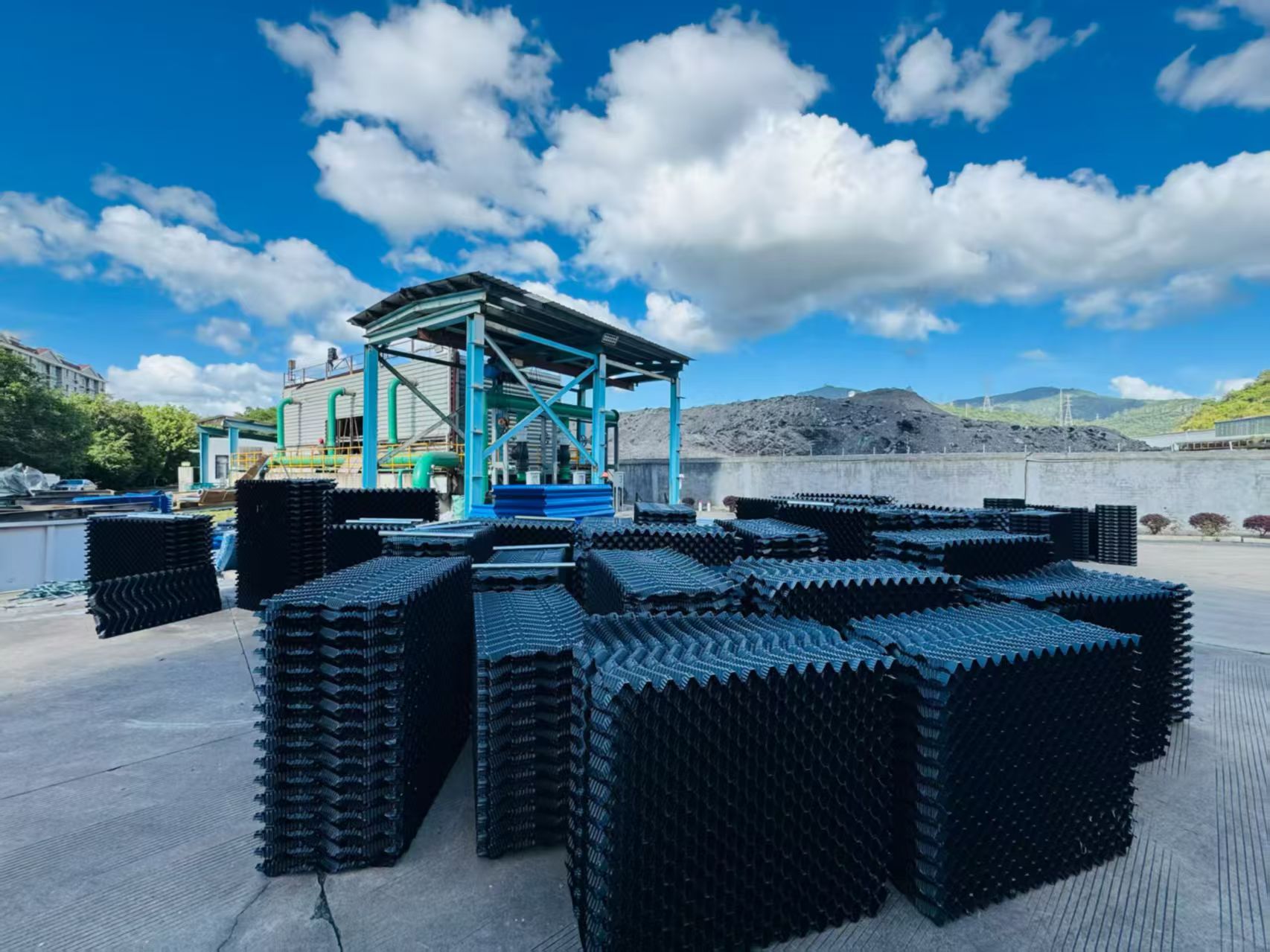
If you are new to cooling tower systems, you may wonder: what is fill for cooling tower, and why is it so important?
Cooling tower fill is one of the key internal components responsible for efficient heat transfer. It increases the contact area between hot circulating water and air, allowing more water to evaporate and heat to be removed from the system.
Without properly selected cooling tower fill, a tower may require more airflow or water circulation to achieve the same cooling effect.
This guide explains what cooling tower fill is, how it works, the different types and materials, and how to select the right fill for a cooling tower.
What Is Fill for a Cooling Tower?
Cooling tower fill is a structured or modular material installed inside a cooling tower to increase contact between water and air.
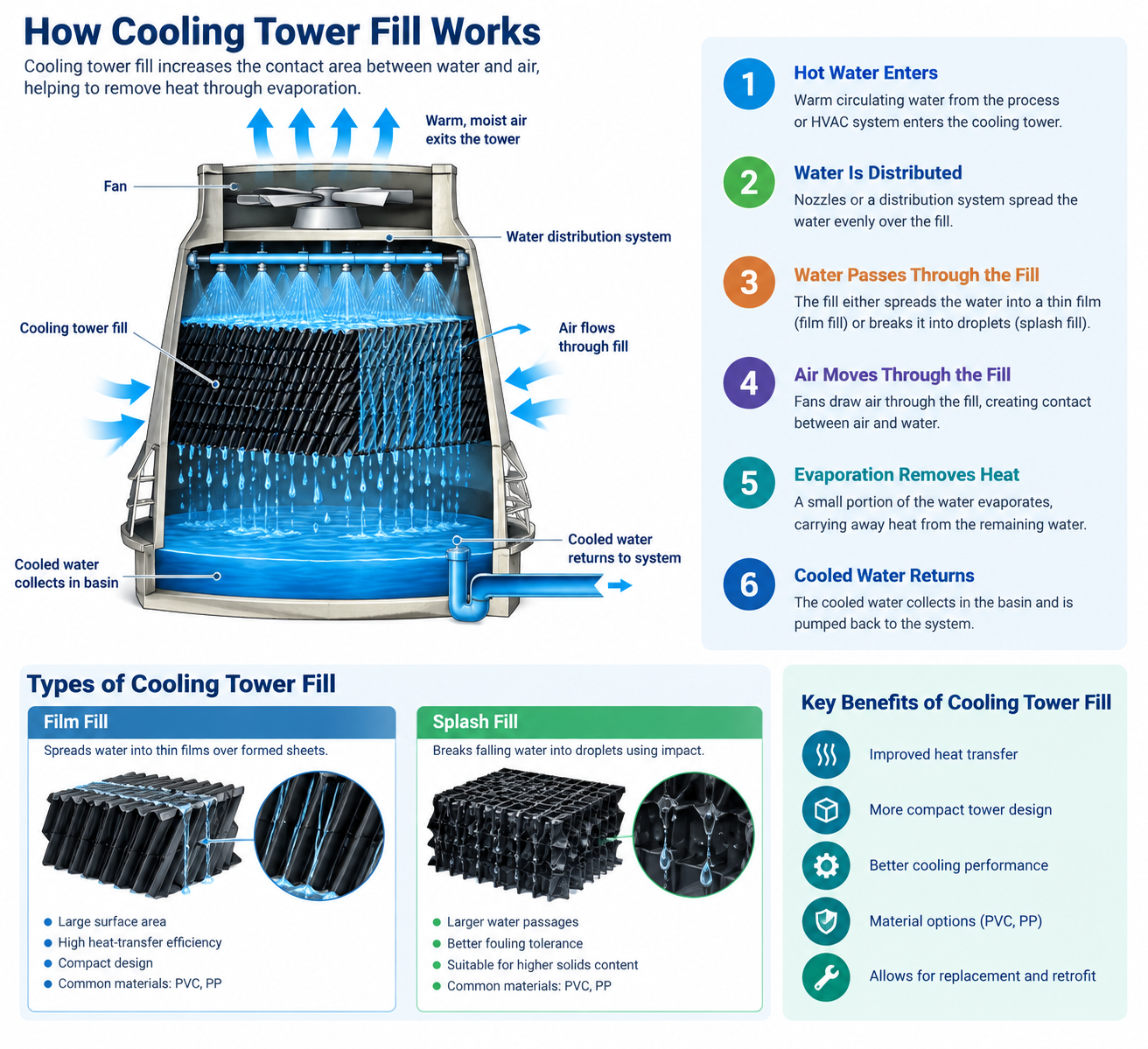
Hot water enters the tower and is distributed over the fill. At the same time, air passes through the fill. The fill either spreads the water into a thin film or breaks it into droplets.
This creates a larger water-air contact area and improves evaporative cooling.
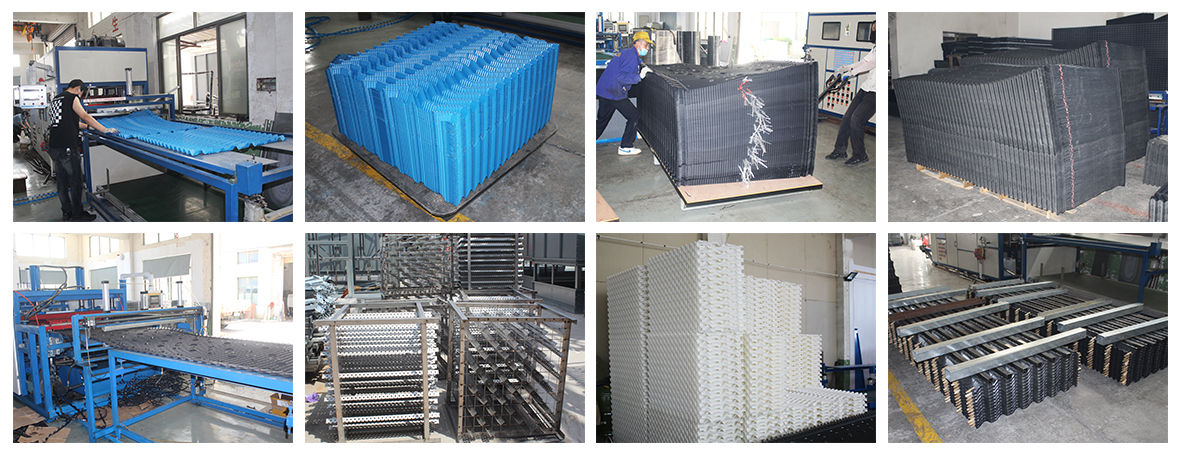
Common cooling tower fill materials include:
The two main fill categories are film fill and splash fill.
Why Is Cooling Tower Fill Important?
The main purpose of fill is to improve heat transfer within a limited tower volume.
When hot water enters a cooling tower, simply allowing it to fall through the air does not provide enough water-air contact for efficient cooling in many designs.
Cooling tower fill solves this problem by:
Increasing water surface area.
Increasing water-air contact time.
Improving water distribution.
Supporting evaporation.
Increasing the tower's effective heat-transfer capacity.
The result is a more compact and efficient cooling process.
How Does Cooling Tower Fill Work?
The basic cooling process is straightforward.
Step 1: Hot Water Enters the Tower
Warm circulating water from the process or HVAC system enters the cooling tower.
Step 2: Water Is Distributed
Nozzles or a distribution system spread the water over the fill.
Step 3: Water Passes Through the Fill
The fill changes the way water flows.
In film fill, water spreads across the surface of formed sheets.
In splash fill, water repeatedly impacts surfaces and breaks into smaller droplets.
Step 4: Air Moves Through the Fill
Depending on the tower design, air moves vertically or horizontally through the fill.
The air contacts the water and carries away heat and water vapor.
Step 5: Evaporation Removes Heat
A small portion of the circulating water evaporates. The energy required for evaporation comes primarily from the water, reducing its temperature.
Step 6: Cooled Water Returns to the System
The cooled water collects in the cold-water basin and is pumped back to the process or HVAC system.
Types of Cooling Tower Fill
Film Fill
Film fill uses closely spaced, formed sheets to spread water into thin films.
The large surface area provides extensive contact between water and air.
Typical advantages include:
High heat-transfer surface area
Compact design
Efficient water-air contact
Low fill volume for certain applications
Suitable for many crossflow and counterflow towers
Film fill is commonly manufactured from PVC or PP.
One consideration is fouling. Fine passages can become blocked by scale, algae, suspended solids, and other contaminants if water quality is poorly controlled.
Splash Fill
Splash fill works differently. Instead of creating a thin film, it repeatedly breaks falling water into droplets.
Common designs include:
Grid splash fill
Tube splash fill
Bar splash fill
Modular splash fill
Splash fill generally has larger passages than many film-fill designs and can be useful in applications where water contains significant suspended solids.
Hybrid Fill
Some cooling tower designs use fill configurations that combine film and splash characteristics.
The objective is to balance heat-transfer performance, fouling resistance, airflow requirements, and available tower volume.
What Materials Are Used for Cooling Tower Fill?
PVC Cooling Tower Fill
PVC is one of the most common materials for cooling tower film fill.
It offers a practical combination of:
PVC film fill is widely used in commercial HVAC and industrial cooling towers.
PP Cooling Tower Fill
Polypropylene is another common material.
PP offers good chemical resistance and can be suitable for applications requiring higher temperature capability, depending on the specific product and grade.
PP is used for both film and splash fill.
Cooling Tower Fill in Crossflow vs. Counterflow Towers
Fill configuration depends partly on the type of cooling tower.
Crossflow Cooling Tower Fill
In a crossflow tower, air generally moves horizontally through the fill while water flows downward.
The fill is typically arranged vertically within the tower's fill area.
Counterflow Cooling Tower Fill
In a counterflow tower, air moves upward while water flows downward.
The two streams move in opposite directions through the fill, creating a counterflow heat-transfer arrangement.
The fill must be designed and installed according to the tower's specific water and airflow configuration.
Benefits of Cooling Tower Fill
Better Heat Transfer
Increasing the water-air contact area improves evaporative heat transfer.
More Compact Cooling Tower Design
A well-designed fill system allows a large effective contact area within a relatively limited physical volume.
Improved Cooling Performance
Properly selected fill can help a cooling tower achieve its required outlet-water temperature.
Flexible Material Options
PVC and PP provide options for different temperature, chemical, and operating conditions.
Suitable for Replacement Projects
Replacement fill can often be manufactured to match existing tower dimensions, allowing operators to restore cooling performance without replacing the entire tower.
What Happens When Cooling Tower Fill Gets Dirty or Damaged?
Cooling tower fill operates continuously and can accumulate contaminants over time.
Common problems include:
Scale
Algae
Biofilm
Suspended solids
Dirt
Oil contamination
Cracks
Warping
Blocked passages
Fouled or damaged fill can reduce water-air contact and increase airflow resistance.
Possible symptoms include higher cold-water temperature, reduced cooling capacity, uneven water distribution, and increased operating costs.
Regular inspection and appropriate water treatment can help extend fill service life.
How to Choose the Right Cooling Tower Fill
Selecting cooling tower fill requires more than matching the physical dimensions.
Consider the following factors:
1. Cooling Tower Type
Determine whether the tower is crossflow, counterflow, induced draft, forced draft, or another configuration.
2. Water Quality
Check suspended solids, hardness, biological growth, oil contamination, and chemical conditions.
Poor water quality may favor splash fill or larger-passage fill designs.
3. Operating Temperature
Confirm the hot-water temperature and maximum operating temperature for the selected fill material.
4. Water Flow Rate
Fill performance depends on water loading and airflow. Provide the supplier with actual or design water-flow information.
5. Fill Dimensions
For replacement projects, measure:
Photos and drawings can also help identify the appropriate replacement.
6. Thermal Requirements
The selected fill should provide the required cooling performance under the tower's design conditions, including water flow, airflow, inlet temperature, outlet temperature, and design wet-bulb temperature.
Cooling Tower Fill Replacement
Cooling tower fill is a wear component and may eventually require replacement.
Signs that replacement may be necessary include:
During a replacement project, inspect the fill supports, spray nozzles, distribution system, drift eliminators, and air inlets.
Installing new fill without correcting poor water distribution or damaged support structures may not restore the expected cooling performance.
FAQ About Cooling Tower Fill
What is the main purpose of fill in a cooling tower?
The main purpose is to increase water-air contact area and contact time so that evaporation can remove heat from circulating water more effectively.
Does cooling tower fill hold water?
Yes, cooling tower fill temporarily spreads or redirects water as it passes through the tower. However, its primary purpose is to increase water-air contact rather than store water.
What is the difference between film fill and splash fill?
Film fill spreads water into thin films across formed sheets, while splash fill repeatedly breaks falling water into droplets. Film fill generally offers high surface area, while splash fill can provide larger passages for applications where fouling is a concern.
How long does cooling tower fill last?
There is no universal service life. Water quality, temperature, chemicals, UV exposure, maintenance, and operating conditions all affect the life of cooling tower fill.
Can cooling tower fill be replaced?
Yes. Replacement fill can often be manufactured to match the dimensions and configuration of an existing cooling tower.
Conclusion
Cooling tower fill is a critical component that improves the efficiency of evaporative heat transfer. By spreading water into thin films or breaking it into droplets, fill increases the contact between water and air and allows heat to be removed more effectively.
The right fill depends on the tower design, water quality, operating temperature, water flow, airflow, and required thermal performance. Film fill and splash fill each have specific advantages, while PVC and PP are widely used materials.
For cooling tower replacement projects, accurate measurements and operating information are essential. Selecting compatible fill and maintaining good water quality can help support reliable cooling tower performance and extend the service life of the system.
Internal Links for Other CoolingTowerParts
Cooling Tower Fill
Cooling Tower Nozzles
Cooling Tower Drift Eliminators
Cooling Tower Louvers
Cooling Tower Fan Blades
Cooling Tower Motors