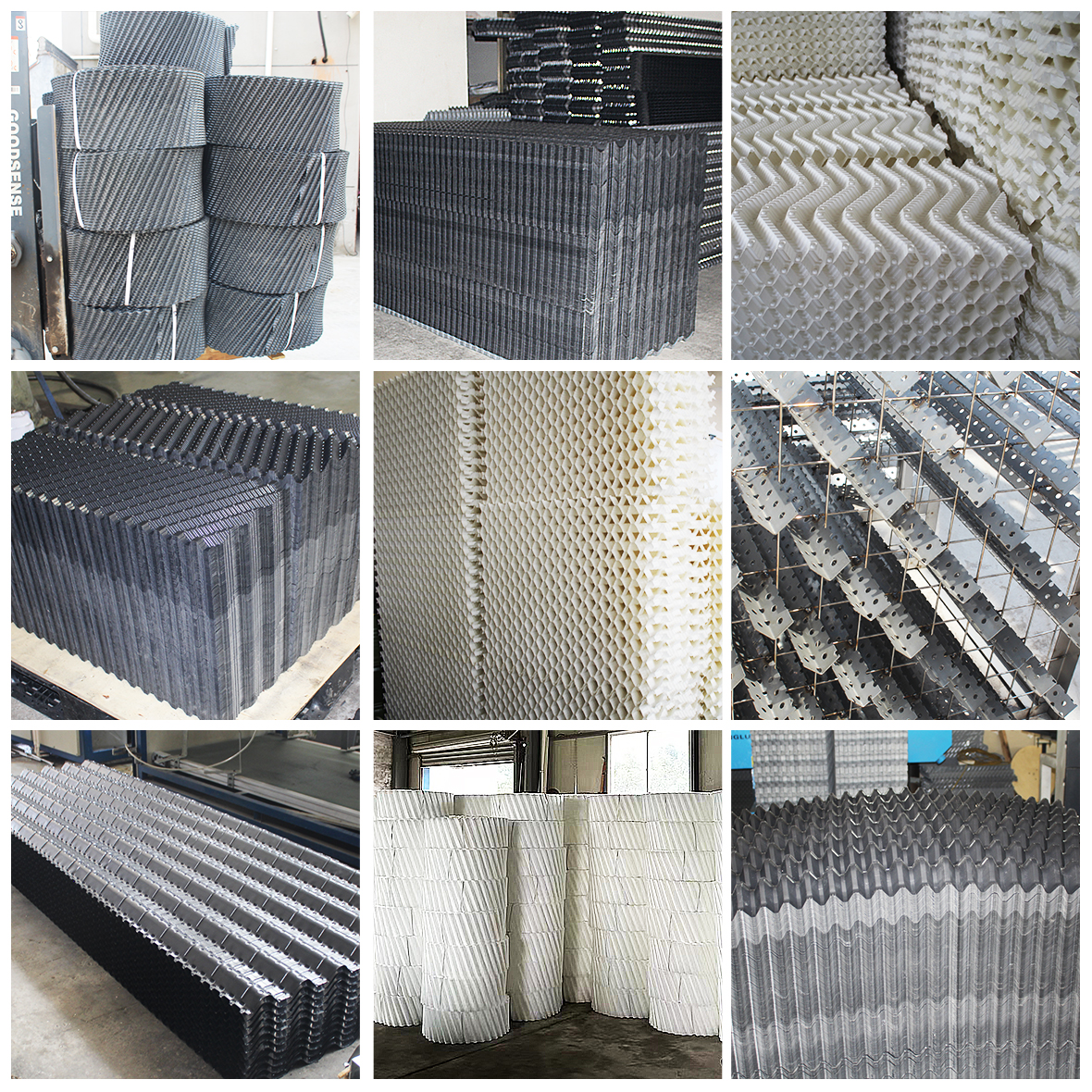
You are here: Home » Blog » Quality Cooling Tower Fill Material for Your Cooling Tower
Quality Cooling Tower Fill Material for Your Cooling Tower
Views: 0 Author: jessi Publish Time: 2026-09-14 Origin: Site
Quality Cooling Tower Fill Material for Your Cooling Tower
Choosing the right cooling tower fill material is one of the most important decisions when designing, upgrading, or maintaining a cooling tower. Cooling tower fill creates a large contact surface between circulating water and air, allowing heat to transfer more effectively and improving overall cooling performance.
A properly selected cooling tower filler can improve heat transfer, optimize water distribution, support stable airflow, and extend the operating life of a cooling tower. However, different applications require different fill materials, structures, and specifications.
So, how do you choose the right cooling tower fill for your system?
This guide explains the major types of cooling tower fill material, their applications, selection factors, maintenance requirements, and replacement considerations.
What Is Cooling Tower Fill Material?
Cooling tower fill material is the heat-transfer media installed inside a cooling tower. Its primary purpose is to increase the contact area between hot circulating water and air.
Instead of allowing water to fall directly through the tower, cooling tower fill spreads the water into thin films or breaks it into droplets. This increases air-water contact and promotes evaporation and heat transfer.
How Does Cooling Tower Fill Work?
The cooling process generally follows these steps:
Hot water enters the cooling tower.
The water distribution system spreads water over the fill.
Water flows through or across the cooling tower fill.
Air passes through the fill.
Heat transfers from the water to the air.
A small portion of water evaporates.
Cooled water collects in the basin.
The fill therefore acts as a critical interface between the water and airflow.
Why Is Air-Water Contact So Important?
Cooling tower performance depends heavily on effective air-water contact.
A well-designed cooling tower filler provides a large effective surface area while maintaining suitable airflow resistance. This allows the tower to transfer heat efficiently without creating excessive pressure drop.
Does More Fill Surface Area Always Mean Better Cooling?
Not necessarily.
Increasing surface area can improve heat transfer, but an excessively dense fill can increase pressure drop and become more vulnerable to fouling.
A good cooling tower fill design must balance:
Heat-transfer surface area
Water distribution
Airflow resistance
Fouling resistance
Mechanical strength
Operating cost
Why Is High-Quality Cooling Tower Fill Important?
The quality of the fill directly affects the reliability and thermal performance of a cooling tower.
Poor-quality fill can deform, crack, clog, or deteriorate under demanding operating conditions. High-quality fill is designed to maintain its structure and thermal characteristics over a long operating period.
How Does Quality Fill Improve Heat Transfer?
A quality cooling tower fill promotes uniform water spreading and creates a large effective contact area between water and air.
This can help the cooling tower achieve the required outlet-water temperature more consistently.
Can Quality Fill Reduce Cooling Tower Operating Costs?
Efficient heat transfer can contribute to lower operating costs by helping the cooling tower meet its cooling duty without unnecessarily increasing airflow or water circulation.
However, actual energy savings depend on the entire cooling system, including fans, motors, pumps, water flow, ambient conditions, and tower design.
How Does Fill Quality Affect Service Life?
High-quality materials can better withstand continuous exposure to:
Water
Temperature changes
Cleaning processes
Water-treatment chemicals
Mechanical stress
Biological growth
Proper material selection and maintenance can therefore reduce premature cooling tower fill replacement.
What Types of Cooling Tower Fill Material Are Available?
There is no single fill material suitable for every application.