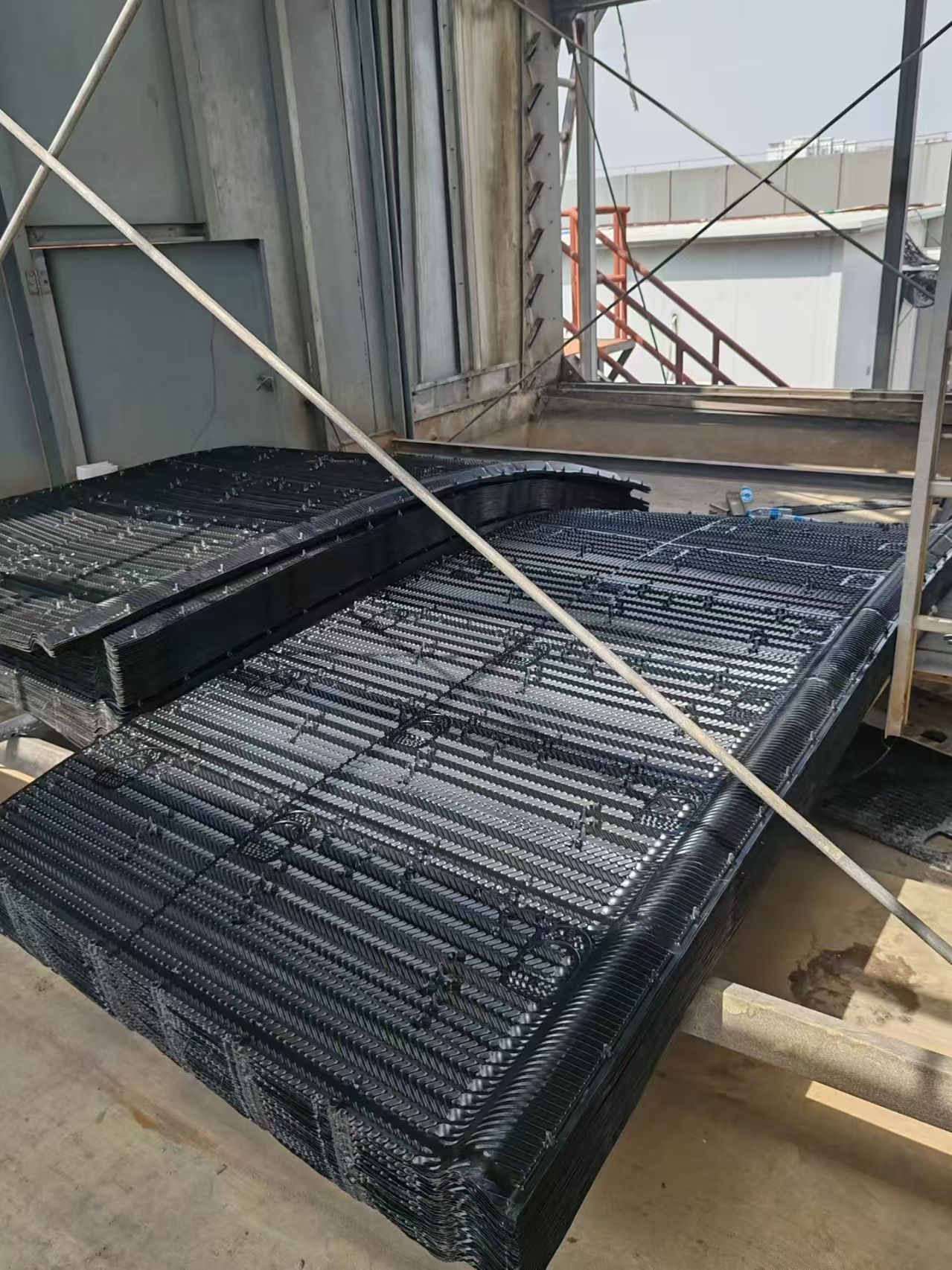
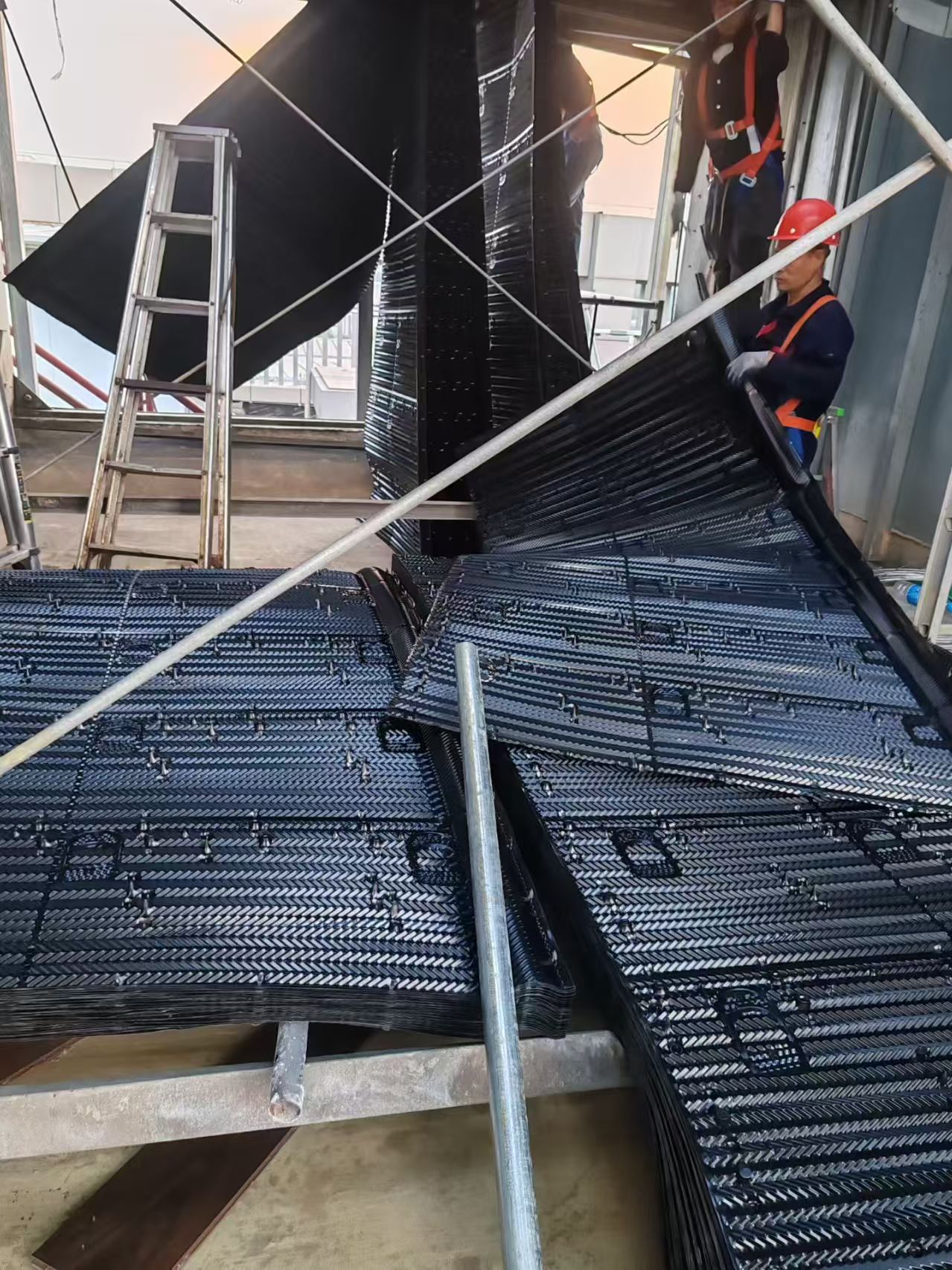
Cooling Tower Fill Replacement Frequency: How Often Should Fill Be Replaced?
Cooling tower fill is a critical heat transfer component in evaporative cooling systems. It increases the contact area between circulating water and air, allowing heat to be removed more efficiently through evaporation. However, cooling tower fill does not last forever. Scaling, biological growth, suspended solids, chemical exposure, high temperatures, and mechanical damage can gradually reduce its performance.
One of the most common maintenance questions is: How often should cooling tower fill be replaced?
There is no universal replacement interval that applies to every cooling tower. The appropriate cooling tower fill replacement frequency depends on the fill material, water quality, operating temperature, cooling tower design, maintenance practices, and actual physical condition of the fill.
For many industrial systems, the best approach is to combine a planned inspection schedule with performance-based replacement rather than replacing fill simply because it has reached a certain age.
How Often Should Cooling Tower Fill Be Replaced?
The replacement frequency of cooling tower fill varies significantly between applications.
Is There a Fixed Cooling Tower Fill Replacement Frequency?
No.
A cooling tower may operate for years without requiring complete fill replacement if the fill remains structurally sound and thermal performance is acceptable. In contrast, a tower exposed to aggressive water conditions may require replacement much earlier.
Instead of relying on a fixed calendar date, operators should evaluate:
Fill condition
Cooling performance
Water quality
Fouling level
Operating temperature
Mechanical damage
Airflow resistance
Water distribution
What Is a Typical Cooling Tower Fill Service Life?
The service life of cooling tower fill can vary widely depending on application and maintenance.
As a general planning concept, many well-maintained fill systems may remain useful for several years, while severe industrial conditions can shorten service life considerably.
Therefore, a statement such as "replace every five years" should not be treated as a universal rule.
Why Does Service Life Vary So Much?
Two cooling towers using similar fill can experience very different service lives because their operating environments may be completely different.
For example, a clean HVAC cooling tower may experience relatively low fouling, while an industrial process cooling tower may handle water containing substantial suspended solids or process contaminants.
What Factors Affect Cooling Tower Fill Replacement Frequency?
Several factors determine how quickly fill deteriorates.
Does Water Quality Affect Cooling Tower Fill Life?
Yes. Water quality is one of the most important factors.
Poor water quality can accelerate:
When deposits accumulate on cooling tower fill, the available heat transfer area can decrease and airflow resistance can increase.
How Does Suspended Solids Concentration Affect Fill?
Suspended solids can enter the fill passages and gradually accumulate.
This problem is especially important for film fill because the passages can be relatively narrow.
Why Is Anti-Clog Fill Useful?
Anti-clog or low-clogging fill designs generally use geometry that provides more open passages for water and solids.
Such fill can be useful in applications where suspended solids are difficult to control, although proper filtration and water treatment remain essential.
Does Operating Temperature Affect Fill Replacement Frequency?
Yes.
Higher operating temperatures can place greater thermal stress on certain plastic fill materials. The actual temperature capability depends on the material and fill design.
PVC, PP, and other fill materials have different operating characteristics, so material selection should always consider the actual water temperature.
Does Chemical Exposure Shorten Fill Life?
Potentially.
Cooling tower water may contain chemicals used for:
Scale control
Corrosion control
Biological control
pH adjustment
Process treatment
The compatibility of these chemicals with the fill material should be evaluated before long-term operation.
How Can You Tell When Cooling Tower Fill Needs Replacement?
Physical inspection and performance monitoring are both important.
What Are the Main Signs of Deteriorated Cooling Tower Fill?
Common warning signs include:
Can Higher Cold-Water Temperature Indicate Fill Problems?
Yes, but it is not conclusive.
If the cooling tower consistently produces higher outlet water temperatures under similar ambient and load conditions, deteriorated fill could be one possible cause.
However, technicians should also inspect:
Cooling tower fans
Fan motors
Pumps
Spray nozzles
Water distribution
Drift eliminators
Air inlet louvers
Ambient conditions
Why Should You Avoid Blaming the Fill Immediately?
Cooling tower performance depends on multiple interconnected components.
Replacing the fill will not necessarily solve a problem caused by inadequate airflow, insufficient water flow, damaged nozzles, fan problems, or poor water treatment.
How Does Scaling Affect Cooling Tower Fill Replacement Frequency?
Scale is one of the most common causes of fill performance degradation.
What Is Cooling Tower Fill Scaling?
Scaling occurs when dissolved minerals in circulating water precipitate and accumulate on fill surfaces.
Common deposits can include calcium-based mineral scale and other inorganic materials.
Why Does Scale Reduce Cooling Performance?
Scale can cover the fill surface and change the geometry of the water passages.
As a result:
Effective heat transfer area may decrease.
Water distribution may become less uniform.
Airflow resistance may increase.
Some fill passages may become blocked.
Cleaning frequency may increase.
Can Scale Be Removed Instead of Replacing the Fill?
Sometimes.
If the fill remains structurally sound, appropriate cleaning may restore a significant portion of its performance.
However, if the fill has become brittle, permanently deformed, cracked, or severely blocked, cleaning may not be sufficient.
How Does Biological Fouling Affect Cooling Tower Fill Life?
Cooling towers provide a warm and wet environment where biological growth can occur if water treatment is inadequate.
What Types of Biological Growth Affect Cooling Tower Fill?
Potential problems include:
Algae
Biofilm
Slime
Microbial deposits
These materials can accumulate on fill surfaces and restrict water and air passages.
Can Regular Biocide Treatment Extend Fill Life?
Effective biological control can reduce fouling and help maintain open fill passages.
However, chemical treatment must be properly controlled. Treatment programs should be designed according to the cooling system's water chemistry and operating requirements.
Is Cleaning Enough to Control Biological Fouling?
Not always.
Cleaning removes existing deposits, while water treatment helps control the conditions that allow biological growth to return.
A combination of mechanical cleaning and appropriate water management is usually more effective than relying on either approach alone.
Does Cooling Tower Fill Material Affect Replacement Frequency?
Yes.
Different materials have different characteristics.
How Long Does PVC Cooling Tower Fill Last?
PVC is widely used for cooling tower fill because it offers a practical combination of heat transfer performance, corrosion resistance, lightweight construction, and cost efficiency.
Its service life depends strongly on:
Temperature
UV exposure
Water chemistry
Fouling
Mechanical stress
Cleaning practices
What About PP Cooling Tower Fill?
Polypropylene cooling tower fill may be selected for applications requiring different temperature or chemical resistance characteristics.
As with PVC, the actual service life depends on the operating environment rather than material name alone.
Does Splash Fill Have a Different Maintenance Profile?
Yes.
Splash fill uses bars or grids to break water into droplets rather than relying primarily on thin water films.
Because its flow passages can be more open, splash fill may be considered for applications with higher suspended solids.
Which Fill Has the Longest Service Life?
There is no universal answer.
The most durable fill is the one whose material and geometry are compatible with the specific cooling tower environment.
Should Cooling Tower Fill Be Replaced Based on Age?
Age can be a useful maintenance reference, but it should not be the only replacement criterion.
Why Is Condition-Based Replacement Better?
A condition-based approach considers actual evidence.
For example, a cooling tower may have relatively old fill that remains structurally sound and thermally effective. Replacing it solely because of age may not provide a meaningful operational benefit.
Conversely, a relatively new fill system may need replacement if it has suffered severe chemical damage or blockage.
What Should Be Recorded During Inspections?
Maintenance teams can record:
Fill installation date
Fill material
Fill type
Operating temperature
Water chemistry
Cleaning dates
Visible fouling
Structural condition
Cooling performance
Pressure drop
Why Is Historical Data Useful?
Maintenance records make it easier to identify gradual deterioration and establish a more accurate cooling tower fill replacement frequency for a specific installation.
How Often Should Cooling Tower Fill Be Inspected?
Inspection frequency should generally be much shorter than the replacement interval.
Should Cooling Tower Fill Be Inspected Annually?
For many systems, annual inspection can be a useful baseline, particularly for evaluating physical condition and fouling.
More frequent inspections may be appropriate for:
High-temperature applications
Heavy industrial cooling
Poor water quality
High suspended solids
Towers with recurring fouling
Systems with critical cooling requirements
What Should an Inspection Include?
A comprehensive inspection can cover:
Physical Inspection
Look for:
Cracks
Brittleness
Deformation
Collapse
Broken sections
Loose modules
Fouling Inspection
Check for:
Scale
Algae
Sludge
Dirt
Biofilm
Mineral deposits
Performance Inspection
Monitor:
Can Proper Maintenance Extend Cooling Tower Fill Life?
Yes.
Preventive maintenance can significantly influence the useful life of cooling tower fill.
What Maintenance Practices Help?
Important practices include:
Maintain appropriate water treatment.
Control suspended solids.
Perform regular fill inspections.
Clean deposits when appropriate.
Maintain proper water distribution.
Check spray nozzles regularly.
Monitor cooling performance.
Inspect fill supports.
Address damaged sections promptly.
Why Is Water Distribution Important?
Cooling tower fill depends on proper water distribution.
If nozzles become clogged or distribution pipes become damaged, some fill sections may receive excessive water while others receive insufficient water.
Uneven distribution can reduce effective cooling and create localized fouling.
Can Nozzle Problems Be Mistaken for Fill Failure?
Yes.
Poor spray patterns can reduce tower performance even when the fill itself is still in good condition.
This is why the complete water distribution system should be inspected before deciding on fill replacement.
When Is Cooling Tower Fill Cleaning Better Than Replacement?
Cleaning can be an economical alternative when the fill is dirty but structurally intact.
When Should You Clean the Fill?
Cleaning may be appropriate when:
Deposits are relatively light
Fill sheets remain flexible
Channels are not permanently blocked
Thermal performance can be recovered
There is no major mechanical damage
When Should You Replace the Fill?
Replacement should be considered when:
Fill sheets are brittle
Modules are cracked
Sections have collapsed
Fouling is permanent
Cleaning cannot restore adequate passages
Thermal performance remains poor
Material degradation is extensive
Can Damaged Fill Be Partially Replaced?
In some towers, individual sections or modules can be replaced instead of the entire fill system.
The feasibility depends on the tower design, fill arrangement, support system, and availability of compatible replacement modules.
How Does Cooling Tower Design Affect Fill Replacement Frequency?
Tower configuration influences both fill performance and maintenance requirements.
Does Counterflow Fill Require Different Maintenance?
Counterflow towers move air upward through the fill while water flows downward.
The fill geometry must support effective interaction between the two streams while maintaining acceptable pressure drop.
What About Crossflow Cooling Tower Fill?
Crossflow towers move air horizontally across the falling water.
Because the airflow and water distribution arrangements differ, replacement fill must be compatible with the tower configuration.
Why Is Correct Fill Geometry Important?
Fill geometry influences:
Selecting a replacement fill with the wrong geometry can create operational problems even if its physical dimensions appear similar.
How Can You Determine the Right Cooling Tower Fill Replacement Frequency?
Instead of using a single replacement date, consider creating a condition-based maintenance strategy.
Step 1: Establish a Baseline
Record the cooling tower's normal operating performance after installation or major maintenance.
Step 2: Monitor Performance
Track:
Step 3: Inspect the Fill
Look for physical deterioration and fouling.
Step 4: Compare Historical Data
Identify whether performance is gradually declining or whether a sudden change has occurred.
Step 5: Investigate Other Components
Check fans, pumps, nozzles, distribution systems, drift eliminators, and water treatment.
Step 6: Decide Between Cleaning and Replacement
If the fill is structurally sound, cleaning may be sufficient.
If it is physically deteriorated or permanently blocked, replacement may be more appropriate.
How Should You Select Replacement Cooling Tower Fill?
Once replacement is justified, choosing the correct cooling tower filler becomes critical.
What Specifications Should Be Checked?
Before ordering, confirm:
Should You Choose Anti-Clog Cooling Tower Fill?
Anti-clog or low-clogging fill may be useful where water contains significant suspended solids.
However, fill selection should consider the complete operating environment rather than one specification alone.
Can a Cooling Tower Fill Manufacturer Provide Custom Sizes?
Many manufacturers can produce replacement fill according to specific dimensions.
Custom options may include:
Accurate measurements should be provided before production.
How Can You Reduce the Need for Frequent Cooling Tower Fill Replacement?
The goal of maintenance is not simply to replace fill less often. The goal is to maintain reliable thermal performance while controlling total lifecycle cost.
What Strategies Can Extend Fill Service Life?
A practical strategy includes:
Good water treatment: Control scale, corrosion, and biological growth.
Suspended-solids management: Use filtration and appropriate blowdown practices where required.
Regular inspection: Identify problems before they become severe.
Correct cleaning: Remove deposits without damaging the fill.
Proper water distribution: Keep nozzles and distribution systems operating correctly.
Suitable fill selection: Match material and geometry to the application.
Why Is Correct Fill Selection So Important?
A cooling tower fill designed for clean HVAC water may not be appropriate for an industrial process with high solids loading.
Selecting the correct fill from the beginning can reduce blockage, maintenance requirements, and premature replacement.
What Is the Best Maintenance Strategy for Cooling Tower Fill?
The most effective strategy is generally a combination of preventive maintenance and condition-based assessment.
A Practical Cooling Tower Fill Maintenance Cycle
Routine monitoring: Track cooling performance and operating conditions.
Regular inspection: Examine fill for fouling and structural deterioration.
Periodic cleaning: Remove deposits when cleaning can restore performance.
Water treatment: Maintain appropriate control of scale, corrosion, and biological growth.
Condition assessment: Determine whether the fill remains structurally and thermally suitable.
Replacement planning: Order compatible fill before deterioration causes an unexpected shutdown.
Cooling Tower Fill Replacement Frequency: Key Takeaways
The correct cooling tower fill replacement frequency depends on the individual cooling tower rather than a universal calendar schedule.
The most important factors include:
Regular inspection is essential because physical deterioration and fouling can develop gradually. Cleaning may be sufficient when fill remains structurally sound, while severe cracking, deformation, permanent blockage, or material degradation may justify replacement.
For industrial applications, choosing the right cooling tower fill, including suitable PVC, PP, splash, film, or anti-clog designs, can help maintain reliable heat transfer performance.
Ultimately, the best approach is to treat fill replacement as a condition-based maintenance decision. By monitoring performance, maintaining water quality, inspecting fill regularly, and selecting compatible replacement media, cooling tower operators can improve reliability and avoid unnecessary premature replacement.