How Do PVC Cooling Tower Fills Improve Heat Transfer?
Efficient heat transfer is essential for the reliable operation of industrial and commercial cooling towers. A cooling tower must remove heat from circulating water and reject it into the atmosphere while maintaining acceptable energy and water consumption. One of the most important components responsible for this process is the cooling tower fill.
PVC cooling tower fills are widely used because they create a large contact area between water and air inside a relatively compact tower volume. By spreading water into thin films and directing airflow through carefully designed channels, PVC fill helps improve evaporation and heat transfer.
But how do PVC cooling tower fills actually improve thermal performance? What makes PVC fill suitable for industrial cooling towers? And how should the right cooling tower filler be selected?
This guide explains the working principle, design factors, advantages, applications, maintenance requirements, and replacement considerations of PVC cooling tower fills.
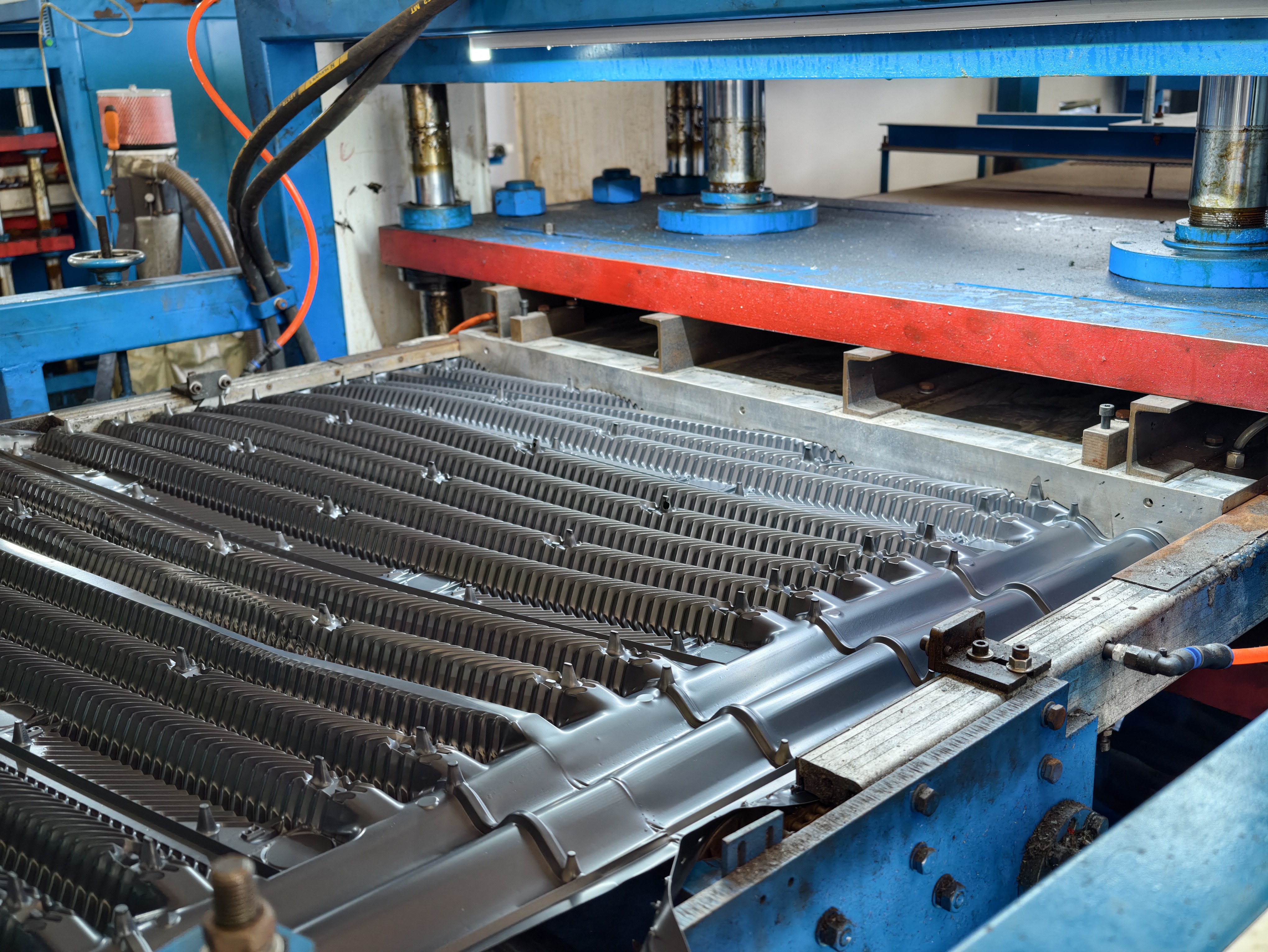
What Are PVC Cooling Tower Fills?
PVC cooling tower fills are heat transfer media made from polyvinyl chloride sheets. The sheets are normally formed into corrugated, wave-shaped, or other structured patterns and assembled into modules.
What Is the Main Purpose of Cooling Tower Fill?
The primary purpose of cooling tower fill is to increase the effective contact area between circulating water and air.
Without fill media, water would tend to fall through the tower in relatively large streams or droplets. This would provide a limited air-water interface.
A properly designed cooling tower filler changes the way water travels through the tower.
It helps:
Spread water across a larger surface
Break large water streams into thinner films
Increase air-water contact
Promote evaporation
Improve heat transfer
Make better use of the tower's internal volume
Why Is PVC Commonly Used for Cooling Tower Fill?
PVC offers a combination of properties that makes it practical for many cooling tower applications.
Typical advantages include:
Lightweight construction
Corrosion resistance
Good formability
Consistent surface geometry
Easy modular installation
Good water distribution characteristics
Cost-effective manufacturing
PVC can be used in many HVAC and industrial cooling applications when the material is compatible with the operating temperature and water chemistry.
How Do PVC Cooling Tower Fills Improve Heat Transfer?
The main mechanism is increasing the effective air-water interface inside the tower.
How Does PVC Fill Increase Air-Water Contact?
Heat rejection in an evaporative cooling tower depends heavily on the interaction between water and air.
PVC fill creates a structured surface over which hot water flows. Instead of allowing water to fall rapidly through the tower, the fill encourages the water to spread across numerous surfaces.
This creates a much larger interface between the two phases.
Why Does a Larger Contact Area Improve Cooling?
A larger contact area gives more water surface an opportunity to interact with moving air.
This improves the conditions for:
Heat transfer
Mass transfer
Evaporation
Moisture removal
As a result, more heat can be rejected from the circulating water during its passage through the fill section.
How Does Thin Water Film Formation Improve Cooling?
Thin water film formation is one of the most important functions of structured PVC fill.
Why Is a Thin Water Film Important?
When hot water spreads over the fill surface, it forms relatively thin films rather than remaining in large streams.
The thinner water layer provides a greater effective surface area relative to the amount of water being cooled.
Air flowing across the surface can then interact more effectively with the water.
How Does Evaporation Remove Heat?
Cooling tower operation relies heavily on evaporative heat transfer.
As a small portion of circulating water evaporates, it absorbs latent heat from the remaining water. The heated, moisture-laden air then leaves the cooling tower.
The basic process is:
Hot water → PVC fill → Thin water film → Air-water contact → Evaporation → Heat rejection → Cooler water
Why Is Evaporative Cooling So Effective?
Evaporation can remove a substantial amount of heat because phase change involves latent heat.
PVC fill does not create the cooling effect by itself. Instead, it provides the surface and flow structure that allows evaporation and air-water heat transfer to occur more effectively.
How Does PVC Fill Geometry Affect Heat Transfer?
The physical geometry of cooling tower fill has a major influence on thermal performance.
What Is the Role of Flute Design?
PVC fill sheets commonly contain angled or corrugated channels known as flutes.
The flute pattern influences:
Water spreading
Airflow direction
Contact area
Turbulence
Pressure drop
Fouling tendency
Different applications may require different flute configurations.
Does Higher Surface Area Always Mean Better Cooling?
Not necessarily.
Increasing surface area can improve the potential for air-water contact, but an overly restrictive fill design may also increase pressure drop.
A good cooling tower fill design must balance:
Heat transfer area + airflow + water distribution + pressure drop + fouling resistance
Why Is Pressure Drop Important?
Cooling tower fans need to move air through the fill.
If the fill creates excessive airflow resistance, fan energy consumption may increase. Therefore, thermal performance should always be considered together with hydraulic and aerodynamic characteristics.
How Does PVC Fill Improve Water Distribution?
Water distribution is another important factor affecting heat transfer.
Why Must Water Be Distributed Evenly?
Ideally, water should be distributed across as much of the fill area as practical.
Poor distribution can result in:
A well-designed PVC cooling tower fill helps redistribute water as it travels downward.
How Do Corrugated Sheets Redistribute Water?
The angled surfaces of PVC fill sheets encourage water to change direction as it moves through the fill.
This can promote:
Film formation
Surface wetting
Water mixing
Redistribution
What Happens If Water Distribution Is Poor?
Even high-performance fill cannot compensate fully for a severely defective water distribution system.
Clogged nozzles, damaged pipes, or improper spray patterns can reduce the amount of fill surface that is effectively wetted.
For this reason, nozzles and distribution systems should be inspected together with the fill.
How Does Airflow Affect PVC Cooling Tower Fill Performance?
Water alone is not enough to achieve efficient evaporative cooling. Adequate airflow is essential.
How Does Air Move Through the Fill?
Airflow depends on the cooling tower configuration.
In a counterflow cooling tower, air generally moves upward while water flows downward.
In a crossflow cooling tower, air generally moves horizontally while water falls vertically.
PVC fill must be designed and installed according to the intended airflow arrangement.
Why Is Air Distribution Important?
Uneven airflow can reduce the effective performance of the fill.
A suitable fill design provides controlled air passages while maintaining sufficient air-water contact.
Can Excessive Airflow Reduce Performance?
More airflow does not automatically mean better cooling.
If airflow is increased beyond the practical operating range, fan energy consumption can increase without producing proportional thermal benefits.
The goal is to achieve an appropriate balance between airflow, water flow, heat load, and fill characteristics.
How Do PVC Cooling Tower Fills Work in Counterflow Towers?
Counterflow cooling towers are widely used for industrial and HVAC applications.
What Happens in a Counterflow Cooling Tower?
In a counterflow configuration:
Hot water enters the upper portion of the tower.
Water flows downward through the fill.
Air enters from the lower portion.
Air travels upward through the fill.
PVC fill increases air-water contact.
Evaporation removes heat.
Cooler water collects in the basin.
Why Is Fill Design Important in Counterflow Towers?
The fill needs to provide sufficient contact area while maintaining reasonable airflow resistance.
Important design parameters include:
Fill height
Flute angle
Sheet thickness
Surface structure
Water loading
Air loading
Can Any PVC Fill Be Used in a Counterflow Tower?
No.
The fill must be compatible with the tower's airflow, water distribution, dimensions, and operating conditions.
How Do PVC Cooling Tower Fills Work in Crossflow Towers?
Crossflow cooling towers use a different air and water arrangement.
What Happens Inside a Crossflow Tower?
Warm water is distributed over the top of the fill and flows downward.
At the same time, air enters horizontally through the fill.
The PVC structure promotes water spreading while allowing air to contact the falling water.
Why Is Fill Orientation Important?
Correct installation ensures that the fill geometry works as intended.
Incorrect orientation can affect:
Water distribution
Airflow
Pressure drop
Heat transfer
Fill stability
Should Replacement Fill Match the Existing Configuration?
In most replacement projects, compatibility with the existing tower is essential.
Before ordering, confirm the fill type, dimensions, orientation, and support arrangement.
How Does PVC Fill Surface Area Affect Cooling Efficiency?
Surface area is an important design parameter, but it should not be considered independently.
What Is Effective Surface Area?
Effective surface area refers to the portion of the fill surface that is actually available for air-water interaction.
A theoretical surface area may be much higher than the effective area if parts of the fill are:
Why Is Wetting Performance Important?
A fill surface only contributes effectively to cooling when water is distributed across it.
This is why water distribution and fill geometry work together.
How Can Better Wetting Improve Heat Transfer?
Better wetting can increase the active air-water interface and reduce unused fill surfaces.
This allows the cooling tower to make better use of the available fill volume.
How Does Water Quality Affect PVC Cooling Tower Fill Performance?
Water quality can have a significant effect on long-term thermal performance.
What Causes Fouling on Cooling Tower Fill?
Common sources include:
Mineral scale
Algae
Sludge
Biofilm
Suspended solids
Dirt
Corrosion products
These deposits can accumulate on PVC surfaces and inside fill channels.
Why Does Fouling Reduce Heat Transfer?
Fouling can:
Reduce effective surface area
Restrict airflow
Interfere with water distribution
Increase pressure drop
Increase cleaning requirements
Can Anti-Clog PVC Fill Help?
For applications with higher suspended solids, an anti-clog or low-clogging fill design may be considered.
More open flow passages can help reduce the tendency of solids to accumulate rapidly.
However, anti-clog fill should not be regarded as maintenance-free. Proper filtration and water treatment remain important.
Is PVC Cooling Tower Fill Suitable for Industrial Applications?
PVC fill can be suitable for many industrial cooling systems when the operating conditions fall within the appropriate range for the material and fill design.
Which Industries Use PVC Cooling Tower Fill?
Typical applications include:
What Makes Industrial Applications Different?
Industrial cooling systems may experience:
Higher heat loads
Higher water temperatures
More suspended solids
Greater chemical exposure
More demanding operating schedules
Does Every Industrial Tower Need the Same Fill?
No.
Fill selection should be based on the actual water quality, temperature, airflow, water loading, and tower configuration.
What Are the Advantages of PVC Cooling Tower Fills?
When properly selected, PVC fill offers several practical advantages.
What Are the Main Thermal Advantages?
PVC cooling tower fills can help:
What Are the Operational Advantages?
PVC fill is also attractive because of its:
Can PVC Fill Help Reduce Cooling Tower Size?
Because fill increases the effective air-water contact area, it allows cooling towers to achieve significant heat transfer within a relatively compact volume.
However, actual tower sizing depends on the complete thermal design.
How Does PVC Fill Thickness Affect Performance?
Fill sheet thickness affects mechanical properties and should be selected according to the application.
Why Does Fill Thickness Matter?
Appropriate thickness can help provide:
However, thickness alone does not determine cooling performance.
Is Thicker PVC Fill Always Better?
No.
A thicker sheet may provide additional mechanical strength, but the final performance depends on the complete fill design, including surface geometry and airflow characteristics.
What Should Buyers Evaluate Instead?
Buyers should consider the complete specification:
How Should PVC Cooling Tower Fill Be Maintained?
Proper maintenance is essential for preserving heat transfer performance.
How Often Should PVC Fill Be Inspected?
Inspection frequency depends on the operating environment.
More frequent inspections may be appropriate for towers exposed to:
What Should Be Checked?
Inspect the fill for:
Scale
Algae
Sludge
Cracks
Deformation
Brittle sheets
Blocked passages
Collapsed modules
Why Should Water Treatment Be Monitored?
Water treatment helps control the conditions that cause scaling, corrosion, and biological fouling.
A well-maintained water treatment program can help preserve the fill's effective heat transfer area.
When Should PVC Cooling Tower Fill Be Replaced?
PVC fill should not necessarily be replaced according to a fixed calendar schedule.
What Are the Main Signs of Fill Replacement?
Replacement may be necessary when the fill has:
Can Cleaning Restore Old PVC Fill?
Sometimes.
If the fill remains structurally sound, cleaning may remove deposits and restore flow passages.
However, cleaning cannot restore severely cracked, brittle, or permanently deformed PVC sheets.
Should Cooling Tower Fill Be Replaced All at Once?
The answer depends on the tower design and fill condition.
Some systems may allow individual sections or modules to be replaced, while others may benefit from complete fill replacement for consistent performance.
How Should You Choose PVC Cooling Tower Fills?
Selecting the right product requires more than matching the dimensions of the existing fill.
Which Specifications Should Be Compared?
Before purchasing, consider:
Why Is Application-Specific Selection Important?
A fill designed for clean HVAC water may not perform well in a process cooling system with high suspended solids.
Likewise, a fill designed for standard temperatures may not be suitable for high-temperature industrial applications.
Can a Cooling Tower Filler Manufacturer Provide Customized Fill?
Many manufacturers can supply customized fill modules based on existing tower dimensions and operating requirements.
Customization may include:
Fill length
Fill width
Fill height
Sheet thickness
Flute configuration
Module arrangement
Accurate measurements and operating data should be provided before production.
How Can PVC Cooling Tower Fill Improve Long-Term Cooling Tower Efficiency?
Good fill selection is only the beginning.
What Practices Help Maintain Heat Transfer Performance?
A complete strategy should include:
Proper fill selection
Correct installation
Effective water distribution
Regular inspection
Appropriate water treatment
Periodic cleaning
Performance monitoring
Timely replacement
Why Is Preventive Maintenance Important?
Even high-quality PVC cooling tower fills can lose performance when deposits accumulate or the fill becomes physically damaged.
Preventive maintenance helps identify problems before they cause major thermal performance losses.
What Should Be Monitored During Operation?
Useful performance indicators include:
Hot-water temperature
Cold-water temperature
Cooling range
Approach
Water flow
Airflow
Fan operating condition
Pressure drop
Tracking these parameters over time can help identify gradual changes in cooling tower performance.
PVC Cooling Tower Fills vs. Other Fill Materials
PVC is not the only material used for cooling tower fill.
How Does PVC Compare With PP Fill?
PVC and PP are both common plastic materials for cooling tower fill.
The appropriate choice depends on:
Is PVC Always the Best Material?
Material selection should be application-specific.
For conventional cooling tower conditions, PVC can provide a practical combination of performance and cost. More demanding environments may require alternative materials or specialized designs.
Why Should Buyers Look Beyond Material Name?
Two PVC fills can have different performance characteristics because geometry, manufacturing quality, sheet thickness, and surface design can vary.
The complete technical specification is therefore more important than the material name alone.
What Should You Know Before Buying PVC Cooling Tower Fill?
Before ordering replacement or new fill media, collect as much technical information as possible.
What Information Should Be Provided to a Supplier?
Useful information includes:
Why Are Existing Fill Dimensions Important?
Accurate dimensions help ensure that the replacement fill fits the existing support structure and water distribution system.
What Happens If Replacement Fill Does Not Fit Properly?
Incorrect dimensions can result in:
Installation gaps
Excessive compression
Unsupported sections
Air bypass
Water bypass
Reduced heat transfer
For replacement projects, precise measurement is therefore essential.
Conclusion: How Do PVC Cooling Tower Fills Improve Heat Transfer?
PVC cooling tower fills improve heat transfer primarily by increasing the effective contact area between circulating water and air. Their structured surfaces distribute water into thin films while creating controlled passages for airflow. This promotes evaporation, improves air-water interaction, and allows the cooling tower to reject heat more effectively within a compact space.
However, thermal performance depends on more than fill surface area. Fill geometry, water distribution, airflow, operating temperature, water quality, fouling resistance, and maintenance all influence the final result.
For industrial cooling towers, the right PVC cooling tower filler should therefore be selected according to the actual application rather than simply choosing the highest-surface-area product or the lowest-cost option.
With suitable fill design, proper installation, effective water treatment, regular inspection, and timely cleaning or replacement, PVC cooling tower fills can support reliable heat transfer and stable long-term cooling tower performance.


