Plastic Cooling Tower Water Float for Automatic Makeup Water Control
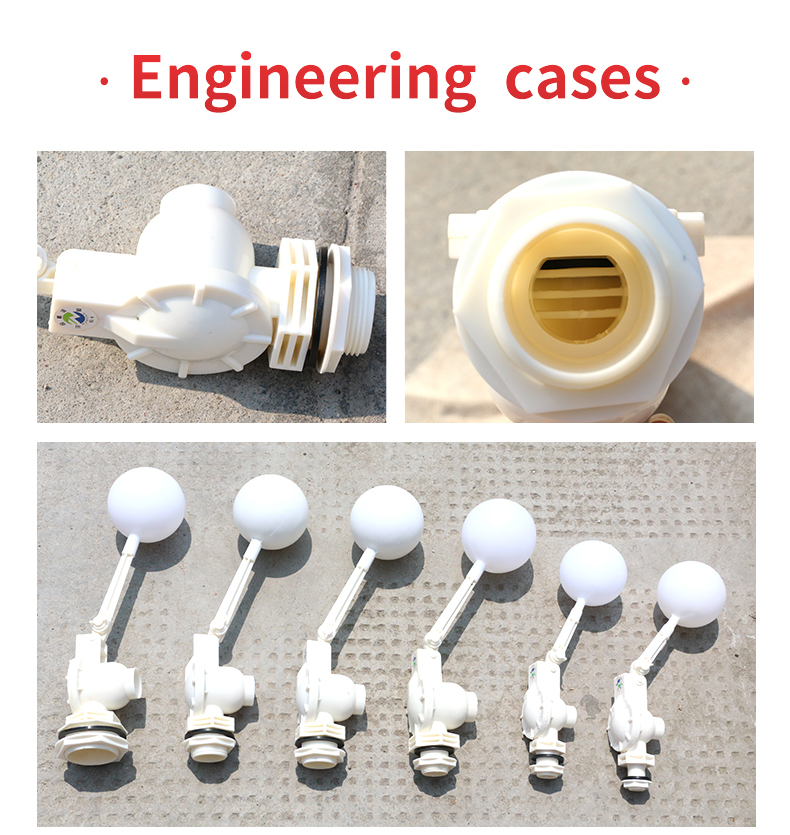
Plastic Cooling Tower Water Float is a reliable float component designed for automatic water-level control in open-circuit and industrial cooling tower systems. It works with a mechanical float valve to regulate cooling tower makeup water, helping maintain a stable basin water level during normal operation.
Made from durable plastic materials suitable for continuous contact with water, this cooling tower water float offers good corrosion resistance, lightweight construction, and dependable buoyancy. It can be used as a replacement component for worn, damaged, or aging cooling tower float assemblies.
For cooling tower operators, HVAC contractors, maintenance companies, and industrial equipment distributors, selecting the correct cooling tower float, water float valve, and makeup water control assembly is important for maintaining efficient tower operation.
Product Overview
A cooling tower continuously loses water through evaporation, drift, blowdown, and other operating processes. If the basin water level falls too low, the circulation system may not operate correctly and pumps can be exposed to undesirable operating conditions.
The plastic cooling tower water float provides a simple mechanical solution. As the basin water level changes, the float moves accordingly and activates the connected float valve. When the water level drops, the valve opens to introduce makeup water. When the water reaches the predetermined level, the float rises and closes the valve.
This automatic process helps maintain the cooling tower basin at an appropriate operating level without requiring electrical controls.
Key Features
Durable plastic float construction
Lightweight and easy to install
Good resistance to water and corrosion
Reliable buoyancy
Designed for automatic water-level control
Suitable for cooling tower makeup-water systems
Replacement-friendly design
Compatible with various mechanical float valve assemblies
Suitable for industrial and commercial cooling towers
Low maintenance requirements
Cooling Tower Water Float Specifications
The exact specification of a cooling tower float should be selected according to the float valve, makeup-water system, cooling tower basin, and operating conditions.
Typical specifications may include:
| Item | Description |
| Product | Plastic Cooling Tower Water Float |
| Application | Cooling Tower Makeup Water Control |
| Material | Engineering Plastic / Durable Polymer |
| Function | Water-Level Detection and Valve Actuation |
| Installation | Cooling Tower Basin / Makeup Water Line |
| Operation | Mechanical Float Control |
| Medium | Water |
| Features | Lightweight, Corrosion Resistant, Buoyant |
| Compatibility | Various Cooling Tower Float Valve Assemblies |
| Application | HVAC, Industrial Cooling, Process Cooling |
Note: Dimensions, connection configurations, float size, and other specifications should be confirmed before ordering to ensure proper compatibility with the existing cooling tower water-level control system.
What Is a Cooling Tower Water Float?
A cooling tower water float is a buoyant component used to monitor and control the water level inside a cooling tower basin.
It is normally connected to a mechanical float valve through an arm or linkage. The float moves vertically or through an arc as the water level changes. This movement controls the opening and closing of the makeup-water valve.
The basic operating principle is simple:
Low water level → Float drops → Valve opens → Makeup water enters
Correct water level → Float rises → Valve closes → Makeup water stops
This automatic process reduces the need for manual basin-level adjustment.
How Does a Cooling Tower Float Valve Work?
A cooling tower float valve uses the buoyancy of the float to mechanically control water flow.
When cooling tower operation causes water in the basin to decrease, the float drops. The connected arm moves the valve toward the open position. Fresh makeup water then flows into the basin.
As the basin fills, the float rises. Once the preset water level is reached, the valve closes or significantly restricts the makeup-water flow.
The process repeats automatically during tower operation.
Why Automatic Water-Level Control Matters
Maintaining the correct cooling tower basin level is important because both excessively low and excessively high water levels can create operating problems.
A low water level may contribute to:
Pump operating problems
Inadequate water circulation
Air entering the pump suction
Reduced cooling performance
Increased risk of equipment damage
An excessively high water level can cause:
Unnecessary water consumption
Basin overflow
Increased chemical and treatment costs
Water wastage
Potential surrounding-area moisture problems
A properly adjusted cooling tower makeup water float valve helps keep the basin within the desired operating range.
Plastic Cooling Tower Float vs. Metal Float
Plastic floats are widely used in water-level control applications because they are lightweight and resistant to many forms of corrosion.
Compared with conventional metal components, a plastic cooling tower float can provide several advantages.
Corrosion Resistance
Cooling tower water may contain dissolved minerals, treatment chemicals, and contaminants. Over time, these conditions can contribute to corrosion of unsuitable metal components.
A properly selected plastic float can provide improved resistance to corrosion and water-related degradation.
Lightweight Construction
Plastic floats are lightweight, making them easier to install and reducing the mechanical load on the float arm and valve assembly.
Reliable Buoyancy
A properly manufactured hollow or buoyant plastic float provides the displacement necessary to operate the connected valve mechanism.
Easy Replacement
If an existing float becomes damaged, cracked, waterlogged, or loses buoyancy, a replacement plastic cooling tower float can restore the automatic water-level control system.
Applications of Plastic Cooling Tower Water Floats
This cooling tower water float can be used in a variety of water-level control applications.
Industrial Cooling Towers
Industrial cooling towers often operate continuously and experience significant evaporation losses. Automatic makeup-water control helps maintain a consistent basin level.
HVAC Cooling Towers
Commercial HVAC systems use cooling towers to reject heat from condenser-water systems. A float valve can automatically compensate for normal water losses.
Power and Process Cooling
Industrial process cooling systems may require stable water levels for reliable operation. A mechanical float system provides a straightforward method of controlling makeup water.
Commercial Cooling Systems
Hotels, commercial buildings, hospitals, office complexes, and other facilities can use cooling tower float assemblies as part of their basin water-level control systems.
Cooling Tower Replacement Parts
The product can also be supplied as a replacement component for maintenance and repair projects where an existing float has become damaged or worn.
Cooling Tower Makeup Water Control
Makeup water is required because cooling towers naturally lose water during operation.
The main sources of water loss include:
Evaporation
Drift
Blowdown
System leakage or maintenance losses
The float valve system compensates for a portion of these losses by automatically introducing fresh water into the basin.
A correctly sized cooling tower makeup water float valve can therefore contribute to stable tower operation and reduce the need for manual water-level adjustment.
Benefits of Using a Plastic Cooling Tower Water Float
1. Automatic Water-Level Regulation
The float allows the makeup-water valve to respond automatically to changes in basin water level.
2. Reduced Manual Maintenance
Operators do not need to continuously monitor and manually open or close the makeup-water supply.
3. Corrosion Resistance
Plastic construction can provide excellent resistance to many water-based environments.
4. Lightweight Design
The lightweight structure simplifies handling and installation.
5. Low Operating Cost
The mechanical design does not require a separate electrical power supply for basic float operation.
6. Simple Construction
A mechanical float assembly has relatively few moving components, making inspection and maintenance straightforward.
7. Suitable for Replacement Applications
The float can be used when repairing existing cooling tower makeup-water control assemblies.
Cooling Tower Float Valve Replacement
A damaged float can prevent a cooling tower makeup-water valve from operating correctly.
Common signs that a float may require replacement include:
Basin water level is too low
Basin water level is too high
Makeup water continuously flows
Makeup water does not enter the basin
Float does not move freely
Float has visible cracks
Float becomes waterlogged
Float loses buoyancy
Valve does not fully open or close
When replacing the component, the float should be checked together with the valve, arm, linkage, mounting hardware, and water connection.
Replacing only the float may not solve the problem if the valve itself is worn or damaged.
How to Install a Cooling Tower Water Float
Installation should be performed by qualified maintenance personnel and should follow the cooling tower manufacturer's requirements.
Step 1: Shut Off the Makeup Water
Close the makeup-water supply before removing the existing float or valve components.
Step 2: Inspect the Existing Assembly
Check the float, arm, valve, fittings, mounting bracket, and connection for signs of corrosion, wear, blockage, or mechanical damage.
Step 3: Remove the Damaged Float
Disconnect the existing float from the arm or linkage according to the configuration of the assembly.
Step 4: Install the Replacement Float
Secure the new plastic cooling tower float firmly to the float arm or connecting mechanism.
Step 5: Check Float Movement
Move the float through its operating range and confirm that it does not contact the basin wall, piping, fill, or other components.
Step 6: Adjust the Water Level
Adjust the float arm or valve mechanism so that the valve closes at the required operating water level.
Step 7: Restore the Water Supply
Open the makeup-water supply gradually and observe the float and valve operation.
Step 8: Test the System
Allow the basin level to rise and fall sufficiently to verify that the valve opens and closes correctly.
Cooling Tower Float Maintenance
Although a plastic float requires relatively little maintenance, regular inspection is recommended as part of a cooling tower maintenance program.
Inspect the float for:
Cracks
Deformation
Water absorption
Loss of buoyancy
Surface deterioration
Chemical damage
Loose connections
Restricted movement
The float arm should also move freely without excessive friction.
The valve should be inspected for:
Sediment buildup
Mineral deposits
Seal damage
Valve-seat wear
Leakage
Restricted flow
Regular inspection can identify problems before they result in unstable basin water levels.
Common Cooling Tower Float Problems
Float Valve Does Not Close
Possible causes include:
Float Valve Does Not Open
Possible causes include:
Float arm stuck
Incorrect adjustment
Mechanical obstruction
Damaged valve mechanism
Incorrect installation
Cooling Tower Basin Overflows
An overflowing basin may be caused by a float valve that fails to close completely or an incorrectly adjusted float.
Check the float position, valve mechanism, water pressure, and valve seat.
Basin Water Level Is Too Low
If the valve does not open sufficiently when the water level drops, inspect the float adjustment and valve operation.
A blocked makeup-water line can also restrict flow.
How to Choose the Right Cooling Tower Water Float
Before ordering a replacement float, check the following specifications.
Float Dimensions
Confirm the physical size and mounting configuration of the replacement float.
Float Material
Choose a material suitable for continuous exposure to the cooling tower water and treatment environment.
Valve Compatibility
The float must work correctly with the existing float valve and connecting arm.
Operating Water Level
The available adjustment range should allow the desired basin operating level to be achieved.
Water Pressure
The float valve must be suitable for the pressure of the makeup-water supply.
Connection Size
Verify the inlet connection and valve size before purchasing a complete float valve assembly.
Cooling Tower Model
For replacement applications, provide the cooling tower model, existing part number, dimensions, or photographs whenever possible.
Cooling Tower Float Valve Manufacturer and Supplier
CoolingTowerPart.com supplies cooling tower replacement parts and components for industrial and commercial cooling tower systems.
Our product range includes cooling tower:
We can help customers identify replacement components based on part numbers, dimensions, photographs, cooling tower models, or existing component information.
For OEM replacement and aftermarket applications, confirming the required dimensions and operating conditions before ordering is recommended.
Why Choose CoolingTowerPart.com?
Selecting the correct replacement component is essential for maintaining cooling tower performance.
CoolingTowerPart.com focuses on supplying cooling tower components for maintenance, refurbishment, replacement, and new equipment applications.
Replacement Compatibility
We can assist with identifying compatible replacement components for different cooling tower configurations.
Customization
Where standard dimensions do not meet project requirements, customized components may be available depending on the product.
OEM and Aftermarket Applications
Products can be considered for both OEM-related requirements and aftermarket cooling tower maintenance.
Technical Support
Customers can provide photographs, drawings, dimensions, or existing part information to help determine the appropriate product.
Global Supply
Cooling tower components can be supplied for industrial customers, contractors, distributors, and maintenance projects in different markets.
Frequently Asked Questions
What is a cooling tower water float?
A cooling tower water float is a buoyant component connected to a mechanical float valve. It detects changes in the cooling tower basin water level and helps control the flow of makeup water.
What does a cooling tower float valve do?
A cooling tower float valve automatically adds makeup water when the basin level falls below the preset level and shuts off the supply when the desired water level is restored.
Why use a plastic float in a cooling tower?
Plastic floats are lightweight, buoyant, and generally resistant to corrosion and water exposure, making them suitable for many cooling tower water-level control applications.
How often should a cooling tower float be inspected?
The float should be inspected during routine cooling tower maintenance. More frequent inspection may be appropriate for towers operating in heavily contaminated or chemically aggressive water conditions.
Why is my cooling tower float valve continuously running?
Continuous water flow can result from a damaged float, incorrect float adjustment, debris in the valve, a worn valve seat, excessive water pressure, or a mechanical obstruction.
Can I replace only the cooling tower float?
In many applications, the float can be replaced separately. However, the valve, float arm, and connecting hardware should also be inspected to ensure the complete assembly operates correctly.
How do I choose a replacement cooling tower float?
Compare the existing float's dimensions, material, mounting arrangement, valve compatibility, operating water level, and cooling tower application. Providing photographs and dimensions can help confirm compatibility.
Does a cooling tower float valve require electricity?
A conventional mechanical float valve does not require electrical power. It uses the buoyancy of the float and mechanical movement to control the makeup-water valve.
Can the float valve control cooling tower makeup water automatically?
Yes. A properly installed mechanical float valve can automatically regulate makeup-water flow according to changes in the cooling tower basin water level.
Can you supply cooling tower float valve replacement parts?
CoolingTowerPart.com can supply cooling tower water-level control components and other cooling tower replacement parts. Customers should provide the required dimensions, part number, cooling tower model, or photographs to help determine compatibility.
Order a Plastic Cooling Tower Water Float
A reliable water-level control system is an important part of cooling tower operation. The Plastic Cooling Tower Water Float provides a simple and effective solution for mechanical makeup-water control while offering lightweight construction and resistance to water-related corrosion.
Whether you need a replacement float for an existing cooling tower, components for a maintenance project, or cooling tower spare parts for industrial distribution, choosing the correct float size and valve configuration is essential.


