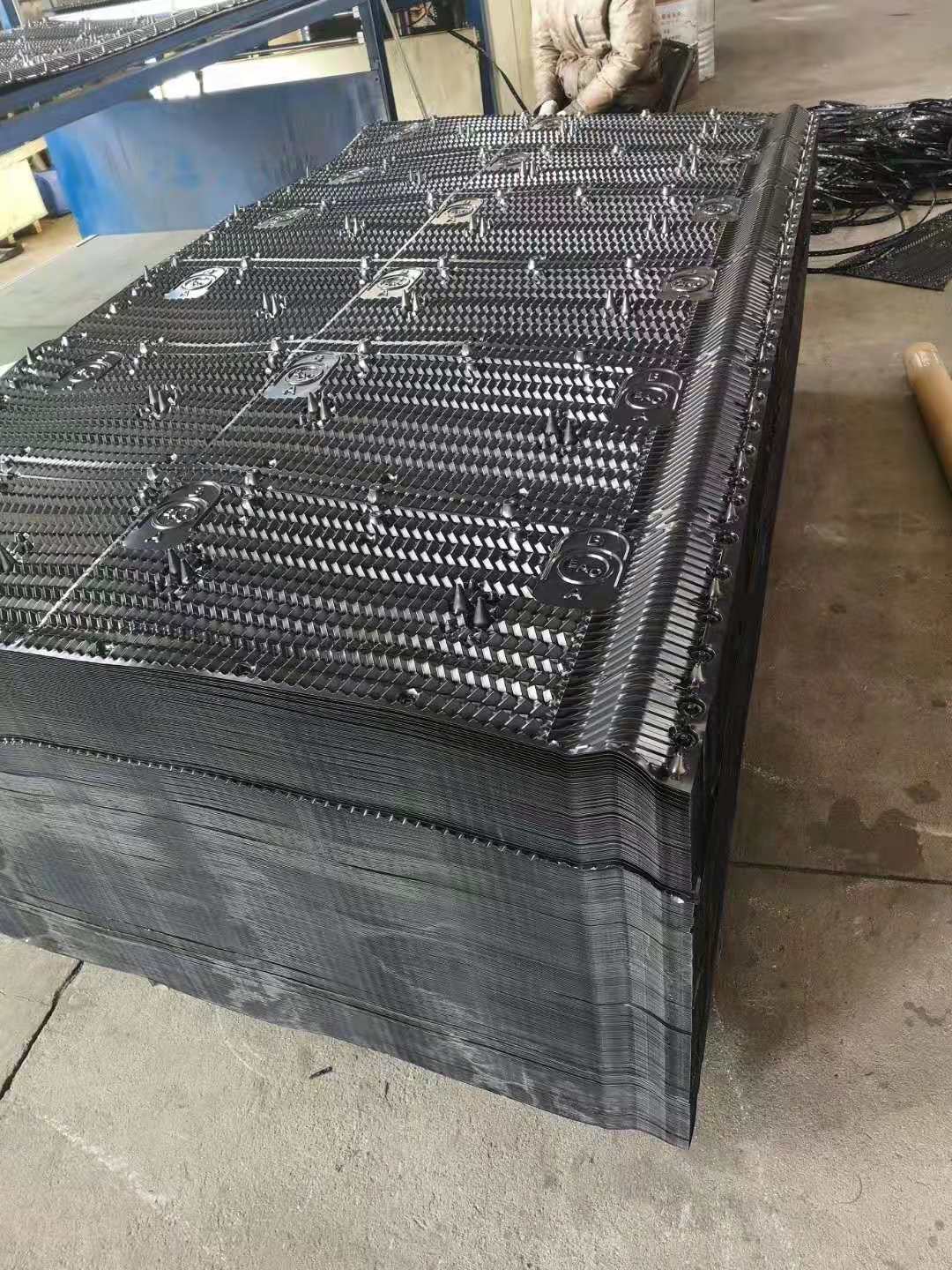
BAC Fill Customized for Efficient Cooling Tower Performance
Cooling tower fill plays a critical role in determining how effectively a cooling tower transfers heat from circulating water to the atmosphere. When standard fill does not perfectly match the tower design, operating conditions, or water quality, a BAC fill customized solution can provide a more practical and efficient alternative.
Customized BAC cooling tower fill can be designed according to tower dimensions, airflow conditions, water distribution, thermal requirements, and installation constraints. Instead of selecting a generic cooling tower filler based only on size, operators can choose a fill configuration that better matches the actual cooling system.
This guide explains what BAC fill customized solutions are, why customization matters, what factors should be considered, and how to select the right cooling tower fill for industrial and commercial applications.
What Is BAC Fill Customized?
BAC fill customized refers to cooling tower fill media manufactured or configured to meet the specific requirements of a BAC-type cooling tower or a particular cooling tower application.
The term can cover several customization aspects, including:
Fill sheet dimensions
Fill block dimensions
Sheet thickness
Flute or corrugation design
Material selection
Bonding method
Block height and width
Airflow characteristics
Water distribution requirements
Installation configuration
A customized BAC cooling tower fill is especially useful when replacement fill needs to fit an existing tower without major modifications.
BAC cooling tower fill parameter
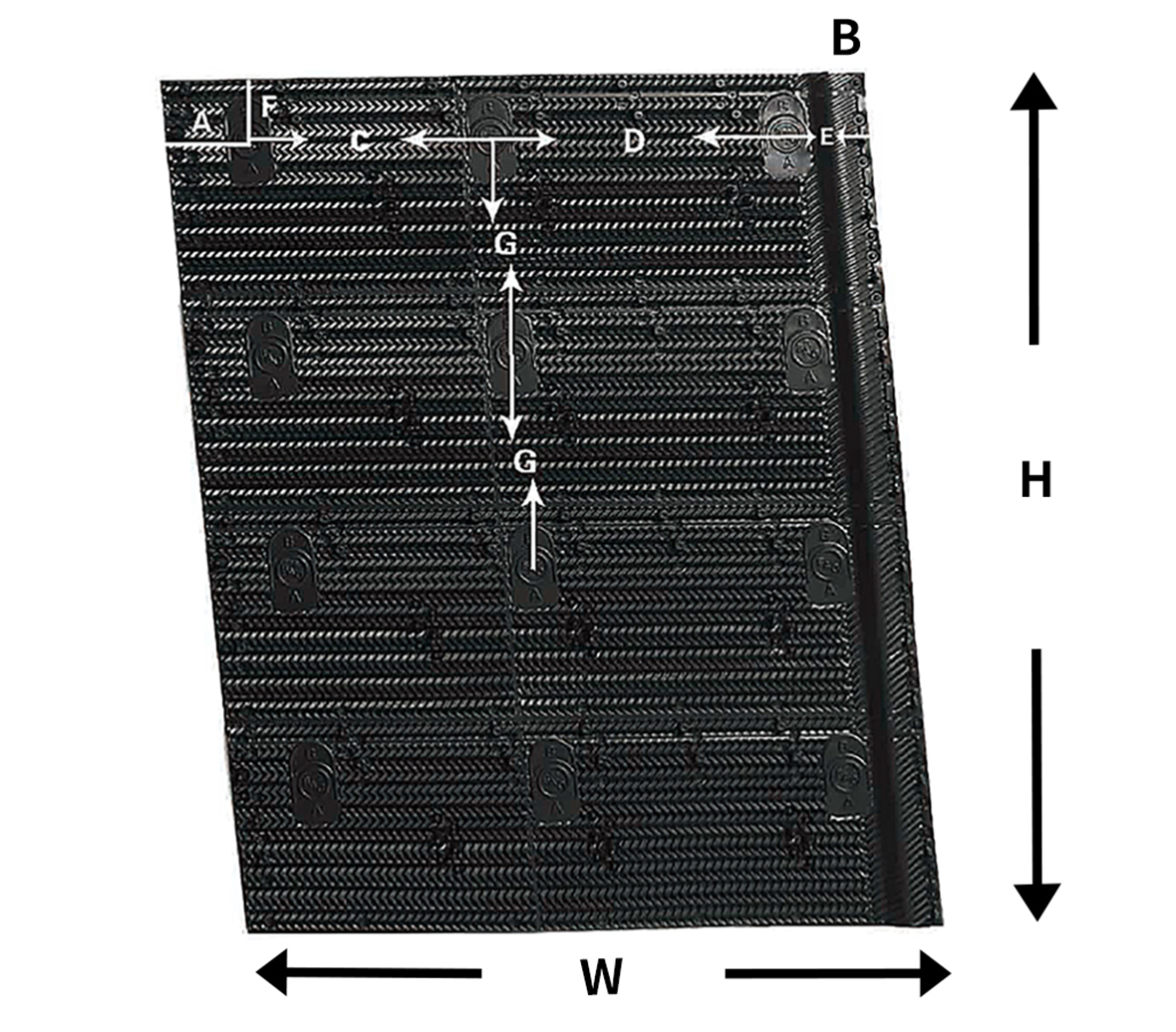
| W | H | A | B | C | D | E | F | G | Gap | Angle |
| 1330 | G multiple | 160 | 135 | 455 | 560 | 155 | 75 | 407 | 16/19 | 5.5° |
| 1350 | G multiple | 160 | 135 | 455 | 560 | 155 | 75 | 407 | 19 | 5.5° |
| 1380 | G multiple | 210 | 135 | 455 | 560 | 155 | 75 | 407 | 16/19 | 5.5° |
Why Is Customized Cooling Tower Fill Important?
Cooling towers operate under different thermal loads, water conditions, airflow rates, and mechanical configurations. A standard fill block may fit one application well but perform poorly in another.
A BAC fill customized solution can help address specific requirements such as:
Limited installation space
Unusual fill dimensions
High heat loads
Restricted airflow
Difficult water quality
Replacement of discontinued fill
Tower refurbishment
Different water distribution systems
Does Customization Improve Cooling Efficiency?
Customization itself does not automatically guarantee higher efficiency. The benefit comes from matching the cooling tower filler to the tower's actual operating conditions.
When fill geometry, material, thickness, block size, and airflow requirements are properly matched, the fill can provide effective water distribution and air-water contact while maintaining acceptable pressure drop.
How Does BAC Cooling Tower Fill Improve Heat Transfer?
The primary purpose of cooling tower fill is to increase the contact area between hot circulating water and moving air.
When water enters the fill section, the fill surface encourages the water to spread into a thin film. Air passes across or through the wetted surfaces, allowing heat and a portion of the water's sensible heat to be transferred to the atmosphere.
How Does Film Fill Work?
Film fill creates a relatively large wetted surface area within a compact volume.
As water flows over the fill:
Water spreads across the fill surface.
Air contacts the wetted surface.
Heat moves from the water into the air.
A small amount of water evaporates.
Evaporation removes additional heat.
Cooled water collects in the basin.
Why Is Surface Area Important?
A larger effective contact area can increase the opportunity for heat transfer. However, maximizing surface area alone is not enough.
A good fill design must balance:
Heat transfer area
Airflow resistance
Water distribution
Fouling resistance
Structural strength
Maintenance requirements
This is why selecting a suitable customized cooling tower fill requires more than simply choosing the largest possible fill surface area.
What Factors Should Be Customized for BAC Fill?
A successful BAC fill customized project should begin with a clear understanding of the existing cooling tower.
Several parameters may need to be customized or verified before production.
1. Fill Dimensions
The dimensions of the fill block are among the most important considerations.
Typical measurements include:
A replacement fill block should fit the existing fill support structure without creating excessive gaps or installation problems.
Why Are Accurate Measurements Necessary?
Even a small dimensional difference can make installation difficult. Incorrect dimensions may result in:
Therefore, customers should provide accurate drawings, photographs, or measurements whenever possible.
2. Fill Material
The material should be selected according to temperature, water quality, chemical exposure, and operating environment.
PVC is widely used for many cooling tower fill applications because it offers a combination of:
PP may be preferred in applications involving higher temperatures or particular chemical conditions.
PVC or PP: Which Is Better for BAC Fill?
There is no universal answer.
PVC can be a practical choice for many standard cooling tower applications, while PP may be more suitable where higher temperature resistance or specific chemical compatibility is required.
The final material selection should consider the actual operating temperature and water chemistry rather than price alone.
3. Fill Sheet Thickness
Fill thickness affects mechanical strength, weight, thermal characteristics, and service life.
Thicker sheets may offer greater structural durability, while thinner sheets can reduce material consumption and weight.
The correct thickness depends on the application and the required service conditions.
4. Fill Flute Design
The flute or corrugation structure influences water spreading, air movement, contact area, and pressure drop.
Different flute configurations can provide different combinations of:
Heat transfer efficiency
Air resistance
Water distribution
Fouling resistance
A customized BAC cooling tower fill should therefore use a flute design appropriate for the tower's operating conditions.
How Do You Choose the Right BAC Fill Customized Solution?
Selecting the right customized fill should start with technical information rather than a product name alone.
What Information Should You Give a Cooling Tower Fill Supplier?
For an accurate recommendation, provide as much of the following information as possible:
Cooling tower model
Cooling tower manufacturer
Existing fill dimensions
Fill material
Fill block size
Fill height
Operating water temperature
Design water flow
Entering and leaving water temperature
Airflow information
Circulating water quality
Installation photographs
Existing fill drawings
Can Old Fill Be Used as a Reference?
Yes. Existing fill is often an excellent reference for a replacement project.
Photos and measurements can help a supplier identify the approximate fill geometry and determine whether a customized replacement is required.
However, the existing fill should also be evaluated for damage, scaling, biological growth, deformation, and clogging before copying its design.
What Are the Advantages of BAC Fill Customized Solutions?
Customized cooling tower fill can offer several advantages compared with generic replacement products.
Better Fit for Existing Cooling Towers
A custom fill block can be manufactured to match the available installation space.
This is particularly valuable for older cooling towers where original replacement parts may no longer be readily available.
Improved Water-Air Contact
The correct fill geometry can help distribute water over the available surface area and promote effective contact between water and air.
Reduced Installation Problems
Correct dimensions can simplify replacement and reduce the need for on-site cutting or modification.
More Flexible Material Selection
Customers can select suitable materials based on temperature and water chemistry instead of being restricted to a standard configuration.
Better Support for Tower Upgrades
Customized fill can also be considered when a cooling tower is being upgraded to increase capacity or improve thermal performance.
When Should You Consider Customized BAC Cooling Tower Fill?
Not every cooling tower requires a completely custom fill solution. However, customization becomes particularly useful in several situations.
When the Original Fill Is No Longer Available
Older cooling towers may use fill configurations that are difficult to source.
A customized replacement can reproduce the required dimensions and functional characteristics while adapting the fill to current manufacturing standards.
When Standard Fill Does Not Fit
If commercially available fill blocks do not match the tower's dimensions, customization can eliminate unnecessary installation modifications.
When Cooling Performance Has Declined
Reduced cooling performance may result from:
Fill clogging
Scaling
Biological growth
Broken fill sheets
Poor water distribution
Airflow restrictions
If cleaning cannot restore the original performance, replacement with an appropriate cooling tower filler may be necessary.
When Operating Conditions Have Changed
A cooling tower may be modified after years of operation.
For example, the plant may increase production and consequently increase the cooling load. In such cases, the original fill configuration may no longer provide the desired performance.
How Does Water Quality Affect Customized Cooling Tower Fill?
Water quality is one of the most important factors in fill selection.
Suspended solids, minerals, biological contaminants, and chemicals can accumulate on fill surfaces and reduce effective airflow and water distribution.
What Happens When Cooling Tower Fill Becomes Fouled?
Fouling can cause:
How Can Customized Fill Help?
For applications with relatively poor water quality, the fill design may need to prioritize fouling resistance and cleanability rather than maximum theoretical surface area.
This is especially important for industrial cooling towers operating with process water or challenging water chemistry.
What Is the Difference Between BAC Fill Replacement and BAC Fill Customized?
BAC fill replacement generally means replacing existing fill with a compatible product.
BAC fill customized goes one step further by adapting the fill configuration to specific requirements.
A replacement project may involve:
Existing dimensions → Compatible fill → Installation
A customized project may involve:
Tower data → Engineering assessment → Customized design → Production → Installation
Which Option Is Better?
If standard replacement fill matches the existing tower and operating conditions, a standard product may be sufficient.
If dimensions, materials, thermal requirements, or operating conditions are unusual, a customized solution can be more appropriate.
How Can Customized Fill Support Cooling Tower Efficiency?
The efficiency of a cooling tower depends on multiple components working together.
These include:
The fill is one part of the complete thermal system.
Why Should Fill Be Considered as Part of the Entire System?
Increasing fill surface area without considering airflow can create excessive resistance.
Likewise, selecting low-resistance fill without considering water distribution may reduce effective wetting.
Therefore, a good BAC fill customized solution should consider the relationship between fill, airflow, water flow, and tower capacity.
How Should BAC Fill Be Installed and Maintained?
Even a high-quality cooling tower filler requires proper installation and maintenance.
What Should Be Checked During Installation?
Before installing new fill, inspect:
Fill supports
Structural members
Water distribution pipes
Spray nozzles
Drift eliminators
Air inlet areas
Basin conditions
How Should Fill Blocks Be Positioned?
Fill blocks should be installed according to the intended orientation and support configuration.
Avoid unnecessary gaps that could allow air bypass.
At the same time, the fill should not be forced into an installation space that causes deformation.
How Often Should Cooling Tower Fill Be Inspected?
Inspection frequency depends on water quality, operating conditions, seasonal usage, and tower design.
Routine inspection can identify early signs of:
Cracking
Deformation
Scaling
Clogging
Biological growth
Structural damage
Early intervention can extend the useful service life of the cooling tower fill.
What Makes a Reliable BAC Fill Customized Supplier?
Choosing the right supplier is just as important as selecting the fill material.
A reliable supplier should be able to provide more than a standard catalog product.
What Capabilities Should You Look For?
Consider suppliers that can provide:
Why Is Technical Communication Important?
Customized fill depends on accurate technical information.
A supplier should be able to review drawings, measurements, photographs, operating parameters, and application requirements before confirming the final configuration.
What Quality Checks Should Be Performed on BAC Cooling Tower Fill?
Quality control is important because fill is continuously exposed to water, air, temperature changes, and mechanical loading.
Dimensional Inspection
Check:
Sheet length
Sheet width
Block height
Thickness
Assembly dimensions
Material Inspection
The supplier should confirm that the selected material is appropriate for the specified operating conditions.
Structural Inspection
Fill blocks should be checked for:
Deformation
Cracks
Poor bonding
Damaged edges
Inconsistent assembly
Performance Considerations
Where required, customized fill can also be evaluated according to thermal and hydraulic requirements.
How Can Customized BAC Fill Reduce Long-Term Operating Costs?
The initial price of cooling tower fill is only one part of the total cost.
A better evaluation should include:
Purchase cost + transportation + installation + maintenance + energy impact + service life
A properly selected fill can help reduce unnecessary replacement and maintenance costs.
Can Better Fill Reduce Energy Consumption?
Potentially, yes.
If the fill provides effective heat transfer without excessive airflow resistance, the cooling tower may achieve its required thermal performance under appropriate operating conditions.
However, actual energy savings depend on the complete cooling tower system, including fan selection, motor efficiency, airflow, water flow, ambient conditions, and control strategy.
What Applications Use BAC Fill Customized Solutions?
Customized cooling tower fill can be used across many industries.
Industrial Cooling
Industrial plants often have demanding cooling requirements and may operate continuously.
Customized fill can be considered for:
Manufacturing plants
Chemical facilities
Steel plants
Power generation
Petrochemical facilities
Process cooling systems
HVAC and Commercial Cooling
Commercial cooling towers may also require replacement fill when existing fill becomes damaged or reaches the end of its service life.
Applications include:
Office buildings
Shopping centers
Hotels
Hospitals
District cooling systems
Data Center Cooling
Data centers require stable thermal management and reliable cooling equipment.
Customized cooling tower fill can be considered when maintaining or upgrading evaporative cooling systems.
What Is the Future of Customized Cooling Tower Fill?
Cooling tower requirements are becoming increasingly application-specific.
Operators are looking for solutions that balance:
Thermal performance
Energy efficiency
Service life
Water conservation
Maintenance requirements
Material compatibility
Installation flexibility
As a result, customized cooling tower fill is becoming an important option for replacement and refurbishment projects.
Will Customized Fill Replace Standard Fill?
Not necessarily.
Standard fill remains practical for many applications because it is readily available and cost-effective.
Customized fill is most valuable when standard products cannot adequately match the tower or when specific performance requirements need to be addressed.
Final Thoughts: Is BAC Fill Customized Right for Your Cooling Tower?
Choosing BAC fill customized can be a practical solution when a cooling tower requires precise dimensions, specific materials, replacement compatibility, or application-focused performance.
The right BAC cooling tower fill should not be selected based solely on price or appearance. Important factors include tower dimensions, water flow, airflow, operating temperature, water quality, fill geometry, material, and maintenance requirements.
Whether you are replacing damaged fill, upgrading an existing tower, or looking for an OEM solution, working with an experienced cooling tower filler supplier can help ensure that the final product matches your application.
A well-designed customized cooling tower fill can provide the combination of fit, water-air contact, durability, and maintainability needed for reliable cooling tower operation.