Cooling Tower Fan Gearbox Maintenance Tips & Common Failure Causes
Meta Description: Practical
cooling tower fan gearbox maintenance tips, oil change intervals, oil analysis guidance and the most common failure causes — lubrication breakdown, water contamination, misalignment, overload and seal leakage — plus repair-or-replace decision rules.
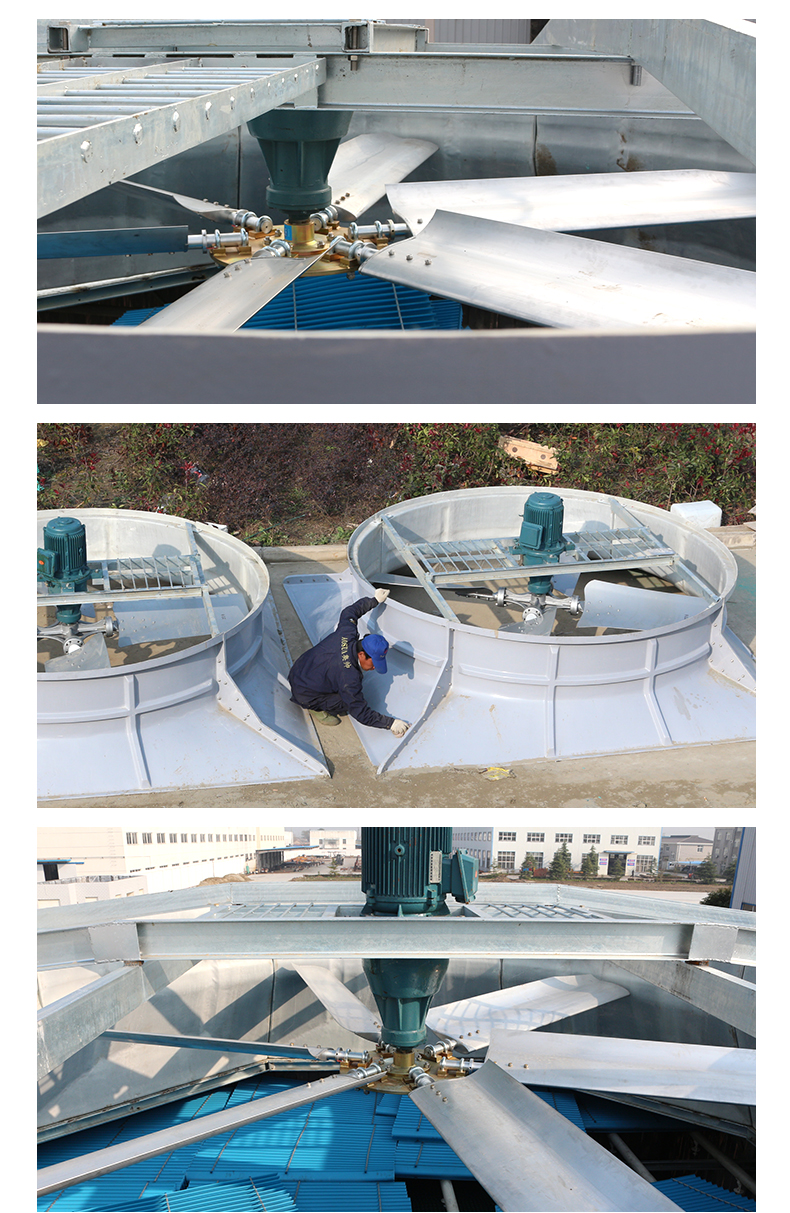
Of all the components that keep an induced-draft cooling tower running, the fan gearbox — also called the speed reducer or Geareducer — is the one that fails most expensively and most predictably. It sits between a motor spinning at roughly 1,800 rpm and a fan that needs only 100 to 200 rpm, multiplying torque along the way so that a reasonably sized motor can drive a fan 20 feet or more in diameter. It operates in permanent humidity, through hundreds of thermal cycles a year, often in coastal salt air, and it runs continuously whether anyone is watching or not. When it fails, the tower stops cooling, process temperatures climb, and a replacement unit may take months to arrive. This guide covers the failure modes that actually account for most cooling tower fan gearbox breakdowns, the early warning signs that precede them, and a maintenance program that can realistically be executed by a plant maintenance team.
Why the Fan Gearbox Fails Earlier Than Its Rating Suggests
What the Gearbox Actually Does
The unit is a right-angle gear reducer mounted on the fan deck, taking high-speed input from the motor and delivering low-speed, high-torque output to the fan shaft. Reduction ratios typically fall in the 9:1 to 18:1 range, in single or double reduction configurations, with power ratings from small HVAC units up to 500 hp and beyond on large industrial towers. Because the output shaft carries the fan directly, the gearbox also absorbs every aerodynamic and mechanical irregularity the fan produces — unbalance, ice load, windmilling, blade pitch error.
The Operating Environment Is the Real Design Condition
Continuous Saturation Humidity
A cooling tower gearbox lives inside a machine that exists to make water evaporate. Saturated air, drift mist and constant wet-dry cycling attack seals, breathers and painted surfaces. Any path that lets moist air into the housing eventually delivers liquid water into the oil.
Thermal Cycling and Condensation
Every shutdown cools the housing; every start reheats it. That daily breathing cycle pulls moist air in through the breather and deposits condensate on cold internal surfaces. This is one of the most overlooked water-entry routes, because no seal has to fail for it to happen.
Duty Cycle and Load Variation
Most tower fans run 24 hours a day for months. Add VFD-driven speed changes, seasonal re-pitching, windmilling during standby and occasional process upsets, and the gearset accumulates far more load reversals than a comparable industrial reducer in a sheltered plant.
Field experience puts realistic service life at roughly 12 to 15 years with proper maintenance. Units that receive no oil analysis and no alignment checks frequently fail in half that time.
The Most Common Cooling Tower Fan Gearbox Failure Causes
1. Incorrect, Degraded or Contaminated Lubricant
Lubrication problems are the single largest category of premature gearbox failure, and they are almost always preventable.
Wrong Viscosity Grade or Wrong Oil Family
Cooling tower reducers commonly specify ISO VG 220 or ISO VG 320 gear oil, and some OEMs explicitly require a non-EP mineral or synthetic oil for particular worm or helical stages. Filling with whatever is on the shelf changes film thickness, changes operating temperature, and can attack seal elastomers. Where a VFD runs the fan at reduced speed for long periods, oil may not reach upper bearings at all, and OEMs often specify a minimum input speed plus an auxiliary oil pump below that threshold.
Missed Oil Change Intervals
Common guidance calls for the first oil change within the first few hundred hours of new operation — often around 300 hours — to flush assembly debris and running-in wear particles, then regular changes afterward. Published service intervals for tower reducers typically run from 2,000 to 3,000 hours or every six months to a year, whichever comes first, with shorter intervals in hot or contaminated sites. Skipping these lets oxidation products, varnish and wear debris accumulate until the oil stops doing its job.
Incorrect Oil Level
Overfilling raises churning losses, foaming and internal pressure, which pushes oil out through seals and breathers. Underfilling starves the highest bearing and the fastest pinion first. Level should sit within the marked range on the sight glass — commonly described as roughly one-half to two-thirds of the gauge — checked with the fan stopped and the housing at ambient temperature.
Thermal Degradation and Varnish
Oil that runs hot oxidizes, thickens and deposits varnish on cooler surfaces. Varnish insulates gear teeth from the oil film and raises temperatures further, which accelerates more varnish. An oversized immersion heater left energized is a documented contributor to exactly this chain — thermal cracking, viscosity loss, polymerization and heavy particulate generation — and it can destroy a gearbox in a single season.
2. Water Ingress and Oil Emulsification
Water is the second classic killer, and cooling towers make water entry easy.
Emulsification and What It Does
When water is mechanically mixed into gear oil, the lubricant turns milky and loses load-carrying capacity. The oil film collapses at the tooth contact, corrosion begins on bearings and gear flanks, and rust particles become additional abrasive contamination. A milky sample is a stop-and-investigate condition, not something to monitor for another quarter.
Entry Routes: Seals, Breathers and Condensation
Worn input or output shaft seals admit splash directly. A blocked breather raises internal pressure and pushes oil out; a breather mounted too high, or extended haphazardly during a previous repair, becomes a condensate chimney that returns water into the housing on every cooldown. Gaskets at the housing split line and pipe fittings are additional entry points. Replacing the oil seal without fixing a blocked breather or a worn shaft journal guarantees the leak returns.
3. Particulate Contamination and Oil Starvation
Solid particles damage a gearbox in two ways: by abrasion at the contact, and by plugging the small orifices that deliver oil where it is needed.
Why Oil Pressure Protection Matters
In forced-lubrication units, a shaft-driven pump feeds oil through passages to spray nozzles and relief valves. Wear debris or sludge that plugs a nozzle deprives the high-speed pinion bearing of oil. Without lubrication, that bearing can overheat and seize within tens of minutes, shearing the shaft and stopping the oil pump — which is exactly the sequence behind the low-pressure alarm that follows the damage rather than preventing it. A properly set pressure switch, wired to trip the fan, plus a routine oil-pressure check, is cheap insurance against a very expensive event.
The Cost of Ignoring Oil Analysis Trends
Documented plant failures have run into the hundreds of thousands of dollars in labor, replacement hardware and expedited freight — with a single gearbox unit priced in the range of hundreds of thousands on large towers. In the published case, oil analysis had flagged falling viscosity and rising wear debris across several samples before failure, but sampling frequency was too low and the "critical" results were never acted on. Detection without action is not predictive maintenance.
4. Motor-to-Gearbox Misalignment
Coupling misalignment loads the input bearing with a radial and angular force the bearing was never designed to carry, and it does so continuously. Symptoms are bearing noise, elevated temperature at the input end and once-per-revolution vibration. Alignment must be rechecked after every motor replacement, coupling service, base repair or foundation adjustment, using a dial indicator or laser alignment tool — not by eye.
5. Fan Unbalance and Overhung Load
The gearbox output bearing carries the fan as an overhung mass. Anything that unbalances the fan becomes a rotating force applied directly to that bearing.
Common Sources of Fan Unbalance
Blade damage from hail, bird strikes or maintenance mishandling; uneven dirt and scale buildup; water or ice accumulation on one side; blades left at unequal pitch angles after an adjustment; and a single replaced blade that differs in weight from the rest. Unequal blade pitch is especially insidious, because the fan can be statically balanced and still produce a once-per-revolution aerodynamic pulse.
Corrective Action
Balance the fan after any blade replacement, and verify all blade angles against the same reference before returning to service. A slightly noisy gearbox that smooths out immediately after a fan balance is telling you the truth about where the load was coming from.
6. Sustained Overload
Reducers are selected with a service factor — industry guidance for cooling tower drives commonly references a service factor of about 2.0 under CTI practices — but that margin is for normal duty, not for a fan that has been re-pitched upward for extra airflow without anyone recalculating motor and gearbox loading. Raising blade pitch increases aerodynamic torque, raises motor current and raises gear tooth load simultaneously. Combined with a fouled fill or obstructed air path that keeps the fan near stall, this produces the thermal and fatigue stress that ends gears early.
7. Seal, Gasket and Breather Failures
Oil leakage is usually the first externally visible failure symptom, and often the least seriously treated. A light weep at the output shaft is the beginning of oil loss, contamination ingress and eventual bearing failure. Peripheral causes deserve equal attention: loose housing bolts, unevenly applied gasket sealant, cracked housings, damaged breather valves and pipe fittings that were never properly sealed. Fixing all of them at once during a planned outage is far cheaper than three separate call-outs.
8. Gear Tooth Fatigue: Pitting, Spalling and Breakage
Fatigue Breakage
Repeated alternating bending stress at the tooth root initiates a crack that grows until the tooth separates. This is a cumulative life-exhaustion mode and typically appears after years of service or after a long period of operation at excessive load.
Overload Breakage
A single short-duration overload — a jammed fan, an ice load, a foreign object strike, or a badly over-pitched blade set — snaps teeth outright. Fracture faces look different from fatigue failures, and the distinction tells you whether the root cause is selection, operation or a one-time event.
Pitting and Spalling
When contact stress exceeds the surface fatigue limit, cracks form just below the pitch line and flakes of material detach. Early pitting looks like fine grey frosting; advanced spalling leaves craters. Both are accelerated by misalignment, contaminated oil and inadequate film thickness, which is why lubrication discipline and alignment checks address them together.
Early Warning Signs You Should Never Ignore
Noise Signatures
A steady hum that becomes louder usually indicates lubrication breakdown or an approaching bearing problem.
Intermittent metallic knocking points to pitting or a chipped tooth.
A sharp screech is a damaged bearing and warrants immediate shutdown.
New tonal noise at a constant fan speed suggests blade pass or a resonance issue rather than gear damage.
Temperature
Housing and oil temperature should be logged, not guessed. A stable baseline that starts drifting upward with unchanged ambient conditions is the earliest reliable indicator of lubrication or load problems. Sustained oil temperatures above roughly 75 °C to 80 °C, or a housing running noticeably hotter than its historical norm, justify investigation before the next shift.
Vibration
Trend vibration at the gearbox input, output and housing, and compare against a baseline taken when the unit was known good. Rising overall level, a new peak at gear mesh frequency, or a growing once-per-revolution component each point at a different cause — mesh frequency to tooth wear, once-per-rev to unbalance or misalignment.
Oil Appearance and Level
Check the sight glass for level, color and clarity. Dark, burnt-smelling oil, milky oil, foam, or metal sparkle all mean stop and sample. Falling level without an obvious puddle means the leak is internal or the oil is being consumed thermally.
Process-Side Symptoms
Rising cold water temperature, falling fan speed, increasing motor current, or a fan that will not reach rated airflow can all originate in the gearbox. Compare motor amps against nameplate and against historical logs before blaming the fill or the blades.
A Practical Maintenance Schedule
Weekly and Monthly Tasks
Verify oil level at the sight glass; top up with the specified grade only.
Record oil and housing temperature, plus motor current, in a log.
Listen for changes in noise and feel for new vibration at the deck.
Inspect for oil weep at shaft seals, housing joints and fittings.
Confirm the breather is clean, unobstructed and correctly oriented.
Drain any free water from the sump where a drain provision exists.
Clean dust, scale and debris from the housing surface — cooling tower reducers rely on housing area for heat rejection.
Quarterly and Semi-Annual Tasks
Oil Sampling and Analysis
Draw a representative sample from a live, mid-level point after the oil has circulated. Test viscosity at operating temperature, water content, ISO particle counts, iron and other wear metals, and oxidation indicators. Trending matters more than any single reading: two consecutive flagged samples are a maintenance order, not a waiting game.
Alignment and Fastener Checks
Verify coupling alignment, check anchor bolts and coupling bolts for torque and looseness, and inspect the fan for balance and pitch uniformity.
Annual Tasks
Full oil change with a proper drain, flush where indicated, and a new filter element if the unit is so equipped.
Replace shaft seals showing any weep, and replace gaskets disturbed during the job.
Inspect the breather assembly and replace if in doubt.
Thermographic scan of the housing and motor to find hot spots not visible to a handheld probe.
Verify backstop or anti-reverse device operation, where fitted.
Five-Year or Major Overhaul
Disassemble, clean the interior, inspect gear flanks for pitting, spalling and wear, check backlash and bearing play, replace bearings and seals as a set, and re-establish alignment on reassembly. Run a no-load or unloaded test before returning the unit to full duty. Because tower gearboxes are often designed for a year of continuous operation without shutdown, plan this work into a seasonal outage rather than waiting for a failure to schedule it.
Lubrication Practices That Actually Extend Life
Choose the Oil the OEM Specifies
Viscosity grade, EP additive content, base oil type and seal compatibility all matter. Where an OEM specifies a non-EP oil for a particular gear type, using an EP product can damage bronze components. Where a synthetic is permitted, it usually buys a wider operating temperature band and longer drain intervals, at a higher unit cost that is easily justified on a gearbox of this size.
Control the Water, Control the Particles
Keep the breather clean, correctly positioned and, in humid climates, consider a desiccant breather.
Never extend or relocate a breather casually during maintenance; orientation is part of the design.
Use filter carts or offline filtration where contamination is a recurring finding.
Fit magnetic drain plugs to capture ferrous wear debris before it circulates.
Fix the first weep immediately; a seal is cheaper than a gearset.
Document Everything
A gearbox log with dates, oil grades, sample results, temperatures, currents and alignment readings turns guesswork into diagnosis. When a unit is eventually replaced, the log is also the evidence that supports a warranty claim.
Condition Monitoring That Pays for Itself
Oil Analysis
The three numbers that matter most are viscosity at operating temperature, water content and ISO particle count. Falling viscosity points to thermal cracking or wrong oil; rising water points to seals, breathers or condensation; rising particle counts and iron concentration point to internal wear and a contamination source that has not been found. Ferrography or filter patch inspection adds visual confirmation of the wear mode — cutting, sliding, or oxide debris.
Vibration Monitoring
Route-based vibration collection at fixed points, monthly or quarterly depending on criticality, establishes trends and catches bearing and gear faults weeks before they become audible. A single one-off reading proves very little; the trend is the product.
Thermography
An infrared scan of the housing, oil lines, motor and coupling area finds hot spots, blocked cooling paths and loose connections that spot checks miss. Twice a year — once in peak summer — is a reasonable cadence for critical towers.
Repair or Replace? Decision Rules
Situations That Usually Favor Repair
Unit is well within its expected service life and the housing, shafts and gears are structurally sound.
Damage is confined to a bearing, seal, breather or gasket.
Repair cost is a clear minority of new-unit cost and a spare is not needed urgently.
Situations That Usually Favor Replacement
Gear teeth are broken, heavily pitted or spalled across multiple stages.
Repeated failures on the same unit despite corrected root causes.
Repair cost approaching half the price of a new unit, especially with freight and downtime included.
Spare parts are unavailable or lead times exceed the outage window.
The existing unit is under-sized for the current duty, or the drive is being modernized to a different motor, ratio or VFD arrangement.
Total Cost of Ownership Beats Purchase Price
The cheapest gearbox on the quotation is rarely the cheapest over fifteen years. Consider service factor, oil capacity, seal quality, breather design, backstop provision, spare parts availability and whether the supplier can confirm the unit matches the tower's actual fan power, speed and thrust. For retrofits, the specification needs to capture ratio, mounting orientation, output shaft and keyway dimensions, flange and bolt pattern, rotation direction, backstop requirement, oil pump provision and service factor — a gearbox that bolts up but does not match the fan's torque demand will fail again.
FAQ
How often should cooling tower fan gearbox oil be changed?
Common practice is the first change at a few hundred hours of running, then every 2,000 to 3,000 hours or six to twelve months — whichever comes first. Hot climates, coastal sites, high dust load and continuous full-speed duty justify the shorter end of that range, and oil analysis should be used to extend or shorten intervals based on evidence.
Can I use a different oil grade if the specified one is unavailable?
Only with the OEM's written confirmation. Viscosity, EP additive package and seal compatibility are all coupled; substituting a nearby grade can change operating temperature, accelerate seal hardening, or damage bronze components. A short-term substitution with documentation is better than running underfilled, but it should be corrected promptly.
Why does my gearbox oil look milky?
Water is emulsified into the oil. Suspect shaft seals, a blocked or badly positioned breather, a leaking housing joint, or condensate from repeated shutdown cycles. Drain, flush, replace the seals and breathers, find the entry route, and re-sample after a few weeks rather than assuming a single drain solved it.
Is a small oil weep really a problem?
Yes, because it is a two-sided failure: oil is leaving and moisture and particles are entering through the same compromised seal. A weep that has been present for a year typically coincides with elevated wear metals in the sample.
Can I run the fan at low speed with a VFD without harming the gearbox?
Often yes, but the minimum input speed matters. Below roughly 400 to 450 rpm on many tower reducers, splash lubrication may not reach the upper bearings, and OEMs commonly require an auxiliary oil pump and a low-pressure trip below that threshold. Confirm the minimum speed and lubrication arrangement with the gearbox manufacturer before running long low-speed duty.
H3: What is the most common single cause of failure?
Across published fleet experience, lubrication-related problems — wrong oil, missed intervals, water contamination, particulate contamination — account for the largest share, followed by fan unbalance and misalignment. All three categories are manageable with a schedule, a sample bottle and an alignment tool.
The Bottom Line
Cooling tower fan gearbox failures are almost never sudden in origin, only sudden in discovery. Viscosity that falls, water that emulsifies, particles that plug an oil nozzle, blades that go out of balance, a coupling that drifts out of alignment — each of these announces itself weeks or months before the fan stops. A plant that checks oil level weekly, samples oil quarterly, trends vibration, verifies alignment after every intervention and keeps the breather clean will get the full 12 to 15 years out of a gearbox. A plant that waits for the low-oil-pressure alarm will eventually pay for labor, expedited freight and lost production at a multiple of the maintenance cost it avoided.
We supply cooling tower fan gearboxes and reducers, fan blades, and related drive components for industrial and HVAC towers, and we can help match ratio, mounting, service factor and lubrication arrangement to your existing fan and motor. Send your tower model, fan diameter, motor rating and current gearbox data, and our engineering team will confirm a compatible replacement together with maintenance guidance.


