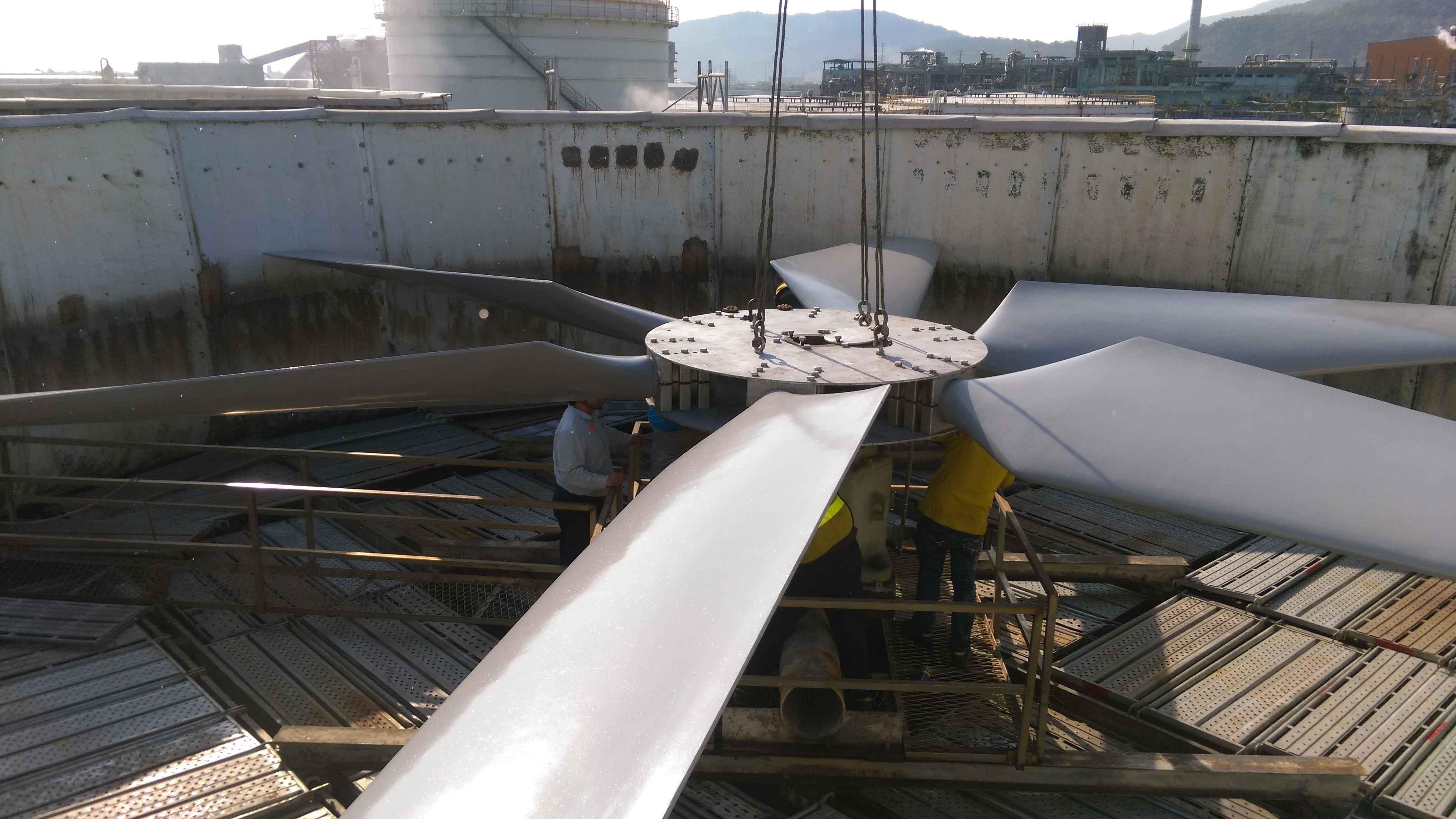
Industrial cooling tower fan replacement is an important maintenance task for maintaining cooling efficiency, reducing energy consumption, and preventing unexpected equipment failures. Cooling tower fans operate continuously in humid, corrosive, and demanding industrial environments. Over time, fan blades, hubs, drive components, and supporting structures can deteriorate, affecting airflow and overall cooling tower performance.
A damaged or inefficient fan may cause excessive vibration, insufficient airflow, increased motor power consumption, and reduced heat transfer efficiency. Replacing the fan at the right time helps restore reliable operation and extend the service life of the cooling tower.
This guide explains when to replace an industrial cooling tower fan, how to select a suitable replacement, and the step-by-step installation process.
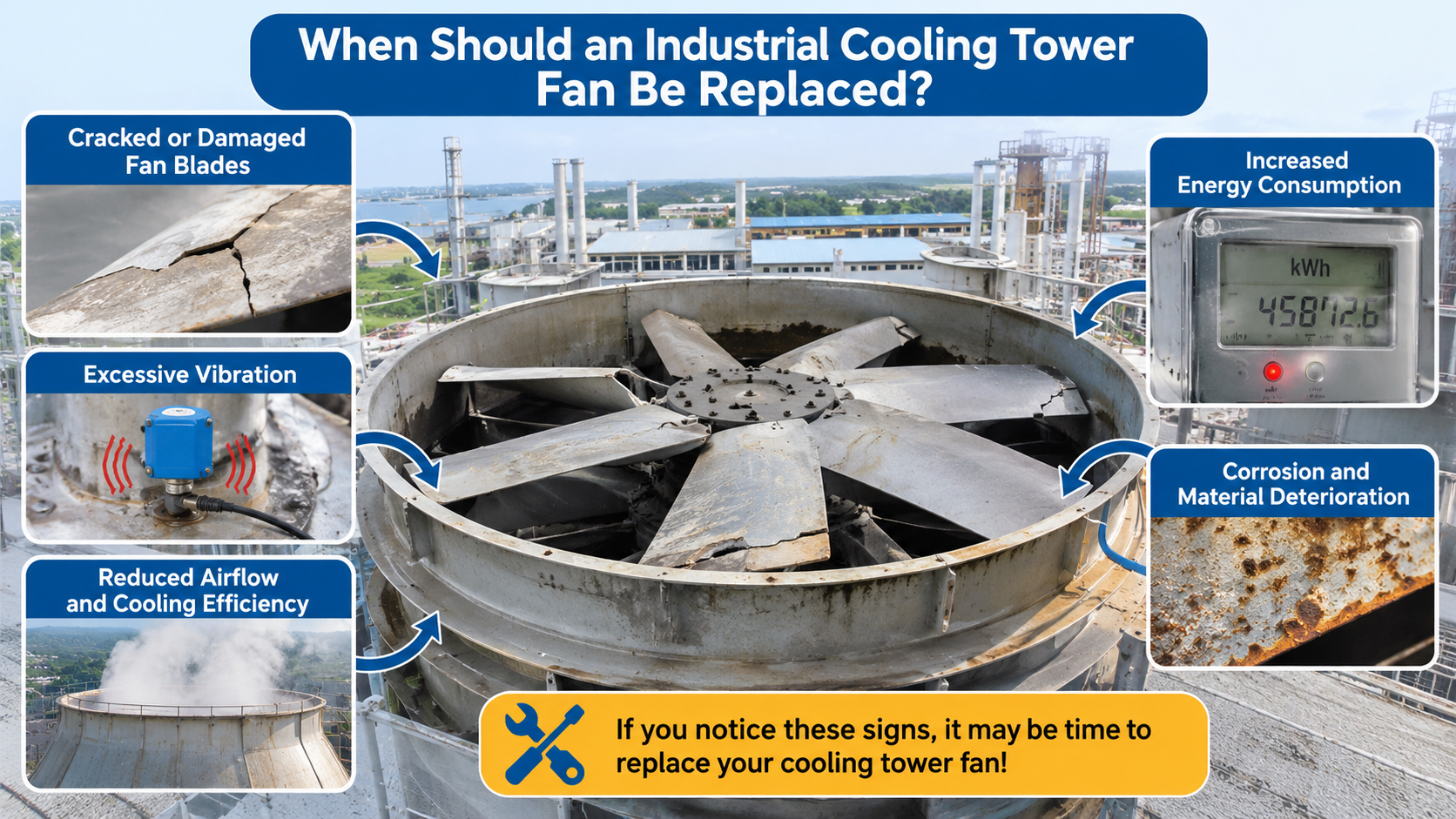
1. When Should an Industrial Cooling Tower Fan Be Replaced?
Not every fan problem requires complete replacement. However, certain conditions indicate that installing a new fan assembly may be more economical and reliable than repeated repairs.
Common warning signs include:
1.1 Cracked or Damaged Fan Blades
Fan blades may develop cracks, deformation, or surface damage because of fatigue, corrosion, chemical exposure, or mechanical impact.
Damaged blades can create airflow imbalance and dangerous vibration. Severely damaged blades should be replaced before further operation.
1.2 Excessive Vibration
Abnormal vibration may result from fan imbalance, damaged blades, loose fasteners, or hub deterioration.
If balancing and maintenance cannot restore stable operation, fan replacement may be necessary.
1.3 Reduced Airflow and Cooling Efficiency
Aging fan blades may lose their original aerodynamic performance. Incorrect blade pitch or structural deformation can also reduce airflow.
If the fan cannot deliver the required airflow, replacement with a properly engineered fan may improve cooling performance.
1.4 Increased Energy Consumption
A deteriorated fan may require more power to achieve the same cooling performance.
Replacing outdated fan blades with a more efficient design may reduce energy consumption, provided the replacement is properly matched to the cooling tower.
1.5 Corrosion and Material Deterioration
Long-term exposure to moisture, chemicals, and UV radiation can damage fan components.
FRP fan blades are commonly selected for replacement projects because of their lightweight construction and corrosion resistance.
2. How to Select the Right Replacement Cooling Tower Fan
Selecting a replacement fan requires more than matching the original fan diameter. The new assembly must meet the cooling tower's aerodynamic, mechanical, and structural requirements.
Important selection factors include:
| Selection Factor | What to Check |
| Fan diameter | Match fan deck and fan stack dimensions |
| Airflow volume | Meet required cooling capacity |
| Static pressure | Match system resistance |
| Blade pitch | Follow aerodynamic and motor loading requirements |
| Number of blades | Confirm approved fan configuration |
| Fan material | FRP, aluminum alloy, or other suitable materials |
| Motor power | Match actual fan operating requirements |
| Rotational speed | Confirm design RPM |
| Hub configuration | Verify mounting and shaft compatibility |
| Installation clearance | Check blade-to-stack clearance |
For replacement projects, provide the manufacturer with original drawings, equipment model numbers, fan specifications, and photographs whenever possible.
3. Tools and Equipment Required for Fan Replacement
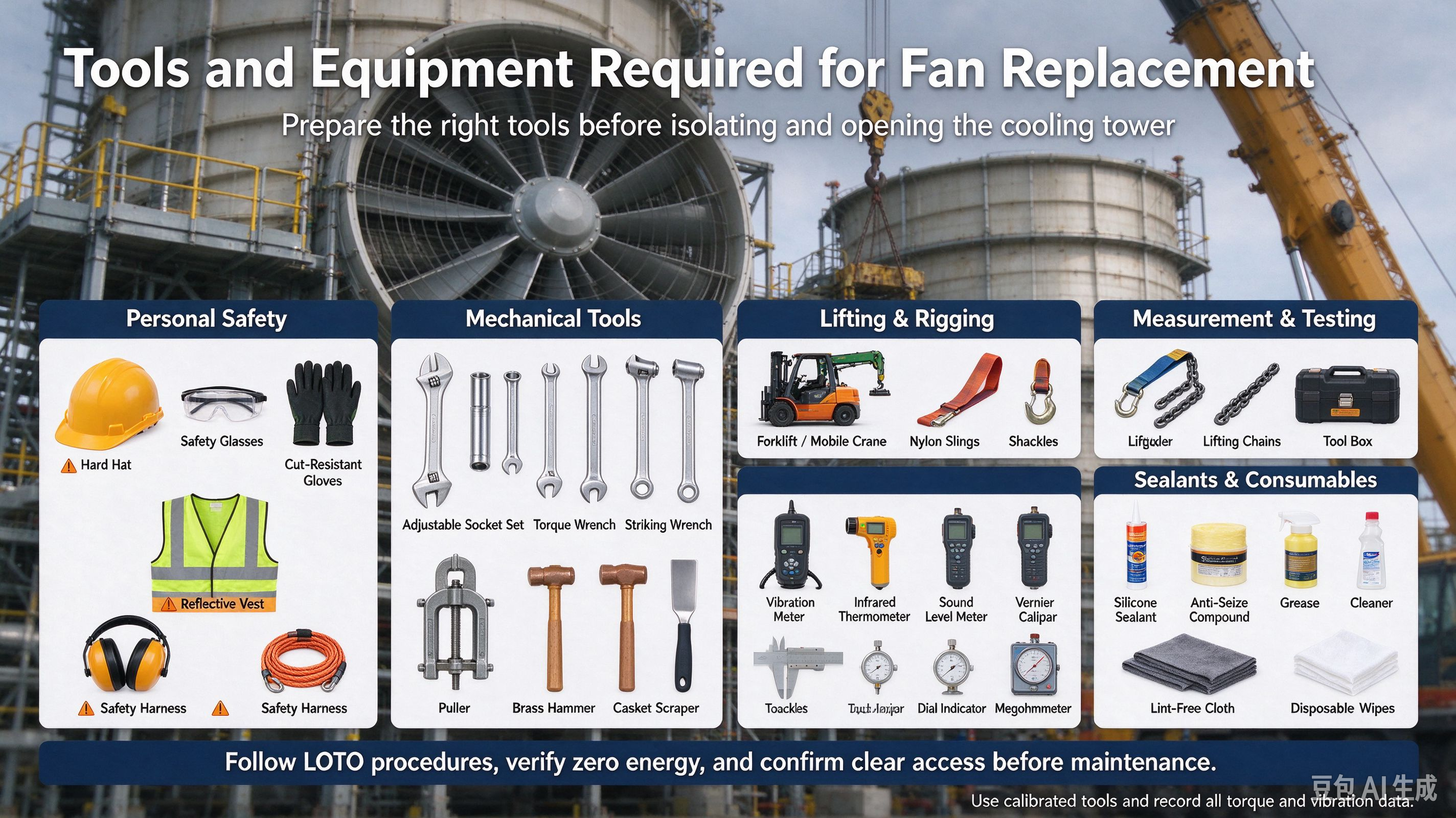
The lifting plan must account for fan weight, lifting points, structural capacity, and site conditions.
4. Step-by-Step Industrial Cooling Tower Fan Replacement
Industrial cooling tower fan replacement should be performed by qualified personnel following the equipment manufacturer's instructions and applicable safety procedures.
Step 1: Shut Down the Cooling Tower
Stop the fan and associated equipment according to the approved shutdown procedure.
Disconnect and isolate the electrical power supply. Apply lockout/tagout (LOTO) procedures to prevent accidental startup.
Verify that the fan has completely stopped before beginning work.
Step 2: Inspect the Existing Fan Assembly
Before removing the fan, inspect the existing installation.
Record important information, including:
Photograph the existing assembly to document its original configuration.
Step 3: Remove the Existing Fan Blades
Use approved lifting equipment to support the fan components.
Remove blade fasteners according to the manufacturer's procedure. If the fan has individually removable blades, remove them carefully and maintain control of each component.
Avoid damaging the hub, mounting surfaces, shaft, or surrounding structures.
Step 4: Remove the Fan Hub or Complete Assembly
If the replacement requires a new hub, remove the existing hub according to the equipment manufacturer's instructions.
Inspect the shaft, keyway, coupling, mounting surfaces, and fasteners.
Check for corrosion, deformation, wear, and other mechanical damage. Repair or replace defective supporting components before installing the new fan.
Step 5: Install the Replacement Fan Hub
Position the replacement hub correctly on the shaft or mounting assembly.
Verify mounting dimensions, shaft compatibility, and alignment.
Tighten fasteners using the specified torque values. Do not estimate bolt torque without consulting the manufacturer's documentation.
Step 6: Install the New Fan Blades
Install the replacement fan blades in the specified positions.
Check the following:
For adjustable-pitch fans, measure each blade using the manufacturer's specified reference points and method.
Consistent blade pitch is essential for balanced airflow and reliable operation.
Step 7: Check Fan Balance and Alignment
After installation, verify that the fan assembly meets the manufacturer's balancing requirements.
Inspect hub alignment, blade positioning, and mechanical clearances.
If necessary, perform balancing according to the approved procedure. Improper balancing can lead to excessive vibration, bearing damage, and structural fatigue.
Step 8: Inspect the Fan Stack and Supporting Structure
Before startup, inspect the fan stack, support beams, mounting brackets, and surrounding structures.
Check for cracks, loose fasteners, corrosion, and deformation.
Ensure that no objects or obstructions remain inside the fan operating area.
Step 9: Perform a Test Run
Remove tools and temporary equipment, confirm that all personnel are clear, and restore power following the approved commissioning procedure.
Start the fan and monitor:
Fan rotational direction
Operating speed
Motor current
Vibration levels
Unusual noise
Blade clearance
Airflow conditions
Stop the equipment immediately if abnormal vibration, noise, or mechanical interference occurs.
Step 10: Record Installation and Performance Data
Document the replacement fan model, installation dimensions, blade pitch, motor current, vibration measurements, and commissioning results.
These records provide a useful reference for future maintenance and performance comparisons.
5. Common Mistakes During Cooling Tower Fan Replacement
Incorrect installation can reduce fan efficiency and create mechanical safety risks.
| Common Mistake | Potential Consequence |
| Incorrect fan diameter | Poor airflow or mechanical interference |
| Unequal blade pitch | Unbalanced airflow and vibration |
| Incorrect hub installation | Shaft or hub damage |
| Loose fasteners | Mechanical failure |
| Insufficient blade clearance | Fan stack contact |
| Incorrect motor matching | Overloading or poor performance |
| Skipping commissioning | Undetected installation problems |
Always use approved technical drawings and installation procedures rather than relying only on visual measurements.
6. Benefits of Replacing an Industrial Cooling Tower Fan
A properly selected replacement fan can provide several operational benefits:
Improved cooling efficiency: Restores the airflow required for effective heat transfer.
Reduced energy consumption: Modern aerodynamic fan designs may reduce the power required to deliver the target airflow.
Lower vibration: A correctly balanced fan assembly helps reduce mechanical stress.
Improved corrosion resistance: FRP fan blades offer good resistance to humid and corrosive cooling tower environments.
Reduced maintenance costs: Replacing severely deteriorated components can reduce repeated repair requirements.
Greater operating reliability: A properly installed replacement fan helps minimize unexpected downtime.
Actual improvements depend on the original equipment condition, replacement design, and operating conditions.
7. How to Choose an Industrial Cooling Tower Fan Replacement Manufacturer
Choosing an experienced cooling tower fan manufacturer is important for successful replacement projects.
Before purchasing, consider the following:
Experience with industrial axial cooling tower fans.
Customized FRP and aluminum fan blade manufacturing capabilities.
Accurate dimensional and aerodynamic design.
Fan hub and mounting compatibility.
Quality control and balancing procedures.
Technical documentation and installation support.
Delivery time and after-sales service.
CoolingTowerPart.com provides industrial cooling tower replacement components, including FRP fan blades and customized fan solutions. Buyers can submit equipment drawings, original fan specifications, and operating requirements to discuss suitable replacement options.
8. Conclusion
Industrial cooling tower fan replacement is essential when existing fans suffer from severe blade damage, excessive vibration, corrosion, or declining aerodynamic performance.
A successful replacement project requires accurate equipment measurements, proper fan selection, safe removal, precise installation, blade pitch adjustment, and thorough commissioning.
By following a systematic replacement process and working with an experienced manufacturer, industrial operators can restore airflow performance, improve cooling efficiency, and maintain reliable cooling tower operation.
Frequently Asked Questions (FAQ)
1. How do I know when my cooling tower fan needs replacement?
Common warning signs include cracked blades, excessive vibration, corrosion, reduced airflow, unusual noise, and deteriorating fan performance.
2. Can I replace cooling tower fan blades without replacing the hub?
Yes. If the existing hub is structurally sound and compatible with the replacement blades, individual blade replacement may be possible. Always confirm compatibility with the manufacturer.
3. Which material is best for replacement cooling tower fan blades?
FRP is a popular choice for industrial cooling towers because it is lightweight, corrosion-resistant, and offers good mechanical strength.
4. Why is blade pitch important during fan replacement?
Blade pitch affects airflow and motor loading. Unequal or incorrect pitch can cause poor performance, excessive current, and vibration.
5. How long does industrial cooling tower fan replacement take?
The installation time depends on fan size, lifting requirements, accessibility, structural condition, and whether the hub or drive system also requires replacement.
6. Should a cooling tower fan be balanced after replacement?
Yes. The completed fan assembly should meet the manufacturer's specified balancing requirements before returning to normal operation.
Recommended internal links for CoolingTowerPart.com:


