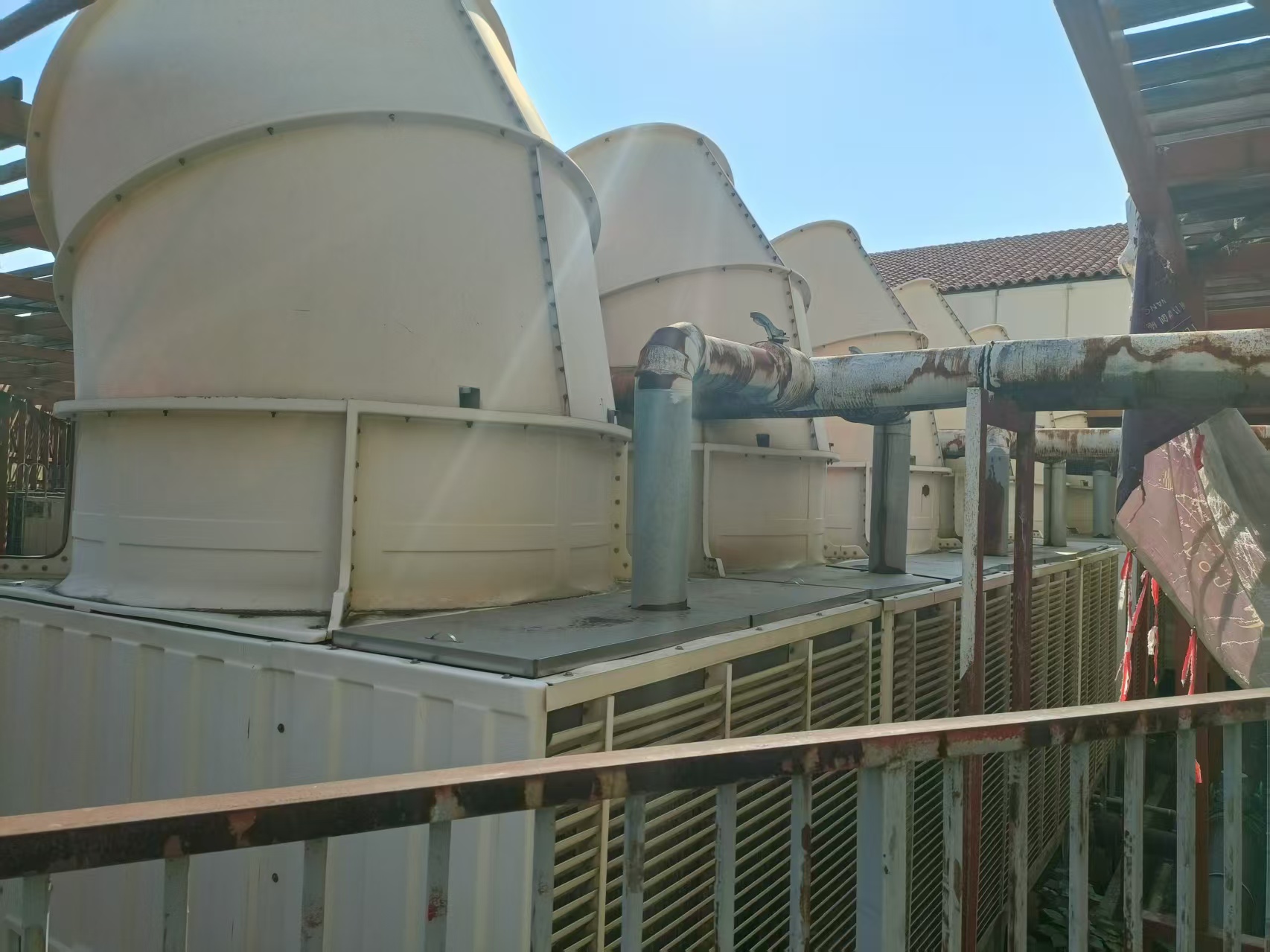
A fiberglass cooling tower fan stack is an important component of an industrial cooling tower. It directs air discharged by the fan and helps maintain the intended airflow path. Although fiberglass-reinforced plastic (FRP) offers excellent corrosion resistance and relatively low weight, it still requires regular inspection and maintenance to ensure reliable operation.
Over time, UV exposure, vibration, mechanical impact, improper installation, and environmental conditions can cause cracks, delamination, loose fasteners, and other problems. If these issues are ignored, they may lead to costly repairs, unexpected downtime, or unsafe operating conditions.
This guide explains common fiberglass cooling tower fan stack problems, practical troubleshooting methods, preventive maintenance procedures, and signs that indicate when repair or replacement may be necessary.
Why Is Fiberglass Cooling Tower Fan Stack Maintenance Important?
FRP fan stacks are commonly used in industrial cooling towers because they resist rust and can be customized for different tower configurations. However, corrosion resistance does not mean maintenance-free operation.
Regular maintenance helps operators:
Identify structural damage before it becomes severe.
Maintain secure mounting connections.
Detect excessive fan vibration and misalignment.
Protect the FRP surface from environmental deterioration.
Reduce unexpected downtime and repair expenses.
Support safe cooling tower operation.
Inspection frequency should depend on operating conditions, the manufacturer's recommendations, equipment age, and previous damage history.
Common Fiberglass Cooling Tower Fan Stack Problems and Solutions
1. Cracks in the FRP Fan Stack
Possible causes:
Mechanical impact during maintenance.
Excessive vibration from the cooling tower fan.
Wind loads or inadequate structural support.
Stress around bolt holes, flanges, or joints.
Improper installation or handling.
Solutions:
Inspect the crack's location, length, depth, and surrounding laminate. Small, localized cracks may be repairable using an approved FRP repair procedure.
Cracks extending through structural layers or appearing around highly stressed mounting areas require assessment by a qualified FRP specialist or engineer. Do not simply cover a structural crack with paint or surface filler.
If the stack's structural integrity cannot be reliably restored, replacement may be the safer option.
2. FRP Surface Deterioration and UV Damage
Fiberglass cooling tower fan stacks are often exposed to direct sunlight, moisture, and changing temperatures. Over time, inadequate UV protection can cause surface chalking, discoloration, resin degradation, or exposed glass fibers.
Solutions:
Inspect the surface for chalking, erosion, and exposed fibers.
Clean the stack using materials compatible with the resin system.
Apply a suitable UV-resistant coating when required.
Repair damaged laminate according to the manufacturer's procedure.
Surface discoloration alone does not necessarily indicate structural failure. If fibers are exposed or the laminate has deteriorated, obtain a technical assessment before deciding on the repair method.
3. Delamination of Fiberglass Layers
Delamination occurs when layers within the FRP laminate separate. It may result from impact, manufacturing defects, moisture entering damaged areas, excessive stress, or unsuitable repair work.
Warning signs:
Blistering or bulging.
Soft or abnormal areas.
Visible separation between layers.
Cracks near damaged laminate.
Unusual movement under normal loading.
Solutions:
Identify the extent of the delamination and assess whether it affects a structural area. Localized damage may be repairable using an engineered laminate repair.
Widespread delamination or separation around major connections may require replacement. Do not rely on surface coatings to restore the strength of separated laminate layers.
4. Loose Bolts and Damaged Mounting Flanges
The mounting flange connects the fan stack to the supporting cooling tower structure. Loose fasteners, damaged bolt holes, flange cracks, or poor alignment can increase stress and vibration.
Solutions:
Inspect fasteners, bolt holes, and flange surfaces.
Check for cracking, deformation, and signs of movement.
Verify alignment with the supporting structure.
Tighten fasteners according to the manufacturer's specified procedure.
Replace damaged fasteners with suitable components.
Do not overtighten bolts, as excessive clamping force may damage the FRP flange. If the flange is cracked or deformed, obtain an engineering assessment before returning the equipment to service.
5. Excessive Vibration
Excessive vibration can damage the fan stack, loosen fasteners, and accelerate fatigue around joints and support points.
Potential causes include fan imbalance, damaged blades, shaft misalignment, bearing problems, loose mounting hardware, and structural resonance.
Solutions:
Stop and isolate the equipment according to site safety procedures.
Inspect fan blades, drive components, mounting hardware, and supports.
Check alignment and fan balance using qualified personnel.
Measure vibration where appropriate and compare readings with applicable equipment limits.
Repair the underlying mechanical problem before restarting.
Replacing or repairing the fan stack alone will not solve vibration caused by an unbalanced fan or defective drive system.
6. Airflow Problems and Fan Clearance Issues
Incorrect stack dimensions, deformation, damaged sections, or improper installation can interfere with the intended airflow path. In severe cases, insufficient fan blade clearance can create a mechanical hazard.
Solutions:
Inspect the stack profile and outlet geometry.
Check for deformation or obstructions.
Verify fan blade-tip clearance against manufacturer requirements.
Confirm that replacement components match the approved design.
Investigate airflow changes alongside fan speed, blade pitch, and other tower operating conditions.
Do not modify the stack diameter or height without reviewing the cooling tower design. Changes in geometry can affect airflow and overall fan performance.
7. Water, Dirt, and Chemical Deposits
Cooling tower environments can expose fan stacks to dirt, airborne contaminants, water deposits, and chemical residues. Accumulated contamination may conceal damage or affect surface condition.
Solutions:
Clean the stack using a method compatible with the FRP resin and protective coating. Avoid aggressive solvents, abrasive tools, or high-pressure cleaning that could damage the laminate.
Where chemical exposure is suspected, confirm that the resin system is compatible with the substance and operating temperature.
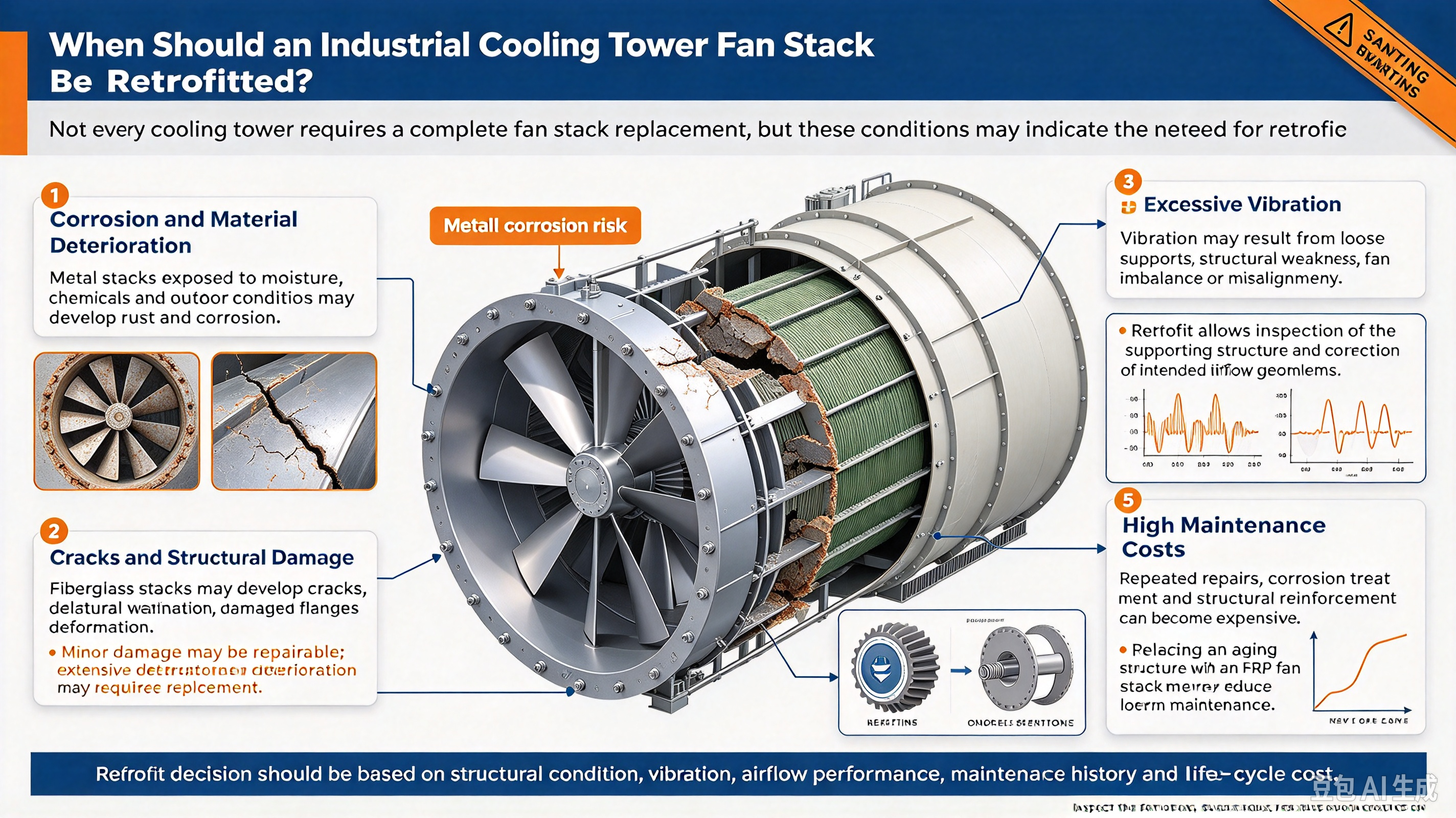
Fiberglass Cooling Tower Fan Stack Preventive Maintenance Checklist
A documented maintenance program helps identify developing problems before they cause unplanned shutdowns.
| Inspection Item | What to Check | Recommended Action |
| FRP surface | Cracks, chalking, exposed fibers | Clean and assess damage |
| Laminate | Blisters, separation, soft areas | Arrange a qualified inspection |
| Mounting flange | Cracks, deformation, misalignment | Repair or replace as approved |
| Fasteners | Looseness, corrosion, damaged threads | Inspect and tighten to specification |
| Fan clearance | Contact marks or insufficient clearance | Verify against manufacturer requirements |
| Vibration | Unusual movement or changing readings | Investigate fan and drive components |
| Surface protection | Coating deterioration | Recoat or repair when necessary |
| Supports | Loose connections or structural damage | Correct the underlying problem |
The table is a general checklist, not a substitute for the equipment manufacturer's inspection schedule or site-specific maintenance plan.
How Often Should an FRP Cooling Tower Fan Stack Be Inspected?
Inspection intervals depend on the tower's environment, operating hours, age, and condition.
Routine operational checks: Look for unusual vibration, visible damage, or changes in operating behavior.
Scheduled inspections: Examine accessible surfaces, fasteners, flanges, and supports according to the maintenance plan.
Detailed inspections: Arrange qualified inspections after significant impacts, abnormal vibration, severe weather, or discovery of structural damage.
Before close inspection or maintenance near the fan, isolate electrical power and follow the site's lockout/tagout procedures. Never approach moving fan blades or enter restricted areas while equipment is operating.
Repair or Replace a Damaged Fiberglass Fan Stack?
Repair is often suitable for localized damage when the remaining laminate is structurally sound and an approved repair can restore the required performance.
Replacement should be considered when there is:
Extensive cracking or widespread delamination.
Severe damage to mounting flanges or connection areas.
Significant deformation or loss of structural integrity.
Repeated repair failures.
Damage that cannot be reliably assessed or repaired.
When replacing a stack, confirm the diameter, height, wall construction, flange dimensions, bolt-hole pattern, fan clearance, and structural requirements.
A custom FRP cooling tower fan stack can be manufactured to match an existing installation, provided the design and dimensions are verified before production.
Choosing a Reliable Fiberglass Cooling Tower Fan Stack Supplier
For industrial maintenance and retrofit projects, supplier selection affects dimensional compatibility, material suitability, and long-term reliability.
Before requesting a quotation, prepare:
Cooling tower manufacturer and model, if known.
Existing fan stack dimensions and drawings.
Photographs of damaged areas and mounting connections.
Operating temperature and environmental conditions.
Required quantity and delivery location.
CoolingTowerPart.com can support inquiries for custom fiberglass cooling tower fan stacks for industrial replacement and retrofit applications. Buyers should confirm material specifications, approved drawings, quality inspection requirements, and delivery details before ordering.
Frequently Asked Questions
1. Do fiberglass cooling tower fan stacks require maintenance?
Yes. FRP resists rust, but regular inspections are still needed to detect cracks, delamination, UV damage, loose fasteners, and vibration-related problems.
2. Can a cracked fiberglass fan stack be repaired?
Some localized cracks can be repaired. Structural cracks require qualified assessment to determine whether repair is reliable or replacement is necessary.
3. What causes FRP fan stack delamination?
Common causes include impact, excessive stress, manufacturing defects, moisture entering damaged areas, and improper repair methods.
4. How can I extend the service life of a fiberglass fan stack?
Use suitable materials, maintain UV protection, inspect mounting connections, monitor fan vibration, clean the surface appropriately, and repair damage promptly.
5. When should I replace a fiberglass cooling tower fan stack?
Replacement may be necessary when structural damage is extensive, flange integrity is compromised, delamination is widespread, or a reliable repair cannot be demonstrated.
Conclusion
Proper fiberglass cooling tower fan stack maintenance helps protect structural integrity, maintain the intended airflow path, and reduce unexpected downtime. Common problems include cracking, delamination, UV deterioration, loose fasteners, vibration, and damage around mounting flanges.
The most effective maintenance strategy combines regular inspections, root-cause troubleshooting, approved FRP repair methods, and timely replacement when necessary. For severely damaged components, a correctly specified custom fiberglass fan stack can provide a practical replacement solution for industrial cooling tower applications.
Recommended internal links for CoolingTowerPart.com:


