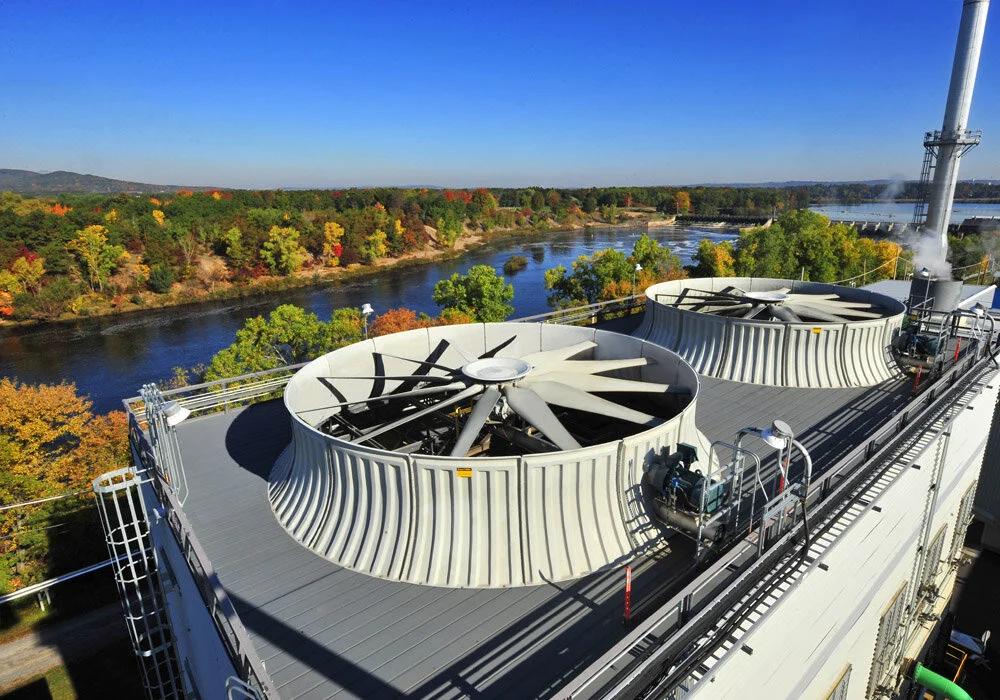
A fiberglass cooling tower fan stack plays an important role in directing airflow from an industrial cooling tower fan. Over time, exposure to UV radiation, moisture, temperature changes, vibration, and mechanical stress can cause damage to the FRP (fiberglass-reinforced plastic) structure. Cracks, delamination, loose mounting flanges, and surface deterioration can affect structural reliability and increase maintenance risks.
When damage occurs, cooling tower operators face an important question: should they repair the existing fiberglass fan stack or replace it with a new one?
The answer depends on the severity of the damage, the remaining structural integrity, repair costs, operating conditions, and the availability of a compatible replacement. This guide compares fiberglass cooling tower fan stack repair and replacement to help maintenance teams, industrial buyers, and cooling tower contractors make informed decisions.
What Causes Fiberglass Cooling Tower Fan Stack Damage?
Before choosing between repair and replacement, identify the cause of the problem.
Common causes include:
UV exposure: Prolonged sunlight can degrade the resin-rich surface if UV protection is inadequate.
Mechanical impact: Tools, maintenance equipment, or falling objects can damage the FRP shell.
Vibration: Excessive fan vibration or loose connections can contribute to fatigue and cracking.
Structural overload: Wind loads, improper support, or unsuitable installation can overstress the stack.
Chemical exposure: Incompatible chemicals may attack the resin system.
Poor installation: Incorrect bolt tightening, flange misalignment, or inadequate support can create localized stress.
Aging and wear: Long-term exposure to operating conditions may gradually reduce material performance.
Correcting the underlying cause is essential. Otherwise, damage may return after the stack has been repaired or replaced.
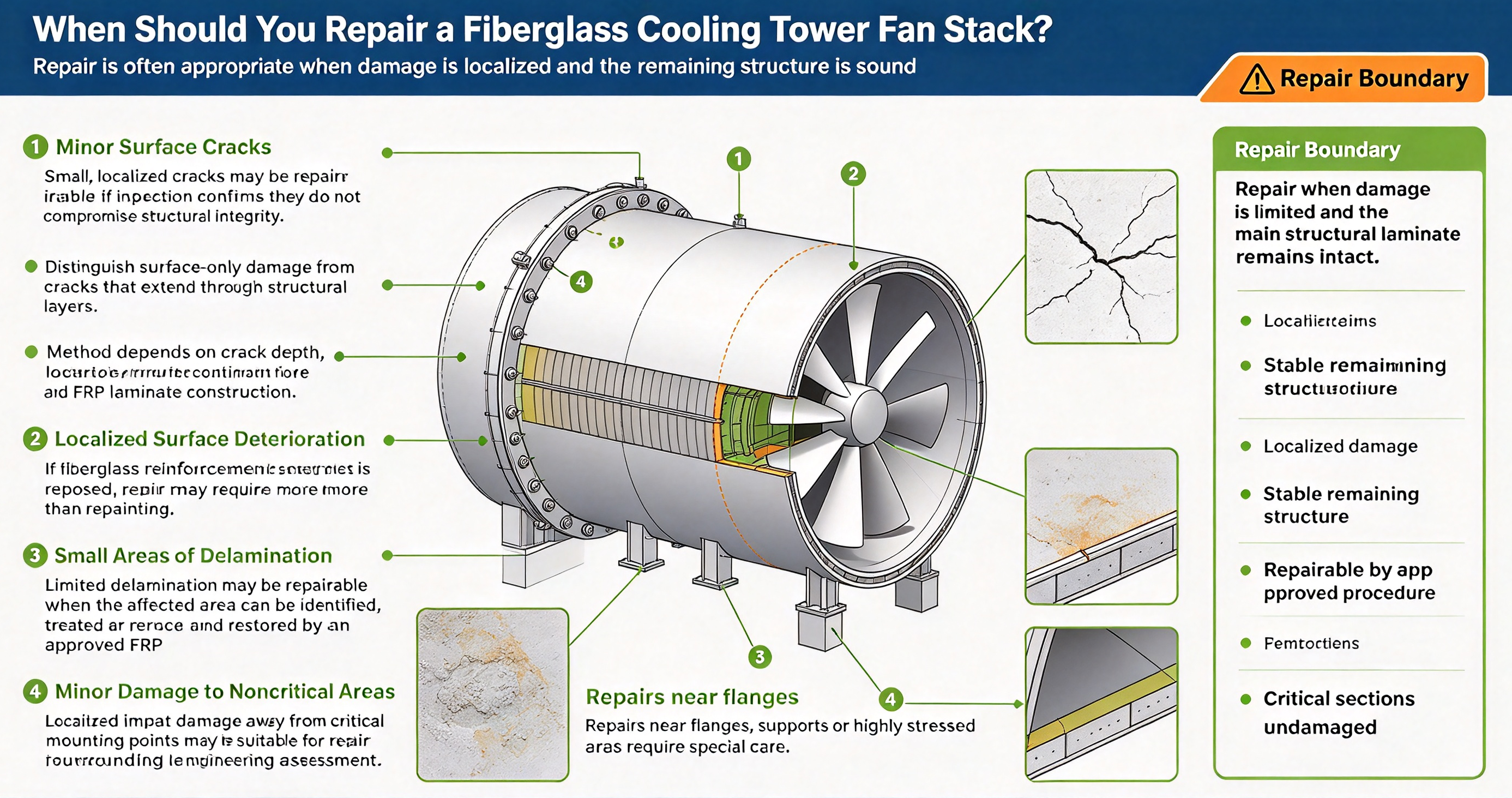
When Should You Repair a Fiberglass Cooling Tower Fan Stack?
Repair is often appropriate when damage is localized and the remaining structure is sound.
When Should You Replace a Fiberglass Cooling Tower Fan Stack?
Replacement is generally preferable when the damage is extensive, structural integrity is uncertain, or repairs cannot provide a reliable long-term solution.
1. Extensive Cracking
Multiple cracks, through-wall fractures, or cracks extending across highly stressed areas may indicate significant structural damage. Replacement should be considered when a qualified assessment cannot establish a safe, reliable repair.
2. Widespread Delamination
Extensive separation between fiberglass layers can reduce structural strength and stiffness. If the affected area is large or difficult to restore, replacing the fan stack may be more practical.
3. Severe Flange Damage
The mounting flange transfers loads between the fan stack and the supporting structure. Significant cracking, deformation, or deterioration around bolt holes can affect connection reliability.
If the flange cannot be restored to its required structural capacity, replacement may be necessary.
4. Repeated Repair Failures
Repeated cracks or recurring damage may indicate an unresolved problem with vibration, support conditions, airflow, or structural design.
Replacing the stack without correcting the underlying cause may not solve the problem. Investigate the root cause before approving either option.
5. High Repair Costs
If extensive repairs require substantial labor, specialized materials, prolonged downtime, and repeated inspections, a new custom FRP fan stack may provide better long-term value.
Fiberglass Fan Stack Repair vs. Replacement: Key Differences
| Factor | Repair | Replacement |
| Initial cost | Often lower for localized damage | Usually higher upfront |
| Downtime | May be shorter for simple repairs | Depends on manufacturing and delivery lead time |
| Structural condition | Relies on sound remaining material | Provides a new structure when correctly manufactured |
| Material requirements | Requires compatible repair materials | Requires appropriate new FRP materials |
| Installation work | Usually limited to the damaged area | May require removal, lifting, and full reinstallation |
| Long-term reliability | Depends on repair quality and remaining material condition | Depends on design, fabrication, installation, and operating conditions |
| Best suited for | Localized, repairable damage | Extensive damage or unreliable existing structures |
These are general comparisons. Actual cost and downtime depend on stack size, site access, repair complexity, replacement availability, and operating requirements.
Repair vs. Replacement: How to Make the Right Decision
Use the following process to evaluate a damaged fiberglass cooling tower fan stack.
Step 1: Inspect the Entire Structure
Check the inside and outside surfaces where accessible. Look for cracks, exposed fibers, delamination, deformation, damaged flanges, loose fasteners, and signs of impact.
Document the damage with photographs and measurements.
Step 2: Determine the Damage Severity
Identify whether the problem is cosmetic, localized laminate damage, or a potential structural failure.
Damage around mounting flanges, support points, and areas exposed to high loads deserves particular attention.
Step 3: Identify the Root Cause
Review fan vibration, mounting alignment, support conditions, wind exposure, chemical compatibility, and maintenance history.
Repair or replacement should not proceed without addressing conditions that could cause repeat damage.
Step 4: Obtain a Qualified Repair Assessment
Ask an FRP specialist or qualified engineer to determine whether the damaged laminate can be restored to the required performance. The assessment should specify the repair method, materials, surface preparation, curing requirements, and inspection criteria.
Step 5: Compare Total Costs
Evaluate more than the immediate repair quotation. Include labor, materials, access equipment, downtime, follow-up inspections, replacement manufacturing, transportation, and installation.
Step 6: Verify Performance Before Restarting
Follow the approved inspection and acceptance procedures. Confirm that repairs have cured correctly, connections are secure, and fan clearances are acceptable before returning the equipment to service.
Never operate a cooling tower fan with a stack that has unresolved structural damage or inadequate blade clearance.
Benefits of Replacing an Old FRP Cooling Tower Fan Stack
For severely damaged or deteriorated equipment, a new fiberglass fan stack can offer several benefits:
Restored structural condition: A correctly engineered replacement avoids reliance on severely damaged existing material.
Improved corrosion resistance: A suitable resin system can withstand the intended operating environment.
Custom dimensions: Replacement stacks can be fabricated to match verified installation requirements.
Reduced repeat repair work: A new stack may reduce recurring maintenance associated with irreparable deterioration.
Better project planning: A planned replacement allows maintenance teams to coordinate manufacturing, lifting, and installation during a scheduled shutdown.
A replacement does not automatically improve airflow or energy efficiency. Any performance improvement depends on the design, dimensions, fan arrangement, and overall cooling tower condition.
How to Choose a Custom Fiberglass Cooling Tower Fan Stack Replacement
If replacement is the best option, provide the supplier with accurate technical information.
Important details include:
Existing cooling tower manufacturer and model
Fan stack diameter, height, and profile
Mounting flange dimensions and bolt-hole pattern
Required wall thickness and reinforcement
Operating temperature and chemical exposure
UV and weather protection requirements
Fan blade clearance and support conditions
Quantity, delivery destination, and required delivery date
For industrial replacement projects, request drawings and confirm dimensional compatibility before production. The proposed FRP structure should be suitable for the site's wind loads, vibration conditions, and other applicable design requirements.
CoolingTowerPart.com can use these specifications to support inquiries for custom fiberglass cooling tower fan stacks for industrial maintenance, repair, and retrofit projects.
How to Prevent Future Fiberglass Fan Stack Damage
Preventive maintenance can help extend service life and reduce unexpected downtime.
Inspect the stack regularly for cracks, delamination, and surface deterioration.
Monitor fan vibration and investigate abnormal changes.
Check mounting bolts, flange connections, and support structures.
Maintain suitable fan blade clearance.
Use cleaning agents compatible with the FRP resin system.
Repair localized damage promptly using approved procedures.
Keep records of inspections, repairs, and recurring problems.
Inspection frequency should reflect the operating environment, equipment condition, and manufacturer's recommendations.
Frequently Asked Questions
Can a cracked fiberglass cooling tower fan stack be repaired?
Yes, some cracks can be repaired. However, the repair method depends on the crack's depth, location, and effect on structural integrity. Extensive or structurally significant cracking may require replacement.
Is repairing an FRP fan stack cheaper than replacing it?
Repair is often less expensive for localized damage. Extensive repairs may become costly when specialized labor, access equipment, downtime, and repeat maintenance are included.
How do I know when a fiberglass fan stack needs replacement?
Warning signs include widespread cracking, extensive delamination, serious flange damage, deformation, and recurring repair failures. A qualified assessment should determine whether the stack can be safely restored.
Can I replace a damaged fan stack with a custom FRP model?
Yes, provided the replacement meets the required dimensions, structural loads, mounting requirements, environmental conditions, and fan clearances.
Should the cooling tower fan operate while the stack is being repaired?
That decision must follow a site-specific safety and engineering assessment. If damage creates a risk of structural failure or fan interference, the equipment should remain out of service until the hazard is resolved.
Conclusion
Choosing between fiberglass cooling tower fan stack repair and replacement requires a careful assessment of damage severity, structural integrity, repair feasibility, downtime, and total lifecycle cost.
Repair is often the practical choice for localized damage when the remaining structure is sound. Replacement is generally preferable for extensive cracking, widespread delamination, severe flange damage, or situations where a reliable repair cannot be demonstrated.
For industrial cooling tower operators and maintenance contractors, early inspections and accurate technical assessments help reduce unexpected downtime and support safer, more cost-effective maintenance decisions.
Need a replacement? Prepare your existing fan stack dimensions, photographs, and cooling tower specifications to request a custom FRP cooling tower fan stack quotation.
Recommended internal links for CoolingTowerPart.com:


