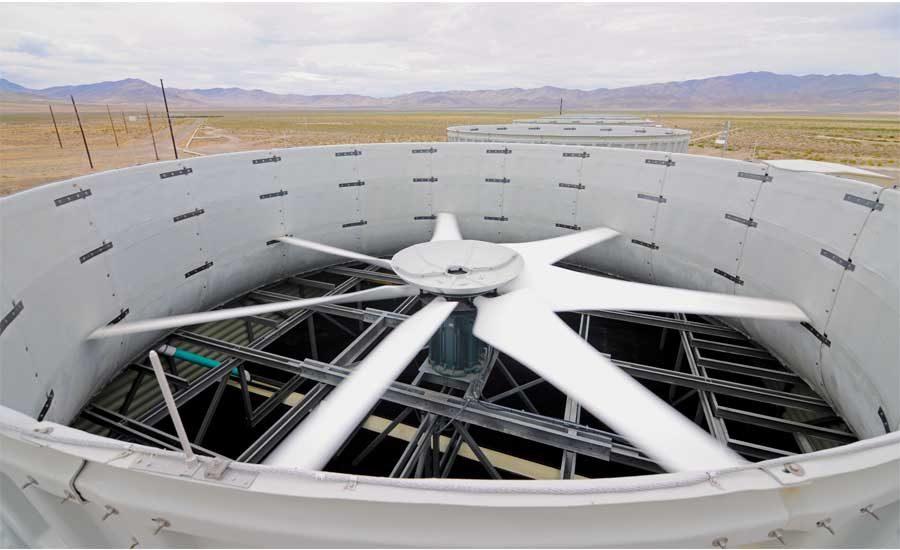
Industrial cooling tower fan troubleshooting is essential for maintaining reliable cooling performance, reducing energy consumption, and preventing unexpected equipment failures. Cooling tower fans operate continuously in humid, corrosive, and demanding industrial environments. Over time, mechanical wear, improper installation, and airflow restrictions can cause problems such as excessive vibration, unusual noise, and insufficient airflow.
These issues not only affect fan efficiency but can also damage motors, gearboxes, bearings, fan blades, and supporting structures.
This guide explains how to identify and troubleshoot the three most common industrial cooling tower fan problems: vibration, noise, and airflow reduction. It also provides practical solutions and preventive maintenance recommendations for industrial operators and maintenance technicians.
1. Industrial Cooling Tower Fan Troubleshooting: Common Warning Signs
Before performing maintenance, operators should understand the symptoms of cooling tower fan problems.
Common warning signs include:
Excessive vibration during operation.
Grinding, rattling, or unusual mechanical noise.
Reduced airflow through the cooling tower.
Higher cooling water outlet temperatures.
Increased motor current and energy consumption.
Uneven fan rotation.
Loose fan blade connections.
Abnormal gearbox or bearing temperatures.
Identifying these symptoms early helps maintenance teams find the root cause before equipment damage becomes more serious.
2. Cooling Tower Fan Vibration: Causes and Solutions
Excessive vibration is one of the most serious problems affecting industrial cooling tower fans.
A properly installed fan should operate within the vibration limits specified by the manufacturer. Abnormal vibration can damage mechanical components and shorten equipment service life.
2.1 Common Causes of Excessive Vibration
Fan blade imbalance
Unequal blade weight, accumulated dirt, damaged blade surfaces, or incorrect blade positioning can create rotational imbalance.
Incorrect blade pitch
Unequal blade angles can produce uneven aerodynamic loading and increase vibration.
Loose mounting bolts
Loose connections between blades, hubs, shafts, and supporting structures can cause mechanical instability.
Shaft misalignment
Incorrect alignment between the motor, gearbox, and fan drive system can generate vibration during operation.
Bearing or gearbox deterioration
Worn bearings, damaged gears, and insufficient lubrication may cause abnormal vibration and noise.
2.2 How to Troubleshoot Cooling Tower Fan Vibration
Follow these inspection steps:
Record vibration levels and compare them with manufacturer limits.
Inspect fan blades for cracks, deformation, and accumulated deposits.
Check blade pitch consistency.
Inspect hub connections and mounting bolts.
Check shaft, motor, and gearbox alignment.
Inspect bearings and gearbox condition.
Perform fan balancing when necessary.
Recommended solution: Correct the underlying mechanical problem before returning the fan to normal operation. Replace blades or hubs with structural damage that cannot be safely repaired.
3. Cooling Tower Fan Noise: Causes and Solutions
Unusual noise is another common indication of industrial cooling tower fan problems.
Normal operating noise depends on fan design, rotational speed, airflow, and installation conditions. Sudden changes in sound often indicate mechanical or aerodynamic problems.
3.1 Common Causes of Fan Noise
| Noise Type | Possible Cause |
| Grinding noise | Bearing or gearbox damage |
| Rattling noise | Loose fasteners or components |
| Repeated knocking | Mechanical interference |
| Whistling noise | Airflow turbulence |
| Excessive aerodynamic noise | Incorrect blade pitch or high fan speed |
| Scraping noise | Blade contact with fan stack |
3.2 How to Troubleshoot Cooling Tower Fan Noise
First, identify where the noise originates.
Inspect fan blades, bearings, gearbox, belts, pulleys, and mounting connections. Check whether the blades have sufficient clearance from the fan stack.
If the noise is accompanied by excessive vibration, overheating, or visible mechanical damage, stop the equipment and investigate before restarting.
Recommended solution: Replace damaged bearings, tighten loose connections, correct alignment, and repair or replace components that cause mechanical interference.
4. Cooling Tower Fan Airflow Problems: Causes and Solutions
Airflow directly affects cooling tower heat transfer performance.
When a fan cannot deliver sufficient air, the cooling tower may fail to maintain the required cold-water temperature.
4.1 Common Causes of Reduced Airflow
Incorrect fan blade pitch: An unsuitable blade angle can reduce airflow or create excessive motor loading.
Low rotational speed: Motor problems, incorrect drive ratios, or belt slippage can reduce fan speed.
Blocked air passages: Dirt, debris, scale, and biological deposits can restrict airflow through fill media and louvers.
Incorrect fan diameter: A poorly matched replacement fan may fail to deliver the required airflow.
Fan stack problems: Incorrect fan-to-stack clearance or damaged fan stack structures can increase airflow losses.
Hot-air recirculation: Poor discharge conditions may allow warm, humid air to return to the tower air inlet.
4.2 How to Troubleshoot Cooling Tower Fan Airflow
Measure fan rotational speed.
Check blade pitch and fan rotation direction.
Inspect fan blades for damage or deformation.
Check belts, pulleys, gearbox, and motor operation.
Inspect fill media and air inlet louvers for blockage.
Check fan stack condition and blade clearance.
Evaluate airflow distribution and hot-air recirculation.
Recommended solution: Restore the fan's specified operating conditions and remove airflow restrictions. If the fan cannot meet its required airflow after troubleshooting, evaluate a replacement fan.
5. Cooling Tower Fan Troubleshooting Table
The following table summarizes common industrial cooling tower fan problems and recommended corrective actions.
| Problem | Main Causes | Recommended Solution |
| Excessive vibration | Imbalance, loose bolts, misalignment | Inspect, align, and balance |
| Grinding noise | Bearing or gearbox wear | Inspect and replace damaged parts |
| Rattling noise | Loose connections | Tighten and inspect fasteners |
| Low airflow | Incorrect pitch, low RPM, blockage | Adjust pitch and clean passages |
| High motor current | Excessive blade loading | Check pitch and motor load |
| Uneven fan rotation | Blade damage or mechanical problems | Inspect blades and hub |
| High operating temperature | Overloading or lubrication problems | Inspect motor and gearbox |
Always identify the actual cause before replacing components.
6. How to Prevent Industrial Cooling Tower Fan Problems
Preventive maintenance helps reduce vibration, noise, and airflow problems.
Recommended maintenance practices include:
6.1 Inspect Fan Blades Regularly
Check for cracks, corrosion, deformation, and loose connections. FRP cooling tower fan blades should also be inspected for delamination and surface deterioration.
6.2 Check Blade Pitch and Fan Balance
Ensure all blades follow the specified pitch settings. Perform balancing according to manufacturer requirements.
6.3 Maintain the Drive System
Inspect motors, gearboxes, bearings, belts, pulleys, and shafts. Follow recommended lubrication and alignment procedures.
6.4 Clean Airflow Passages
Remove dirt, debris, and deposits from fill media, air inlet louvers, and drift eliminators.
6.5 Monitor Operating Conditions
Record vibration, motor current, RPM, noise, and operating temperature. Comparing historical measurements helps identify developing problems.
6.6 Inspect the Fan Stack
Check FRP fan stacks and supporting structures for cracks, deformation, corrosion, and loose connections.
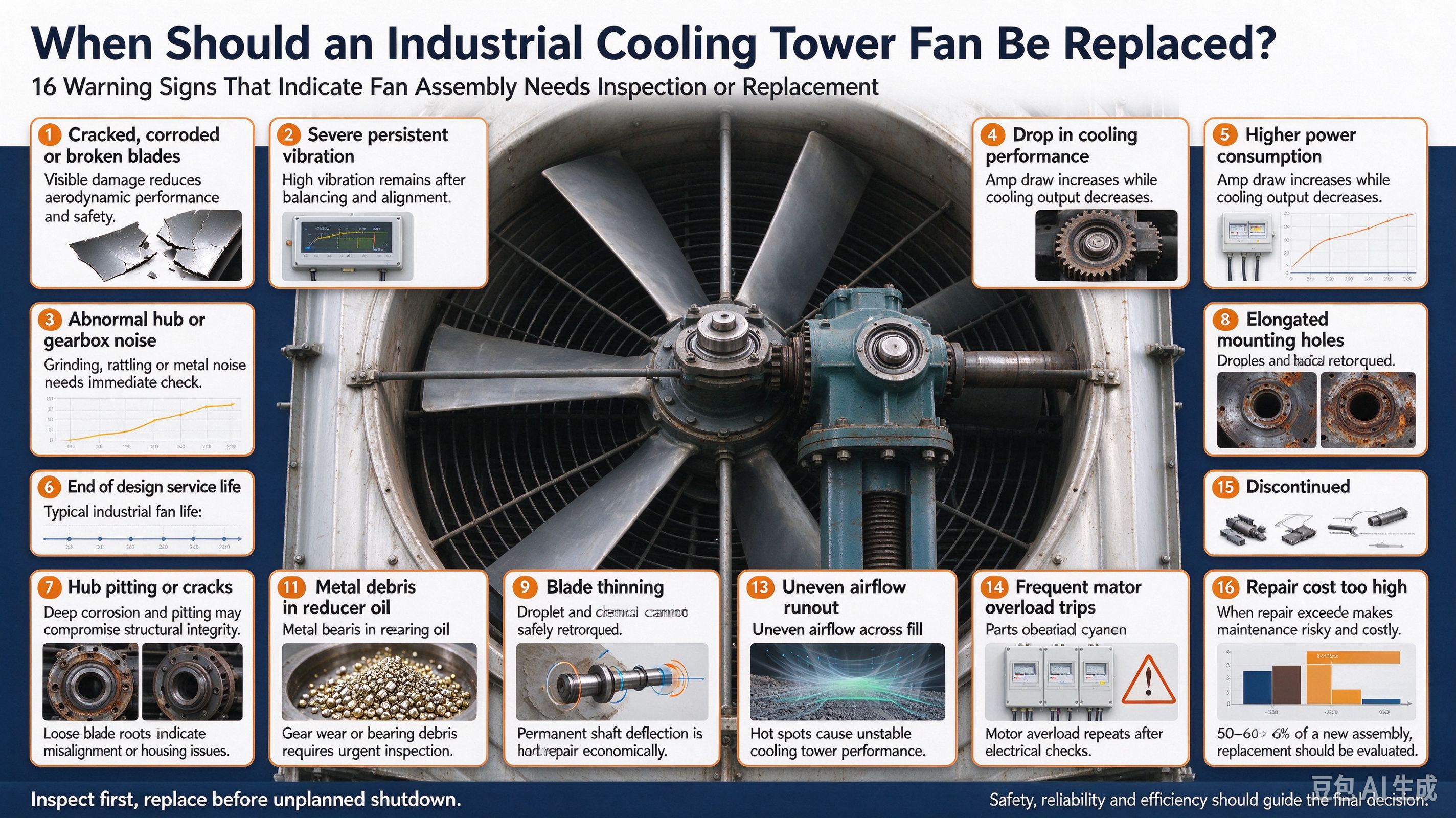
7. When Should You Replace an Industrial Cooling Tower Fan?
Some problems can be corrected through adjustment or component repair. However, severe structural damage may require fan replacement.
Consider replacing the fan when:
Fan blades have serious structural cracks.
The fan hub is severely damaged.
Excessive vibration continues after proper balancing and alignment.
Corrosion or material deterioration compromises structural strength.
The fan cannot achieve the required airflow.
Repeated repairs result in high maintenance costs.
For replacement projects, confirm fan diameter, airflow requirements, static pressure, blade pitch, motor power, rotational speed, and hub dimensions.
A properly engineered FRP cooling tower fan can provide a lightweight and corrosion-resistant solution for many industrial applications.
8. Choosing a Reliable Industrial Cooling Tower Fan Supplier
Selecting a qualified manufacturer is important when repairing, upgrading, or replacing cooling tower fans.
Before purchasing, evaluate:
Industrial cooling tower fan manufacturing experience.
Customized FRP and aluminum fan blade capabilities.
Fan hub and mounting compatibility.
Aerodynamic design and performance specifications.
Balancing and quality inspection procedures.
Technical drawings and replacement support.
Delivery schedules and after-sales service.
CoolingTowerPart.com provides industrial cooling tower replacement components, including FRP fan blades and customized fan solutions. Buyers can submit original equipment drawings, fan dimensions, and operating parameters to discuss suitable replacement options.
9. Conclusion
Industrial cooling tower fan troubleshooting mainly focuses on identifying and correcting vibration, noise, and airflow problems.
Fan imbalance, incorrect blade pitch, loose fasteners, bearing deterioration, and blocked airflow passages are common causes of poor performance.
Through systematic inspections, proper maintenance, and timely component replacement, industrial operators can improve cooling efficiency, reduce energy consumption, and prevent unexpected downtime.
Understanding the causes of cooling tower fan problems helps maintenance teams make better repair and replacement decisions while maintaining reliable industrial cooling tower operation.
Frequently Asked Questions (FAQ)
1. What causes excessive vibration in an industrial cooling tower fan?
Common causes include fan blade imbalance, unequal blade pitch, loose fasteners, shaft misalignment, damaged bearings, and gearbox deterioration.
2. Why is my cooling tower fan making unusual noise?
Grinding, rattling, and knocking sounds may indicate bearing damage, loose components, blade interference, or gearbox problems.
3. What causes low airflow in a cooling tower fan?
Incorrect blade pitch, low rotational speed, blocked fill media, damaged blades, and poor fan stack design can reduce airflow.
4. Can incorrect blade pitch cause vibration?
Yes. Unequal blade pitch can create uneven aerodynamic loading, resulting in vibration and reduced fan performance.
5. How often should cooling tower fans be inspected?
Operators should perform routine condition checks regularly and schedule detailed inspections according to manufacturer recommendations and site operating conditions.
6. When should I replace cooling tower fan blades?
Replace blades with severe cracks, deformation, delamination, or structural damage that exceeds approved repair limits.
Recommended internal links for CoolingTowerPart.com:


