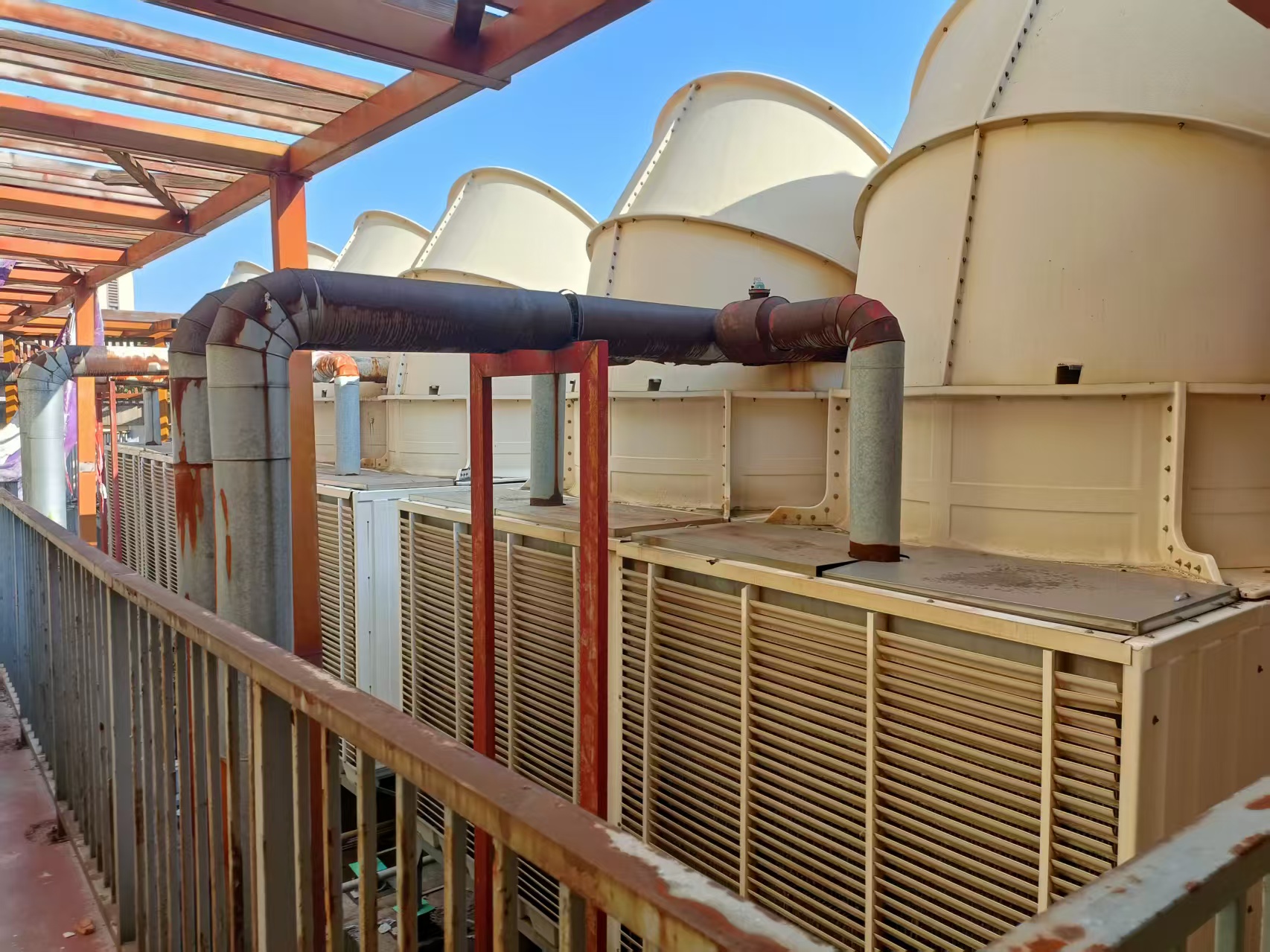
How to Clean and Maintain a Cooling Tower Filler?
A cooling tower filler, also known as cooling tower fill media, is one of the most important components in a cooling tower. It increases the contact area between hot water and air, allowing heat to transfer more efficiently through evaporation. However, dust, dirt, algae, scale, biological deposits, and suspended solids can gradually accumulate on the fill surface.
When a cooling tower filler becomes dirty or blocked, water distribution and airflow can deteriorate, reducing cooling performance and increasing operating costs. Regular cooling tower fill cleaning and maintenance can help preserve heat-transfer efficiency, extend fill service life, and reduce the risk of premature replacement.
This guide explains how to inspect, clean, maintain, and replace cooling tower fill while avoiding common maintenance mistakes.
What Is a Cooling Tower Filler and Why Does It Need Maintenance?
A cooling tower filler provides a large surface area for water and air to interact. Depending on the cooling tower design, the fill may be installed as film fill or splash fill.
How Does Cooling Tower Fill Improve Heat Transfer?
When hot circulating water enters the cooling tower, it is distributed over the fill media. The filler spreads the water into thin films or droplets, increasing the contact area between water and air.
As air moves through the cooling tower fill, a portion of the water evaporates. This evaporation removes heat from the circulating water.
A properly maintained cooling tower fill therefore helps achieve:
Better heat-transfer efficiency
More uniform water distribution
Lower cooling-water outlet temperatures
Reduced fan and pump operating requirements
More stable cooling tower performance
What Happens When a Cooling Tower Filler Becomes Dirty?
Contaminated fill can restrict both water flow and airflow.
Common problems include:
Can Dirty Fill Increase Energy Consumption?
Yes. Blocked passages can increase airflow resistance and reduce effective heat-transfer area. The cooling tower may then need more fan operation or higher water circulation to achieve the required cooling temperature.
This is why cooling tower fill maintenance should be treated as part of routine cooling tower operation rather than an occasional emergency task.
How Often Should Cooling Tower Fill Be Cleaned?
There is no single cleaning interval that works for every cooling tower. The appropriate frequency depends on water quality, operating environment, tower design, seasonal conditions, and contamination levels.
Which Factors Determine Cooling Tower Fill Cleaning Frequency?
Consider the following factors:
| Factor | Potential Impact |
| Poor water quality | Faster scale and sediment buildup |
| High dust environment | More debris accumulation |
| Warm climate | Greater biological growth potential |
| High cycles of concentration | Increased scaling risk |
| Industrial emissions | Greater contamination risk |
| Inadequate water treatment | Faster fouling |
| Heavy operating load | Increased maintenance requirements |
For many industrial cooling systems, cooling tower filler inspection should be performed regularly, while cleaning should be scheduled according to actual fouling conditions.
Should Cooling Tower Fill Be Inspected Before Cleaning?
Yes. Inspection helps determine whether the fill requires light cleaning, deep cleaning, partial replacement, or complete replacement.
Before cleaning, check:
How Do You Clean a Cooling Tower Filler?
A proper cooling tower fill cleaning process should combine inspection, debris removal, controlled washing, and post-cleaning inspection.
Step 1: Shut Down and Isolate the Cooling Tower
Before maintenance begins, shut down the appropriate equipment according to the site's safety procedures.
Isolate relevant pumps, fans, and other equipment where required. Make sure personnel follow the site's lockout/tagout procedures.
Never begin cleaning while moving mechanical components or uncontrolled water flow could create a safety hazard.
Step 2: Remove Large Debris
Start by removing leaves, plastic, mud, sticks, dust, and other large debris from the cooling tower.
Check areas around:
Removing loose debris first prevents it from being pushed deeper into the fill during washing.
Step 3: Inspect the Cooling Tower Fill
Examine the fill carefully before applying water or cleaning chemicals.
Look for:
What Should You Do With Damaged Fill?
If the cooling tower filler is cracked, collapsed, severely deformed, or structurally deteriorated, cleaning alone may not restore performance.
Damaged sections should be evaluated for cooling tower fill replacement.
Step 4: Flush the Fill With Water
Use clean water to remove loose dirt and deposits.
For plastic PVC or PP fill, controlled low-pressure washing is generally preferable to aggressive high-pressure cleaning.
The objective is to remove contamination without damaging the thin fill sheets or changing their geometry.
Step 5: Remove Scale and Biological Deposits
If simple water flushing cannot remove deposits, a suitable cleaning treatment may be required.
The cleaning method should be selected according to:
Fill material
Scale type
Water chemistry
Manufacturer recommendations
Environmental requirements
Cooling tower operating conditions
Why Should Chemical Compatibility Be Checked?
Different cooling tower fill materials and coatings can react differently to cleaning chemicals.
PVC and PP fill, for example, should not automatically be treated with any strong chemical simply because it is effective at removing scale.
Always verify chemical compatibility and concentration before treatment.
Step 6: Rinse the Cooling Tower Fill Thoroughly
After cleaning, rinse the fill with sufficient clean water to remove loosened deposits and chemical residues.
Residual chemicals can affect circulating-water chemistry and potentially damage equipment if not properly controlled.
Step 7: Inspect the Fill Again
After cleaning, inspect the cooling tower fill media again.
Check whether:
Water passages are open
Deposits have been removed
Fill packs remain properly aligned
Sheets are not damaged
Water distribution is uniform
Supports remain secure
Only after the system passes inspection should it be returned to normal operation.
How Can You Maintain Cooling Tower Fill Between Cleanings?
Cleaning is only one part of maintaining a cooling tower filler. Preventive maintenance can significantly reduce the speed at which contamination develops.
Can Water Treatment Extend Cooling Tower Fill Life?
Yes. Proper water treatment is one of the most important ways to protect cooling tower fill.
A suitable water-management program can help control:
Scale
Corrosion
Biological growth
Suspended solids
Mineral deposits
The exact treatment program should be based on the site's water chemistry and operating conditions.
How Does Blowdown Help Protect Cooling Tower Fill?
As water evaporates, dissolved minerals remain in the circulating water. If concentration becomes excessive, scale can form on the fill.
Controlled blowdown removes a portion of concentrated water and replaces it with makeup water.
This helps control dissolved solids and can reduce scaling risk.
How Can You Prevent Algae From Blocking Cooling Tower Fill?
Light and warm, wet surfaces can create favorable conditions for biological growth.
To reduce the risk:
Why Is Biological Fouling a Problem?
Slime and algae can cover the surface of the filler and restrict water distribution. In severe cases, they can block fill passages and reduce effective air-water contact.
How Do You Maintain PVC Cooling Tower Fill?
PVC cooling tower fill is widely used because of its balance of heat-transfer performance, processability, and cost.
However, PVC fill still requires proper maintenance.
What Should You Check on PVC Cooling Tower Filler?
During inspection, look for:
Brittleness
Cracks
Warping
Discoloration
Scale
Biological deposits
Blocked channels
Mechanical damage
Can High-Pressure Washing Damage PVC Fill?
Yes. Excessive water pressure can deform or damage thin PVC sheets.
Cleaning pressure should therefore be controlled according to the fill design and condition.
A gentler cleaning process is usually preferable to aggressive washing that could shorten fill life.
How Do You Maintain PP Cooling Tower Fill?
Polypropylene is another material used for cooling tower fill, particularly in applications requiring different chemical or temperature characteristics.
What Makes PP Fill Maintenance Different?
The basic inspection principles remain similar, but the appropriate cleaning chemicals, temperature limits, and mechanical cleaning methods should be checked against the specific PP fill specification.
Before cleaning, verify:
This avoids damaging the fill while attempting to remove contamination.
How Can You Tell if Cooling Tower Fill Needs Replacement?
Cleaning cannot solve every cooling tower fill problem.
Replacement should be considered when the fill has experienced severe physical or chemical deterioration.
What Are the Main Signs of Cooling Tower Fill Failure?
Typical warning signs include:
Extensive cracking
Severe deformation
Collapsed fill packs
Persistent blockage after cleaning
Significant loss of fill material
Severe brittleness
Poor water distribution
Repeated performance problems
Heavy deposits that cannot be removed
Does Poor Cooling Performance Always Mean the Fill Must Be Replaced?
No.
Low cooling performance can also result from:
Therefore, the entire cooling tower should be inspected before deciding on cooling tower fill replacement.
What Are Common Cooling Tower Fill Cleaning Mistakes?
Incorrect cleaning can sometimes cause more damage than contamination itself.
Is Aggressive Pressure Washing a Good Idea?
Not necessarily.
Excessive pressure can deform film-fill sheets, break fragile sections, or dislodge fill packs from their supports.
Can You Use Any Descaling Chemical?
No.
Chemical selection must consider the fill material, deposit type, concentration, temperature, and manufacturer's recommendations.
Should You Ignore the Water Distribution System?
No.
Even clean fill cannot perform efficiently if water is distributed unevenly.
During maintenance, inspect:
Cooling tower nozzles
Spray pipes
Water headers
Distribution basins
Strainers
Valves
A blocked nozzle can create dry sections of fill and reduce effective heat-transfer performance.
How Does Proper Fill Maintenance Improve Cooling Tower Efficiency?
A clean and correctly installed cooling tower filler provides better contact between air and water.
This can contribute to:
More effective heat transfer
Better approach temperature
More uniform water distribution
Reduced hydraulic resistance
Improved airflow conditions
Longer fill service life
More predictable tower performance
Why Is Fill Maintenance Important for Industrial Cooling?
Industrial cooling towers often operate continuously under demanding conditions. A small amount of fouling can gradually become a major operational problem.
Preventive maintenance allows operators to identify contamination before it develops into severe blockage or physical damage.
What Is a Practical Cooling Tower Fill Maintenance Checklist?
A simple checklist can make routine inspections more consistent.
Weekly or Routine Checks
Depending on the application, inspect:
Monthly Checks
Review:
Fill fouling
Scale formation
Airflow passages
Water distribution
Drift eliminators
Louvers
Fill supports
Annual or Scheduled Shutdown Inspection
During a major maintenance shutdown, inspect:
Should Inspection Results Be Recorded?
Yes. Keeping maintenance records makes it easier to identify gradual deterioration.
Useful records include:
How Can You Extend the Service Life of Cooling Tower Fill?
The best approach is not simply to clean the fill more frequently. It is to control the conditions that cause fouling and deterioration.
What Preventive Measures Are Most Important?
A comprehensive strategy should include:
Regular fill inspection
Effective water treatment
Proper blowdown control
Routine nozzle inspection
Timely removal of debris
Controlled cleaning
Monitoring of cooling performance
Early replacement of damaged sections
Why Is Early Maintenance Better Than Emergency Replacement?
Severely fouled or damaged fill can affect overall tower performance and may require an unexpected shutdown.
Routine maintenance allows problems to be identified and corrected during planned service periods.
How Should You Choose Replacement Cooling Tower Fill?
When cleaning no longer restores performance, selecting the right replacement fill becomes important.
What Factors Should Be Considered?
Before purchasing replacement cooling tower fill, consider:
Cooling tower model
Crossflow or counterflow design
Existing fill dimensions
Fill thickness
Material
Operating temperature
Water quality
Contamination level
Required heat-transfer performance
Existing support structure
Should Replacement Fill Match the Original Design?
In most cases, replacement fill should be compatible with the existing tower geometry and water-distribution system.
Changing fill type, thickness, or configuration without evaluating the tower can affect airflow, pressure drop, water distribution, and thermal performance.
Conclusion: Why Is Regular Cooling Tower Filler Maintenance Important?
A cooling tower filler plays a critical role in transferring heat from circulating water to the atmosphere. Over time, scale, algae, sediment, dirt, and other contaminants can reduce its effective surface area and restrict water and airflow.
Regular cooling tower fill cleaning and maintenance helps keep fill passages open, maintain heat-transfer efficiency, and identify physical damage before it becomes a larger problem.
The most effective maintenance strategy combines regular inspection, water treatment, controlled cleaning, proper water distribution, and timely cooling tower fill replacement when the media is no longer serviceable.
For industrial and commercial cooling towers, maintaining the filler should be viewed as a preventive performance strategy—not simply a cleaning task. A properly maintained cooling tower fill can support stable operation, efficient heat transfer, and longer equipment service life.