How Is the Cooling Tower Fan Market Changing in 2026?
The global Cooling Tower Fan Market is undergoing significant changes in 2026 as industrial facilities demand more efficient, reliable, and environmentally friendly cooling solutions. Increasing investment in manufacturing, power generation, commercial HVAC systems, and data centers is creating new opportunities for cooling tower fan manufacturers and suppliers.
At the same time, technological developments are changing how cooling tower fans are designed, manufactured, installed, and maintained. Energy-efficient fan blades, fiberglass-reinforced plastic (FRP) materials, variable-frequency drives (VFDs), and intelligent monitoring systems are becoming increasingly important in modern industrial cooling applications.
In 2026, buyers are no longer focused only on the initial purchase price of cooling tower fans. They are paying greater attention to airflow performance, electricity consumption, corrosion resistance, maintenance requirements, and total operating costs.
For manufacturers, distributors, and industrial buyers, understanding these changes is essential for identifying market opportunities and maintaining competitiveness.
This article explores the major developments shaping the Cooling Tower Fan Market in 2026, including market demand, emerging technologies, regional opportunities, industry challenges, and future growth trends.
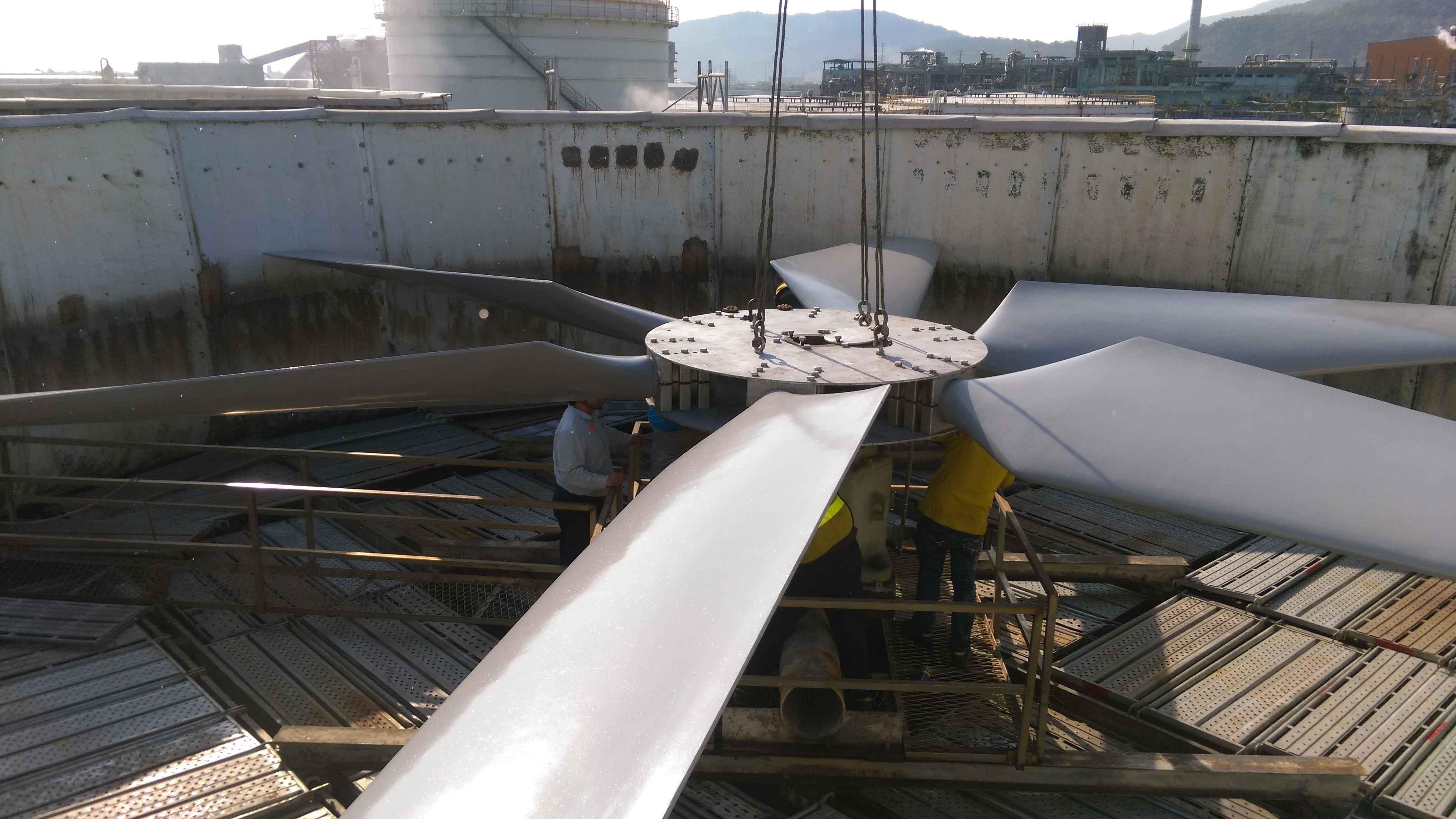
1. Overview of the Cooling Tower Fan Market in 2026
The cooling tower fan industry is closely connected to the development of the global cooling tower market. As industrial cooling requirements increase, demand for complete fan assemblies, replacement blades, motors, gearboxes, and other related components continues to develop.
According to Grand View Research, the global cooling tower market is estimated to reach approximately USD 4.8 billion in 2026, compared with USD 4.5 billion in 2025. Its forecast indicates continued growth through 2033. These figures refer to the overall cooling tower market, not exclusively to cooling tower fans.
1.1 Increasing Demand for Industrial Cooling Equipment
Industrial facilities require reliable cooling systems to maintain production efficiency and equipment safety.
Cooling towers remove excess heat from circulating water, while cooling tower fans provide the airflow necessary for effective heat exchange.
Major industries driving demand include:
Power generation and electricity production
Chemical and petrochemical manufacturing
Oil and gas processing
Steel and metallurgical industries
Pharmaceutical production
Commercial HVAC systems
Data centers and digital infrastructure
As these industries expand, the demand for high-performance industrial cooling tower fans is also increasing.
1.2 Replacement Demand Is Becoming More Important
In addition to new cooling tower installations, replacement projects are an important source of business for fan manufacturers.
Many industrial cooling towers have operated for years under continuous mechanical loads and demanding environmental conditions.
Over time, fan blades, hubs, motors, and transmission components may experience wear, corrosion, fatigue, or reduced performance.
Common Reasons for Cooling Tower Fan Replacement
Cracked or damaged fan blades
Excessive vibration
Corrosion of metal components
Reduced airflow capacity
Increased electricity consumption
Fan hub deterioration
Motor and gearbox problems
Replacing outdated components with modern fan systems can help improve cooling efficiency and reduce long-term maintenance costs.
1.3 Greater Focus on Total Lifecycle Costs
Industrial buyers are increasingly evaluating cooling tower fans based on their entire operating life.
A low-cost fan may not provide the best value if it consumes excessive electricity or requires frequent maintenance.
Manufacturers that offer durable materials, optimized aerodynamic designs, and reliable technical support are better positioned to meet these purchasing requirements.
2. Energy Efficiency Is Reshaping the Cooling Tower Fan Market
Energy efficiency is one of the most important trends influencing the Cooling Tower Fan Market in 2026.
Cooling tower fans often operate for extended periods, making electricity consumption a major part of their operating costs.
Even relatively small improvements in fan efficiency can produce meaningful savings over time.
2.1 Improved Aerodynamic Fan Blade Design
Modern cooling tower fan manufacturers are placing greater emphasis on blade aerodynamics.
Fan blade shape, pitch angle, diameter, and surface characteristics influence airflow capacity and power requirements.
How Does Aerodynamic Optimization Improve Performance?
An optimized fan blade is designed to move the required volume of air while minimizing unnecessary aerodynamic losses.
Important design considerations include:
Blade curvature and profile
Blade pitch angle
Blade length and diameter
Number of fan blades
Structural stiffness
Airflow distribution
Operating rotational speed
The Importance of Correct Blade Pitch
Blade pitch directly affects airflow and the power required to operate a cooling tower fan.
An excessively high pitch may increase motor load, while an excessively low pitch may reduce airflow.
Manufacturers must balance airflow requirements, motor capacity, and mechanical operating limits when selecting the appropriate blade angle.
2.2 Increasing Adoption of Variable Frequency Drives
Variable Frequency Drives are becoming an important technology in modern cooling tower fan systems.
Traditional fans may operate at constant speeds even when the cooling load changes.
VFD technology allows fan speed to be adjusted according to actual operating conditions.
Key Benefits of VFD Technology
Lower electricity consumption: Fan speed can be reduced when full airflow is unnecessary.
Better temperature control: Operators can adjust airflow according to cooling water temperature.
Reduced starting stress: Controlled acceleration can reduce mechanical and electrical stress.
Flexible operation: Fan speed can respond to changes in ambient temperature and industrial heat loads.
2.3 High-Efficiency Motors and Transmission Systems
The performance of a cooling tower fan depends not only on its blades but also on the motor and transmission system.
High-efficiency motors, suitable gearboxes, and properly selected drive components help improve overall operating performance.
Important Components in an Efficient Fan System
Industrial cooling tower fan motor
Fan gearbox or speed reducer
Fan hub assembly
FRP or aluminum fan blades
Drive shaft and coupling
Variable-frequency drive
Selecting compatible components is essential for maintaining stable operation and avoiding unnecessary mechanical losses.
3. FRP Cooling Tower Fans Are Gaining Market Attention
Another important development in 2026 is the increasing attention given to FRP cooling tower fan technology.
Fiberglass Reinforced Plastic (FRP) offers a combination of lightweight construction, corrosion resistance, and structural flexibility. These characteristics make it suitable for many industrial cooling tower applications.
3.1 Why Are FRP Cooling Tower Fan Blades Becoming More Popular?
Compared with conventional metal fan blades, FRP blades offer several practical advantages.
Excellent Corrosion Resistance
Cooling towers operate in environments with high humidity and continuous exposure to water. Some industrial applications also involve chemicals and corrosive substances.
FRP materials can provide excellent resistance to many corrosive environments, helping reduce corrosion-related maintenance.
Lightweight Structural Design
FRP fan blades are generally lightweight compared with many traditional metal alternatives.
A properly engineered lightweight blade can reduce the mechanical loads imposed on the fan hub and drive system.
Flexible Manufacturing and Customization
FRP manufacturing technology allows manufacturers to customize blade dimensions and structural configurations.
Common customization options include:
3.2 FRP vs. Aluminum Cooling Tower Fan Blades
Both FRP and aluminum fan blades have important applications in the cooling tower industry.
Comparison | FRP Fan Blades | Aluminum Fan Blades |
Weight | Generally lightweight | Lightweight |
Corrosion resistance | Excellent in many environments | Depends on alloy and surface treatment |
Structural design | Flexible composite design | Metal fabrication |
Maintenance | Low corrosion-related maintenance | Requires appropriate corrosion protection |
Customization | Flexible | Available in various configurations |
Applications | Industrial and corrosive environments | Industrial and commercial cooling |
The best material depends on operating conditions, fan diameter, mechanical requirements, and project specifications.
3.3 Demand for Customized FRP Fan Solutions
In 2026, industrial customers increasingly require replacement fan blades that match existing cooling tower installations.
Standard products may not always fit older cooling tower models or customized industrial systems.
Manufacturers capable of providing customized FRP fan blades can therefore serve a wider range of replacement and modernization projects.
4. Data Center Expansion Is Creating New Cooling Tower Opportunities
The rapid expansion of artificial intelligence, cloud computing, and digital infrastructure is creating new demand for advanced cooling technologies.
Data centers generate substantial heat because servers, networking equipment, and computing systems operate continuously.
Effective heat rejection is essential for maintaining stable operating temperatures and protecting sensitive equipment.
4.1 How Does AI Development Affect Cooling Tower Fan Demand?
AI computing requires powerful processors and high-density server infrastructure.
As computing capacity increases, thermal management becomes more challenging.
Cooling towers can support heat rejection in facilities using water-based cooling systems.
According to Mordor Intelligence, data centers are projected to be one of the fastest-growing cooling tower applications, with an estimated 9.05% CAGR through 2031. This forecast concerns the cooling tower application segment rather than cooling tower fans alone.
Increasing Requirements for High-Capacity Fan Systems
Large data center facilities may require cooling systems capable of handling substantial thermal loads.
This creates opportunities for:
Large-diameter axial cooling tower fans
High-efficiency fan motors
FRP fan blade assemblies
Intelligent fan speed control
Low-vibration fan systems
Reliable replacement components
4.2 Liquid Cooling and Hybrid Cooling Technologies
Liquid cooling is attracting increasing attention in high-density data center applications.
However, liquid cooling does not necessarily eliminate the need for external heat-rejection equipment.
Depending on the system architecture, heat may still need to be transferred to cooling towers, fluid coolers, or hybrid systems.
What Does This Mean for Cooling Tower Fan Manufacturers?
Manufacturers need to understand changing data center cooling architectures and provide products suitable for different heat-rejection configurations.
The future market will not depend on one cooling technology alone. Instead, buyers will select solutions according to facility size, water availability, energy requirements, and operating conditions.
5. Intelligent Monitoring Is Changing Cooling Tower Fan Maintenance
Industrial maintenance is gradually moving from traditional periodic inspections toward condition-based and predictive maintenance.
In 2026, digital monitoring technologies are becoming increasingly relevant to industrial cooling equipment.
5.1 Real-Time Fan Performance Monitoring
Modern monitoring systems can collect operating information from different cooling tower components.
Important monitoring parameters include:
This information helps operators understand equipment performance and identify unusual operating conditions.
5.2 Predictive Maintenance Reduces Unexpected Downtime
Traditional maintenance schedules are usually based on fixed operating intervals.
However, equipment may develop problems between scheduled inspections.
Predictive maintenance uses operating data to identify possible mechanical failures before serious damage occurs.
Common Problems That Can Be Detected
Fan imbalance: Abnormal vibration may indicate uneven blade weight distribution or incorrect installation.
Bearing deterioration: Increasing bearing temperature or vibration may indicate lubrication problems or mechanical wear.
Gearbox problems: Unusual noise, temperature changes, and vibration can indicate transmission system issues.
Blade damage: Visual inspection and vibration monitoring can help identify potential blade deterioration.
5.3 Integration With Automated Cooling Tower Systems
Intelligent control systems can connect fan motors, VFDs, temperature sensors, and monitoring equipment.
This integration allows operators to adjust fan speed according to changing cooling requirements.
As industrial automation develops, manufacturers that provide compatible equipment and technical support may gain additional business opportunities.
6. Regional Changes in the Cooling Tower Fan Market in 2026
The global market is developing differently across regions because of variations in industrial investment, climate conditions, infrastructure, and environmental requirements.
6.1 Asia-Pacific: A Major Manufacturing and Demand Center
Asia-Pacific continues to play an important role in the global cooling tower industry.
China, India, Japan, South Korea, Vietnam, Indonesia, and Thailand have extensive industrial and manufacturing activities.
According to Grand View Research, Asia-Pacific accounted for approximately 31.8% of global cooling tower market revenue in 2025.
Opportunities for Chinese Cooling Tower Fan Manufacturers
China has an established manufacturing supply chain for cooling tower equipment and industrial components.
Chinese suppliers can serve international buyers looking for:
FRP cooling tower fan blades
Aluminum cooling tower fans
Cooling tower fan hubs
Fan motors and gearboxes
Complete fan assemblies
Customized replacement parts
Competitive manufacturing costs, flexible production, and export experience can help Chinese suppliers compete internationally.
6.2 North America: Replacement and Energy-Saving Projects
North America has a large installed base of industrial and commercial cooling equipment.
Many facility operators are investing in equipment modernization to improve energy efficiency and operational reliability.
Major Market Opportunities
Cooling tower fan blade replacement
High-efficiency fan motor upgrades
VFD installation projects
Fan balancing services
FRP fan blade modernization
Intelligent maintenance systems
Data center construction is also increasing the importance of reliable cooling infrastructure.
6.3 Europe: Energy Efficiency and Environmental Requirements
European buyers generally place considerable emphasis on energy efficiency, environmental performance, and equipment reliability.
Cooling tower fan suppliers may benefit from demand for products that reduce electricity consumption and maintenance requirements.
Manufacturers should pay attention to applicable product standards, documentation, and project-specific environmental requirements when serving European customers.
6.4 Middle East: High-Temperature Industrial Applications
The Middle East offers opportunities for cooling tower fan manufacturers because of its energy, petrochemical, desalination, and industrial infrastructure.
Countries such as Saudi Arabia, the UAE, Qatar, and Oman require reliable cooling equipment for demanding operating environments.
Important Product Requirements
High-temperature operating suitability
Corrosion-resistant materials
Strong structural performance
Stable airflow
Reliable motors and gearboxes
Low-maintenance fan systems
Suppliers that understand these requirements can develop stronger relationships with regional distributors and industrial contractors.
7. What Are the Biggest Challenges in the Cooling Tower Fan Market in 2026?
Although the market offers growth opportunities, manufacturers and suppliers must also deal with several challenges.
7.1 Rising Manufacturing and Raw Material Costs
Raw materials such as fiberglass, resin, aluminum, steel, and industrial electrical components influence manufacturing expenses.
Price fluctuations can affect production costs and international quotations.
How Can Manufacturers Control Production Costs?
Manufacturers can improve cost competitiveness through:
Better raw material purchasing strategies
Optimized production processes
Reduced manufacturing waste
Improved inventory management
More efficient quality control
Standardized product components where appropriate
7.2 Increasing Technical Requirements
Industrial buyers expect cooling tower fans to deliver reliable performance under continuous operating conditions.
Manufacturers must ensure that products meet the required mechanical and aerodynamic specifications.
Poor design or manufacturing quality may result in excessive vibration, insufficient airflow, or premature equipment failure.
7.3 International Competition
The market includes established cooling tower manufacturers, specialized fan producers, and regional replacement-part suppliers.
Price competition is important, but it is not the only factor affecting purchasing decisions.
Manufacturers must also demonstrate technical knowledge, production quality, customization capabilities, and reliable delivery.
7.4 Environmental and Water Management Requirements
Cooling tower operators are paying more attention to water consumption, drift control, and environmental performance.
Although these requirements primarily affect the overall cooling tower system, they can also influence fan selection and operating strategies.
For example, improved airflow control and variable-speed operation may help facilities optimize cooling performance under changing operating conditions.
8. How Are Cooling Tower Fan Manufacturers Adapting to Market Changes?
To remain competitive in 2026, cooling tower fan manufacturers are adjusting their product development and business strategies.
8.1 Investing in Advanced Manufacturing Technology
Manufacturing precision directly influences cooling tower fan quality.
Modern production processes can improve blade consistency, structural accuracy, and product reliability.
Important Manufacturing Processes
FRP material preparation
Fan blade molding
Precision machining
Fan hub manufacturing
Dimensional inspection
Dynamic balancing
Final product testing
A well-controlled production process helps manufacturers deliver consistent products for industrial customers.
8.2 Developing More Customized Fan Products
Different cooling towers have different airflow requirements, structural configurations, and installation dimensions.
Manufacturers are increasingly providing customized solutions rather than relying exclusively on standard products.
For example, customers may require different blade diameters, pitch angles, hub configurations, and motor specifications.
Customized production helps suppliers support both new cooling tower projects and existing equipment replacement.
8.3 Improving International Customer Service
Global buyers expect suppliers to provide more than finished products.
Technical communication, product documentation, export packaging, and after-sales support are becoming important parts of supplier evaluation.
Manufacturers that can provide complete technical information and responsive communication can improve customer confidence.
9. How to Choose the Right Cooling Tower Fan Supplier in 2026?
With more suppliers competing in the global market, industrial buyers need to evaluate manufacturers carefully.
9.1 Check Product Quality and Material Selection
The first step is to evaluate the materials used in the cooling tower fan.
For FRP blades, buyers should understand the resin system, reinforcement materials, manufacturing process, and structural design.
For aluminum blades, alloy selection, corrosion protection, and mechanical strength are important considerations.
9.2 Evaluate Technical and Customization Capabilities
A professional manufacturer should be able to understand the operating requirements of the cooling tower.
Important specifications include:
Why Are Technical Drawings Important?
Technical drawings help buyers and manufacturers confirm product dimensions before production.
They can reduce specification misunderstandings and improve compatibility with existing cooling tower equipment.
9.3 Compare Product Performance and Long-Term Costs
Buyers should not evaluate products based only on purchase price.
A more complete comparison should include:
Evaluation Factor | Importance |
Airflow performance | Cooling capacity |
Energy consumption | Operating expenses |
Material quality | Durability |
Dynamic balancing | Vibration control |
Corrosion resistance | Maintenance requirements |
Manufacturing accuracy | Installation compatibility |
After-sales service | Long-term support |
9.4 Choose a Supplier With Export Experience
International projects often involve customized specifications, shipping arrangements, and technical documentation.
A manufacturer with export experience can help buyers manage these requirements more effectively.
10. Future Outlook: Where Is the Cooling Tower Fan Market Heading After 2026?
The Cooling Tower Fan Market is expected to continue evolving as industrial cooling requirements become more demanding.
Several long-term trends are likely to influence product development and purchasing decisions.
10.1 Greater Demand for High-Efficiency Fan Systems
Electricity costs and energy-efficiency requirements will continue to encourage industrial facilities to upgrade existing cooling tower fans.
Manufacturers will focus on improving aerodynamic designs, motor efficiency, and fan system compatibility.
10.2 More Advanced Composite Materials
FRP fan blades are expected to remain important in applications where lightweight construction and corrosion resistance are required.
Improvements in composite materials and manufacturing processes may create opportunities for stronger and more efficient fan products.
10.3 Increasing Demand for Complete Fan Assemblies
Industrial customers may increasingly prefer integrated fan solutions rather than purchasing individual components from multiple suppliers.
These solutions may include:
Integrated product supply can simplify procurement and improve component compatibility.
10.4 Growth in International Replacement Markets
As existing cooling tower installations age, replacement demand will continue to create business opportunities.
Manufacturers that can provide compatible replacement products for different cooling tower models may develop long-term international customer relationships.
10.5 Greater Integration of Digital Technologies
Monitoring systems, automated speed control, and predictive maintenance will become increasingly important in modern industrial cooling systems.
Manufacturers that understand both mechanical equipment and digital operating requirements will be better positioned to support future projects.
11. Power Tower Cooling Technology (Shaoxing) Co., Ltd: Supporting the Changing Cooling Tower Fan Market
As the global cooling tower industry develops, industrial buyers need reliable suppliers that understand product quality, engineering requirements, and international project needs.
Power Tower Cooling Technology (Shaoxing) Co., Ltd focuses on cooling tower products and related industrial components, serving customers involved in cooling tower construction, maintenance, and equipment replacement.
11.1 FRP Cooling Tower Fan Blade Solutions
FRP fan blades are an important product category for industrial cooling tower applications.
Their lightweight construction, corrosion resistance, and customization flexibility make them suitable for many industrial environments.
When selecting replacement blades, customers should consider fan diameter, pitch angle, hub compatibility, and operating requirements.
11.2 Cooling Tower Fan Components
A complete cooling tower fan system requires several components to work together.
These may include fan blades, hubs, motors, gearboxes, and other transmission components.
Selecting compatible components is essential for maintaining reliable operating performance.
11.3 Customized Solutions for International Customers
Different industrial projects require different product specifications.
Providing suitable product configurations and technical communication can help customers identify solutions for their cooling tower applications.
For buyers seeking cooling tower fan blades, FRP fan products, and related cooling tower components, working with a manufacturer that understands industrial requirements is an important part of successful procurement.
12. Conclusion: The Cooling Tower Fan Market Is Entering a New Stage in 2026
The Cooling Tower Fan Market in 2026 is changing through technological innovation, industrial expansion, and increasing demand for energy-efficient cooling solutions.
Several important trends are shaping the industry:
Greater demand for energy-efficient cooling tower fans
Increasing attention to FRP fan blade technology
Expansion of data center cooling infrastructure
Wider adoption of VFD systems
Development of intelligent monitoring and predictive maintenance
Growing replacement demand from existing cooling towers
More customized industrial fan solutions
These developments are creating opportunities for cooling tower fan manufacturers, distributors, and international suppliers.
For manufacturers, continued investment in product engineering, manufacturing quality, and technical services will be essential.
For industrial buyers, selecting the right fan design, materials, and supplier can improve cooling performance and reduce long-term operating expenses.
As industrial cooling requirements continue to evolve, reliable and efficient cooling tower fan systems will remain important components of modern industrial infrastructure.
FAQ About the Cooling Tower Fan Market in 2026
1. Is the Cooling Tower Fan Market Growing in 2026?
The broader cooling tower market is expected to grow in 2026, supported by industrial development, infrastructure investment, HVAC demand, and data center expansion. This creates additional opportunities for cooling tower fan manufacturers and replacement-part suppliers.
2. What Are the Biggest Cooling Tower Fan Trends in 2026?
The main trends include energy-efficient fan designs, FRP fan blades, VFD technology, intelligent monitoring, customized fan assemblies, and increasing replacement demand.
3. Why Are FRP Cooling Tower Fans Popular?
FRP cooling tower fans offer lightweight construction, corrosion resistance, structural flexibility, and reduced corrosion-related maintenance requirements.
4. How Does AI Development Affect the Cooling Tower Fan Industry?
AI data centers require advanced thermal management because of high computing loads. This creates opportunities for cooling towers and associated heat-rejection fan systems, although the specific cooling architecture varies between facilities.
5. Which Regions Offer the Best Opportunities for Cooling Tower Fan Suppliers?
Asia-Pacific, North America, Europe, and the Middle East offer opportunities driven by industrial investment, equipment modernization, infrastructure development, and growing cooling requirements.
6. What Should Buyers Consider When Purchasing Cooling Tower Fans?
Buyers should evaluate fan diameter, blade material, airflow capacity, pitch angle, motor power, rotational speed, fan hub compatibility, dynamic balancing, and supplier experience.
7. Are Cooling Tower Fan Replacement Projects a Good Market Opportunity?
Yes. Existing cooling towers require periodic maintenance and component replacement. Fan blades, hubs, motors, and gearboxes can all create replacement business opportunities.


