1. Introduction
A cooling tower fan plays an important role in industrial heat rejection. It moves large volumes of air through the cooling tower, helping transfer heat from circulating water into the atmosphere. When the fan develops a problem, cooling performance can decline, energy consumption may increase, and unexpected equipment downtime can disrupt production.
But what should you do when your cooling tower fan starts making unusual noise, vibrating excessively, or showing visible damage? Should you repair the existing fan or replace it with a new one?
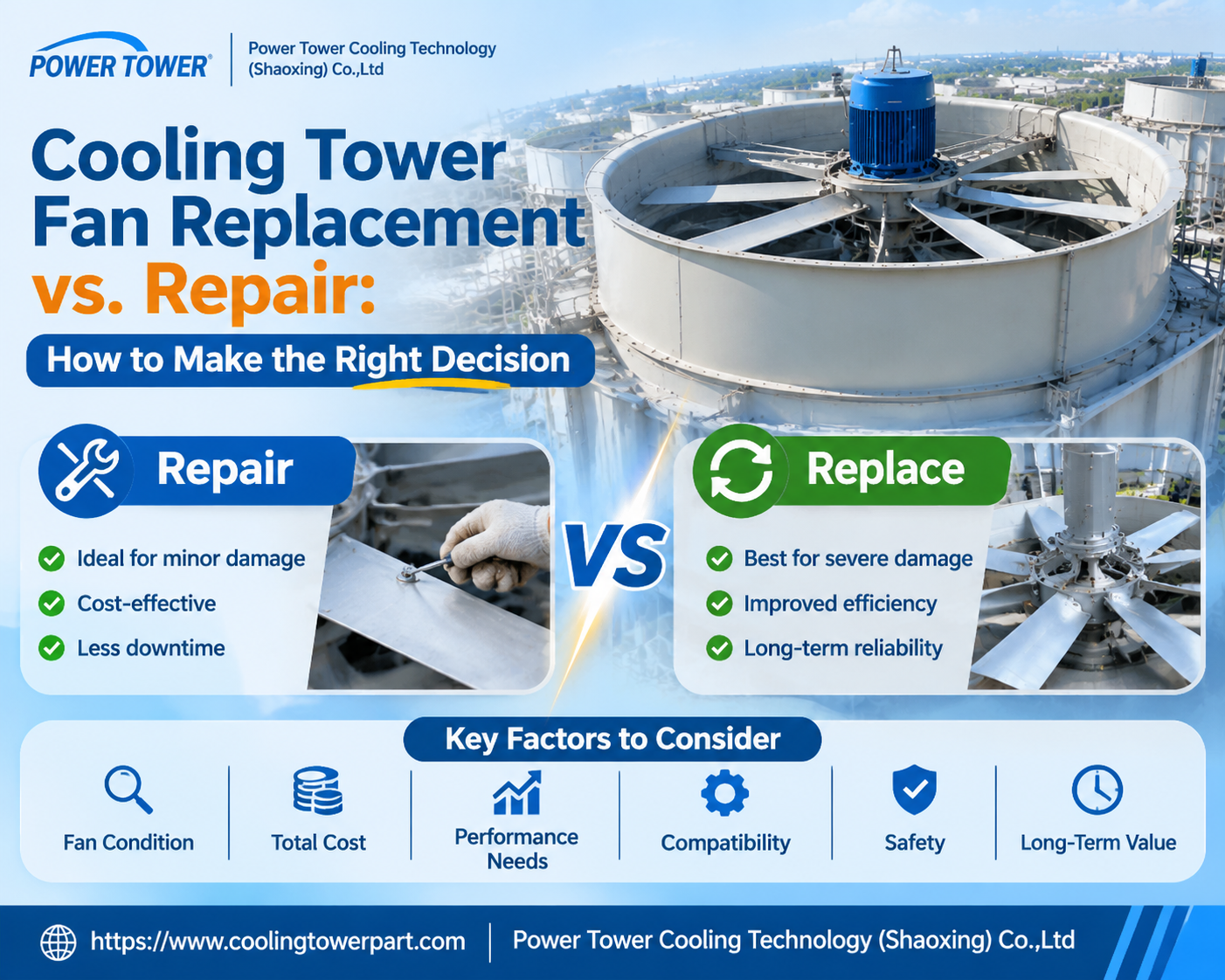
The answer depends on several factors, including the type of damage, equipment age, operating conditions, repair costs, and required cooling performance. A minor problem may only need a component replacement, while extensive structural damage or repeated failures may make a complete fan replacement the more economical option.
In this guide, we compare cooling tower fan replacement vs. repair, explain the warning signs to watch for, and show you how to make a practical decision for your industrial cooling system.
2. Understanding the Role of a Cooling Tower Fan
Before deciding whether to repair or replace a fan, it helps to understand what the fan actually does.
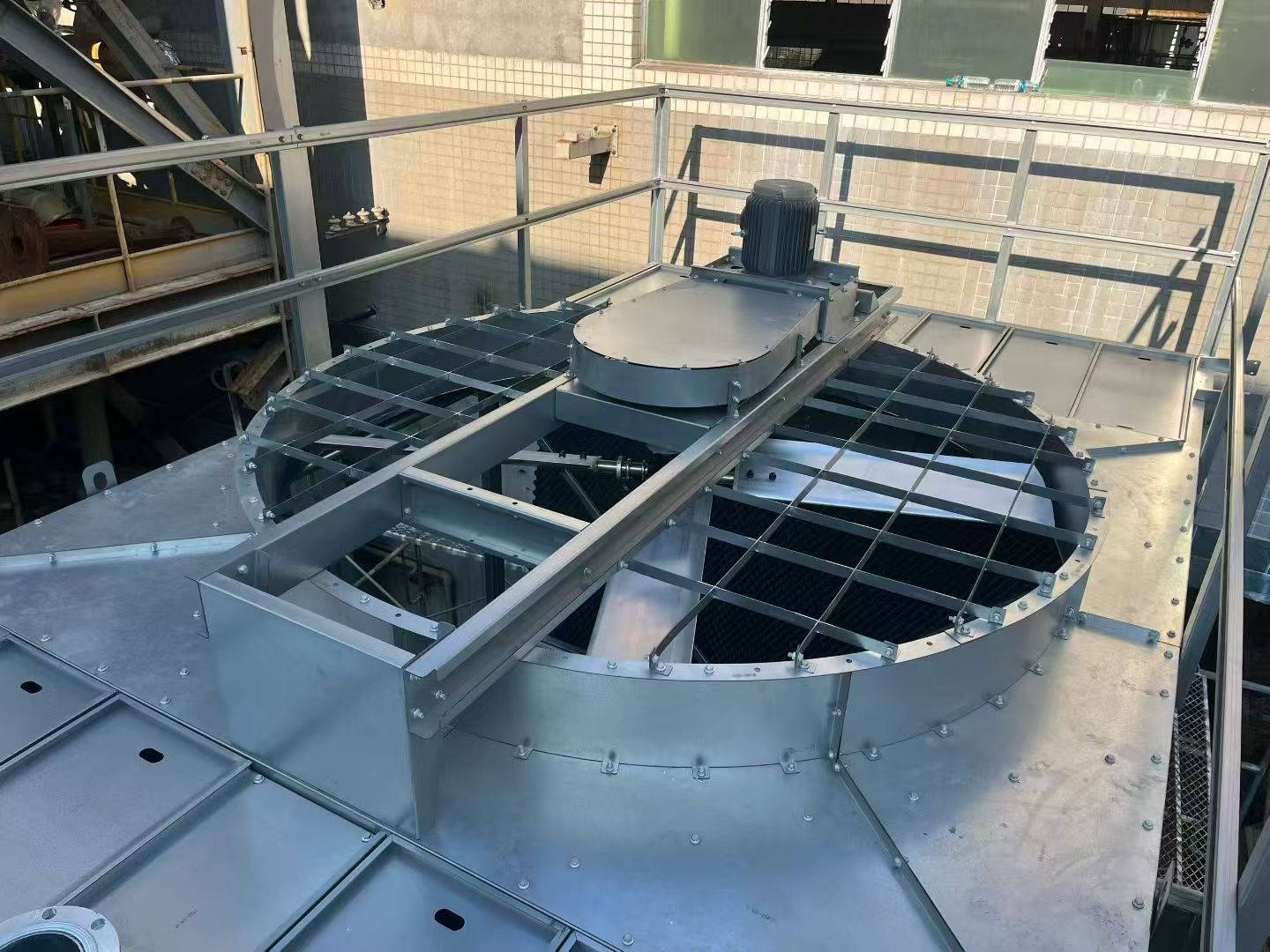
A cooling tower fan creates the airflow needed to support heat and mass transfer inside the tower. Depending on the cooling tower design, it may be installed above the tower as an induced-draft fan or elsewhere in the airflow path as part of a forced-draft arrangement.
The fan does not cool the water by itself. Instead, it moves air through the tower so that heat can be transferred from the circulating water to the surrounding air.
2.1 How the Fan Supports Heat Rejection
In a typical mechanical-draft cooling tower, warm water is distributed over the fill media while the fan moves air through the tower. A portion of the water evaporates, carrying heat away from the remaining water.
The fan must provide sufficient airflow to support the tower's design operating conditions. If airflow becomes inadequate, the cooling tower may struggle to maintain the required cold-water temperature.
However, simply installing a larger or faster fan does not automatically improve efficiency. The fan must match the tower's airflow resistance, motor capacity, and thermal requirements.
2.2 Main Cooling Tower Fan Components
A typical cooling tower fan assembly may include:
Fan blades: Move air through the tower.
Fan hub: Connects and supports the blades.
Drive shaft: Transfers mechanical power in certain drive arrangements.
Gearbox or belt drive: Transmits power from the motor to the fan.
Electric motor: Provides the power needed to rotate the fan.
Fan cylinder or fan stack: Guides airflow through the discharge opening.
Mounting and support structure: Holds the fan assembly in position.
Not every cooling tower uses the same configuration. Some systems have direct-drive fans, while others use gearboxes or belt-driven arrangements. This distinction matters when planning repairs or replacement.
3. Common Cooling Tower Fan Problems
Cooling tower fans operate in demanding environments. They are exposed to moisture, temperature changes, airborne contaminants, vibration, and continuous mechanical loads.
Over time, these conditions can affect fan performance and component reliability.
3.1 Blade Damage and Deformation
Fan blades may develop cracks, surface damage, erosion, or deformation. Foreign objects, corrosion, excessive vibration, and improper operation can all contribute to blade deterioration.
A damaged blade can change the fan's aerodynamic performance and create an imbalance. Even a small difference in blade condition or mass distribution may increase vibration at operating speed.
If the damage is limited and the manufacturer permits an approved repair, repairing or replacing the affected component may be possible. However, cracked structural areas, damaged blade roots, or significant deformation should never be treated as minor cosmetic problems.
3.2 Vibration and Unusual Noise
Excessive vibration is one of the most important warning signs in a cooling tower fan system.
Possible causes include:
Fan imbalance.
Loose mounting bolts.
Damaged bearings.
Misalignment.
Bent or damaged blades.
Gearbox deterioration.
Structural resonance.
Unusual noise may also indicate mechanical contact, bearing problems, or changes in the drive system.
Do not assume that tightening a few bolts will solve every vibration problem. The source must be identified before the equipment returns to service.
3.3 Motor and Gearbox Problems
Motor overheating, abnormal current, bearing noise, oil leakage, and gearbox temperature increases can all affect fan operation.
Some problems can be corrected through electrical maintenance, lubrication, alignment, or component replacement. Others may indicate severe internal wear or a drive system that is approaching the end of its useful service life.
Importantly, a motor or gearbox failure does not automatically mean the fan blades must also be replaced. Evaluate the fan assembly and drive system separately.
3.4 Corrosion and Structural Deterioration
Cooling towers create a wet operating environment. Depending on water chemistry and surrounding conditions, metal components may experience corrosion.
FRP fan blades and cylinders are generally resistant to many corrosive environments, but their performance still depends on resin selection, reinforcement, manufacturing quality, temperature, and chemical exposure.
When corrosion or material deterioration affects load-bearing areas, a simple surface repair may not restore the original structural reliability.
4. When Is Cooling Tower Fan Repair the Better Choice?
Repair is often the more practical option when the damage is limited, the fan design remains suitable, and the main structure is still in good condition.
The goal is not simply to spend less today. It is to restore reliable operation without creating additional maintenance problems.
4.1 Minor and Localized Damage
If inspection confirms that the problem is limited to a replaceable or repairable component, repair may be appropriate.
Examples include:
Loose fasteners.
Minor alignment issues.
Worn replaceable bearings.
Belt deterioration.
Certain electrical connection problems.
Localized damage that can be repaired using an approved procedure.
For composite blades, repairability depends on the location, depth, and extent of the damage. Structural cracks and damage near highly stressed attachment areas require professional assessment.
4.2 Problems with Replaceable Components
A cooling tower fan is a system of connected components. Not every failure requires replacing the entire assembly.
For example, if a gearbox has a problem but the blades, hub, and support structure remain in good condition, repairing or replacing the gearbox may be sufficient.
Similarly, a motor replacement may restore operation without changing the complete fan assembly, provided the new motor is compatible with the system.
4.3 The Fan Is Still Properly Sized
Repair makes more sense when the existing fan still meets the cooling tower's design requirements.
If the fan provides the required airflow, operates within acceptable mechanical limits, and matches the system's static pressure requirements, there may be little reason to replace it simply because it is old.
In this situation, targeted maintenance can extend service life while avoiding unnecessary capital expenditure.
5. When Should You Replace a Cooling Tower Fan?
Sometimes repair only delays a bigger problem. If the fan has extensive damage, poor performance, or repeated failures, replacement may offer better long-term value.
5.1 Extensive Blade or Hub Damage
A fan with multiple cracked blades, serious deformation, or damaged hub connections may no longer be suitable for continued operation.
The hub and blade attachment points are particularly important because they transfer mechanical loads during rotation.
If these areas are compromised, replacement is often safer than attempting an uncertain repair.
Never operate a fan with suspected structural damage simply to keep production running.
5.2 Repeated Repairs and Rising Maintenance Costs
Have you repaired the same fan several times in a short period?
Repeated failures may indicate that the equipment has reached the end of its useful service life, that the original design is unsuitable for current conditions, or that an underlying problem has not been corrected.
Compare the cumulative cost of repairs with the expected cost of replacement. Include labor, spare parts, downtime, inspection, and the possibility of future failures.
When maintenance costs continue increasing without delivering reliable performance, replacement deserves serious consideration.
5.3 Poor Performance or Outdated Design
Older fans may not match current operating requirements.
For example, a cooling tower may have undergone process changes, increased cooling demand, or modifications to its fill and airflow system. The original fan may no longer provide the required performance.
A properly engineered replacement may improve airflow distribution or reduce the power required to achieve the same operating duty.
However, any upgrade must be based on actual system calculations. A fan with a higher airflow rating is not necessarily more efficient if it also creates excessive pressure losses or requires more motor power.
5.4 Spare Parts Are Difficult to Obtain
Some older cooling tower models use discontinued fan blades, hubs, or drive components.
If replacement parts are difficult to source, repairs may become expensive and time-consuming. Custom manufacturing may also require detailed measurements and engineering verification.
In these cases, replacing the fan with a compatible modern design may simplify future maintenance and spare-part management.
6. Cooling Tower Fan Replacement vs. Repair: Key Differences
The following table provides a practical comparison.
| Evaluation Factor | Repair | Replacement |
| Initial investment | Usually lower | Usually higher |
| Downtime | Often shorter for minor repairs | May require more planning and installation |
| Equipment condition | Suitable when damage is limited | Better for extensive deterioration |
| Performance improvement | Usually restores existing performance | May provide an opportunity for an upgrade |
| Spare parts | Depends on existing model availability | New parts can be specified for future support |
| Long-term maintenance | May remain high if equipment is aging | May reduce maintenance needs when properly selected |
| Engineering requirements | Depends on repair complexity | Requires compatibility and performance verification |
| Best application | Localized, repairable problems | Severe damage, repeated failures, or unsuitable design |
There is no universal winner. The right decision depends on the condition of the existing fan and the cooling tower's actual operating requirements.
7. Cost Comparison: Repair or Replacement?
Cost is often the first question facility managers ask. But comparing only the repair quotation with the replacement quotation can lead to the wrong decision.
You should consider the total cost of ownership, not just the initial purchase price.
7.1 Direct Repair Costs
Repair costs may include:
Inspection and troubleshooting.
Replacement blades or other components.
Motor or gearbox maintenance.
Balancing and alignment.
Labor and installation.
Testing and commissioning.
Production downtime.
A minor repair may be inexpensive. However, a complex repair involving difficult access, specialized labor, or custom components can become surprisingly costly.
7.2 Total Replacement Costs
A replacement project may involve more than purchasing a new fan.
Consider the following:
New fan assembly or components.
Engineering and compatibility checks.
Removal of existing equipment.
Lifting and installation.
Electrical and mechanical modifications.
Balancing and commissioning.
Additional downtime and production planning.
If the replacement fan is not dimensionally or mechanically compatible with the existing tower, additional modifications may be required.
7.3 Consider Long-Term Operating Expenses
A useful way to compare the two options is to estimate their total cost over a defined evaluation period.
Total Repair Cost = Initial Repair + Expected Future Repairs + Downtime Costs + Operating Costs
Total Replacement Cost = Equipment Purchase + Installation + Downtime Costs + Expected Maintenance + Operating Costs
For an energy-saving upgrade, estimate the potential electricity savings using measured operating conditions rather than relying only on a supplier's general efficiency claims.
For example, if a new fan reduces power consumption, the annual energy saving can be estimated as:
Annual Energy Savings = Power Reduction (kW) × Operating Hours × Electricity Price per kWh
This calculation provides a starting point for evaluating the investment. Actual savings depend on operating hours, load conditions, control strategy, and system performance.
8. How to Evaluate Cooling Tower Fan Condition
Before making a decision, conduct a structured inspection. A proper assessment helps identify whether the problem is isolated or affects the complete fan system.
8.1 Visual Inspection
Check the following areas:
Blade surfaces and leading edges.
Blade roots and attachment points.
Fan hub and fasteners.
Fan cylinder and support structure.
Motor and gearbox housing.
Signs of corrosion, cracking, or deformation.
Look for differences between blades. Uneven damage may indicate imbalance or a problem with the operating environment.
8.2 Vibration and Noise Checks
Measure vibration at appropriate points on the fan assembly, motor, gearbox, and supporting structure.
Compare the results with the equipment manufacturer's limits and applicable site maintenance standards.
Listen for unusual sounds such as grinding, knocking, or repeated mechanical contact. These symptoms can help identify developing problems, but they should be confirmed through inspection and measurement.
8.3 Airflow and Operating Performance
Review the cooling tower's operating data.
Useful information includes:
Hot-water inlet temperature.
Cold-water outlet temperature.
Water flow rate.
Ambient wet-bulb temperature.
Fan speed.
Motor power or current.
Process cooling demand.
A decline in cooling performance does not always mean the fan is defective. Fouled fill, poor water distribution, blocked air inlets, excessive recirculation, and changes in water flow can produce similar symptoms.
Evaluate the complete cooling tower before ordering replacement equipment.
9. Important Factors Before Replacing a Cooling Tower Fan
If replacement is necessary, selecting the correct fan is just as important as deciding to replace the old one.
9.1 Fan Diameter and Blade Configuration
Fan diameter must match the cooling tower's available space and fan cylinder geometry.
Blade number, pitch, profile, and hub configuration also influence airflow and power requirements.
Do not assume that a fan with the same diameter will automatically fit. Confirm the hub dimensions, mounting arrangement, blade clearance, and rotation direction.
9.2 Airflow, Static Pressure, and Speed
The replacement fan must deliver the required airflow against the resistance of the cooling tower.
Important parameters include:
The fan should be selected using the tower's actual system resistance and performance requirements. An oversized fan can increase power consumption, vibration, or mechanical loading.
9.3 Motor and Drive Compatibility
Check the motor rating, voltage, frequency, rotational speed, mounting arrangement, and drive configuration.
For gearbox-driven systems, verify the gearbox ratio, output speed, torque capacity, and shaft connection.
A replacement fan must operate within the mechanical limits of the complete drive system.
9.4 Material Selection and Operating Environment
Cooling tower fans are commonly manufactured from FRP (fiber-reinforced plastic), aluminum alloys, and stainless steel.
Each material has different characteristics.
| Material | Main Characteristics | Typical Considerations |
| FRP | Lightweight and corrosion resistant | Resin system, reinforcement, temperature, and chemical compatibility |
| Aluminum alloy | Relatively lightweight and easy to handle | Alloy selection, corrosion exposure, and mechanical strength |
| Stainless steel | High mechanical strength and corrosion resistance depending on grade | Grade selection, weight, and operating environment |
There is no single material that suits every cooling tower. Consider the water environment, ambient conditions, fan diameter, mechanical loads, and maintenance requirements before choosing.
10. Can You Replace Only the Fan Blades?
Yes, in some situations, replacing individual fan blades is a practical alternative to replacing the complete fan assembly.
This option may be suitable when:
The hub is in good structural condition.
The remaining blades are serviceable.
Replacement blades are compatible with the existing fan.
The manufacturer approves the replacement configuration.
The fan can be properly balanced after installation.
However, blade replacement is not simply a matter of matching the length and installing a new part.
Blade profile, mass, pitch angle, material, attachment design, and aerodynamic characteristics must be considered.
Using blades with different specifications may create imbalance or change the fan's operating point. Always verify compatibility before installation.
11. Benefits of a Cooling Tower Fan Upgrade
When the existing fan is outdated or unsuitable, an engineered upgrade can offer several benefits.
Improved airflow performance: A properly selected fan can better match the cooling tower's required airflow and system resistance.
Potential energy savings: An efficient fan operating at an appropriate duty point may reduce the power needed to deliver the required airflow.
Improved reliability: Replacing deteriorated blades, hubs, or drive components can reduce the risk of unexpected failures.
Reduced maintenance requirements: A suitable modern design may simplify inspection and spare-part management.
Better operating flexibility: In some systems, compatible variable-speed control can help adjust airflow to changing cooling loads.
Remember that these benefits depend on the complete system design. A fan upgrade alone cannot correct every cooling tower performance problem.
12. Common Mistakes to Avoid
Several mistakes can turn a straightforward repair or replacement project into an expensive problem.
Choosing based only on price: The cheapest fan may not meet the required airflow, pressure, or mechanical specifications.
Ignoring the original design: Fan diameter, blade geometry, hub dimensions, and drive configuration must be checked before ordering.
Replacing the fan without checking the tower: Poor fill condition, blocked air passages, and water distribution problems may be the real causes of low cooling performance.
Mixing incompatible blades: Different blade weights or aerodynamic characteristics can create imbalance and unsafe operating conditions.
Ignoring vibration: A fan should not be returned to service without investigating abnormal vibration or suspected mechanical contact.
Skipping commissioning: Installation should be followed by appropriate inspection, testing, and verification of operating conditions.
13. Installation and Safety Considerations
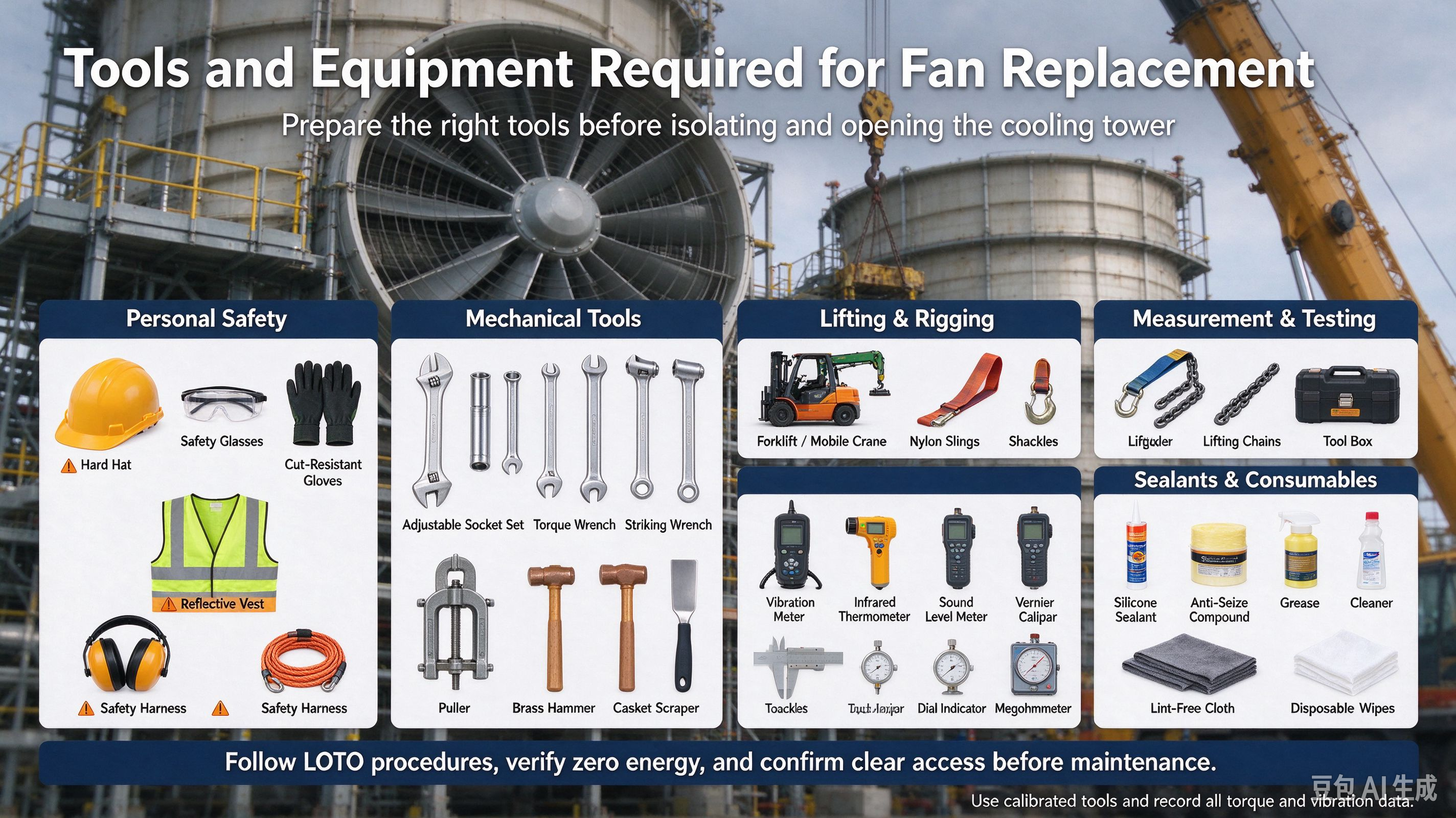
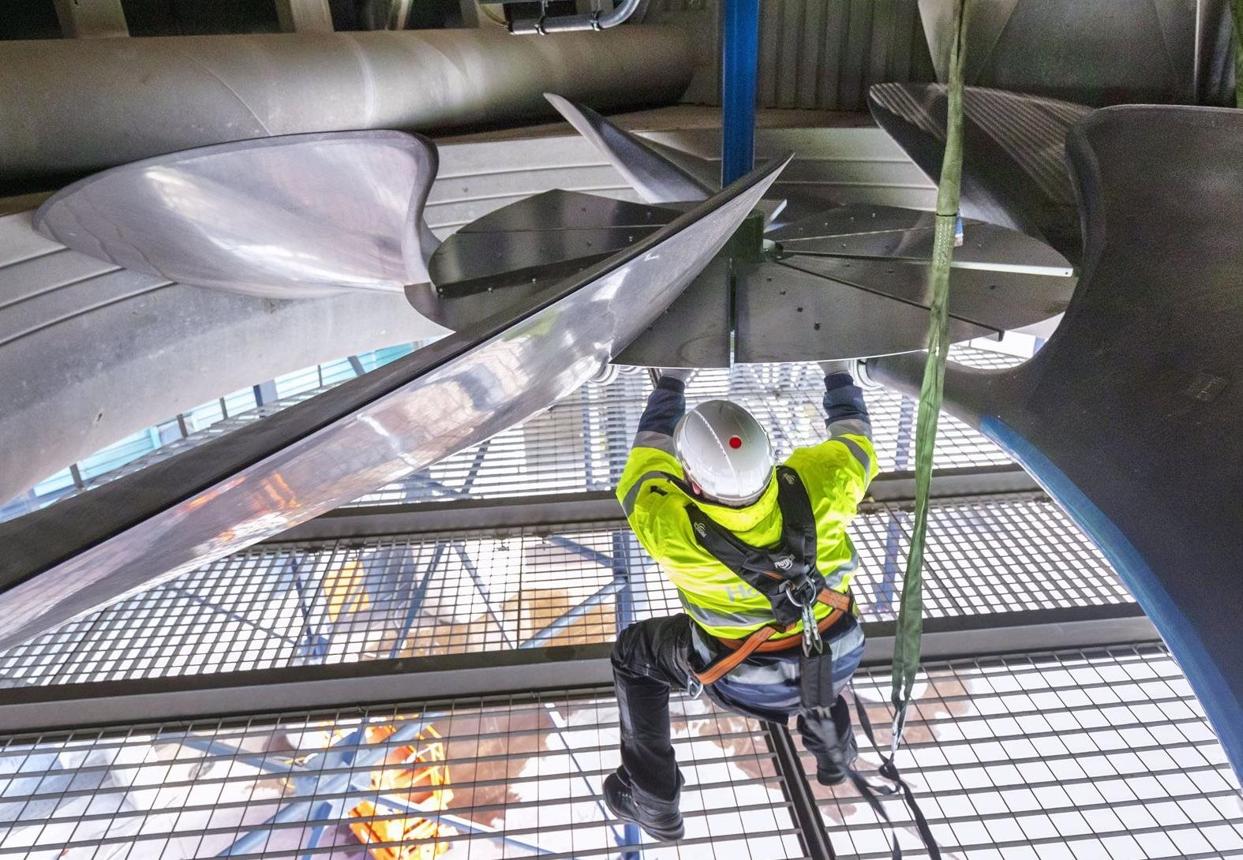
Cooling tower fan installation involves rotating machinery, electrical equipment, elevated work areas, and potentially heavy components.
Before inspection or maintenance, isolate electrical power and apply the site's lockout/tagout procedures. Confirm that the fan cannot start unexpectedly.
During installation:
Verify the replacement equipment against approved drawings and specifications.
Inspect the fan hub, blades, fasteners, and support structure.
Check blade pitch and orientation according to the manufacturer's instructions.
Confirm blade-tip clearance inside the fan cylinder.
Verify motor, gearbox, and drive alignment.
Tighten fasteners to the specified requirements.
Complete balancing and other required mechanical checks.
Conduct controlled commissioning and monitor vibration, noise, and motor load.
Never operate a fan if blade-to-cylinder contact is possible or if structural damage remains unresolved.
14. Preventive Maintenance After Repair or Replacement
Whether you repair or replace your cooling tower fan, preventive maintenance helps protect the investment.
A practical maintenance program should include:
Regular visual inspection of blades and hubs.
Checking fasteners and mounting connections.
Monitoring vibration and unusual noise.
Inspecting bearings and lubrication where applicable.
Checking gearbox oil condition and leakage.
Monitoring motor temperature and electrical load.
Inspecting the fan cylinder for damage or deformation.
Recording maintenance findings and operating data.
Inspection frequency should reflect operating hours, environmental conditions, equipment criticality, and manufacturer recommendations.
Keep a record of vibration measurements and maintenance activities. Comparing historical data can help identify gradual deterioration before it becomes a major failure.
15. How to Choose a Reliable Cooling Tower Fan Supplier
A reliable supplier should provide more than a product quotation. Technical support and compatibility verification are essential.
When evaluating a cooling tower fan supplier, consider:
Product and engineering experience: Does the supplier understand industrial cooling tower fan applications?
Technical documentation: Can the supplier provide drawings, dimensions, material details, and relevant performance information?
Customization capability: Can the fan be manufactured or configured to match the existing tower?
Quality control: Does the supplier have clear inspection and production quality procedures?
After-sales support: Can the supplier help with installation questions, spare parts, and technical troubleshooting?
Before placing an order, provide the supplier with the original fan model, diameter, blade number, motor power, rotational speed, hub dimensions, and operating requirements whenever available.
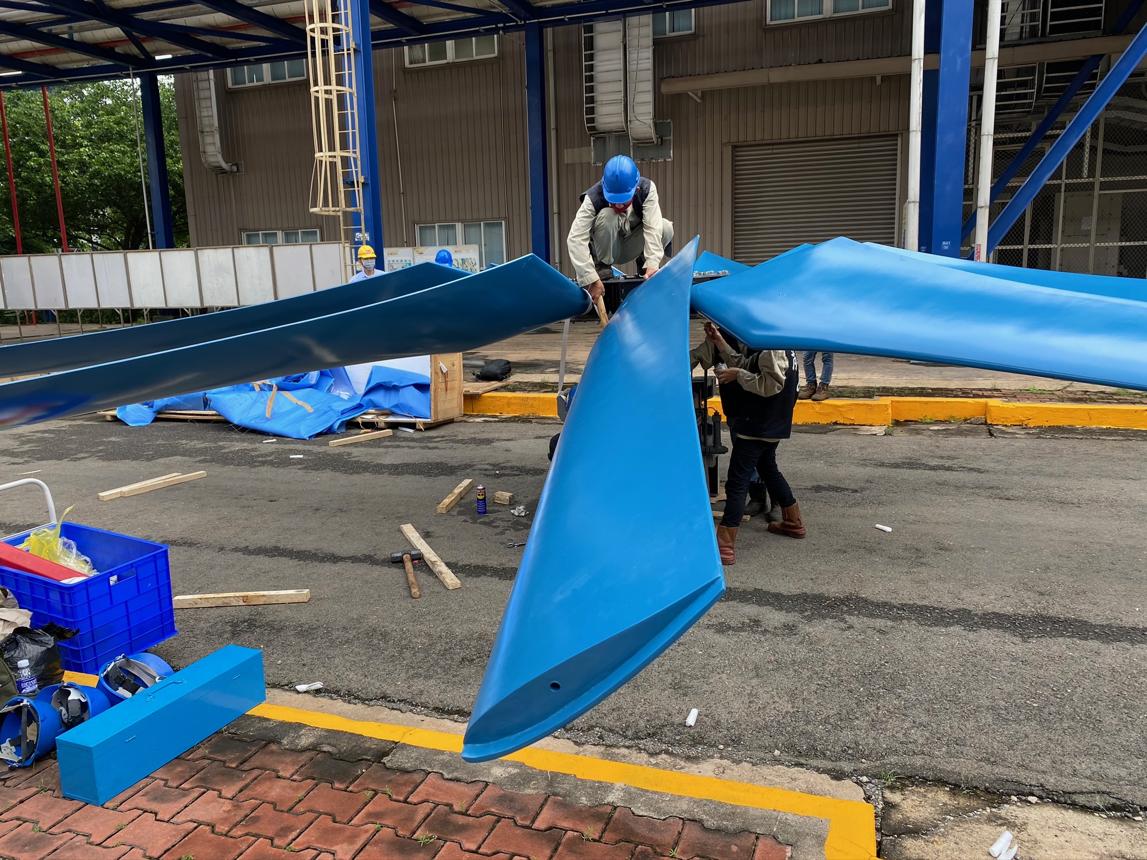
16. Cooling Tower Fan Solutions from Power Tower
Power Tower Cooling Technology (Shaoxing) Co.,Ltd focuses on cooling tower components and related industrial cooling applications.
For customers considering cooling tower fan repair, replacement, or upgrading, selecting compatible components is an important part of maintaining reliable tower operation.
The correct solution should be based on the existing fan configuration, cooling tower dimensions, operating conditions, and required airflow performance.
If you are planning a fan replacement project, prepare the available equipment information before requesting a quotation. This helps suppliers evaluate compatibility and identify the technical details that need confirmation.
Visit https://www.coolingtowerpart.com to learn more about cooling tower components and discuss your equipment requirements.
17. Frequently Asked Questions
17.1 Is It Cheaper to Repair or Replace a Cooling Tower Fan?
Repair is usually less expensive initially when the damage is minor and localized. However, replacement may provide better long-term value if the fan has extensive damage, frequent failures, or high maintenance costs.
Compare the total expected costs rather than looking only at the initial quotation.
17.2 How Long Does a Cooling Tower Fan Last?
There is no universal service life for cooling tower fans. Actual life depends on material quality, operating speed, mechanical loading, water and air conditions, maintenance, and installation quality.
Regular inspection can help identify deterioration and determine when repair or replacement is necessary.
17.3 Can I Replace Only Damaged Fan Blades?
Yes, provided the hub and remaining components are in suitable condition and the replacement blades are approved for the existing fan assembly.
Blade geometry, weight, pitch, attachment dimensions, and balance must be verified before operation.
17.4 Does a New Fan Reduce Energy Consumption?
It can, but energy savings are not guaranteed. A replacement fan must be properly matched to the cooling tower's airflow and static pressure requirements.
Actual power consumption should be compared under equivalent operating conditions.
17.5 What Information Is Needed to Select a Replacement Fan?
Useful information includes:
Cooling tower manufacturer and model.
Existing fan diameter.
Number of blades.
Blade material and profile.
Hub dimensions and mounting arrangement.
Motor power and rotational speed.
Gearbox ratio, if applicable.
Required airflow and operating conditions.
Fan cylinder dimensions and available clearance.
Photographs, equipment drawings, and nameplate information can also help the supplier evaluate the replacement requirements.
18. Conclusion
Choosing between cooling tower fan replacement and repair is not simply a matter of comparing two quotations. It requires a clear understanding of equipment condition, operating performance, safety, and long-term maintenance costs.
Repair is often the right choice for minor, localized problems when the existing fan remains structurally sound and correctly sized. Replacement is generally worth considering when the fan has extensive damage, repeated failures, poor performance, or unavailable spare parts.
Before making a decision, inspect the complete fan assembly and evaluate the cooling tower's operating conditions. If replacement is necessary, verify the fan dimensions, materials, airflow requirements, drive compatibility, and installation clearances.
With the right assessment and a properly selected solution, you can maintain reliable cooling tower operation while controlling maintenance costs and avoiding unnecessary downtime.
Power Tower Cooling Technology (Shaoxing) Co.,Ltd
Website: https://www.coolingtowerpart.com


