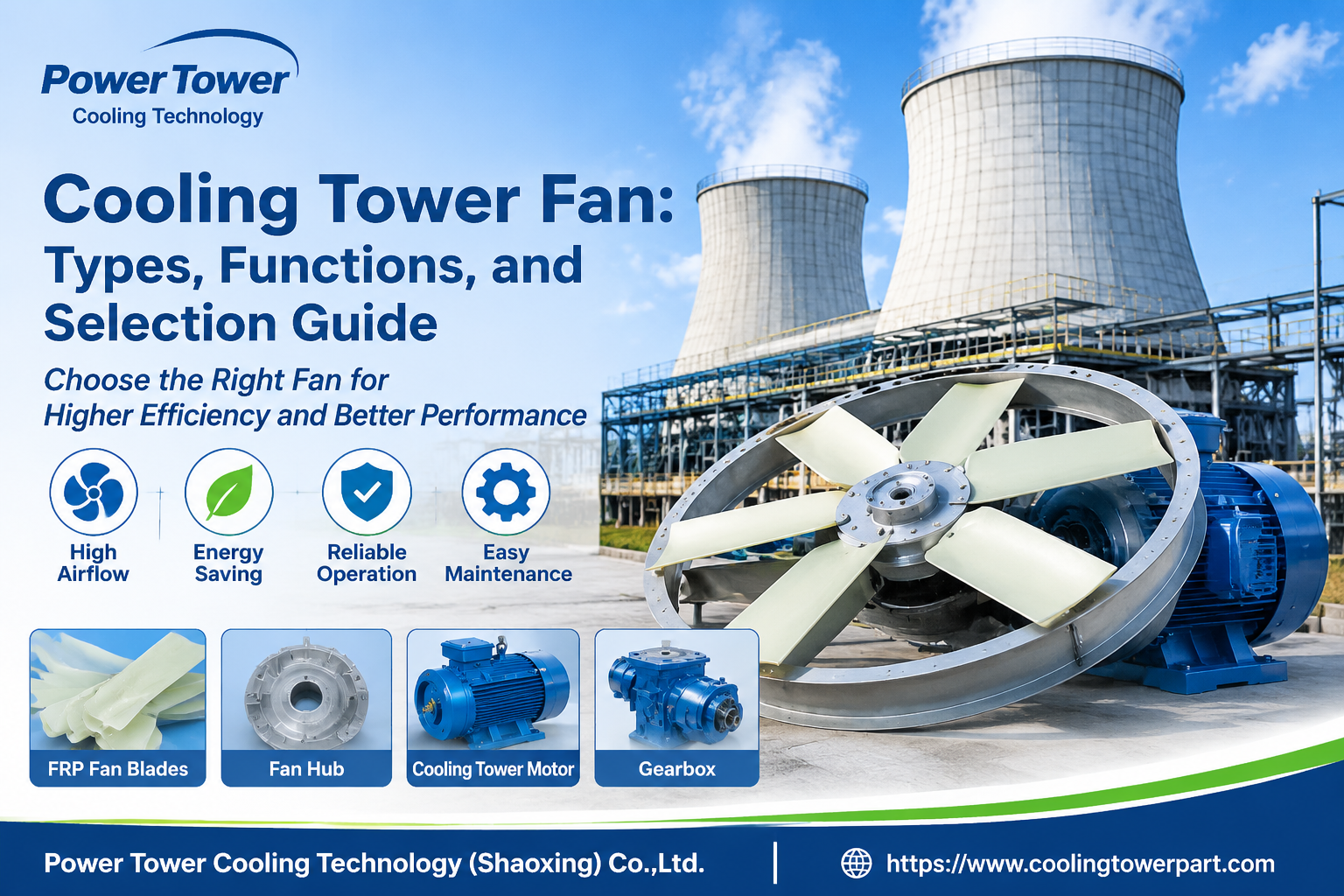
1. Introduction to Cooling Tower Fans
A cooling tower fan may look like a simple rotating machine, but it plays a major role in the performance of an industrial cooling system. Without sufficient airflow, even a well-designed cooling tower can struggle to remove heat from circulating water.
Whether you operate a power plant, chemical factory, HVAC system, or manufacturing facility, choosing the right cooling tower fan is essential. The fan affects airflow, heat rejection, electricity consumption, operating noise, and maintenance costs.
But which fan type should you choose? Should you use an axial or centrifugal fan? Is an FRP fan blade better than an aluminum blade? And what should you check before ordering a replacement?
In this guide, we will explain how cooling tower fans work, compare common fan types, discuss important selection factors, and share practical maintenance advice. We will also introduce the cooling tower fan and component solutions offered by Power Tower Cooling Technology (Shaoxing) Co.,Ltd.
2. What Is a Cooling Tower Fan?
A cooling tower fan is a mechanical device that moves air through a cooling tower to support heat transfer between the circulating water and the surrounding atmosphere.
In a mechanical-draft cooling tower, an electric motor drives the fan. Depending on the tower design, the fan either draws air through the tower or pushes air into it.
As air passes through the heat-transfer section, it comes into contact with water distributed over the fill media. A portion of the water evaporates, carrying heat away. The remaining water becomes cooler and returns to the cooling system.
Think of the fan as the engine of the tower's airflow system. It does not cool the water by itself, but it creates the air movement needed for effective heat rejection.
2.1 Main Components of a Cooling Tower Fan
A complete cooling tower fan system consists of several interconnected components. Their exact arrangement depends on the tower design and drive configuration.
Fan blades: Generate airflow by converting rotational energy into air movement.
Fan hub: Holds the blades in position and transfers rotational force to them.
Electric motor: Supplies the mechanical power needed to rotate the fan.
Gearbox or speed reducer: Reduces motor speed and increases output torque when required.
Drive shaft and coupling: Transfer power between drive components in applicable configurations.
Fan cylinder or fan stack: Guides airflow and helps reduce unnecessary air recirculation.
Bearings and mounting components: Support rotating equipment and maintain the required mechanical alignment.
Not every cooling tower uses all these components. A direct-drive fan, for example, may not require a separate gearbox or drive shaft.
2.2 How a Cooling Tower Fan Works
The operating process is straightforward, although the engineering behind it can be quite complex.
First, the electric motor starts and transfers power to the fan. The rotating blades create a pressure difference that moves air through the cooling tower.
Next, air passes through the fill section, where water flows over or across the heat-transfer surfaces. Heat moves from the water into the air, while evaporation removes additional thermal energy.
Finally, warm, moisture-laden air leaves the tower, and cooled water collects in the basin before returning to the process.
The fan, fill media, water distribution system, and drift eliminators must all work together. If one component performs poorly, the overall cooling process may suffer.
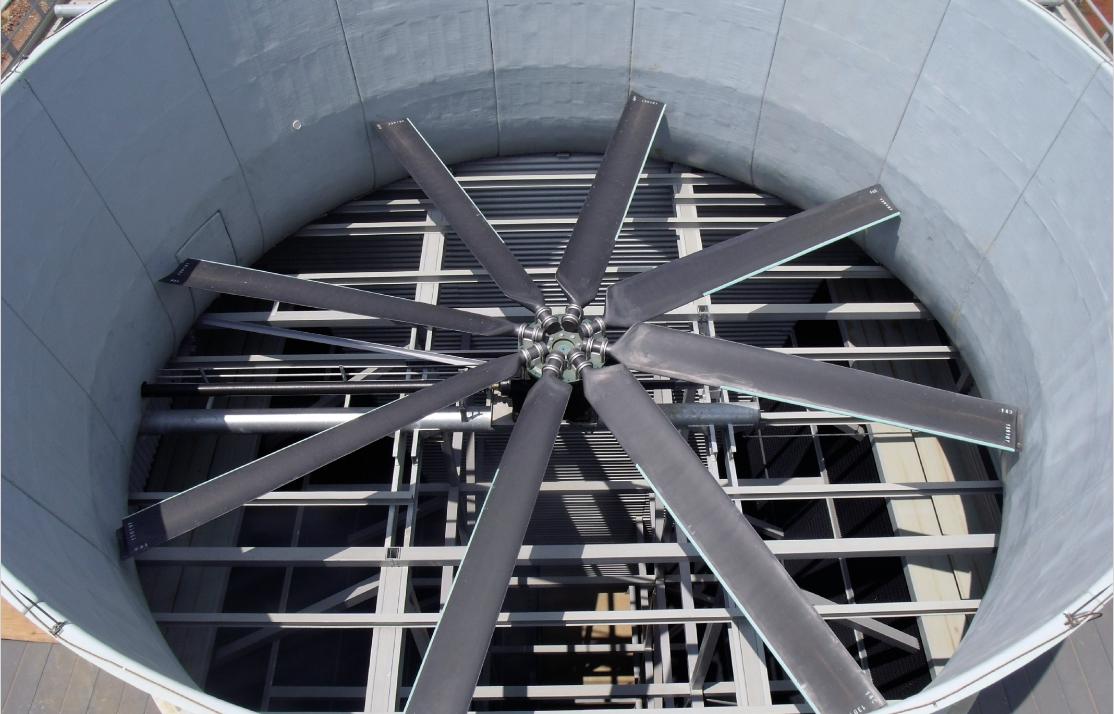
3. Main Functions of a Cooling Tower Fan
A cooling tower fan has several important responsibilities beyond simply rotating.
3.1 Creating Airflow
The fan's primary function is to create sufficient airflow through the tower.
Airflow affects how much air contacts the circulating water and how effectively heat and moisture leave the system. Too little airflow can reduce cooling performance, while excessive airflow may increase electricity consumption without providing a worthwhile improvement.
The goal is not to move the maximum possible volume of air. It is to deliver the airflow required by the cooling tower under its actual operating conditions.
3.2 Supporting Heat Transfer
Cooling tower fans help maintain the air movement needed for heat and mass transfer.
When air passes through the fill section, it supports the evaporation process. The amount of heat rejected depends on several factors, including water temperature, entering-air conditions, water flow, fill performance, and airflow.
A correctly selected fan helps the tower maintain its required cooling range and approach under the specified design conditions.
3.3 Maintaining Cooling Tower Performance
A properly operating fan helps maintain stable cooling water temperatures.
If the fan slows down unexpectedly, rotates in the wrong direction, or develops mechanical problems, the tower may experience reduced cooling capacity.
However, high outlet-water temperature does not automatically mean the fan is faulty. Blocked fill, poor water distribution, excessive heat load, unsuitable water flow, and unfavorable weather can also affect performance.
A proper inspection should examine the entire cooling tower rather than focusing on the fan alone.
4. Common Types of Cooling Tower Fans
Cooling tower fans can be classified according to airflow direction, installation arrangement, and drive configuration. Two major fan categories are axial and centrifugal fans.
4.1 Axial Flow Cooling Tower Fans
Axial fans are widely used in mechanical-draft cooling towers, particularly large industrial units.
In an axial fan, air moves generally parallel to the fan shaft. The rotating blades create airflow along the shaft direction, allowing large volumes of air to pass through the tower.
Common characteristics include:
High airflow capacity.
Suitable performance in relatively low-pressure systems.
Large fan diameters for industrial applications.
Compatibility with FRP and aluminum alloy blades.
Availability in different blade numbers, profiles, and drive arrangements.
Axial fans are commonly installed in induced-draft and forced-draft cooling towers.
They are often a practical choice when the tower requires substantial airflow without unusually high system resistance.
4.2 Centrifugal Cooling Tower Fans
Centrifugal fans operate differently. Air enters the impeller and is accelerated outward by centrifugal action, leaving the fan in a radial direction.
These fans can generate higher pressure than many axial fan configurations, making them suitable for systems with greater airflow resistance.
Depending on the application, centrifugal fans may use forward-curved, backward-curved, or radial blades.
Their characteristics include:
Higher pressure capability in suitable designs.
Different installation and ducting arrangements.
Potentially larger space requirements.
Different noise and energy characteristics depending on the operating point.
Centrifugal fans are used in certain cooling and ventilation applications, including configurations where airflow must pass through more restrictive passages.
They are not automatically better or worse than axial fans. The correct choice depends on the required airflow, pressure, system layout, and operating efficiency.
4.3 Induced-Draft and Forced-Draft Fan Arrangements
Another important distinction is where the fan is installed.
Induced-draft cooling tower fans are usually located near the top of the tower. They pull air through the fill section and discharge warm air upward.
This arrangement is widely used in industrial cooling towers because it helps direct warm, humid discharge air away from the air inlet area.
Forced-draft cooling tower fans are generally installed near the air inlet. They push air into the tower, where it travels through the heat-transfer section before leaving.
These arrangements are different from axial and centrifugal classifications. An induced-draft fan can be axial or, in some designs, use another fan configuration. The same principle applies to forced-draft systems.
5. Cooling Tower Fan Blade Materials and Designs
Fan blade material affects weight, corrosion resistance, mechanical strength, maintenance requirements, and service life.
The best material depends on the operating environment and the fan's engineering requirements.
5.1 FRP Fan Blades
FRP stands for fiberglass-reinforced plastic. FRP cooling tower fan blades combine a lightweight structure with good strength and corrosion resistance.
They are widely used in industrial cooling towers because the environment often contains moisture, water droplets, and water-treatment chemicals.
Potential advantages include:
Good corrosion resistance.
Relatively low weight.
High strength-to-weight ratio.
Flexibility in blade profile and design.
Suitability for demanding industrial environments when properly specified.
FRP blades can be a suitable option for facilities that want to reduce corrosion-related maintenance.
However, FRP quality depends on the resin system, fiber reinforcement, manufacturing process, structural design, and quality control. Buyers should not assume that every FRP blade has the same performance.
5.2 Aluminum Alloy Fan Blades
Aluminum alloy is another common material for cooling tower fan blades.
Aluminum blades can provide a good balance of strength and weight. They may also be suitable for applications where dimensional stability, mechanical properties, and ease of inspection are important.
However, aluminum can be affected by corrosion depending on the alloy, surface condition, water chemistry, and exposure environment.
Before selecting aluminum blades, check the manufacturer's material specifications and confirm that the design suits the cooling tower's operating conditions.
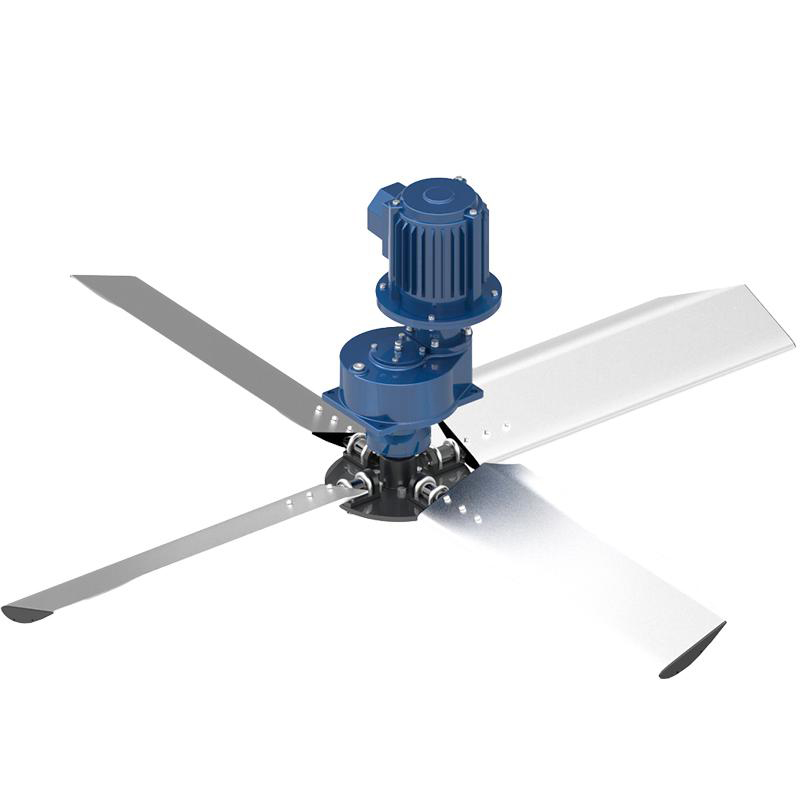
5.3 Blade Shape, Pitch, and Diameter
Material is only one part of fan selection. Blade geometry also has a major influence on performance.
Three important parameters are:
Blade profile: The aerodynamic shape affects how efficiently the blade produces airflow.
Blade pitch: The angle of the blade affects airflow, pressure, and motor load. Increasing pitch does not always improve cooling. An excessive pitch angle may overload the motor or gearbox.
Fan diameter: Diameter influences the amount of air the fan can move at a given operating speed and design condition.
Blade number, spacing, hub geometry, rotational speed, and fan-stack clearance also matter.
For replacement projects, avoid choosing blades based only on diameter or appearance. The complete fan assembly must be checked against the original performance requirements.
6. How to Choose the Right Cooling Tower Fan
Selecting a cooling tower fan is an engineering decision, not simply a product-size comparison.
A fan that looks suitable may fail to deliver the required airflow after installation. Worse, an incompatible fan can increase power consumption or place excessive stress on the drive system.
Here are the main factors to evaluate.
6.1 Determine Required Airflow
Start with the cooling tower's required airflow under its design operating conditions.
Airflow requirements depend on:
Cooling water flow rate.
Entering and leaving water temperatures.
Entering-air wet-bulb temperature.
Heat load.
Tower configuration.
Fill characteristics.
Design and operating conditions.
The required airflow should be established through the tower's original engineering data or a suitable performance assessment.
Do not select a fan based only on the cooling tower's nominal tonnage. Two towers with similar capacities may have different airflow requirements.
6.2 Check Static Pressure and System Resistance
Air must pass through several parts of the cooling tower, including air inlets, fill media, drift eliminators, and other internal structures.
These components create resistance to airflow.
The fan must provide enough pressure to overcome the system resistance while delivering the required airflow.
When evaluating a fan, review its performance curve and identify the expected operating point. The fan curve should be considered together with the system resistance curve.
A fan with impressive maximum airflow may not perform well at the actual operating pressure.
6.3 Match Fan Diameter and Speed
Fan diameter and rotational speed directly affect airflow and power requirements.
A larger fan is not automatically the right choice. It must fit the fan cylinder and maintain appropriate clearance from surrounding structures.
Rotational speed must also match the fan design and drive system.
For a geometrically similar fan operating under comparable conditions, the fan laws provide a useful approximation:
Airflow changes approximately in proportion to rotational speed.
Pressure changes approximately with the square of rotational speed.
Power changes approximately with the cube of rotational speed.
This means a relatively small speed increase can create a significant increase in power demand.
Always verify the manufacturer's operating limits and the motor's available capacity before changing fan speed.
6.4 Select the Right Motor and Gearbox
The motor and gearbox must be compatible with the selected fan.
Important motor specifications include:
For gearbox-driven systems, check the gear ratio, input and output speeds, rated torque, service factor, mounting dimensions, lubrication requirements, and rotation direction.
The motor, gearbox, shaft, coupling, hub, and blades form one mechanical system. Replacing only one component without checking the others can create avoidable problems.
6.5 Consider Operating Environment
Cooling towers operate in environments that can be challenging for mechanical equipment.
High humidity, chemical exposure, salt-laden air, temperature changes, UV exposure, and continuous operation can affect fan components.
For coastal or chemical-processing facilities, corrosion resistance deserves particular attention.
For outdoor installations, consider weather protection and the condition of exposed mounting hardware.
Also evaluate operating noise, access for maintenance, available installation space, and local safety requirements.
A good selection should consider the entire service environment, not just the initial purchase price.
7. Cooling Tower Fan Efficiency and Energy Consumption
The cooling tower fan can account for a significant share of a mechanical-draft tower's electrical consumption.
This makes fan efficiency an important part of operating-cost management.
Several factors influence energy consumption:
Fan design: Aerodynamically efficient blades can help reduce the power required to produce a given airflow.
Operating speed: Running a fan faster than necessary can increase power demand substantially.
System resistance: Dirty fill, blocked air inlets, and fouled drift eliminators can restrict airflow and affect the fan's operating point.
Mechanical condition: Poor alignment, damaged bearings, imbalance, and worn drive components can create additional losses.
Control strategy: Variable-frequency drives may help reduce energy use when cooling demand changes, provided the fan, motor, and control system are suitable for variable-speed operation.
A practical energy-efficiency improvement program should begin with operating measurements. Compare fan speed, motor current, power consumption, water temperatures, and cooling demand before making changes.
Do not assume that installing a larger fan or increasing blade pitch will automatically improve efficiency.
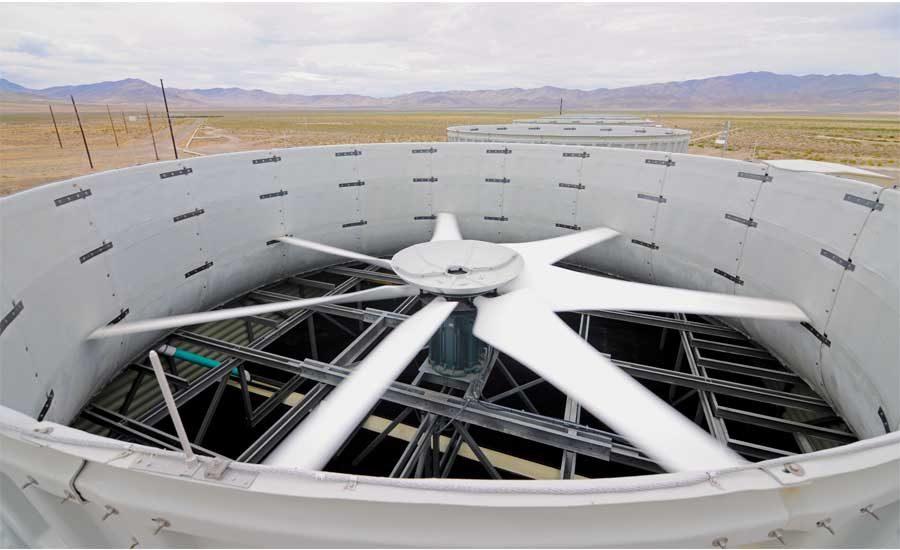
8. Common Cooling Tower Fan Problems
Even a well-designed cooling tower fan needs regular inspection. Mechanical wear, incorrect installation, and operating conditions can all affect performance.
8.1 Excessive Vibration
Excessive vibration is one of the most important warning signs in a cooling tower fan system.
Possible causes include:
Uneven deposits on fan blades.
Damaged or deformed blades.
Incorrect fan balance.
Loose fasteners.
Worn bearings.
Shaft misalignment.
Gearbox or coupling problems.
Structural looseness or resonance.
Vibration should be measured and investigated rather than treated by simply tightening random bolts or adding counterweights.
If vibration increases suddenly, stop and inspect the equipment according to the site's safety procedures.
8.2 Unusual Noise
Unusual noise may indicate mechanical or aerodynamic problems.
A rattling sound could come from loose components. Grinding or whining may indicate bearing or gearbox problems. Changes in airflow noise may point to an obstruction or an abnormal operating condition.
The source should be identified before repairs begin.
Operating a damaged fan for an extended period can lead to more serious equipment failure.
8.3 Insufficient Airflow
Insufficient airflow can reduce cooling tower performance.
Potential causes include incorrect fan rotation, unsuitable fan speed, damaged blades, excessive system resistance, or problems with the drive system.
However, poor cooling may also result from blocked fill, poor water distribution, excessive heat load, or unsuitable water flow.
A complete system inspection is more reliable than replacing the fan immediately.
8.4 Motor Overheating
Motor overheating can result from several conditions:
Excessive mechanical load.
Incorrect motor selection.
Voltage imbalance or electrical supply problems.
Poor ventilation.
Bearing problems.
Frequent starting.
Unsuitable variable-frequency-drive settings.
High ambient temperature.
Check the motor nameplate, electrical measurements, operating load, and manufacturer's recommendations.
Repeatedly resetting an overloaded motor without finding the cause can damage the motor and create safety risks.
9. Cooling Tower Fan Maintenance Tips
Preventive maintenance helps extend equipment life and reduce unplanned downtime.
A practical maintenance program should include the following checks.
Inspect fan blades: Look for cracks, deformation, erosion, corrosion, and unusual deposits.
Check blade fasteners: Verify that bolts and locking components remain secure according to the manufacturer's torque requirements.
Monitor vibration: Record vibration measurements and compare them with previous readings and applicable limits.
Inspect the hub: Check for corrosion, cracks, looseness, and signs of mechanical wear.
Check the drive system: Inspect the motor, gearbox, coupling, shaft, and bearings according to the equipment manufacturer's maintenance instructions.
Keep airflow passages clean: Remove debris and inspect fill, drift eliminators, and air inlets for blockage.
Review operating data: Monitor motor current, power consumption, fan speed, cooling water temperatures, and unusual changes in performance.
The inspection frequency should reflect operating hours, environmental conditions, equipment criticality, and manufacturer recommendations.
Before anyone works on a fan, the equipment must be safely shut down and electrically isolated. Follow the site's lockout/tagout procedure, verify zero speed, and apply appropriate fall-protection and lifting controls. Never inspect or adjust rotating blades while the fan is running.
10. When Should You Replace a Cooling Tower Fan?
Not every fan problem requires a complete replacement. Sometimes a damaged component can be repaired or replaced individually.
However, a full fan replacement or retrofit may be appropriate when:
Blades have serious cracks or structural damage.
The hub is damaged or no longer suitable for service.
The fan cannot meet the required airflow.
The existing assembly has recurring vibration problems.
Major components have reached the end of their service life.
Replacement parts are difficult to obtain.
The facility needs to upgrade its fan performance or drive arrangement.
Before ordering, compare the existing fan's specifications with the proposed replacement.
Important information includes fan diameter, blade number, blade material, rotation direction, operating speed, hub dimensions, mounting pattern, motor power, gearbox ratio, and required airflow.
For an upgrade, also verify the fan curve, motor load, structural support, and fan-stack clearance.
11. Why Choose the Right Cooling Tower Fan Supplier?
A reliable supplier should do more than offer a low price.
The supplier should understand the relationship between fan blades, hubs, motors, gearboxes, and the cooling tower's operating requirements.
When evaluating a supplier, consider:
Product range and technical knowledge.
Availability of drawings and specifications.
Material and manufacturing quality.
Experience with replacement and retrofit projects.
Ability to review existing equipment information.
Communication and delivery arrangements.
Technical support during product selection.
Ask for relevant product information before placing an order. For replacement projects, provide photographs, nameplate details, and dimensions whenever possible.
A supplier who checks compatibility before quoting can help reduce the risk of ordering unsuitable components.
12. Cooling Tower Fan Solutions from Power Tower
Power Tower Cooling Technology (Shaoxing) Co.,Ltd. supplies cooling tower components and replacement products for industrial cooling applications.
Through www.coolingtowerpart.com, customers can explore cooling tower fan-related products and other replacement components.
The product range includes FRP industrial cooling tower fans, fan blades, fan-drive components, and related parts. Depending on the project requirements, customers can discuss suitable configurations for maintenance, replacement, and retrofit applications.
Power Tower understands that a cooling tower fan is not an isolated component. Blade design, hub connection, drive arrangement, operating speed, and installation dimensions all need to be considered together.
For a replacement inquiry, it is helpful to provide:
Cooling tower manufacturer and model.
Existing fan diameter.
Number of blades.
Blade material and profile, if known.
Fan rotational speed and rotation direction.
Hub dimensions and mounting details.
Motor power and speed.
Gearbox model and ratio, if applicable.
Photos of the existing fan and nameplates.
Required quantity and delivery destination.
With this information, the product configuration can be reviewed more accurately before an order is confirmed.
Whether you need FRP fan blades, an industrial cooling tower fan, or related replacement components, contact Power Tower to discuss your project requirements.
13. Frequently Asked Questions
13.1 Which Type of Fan Is Most Common in Cooling Towers?
Axial fans are widely used in mechanical-draft cooling towers because they can move large volumes of air at relatively low pressure.
However, centrifugal fans may be suitable for applications with higher airflow resistance or different installation requirements.
The correct choice depends on the tower design and required operating conditions.
13.2 Are FRP Cooling Tower Fan Blades Better Than Aluminum Blades?
Neither material is best for every application.
FRP blades offer good corrosion resistance and a high strength-to-weight ratio. Aluminum blades can provide useful mechanical strength and dimensional stability.
The choice should consider water chemistry, environmental exposure, blade design, weight, maintenance requirements, and the manufacturer's specifications.
13.3 Can I Replace Only the Fan Blades?
Yes, in some cooling tower designs, individual blades can be replaced without changing the complete fan assembly.
However, the replacement blades must be compatible with the existing hub, blade profile, pitch, mounting arrangement, and performance requirements.
The complete assembly must also meet the manufacturer's balance requirements. Do not replace blades individually unless the fan design and manufacturer permit this approach.
13.4 How Can I Reduce Cooling Tower Fan Energy Consumption?
Start by checking whether the fan operates at the required speed and airflow.
Inspect the blades for damage or deposits, check the drive system, and make sure the fill and air passages are not blocked.
A suitable variable-frequency drive may reduce energy consumption when cooling demand varies. However, the motor and fan must be approved for the intended operating range.
Measure actual power consumption before and after any improvement to confirm the result.
13.5 What Information Is Needed When Ordering a Replacement Fan?
At minimum, provide the cooling tower model, fan diameter, blade number, rotation direction, fan speed, motor power, and hub dimensions.
Photos of the existing fan, hub, motor, gearbox, and equipment nameplates are also helpful.
For more complex projects, airflow requirements, fan performance data, and installation drawings may be needed to confirm compatibility.
14. Conclusion
A cooling tower fan is essential to the airflow and heat-rejection performance of a mechanical-draft cooling tower. Choosing the right fan involves much more than comparing diameter or motor power.
You need to consider fan type, airflow, static pressure, blade material, pitch, rotational speed, drive configuration, and the operating environment.
Regular maintenance is equally important. Inspecting blades, monitoring vibration, checking the drive system, and keeping airflow passages clean can help prevent unexpected failures.
For industrial users planning a fan replacement, maintenance project, or cooling tower upgrade, working with a knowledgeable component supplier can make the selection process more reliable.
Power Tower Cooling Technology (Shaoxing) Co.,Ltd. provides cooling tower fan-related products and replacement components through www.coolingtowerpart.com. Contact the team with your equipment details to discuss a suitable solution for your cooling tower application.


