How Does a Cooling Tower Fan Stack Improve Airflow Efficiency?
A cooling tower fan stack plays an important role in controlling airflow, improving fan discharge conditions, and supporting stable cooling tower operation. Although it may look like a simple cylindrical structure surrounding the fan, its dimensions, shape, material, and aerodynamic design can significantly influence the overall ventilation system.
In industrial cooling towers, inefficient airflow can lead to higher fan power consumption, uneven air distribution, and reduced heat rejection performance. A properly designed Cooling Tower Fan Stack helps guide air through the fan and discharge it in a more controlled direction. It can also reduce unnecessary airflow disturbances and help limit the recirculation of warm, humid exhaust air.
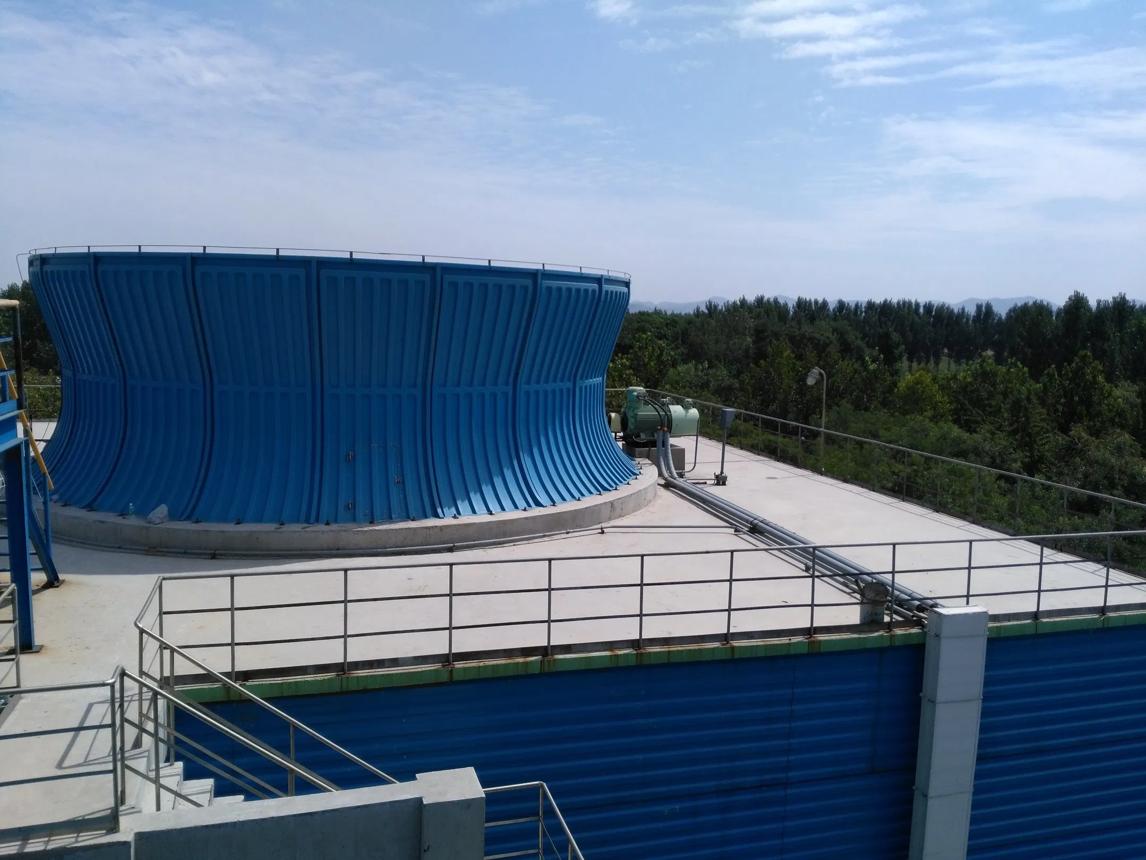
Today, many cooling tower manufacturers and industrial users choose an FRP Cooling Tower Fan Stack because of its lightweight construction, corrosion resistance, and customization flexibility. Whether used in a new cooling tower or as a replacement component, the right Fan Stack For Cooling Tower applications should be designed around fan specifications, tower structure, and actual operating conditions.
This article explores how cooling tower fan stacks improve airflow efficiency, which design factors matter most, and how buyers can select the right product for long-term performance.
What Is a Cooling Tower Fan Stack and Why Does It Matter?
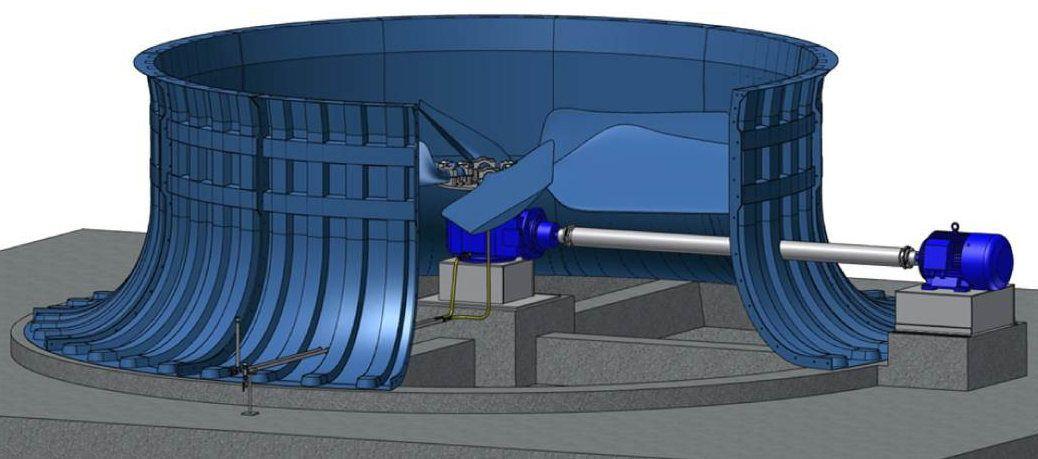
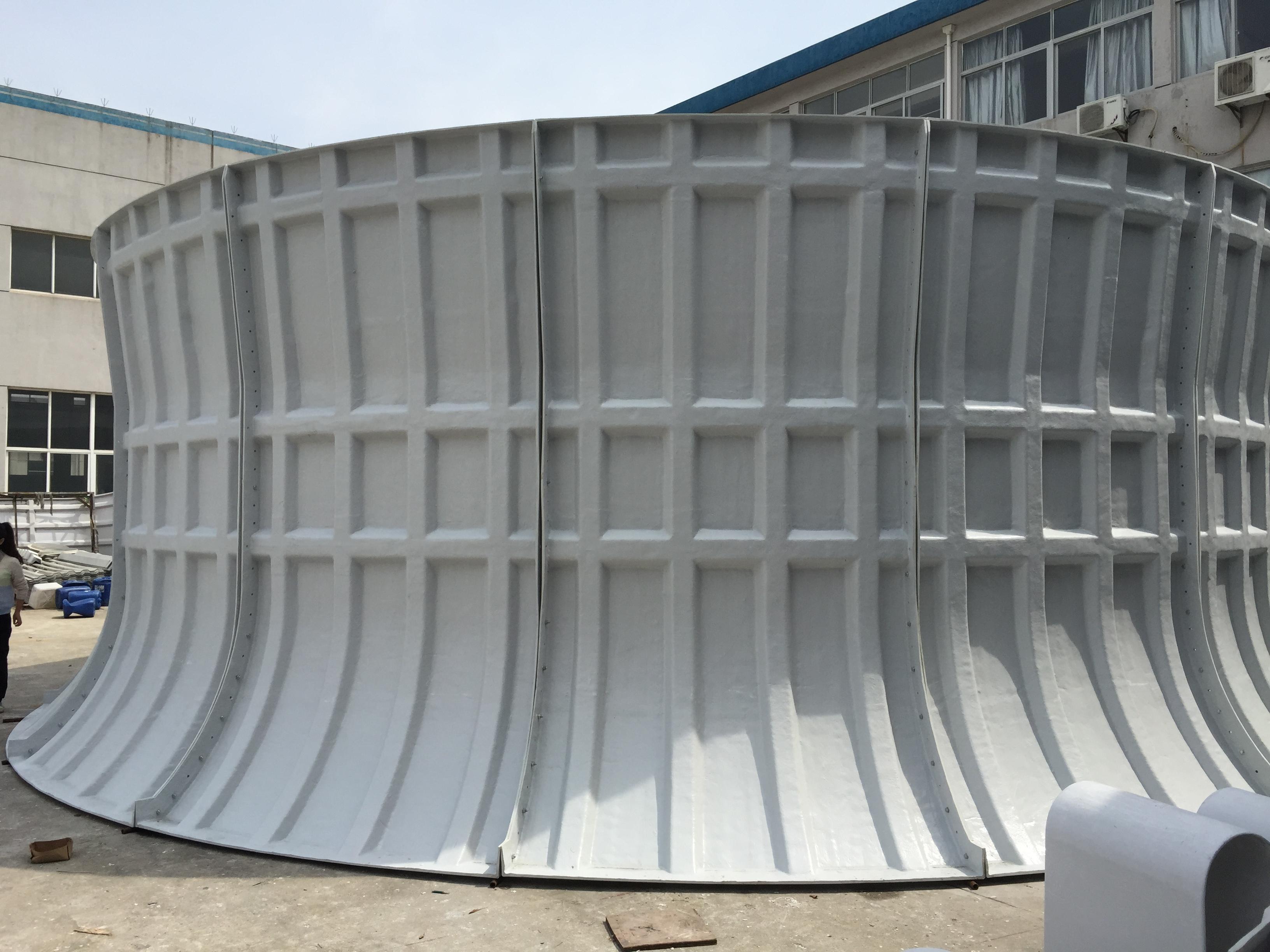
A cooling tower fan stack is the structure installed around an axial fan, usually at the air discharge section of an induced-draft cooling tower. It provides a defined passage for air leaving the fan and helps direct exhaust air away from the cooling tower.
Unlike decorative or protective covers, a fan stack is part of the cooling tower's airflow arrangement. Its geometry can influence the velocity distribution, discharge direction, and pressure conditions around the fan.
What Are the Main Functions of a Fan Stack?
A well-designed fan stack performs several important functions:
Airflow guidance: Directs air toward the discharge opening.
Air discharge control: Helps maintain a suitable exhaust direction and flow pattern.
Fan protection: Provides an enclosure around the fan assembly.
Reduced airflow disturbance: Helps avoid unnecessary interference with the fan's operating airflow.
Recirculation control: A suitable discharge height and arrangement can reduce the risk of warm, moist air returning to the air inlet.
Structural integration: Connects the fan area with the upper structure of the cooling tower.
How Does the Fan Stack Work with the Cooling Tower Fan?
The fan creates a pressure difference that moves air through the cooling tower. In an induced-draft cooling tower, air enters through the air inlet, passes through the heat exchange section, and is pulled upward by the fan.
The fan stack surrounds the discharge area and provides a pathway for the exhaust air.
If the stack is poorly matched to the fan, airflow may become less uniform or experience additional resistance. If its geometry is properly coordinated with the fan, it can support a more stable discharge pattern.
How Does a Cooling Tower Fan Stack Improve Airflow Efficiency?
Airflow efficiency is not determined by the fan alone. The interaction between the fan blades, stack geometry, discharge opening, and surrounding environment also matters.
1. Creates a More Controlled Air Discharge Path
One of the most important benefits of a Cooling Tower Fan Stack is that it provides a defined passage for discharged air.
Without an appropriate discharge structure, air leaving the fan may spread in an uncontrolled pattern. This can affect the ventilation arrangement, particularly in cooling towers with complex surrounding structures.
A suitable fan stack helps guide exhaust air upward and away from the tower.
Why Is Air Discharge Direction Important?
Cooling tower exhaust air contains heat and moisture absorbed during the cooling process. If this air returns to the air inlet, the entering air temperature and humidity may increase.
This phenomenon is known as hot-air recirculation.
A properly designed fan stack can help improve discharge direction and reduce the likelihood of recirculation. However, actual recirculation performance also depends on stack height, tower layout, wind conditions, nearby buildings, and air inlet arrangements.
2. Helps Reduce Unnecessary Airflow Resistance
Airflow resistance directly affects the pressure that the fan must overcome.
An unsuitable fan stack may create abrupt changes in flow direction or cross-sectional area. These changes can contribute to flow separation, turbulence, and additional pressure losses.
Smooth Internal Geometry
A properly designed stack should provide a suitable transition between the fan discharge region and the outlet.
Important design considerations include:
The goal is not simply to make the stack larger. Instead, the dimensions should be coordinated with the fan and the cooling tower's airflow requirements.
Why Can Poor Geometry Reduce Fan Performance?
When airflow encounters excessive resistance, the fan may operate at a different point on its performance curve.
Depending on the fan system, this can reduce airflow volume or increase the power required to achieve the desired operating condition.
A well-matched fan stack helps avoid unnecessary system resistance, but it cannot compensate for an incorrectly selected or poorly maintained fan.
3. Supports More Stable Fan Operation
Airflow around an axial fan should be as uniform as practical. Uneven inlet or discharge conditions can contribute to unstable aerodynamic behavior and unwanted vibration.
A correctly designed fan stack helps establish a suitable airflow passage around the fan.
The Importance of Fan Blade Clearance
The clearance between the blade tips and the inside wall of the stack is an important design parameter.
If the clearance is too large, more air may leak around the blade tips, reducing effective fan performance. If it is too small, there may be a risk of blade-to-stack contact caused by vibration, deformation, thermal effects, or installation errors.
The correct clearance must follow the fan manufacturer's specifications and account for operating conditions.
4. Helps Reduce Hot-Air Recirculation
Hot-air recirculation occurs when warm, moisture-laden air discharged from the cooling tower is drawn back into the air intake.
This can reduce the cooling potential of the incoming air and negatively affect tower performance.
A suitable Fan Stack For Cooling Tower applications can help direct exhaust air upward and away from nearby air inlets.
Factors That Influence Recirculation
Fan stack design is only one part of recirculation control. Other important factors include:
Cooling tower discharge velocity
Stack outlet height
Wind direction and speed
Distance between cooling towers
Nearby walls and buildings
Air inlet location
Cooling tower arrangement
For large industrial projects, engineers may use airflow analysis or computational fluid dynamics (CFD) to evaluate the interaction between the discharge plume and surrounding structures.
5. Supports Energy-Efficient Cooling Tower Operation
A cooling tower fan consumes electrical power to move air through the tower. The fan's operating point depends on airflow demand and the resistance of the entire air system.
An appropriately designed fan stack can help avoid unnecessary pressure losses and support the intended fan operating condition.
However, it is important to understand that the fan stack does not automatically reduce electricity consumption. Actual energy savings depend on the original system design, fan selection, motor efficiency, control strategy, and operating conditions.
What Design Features Make an FRP Cooling Tower Fan Stack More Efficient?
An FRP Cooling Tower Fan Stack combines aerodynamic requirements with structural and material considerations. Its performance depends on more than the use of fiberglass reinforcement.
1. Aerodynamic Shape and Stack Diameter
The shape of the fan stack influences how air moves through the discharge passage.
Common designs include cylindrical, tapered, and bell-mouth configurations.
Cylindrical Fan Stack
A cylindrical fan stack has a relatively simple structure and is widely used in industrial cooling towers.
Its dimensions should match the fan diameter and required installation clearance.
Tapered Fan Stack
A tapered design changes the cross-sectional area along the airflow passage.
When properly engineered, it can provide a suitable transition for particular fan and tower configurations.
Bell-Mouth Design
A bell-mouth profile uses a curved transition to guide airflow more smoothly in suitable arrangements.
It may be applied where the airflow geometry and fan configuration benefit from a smoother entrance or transition.
2. Lightweight FRP Construction
FRP is widely used in cooling tower fan stacks because it offers a combination of mechanical strength, corrosion resistance, and relatively low weight.
Compared with many traditional steel structures, an FRP stack can be easier to transport and lift.
Why Does Lightweight Construction Matter?
A lighter fan stack can provide several practical benefits:
Reduced lifting requirements during installation
Lower transportation weight
Less additional load on supporting structures
Easier handling during replacement projects
Greater flexibility for customized designs
Lightweight construction does not mean that structural requirements can be reduced. The stack must still be designed to withstand wind loads, vibration, and other expected forces.
3. Corrosion-Resistant Material Selection
Cooling towers operate in environments with continuous moisture exposure. Depending on the industrial process, the surrounding atmosphere may also contain corrosive substances.
An FRP Cooling Tower Fan Stack does not rust like conventional carbon steel.
The resin system should be selected according to the actual operating environment.
Material component | Main function |
Glass fiber | Provides structural reinforcement |
Resin matrix | Binds fibers and contributes to environmental resistance |
Surface layer | Helps protect the outer surface |
Reinforcement sections | Improve structural stiffness |
Connection flanges | Support secure installation |
Polyester resin may be suitable for many general applications, while vinyl ester resin may be considered for environments requiring enhanced chemical resistance.
4. Reinforcement and Structural Stability
The fan stack must maintain its designed geometry during operation.
If the structure deforms excessively, the fan blade clearance and airflow passage may be affected.
Common reinforcement features include:
Circumferential reinforcement rings
Vertical reinforcing ribs
Reinforced flange sections
Additional reinforcement around lifting and connection points
How Does Structural Stability Affect Airflow?
A fan stack that maintains its shape helps preserve the intended airflow geometry.
Structural deformation may change the clearance between the fan blades and stack wall, potentially creating operating or safety problems.
Therefore, reinforcement design should consider both structural strength and aerodynamic requirements.
How Does Fan Stack Design Affect Different Cooling Tower Types?
Different cooling tower configurations have different airflow paths and installation requirements. A fan stack should always be selected according to the specific tower design.
1. Induced-Draft Cooling Towers
Induced-draft cooling towers typically install the fan near the top of the tower. The fan draws air through the heat exchange section and discharges it through the fan stack.
In this configuration, the fan stack is especially important for controlling the exhaust direction and supporting the intended discharge arrangement.
2. Counterflow Cooling Towers
In a counterflow cooling tower, air generally moves upward while water flows downward through the heat exchange section.
The fan stack is usually positioned above the fan assembly and must be coordinated with the tower's vertical airflow arrangement.
A suitable design helps maintain the required discharge path without interfering with fan operation.
3. Crossflow Cooling Towers
Crossflow cooling towers typically allow air to move horizontally through the fill section while water flows downward.
Depending on the tower configuration, the fan and discharge structure are arranged to remove air from the tower.
For crossflow applications, stack dimensions, support structure, and airflow distribution should be evaluated according to the original equipment design.
What Are the Common Problems Caused by an Improper Fan Stack?
An incorrectly designed, installed, or maintained fan stack may affect airflow and equipment reliability.
1. Incorrect Fan Stack Diameter
If the internal diameter is too small, the stack may create unnecessary flow restriction or insufficient blade clearance.
If it is too large, the blade-tip clearance may become excessive and reduce fan effectiveness.
Solution: Confirm the fan diameter, blade-tip clearance, and manufacturer's design specifications before manufacturing or installation.
2. Insufficient Stack Height
A stack that is too short may not provide the intended exhaust discharge conditions.
In certain layouts, this can increase the potential for warm, humid exhaust air to return to the air inlet.
Solution: Evaluate the tower arrangement, surrounding structures, wind conditions, and discharge requirements before determining stack height.
3. Poor Installation Alignment
An improperly aligned stack can create uneven clearance around the fan.
This may increase the risk of blade contact, vibration, and mechanical damage.
Solution: Check the supporting structure, flange alignment, bolt positions, and fan clearance during installation.
4. Structural Cracks and Deformation
FRP fan stacks can develop cracks or delamination due to impact, poor manufacturing, excessive loading, or long-term environmental exposure.
Structural deformation may also affect fan clearance.
Solution: Conduct regular inspections and arrange professional evaluation. Damaged structural areas should be repaired using an appropriate FRP procedure or replaced when necessary.
5. Excessive Fan Vibration
Excessive vibration is not necessarily caused by the fan stack itself. Possible causes include fan imbalance, incorrect blade pitch, bearing wear, shaft misalignment, loose bolts, and structural resonance.
Solution: Inspect the complete fan assembly and supporting structure rather than assuming the stack is the only source of vibration.
How Can You Select the Right Fan Stack For Cooling Tower Projects?
Selecting a suitable Fan Stack For Cooling Tower applications requires coordination between the cooling tower manufacturer, fan supplier, and FRP component manufacturer.
1. Confirm Fan Specifications
Before requesting a quotation, buyers should collect the following information:
These specifications help manufacturers understand the fan arrangement and determine suitable stack dimensions.
2. Check Existing Tower Dimensions
For replacement projects, the existing fan stack should be measured carefully.
Important dimensions include:
Photographs and technical drawings are useful for confirming these details.
3. Evaluate the Operating Environment
The selected material should match the actual application.
For example, cooling towers in chemical plants may require a different resin specification from those used in general commercial HVAC systems.
Buyers should provide information about operating temperature, chemical exposure, weather conditions, and other relevant environmental factors.
4. Compare Manufacturer Capabilities
A reliable FRP manufacturer should have experience in composite material selection, molding, structural reinforcement, and customized fan stack production.
Ask suppliers about:
FRP manufacturing methods
Resin and glass fiber specifications
Dimensional quality control
Structural inspection procedures
Custom mold capabilities
Packaging and transportation arrangements
5. Consider Installation and Long-Term Maintenance
The purchase price is only one part of the total project cost.
A well-designed fan stack should be practical to transport, install, inspect, and maintain.
For replacement projects, compatibility with the existing fan system and supporting structure is particularly important.
How Is an FRP Cooling Tower Fan Stack Manufactured?
Manufacturing quality affects the dimensional accuracy, structural strength, and durability of an FRP fan stack.
1. Mold and Design Preparation
The manufacturer prepares the mold according to the required fan stack dimensions and structural design.
The mold should be checked to ensure that its shape and dimensions meet the product drawings.
2. Material Preparation
Glass fiber reinforcement and resin are selected according to the technical requirements.
Material selection should consider the operating environment and expected mechanical loads.
3. FRP Molding and Lamination
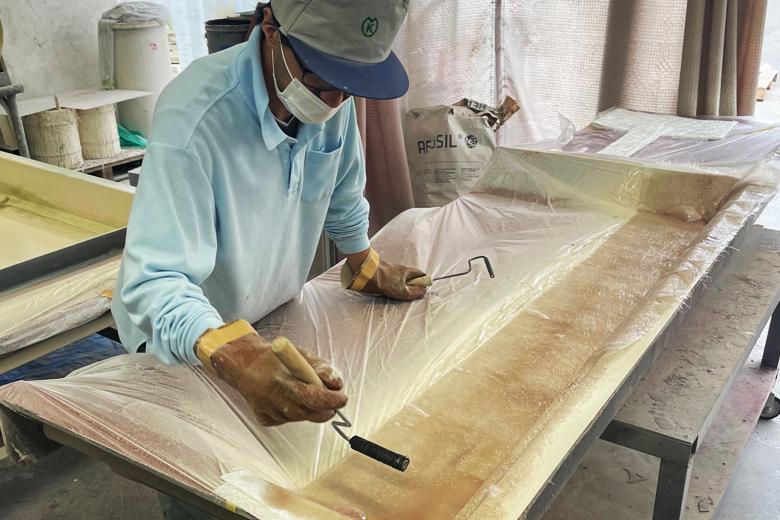
The resin and glass fiber are combined using a suitable manufacturing process, such as hand lay-up, spray-up, or another composite molding method.
The manufacturer should maintain consistent material distribution and laminate quality.
4. Curing and Surface Finishing
The product undergoes curing before demolding and finishing.
After curing, excess material is removed, and the flange and connection areas are processed.
5. Final Quality Inspection
The finished FRP Cooling Tower Fan Stack should be checked for:
Overall dimensions
Shell thickness
Surface defects
Cracks and delamination
Flange accuracy
Bolt-hole positions
Structural consistency
Proper inspection helps reduce installation problems and supports reliable operation.
How Can Regular Maintenance Keep a Cooling Tower Fan Stack Efficient?
Even a high-quality fan stack requires regular inspection. Maintenance helps preserve the designed airflow passage and identify structural problems before they affect operation.
1. Inspect the Internal and External Surfaces
Look for cracks, scratches, delamination, and signs of impact damage.
Pay special attention to flange areas and reinforced sections.
2. Check Fan Blade Clearance
Confirm that the clearance between the blade tips and stack wall remains within the manufacturer's specified range.
Any signs of contact should be investigated immediately.
3. Monitor Vibration and Noise
Unusual vibration or noise may indicate fan imbalance, loose connections, bearing problems, or structural issues.
Check the complete fan system and supporting structure.
4. Clean the Airflow Passage
Remove debris, dust, and other deposits that may interfere with airflow.
Use cleaning methods suitable for the FRP surface and avoid damaging the protective layer.
5. Inspect Connections and Supports
Check bolts, flanges, support structures, and other connection points for looseness or deterioration.
A stable mounting arrangement helps maintain the intended stack geometry.
FAQ About Cooling Tower Fan Stacks
1. Does a Cooling Tower Fan Stack Increase Airflow?
A properly designed fan stack can help guide airflow and reduce unnecessary flow disturbances. However, the actual airflow volume depends on the fan characteristics, system resistance, tower configuration, and operating conditions.
2. What Is the Best Material for a Cooling Tower Fan Stack?
FRP is a popular choice because it offers corrosion resistance, relatively low weight, and customization flexibility. Steel and other materials may also be suitable depending on the operating environment and structural requirements.
3. Why Is an FRP Cooling Tower Fan Stack Widely Used?
FRP fan stacks are widely used because they resist rust, are relatively lightweight, and can be manufactured in customized shapes and dimensions. These characteristics are valuable in industrial cooling towers exposed to moisture and corrosive environments.
4. Can a Fan Stack Reduce Cooling Tower Energy Consumption?
A properly designed fan stack may help reduce unnecessary airflow resistance. This can support efficient fan operation, but actual energy savings depend on the entire cooling tower system, including fan selection, motor efficiency, controls, and operating conditions.
5. Can I Replace a Metal Fan Stack with an FRP Fan Stack?
Yes, in many applications. However, the replacement must be checked for dimensions, blade clearance, flange compatibility, structural loads, and installation requirements.
6. How Do I Know If My Cooling Tower Fan Stack Needs Replacement?
Visible structural cracks, serious delamination, excessive deformation, damaged connection sections, or repeated installation problems may indicate the need for professional assessment and possible replacement.
7. What Information Is Required for a Customized Fan Stack?
Provide the fan diameter, stack height, internal and external diameters, flange dimensions, bolt-hole arrangement, material requirements, quantity, and available drawings or photographs.
Conclusion: Why Is the Right Cooling Tower Fan Stack Important?
A Cooling Tower Fan Stack is an important part of the cooling tower ventilation system. Its design affects how air moves through the fan discharge section, how exhaust air is directed, and how effectively the fan operates within the overall system.
A properly engineered stack can support smoother airflow, help reduce unnecessary resistance, improve discharge conditions, and reduce the risk of hot-air recirculation when combined with a suitable tower layout.
For many industrial applications, an FRP Cooling Tower Fan Stack provides additional benefits through corrosion resistance, lightweight construction, and flexible customization. However, material quality alone cannot guarantee airflow efficiency. Fan diameter, blade clearance, stack geometry, structural strength, and installation accuracy must all work together.
When selecting a Fan Stack For Cooling Tower projects, buyers should prioritize technical compatibility, reliable manufacturing, and long-term operating requirements rather than focusing only on the initial purchase price.
Choosing an experienced manufacturer and providing accurate equipment information can help ensure that the customized fan stack meets the requirements of the cooling tower and supports reliable industrial operation.