1. Introduction
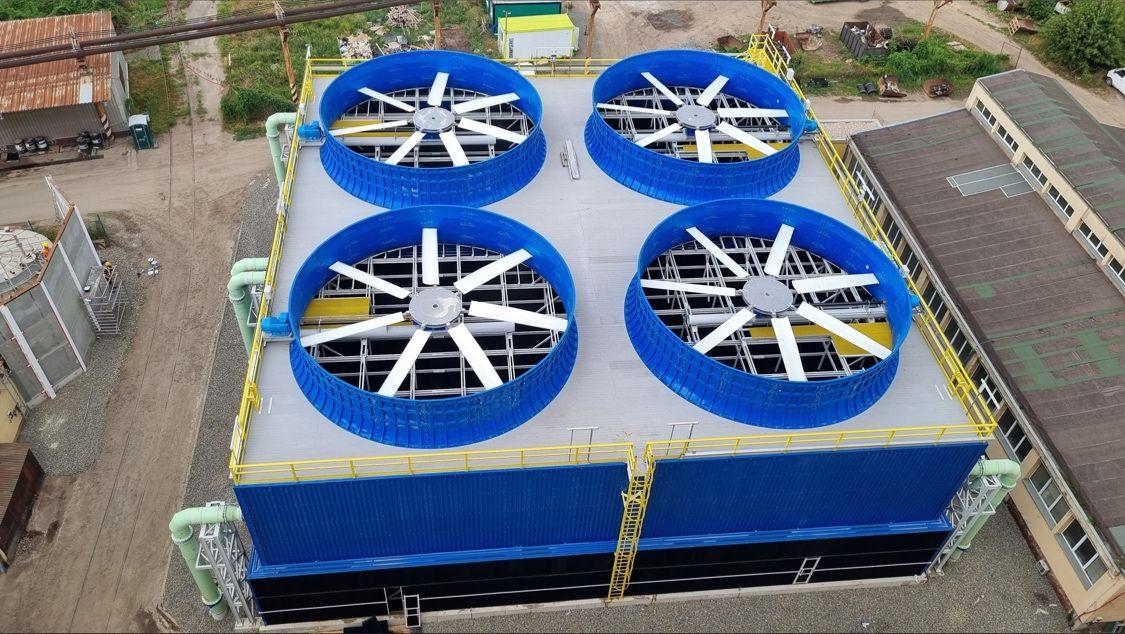
A cooling tower fan plays a critical role in industrial heat rejection. It moves air through the tower, helping transfer heat from circulating water to the atmosphere. When the fan works properly, the cooling tower can maintain the required water temperature and support stable production.
But what happens when the fan becomes noisy, vibrates excessively, or fails to deliver enough airflow? In many cases, the equipment needs repair. In others, cooling tower fan replacement is the more reliable and economical solution.
Replacing a worn or damaged fan can restore airflow, improve operating stability, and reduce the risk of unexpected shutdowns. However, choosing a replacement is not as simple as buying a fan with the same diameter. You need to consider airflow, fan speed, blade pitch, motor capacity, materials, and the tower's original design.
This guide explains how to recognize replacement signs, estimate costs, select the right fan, and plan a safe installation.
2. What Is Cooling Tower Fan Replacement?
Cooling tower fan replacement means removing an existing fan assembly or damaged fan components and installing a suitable replacement. Depending on the equipment condition, the work may involve replacing the complete fan, individual blades, the hub, or related drive components.
The correct replacement should match the cooling tower's operating requirements. A fan that physically fits the tower may still deliver the wrong airflow or place excessive loads on the motor and drive system.
That is why technical verification is essential before purchasing replacement equipment.
2.1 The Role of a Cooling Tower Fan
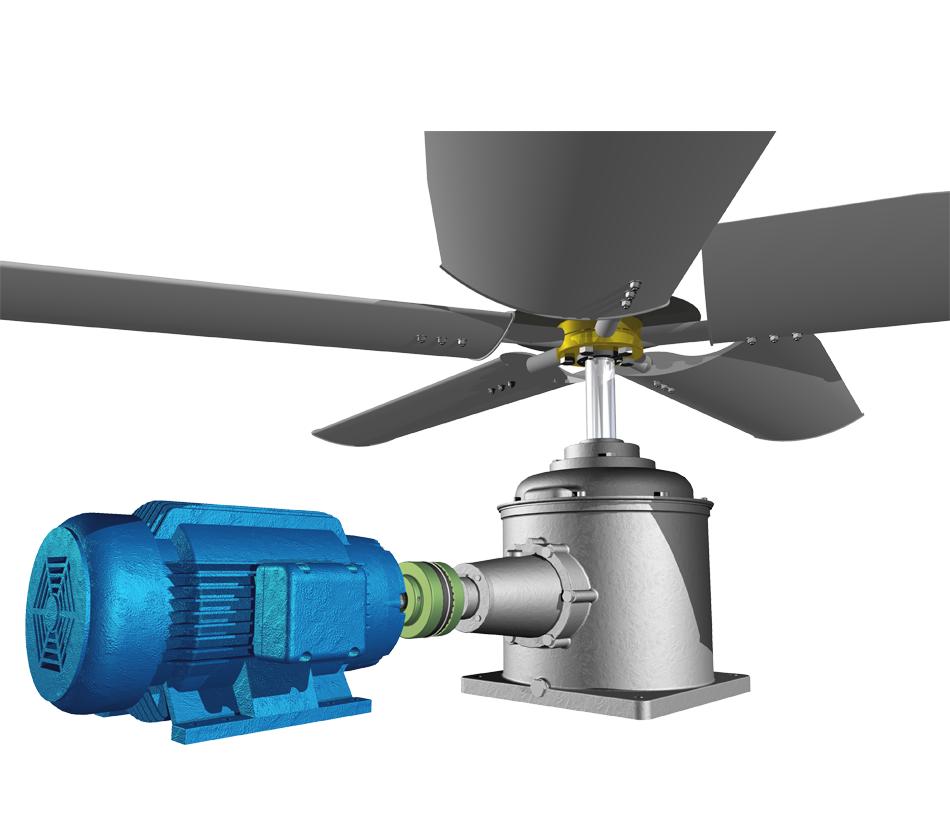
The fan creates the airflow needed for heat and mass transfer inside the cooling tower. As warm water flows over the fill, air passes through the tower and helps remove heat through evaporation and sensible heat transfer.
If airflow becomes insufficient, cooling performance may decline. The fan also affects energy consumption, vibration levels, operating noise, and the mechanical loads applied to the tower structure.
A properly selected fan helps the entire cooling system operate as intended.
2.2 Main Fan Types
Axial fans are widely used in industrial cooling towers because they move large volumes of air along the fan shaft. They are commonly selected for applications that require high airflow at relatively low static pressure.
Centrifugal fans draw air into the impeller and discharge it in a direction generally perpendicular to the inlet flow. They may be suitable for systems with higher external static pressure or specific ducting requirements.
Cooling tower fan designs also differ in blade shape, diameter, material, hub construction, and drive arrangement. Always identify the original fan configuration before selecting a replacement.
3. Signs Your Cooling Tower Fan Needs Replacement
A cooling tower fan rarely fails without warning. Changes in sound, vibration, airflow, and operating conditions can indicate developing problems.
Identifying these signs early gives maintenance teams time to inspect the equipment and plan a replacement before a serious failure occurs.
3.1 Unusual Noise and Excessive Vibration
A fan that suddenly produces rattling, scraping, knocking, or unusual humming sounds needs inspection.
Excessive vibration is another important warning sign. It may result from damaged blades, loose fasteners, fan imbalance, bearing wear, shaft misalignment, or structural looseness.
Do not assume that every vibration problem means the fan itself must be replaced. First identify the source.
If the fan blades are cracked, distorted, or severely damaged, replacement may be necessary. Continuing to operate a damaged fan can increase mechanical stress and potentially damage other components.
3.2 Reduced Airflow and Cooling Performance
Has the cooling tower started delivering warmer outlet water even though the operating conditions have not changed significantly?
Insufficient airflow may be one possible cause. A damaged fan, incorrect rotation, unsuitable blade pitch, or reduced fan speed can affect air movement.
However, blocked fill, dirty air inlets, poor water distribution, and changes in system load can also reduce cooling performance. Check the entire tower before deciding that fan replacement is required.
If inspection confirms that the existing fan cannot provide the required airflow, a correctly selected replacement may help restore performance.
3.3 Visible Blade Damage or Corrosion
Inspect the fan blades for cracks, deformation, erosion, corrosion, and material deterioration.
Fiberglass-reinforced plastic blades may suffer impact damage or surface deterioration. Aluminum blades may be affected by corrosion or mechanical damage, depending on the operating environment.
Even a small defect deserves attention because fan blades rotate at high speed. A damaged blade can affect balance and increase stress on the hub, shaft, bearings, and supporting structure.
If the damage is severe or the blade cannot be repaired according to the manufacturer's instructions, replace the affected components or the complete assembly as appropriate.
3.4 Motor Overload and Rising Energy Consumption
A fan system that requires more electrical power than expected may have a mechanical or operating problem.
Excessive blade pitch, incorrect fan selection, blocked airflow paths, bearing problems, and drive-system faults can all affect motor load.
If the motor repeatedly trips, runs unusually hot, or draws excessive current, investigate the cause before restarting the equipment.
Replacing the fan may be appropriate if the existing assembly is damaged or incorrectly matched to the tower. However, a new fan will not automatically solve an electrical fault or a problem elsewhere in the system.
3.5 Repeated Repairs and Increasing Maintenance Costs
Sometimes the clearest replacement signal is the repair history.
If the same fan requires repeated blade repairs, balancing work, fastener replacement, or other maintenance, the total cost may become greater than the cost of a new assembly.
Frequent repairs also increase the risk of unplanned downtime. Compare the cost of continued maintenance with the purchase, installation, and expected service life of a replacement.
A planned replacement can be easier to schedule and manage than repeated emergency repairs.
4. Repair or Replace: How to Make the Right Decision
Repair may be suitable when the problem is limited, the fan structure remains sound, and the manufacturer permits the repair. Examples include replacing approved fasteners or correcting a minor, properly diagnosed installation issue.
Replacement becomes more attractive when blades are cracked, the hub is damaged, corrosion is extensive, the fan has reached the end of its useful service life, or suitable spare parts are no longer available.
Consider five points:
A qualified technician should assess structural damage and determine whether a component can be safely reused.
Never rely on a temporary repair for a component that the manufacturer requires to be replaced.
5. Factors That Affect Cooling Tower Fan Replacement Cost
The cost of cooling tower fan replacement varies significantly. A small fan with a standard configuration may cost much less than a large custom assembly designed for a specific industrial tower.
The final budget should include the fan, associated components, labor, transportation, lifting equipment, and commissioning.
5.1 Fan Type, Diameter, and Material
Fan type is one of the main cost factors. Axial and centrifugal fans have different structures and performance requirements. Larger fan diameters generally require more material and careful manufacturing.
Blade materials also influence price. FRP, aluminum, and other engineered materials have different mechanical properties, corrosion resistance, weights, and cost levels.
The most expensive material is not necessarily the best choice. Select a material that suits the tower's water quality, temperature, environment, and operating conditions.
5.2 Motor, Gearbox, and Drive Components
If the replacement project includes a new motor, gearbox, coupling, belt, pulley, shaft, or hub, the total cost will increase.
Before replacing these components, confirm their condition and compatibility with the new fan.
A fan and drive system must work together. An unsuitable combination can cause excessive motor load, vibration, or poor operating performance.
5.3 Labor, Transportation, and Installation
Installation costs depend on tower height, site access, equipment weight, lifting requirements, and local labor rates.
Some projects require cranes or specialist lifting equipment. Others need additional work to remove corroded fasteners, repair supports, or modify access platforms.
Transportation costs can also be significant for large fan assemblies.
Ask suppliers whether their quotation includes packaging, delivery, technical documentation, and installation support.
6. How to Choose the Right Replacement Fan
Correct fan selection is the most important step in a successful replacement project.
Do not select a fan based only on its outside diameter or appearance. The replacement must suit the cooling tower's design and operating point.
6.1 Confirm the Original Fan Specifications
Start by collecting the existing fan's technical information.
Useful details include:
Fan type and model.
Fan diameter.
Number of blades.
Blade material.
Hub dimensions.
Rotation direction.
Operating speed.
Motor power.
Mounting arrangement.
If available, obtain the original equipment manufacturer's drawings and fan performance data.
Take clear photographs of the fan, hub, motor, gearbox, and installation position. Record the tower model and equipment nameplate information as well.
These details help a supplier assess whether a standard replacement is suitable or whether a customized design is required.
6.2 Match Airflow and Static Pressure
The replacement fan must provide the airflow required by the cooling tower at the actual system resistance.
A fan with a similar diameter may perform very differently if its blade geometry, pitch, or speed is different.
Consider the fan performance curve and the tower's air-side resistance.
The objective is not simply to maximize airflow. Excessive airflow can increase power consumption, noise, and mechanical loading without delivering a proportional improvement in cooling performance.
6.3 Check Motor Power and Operating Speed
Confirm the fan's required operating speed and the motor's available power.
The motor, gearbox, drive shaft, and fan must be compatible. Check the allowable speed range, rated current, transmission ratio, and mechanical limits.
A replacement fan that requires more power than the existing drive can safely provide may overload the motor.
Never assume that the original motor can drive a different fan design without engineering verification.
6.4 Select Suitable Materials
Material selection should reflect the operating environment.
FRP blades are commonly used where low weight and corrosion resistance are important. Aluminum may be appropriate for certain fan designs and operating conditions. Other materials may be specified for demanding environments.
Consider:
Ask the supplier for material specifications and any relevant product test information.
7. Cooling Tower Fan Replacement: Step-by-Step Installation Guide
A successful replacement requires planning, correct tools, trained personnel, and strict safety controls.
The following steps provide a general overview. Always follow the equipment manufacturer's instructions and the site's approved work procedures.
7.1 Prepare the Site and Replacement Parts
Before work begins, confirm that the replacement fan matches the approved specifications.
Check the delivery for visible damage and verify that all blades, hubs, fasteners, and other required components are included.
Prepare lifting equipment, access platforms, tools, measuring instruments, and personal protective equipment.
Review the installation drawings and agree on the lifting and work sequence with the maintenance team.
7.2 Shut Down and Isolate the Equipment
Stop the cooling tower and isolate all relevant electrical and mechanical energy sources.
Apply the site's lockout/tagout procedure, verify zero energy, and confirm that the fan has completely stopped. Prevent automatic or remote restart.
Follow site requirements for work at height, confined spaces, and lifting operations where applicable.
Never inspect, adjust, or remove fan components while the equipment is operating.
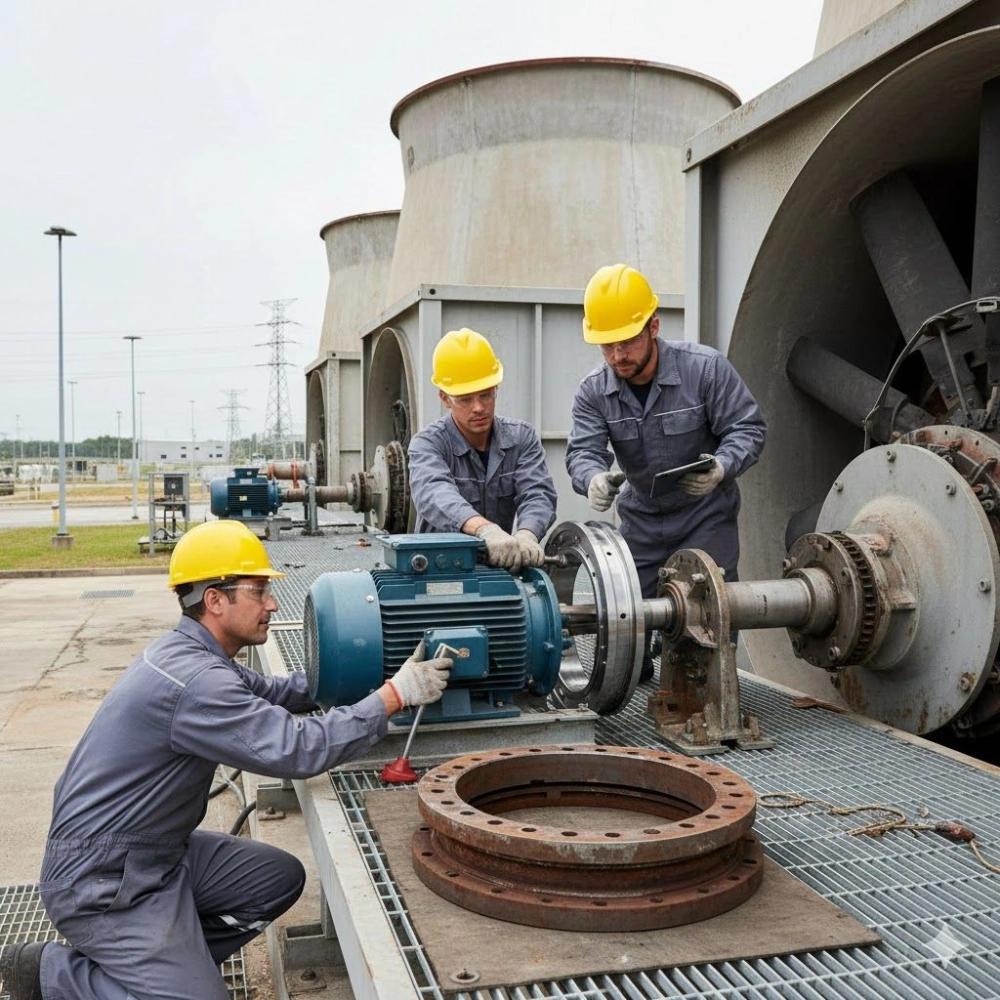
7.3 Remove the Old Fan Assembly
Remove guards and access covers according to the manufacturer's instructions.
Mark the existing installation position and record relevant measurements before disassembly.
Support the fan assembly properly before loosening its fasteners. Use approved lifting points and suitable lifting equipment.
Avoid striking the hub or blades with tools because impact can damage components that might otherwise be reused.
Keep removed fasteners and parts organized for inspection.
7.4 Inspect the Hub, Shaft, and Support Structure
Once the old fan is removed, inspect the hub, shaft, gearbox output, mounting plate, support structure, and fastener holes.
Look for corrosion, cracks, deformation, looseness, and signs of abnormal contact. Check shaft condition and alignment.
If the hub or support structure is damaged, resolve the issue before installing the new fan.
Installing a new fan on a defective support system can lead to another failure.
7.5 Install and Align the New Fan
Position the replacement fan according to the approved drawings and manufacturer's instructions.
Confirm the correct orientation and rotation direction. Install the hub and blades using the specified fasteners and tightening procedure.
Check the fan's clearance from surrounding structures and verify that the assembly is centered as required.
Alignment and mounting tolerances should follow the manufacturer's specifications rather than assumptions based on visual appearance.
7.6 Check Blade Pitch and Fasteners
Blade pitch has a direct effect on fan performance and motor load.
Set the pitch using the manufacturer's specified reference method, measurement location, and tolerance. Do not apply a universal blade-angle value to every cooling tower fan because blade designs and measurement conventions vary.
Tighten fasteners to the specified torque and use the required locking method.
Confirm that all blades are installed consistently and that the fan assembly meets the manufacturer's balance requirements.
7.7 Test the Fan After Installation
Before restarting, check that all tools and loose materials have been removed. Reinstall guards and access covers.
Confirm that personnel are clear of the equipment and follow the approved startup procedure.
During commissioning, verify:
Compare measured values with the manufacturer's limits and the site's baseline data.
If abnormal vibration, noise, or motor loading occurs, stop the equipment and investigate before returning it to normal service.
Record the installation details and commissioning results for future maintenance.
8. Common Mistakes to Avoid
Several mistakes can turn a straightforward replacement into an expensive problem.
First, do not select a fan based only on diameter. Second, do not ignore the original airflow and static-pressure requirements.
Third, do not increase blade pitch simply to obtain more airflow; this may increase motor load beyond acceptable limits.
Fourth, do not reuse damaged hubs, fasteners, or support structures without approval.
Fifth, do not skip alignment, clearance, and vibration checks.
Finally, avoid unapproved blade modifications or improvised balancing weights. Use the manufacturer's approved procedures and qualified technicians for all critical work.
9. How to Extend the Service Life of a New Fan
A replacement fan is an investment. Good maintenance helps protect it.
Establish a regular inspection schedule based on the operating environment and manufacturer recommendations.
Check blades for cracks, corrosion, deposits, and deformation. Inspect fasteners, hubs, guards, bearings, drive components, and support structures.
Monitor vibration and motor current so that changes can be identified early. Keep air inlets and other airflow paths clear.
Also maintain the cooling tower's fill and water distribution system. Blocked or deteriorated components can change airflow resistance and affect overall tower performance.
Maintain records of inspections, repairs, operating hours, and abnormal events. These records make it easier to identify recurring problems and plan future replacements.
10. When Should You Replace Fan Blades, Motors, or Gearboxes?
Not every fan problem requires replacement of the complete assembly.
If one blade is damaged, an approved individual blade replacement may be possible, provided the fan manufacturer confirms compatibility and the complete assembly can be restored to the required balance and performance.
If the motor has electrical faults, overheating, or insulation problems, it may need separate repair or replacement.
Gearboxes may require replacement when gears, shafts, or housings are severely damaged or uneconomical to repair.
However, changing one component can affect the rest of the drive system. Always check the complete assembly before ordering parts.
Matching the replacement component to the original specifications is essential.
11. Why Choose a Reliable Cooling Tower Fan Replacement Supplier?
A reliable supplier should do more than offer a low price.
The supplier should understand cooling tower fan structures, replacement requirements, materials, and compatibility issues.
Look for:
Clear technical specifications.
Dimensional drawings.
Material information.
Responsive technical communication.
Reasonable lead times.
Suitable packaging and delivery arrangements.
Clear warranty terms and after-sales support.
Ask whether the supplier can review photographs, nameplate data, and existing fan dimensions before confirming an order.
A supplier who asks detailed technical questions before quoting is often more useful than one who recommends a fan without checking the application.
12. Cooling Tower Fan Replacement Solutions from Power Tower
Power Tower Cooling Technology (Shaoxing) Co.,Ltd. supplies cooling tower components and replacement parts for industrial cooling tower maintenance and refurbishment projects.
Through coolingtowerpart.com, customers can explore cooling tower components and discuss replacement requirements with the company.
When planning a cooling tower fan replacement, it is important to confirm the original equipment specifications and actual operating conditions before selecting a product.
Power Tower can use the information provided by customers to help assess component requirements and identify suitable replacement options within its product range.
To support a technical inquiry, customers should prepare:
Cooling tower brand and model.
Fan type and diameter.
Number of blades.
Blade material.
Hub dimensions.
Motor power and operating speed.
Rotation direction.
Clear photographs and available technical drawings.
Providing complete information helps reduce uncertainty during product selection and quotation.
Whether you are maintaining an existing cooling tower or sourcing replacement components for a refurbishment project, choosing compatible parts is an important step toward reliable operation.
13. Frequently Asked Questions
13.1 How Often Should a Cooling Tower Fan Be Replaced?
There is no universal replacement interval.
Fan service life depends on design, material, operating hours, environmental conditions, maintenance quality, and operating loads.
Inspect the fan regularly and replace it when its condition, safety, or performance no longer meets the manufacturer's requirements.
13.2 Can I Replace Only the Fan Blades?
In some cases, yes.
Individual blade replacement may be possible if the fan design allows it and compatible blades are available.
The replacement blades must match the required profile, material, dimensions, and operating specifications. The complete fan assembly must also meet the manufacturer's balance and performance requirements.
13.3 Can I Install a Fan with a Different Diameter?
Do not change the fan diameter without engineering verification.
A different diameter can affect airflow, clearance, rotational speed, power demand, and mechanical loading.
Check the cooling tower design and drive-system limits before making a


