FRP Cooling Tower Fan Blades: Materials, Design And Benefits
FRP cooling tower fan blades have become an important solution for modern industrial cooling systems because of their lightweight construction, corrosion resistance, high strength-to-weight ratio, and flexible aerodynamic design. As industrial facilities increasingly focus on energy efficiency, equipment reliability, and long-term operating costs, choosing the right cooling tower fan blade material has become an important part of cooling tower engineering.
Compared with traditional metal fan blades, FRP (Fiber Reinforced Plastic) fan blades offer several advantages in humid, corrosive, and demanding industrial environments. They can be manufactured in different sizes, shapes, and aerodynamic profiles to meet the requirements of various cooling tower applications.
From power plants and chemical factories to HVAC systems and manufacturing facilities, FRP cooling tower fan blades are widely considered for both new installations and replacement projects.
However, selecting the right FRP fan blade involves more than simply comparing materials. Blade structure, fiber reinforcement, resin systems, pitch angle, fan diameter, rotational speed, and manufacturing quality all influence the final performance.
This article explains FRP cooling tower fan blade materials, manufacturing processes, structural design, major benefits, applications, and selection considerations to help industrial buyers and engineering professionals make better decisions.
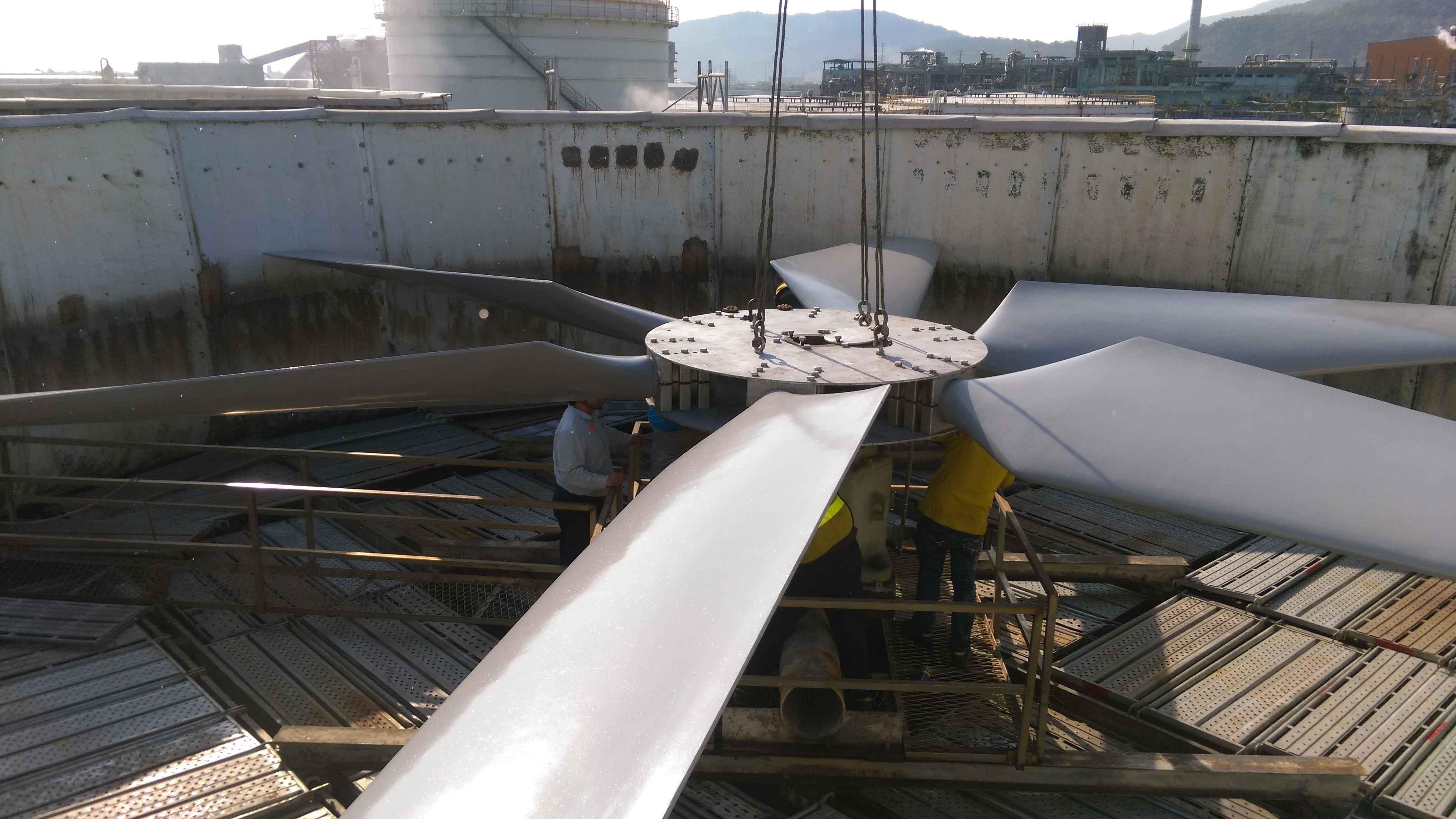
What Are FRP Cooling Tower Fan Blades?
FRP cooling tower fan blades are aerodynamic components manufactured from fiber-reinforced polymer composite materials. They are designed to generate airflow through cooling towers, supporting the heat exchange process between circulating water and ambient air.
FRP combines reinforcing fibers with a polymer resin matrix. The fibers provide mechanical strength and stiffness, while the resin binds the fibers together and helps protect the composite structure.
Unlike conventional metal blades, FRP blades can be molded into complex aerodynamic profiles while maintaining relatively low weight.
How Do FRP Cooling Tower Fan Blades Work?
Cooling tower fans are generally axial-flow fans. Their blades rotate around a central hub and move air through the cooling tower.
As the blades rotate, the aerodynamic profile creates a pressure difference that moves air through the fill section and other internal components.
This airflow helps water release heat through evaporation and sensible heat transfer.
The main functions of FRP cooling tower fan blades include:
Generating sufficient airflow for heat rejection.
Maintaining stable fan operation.
Supporting efficient cooling tower performance.
Reducing unnecessary mechanical loading.
Resisting corrosion in humid environments.
Providing reliable operation under continuous working conditions.
Where Are FRP Fan Blades Installed?
FRP fan blades are commonly used in:
Industrial mechanical-draft cooling towers.
Counterflow cooling towers.
Crossflow cooling towers.
Power plant cooling systems.
Chemical processing facilities.
HVAC central cooling systems.
Steel and metallurgical plants.
Petrochemical facilities.
The final fan blade configuration depends on cooling tower dimensions, airflow requirements, fan speed, and the design of the fan hub.
What Materials Are Used in FRP Cooling Tower Fan Blades?
The performance of an FRP cooling tower fan blade depends on the combination of reinforcing fibers, resin systems, additives, and manufacturing processes.
Different material combinations offer different mechanical and environmental characteristics.
Glass Fiber Reinforcement
Glass fiber is one of the most widely used reinforcing materials in FRP cooling tower fan blades.
It provides mechanical strength, stiffness, and dimensional stability while keeping the blade relatively lightweight.
Main Advantages of Glass Fiber
Good tensile strength.
Good fatigue performance when properly designed.
Relatively low material cost.
Good electrical insulation.
Compatibility with different resin systems.
Flexible manufacturing options.
The fiber type, orientation, and content affect the mechanical properties of the finished blade.
For industrial fan applications, manufacturers must ensure that fiber distribution and reinforcement direction are suitable for the expected centrifugal and aerodynamic loads.
Polyester Resin
Polyester resin is commonly used in fiberglass composite manufacturing.
It offers a practical balance between cost, processability, and mechanical performance.
Why Is Polyester Resin Used?
Suitable for various FRP molding processes.
Relatively economical.
Good manufacturing flexibility.
Available in different formulations.
Suitable for many general industrial environments.
However, the specific resin formulation should be selected according to operating temperature, moisture exposure, chemical conditions, and required service life.
Vinyl Ester Resin
Vinyl ester resin is often considered for applications requiring improved chemical and moisture resistance.
Compared with many general-purpose polyester systems, properly formulated vinyl ester composites can offer better resistance to certain corrosive environments.
Typical Applications
Vinyl ester FRP blades may be considered for:
Chemical processing plants.
Coastal industrial facilities.
Cooling towers exposed to aggressive water treatment chemicals.
Environments requiring enhanced corrosion resistance.
The suitability of a particular resin depends on the specific chemicals, concentrations, and operating temperatures involved.
Epoxy Resin
Epoxy resin is another option for high-performance composite applications.
It can provide strong adhesion to reinforcing fibers and good mechanical properties when correctly formulated and manufactured.
However, epoxy systems may have higher material and processing costs.
The selection between polyester, vinyl ester, and epoxy should be based on the required mechanical properties, environmental conditions, manufacturing process, and project budget.
FRP Material Comparison
Material component | Main function | Important characteristics |
Glass fiber | Reinforcement | Strength and stiffness |
Polyester resin | Matrix | Cost-effective processing |
Vinyl ester resin | Matrix | Enhanced chemical resistance |
Epoxy resin | Matrix | Strong fiber bonding and mechanical properties |
The quality of an FRP blade is determined by the complete composite system rather than one material alone.
How Are FRP Cooling Tower Fan Blades Designed?
FRP fan blade design requires careful consideration of aerodynamic performance, structural strength, weight distribution, and operating conditions.
A properly designed blade should generate the required airflow without creating excessive motor loads or mechanical vibration.
Blade Airfoil Profile
The airfoil profile determines how the blade interacts with surrounding air during rotation.
A suitable aerodynamic profile helps create the pressure difference required to move air through the cooling tower.
Why Is Airfoil Design Important?
An optimized airfoil can help:
Improve airflow efficiency.
Reduce unnecessary aerodynamic losses.
Maintain stable airflow.
Control aerodynamic noise.
Achieve the required fan performance.
The airfoil profile should be selected according to the fan diameter, rotational speed, static pressure requirements, and cooling tower resistance.
Blade Pitch Angle
Blade pitch angle is another critical design parameter.
It describes the angular position of the blade relative to a defined reference plane.
Changing the pitch angle affects aerodynamic loading and fan performance.
What Happens When the Pitch Angle Is Too Large?
An excessive pitch angle may increase fan loading and motor power consumption.
Possible consequences include:
Higher motor current.
Increased power requirements.
Excessive aerodynamic resistance.
Increased vibration.
Potential motor overload.
What Happens When the Pitch Angle Is Too Small?
An insufficient pitch angle may reduce airflow and cooling capacity.
The cooling tower may struggle to achieve the required outlet water temperature, especially under high thermal loads.
Therefore, FRP fan blade pitch should be selected according to manufacturer performance data and verified operating conditions.
Blade Twist and Geometry
FRP cooling tower fan blades are often designed with a twisted geometry.
The reason is that the linear velocity of a rotating blade increases from the root toward the tip.
A suitable twist distribution helps maintain appropriate aerodynamic conditions along the blade span.
Important Geometric Parameters
Blade length.
Chord width.
Root thickness.
Tip geometry.
Airfoil curvature.
Twist distribution.
Pitch angle.
These parameters must be optimized together rather than considered independently.
Blade Root and Hub Connection
The blade root is the connection between the blade and the fan hub.
This area experiences significant mechanical loading during operation.
A reliable blade root design should provide:
Sufficient structural strength.
Accurate mounting dimensions.
Secure fastening.
Resistance to fatigue.
Consistent load transfer.
For replacement projects, the blade root dimensions must match the existing hub assembly or the specified replacement hub.
Blade Tip Design
The blade tip influences aerodynamic performance and clearance between the blade and fan cylinder.
Excessive tip clearance may increase airflow leakage, while insufficient clearance can create a risk of contact during operation.
Manufacturers should consider blade deformation, installation tolerances, and operating conditions when determining suitable clearance.
What Are the Main Benefits of FRP Cooling Tower Fan Blades?
FRP cooling tower fan blades offer several advantages compared with conventional metal alternatives.
These benefits make them suitable for many industrial cooling applications.
Excellent Corrosion Resistance
One of the most important advantages of FRP fan blades is their resistance to many corrosive environments.
Cooling towers operate in conditions involving continuous moisture, water droplets, and potentially aggressive chemical substances.
Metal fan blades may require protective coatings or other corrosion-control measures.
FRP materials do not rust like ordinary carbon steel and can provide reliable performance when the resin system is selected appropriately.
Why Is Corrosion Resistance Important?
Corrosion can gradually weaken metal components and affect blade surface quality.
By choosing a suitable FRP composite, industrial facilities can reduce corrosion-related maintenance and replacement requirements.
However, FRP is not universally resistant to all chemicals. Actual chemical compatibility should always be verified.
Lightweight Construction
FRP fan blades generally have a lower density than steel and can offer a favorable strength-to-weight ratio.
A lighter blade can reduce the rotating mass of the fan assembly.
Potential advantages include:
Lower centrifugal loading.
Reduced loading on certain rotating components.
Easier handling during installation.
More convenient maintenance.
Greater flexibility in fan system design.
The actual effect on motor power depends primarily on aerodynamic loading and operating conditions, not simply blade weight.
High Strength and Structural Reliability
Properly engineered FRP blades can provide the strength and stiffness needed for continuous industrial operation.
Glass fiber reinforcement helps the composite resist tensile and bending loads.
What Affects FRP Blade Strength?
Important factors include:
A professional manufacturer should evaluate these factors according to the intended fan application.
Good Fatigue Performance
Cooling tower fans often operate for extended periods, creating repeated mechanical and aerodynamic loading.
Over time, repeated stress may cause fatigue damage in fan blades.
Properly designed FRP composites can provide good fatigue performance, helping maintain structural integrity during long-term operation.
However, fatigue resistance depends on the composite layup, manufacturing quality, stress levels, and environmental exposure.
Flexible Aerodynamic Design
FRP molding technology allows manufacturers to produce different blade shapes and aerodynamic profiles.
This flexibility is valuable for customized cooling tower fan applications.
For example, manufacturers may customize:
Blade diameter.
Blade length.
Blade width.
Pitch angle.
Airfoil profile.
Root configuration.
Surface finish.
This makes FRP blades suitable for both original equipment manufacturing and replacement projects.
Reduced Corrosion-Related Maintenance
Because FRP does not undergo conventional iron oxidation, it can reduce certain maintenance problems associated with steel blades.
Depending on the operating environment and composite quality, FRP blades may require less corrosion-related maintenance.
Nevertheless, regular inspection is still necessary to identify cracks, delamination, surface damage, loose connections, and other potential problems.
Long-Term Operating Value
Although the initial price of FRP fan blades may vary according to material formulation and manufacturing requirements, buyers should evaluate total ownership costs.
These include:
A properly selected FRP fan blade can provide long-term value through reliable operation and reduced corrosion-related maintenance.
FRP vs Aluminum vs Steel Cooling Tower Fan Blades: Which Is Better?
Choosing between FRP, aluminum, and steel fan blades depends on the operating environment and technical requirements.
Each material has different advantages and limitations.
FRP Cooling Tower Fan Blades
FRP is particularly attractive for humid and corrosive environments.
Its main advantages include:
Good corrosion resistance.
Lightweight construction.
Flexible aerodynamic design.
Good strength-to-weight ratio.
Custom manufacturing possibilities.
FRP is often a suitable choice for industrial cooling towers requiring corrosion resistance and customized blade configurations.
Aluminum Cooling Tower Fan Blades
Aluminum fan blades are lightweight and offer good machinability.
They can provide a useful balance of strength and weight for different fan systems.
However, aluminum alloys may experience corrosion under certain chemical and environmental conditions.
Proper alloy selection and surface protection are important.
Steel Cooling Tower Fan Blades
Steel blades offer high mechanical strength and rigidity.
They may be appropriate for applications where specific structural requirements favor steel construction.
However, steel is generally heavier and requires suitable corrosion protection in wet environments.
Material Selection Comparison
Performance factor | FRP | Aluminum | Steel |
Weight | Lightweight | Lightweight | Heavy |
Corrosion resistance | Generally good | Depends on alloy and environment | Requires protection |
Strength | High when properly engineered | Good | High |
Design flexibility | High | Moderate | Moderate |
Maintenance | Requires composite inspection | Requires corrosion inspection | Requires corrosion protection |
Customization | Excellent | Good | Good |
Which material should buyers choose?
For many industrial cooling tower applications, FRP offers an attractive combination of corrosion resistance, lightweight construction, and aerodynamic customization.
However, the best material should always be determined by actual operating conditions and engineering requirements.
How Are FRP Cooling Tower Fan Blades Manufactured?
The manufacturing process has a direct influence on blade quality, structural consistency, and service life.
A reliable FRP fan blade manufacturer should maintain strict control over material preparation, molding, curing, finishing, and inspection.
Mold Preparation
The manufacturing process begins with mold preparation.
The mold defines the blade's dimensions, surface shape, aerodynamic profile, and overall geometry.
What Should Be Checked Before Molding?
Mold surface condition.
Dimensional accuracy.
Surface cleanliness.
Mold release treatment.
Profile consistency.
A properly maintained mold helps ensure consistent blade dimensions and surface quality.
Fiber Reinforcement Preparation
Glass fiber materials are arranged according to the blade's structural requirements.
Fiber orientation is important because composite materials have different mechanical properties in different directions.
A suitable reinforcement layout helps the blade withstand bending, centrifugal, and aerodynamic loads.
Resin Application and Molding
The selected resin is combined with the reinforcing fibers during the molding process.
Manufacturing methods may include hand lay-up, vacuum-assisted processes, and other composite molding techniques.
The selected process depends on blade dimensions, design complexity, production volume, and quality requirements.
Curing Process
Curing allows the resin to harden and form a solid composite structure.
Insufficient curing or improper process control may affect mechanical performance and dimensional stability.
Manufacturers should follow the resin system's specified curing requirements.
Trimming and Surface Finishing
After curing, the blade is removed from the mold.
Excess material is trimmed, and the blade surface is finished according to product specifications.
The manufacturer should inspect the blade for surface defects, cracks, exposed fibers, and other visible problems.
Final Inspection and Balancing
Before delivery, FRP cooling tower fan blades should undergo appropriate quality inspections.
Important inspection items include:
Blade length and width.
Blade thickness.
Root dimensions.
Surface quality.
Pitch angle.
Weight consistency.
Structural integrity.
Balancing requirements.
For complete fan assemblies, dynamic balancing may be required according to the fan manufacturer's specifications.
What Quality Tests Should FRP Fan Blades Pass?
Quality testing helps verify whether the finished fan blades meet the required technical specifications.
Industrial buyers should pay attention to both material quality and finished product performance.
Dimensional Inspection
Dimensional inspection verifies that the blade meets the specified length, width, thickness, and mounting dimensions.
Accurate dimensions are especially important for replacement blades.
Incorrect dimensions may create installation difficulties or affect fan performance.
Surface and Structural Inspection
Visual and appropriate nondestructive inspections can help identify:
The inspection method should be appropriate for the composite structure.
Mechanical Strength Testing
Mechanical testing can evaluate the properties of the composite material and finished blade structure.
Depending on the design, relevant testing may include tensile, flexural, and other structural assessments.
Dynamic Balancing
Dynamic balancing helps reduce vibration caused by uneven mass distribution in the rotating assembly.
For large industrial cooling tower fans, balancing quality is particularly important because excessive vibration may affect bearings, gearboxes, motors, and supporting structures.
Performance Verification
For projects requiring specific fan performance, airflow and pressure measurements can help verify whether the fan meets the design requirements.
Testing should be conducted using suitable methods and operating conditions.
Where Are FRP Cooling Tower Fan Blades Used?
FRP fan blades are suitable for various industrial and commercial cooling applications.
Their corrosion resistance and design flexibility make them attractive for systems exposed to moisture and demanding operating conditions.
Power Plants
Power plants require reliable cooling systems to support continuous heat rejection.
FRP fan blades can be considered for large industrial cooling towers where corrosion resistance and lightweight construction are important.
Chemical Processing Plants
Chemical facilities may expose cooling tower equipment to corrosive water treatment chemicals and challenging environmental conditions.
Selecting a suitable FRP resin system can help improve the resistance of fan blades to specific chemical environments.
HVAC Systems
Commercial buildings, shopping centers, hospitals, and industrial facilities use cooling towers as part of central air-conditioning systems.
FRP fan blades can provide a lightweight option for suitable HVAC cooling tower configurations.
Steel and Metallurgical Industries
Steel plants and metallurgical facilities often operate cooling systems under high thermal loads and demanding environmental conditions.
Fan blade selection should consider operating temperatures, airborne contaminants, cooling requirements, and mechanical loading.
Petrochemical Facilities
Petrochemical plants require reliable cooling equipment in environments where corrosion and chemical exposure may be significant.
FRP fan blades can be considered when the selected composite materials are compatible with the specific operating environment.
How to Choose the Right FRP Cooling Tower Fan Blades?
Selecting the correct FRP fan blade is essential for maintaining cooling tower performance and preventing compatibility problems.
Industrial buyers should evaluate the following technical factors before placing an order.
Confirm the Fan Diameter
Fan diameter is one of the most important specifications.
The replacement blade must be compatible with the existing fan assembly and fan cylinder dimensions.
An incorrect diameter may affect airflow performance and blade tip clearance.
Check the Number of Blades
Cooling tower fans use different blade quantities depending on fan design and performance requirements.
The replacement blades should match the original fan configuration unless a complete engineering redesign has been approved.
Verify the Blade Pitch Angle
Blade pitch affects aerodynamic loading, airflow, and motor power consumption.
Buyers should provide the original pitch angle or relevant fan performance information to the manufacturer.
Select the Appropriate FRP Material
Different resin systems and fiber reinforcement configurations offer different performance characteristics.
For example:
General industrial environments may use suitable polyester-based FRP.
More demanding chemical environments may require vinyl ester systems.
Specialized high-performance applications may consider epoxy-based composites.
The actual choice should depend on chemical compatibility and mechanical requirements.
Check Hub Compatibility
Blade root dimensions and mounting configurations must match the fan hub.
Important information includes:
For replacement projects, providing clear photographs and original technical drawings can help prevent compatibility problems.
Evaluate the Manufacturer's Technical Capabilities
A reliable FRP cooling tower fan blade manufacturer should offer:
Professional product design.
Suitable composite materials.
Customized manufacturing.
Dimensional inspection.
Structural quality control.
Balancing support.
Technical documentation.
Export packaging and delivery services.
Choosing a supplier with relevant industrial experience can reduce procurement risks.
What Maintenance Is Required for FRP Cooling Tower Fan Blades?
Although FRP fan blades provide good corrosion resistance, regular maintenance remains necessary.
Inspection helps identify potential problems before they affect the complete fan system.
Regular Surface Inspection
Check blade surfaces for cracks, scratches, discoloration, exposed fibers, and signs of delamination.
Pay particular attention to the blade root and other highly stressed areas.
Check Blade Mounting Bolts
Loose mounting bolts may cause vibration and uneven mechanical loading.
Inspect the connection between each blade and the fan hub according to the manufacturer's maintenance schedule.
Monitor Fan Vibration
Unexpected vibration may indicate blade imbalance, damaged components, loose fasteners, or alignment problems.
Vibration monitoring can help identify developing mechanical issues.
Keep Blades Clean
Dust, dirt, and deposits may accumulate on blade surfaces.
Regular cleaning helps maintain aerodynamic performance.
Cleaning methods and chemicals should be compatible with the selected resin system.
Check Blade Pitch Consistency
For adjustable-pitch fan systems, verify that the blades maintain the specified pitch angle.
Unequal blade pitch can create uneven loading and reduce fan performance.
Replace Damaged Blades Promptly
Blades with serious cracks, structural damage, or delamination should not continue operating without an engineering assessment.
Replacement decisions should consider the manufacturer's repair criteria and the overall condition of the fan assembly.
Why Should You Work with a Professional FRP Cooling Tower Fan Blade Manufacturer?
For industrial buyers, selecting a reliable manufacturer is as important as selecting the right material.
An experienced supplier can help evaluate technical specifications, recommend suitable blade configurations, and provide customized solutions for different cooling tower systems.
Customized Blade Manufacturing
Different cooling tower brands and models may use different fan diameters, hub structures, and blade profiles.
A professional manufacturer should be able to provide customized FRP fan blades based on drawings, samples, or existing equipment specifications.
Consistent Product Quality
Consistent manufacturing quality helps ensure that replacement blades meet dimensional and structural requirements.
Buyers should ask about raw material inspection, molding procedures, curing controls, and final inspection standards.
Technical Support for Replacement Projects
Replacing old cooling tower fan blades requires more than matching the blade's external dimensions.
The manufacturer should also evaluate fan speed, hub compatibility, blade pitch, and required performance.
Reliable Export and Delivery Services
For international industrial projects, packaging and transportation are important considerations.
FRP blades should be properly protected during storage and shipping to prevent impact damage, deformation, and surface scratches.
Suppliers with export experience can help coordinate packaging, documentation, and delivery requirements.
What Information Should Buyers Provide When Ordering FRP Cooling Tower Fan Blades?
Providing accurate technical information helps manufacturers recommend suitable products and prepare more accurate quotations.
Before contacting a supplier, buyers should prepare the following details:
Required information | Purpose |
Cooling tower brand and model | Identify equipment compatibility |
Fan diameter | Confirm blade dimensions |
Number of blades | Match fan configuration |
Blade material | Confirm FRP requirements |
Blade pitch angle | Evaluate aerodynamic requirements |
Fan rotational speed | Check operating conditions |
Motor power | Evaluate fan load compatibility |
Hub dimensions | Confirm mounting compatibility |
Existing blade drawings or photos | Improve identification accuracy |
Required quantity | Prepare production and quotation plans |
If original technical drawings are unavailable, clear photographs of the existing blades, hub, and mounting connections can help manufacturers understand the replacement requirements.
Frequently Asked Questions About FRP Cooling Tower Fan Blades
Are FRP Cooling Tower Fan Blades Better Than Aluminum Blades?
FRP blades generally offer good corrosion resistance and flexible aerodynamic design. Aluminum blades are also lightweight and provide good mechanical properties.
The better option depends on the operating environment, fan design, maintenance requirements, and project budget.
How Long Do FRP Cooling Tower Fan Blades Last?
The service life of FRP fan blades depends on material quality, manufacturing processes, operating conditions, UV exposure, chemical compatibility, and maintenance.
There is no universal service-life figure that applies to every installation. Regular inspection is important for identifying aging and structural damage.
Can FRP Cooling Tower Fan Blades Be Customized?
Yes. FRP blades can be customized according to fan diameter, blade length, airfoil profile, pitch angle, material formulation, and hub connection requirements.
Manufacturers can use technical drawings, samples, or original equipment information to evaluate customization requirements.
Are FRP Fan Blades Suitable for High-Temperature Cooling Towers?
FRP fan blades can be used in certain high-temperature cooling tower applications, provided that the selected resin system and composite structure meet the actual operating temperature requirements.
Buyers should confirm the continuous service temperature and thermal performance with the manufacturer.
Do FRP Cooling Tower Fan Blades Require Regular Balancing?
Yes. Fan assemblies should meet the applicable balancing requirements.
Individual replacement blades should also have appropriate weight and dimensional consistency to help maintain balanced operation.
Can FRP Fan Blades Replace Existing Metal Blades?
In some applications, FRP blades can replace existing metal blades. However, replacement should not be based on external dimensions alone.
Engineers should verify aerodynamic performance, blade strength, hub compatibility, fan speed, and motor loading before making the change.
Conclusion: Are FRP Cooling Tower Fan Blades a Good Choice for Industrial Cooling Systems?
FRP cooling tower fan blades offer several important advantages for industrial cooling systems, including lightweight construction, corrosion resistance, flexible aerodynamic design, and good structural performance when properly engineered.
Their ability to withstand humid environments and accommodate customized blade configurations makes them an attractive option for power plants, chemical facilities, HVAC systems, and other industrial applications.
However, successful selection depends on more than material choice. Buyers should also consider airfoil geometry, blade pitch, fiber reinforcement, resin formulation, manufacturing quality, fan diameter, and hub compatibility.
When purchasing FRP cooling tower fan blades, working with an experienced manufacturer can help ensure that the products meet the required technical specifications and operating conditions.
The right FRP cooling tower fan blades can help improve airflow performance, reduce corrosion-related maintenance, and support reliable long-term cooling tower operation. Choosing a suitable design and qualified manufacturing partner is therefore an important investment in industrial cooling system performance.


