A cooling tower fan gearbox is one of the most important mechanical components in a mechanical-draft cooling tower. It transfers power from the motor to the fan while reducing rotational speed and providing the torque needed to move large volumes of air through the tower.
Although a gearbox is designed for continuous industrial operation, it is not maintenance-free. Poor lubrication, excessive vibration, misalignment, contamination, and overloading can gradually damage internal gears and bearings. If these problems are not detected early, they may lead to unexpected shutdowns, expensive repairs, or even complete gearbox failure.
So, how can you keep a cooling tower fan gearbox operating reliably for years?
The answer is a combination of regular inspection, correct lubrication, temperature monitoring, vibration control, and timely component replacement. This guide explains practical cooling tower fan gearbox maintenance methods that help reduce downtime and extend equipment service life.
1. Understanding the Cooling Tower Fan Gearbox
A cooling tower fan gearbox is a speed-reduction device installed between the drive motor and the cooling tower fan. Its main purpose is to convert the motor's relatively high rotational speed into a lower speed suitable for the fan.
In many industrial cooling towers, the fan operates under continuous loads and challenging environmental conditions. The gearbox must therefore withstand mechanical stress, moisture, temperature changes, and long operating hours.
Main Functions of a Cooling Tower Gearbox
A cooling tower gearbox performs several important functions:
Speed reduction: Reduces motor speed to match the fan's required operating speed.
Torque transmission: Provides sufficient torque to drive large fan blades.
Power transmission: Transfers mechanical power efficiently from the motor to the fan.
Stable operation: Helps maintain consistent fan rotation when the drive system is correctly selected and installed.
A gearbox problem can affect the entire cooling tower. Even if the motor is running normally, damaged gears or bearings may prevent the fan from operating safely and efficiently.
Common Gearbox Types
Cooling tower gearboxes are available in different designs depending on the tower structure, fan size, load, and operating requirements.
Common types include:
Bevel gearboxes: Commonly used in cooling tower fan drive systems where the motor and fan shafts are arranged at an angle.
Helical gearboxes: Use angled gear teeth to provide smooth and efficient power transmission in suitable drive arrangements.
Other industrial reduction gearboxes: May be used in specialized cooling tower configurations.
Always select a gearbox according to the original equipment specifications, required reduction ratio, rated power, torque, mounting arrangement, and operating conditions.
2. Why Gearbox Maintenance Is Important
A cooling tower fan gearbox often operates for long periods, sometimes around the clock. Continuous operation makes preventive maintenance especially important.
Without proper maintenance, small problems can develop into major mechanical failures.
Regular gearbox maintenance provides several benefits:
1. Extends equipment service life
Correct lubrication reduces friction between gears and bearings, helping prevent premature wear.
2. Reduces unexpected downtime
Routine inspections can identify oil leaks, unusual noise, vibration, and temperature increases before they cause serious damage.
3. Improves operating reliability
A properly maintained gearbox helps the fan operate smoothly and consistently.
4. Reduces maintenance costs
Replacing contaminated oil or a damaged seal is generally less expensive than repairing severely damaged gears.
5. Protects other drive components
Excessive gearbox vibration or mechanical resistance can place additional stress on the motor, coupling, shaft, and fan assembly.
For industrial facilities, gearbox maintenance is not simply a repair activity. It is an important part of cooling tower reliability management.
3. Common Cooling Tower Gearbox Problems
Understanding common gearbox problems helps maintenance personnel identify warning signs before equipment failure occurs.
3.1 Lubricating Oil Deterioration
Gear oil forms a protective film between moving metal surfaces. Over time, oil can deteriorate because of high operating temperatures, oxidation, moisture, dust, and metal particles.
When the oil loses its protective properties, friction increases and gear surfaces may wear more quickly.
Typical warning signs include:
Dark or discolored oil
Unusual oil odor
Visible water contamination
Metal particles in the oil
Increased gearbox operating temperature
If the oil appears abnormal, investigate the cause rather than simply adding fresh oil.
3.2 Gear Wear and Damage
Gears are exposed to repeated mechanical contact during operation. Insufficient lubrication, excessive loads, incorrect installation, and contamination can accelerate gear wear.
Common gear problems include pitting, surface scoring, tooth damage, and abnormal wear patterns.
Possible symptoms include unusual noise, vibration, increased operating temperature, and changes in fan performance.
If serious gear damage is suspected, the gearbox should be inspected by qualified maintenance personnel.
3.3 Bearing Failure
Bearings support rotating shafts and help maintain stable gearbox operation.
Bearing damage may result from:
Insufficient or unsuitable lubrication
Excessive mechanical loads
Incorrect shaft alignment
Contamination
Excessive vibration
Normal wear after long-term operation
A damaged bearing may produce grinding, rumbling, or other abnormal sounds. Continued operation can cause further damage to the shaft and gears.
3.4 Overheating and Excessive Vibration
A gearbox operating above its normal temperature range may have lubrication problems, excessive loading, internal wear, or cooling-related issues.
Excessive vibration may indicate gear damage, bearing wear, loosened mounting bolts, misalignment, or an imbalance in the connected fan assembly.
Temperature and vibration should be evaluated together with the manufacturer's operating limits and historical readings.
4. Daily and Routine Gearbox Inspection
Regular inspection is one of the simplest ways to prevent unexpected gearbox problems.
The inspection frequency should follow the gearbox manufacturer's recommendations and the cooling tower's operating conditions.
Daily Inspection
During routine operation, maintenance personnel should check:
Whether the gearbox produces unusual noise
Whether the housing temperature appears abnormal
Whether there are visible oil leaks
Whether the fan rotates smoothly
Whether abnormal vibration is present
Whether mounting bolts and surrounding components appear secure
Do not touch rotating parts or attempt to inspect moving components without following the site's safety procedures.
Weekly Inspection
A more detailed weekly inspection can include:
Checking the oil level according to the manufacturer's procedure
Inspecting seals and connections for leakage
Checking the gearbox mounting and foundation
Reviewing temperature and vibration records
Inspecting the motor and coupling
Checking for unusual changes in fan operating conditions
Monthly Inspection
Monthly inspections should focus on identifying developing problems.
Where appropriate, maintenance personnel can review oil condition, inspect breathers and vents, check fasteners, and compare vibration readings with previous records.
The inspection schedule should be adjusted based on operating hours, environmental conditions, and the gearbox manufacturer's instructions.
5. Cooling Tower Gearbox Lubrication Guide
Lubrication is one of the most important factors affecting gearbox service life.
Gear oil reduces friction, limits wear, helps remove heat from contact surfaces, and protects internal components from corrosion.
However, using the wrong oil or maintaining an incorrect oil level can create serious problems.
5.1 Choosing the Correct Gear Oil
Always select lubricating oil according to the gearbox manufacturer's specifications.
Important factors include:
Oil viscosity grade
Operating temperature range
Gearbox design
Required load-carrying performance
Compatibility with seals and internal materials
Environmental operating conditions
Do not choose oil based only on its brand or price. Two oils with similar appearances may have different viscosity and performance characteristics.
Avoid mixing different oil types unless the manufacturer confirms their compatibility.
5.2 Checking Oil Level and Oil Condition
The oil level should be checked using the gearbox's designated sight glass, dipstick, or other specified method.
Before checking, follow the manufacturer's instructions regarding shutdown, oil settling time, and measurement conditions.
Look for the following problems:
Oil level below the recommended range
Excessive oil level
Milky or cloudy appearance
Unusual discoloration
Visible metal particles
Water contamination
Oil leakage around seals and joints
Both insufficient and excessive oil levels can cause problems. Low oil levels may lead to inadequate lubrication, while overfilling can increase churning losses, temperature, and pressure.
5.3 Oil Change Intervals
There is no universal oil change interval for every cooling tower gearbox.
The correct interval depends on the gearbox model, lubricant type, operating temperature, operating hours, environmental conditions, and oil analysis results.
A practical maintenance approach includes:
Follow the manufacturer's recommended initial oil change schedule.
Record the date and operating hours of each oil change.
Inspect oil condition during scheduled maintenance.
Conduct oil analysis when operating conditions or equipment criticality justify it.
Replace oil when required by the manufacturer or when analysis indicates deterioration or contamination.
When changing oil, use the specified lubricant and follow the correct filling procedure. Make sure the gearbox is not contaminated during the process.
6. Temperature and Vibration Monitoring
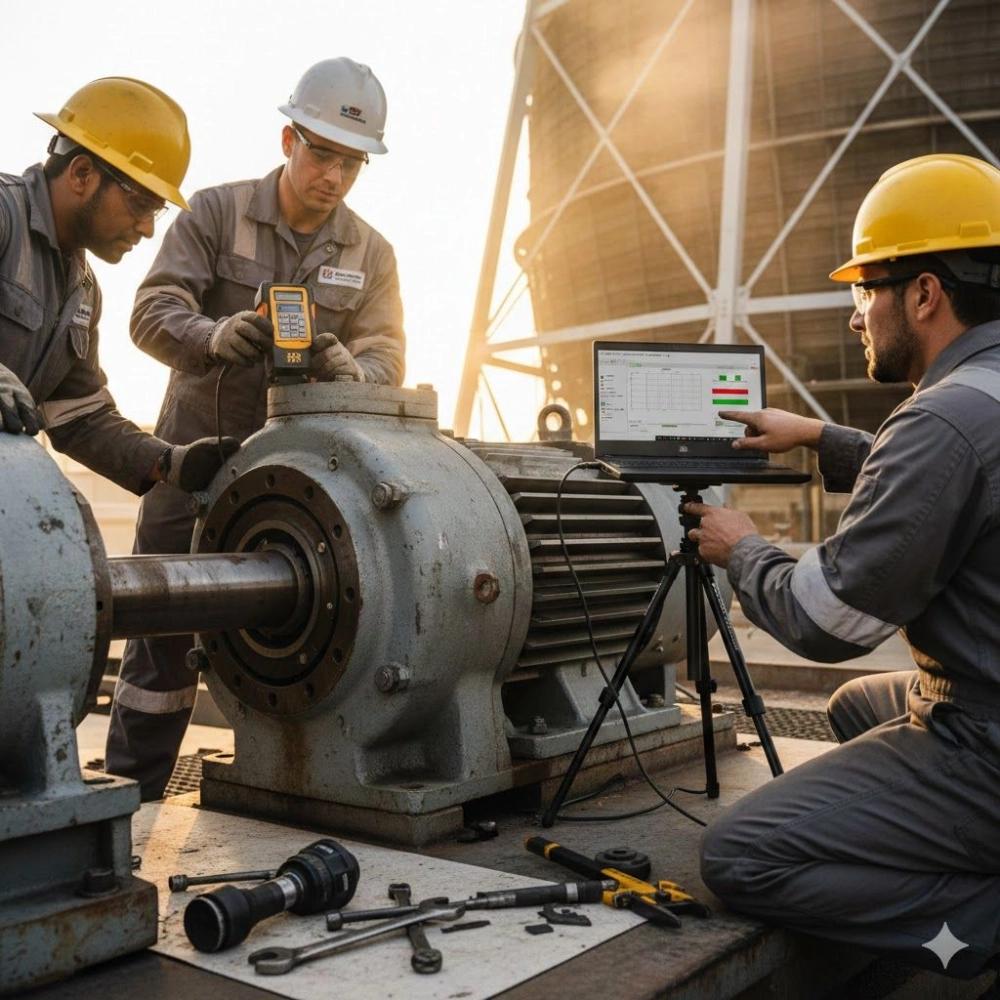
Temperature and vibration monitoring can help detect developing gearbox problems before they cause equipment failure.
Gearbox Temperature Monitoring
A gradual increase in gearbox temperature may indicate:
Oil deterioration
Incorrect oil viscosity
Insufficient or excessive oil
Excessive mechanical loading
Bearing damage
Internal gear friction
Poor operating conditions
Measure temperature at consistent locations and under comparable operating conditions. Compare readings with manufacturer limits and historical operating data.
A single temperature reading may not identify the root cause. The trend is often more useful.
Gearbox Vibration Monitoring
Vibration analysis can help identify mechanical problems such as:
Bearing deterioration
Gear tooth damage
Shaft misalignment
Loose mounting bolts
Fan imbalance
Structural resonance
Establish baseline readings when the gearbox is operating normally. Then monitor changes over time.
If vibration increases suddenly or exceeds the manufacturer's permitted limits, investigate the equipment before continuing operation.
7. Gearbox Alignment and Installation Checks
Correct installation is essential for reliable gearbox operation.
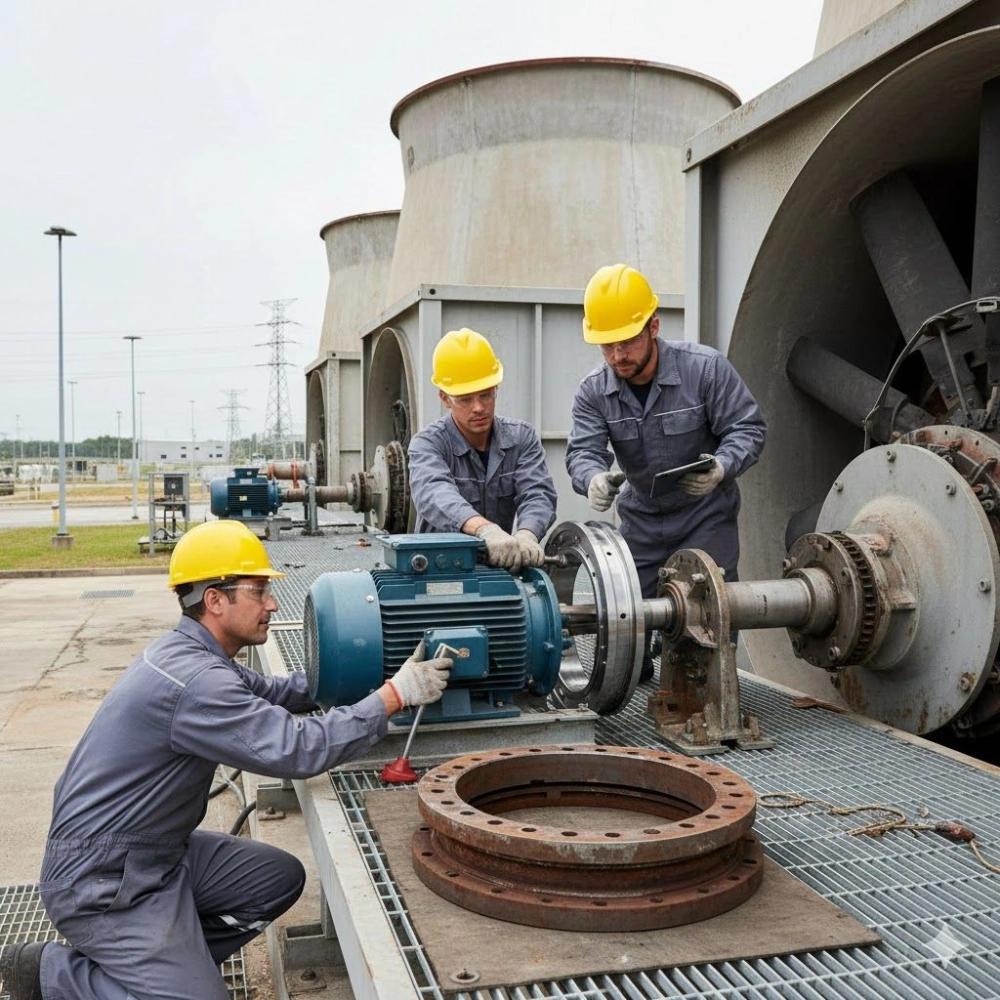
Misalignment between the motor, gearbox, and fan drive components can increase mechanical stress and accelerate wear.
During installation or major maintenance, check:
Mounting position: Confirm that the gearbox is installed in the correct orientation.
Foundation and support: Make sure the mounting structure is stable and suitable for the gearbox load.
Shaft alignment: Check alignment according to the drive system design and manufacturer requirements.
Fasteners: Tighten mounting bolts to the specified torque.
Coupling condition: Inspect the coupling and connected components for wear or damage.
Lubrication system: Confirm that the gearbox has the correct lubricant and oil level before operation.
After installation, conduct a controlled test run and monitor noise, vibration, temperature, and leakage.
8. Seasonal Cooling Tower Gearbox Maintenance
Cooling towers operate in different weather conditions throughout the year. Seasonal changes can affect gearbox lubrication, moisture exposure, and operating loads.
Summer Maintenance
During hot weather, gearbox operating temperatures may increase.
Recommended checks include:
Monitor gearbox temperature more frequently.
Check oil condition and level.
Inspect seals for leakage.
Check for abnormal vibration under high operating loads.
Ensure the cooling tower fan operates within its design conditions.
Do not assume that high ambient temperature is the only reason for gearbox overheating. Internal mechanical problems must also be considered.
Winter Maintenance
In cold weather, lubricant viscosity may increase, affecting startup conditions.
Recommended precautions include:
Confirm that the selected lubricant is suitable for the expected ambient temperature.
Follow the manufacturer's cold-start instructions.
Check for moisture accumulation and condensation.
Inspect seals and breather components.
Avoid sudden loading if the manufacturer's operating procedure requires a warm-up period.
For towers that operate seasonally, follow the manufacturer's shutdown, preservation, and restart procedures.
9. How to Prevent Premature Gearbox Failure
Preventive maintenance is more effective when it addresses the causes of failure rather than only the visible symptoms.
Here are several practical ways to protect a cooling tower fan gearbox.
9.1 Maintain Proper Lubrication
Use the specified oil, maintain the correct oil level, and prevent contamination during oil changes.
9.2 Avoid Excessive Fan Loading
An incorrectly selected fan, unsuitable blade angle, or abnormal operating condition may increase the load on the gearbox.
Make sure the fan and gearbox are compatible and operate within their design limits.
9.3 Control Vibration
Check the fan blades, hub, shaft, coupling, and gearbox mounting system.
Correct fan imbalance and mechanical looseness promptly.
9.4 Prevent Water and Dust Contamination
Cooling towers operate in humid environments. Moisture can enter the gearbox through damaged seals, unsuitable breathers, or poor maintenance practices.
Inspect sealing components and keep the gearbox exterior clean.
9.5 Follow Manufacturer Instructions
Use the manufacturer's specifications for lubricant, oil level, temperature limits, inspection frequency, and replacement procedures.
Avoid applying generic maintenance intervals to every gearbox model.
9.6 Keep Maintenance Records
Record operating hours, oil changes, temperature readings, vibration measurements, repairs, and replaced components.
These records help identify gradual changes and support better maintenance planning.
10. When Should a Cooling Tower Gearbox Be Replaced?
A gearbox does not necessarily need replacement simply because it has been operating for a certain number of years.
Its condition, operating history, inspection results, and repair feasibility should guide the decision.
Consider a professional inspection or replacement when you observe:
Severe gear tooth damage
Repeated bearing failures
Persistent overheating
Excessive vibration that cannot be corrected externally
Serious internal noise
Significant metal contamination in the lubricant
Cracks or major damage to the gearbox housing
Repeated breakdowns despite proper maintenance
Before replacing a gearbox, confirm that the replacement unit matches the original drive system requirements.
Important specifications include rated power, reduction ratio, output speed, torque capacity, mounting dimensions, shaft arrangement, and lubrication requirements.
A technically incompatible gearbox may create new problems even if its rated power appears suitable.
11. Cooling Tower Gearbox Maintenance Checklist
The following checklist can help maintenance teams organize routine inspections.
| Inspection Item | Recommended Check |
| Gearbox noise | Listen for abnormal sounds |
| Housing temperature | Compare readings with normal operating limits |
| Lubricating oil level | Check using the specified method |
| Oil condition | Look for discoloration, contamination, and metal particles |
| Oil leakage | Inspect seals, joints, and connections |
| Vibration | Record and compare vibration trends |
| Mounting bolts | Check for looseness |
| Motor and coupling | Inspect alignment and component condition |
| Fan assembly | Check for imbalance and abnormal loading |
| Maintenance records | Update operating hours and service history |
The checklist should be adapted to the gearbox manufacturer's maintenance instructions and the facility's maintenance program.
12. How Proper Maintenance Improves Operating Efficiency
A well-maintained gearbox helps the cooling tower fan operate reliably and reduces unnecessary mechanical losses.
When gears and bearings are properly lubricated, friction and wear can be controlled. When the drive system is correctly aligned, unnecessary vibration and mechanical stress can be reduced.
This supports:
More reliable fan operation
Reduced risk of unplanned shutdowns
Lower maintenance and repair costs
Better protection of connected equipment
More stable cooling tower operation
However, gearbox maintenance alone cannot guarantee overall cooling tower efficiency. Fan condition, motor performance, water distribution, fill condition, air circulation, and heat load also affect cooling performance.
A complete maintenance program should therefore cover the entire cooling tower system.
13. Choosing Reliable Cooling Tower Gearbox Components
When repairing or upgrading a cooling tower fan drive system, selecting compatible components is essential.
Before purchasing a replacement gearbox or related parts, confirm:
Original gearbox model and manufacturer
Motor rated power and speed
Required gearbox reduction ratio
Fan operating speed
Output torque requirements
Mounting and shaft dimensions
Lubricant specifications
Cooling tower operating environment
Do not select a replacement based only on external dimensions. Internal gear design, load capacity, and drive compatibility are equally important.
For cooling tower operators, working with experienced cooling tower component suppliers can help simplify component identification and replacement planning.
Power Tower Cooling Technology (Shaoxing) Co.,Ltd provides cooling tower-related products and technical support through its website, https://www.coolingtowerpart.com.
When planning gearbox maintenance or replacement, provide the cooling tower model, gearbox nameplate information, motor specifications, and relevant installation dimensions. Accurate information helps suppliers evaluate component compatibility more effectively.
14. Frequently Asked Questions
Q1: How often should a cooling tower gearbox be inspected?
A basic visual and operating inspection should be performed regularly, often daily or during each operating shift. More detailed inspections should follow the manufacturer's maintenance schedule and the facility's operating conditions.
Q2: What is the most important part of cooling tower gearbox maintenance?
Lubrication is one of the most important factors. Correct oil selection, proper oil level, and contamination control help protect gears and bearings from premature wear.
Q3: Why does my cooling tower gearbox become hot?
Possible causes include unsuitable lubricant, incorrect oil level, excessive loading, bearing damage, gear wear, or poor operating conditions. Compare the temperature with manufacturer limits and investigate any abnormal increase.
Q4: What causes cooling tower gearbox vibration?
Common causes include damaged bearings, worn gears, shaft misalignment, loose mounting bolts, fan imbalance, and structural problems.
Q5: Can I use ordinary industrial gear oil in a cooling tower gearbox?
Not necessarily. The lubricant must meet the gearbox manufacturer's viscosity, performance, and compatibility requirements. Always check the specified oil grade before filling or changing the lubricant.
Q6: How long does a cooling tower gearbox last?
There is no single service life that applies to every gearbox. Actual life depends on design, load, operating hours, lubrication, environmental conditions, installation quality, and maintenance practices.
Q7: Should I replace the gearbox when changing the cooling tower fan?
Not automatically. The gearbox should be inspected and evaluated separately. If it remains in good condition and is compatible with the replacement fan and drive system, replacement may not be necessary.
Conclusion
Cooling tower fan gearbox maintenance is essential for reliable industrial cooling tower operation. Regular inspection, correct lubrication, temperature monitoring, vibration analysis, and proper installation can help prevent premature wear and unexpected failures.
The most effective approach is to establish a maintenance schedule based on the gearbox manufacturer's recommendations, operating conditions, and actual equipment performance.
Do not wait until abnormal noise, overheating, or severe vibration causes a shutdown. Early detection and timely maintenance can reduce repair costs, protect connected equipment, and extend gearbox service life.
If you are planning cooling tower gearbox maintenance, component replacement, or a cooling tower upgrade, visit Power Tower Cooling Technology (Shaoxing) Co.,Ltd at www.coolingtowerpart.com to learn more about cooling tower products and solutions.


