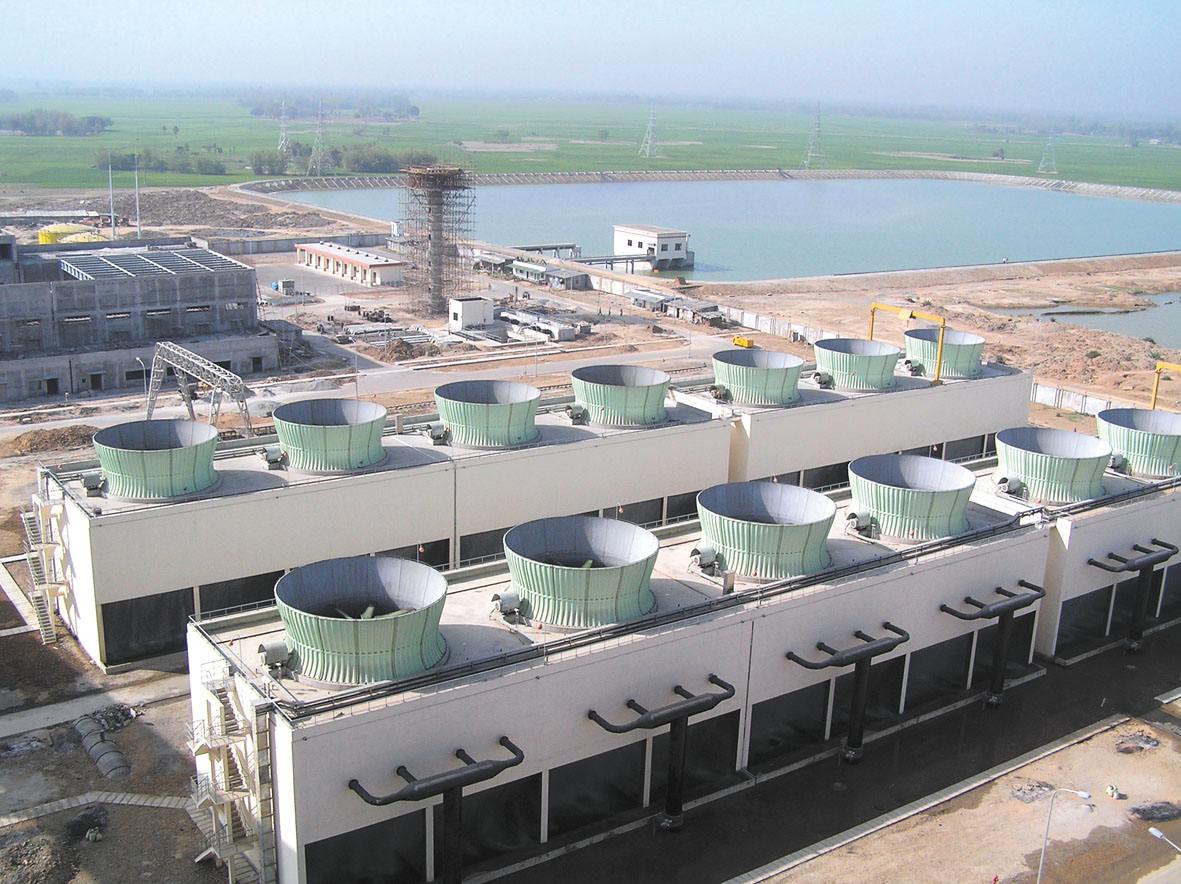
1. Introduction to Cooling Tower Fan Blade Balancing
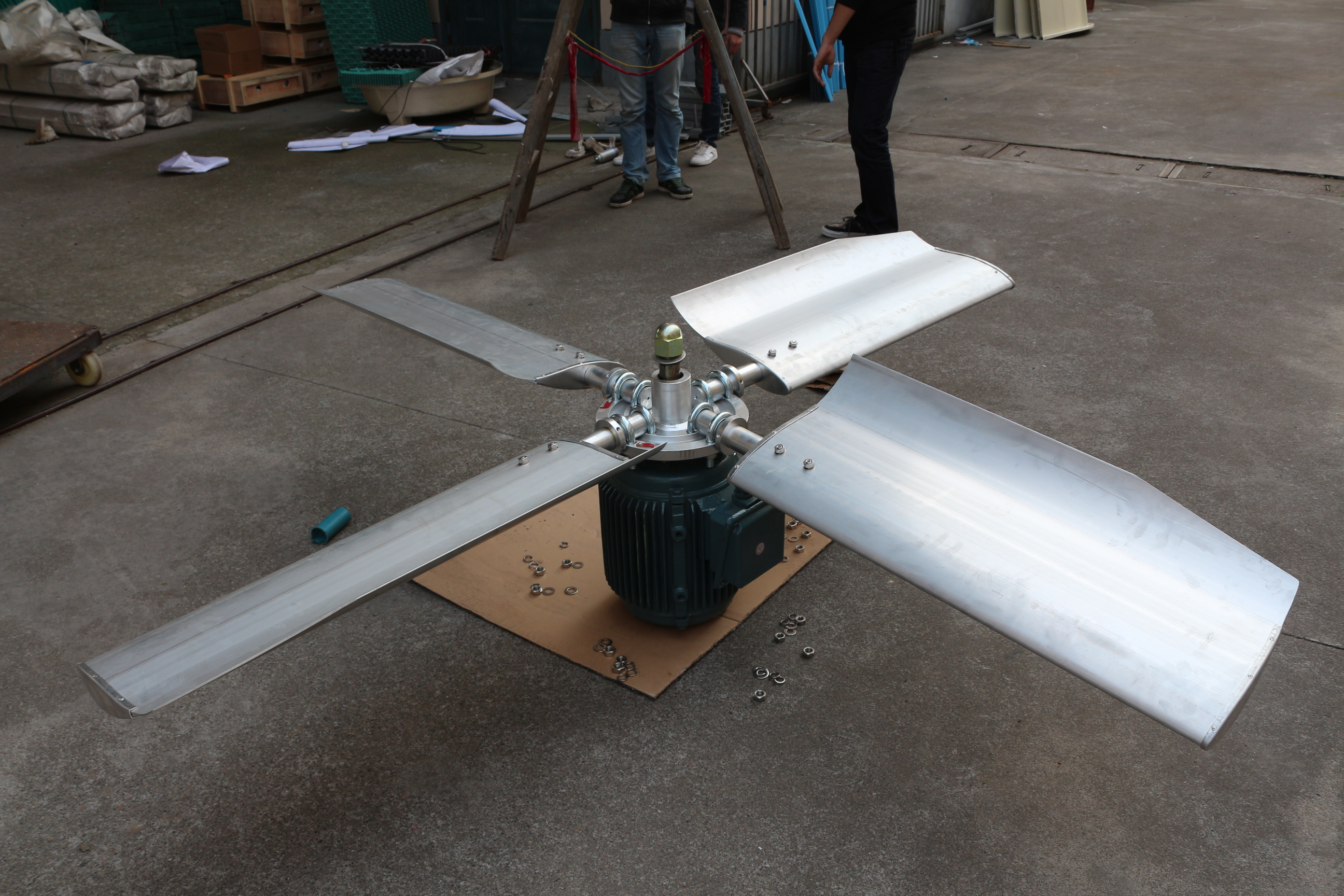
A cooling tower fan may look like a simple rotating machine, but its performance depends on several components working together. The fan blades, hub, shaft, motor, gearbox, and bearings all contribute to smooth and reliable operation.
Among these components, fan blade balance deserves special attention.
When a cooling tower fan rotates, even a small difference in blade weight or mass distribution can create vibration. At low speeds, the problem may seem minor. However, as the fan continues running, vibration can place additional stress on bearings, shafts, gearboxes, mounting structures, and other connected components.
That is why cooling tower fan blade balancing is an important part of industrial cooling tower maintenance.
Dynamic balancing is one of the most effective methods for identifying and correcting rotating fan imbalance under operating or controlled test conditions. It helps maintenance teams understand where the imbalance exists and determine the appropriate correction.
In this guide, we will explain the difference between static and dynamic balancing, discuss common causes of fan imbalance, and walk through the main steps of a dynamic balancing procedure. We will also share practical maintenance recommendations from the perspective of cooling tower component manufacturing.
2. Why Is Fan Blade Balancing Important?
Why should you spend time checking fan balance when the equipment still appears to be working?
The answer is simple: vibration is not just noise. It is a warning that something may be placing unnecessary stress on your equipment.
A properly balanced cooling tower fan can operate more smoothly, reduce mechanical loading, and support more reliable long-term performance.
2.1 Reduce Vibration and Mechanical Stress
An unbalanced fan generates centrifugal force as it rotates. This force changes direction continuously and can create periodic vibration throughout the fan assembly.
The higher the rotational speed and the greater the imbalance, the more significant the resulting force may become.
Excessive vibration can affect the fan support structure, drive system, and connected equipment. Over time, repeated mechanical stress may contribute to loose fasteners, fatigue, and premature component wear.
Balancing helps reduce the vibration caused by uneven mass distribution.
2.2 Protect Bearings, Gearboxes, and Motors
Bearings support the rotating shaft, while gearboxes or belt-drive systems transmit power to the fan. These components are designed to operate within specified mechanical limits.
When a fan is unbalanced, additional forces may be transmitted through the shaft and bearing supports. This can increase bearing loading and contribute to premature wear.
The motor and gearbox may also experience additional mechanical stress. Although balancing cannot solve every drive-system problem, it can remove one important source of vibration.
2.3 Improve Cooling Tower Operating Efficiency
A balanced fan does not automatically increase cooling capacity. Actual thermal performance depends on airflow, water distribution, fill condition, ambient conditions, and the overall tower design.
However, reducing unnecessary vibration can help the fan operate more reliably and reduce the risk of vibration-related shutdowns.
Stable fan operation also makes it easier to identify other problems, such as damaged blades, loose connections, bearing defects, or motor issues.
3. Static Balancing vs. Dynamic Balancing
Static and dynamic balancing are related, but they are not the same.
Choosing the correct method depends on the fan design, operating speed, rotor configuration, manufacturer requirements, and the vibration problem being investigated.
3.1 What Is Static Balancing?
Static balancing focuses on the distribution of mass around a rotor's axis.
Imagine placing a wheel on a low-friction horizontal shaft. If one side is heavier, that side tends to rotate downward. The wheel is statically unbalanced.
A similar principle applies to cooling tower fan assemblies. Static balancing can help identify a heavy spot when the rotor is stationary or supported on suitable balancing equipment.
This method is useful for certain components and rotor configurations, especially where the main imbalance can be adequately represented in one plane.
However, static balancing does not necessarily identify all imbalance conditions in a large rotating fan.
3.2 What Is Dynamic Balancing?
Dynamic balancing considers the rotor while it is rotating.
A dynamic balancing system uses vibration sensors and rotational reference information to evaluate the magnitude and phase of vibration. Depending on the equipment and balancing procedure, it can identify correction requirements in one or more balancing planes.
For a large cooling tower fan, dynamic balancing is particularly useful when the rotor's operating behavior cannot be adequately represented by a simple stationary balance check.
The process typically involves measuring baseline vibration, applying a known trial weight when appropriate, measuring the response, calculating the correction, and verifying the result.
3.3 Which Balancing Method Should You Choose?
There is no universal rule that dynamic balancing must replace static balancing in every situation.
| Comparison | Static Balancing | Dynamic Balancing |
| Main condition | Rotor stationary | Rotor rotating |
| Measurement focus | Mass distribution around the axis | Rotating vibration and phase response |
| Typical application | Suitable individual components and rotors | Rotating assemblies requiring dynamic assessment |
| Equipment | Suitable static balancing fixture | Dynamic balancing machine or field balancing equipment |
| Correction planes | Usually one | One or more, depending on the rotor and method |
| Main limitation | May not identify couple imbalance | Requires suitable instrumentation and trained personnel |
For large cooling tower fan assemblies, dynamic balancing may be appropriate when vibration measurements indicate a rotating imbalance that cannot be resolved through static checks alone.
Always follow the fan manufacturer's balancing requirements and applicable industry standards.
4. Common Causes of Cooling Tower Fan Imbalance
Before balancing a fan, it is important to understand why the imbalance occurred.
Adding correction weights without identifying the original problem may only hide a symptom. If the actual cause is a damaged blade, loose hub connection, or worn bearing, the vibration may return quickly.
4.1 Unequal Blade Weight or Pitch
Cooling tower fan blades should be compatible with the fan design and installed according to the specified arrangement.
If replacement blades have different weights, dimensions, or material properties, the fan may develop an uneven mass distribution.
Unequal blade pitch is another concern. Although pitch differences are primarily an aerodynamic and installation issue, they can create uneven aerodynamic loading and vibration.
During inspection, check both blade weight compatibility and pitch settings.
4.2 Dirt, Scale, and Material Buildup
Cooling towers operate in environments where moisture, airborne dust, minerals, and other contaminants are common.
Over time, deposits may accumulate on fan blades. If the buildup is uneven, it can change the mass distribution of the rotating assembly.
For example, one blade may collect more mineral deposits than another. Even if the blades were originally balanced, the additional material can create an imbalance.
Regular cleaning and inspection help prevent this problem.
4.3 Blade Damage and Deformation
A fan blade may become bent, cracked, chipped, or permanently deformed because of impact, corrosion, fatigue, improper handling, or operating conditions.
A damaged blade may have a different mass distribution from the other blades. It may also generate abnormal aerodynamic forces.
Do not assume that adding a balancing weight will make a damaged blade safe. Structural defects must be evaluated and repaired or replaced according to the manufacturer's requirements.
4.4 Loose Bolts and Hub Problems
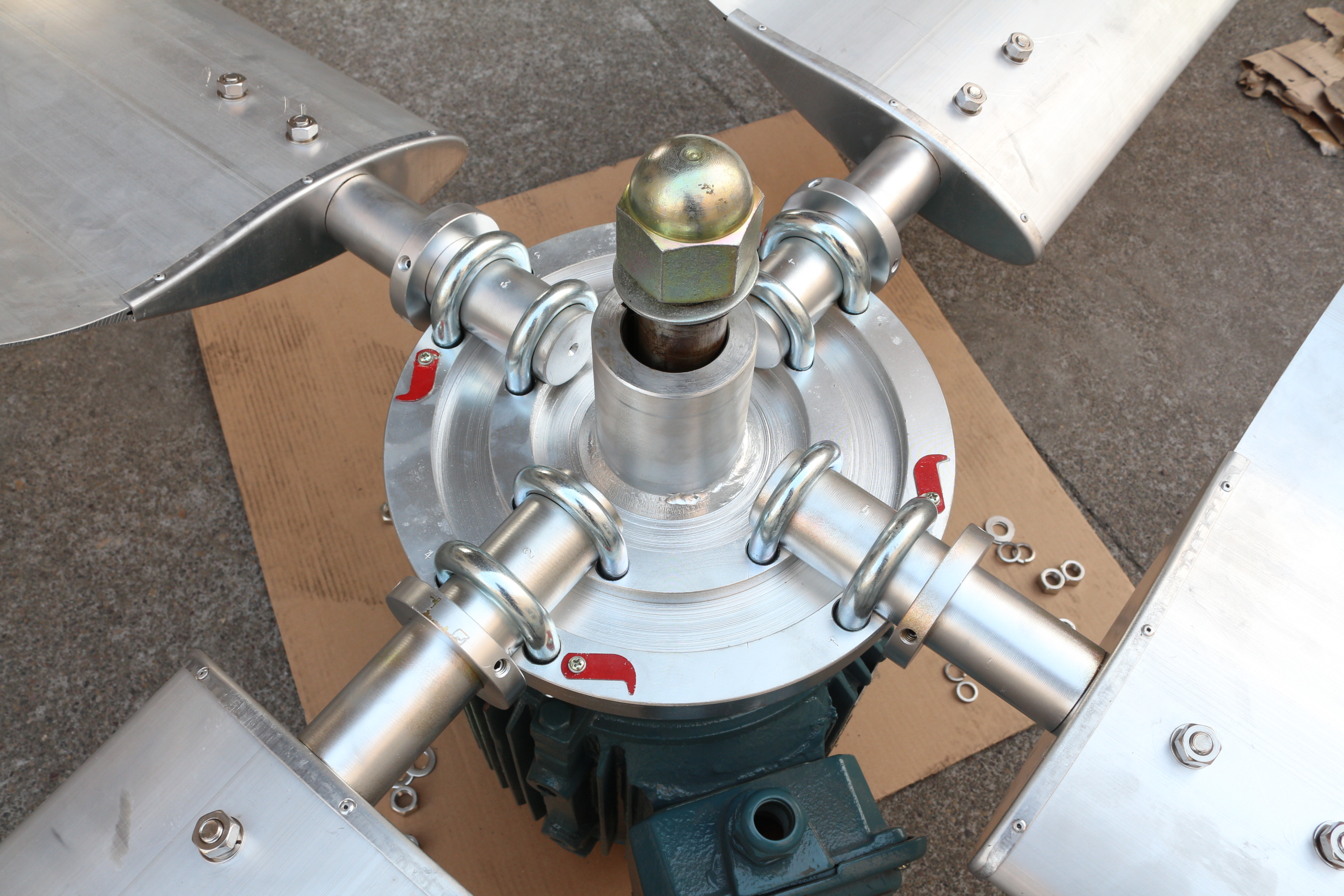
The hub connects the fan blades to the rotating shaft or drive assembly.
Loose blade mounting bolts, damaged threads, worn connections, or hub deformation can affect fan stability.
A loose connection is especially important because it may become more dangerous as operating forces increase.
Inspect the hub, blade clamps, mounting hardware, and shaft connection before performing any balancing work.
4.5 Corrosion and Uneven Wear
Cooling towers expose components to moisture and potentially corrosive operating environments.
Corrosion can gradually remove material from one area while deposits accumulate elsewhere. This changes the rotor's mass distribution.
Uneven wear may also affect blade surfaces and mounting connections.
If corrosion has reduced structural strength, balancing alone is not an acceptable solution. The affected component must be assessed for continued service.
5. Signs That Your Cooling Tower Fan Needs Balancing
How can you tell whether a cooling tower fan may be unbalanced?
Look for changes in operating behavior, particularly when they appear after maintenance, component replacement, or an abnormal event.
Common warning signs include:
Increased vibration at the fan deck or bearing supports.
Unusual humming, rattling, or mechanical noise.
Fan blades that appear to move unevenly during rotation.
Loose fasteners or repeated loosening of mounting hardware.
Abnormal bearing temperature or accelerated bearing wear.
Increased vibration after blade replacement or adjustment.
Changes in motor current or operating behavior that require further investigation.
These symptoms do not prove that the fan is unbalanced. Bearing defects, shaft misalignment, structural resonance, looseness, and aerodynamic problems can produce similar symptoms.
The correct approach is to inspect the entire rotating system and use vibration analysis to identify the likely cause.
6. Tools and Equipment for Dynamic Balancing
A reliable dynamic balancing procedure depends on suitable equipment and correct measurement methods.
The exact equipment varies according to whether balancing takes place in a workshop or in the field.
Typical tools and instruments include:
Dynamic balancing analyzer: Measures vibration amplitude and phase and helps calculate correction requirements.
Vibration sensors: Accelerometers or other suitable transducers measure vibration at selected locations.
Tachometer or phase reference sensor: Provides rotational speed and a reference point for phase measurement.
Trial weights: Known masses temporarily installed at approved locations to evaluate the rotor's response.
Correction weights: Approved weights used to correct the identified imbalance.
Precision measuring tools: Calipers, scales, and other instruments help verify dimensions and component weights.
Torque wrench: Ensures fasteners are tightened to the specified torque.
Inspection tools: Flashlights, mirrors, and suitable measuring equipment help identify cracks, corrosion, loose connections, and other defects.
For large industrial cooling tower fans, the balancing system must be suitable for the rotor's size, operating speed, mounting arrangement, and measurement requirements.
7. Preparation Before Dynamic Balancing
Preparation is one of the most important stages of the entire process.
If the fan has loose bolts, damaged blades, or defective bearings, balancing results may be inaccurate. Worse, attempting to run a defective fan can create a safety risk.
7.1 Inspect the Fan Assembly
Start with a complete visual and mechanical inspection.
Check the following:
Fan blades for cracks, chips, corrosion, and deformation.
Hub surfaces for damage and corrosion.
Blade clamps and mounting bolts for looseness.
Shaft and coupling connections for visible defects.
Fan support structure for cracks or loose connections.
Any signs of contact between rotating and stationary components.
Remove dirt and uneven deposits using a cleaning method compatible with the blade material.
If a structural defect is found, resolve it before proceeding.
7.2 Check Blade Pitch and Installation
Blade pitch affects airflow and aerodynamic loading.
Use the manufacturer's specified measurement locations and procedure to check the pitch of every blade. Do not estimate the angle by eye.
Also confirm that:
All blades are installed in the correct orientation.
Blade positions match the fan design.
Replacement blades are compatible with the assembly.
Mounting hardware is correctly installed.
The hub and blade connections meet the manufacturer's requirements.
Correcting pitch differences is not the same as correcting mass imbalance. Both issues may need attention.
7.3 Inspect Bearings, Shafts, and Drive Components
Check the bearings, shaft, motor, gearbox, coupling, and belt-drive components where fitted.
Look for bearing noise, excessive clearance, abnormal temperature, lubrication problems, shaft runout, and signs of misalignment.
A vibration problem caused by a damaged bearing cannot be reliably corrected by adding fan balancing weights.
The fan must be mechanically sound before dynamic balancing begins.
8. Step-by-Step Dynamic Balancing Guide
The following procedure describes the general principles of field dynamic balancing. The exact sequence, sensor locations, correction planes, and calculation method depend on the balancing instrument and fan design.
Only qualified personnel should perform the work using an approved procedure.
8.1 Record the Initial Vibration
Before making any correction, record the fan's baseline vibration.
Measurements are commonly taken at suitable bearing housings or support locations in horizontal, vertical, and axial directions, as appropriate.
Record the following information:
Fan rotational speed.
Vibration amplitude.
Vibration phase, when available.
Measurement location and direction.
Operating conditions.
Any unusual noise or mechanical behavior.
Use consistent measurement locations so that readings can be compared accurately.
A baseline record helps determine whether the correction has improved the condition.
8.2 Identify the Vibration Characteristics
A vibration analyzer can help determine whether the problem is related to rotor imbalance.
Imbalance often produces a significant vibration component at the rotational frequency, commonly called 1× running speed.
However, a strong 1× component is not proof of imbalance by itself. Misalignment, looseness, resonance, and other faults can also influence vibration at or near running speed.
Review the vibration spectrum, phase information, operating speed, and mechanical inspection findings together.
If the cause is uncertain, a qualified vibration analyst should evaluate the data before any correction is attempted.
8.3 Install Trial Weights
When the selected balancing method requires a trial weight, install a known mass at an approved location.
The trial weight is used to measure how the rotor responds to a controlled change in mass distribution.
Before installation, confirm:
The permitted trial-weight location.
The required weight and attachment method.
The maximum allowable operating speed.
The structural suitability of the attachment point.
The manufacturer's safety requirements.
Never attach a trial weight using an improvised method.
All trial weights must be secured against movement or detachment during testing.
8.4 Measure the Vibration Response
After installing the trial weight, repeat the vibration measurement under comparable operating conditions.
Record the new vibration amplitude and phase.
The difference between the baseline measurement and the trial-weight response helps the balancing instrument determine the rotor's response to the added mass.
Keep operating speed and measurement locations as consistent as possible. Significant changes in operating conditions can affect the accuracy of the comparison.
8.5 Calculate the Correction Weight
The balancing analyzer uses the original and trial measurements to calculate the required correction.
The result may include:
For a rotor requiring two-plane balancing, the analyzer may calculate separate correction weights for each plane.
Do not estimate correction weight based only on visual observation or vibration amplitude. Use the balancing instrument's approved calculation method and verify that the proposed correction is within the fan manufacturer's limits.
8.6 Install the Final Correction Weight
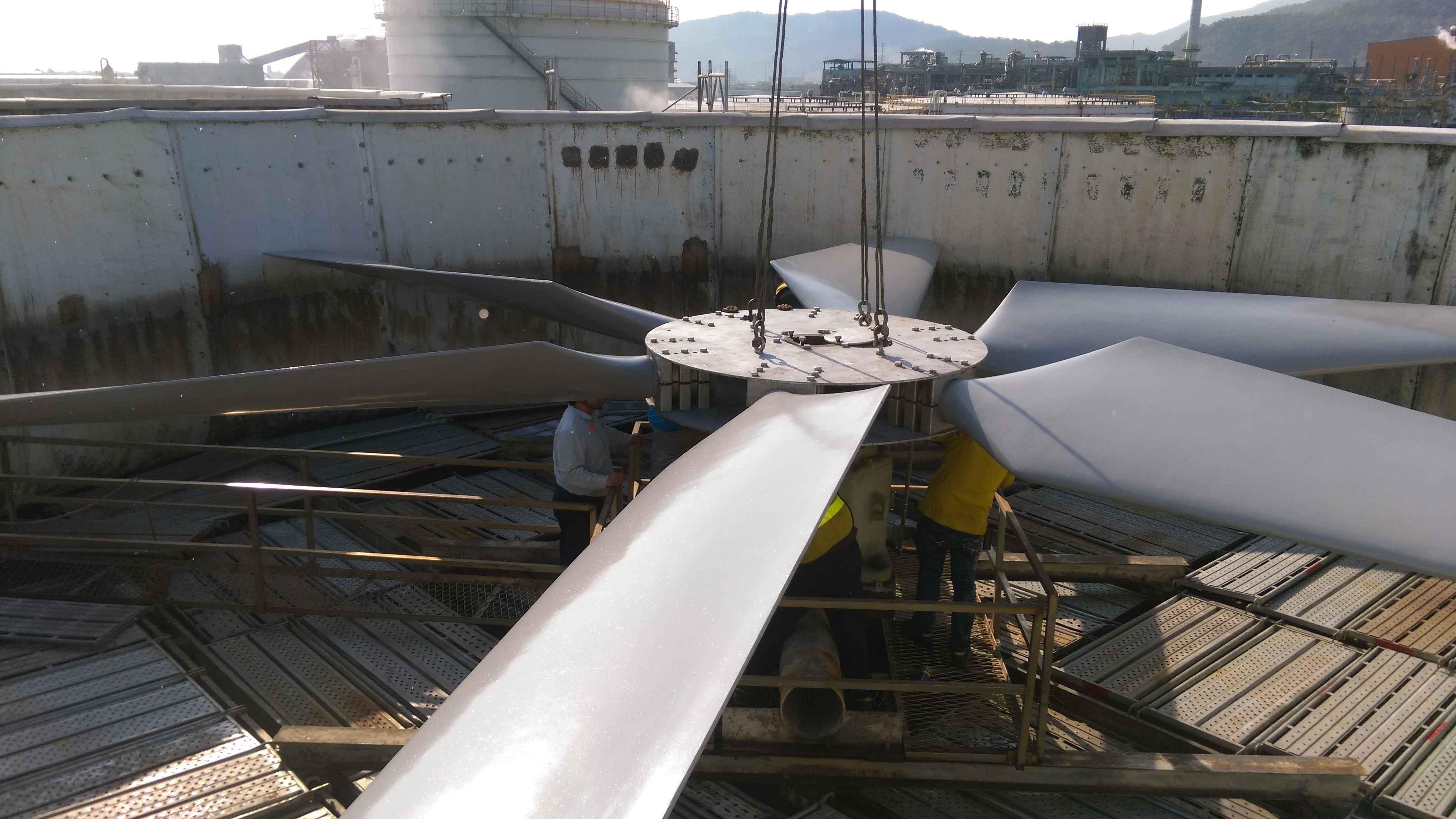
Once the correction has been calculated and reviewed, install the specified weight at the approved location.
The attachment must be mechanically secure and suitable for the operating environment.
Depending on the fan design, correction may involve an approved weight system, material removal from a designated location, or another manufacturer-approved method.
Do not drill, weld, grind, or modify a blade or hub unless the manufacturer specifically permits the procedure.
After installation, check the fasteners and attachment security according to the specified torque and inspection requirements.
8.7 Verify the Final Balance
The balancing process is not complete until the result has been verified.
Run the fan under the approved test conditions and repeat the vibration measurements.
Compare the final readings with the baseline and the applicable acceptance criteria.
A successful correction should demonstrate an acceptable reduction in the vibration associated with imbalance, without introducing another mechanical problem.
Record the final vibration amplitude, phase, operating speed, correction weight, correction position, and test conditions.
Keep these records for future maintenance and condition monitoring.
9. Important Safety Precautions
Cooling tower fans are large rotating machines. Their blades can cause serious injury, and detached components can become dangerous projectiles.
Safety must come before balancing accuracy.
Follow these precautions:
Apply the site's lockout/tagout procedure before inspection or mechanical work.
Confirm that the fan cannot start automatically through a remote control or automatic control system.
Verify that the rotor has completely stopped before approaching or touching it.
Use appropriate fall protection when working at height.
Wear suitable personal protective equipment.
Never operate a fan with unsecured trial weights or correction weights.
Keep personnel away from the fan's rotating plane during testing.
Follow the fan manufacturer's operating limits and approved test procedure.
Stop testing immediately if abnormal noise, movement, or vibration develops.
Never bypass a safety device to complete a balancing procedure.
For field balancing, establish a controlled work area and ensure that all personnel understand the test sequence and emergency shutdown arrangements.
10. Common Dynamic Balancing Mistakes
Even experienced maintenance teams can make mistakes when the original cause of vibration is not properly investigated.
Here are several problems worth avoiding.
Balancing before inspection: A damaged blade or loose hub connection should be corrected before balancing.
Ignoring blade pitch: Unequal pitch can cause uneven aerodynamic loading even when the rotor's mass distribution is acceptable.
Using unsuitable correction weights: Every weight must be compatible with the fan design and securely attached.
Measuring at inconsistent locations: Changing sensor positions or directions makes before-and-after comparisons less reliable.
Ignoring operating conditions: Changes in speed, airflow, or mechanical configuration can affect vibration readings.
Treating every vibration problem as imbalance: Bearing defects, misalignment, looseness, and resonance require different corrective actions.
Failing to document the results: Without records, it becomes difficult to determine whether vibration is increasing or returning over time.
A good balancing procedure is based on measurement, diagnosis, correction, and verification—not guesswork.
11. How Often Should Cooling Tower Fans Be Balanced?
There is no single balancing interval that applies to every cooling tower fan.
The required frequency depends on the fan design, operating hours, environment, vibration history, maintenance program, and manufacturer's recommendations.
For many industrial installations, vibration condition monitoring is more useful than balancing at an arbitrary fixed interval.
Consider checking fan balance or arranging a vibration assessment in the following situations:
After installing a new fan or replacing blades.
After replacing or repairing the hub.
Following a significant impact or abnormal operating event.
When vibration increases beyond the site's alert level.
After major maintenance involving the rotor or drive assembly.
When repeated bearing or fastener problems occur.
If a fan operates in a dusty, corrosive, or high-contamination environment, more frequent inspections may be necessary.
The maintenance team should establish inspection and balancing intervals based on actual operating conditions and equipment requirements.
12. Maintenance Tips to Prevent Fan Imbalance
Preventive maintenance is usually more cost-effective than waiting for a vibration problem to become serious.
A practical maintenance program should include the following activities.
Clean the blades regularly. Remove dirt, scale, and other deposits that could create uneven mass distribution. Select cleaning methods that will not damage the blade material.
Inspect blade surfaces. Look for cracks, deformation, corrosion, and signs of impact.
Check mounting hardware. Inspect hub connections, blade clamps, and fasteners according to the manufacturer's requirements.
Monitor vibration trends. Record readings at consistent locations and compare them over time.
Maintain the drive system. Check bearings, lubrication, shafts, couplings, belts, and gearboxes as applicable.
Verify blade pitch. Check pitch after blade replacement, adjustment, or other maintenance that may affect the setting.
Use compatible replacement components. Confirm that replacement blades match the fan's design, dimensions, material, weight requirements, and operating conditions.
These simple actions help reduce the likelihood of imbalance and support more reliable fan operation.
13. When Should You Replace Fan Blades Instead of Balancing Them?
Balancing is useful when the fan is structurally sound but has an uneven mass distribution.
However, it is not a repair method for every blade problem.
You should consider blade replacement when:
A blade has a structural crack.
The blade is permanently deformed.
Corrosion has significantly reduced material thickness or strength.
A mounting area is damaged.
The blade has suffered impact damage.
The blade material is deteriorating.
The manufacturer does not approve continued use or repair.
A damaged blade can fail even if the fan appears to have acceptable vibration after correction.
When replacing blades, confirm compatibility with the existing hub and fan assembly. Check blade length, profile, material, weight, mounting dimensions, pitch range, and operating requirements.
It is also important to check whether the complete rotor requires balancing after replacement. Follow the manufacturer's recommendations and verify the final vibration condition before returning the fan to normal service.
14. How to Choose a Reliable Cooling Tower Fan Blade Supplier
The quality and compatibility of replacement fan blades have a direct influence on fan reliability.
If you are purchasing replacement blades, do not focus on price alone. A low-cost blade that does not match the original design may create installation difficulties, uneven loading, or additional maintenance work.
Consider these factors when evaluating a supplier:
Product compatibility: The supplier should understand your existing fan model, blade dimensions, hub connection, and installation requirements.
Material selection: Blade materials should be appropriate for the operating environment, temperature, moisture, and corrosion conditions.
Dimensional accuracy: Consistent dimensions and mounting details are important for correct installation.
Weight consistency: Replacement blades should meet the fan design's weight and balance requirements.
Technical communication: A capable supplier should be able to review drawings, photographs, dimensions, and relevant operating information before recommending a replacement.
Quality control: Ask about inspection procedures, material specifications, and available product documentation.
At Power Tower Cooling Technology (Shaoxing) Co.,Ltd, we focus on cooling tower components and replacement solutions. When selecting fan blades or related parts, it is important to match the replacement components to the existing equipment rather than choosing by appearance alone.
Visit our website at https://www.coolingtowerpart.com to learn more about our cooling tower products and discuss your component requirements.
15. Frequently Asked Questions
15.1 Can a Cooling Tower Fan Operate with Slight Imbalance?
A fan may continue operating with a small amount of imbalance, but that does not mean the condition should be ignored.
Whether the vibration is acceptable depends on the fan design, operating speed, support structure, and applicable vibration limits.
Monitor the vibration trend and follow the manufacturer's acceptance criteria. If vibration increases or other warning signs appear, arrange an inspection.
15.2 Is Dynamic Balancing Better Than Static Balancing?
Dynamic balancing provides information about the rotor's behavior while rotating and can address imbalance conditions that static balancing may not identify.
However, the best method depends on the rotor configuration and the manufacturer's requirements. Static balancing remains useful for suitable components and applications.
For large cooling tower fans, dynamic balancing may be appropriate when field vibration measurements indicate a rotating imbalance.
15.3 Can Dirty Fan Blades Cause Vibration?
Yes. Uneven dirt, mineral scale, or other deposits can change the mass distribution of fan blades.
If one blade carries significantly more buildup than the others, the fan may develop additional vibration.
Cleaning and inspection should therefore be part of routine fan maintenance.
15.4 Should Fan Blades Be Balanced After Replacement?
The replacement blades should meet the original fan's specifications and weight requirements.
After installation, check blade pitch, mounting hardware, and the complete fan assembly. Whether a separate balancing procedure is required depends on the fan design and manufacturer instructions.
At minimum, verify vibration under the approved operating conditions before returning the equipment to normal service.
16. Conclusion
Cooling tower fan blade balancing is an important part of maintaining reliable industrial cooling equipment.
An unbalanced fan can create unnecessary vibration and mechanical stress, potentially affecting bearings, shafts, gearboxes, motors, and support structures. Dynamic balancing provides a systematic way to measure rotating vibration, identify correction requirements, and verify the result.
But remember: balancing should never replace proper inspection. Damaged blades, loose hub connections, defective bearings, and incorrect blade pitch must be addressed before the balancing process can deliver a reliable result.
For cooling tower operators, the best approach combines regular cleaning, mechanical inspection, vibration monitoring, correct replacement parts, and professional balancing when required.


