1. Introduction: Why Cooling Tower Fan Balance Matters
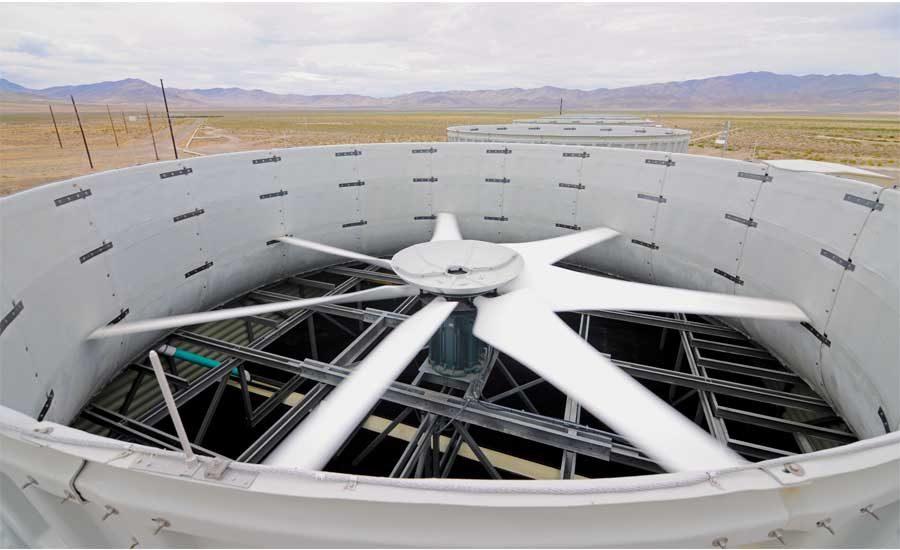
A cooling tower fan may look like a simple rotating component, but its performance has a direct impact on the entire cooling system. It moves large volumes of air through the tower, helping remove heat from circulating water. When the fan operates smoothly, the cooling tower can maintain stable airflow, reduce unnecessary energy consumption, and support reliable industrial production.
However, what happens when the fan becomes unbalanced?
At first, you might notice a slight vibration or an unusual sound. These signs can seem harmless, especially if the cooling tower is still operating normally. But an unbalanced fan can gradually place additional stress on bearings, shafts, gearboxes, motors, and supporting structures. If the problem continues, it may lead to equipment damage and unexpected downtime.
Cooling tower fan imbalance is a common issue in industrial cooling tower maintenance. Fortunately, it is often possible to identify and correct the problem before it develops into a major failure.
In this guide, we explain the causes, symptoms, risks, inspection methods, and practical solutions for cooling tower fan imbalance. We also discuss how to prevent recurring problems and select suitable replacement components.
2. What Is Cooling Tower Fan Imbalance?
Cooling tower fan imbalance occurs when the mass distribution of a rotating fan assembly is uneven around its rotational axis.
Ideally, the fan blades and hub should be properly balanced so that the rotating assembly produces minimal unwanted vibration. When one blade is heavier than another, or when material accumulates unevenly on the blades, the fan's center of mass may move away from its rotational axis.
As the fan rotates, this uneven mass creates centrifugal forces. These forces increase with rotational speed and can produce noticeable vibration throughout the fan and drive system.
Think of a washing machine with an uneven load. When the drum spins quickly, the clothes gather on one side and cause the machine to shake. A cooling tower fan can experience a similar effect, although the forces and operating conditions are different.
2.1 Static Imbalance
Static imbalance occurs when the fan's center of mass does not align with its rotational axis. The heavier section tends to move toward the lowest position when the rotor is free to turn.
This type of imbalance is commonly associated with uneven mass distribution across the fan assembly.
2.2 Dynamic Imbalance
Dynamic imbalance occurs when mass distribution is uneven in different planes along the rotating assembly. It can create both radial and couple-related vibration during rotation.
Large industrial cooling tower fans may require dynamic balancing because their diameter, operating speed, and blade configuration can make more complex vibration patterns possible.
The correct balancing method depends on the fan design, operating conditions, and manufacturer's requirements.
3. Common Causes of Cooling Tower Fan Imbalance
Fan imbalance rarely develops without a reason. In many cases, the problem results from gradual contamination, mechanical wear, component damage, or incorrect installation.
Understanding the cause is essential. Otherwise, balancing the fan without correcting the underlying problem may only provide temporary improvement.
3.1 Dirt, Scale, and Debris on Fan Blades
Cooling towers operate in environments where moisture, dust, airborne particles, and water droplets are constantly present.
Over time, dirt, mineral deposits, algae, and other contaminants may accumulate on fan blades. If the buildup is uneven, one blade or one section of the fan can become heavier than the others.
Even a relatively small amount of uneven material can affect a high-speed rotating assembly.
Regular cleaning helps prevent this problem. However, cleaning should follow the fan manufacturer's recommendations. Aggressive tools or unsuitable chemicals may damage blade surfaces or protective coatings.
3.2 Damaged or Deformed Fan Blades
Fan blades can become damaged during transportation, installation, operation, or maintenance.
Common examples include:
Cracks around blade roots or mounting areas.
Bent or twisted blade sections.
Chipped blade edges.
Deformation caused by impact.
Damage from corrosion or chemical exposure.
A damaged blade may have a different mass or aerodynamic profile from the remaining blades. This can create imbalance and may also reduce airflow efficiency.
A cracked or deformed blade should not simply be treated as a balancing problem. It needs to be assessed for structural integrity and replaced when necessary.
3.3 Loose Fasteners and Hub Problems
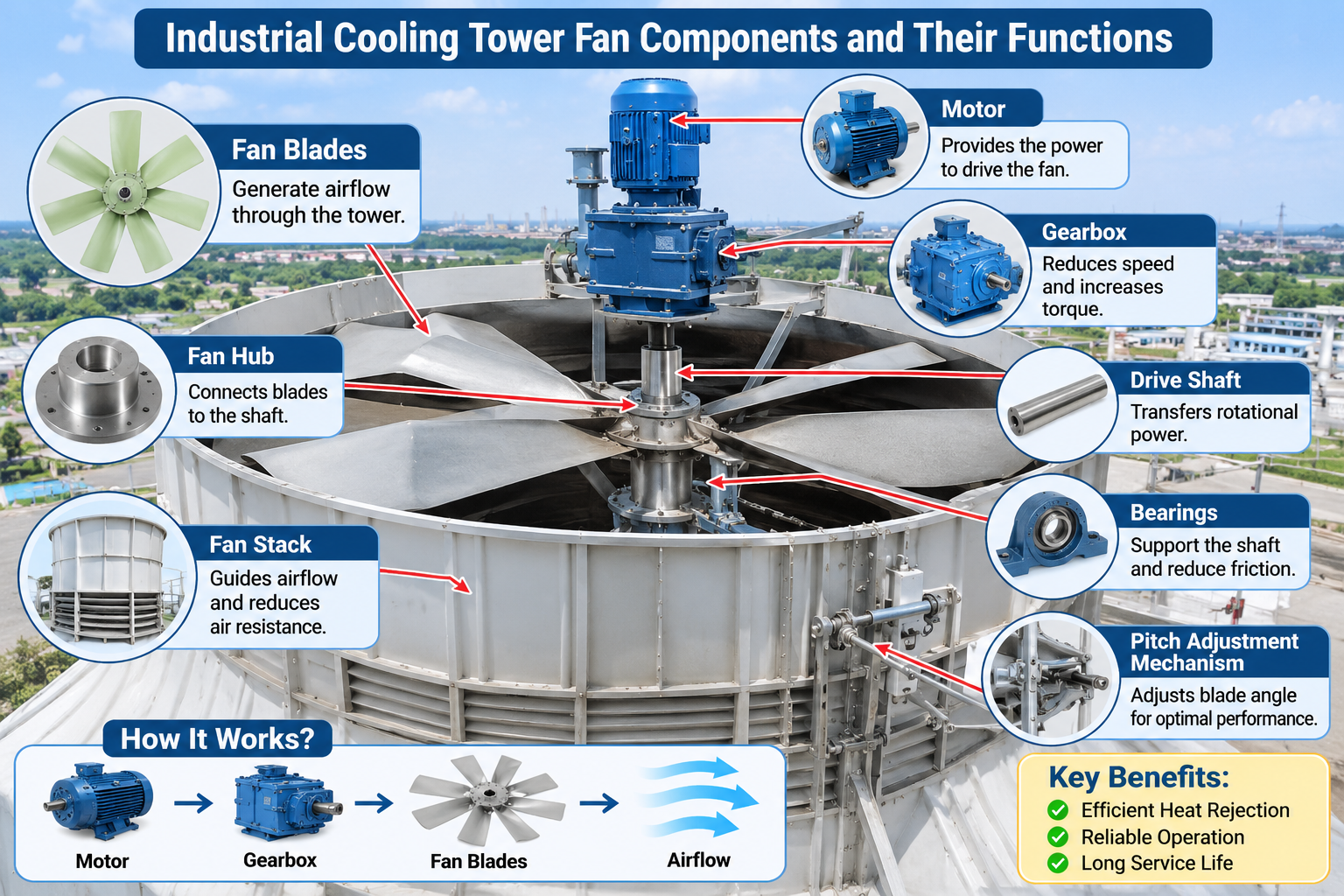
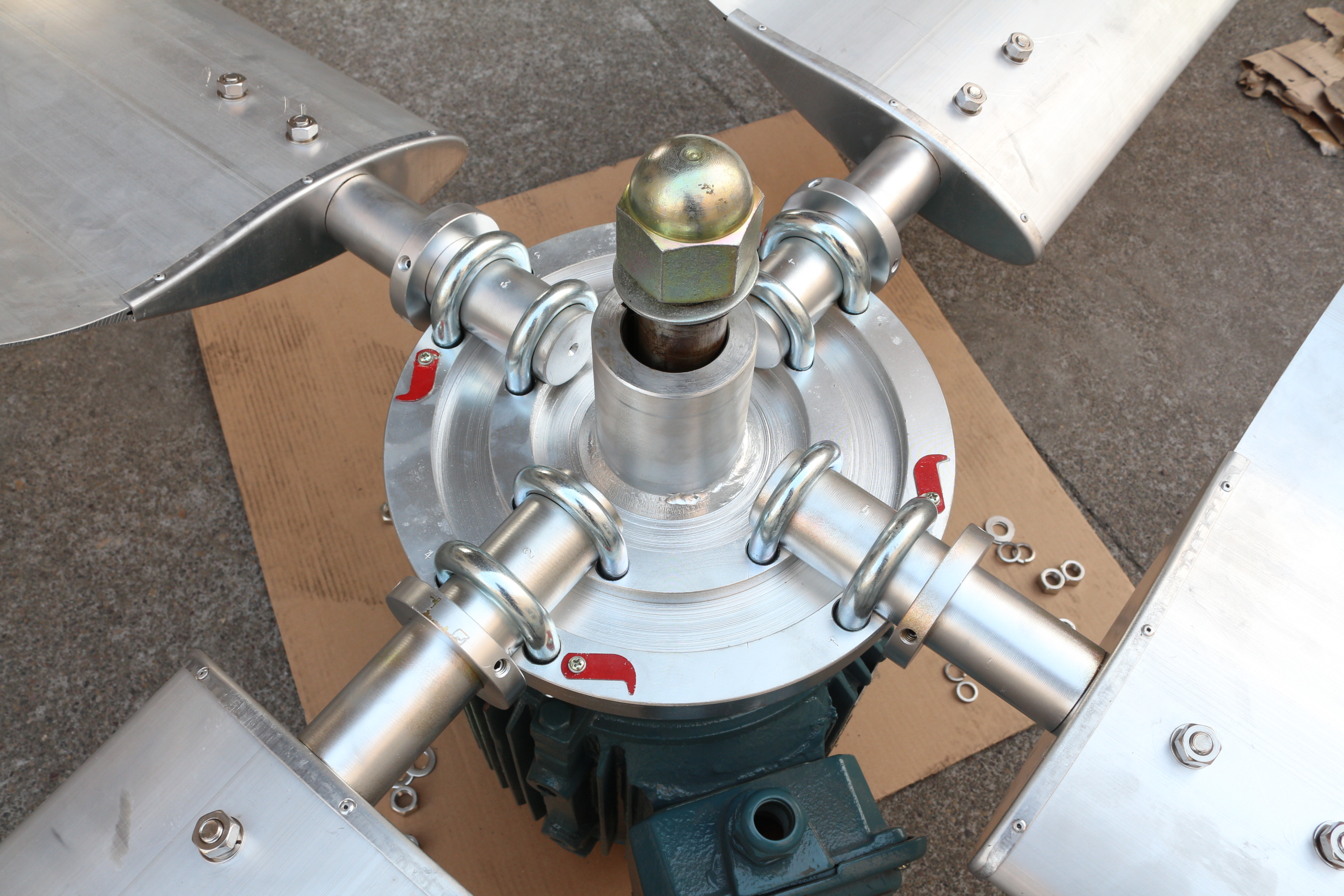
The fan hub connects the blades to the rotating shaft or drive assembly. If its fasteners become loose, the blades may no longer maintain their intended positions.
Uneven blade positioning can affect both balance and aerodynamic performance.
Other possible problems include worn mounting holes, damaged blade clamps, loose hub components, and incorrect assembly.
During inspection, technicians should check the hub, blade connections, fasteners, and mounting surfaces against the manufacturer's specifications.
3.4 Corrosion and Uneven Blade Wear
Cooling tower fans operate in humid environments, and some industrial applications expose components to aggressive water treatment chemicals or corrosive atmospheres.
Corrosion can gradually remove material from certain areas of a blade. It may also weaken the blade structure.
Uneven wear can change the mass distribution of the fan assembly. In severe cases, corrosion may create cracks or other structural defects.
Material selection is therefore important. Depending on the application, cooling tower fans may use engineered plastics, fiberglass-reinforced materials, aluminum alloys, or other materials designed for specific operating environments.
3.5 Incorrect Installation and Alignment
Incorrect installation can contribute to vibration that resembles fan imbalance.
Potential problems include:
Incorrect blade pitch settings.
Uneven blade installation.
Improper hub positioning.
Shaft misalignment.
Loose mounting structures.
Incorrect installation of drive components.
A fan may be correctly balanced but still vibrate because of poor alignment, a bent shaft, or a structural problem.
For this reason, technicians should inspect the entire rotating assembly rather than immediately adding balancing weights.
4. Main Symptoms of Cooling Tower Fan Imbalance
How can you tell whether a cooling tower fan is unbalanced?
The symptoms may develop gradually or appear suddenly after blade damage, maintenance work, or an unexpected impact. The following signs deserve attention.
4.1 Excessive Vibration
Excessive vibration is one of the most recognizable symptoms of cooling tower fan imbalance.
You may notice vibration around the fan deck, motor base, gearbox support, or nearby structural components. In some cases, the vibration becomes stronger as the fan speed increases.
However, vibration does not automatically mean the fan is unbalanced. Bearing damage, misalignment, looseness, shaft defects, and structural resonance can produce similar symptoms.
A vibration measurement and mechanical inspection are needed to identify the actual cause.
4.2 Unusual Noise
An unbalanced fan may generate unusual operating sounds.
These can include:
Repeated humming or rumbling.
Increased mechanical noise.
Periodic vibration-related sounds.
Rattling caused by loose components.
Abnormal noise from bearings or gearboxes.
Noise should be investigated rather than ignored. A sound that appears minor during normal operation may indicate developing mechanical damage.
4.3 Increased Motor Current and Energy Consumption
Fan imbalance can increase mechanical loading and contribute to inefficient operation. Depending on the severity and the associated mechanical problems, the motor may draw more current.
However, higher motor current can also result from increased airflow resistance, incorrect blade pitch, motor faults, gearbox problems, or changing operating conditions.
Compare current measurements with the equipment's normal operating records and rated limits. Do not assume that imbalance is the only possible explanation.
4.4 Reduced Airflow and Cooling Performance
A damaged or incorrectly installed fan may fail to deliver the expected airflow.
If blade pitch or geometry changes, the fan may move less air through the cooling tower. This can reduce heat rejection and make it harder to maintain the required cooling water temperature.
Operators may notice higher outlet water temperatures, unstable process cooling, or reduced system capacity.
These symptoms can have several causes, including dirty fill, blocked air inlets, poor water distribution, and fan performance problems. A complete cooling tower inspection is often necessary.
4.5 Premature Bearing and Gearbox Wear
An unbalanced fan creates additional dynamic forces that may be transmitted to the shaft, bearings, gearbox, and supporting structure.
Over time, these forces can contribute to premature wear, looseness, and mechanical fatigue.
If bearing temperatures rise, lubricant leaks appear, or gearbox noise increases, technicians should investigate the drive system promptly.
5. Risks of Operating an Unbalanced Cooling Tower Fan
Can you continue operating a cooling tower with a slightly unbalanced fan?
That depends on the measured vibration, equipment condition, manufacturer's limits, and the severity of the problem. There is no universal safe level that applies to every cooling tower.
Operating an unbalanced fan without investigation can create several risks.
5.1 Damage to Bearings, Shafts, and Gearboxes
The additional forces generated by an unbalanced fan can increase the mechanical load on bearings and shafts.
Bearings may experience abnormal loading, while gearbox components can be exposed to vibration transmitted through the drive system.
If the problem continues, maintenance costs may increase because several connected components could require repair or replacement.
5.2 Structural Fatigue and Equipment Loosening
Continuous vibration can place repeated stress on the fan deck, support frame, motor base, fasteners, and other structural connections.
Over time, this may contribute to fatigue cracks, loosened bolts, and damage to mounting points.
Regular inspection is particularly important for large cooling towers that operate for long periods or experience frequent starts and stops.
5.3 Unexpected Downtime and Higher Maintenance Costs
A minor vibration problem can become a major maintenance issue if it is ignored.
For example, a fan blade may initially have a small amount of uneven buildup. If the buildup is not removed, vibration may increase. Additional mechanical stress can then affect bearings, mounting components, and the drive system.
The final repair may require more labor, more replacement parts, and a longer shutdown than early intervention would have required.
5.4 Safety Risks for Maintenance Personnel
A damaged or severely vibrating fan assembly can create serious safety concerns.
Loose components, cracked blades, and unstable rotating equipment should never be treated as routine operating conditions.
If there are signs of severe vibration, visible structural damage, or suspected blade failure, follow the site's shutdown and isolation procedures. Maintenance personnel should not approach or inspect exposed rotating equipment while it is operating.
6. How to Diagnose Cooling Tower Fan Imbalance
Correct diagnosis is the foundation of effective repair.
Instead of replacing parts immediately, maintenance teams should gather evidence and identify whether the vibration comes from fan imbalance or another mechanical problem.
6.1 Visual Inspection
Start with a controlled visual inspection after the equipment has been safely shut down and isolated.
Check the following:
Dirt, scale, and deposits on fan blades.
Cracks, deformation, and damaged blade edges.
Corrosion and uneven surface wear.
Loose or missing fasteners.
Hub and blade mounting conditions.
Signs of contact between the fan and surrounding structures.
Unusual wear or damage around the drive system.
Photographs can help maintenance teams compare blade conditions over time.
6.2 Vibration Measurement
Vibration measurement provides more reliable information than visual observation alone.
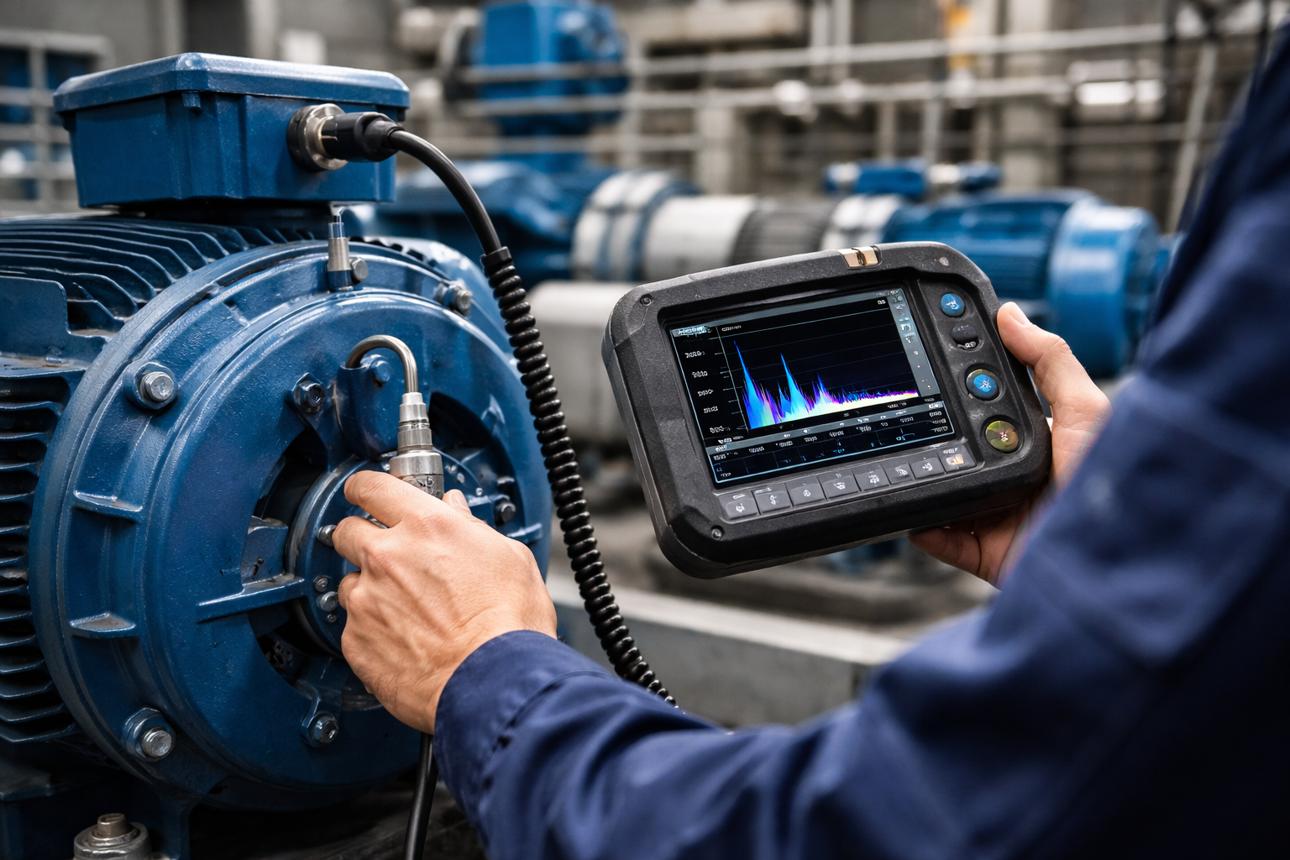
Qualified technicians may use vibration analyzers to measure vibration amplitude and frequency at appropriate points, such as bearing housings, motor supports, and gearbox locations.
A strong vibration component at the fan's rotational frequency may indicate imbalance, but it is not conclusive by itself.
Technicians should also consider phase information, operating speed, structural response, and other frequency components when diagnosing the issue.
Where appropriate, compare the results with the equipment manufacturer's limits and relevant industry standards.
6.3 Checking Fan Blades, Hub, Shaft, and Drive System
A complete inspection should include the entire rotating assembly.
Check blade pitch and positioning, hub condition, shaft runout, bearing condition, coupling alignment, gearbox condition, and motor mounting.
A bent shaft or damaged bearing can cause vibration even when the fan itself is properly balanced.
The goal is to identify the source of vibration before selecting a repair method.
7. Practical Solutions for Cooling Tower Fan Imbalance
Once the cause has been identified, the maintenance team can select an appropriate solution.
The best repair is not always the most complicated one. Sometimes cleaning is enough. In other situations, a damaged blade or complete fan assembly must be replaced.
7.1 Clean Fan Blades and Remove Uneven Deposits
If uneven dirt or scale buildup is responsible for the imbalance, cleaning may restore a more uniform mass distribution.
Use cleaning methods and chemicals compatible with the blade material. Avoid excessive force, sharp tools, and aggressive solvents that could damage the surface.
After cleaning, inspect the blades for cracks, deformation, and other defects before returning the equipment to service.
7.2 Repair or Replace Damaged Blades
A damaged fan blade requires careful evaluation.
Minor surface issues may be addressed using an approved repair method, but cracks, significant deformation, and structural damage generally require replacement.
When replacing a blade, technicians should confirm:
Fan model and diameter.
Blade material and profile.
Blade length and mounting dimensions.
Required blade pitch.
Hub compatibility.
Manufacturer's weight and installation requirements.
Do not replace only one blade with an incompatible component. Differences in mass, geometry, or aerodynamic characteristics can create further problems.
For some fan designs, the manufacturer may recommend replacing a matched set or the complete fan assembly.
7.3 Tighten Fasteners and Inspect the Fan Hub
Loose fasteners should be addressed according to the manufacturer's installation procedure.
Inspect the hub, blade clamps, mounting holes, and connection surfaces. Replace damaged hardware rather than relying on excessive tightening to compensate for worn components.
Use the specified tightening sequence and torque values where provided.
7.4 Perform Professional Fan Balancing
If the fan assembly remains unbalanced after inspection and correction of mechanical defects, professional balancing may be necessary.
Depending on the fan design and operating conditions, technicians may perform balancing in a workshop or use an approved in-situ balancing method.
A professional balancing process generally involves:
Inspecting the fan and drive system.
Confirming that mechanical defects have been addressed.
Measuring baseline vibration.
Identifying the imbalance characteristics.
Calculating an appropriate correction.
Applying an approved correction method.
Rechecking vibration and documenting the results.
Correction weights must be installed only at approved locations and in accordance with engineering and manufacturer requirements.
Never attach improvised weights to fan blades or hubs. Incorrect weight placement can make the vibration worse or create a dangerous component failure.
7.5 Correct Installation and Drive-System Problems
If the inspection identifies shaft misalignment, incorrect blade pitch, loose supports, or drive-system defects, these issues must be corrected.
Balancing cannot compensate for a bent shaft, damaged bearing, or unstable support structure.
After repairs, the complete assembly should be checked under controlled conditions by qualified personnel.
8. Static Balancing vs. Dynamic Balancing
Static and dynamic balancing address different types of mass distribution problems.
| Comparison | Static Balancing | Dynamic Balancing |
| Main purpose | Corrects static mass imbalance | Corrects imbalance effects in multiple planes |
| Typical method | Measures mass distribution with the rotor stationary or in a suitable balancing fixture | Measures rotating vibration and phase information |
| Application | Suitable for certain simpler rotating components | Often appropriate for larger or more complex rotating assemblies |
| Equipment | Balancing fixture or suitable static balancing equipment | Dynamic balancing machine or approved field balancing equipment |
| Main consideration | Does not fully address all couple imbalance | Requires appropriate instrumentation and qualified technicians |
The correct method depends on the fan's design, size, operating speed, and manufacturer's requirements.
For large industrial cooling tower fans, dynamic balancing may be required when static balancing alone cannot achieve the necessary operating performance.
9. How to Prevent Cooling Tower Fan Imbalance
Repairing an unbalanced fan is important, but preventing the problem from returning is even better.
A consistent maintenance program can help identify early warning signs and reduce unexpected failures.
9.1 Establish a Regular Inspection Schedule
Create an inspection schedule based on operating hours, environmental conditions, and manufacturer recommendations.
During routine inspections, check the blades, hub, fasteners, bearings, gearbox, motor, and supporting structure.
Cooling towers operating in dusty, coastal, or chemically aggressive environments may require more frequent inspections.
9.2 Keep the Fan and Air Inlet Area Clean
Preventing contamination is one of the simplest ways to reduce the risk of uneven deposits.
Keep the fan area and surrounding air passages free from unnecessary debris. Inspect the blades for dirt, scale, and biological growth.
Cleaning frequency should reflect actual operating conditions rather than follow a fixed schedule without considering the environment.
9.3 Monitor Vibration Trends
A single vibration reading provides useful information, but long-term monitoring can reveal developing problems.
Record vibration measurements at consistent locations and under comparable operating conditions. Track changes in amplitude and frequency over time.
If vibration begins to rise, investigate early instead of waiting until the fan produces obvious noise or visible movement.
9.4 Use Compatible Replacement Fan Parts
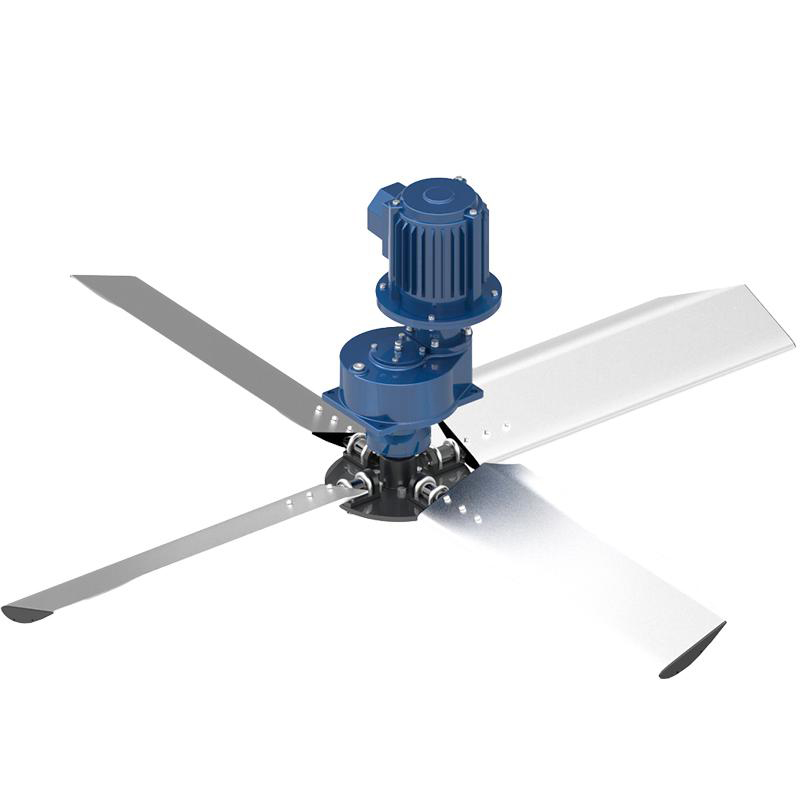
Replacement components should match the original fan's technical requirements.
Important factors include blade geometry, material, diameter, pitch, hub configuration, mounting dimensions, and operating speed.
Using an unsuitable replacement blade may change airflow performance and create new vibration problems.
For this reason, provide the supplier with the fan model, drawings, photographs, dimensions, and operating information whenever possible.
10. When Should You Replace a Cooling Tower Fan?
Not every imbalance problem requires a complete fan replacement. Cleaning, approved repairs, fastener correction, or professional balancing may be sufficient.
However, replacement should be considered when:
Blades have significant cracks or structural damage.
Corrosion has seriously weakened the fan.
Blade deformation cannot be corrected safely.
The hub or mounting system is severely damaged.
Repeated balancing attempts do not resolve the problem.
Suitable replacement blades are unavailable.
The fan no longer meets the required operating performance.
A replacement decision should consider both mechanical safety and operating efficiency.
Replacing a severely damaged fan may cost more initially, but it can help avoid repeated repairs and unplanned downtime.
11. Choosing Reliable Cooling Tower Fan Replacement Parts
Selecting the correct replacement component is essential for stable cooling tower operation.
A fan is not simply a collection of blades that happen to rotate. Its design determines airflow, pressure characteristics, power requirements, noise, and mechanical loading.
Before purchasing replacement parts, confirm the following information:
Fan specifications: Diameter, rotational speed, blade quantity, blade profile, and material.
Hub information: Hub type, mounting dimensions, connection method, and shaft configuration.
Operating conditions: Air temperature, humidity, corrosion exposure, and expected operating hours.
Performance requirements: Required airflow, static pressure, motor power, and cooling tower operating conditions.
Compatibility: Confirm that the replacement parts are suitable for the existing fan assembly and drive system.
A reliable supplier should be able to review technical information and help identify compatible components rather than recommend parts based on appearance alone.
12. How Power Tower Supports Cooling Tower Fan Maintenance
Power Tower Cooling Technology (Shaoxing) Co.,Ltd. focuses on cooling tower components and replacement solutions for industrial cooling tower applications.
When a cooling tower fan develops vibration, damaged components, or performance problems, choosing compatible replacement parts is an important part of the repair process.
Power Tower provides cooling tower-related products and component support to help customers maintain and restore their equipment.
When contacting Power Tower about a cooling tower fan or replacement component, customers can prepare the following information:
Cooling tower brand and model.
Existing fan diameter and blade quantity.
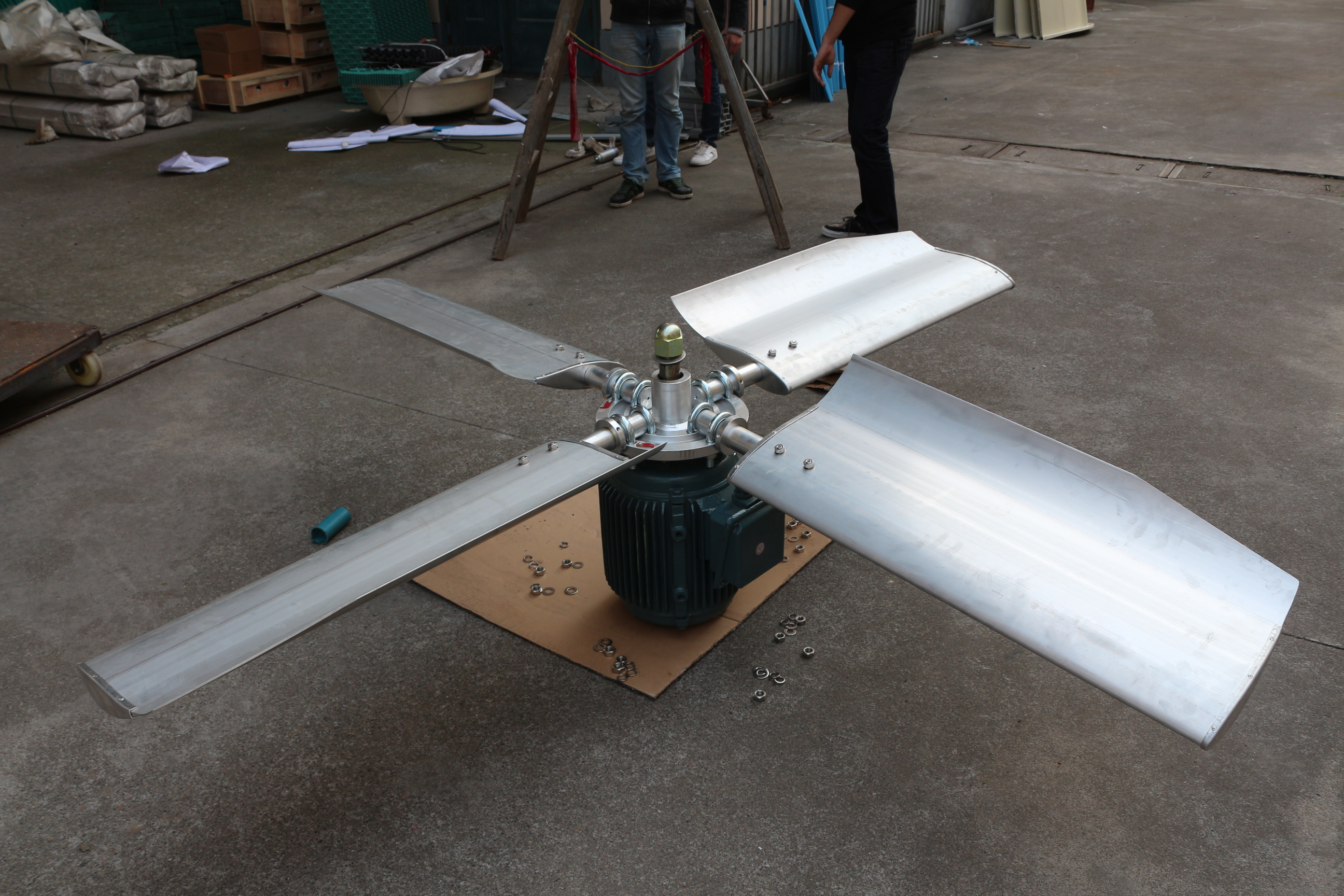
Fan and hub photographs.
Blade dimensions and material, if available.
Motor and gearbox information.
Description of the vibration or operating problem.
Drawings or original component part numbers, if available.
These details help make product identification more accurate and reduce the risk of selecting incompatible components.
For customers looking for cooling tower fan components, replacement parts, or other cooling tower products, visit the official website:
Power Tower Cooling Technology (Shaoxing) Co.,Ltd.
Website: https://www.coolingtowerpart.com
The right component, combined with correct installation and maintenance, can help improve equipment reliability and extend the service life of a cooling tower system.
13. Frequently Asked Questions
13.1 Can a Cooling Tower Fan Run with Slight Imbalance?
Whether a fan can continue operating depends on its measured vibration, manufacturer's limits, equipment condition, and operating environment.
A small imbalance should not automatically be considered harmless. Monitor the equipment and investigate any abnormal vibration.
If vibration exceeds the permitted limit or there are signs of damage, follow the site's shutdown and inspection procedures.
13.2 What Causes Cooling Tower Fan Vibration?
Common causes include fan imbalance, dirty blades, damaged blades, loose fasteners, bearing wear, shaft misalignment, gearbox problems, and structural resonance.
Because these problems can produce similar symptoms, vibration analysis and mechanical inspection are important for accurate diagnosis.
13.3 Can Cleaning Fix Fan Imbalance?
Yes, cleaning can resolve imbalance when uneven dirt, scale, or other deposits are responsible for the mass difference between blades.
However, cleaning will not correct a bent shaft, damaged bearing, cracked blade, or loose hub. Inspect the complete fan assembly after cleaning.
13.4 How Often Should a Cooling Tower Fan Be Balanced?
There is no single balancing interval that applies to every cooling tower.
Balancing should be considered during commissioning when specified, after relevant repairs or component replacement, and whenever vibration measurements indicate a problem.
Follow the fan manufacturer's maintenance recommendations and use vibration trends to guide maintenance decisions.
13.5 Is Fan Imbalance the Same as Motor Misalignment?
No. Fan imbalance and motor misalignment are different mechanical conditions.
Fan imbalance results from uneven mass distribution in the rotating assembly. Motor misalignment occurs when connected rotating components are not aligned within the required tolerances.
Both can cause vibration, and they may occur at the same time. Proper diagnosis is necessary before carrying out repairs.
14. Conclusion
Cooling tower fan imbalance is more than a minor operating inconvenience. If left unresolved, it can increase vibration, accelerate bearing and gearbox wear, reduce equipment reliability, and contribute to costly downtime.
The most important step is to identify the actual cause. Uneven dirt buildup, damaged blades, loose fasteners, corrosion, installation errors, and drive-system problems all require different solutions.
A good maintenance strategy combines regular visual inspections, vibration monitoring, correct installation, professional balancing, and compatible replacement components.
If your cooling tower fan shows unusual vibration or noise, do not wait for the problem to become a major failure. Investigate it early, correct the underlying cause, and keep the entire rotating assembly in good condition.
For cooling tower fan components and replacement solutions, contact Power Tower Cooling Technology (Shaoxing) Co.,Ltd. through https://www.coolingtowerpart.com.


