Introduction
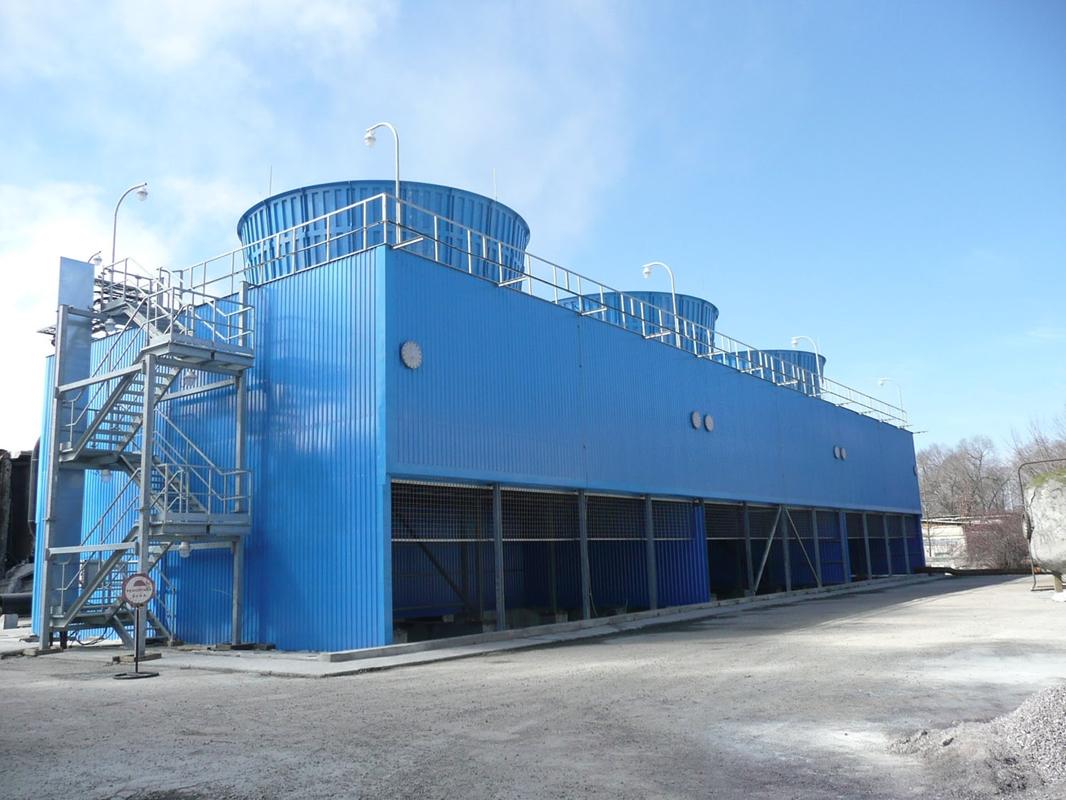
Cooling towers play an essential role in industrial heat rejection. From manufacturing plants and chemical facilities to commercial HVAC systems, they help remove unwanted heat and maintain stable operating temperatures. But have you ever wondered how air moves through a cooling tower and what makes the cooling process possible?
The fan is one of the most important components. It generates the airflow needed to bring air into contact with circulating water, allowing heat to transfer from the water to the surrounding atmosphere.
While axial fans are widely used in large industrial cooling towers, centrifugal fans also have an important role in specific cooling applications. They are particularly useful in systems that require higher static pressure, ducted airflow, or a compact forced-draft arrangement.
A centrifugal fan cooling tower uses a centrifugal fan to move air through the tower's heat-transfer section. Unlike an axial fan, which moves air mainly parallel to its rotating shaft, a centrifugal fan draws air into the center of its impeller and accelerates it outward.
This guide explains how centrifugal fan cooling towers work, their main components and types, their industrial applications, and how to select and maintain the right equipment. Whether you are an engineer, maintenance professional, or industrial equipment buyer, understanding these factors can help you make better cooling tower decisions.
1. What Is a Centrifugal Fan Cooling Tower?
A centrifugal fan cooling tower is a mechanical-draft cooling tower that uses a centrifugal fan to move air through the cooling process.
The fan draws air through its inlet and accelerates it using a rotating impeller. The air then moves outward in a radial direction before leaving through the fan housing or discharge outlet.
This operating principle makes centrifugal fans suitable for applications where air must overcome resistance from cooling tower fill, louvers, drift eliminators, ductwork, or other system components.
In a typical forced-draft cooling tower, the centrifugal fan is installed near the air inlet. It pushes ambient air into the tower and through the heat-transfer section.
The warm water is distributed over the fill media, while the moving air passes through the fill and absorbs heat. A portion of the water evaporates, removing heat from the remaining water.
The cooled water collects in the basin and returns to the industrial process.
It is important to understand that a centrifugal fan does not perform the cooling process by itself. It provides the airflow needed for effective heat and mass transfer. The fill, water distribution system, drift eliminators, and overall tower design are equally important.
2. What Is a Centrifugal Fan?
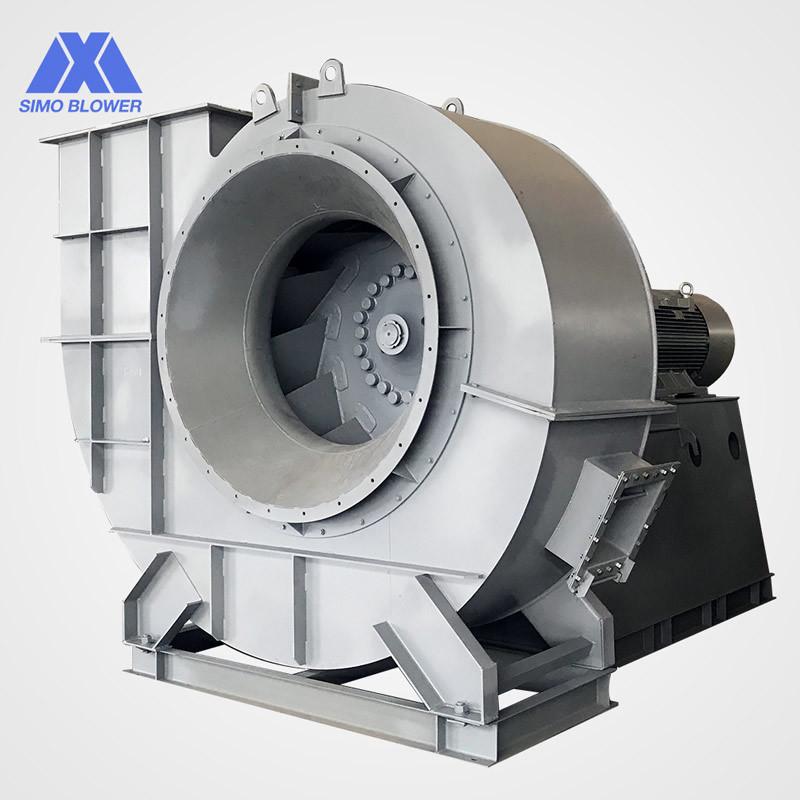
A centrifugal fan is a mechanical device that uses a rotating impeller to move air or gas and increase its pressure.
Its operation is based on the transfer of mechanical energy from the motor to the air.
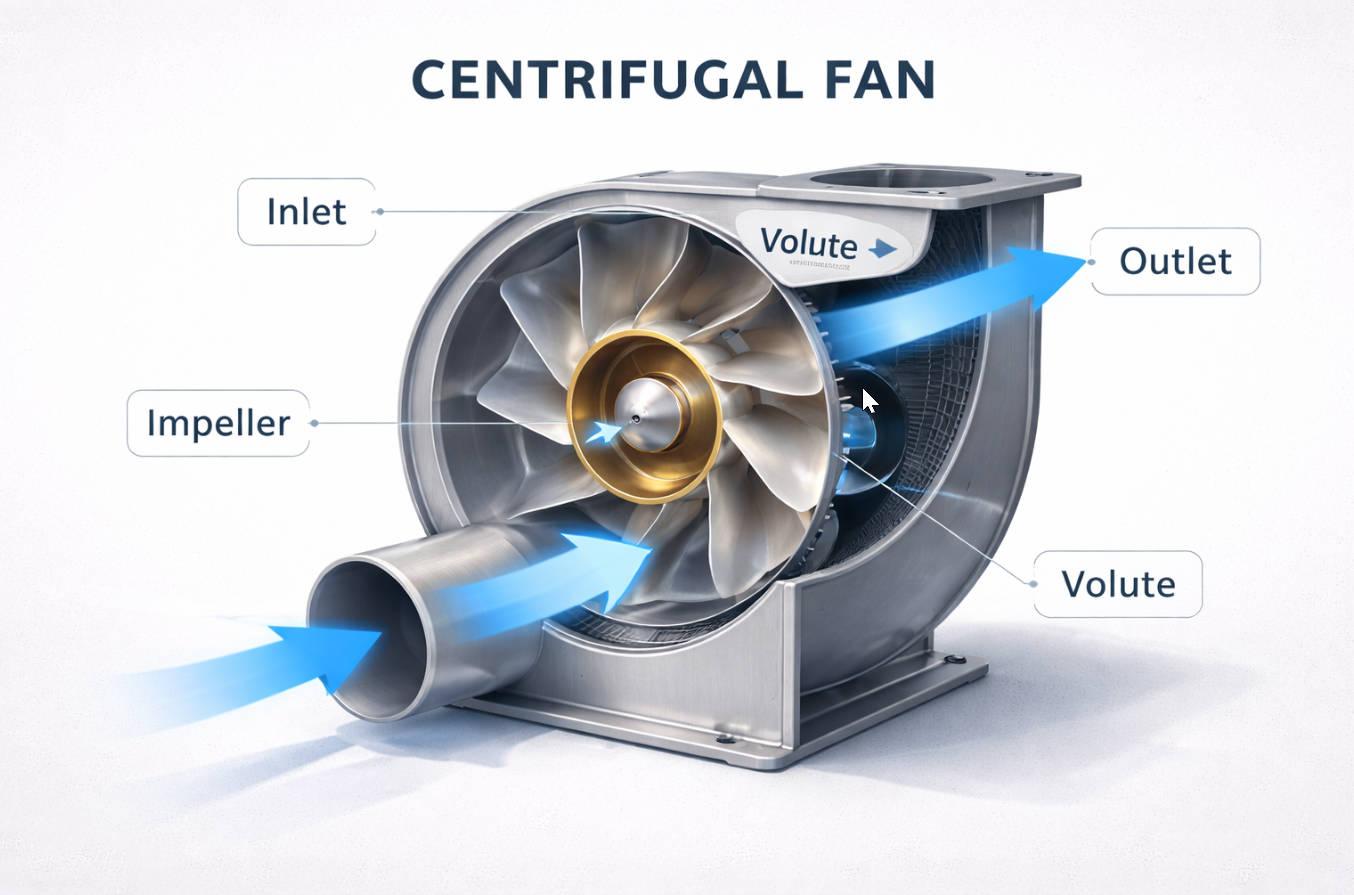
When the impeller rotates, air enters through the central inlet and moves outward between the blades. The fan housing collects the discharged air and directs it toward the outlet.
The direction of discharge is generally approximately perpendicular to the inlet airflow.
The main parts of a centrifugal fan include:
Impeller: The rotating component that transfers energy to the air.
Blades: The curved or straight elements that guide airflow.
Hub: The central component connecting the impeller to the shaft.
Fan housing: The casing that collects and directs discharged air.
Inlet: The opening through which air enters.
Outlet: The opening through which pressurized air leaves.
Drive system: The motor and associated transmission components.
The impeller design, diameter, rotational speed, and blade geometry all influence the fan's airflow, pressure, efficiency, and power requirements.
3. How Does a Centrifugal Fan Cooling Tower Work?
The working principle of a centrifugal fan cooling tower combines mechanical airflow generation with evaporative heat transfer.
The process can be divided into three main stages.
3.1 Air Intake and Fan Operation
The centrifugal fan draws ambient air into its inlet. The motor drives the impeller, which accelerates the air outward.
The fan housing then collects and directs the air toward the cooling tower's internal air passages.
Depending on the tower configuration, the air may move vertically upward or horizontally through the fill section.
The fan must provide sufficient airflow to overcome the total resistance of the air system. This resistance can come from fill media, drift eliminators, louvers, ductwork, and other components.
Selecting a fan based only on its maximum airflow rating is therefore not sufficient. Engineers must consider the required airflow at the actual operating static pressure.
3.2 Heat Exchange Between Air and Water
Hot water enters the cooling tower through the water distribution system.
Spray nozzles or distribution basins spread the water over the fill media. The fill increases the contact area between water and air, allowing heat transfer to take place more effectively.
As air passes through the fill, heat moves from the warmer water into the air. At the same time, a small portion of the water evaporates.
This evaporation removes additional heat from the remaining circulating water.
The cooling performance depends on several operating factors:
Entering water temperature.
Required leaving water temperature.
Ambient wet-bulb temperature.
Water flow rate.
Airflow rate.
Fill design and condition.
Uniformity of air and water distribution.
The centrifugal fan supplies the airflow, but the quality and condition of the fill media are also critical to overall cooling performance.
3.3 Air Discharge and Heat Rejection
After passing through the fill, the air becomes warmer and more humid.
The fan and discharge arrangement move this air away from the cooling tower. Drift eliminators help capture water droplets carried by the exhaust air and reduce water loss.
Meanwhile, cooled water collects in the basin and returns to the heat exchanger or industrial process.
The cycle continues as long as the cooling system operates.
A properly designed cooling tower maintains a suitable balance between airflow, water distribution, heat-transfer capacity, and fan power consumption.
4. Main Components of a Centrifugal Fan Cooling Tower
A centrifugal fan cooling tower contains several interconnected components. Understanding their functions makes equipment selection, troubleshooting, and maintenance easier.
4.1 Centrifugal Fan and Impeller
The centrifugal fan and impeller generate the airflow required for cooling.
The impeller consists of a central hub and multiple blades. Its design determines how efficiently mechanical energy is transferred to the air.
Important specifications include:
When replacing an impeller, matching only the outside diameter is not enough. Blade geometry, rotation direction, hub dimensions, operating speed, and fan performance must also be considered.
4.2 Fan Housing and Air Duct
The fan housing collects air discharged from the impeller and guides it toward the outlet.
Its shape influences airflow distribution and pressure losses. Poorly designed transitions, sharp bends, and unsuitable duct dimensions can reduce system efficiency.
For industrial installations, the fan housing and connected ductwork should be designed as part of the same air-handling system.
4.3 Electric Motor and Drive System
The motor supplies mechanical power to the fan.
Depending on the design, the fan may use a direct-drive arrangement or a belt-driven transmission system. Other drive configurations may also be used in specialized applications.
The motor must match the fan's required power, operating speed, starting conditions, and electrical supply.
An undersized motor may overload, while an oversized motor can increase equipment costs without providing meaningful benefits.
4.4 Cooling Tower Fill and Water Distribution System
Cooling tower fill media increases the contact area between air and water. It is one of the main components responsible for effective heat transfer.
Common fill materials include PVC and PP. The selection depends on water temperature, water quality, chemical conditions, and operating requirements.
The water distribution system uses pipes, spray nozzles, or distribution basins to spread hot water evenly over the fill.
Even a correctly selected centrifugal fan cannot compensate for severely blocked fill or uneven water distribution.
4.5 Drift Eliminators and Air Inlet Louvers
Drift eliminators capture water droplets carried by moving air and return much of that water to the tower.
Air inlet louvers help guide incoming air, reduce water splash-out, and limit the entry of debris and sunlight, depending on the tower design.
Both components create some resistance to airflow. Their condition should therefore be considered when evaluating fan performance.
5. Common Types of Centrifugal Fans Used in Cooling Towers
Centrifugal fans can be classified according to blade design and inlet arrangement. Different designs offer different airflow, pressure, and efficiency characteristics.
5.1 Forward-Curved Centrifugal Fans
Forward-curved fans have blades that curve in the direction of rotation.
They can move relatively large volumes of air at comparatively low rotational speeds. Their compact design makes them suitable for certain ventilation and packaged air-handling applications.
However, their power characteristics require careful attention. Depending on the fan curve and operating point, forward-curved fans may be sensitive to changes in system resistance.
The motor must be selected according to the manufacturer's performance data to avoid overload.
5.2 Backward-Curved Centrifugal Fans
Backward-curved fans have blades that curve opposite to the direction of rotation.
They are widely used in industrial air-handling systems because they can provide good efficiency and suitable pressure performance.
Many backward-curved designs have a non-overloading power characteristic over their intended operating range. However, actual performance depends on the specific impeller design and operating conditions.
For industrial cooling tower applications, this type may be suitable when the system requires controlled airflow against relatively high resistance.
5.3 Radial-Blade Centrifugal Fans
Radial-blade fans have blades extending outward from the impeller hub.
Their relatively simple geometry can make them suitable for certain demanding environments, including applications involving dust or particles.
They are not automatically the best choice for clean cooling tower air. Their efficiency, noise, and pressure characteristics should be evaluated against the actual application.
5.4 Single-Inlet and Double-Inlet Centrifugal Fans
A single-inlet centrifugal fan draws air into one side of the impeller.
A double-inlet fan draws air into both sides. Depending on its design, this arrangement can provide greater airflow capacity.
The correct configuration depends on installation space, fan dimensions, required airflow, and pressure conditions.
6. Cooling Tower Configurations Using Centrifugal Fans
Centrifugal fans are used in several mechanical-draft cooling tower arrangements, particularly where air pressure and duct connections are important.
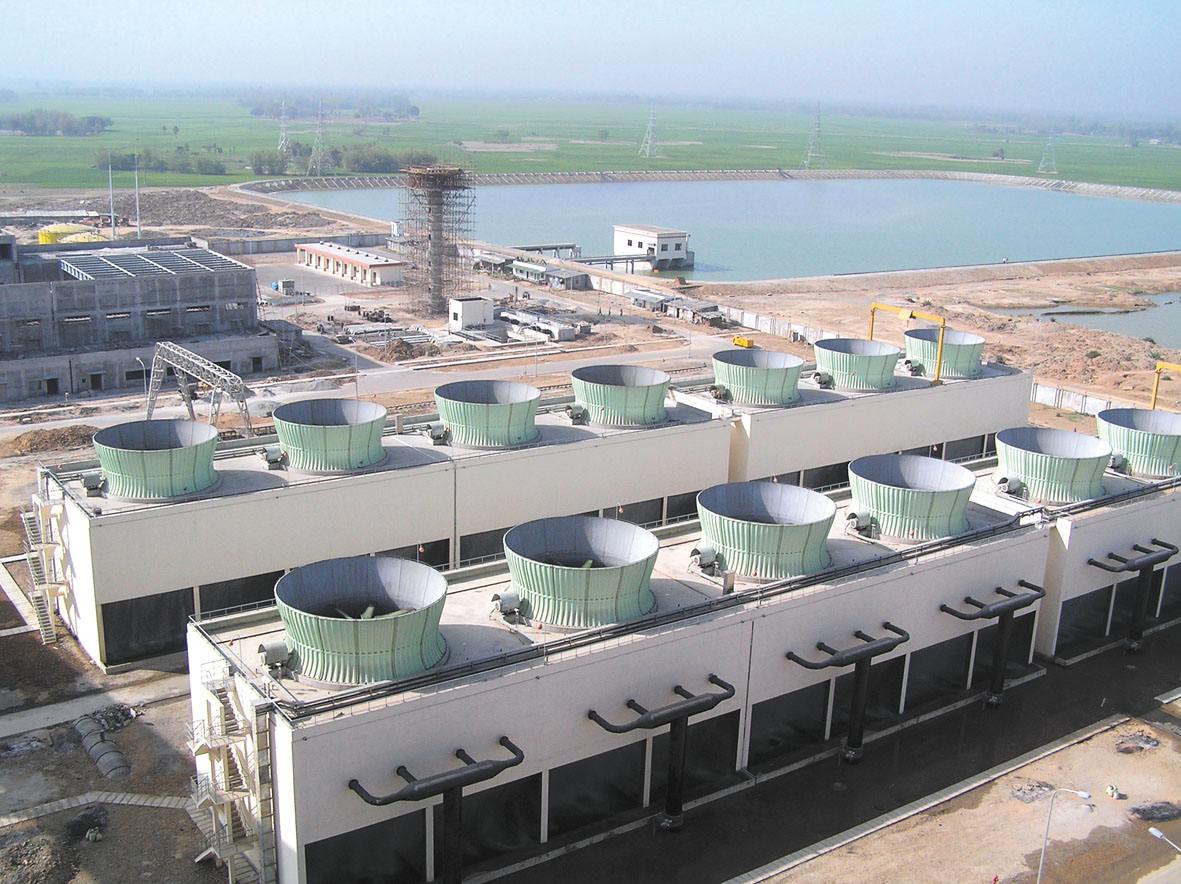
6.1 Forced-Draft Cooling Towers
Forced-draft cooling towers typically position the fan near the air inlet.
The fan pushes ambient air into the tower, forcing it through the fill and other internal components before it leaves through the discharge opening.
Centrifugal fans are often suitable for this configuration because they can overcome the resistance associated with certain ducted and compact air systems.
Another potential advantage is that the fan can be located in a comparatively dry incoming air stream, depending on the installation.
However, forced-draft designs must also consider the possibility of warm, humid exhaust air recirculating toward the air inlet. Proper intake and discharge separation is important.
6.2 Forced-Draft Counterflow Cooling Towers
In a forced-draft counterflow cooling tower, air generally moves upward through the fill while water flows downward.
The centrifugal fan is normally installed near the lower air inlet.
This arrangement creates countercurrent contact between air and water, supporting evaporative heat transfer.
The fan must be selected according to the resistance of the fill, drift eliminators, louvers, and other air passages.
6.3 Forced-Draft Crossflow Cooling Towers
In a forced-draft crossflow cooling tower, air moves horizontally through the fill while water flows downward.
A centrifugal fan may be installed on the inlet side to push air through the tower.
This arrangement can be considered for installations with restricted headroom or particular space requirements.
The final configuration depends on the required cooling capacity, air resistance, and equipment layout.
6.4 Indoor and Space-Restricted Cooling Systems
Some industrial facilities cannot install cooling towers in completely open outdoor locations.
Ductwork may be required to connect the equipment to an external air intake or discharge point.
Centrifugal fans can be useful in these systems because their discharge arrangement can be integrated with different duct configurations.
Engineers must still evaluate duct pressure losses, noise, ventilation, recirculation, and maintenance access.
7. Centrifugal Fan vs. Axial Fan Cooling Tower
One of the most common questions when selecting cooling tower equipment is whether a centrifugal fan or an axial fan is the better choice.
Both types can move the air required for evaporative cooling, but their operating characteristics differ.
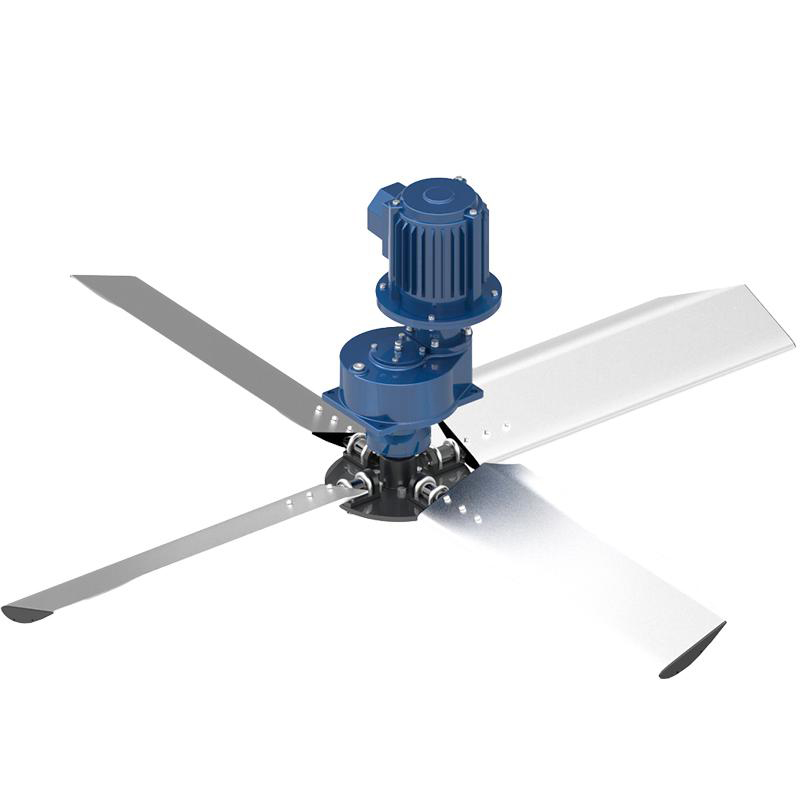
An axial fan moves air mainly parallel to its rotating shaft. A centrifugal fan draws air into the impeller and discharges it radially.
| Comparison | Centrifugal Fan | Axial Fan |
| Airflow direction | Radial discharge | Parallel to shaft |
| Pressure capability | Often suitable for higher system resistance | Commonly suited to lower system resistance |
| Installation | Often integrated with a housing or duct | Often installed in a fan cylinder |
| Typical application | Forced-draft and ducted systems | Many large industrial cooling towers |
| Space requirements | Depends on casing and discharge arrangement | Depends on fan deck and tower structure |
| Efficiency | Depends on design and operating point | Often efficient for large airflow at relatively low resistance |
| Maintenance | Impeller, casing, bearings, and drive | Blades, hub, bearings, and drive |
The main selection factor is the system operating point.
A centrifugal fan may be the better choice when air must overcome substantial duct or equipment resistance. An axial fan is often more suitable when a large airflow volume is needed through a relatively open cooling tower structure.
Neither type is automatically superior. The correct selection depends on the required airflow, static pressure, energy consumption, installation conditions, and maintenance requirements.
8. Advantages of Centrifugal Fan Cooling Towers
Why would an engineer choose a centrifugal fan instead of an axial fan?
There are several potential advantages.
8.1 Suitable for Higher System Resistance
Centrifugal fans are often selected for systems that require airflow against relatively high static pressure.
This can be useful when air must pass through ducts, filters, compact equipment layouts, or other components that create resistance.
However, the fan must still be correctly sized. High pressure capability does not mean every centrifugal fan can handle every cooling tower system.
8.2 Flexible Installation and Duct Design
The radial discharge arrangement allows centrifugal fans to connect with different duct configurations.
This flexibility can help engineers work around building layouts, equipment rooms, and space limitations.
It can also make centrifugal fans useful in specialized ventilation and industrial cooling systems.
8.3 Suitable for Certain Noise-Control Requirements
Some centrifugal fan designs can be integrated with acoustic enclosures or installed in dedicated mechanical rooms.
This may help manage noise in certain applications.
However, actual noise levels depend on impeller speed, blade geometry, airflow turbulence, casing design, vibration, and installation quality. A centrifugal fan should not automatically be assumed to be quieter than an axial fan.
8.4 Convenient for Selected Packaged Systems
Centrifugal fans can be integrated into packaged equipment and ducted cooling systems.
This arrangement may simplify certain installation layouts, especially where air must be directed through a specific route.
9. Limitations and Challenges
Centrifugal fan cooling towers also have limitations.
First, centrifugal fans can require additional installation space because of their housing and discharge arrangement.
Second, the fan and duct system may involve significant pressure losses if the layout is poorly designed.
Third, some centrifugal fan configurations can have higher initial costs or more complicated maintenance requirements than simpler fan arrangements.
Energy consumption is another important consideration. Centrifugal fans are not always as efficient as axial fans when moving large volumes of air against relatively low resistance.
Common operating challenges include:
Impeller imbalance causing vibration.
Dirt or scale accumulating on blades.
Bearing wear increasing noise and power consumption.
Corrosion damaging the impeller and housing.
Incorrect motor selection causing overload.
Poor duct design restricting airflow.
Incorrect fan rotation reducing performance.
These problems can be managed through proper engineering, installation, and preventive maintenance.
10. Industrial Applications of Centrifugal Fan Cooling Towers
Centrifugal fan cooling towers can support a range of industrial and commercial cooling requirements.
10.1 HVAC and Commercial Buildings
Large buildings use cooling towers to reject heat from water-cooled chiller systems.
Centrifugal fans may be considered in packaged or ducted cooling arrangements where airflow must follow a specific route.
Typical applications include:
Office complexes.
Hospitals.
Hotels.
Shopping centers.
Commercial facilities.
Industrial HVAC systems.
The choice of fan depends on the equipment layout, cooling load, and airflow resistance.
10.2 Chemical and Petrochemical Plants
Chemical plants often operate heat exchangers, condensers, and process cooling systems.
These facilities may have demanding environmental and operating requirements.
A centrifugal fan cooling tower can be considered where suitable pressure capability and duct arrangements are needed.
Material selection is particularly important because humidity, chemical exposure, and corrosive environments can affect equipment service life.
10.3 Manufacturing and Processing Facilities
Manufacturing processes generate heat through machinery, production lines, hydraulic systems, and industrial equipment.
Cooling towers help maintain stable operating temperatures and protect production equipment.
Centrifugal fans may be used in specialized systems where airflow must overcome resistance or fit a restricted equipment layout.
10.4 Power Generation and Energy Systems
Power plants and energy facilities use cooling systems to remove heat from different processes.
The choice of cooling tower fan depends on cooling capacity, ambient conditions, pressure requirements, and plant layout.
Centrifugal fans can serve selected auxiliary or packaged cooling applications, while axial fans are also widely used in large cooling tower installations.
11. How to Select the Right Centrifugal Fan for a Cooling Tower
Selecting a fan is not simply a matter of finding a product with the right diameter.
A suitable fan must match the cooling tower's actual operating conditions.
11.1 Determine the Required Airflow
Start by identifying the airflow required by the cooling tower.
This depends on the heat load, water flow rate, entering and leaving water temperatures, ambient wet-bulb temperature, and tower design.
The fan must deliver the required airflow at the actual system resistance, not simply at its free-air rating.
11.2 Calculate Static Pressure
Static pressure represents the resistance the fan must overcome.
Sources of resistance may include:
Cooling tower fill.
Drift eliminators.
Air inlet louvers.
Ductwork and bends.
Screens and filters.
Discharge openings.
The fan should be selected using its performance curve at the required airflow and pressure.
11.3 Check Motor Power and Operating Speed
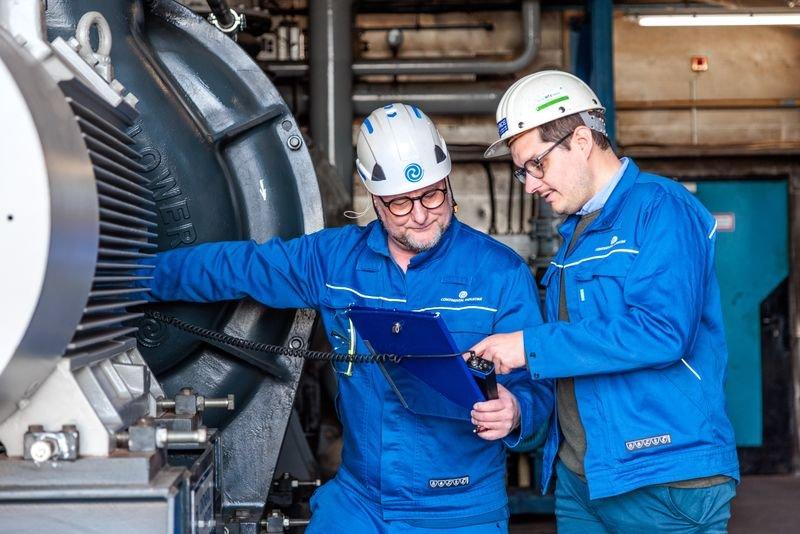
The motor must supply sufficient power to drive the fan at its intended operating point.
Important information includes:
Avoid selecting a motor based only on the original motor nameplate if the fan or air system has changed.
11.4 Consider Materials and Operating Conditions
Cooling towers operate in humid environments, and some industrial applications involve corrosive water or chemicals.
Fan components may be manufactured from different materials, including coated steel, stainless steel, aluminum alloys, or engineered composites.
The correct choice depends on temperature, corrosion exposure, mechanical loading, and maintenance requirements.
11.5 Review Noise, Efficiency, and Maintenance
A fan should be evaluated over its expected operating range.
Before purchasing, review:
Fan efficiency at the required operating point.
Noise level and vibration limits.
Bearing and lubrication requirements.
Access for inspection and repair.
Availability of replacement parts.
Manufacturer documentation and performance data.
A low purchase price does not necessarily represent the lowest long-term operating cost.
12. Centrifugal Fan Cooling Tower Maintenance
Regular maintenance helps protect fan performance and extend equipment service life.
A maintenance plan should cover both the fan assembly and the complete cooling tower air path.
12.1 Inspect the Impeller and Fan Housing
Check the impeller for dirt, scale, corrosion, cracks, and deformation.
Deposits can change the balance of the rotating assembly. Even a small amount of uneven buildup may cause vibration at operating speed.
Inspect the housing for corrosion, loose connections, cracks, and damage.
Remove accumulated debris using approved cleaning procedures.
12.2 Check Bearings and Drive Components
Bearings support the rotating shaft and help maintain stable fan operation.
Look for unusual temperature increases, noise, lubrication problems, and excessive movement.
For belt-driven systems, inspect belt condition, tension, pulley alignment, and wear.
Follow the equipment manufacturer's lubrication and replacement intervals.
12.3 Monitor Vibration and Noise
Changes in vibration or sound can indicate developing mechanical problems.
Common causes include:
Impeller imbalance.
Loose mounting bolts.
Bearing deterioration.
Shaft misalignment.
Damaged blades.
Structural resonance.
Use appropriate vibration measurement equipment where required. Do not assume that every vibration problem is caused by fan imbalance.
12.4 Clean Air Passages and Cooling Tower Fill
The fan is only one part of the air system.
Blocked louvers, dirty fill, damaged drift eliminators, and accumulated debris can restrict airflow.
Inspect and clean these components according to the site's water treatment and maintenance plan.
For PVC or PP fill, select cleaning methods compatible with the material and the manufacturer's recommendations.
13. Common Problems and Troubleshooting
Understanding common problems helps maintenance teams identify the cause before replacing equipment unnecessarily.
| Problem | Possible Causes | Recommended Checks |
| Low airflow | Incorrect fan speed, blocked air passage, wrong rotation | Check speed, rotation, fill, and ductwork |
| Excessive vibration | Imbalance, misalignment, worn bearings, loose mounting | Inspect rotating assembly and supports |
| High motor current | Excessive loading, incorrect operating point, mechanical friction | Check motor data and fan operating conditions |
| Unusual noise | Bearing damage, loose parts, impeller contact, turbulence | Inspect bearings, casing, and clearances |
| Poor cooling performance | Insufficient airflow, poor water distribution, dirty fill | Inspect the complete heat-transfer system |
| Frequent bearing failure | Lubrication issues, misalignment, contamination, excessive load | Review installation and maintenance records |
A good troubleshooting process starts with measurement rather than guesswork.
Check the operating data, compare it with the design conditions, and identify the root cause before changing fan components.
14. How to Improve Centrifugal Fan Cooling Tower Efficiency
Improving cooling tower efficiency requires attention to the whole system.
Here are several practical steps.
Maintain the correct airflow. Check whether the fan operates near its intended design point. Excessive or insufficient airflow can affect cooling performance and energy use.
Keep the fill clean. Fouled or blocked fill reduces effective heat-transfer area and can increase air resistance.
Maintain uniform water distribution. Poor spray distribution creates uneven wetting and reduces the effective use of the fill.
Inspect the drive system. Worn belts, misaligned pulleys, damaged bearings, and loose connections can waste energy.
Use appropriate fan controls. Variable-speed control may help match airflow to changing cooling loads when the motor, drive, fan, and control system are designed for it.
Monitor operating conditions. Record water temperatures, ambient wet-bulb temperature, fan speed, motor current, and vibration.
Small improvements across several components can produce better results than changing the fan alone.
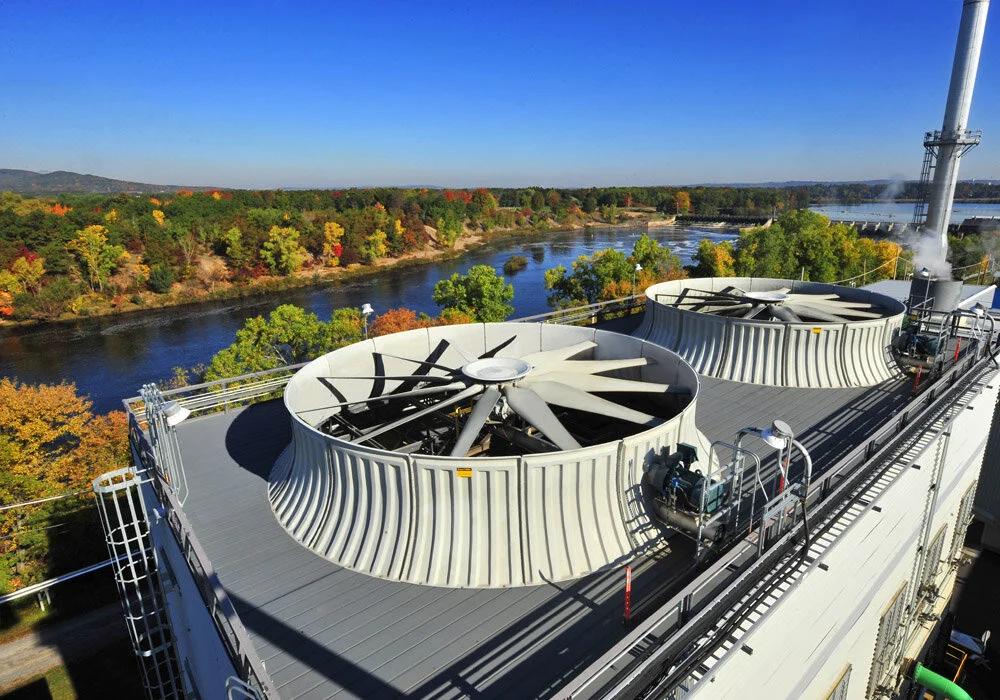
15. When Should You Replace a Centrifugal Fan?
A centrifugal fan does not need to be replaced simply because it has been operating for many years.
However, replacement may be necessary when the impeller is severely corroded, cracked, deformed, or mechanically damaged.
Other warning signs include repeated bearing failures, excessive vibration that cannot be corrected through maintenance, declining performance, and the unavailability of critical replacement parts.
Before ordering a replacement fan, collect the following information:
Existing fan model and manufacturer.
Impeller diameter and overall dimensions.
Number and design of blades.
Rotation direction.
Rated airflow and static pressure.
Operating speed.
Motor power and connection details.
Mounting and shaft dimensions.
Operating temperature and environmental conditions.
If the original fan is no longer available, a replacement should be selected through an engineering compatibility review.
A fan that physically fits may still have an unsuitable performance curve or impose excessive load on the motor.
16. Choosing a Reliable Cooling Tower Parts Supplier
Choosing a reliable supplier is an important part of maintaining industrial cooling equipment.
A good supplier should understand cooling tower structures, operating conditions, and component compatibility.
When evaluating a supplier, consider:
Product specifications and technical documentation.
Manufacturing and quality control capabilities.
Material options.
Customization and OEM support.
Replacement-part compatibility.
Communication and technical support.
Packaging and international delivery experience.
Do not focus only on the unit price. The quality of the replacement component and its compatibility with existing equipment can have a direct impact on operating reliability.
17. Power Tower Cooling Tower Components and Replacement Support
Power Tower Cooling Technology (Shaoxing) Co.,Ltd. supplies cooling tower components and replacement products for industrial customers and cooling tower maintenance projects.
Through its website, https://www.coolingtowerpart.com, the company provides product information and support for customers looking for cooling tower parts and replacement solutions.
For centrifugal fan cooling tower projects, selecting compatible components is essential. The fan, motor, fill media, drift eliminators, and water distribution system all contribute to overall cooling performance.
When planning a replacement project, customers can prepare the following information to help identify suitable products:
Cooling tower brand and model.
Existing component photographs.
Product dimensions and drawings.
Original part number, if available.
Operating temperature and water conditions.
Required quantity.
Delivery destination.
For fan-related replacement projects, also provide the fan type, impeller dimensions, rotation direction, motor details, and available performance data.
This information helps reduce compatibility risks and makes the product selection process more efficient.
Whether you are maintaining an existing cooling tower or sourcing replacement components for an industrial project, Power Tower Cooling Technology (Shaoxing) Co.,Ltd. can be contacted to discuss your product requirements.
Visit https://www.coolingtowerpart.com to explore cooling tower components and contact the company about your project.
18. Frequently Asked Questions
Is a Centrifugal Fan Better Than an Axial Fan for a Cooling Tower?
Not in every situation.
Centrifugal fans are often suitable for higher-resistance or ducted air systems. Axial fans are commonly used in cooling towers that require large airflow through relatively open air passages.
The best choice depends on airflow, static pressure, installation space, efficiency, and operating conditions.
Why Are Centrifugal Fans Used in Forced-Draft Cooling Towers?
Centrifugal fans can provide the pressure needed to push air through the cooling tower's internal components.
Their discharge arrangement can also make them convenient for certain ducted and packaged equipment designs.
Do Centrifugal Cooling Tower Fans Consume More Power?
Not necessarily in every application, but power consumption must be carefully evaluated.
It depends on airflow, static pressure, fan efficiency, rotational speed, and the actual operating point.
Centrifugal fans may consume more power than axial fans in applications where large airflow is required against relatively low resistance. A correctly selected centrifugal fan can still operate efficiently within its intended application.
How Often Should a Centrifugal Fan Be Inspected?
Inspection frequency depends on operating hours, environmental conditions, manufacturer recommendations, and site maintenance requirements.
Critical installations may require regular vibration and temperature monitoring, while all systems should have scheduled visual and mechanical inspections.
Can a Centrifugal Fan Be Replaced Without Replacing the Whole Cooling Tower?
Yes, in many cases.
A fan can often be replaced independently if the cooling tower structure and other components remain suitable.
However, the replacement must match the required airflow, pressure, speed, motor power, mounting dimensions, and mechanical arrangement.
A technical compatibility check should be completed before purchasing.
19. Conclusion
A centrifugal fan cooling tower uses centrifugal airflow technology to support evaporative heat rejection. Its ability to handle certain higher-resistance air systems makes it a useful option for forced-draft, ducted, packaged, and specialized industrial cooling applications.
However, choosing the right fan involves more than comparing fan sizes or motor power. Airflow, static pressure, impeller design, system resistance, material selection, and maintenance requirements all matter.
Just as importantly, the fan must work together with the cooling tower fill, water distribution system, drift eliminators, and other components.
If you are planning a cooling tower fan replacement or looking for compatible cooling tower components, working with an experienced supplier can help you avoid unnecessary equipment problems.
Power Tower Cooling Technology (Shaoxing) Co.,Ltd. supplies cooling tower components and replacement products for industrial maintenance and replacement projects.
Visit https://www.coolingtowerpart.com to explore its products and discuss your cooling tower requirements.


