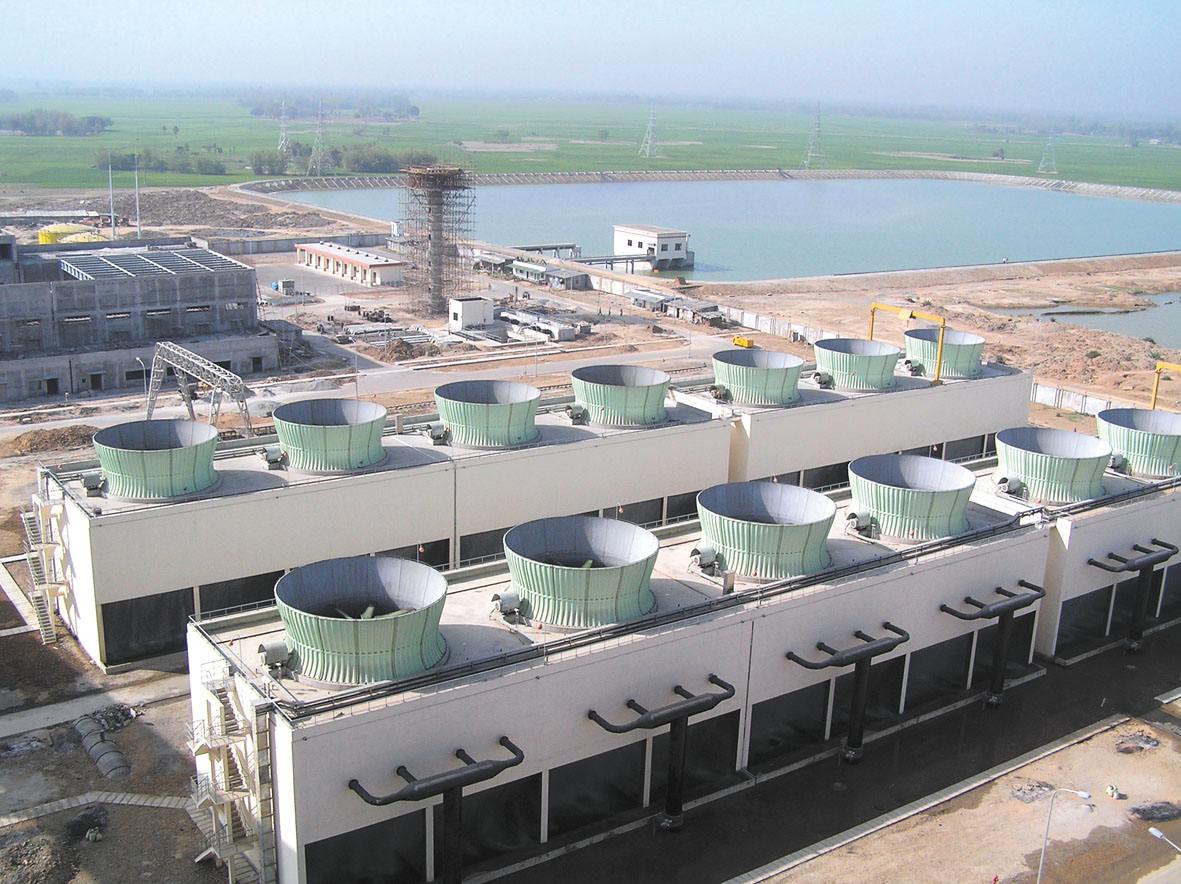
1. Introduction: Why Fan Blade Angle Matters
A cooling tower fan does more than simply move air. It plays a central role in the heat rejection process, helping remove warm air from the tower so that circulating water can cool down and return to the industrial system.
But have you ever considered how much influence a small adjustment to the fan blade angle can have on the entire cooling tower?
The blade angle, also known as blade pitch, affects the amount of air a fan moves, the load placed on its motor, its operating noise, and its overall efficiency. If the angle is too low, the fan may not deliver enough airflow. If it is too high, the motor may experience excessive loading and consume more power than necessary.
That is why correct cooling tower fan blade angle setting is an important part of cooling tower installation, commissioning, and maintenance.
In this guide, we explain how fan blade pitch works, what determines the correct setting, how to measure and adjust it, and which mistakes to avoid. We also discuss how to select compatible replacement fan blades for industrial cooling tower applications.
2. What Is Cooling Tower Fan Blade Angle?
The cooling tower fan blade angle is the angle at which each blade is installed relative to a defined reference plane or direction of rotation.
In axial fans, the blades rotate around a central hub and push air along the fan axis. Their pitch determines how the blades interact with the surrounding air.
A properly selected blade angle helps the fan deliver the airflow required by the cooling tower while keeping motor power consumption within the equipment's operating limits.
However, there is no single blade angle suitable for every cooling tower. The correct value depends on the fan's aerodynamic design, diameter, rotational speed, operating conditions, and manufacturer's specifications.
2.1 Understanding Blade Pitch
Blade pitch describes the orientation of a fan blade relative to the fan's rotation plane or another specified measurement reference.
A larger pitch setting generally increases the aerodynamic loading of an axial fan. Under comparable conditions, this may increase airflow and motor power demand.
But the relationship is not unlimited or perfectly linear. The actual result depends on the blade profile, fan geometry, system resistance, and operating point.
2.2 Blade Angle vs. Blade Position
Blade angle and blade position are related, but they are not the same thing.
Blade angle: The pitch of the blade relative to the specified reference.
Blade position: The blade's physical location and orientation on the fan hub.
Blade spacing: The distribution of blades around the hub.
Blade alignment: Whether the blades are installed consistently according to the fan design.
Even if every blade looks correctly installed, small differences in pitch can create uneven aerodynamic loading.
For a multi-blade cooling tower fan, consistent blade positioning and pitch are essential.
3. How Cooling Tower Fan Blade Angle Affects Performance
Changing the blade pitch can influence several operating parameters. That is why technicians should consider the complete cooling tower system rather than adjusting the angle based on airflow alone.
3.1 Airflow and Air Volume
The main purpose of a cooling tower fan is to move air through the tower.
Airflow supports evaporation and heat transfer, helping the cooling tower remove heat from circulating water. If the fan blade angle is too low, the fan may not deliver the airflow required by the application.
Increasing blade pitch may increase the fan's aerodynamic loading and airflow within its suitable operating range.
However, more airflow is not automatically better. The cooling tower has a design airflow requirement, and excessive airflow may increase power consumption without providing a worthwhile improvement in cooling performance.
3.2 Motor Power and Current
Fan blade pitch directly influences the load placed on the fan drive system.
When the blade angle increases, the fan may require more torque to move air. This can increase motor power demand and operating current.
If the motor is already operating close to its rated limits, an excessive pitch adjustment may cause overcurrent, overheating, or protective trips.
For this reason, motor current should be checked after any approved blade pitch adjustment.
Never assume that a larger blade angle will improve cooling tower efficiency simply because it moves more air.
3.3 Cooling Efficiency and Water Temperature
A cooling tower needs sufficient airflow to support heat rejection.
If the fan delivers insufficient air, the cooling tower may struggle to maintain the required cold-water temperature, particularly during periods of high ambient temperature or heavy process loads.
Correct fan blade angle helps the fan operate closer to its intended performance point.
However, cooling water temperature is also affected by water flow rate, wet-bulb temperature, fill condition, water distribution, and tower cleanliness.
If the cooling performance is poor, adjusting the fan pitch without checking these other factors may not solve the problem.
3.4 Noise and Vibration
Incorrect blade pitch can contribute to uneven aerodynamic loading and may affect operating noise.
If the blades are not adjusted consistently, the fan may experience uneven airflow forces. This can contribute to vibration or unstable operation.
However, vibration can also come from fan imbalance, damaged bearings, loose fasteners, shaft misalignment, or structural resonance.
A complete inspection is necessary before identifying blade angle as the cause.
4. Factors That Determine the Correct Fan Blade Angle
How do you know which blade angle is right?
The answer starts with the fan design and the cooling tower's operating requirements. A setting that works for one cooling tower may be unsuitable for another.
4.1 Fan Diameter and Blade Design
Fan diameter affects the amount of air the fan can move.
Blade length, width, profile, twist, and material also influence aerodynamic performance. Two fans with the same diameter may require different pitch settings because their blade designs are different.
For this reason, do not copy the blade angle from another cooling tower unless the fan manufacturer confirms that the designs and operating conditions are comparable.
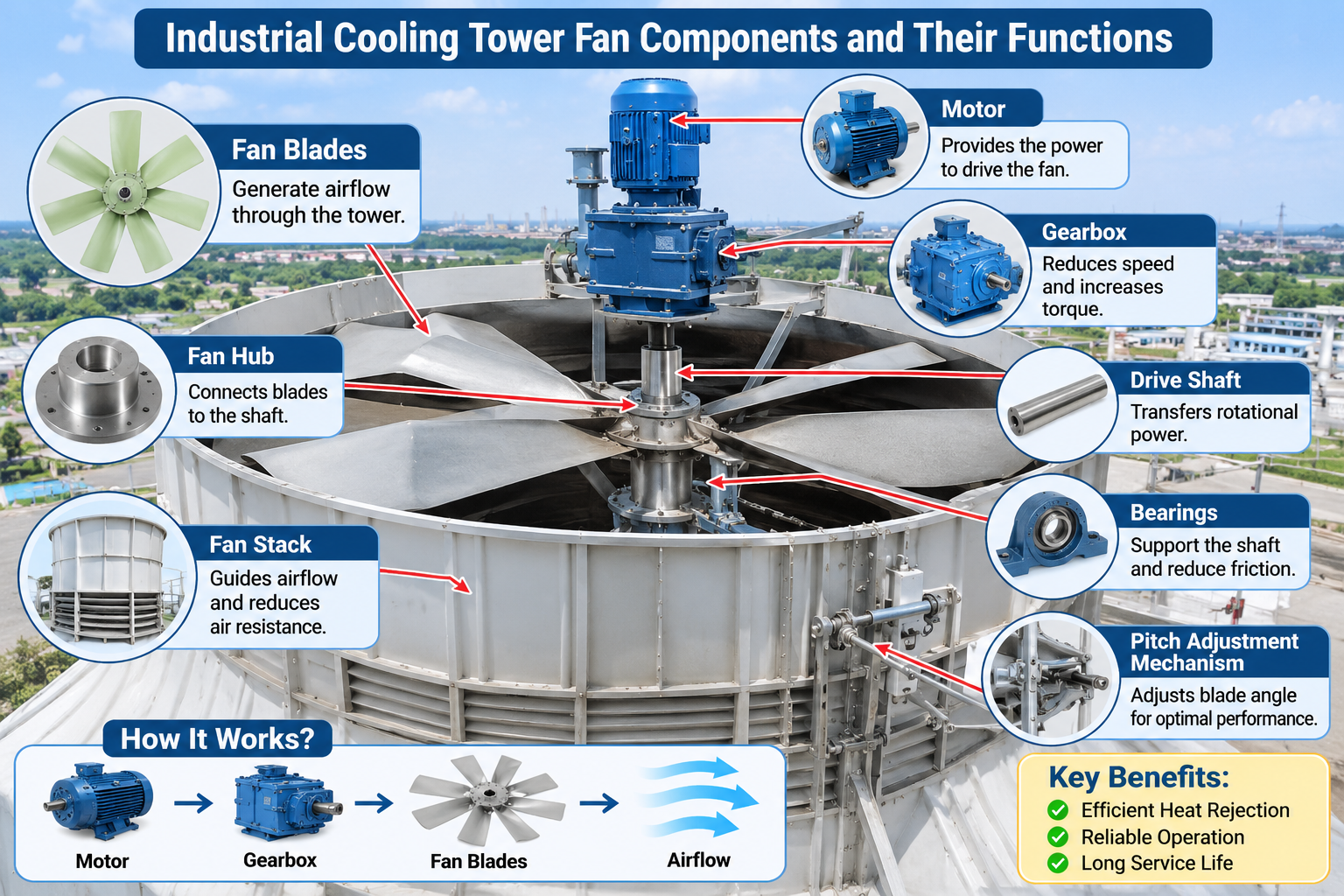
4.2 Fan Speed and Motor Specifications
Fan speed is another important factor.
A fan running at a higher rotational speed generally operates under different aerodynamic and mechanical conditions from a slower fan. A pitch setting suitable for one speed may overload the motor at another.
Before making an adjustment, check:
Motor rated power.
Rated current and voltage.
Fan rotational speed.
Drive configuration.
Gearbox or belt-drive specifications.
Fan manufacturer's operating limits.
The selected blade pitch must remain compatible with the entire drive system.
4.3 Cooling Tower Airflow Requirements
The cooling tower's design airflow is an important reference when setting fan blade pitch.
For example, a cooling tower operating under a high heat load may require a different airflow level from one operating under lighter conditions.
The fan should be configured to meet the required airflow without exceeding the permitted motor load or fan operating limits.
4.4 Static Pressure and Airflow Resistance
The fan does not operate independently. It must overcome resistance within the cooling tower.
Airflow resistance may come from fill media, drift eliminators, louvers, air inlets, and other internal structures.
If these components become blocked or dirty, airflow resistance may increase.
In this situation, increasing blade pitch may place additional load on the fan without addressing the actual cause of poor airflow.
Check the tower's air passages and internal components before changing the fan setting.
4.5 Environmental and Operating Conditions
Cooling towers operate in different environments.
Dust, humidity, corrosion, temperature, water quality, and seasonal operating conditions can all influence maintenance requirements and performance.
A fan installed in a coastal industrial environment may face different corrosion challenges from one operating in a clean indoor industrial facility.
Blade material and design should therefore match the application.
5. How to Measure Cooling Tower Fan Blade Angle
Before adjusting a fan, technicians need a reliable way to measure its existing blade pitch.
An inaccurate measurement can lead to inconsistent settings and unnecessary performance problems.
5.1 Tools Required
The tools depend on the fan design and the manufacturer's measurement procedure.
Common equipment may include:
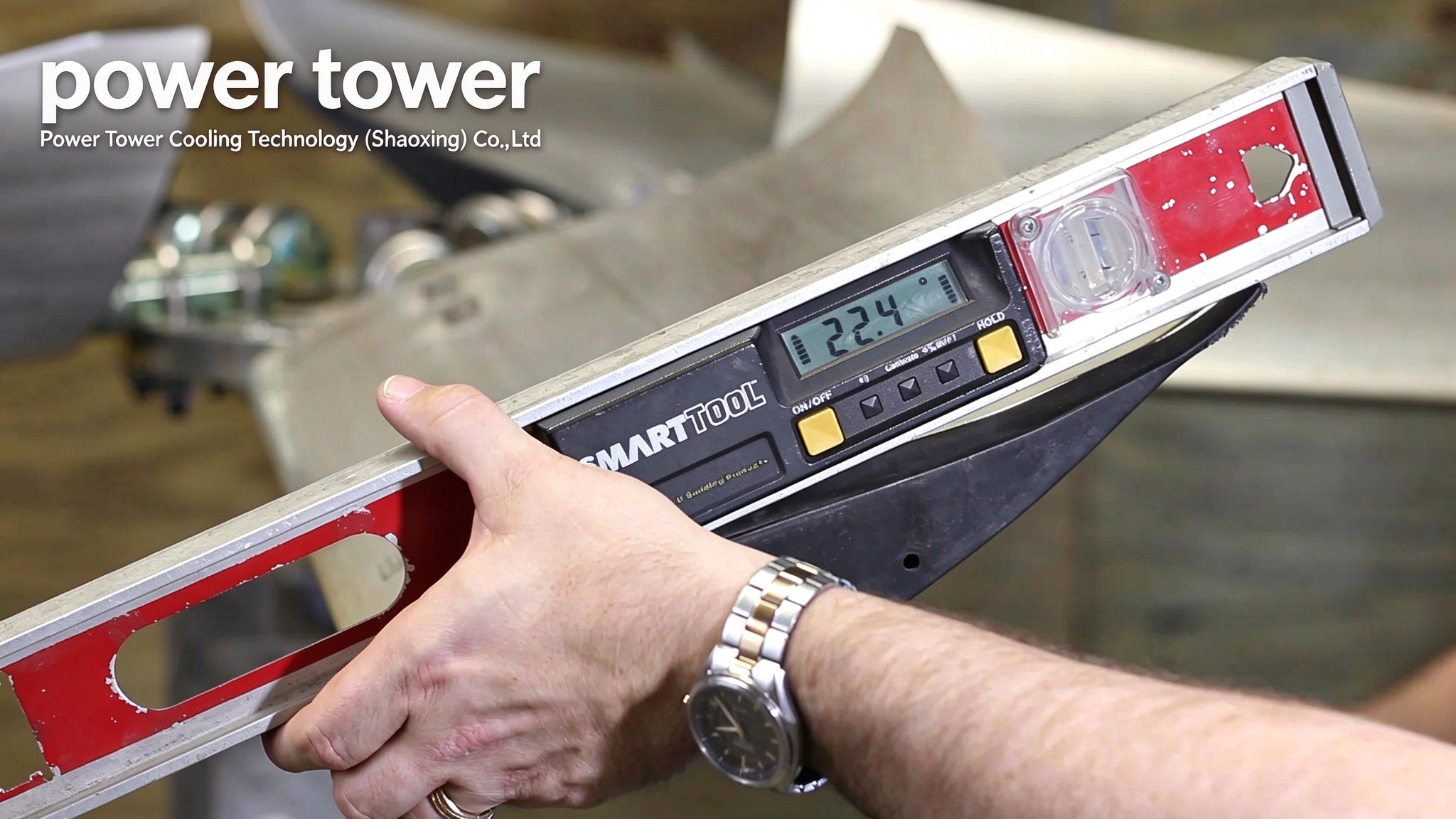
Digital angle gauge or inclinometer.
Blade pitch measuring fixture, if specified.
Suitable hand tools for approved adjustments.
Torque wrench.
Measuring tape or caliper.
Inspection checklist.
Clamp meter or power monitoring equipment.
Vibration analyzer, when required.
Always use measurement equipment suitable for the fan and the manufacturer's specified reference method.
5.2 Establishing a Consistent Measurement Reference
One of the most important parts of blade angle measurement is using the correct reference.
Different fan manufacturers may define blade pitch using different measurement conventions. Some specify the angle relative to the plane of rotation, while others provide a particular fixture position or measurement procedure.
Do not assume that two angle readings are directly comparable unless they use the same reference.
Before taking measurements, identify the manufacturer's definition and follow it consistently.
5.3 Measuring Every Blade
Measure each blade at the specified location and reference point.
Record the readings and compare them with the manufacturer's requirements.
If the readings vary significantly, check for incorrect installation, blade deformation, hub problems, or measurement errors.
All blades should be adjusted consistently according to the fan design. Never rely on visual judgment alone when precise measurements are required.
6. Step-by-Step Cooling Tower Fan Blade Angle Setting
Adjusting cooling tower fan blade angle requires technical knowledge and careful attention to safety.
The following is a general overview. The actual procedure, adjustment range, tightening sequence, and torque values must come from the specific fan manufacturer's documentation.
6.1 Review Manufacturer Specifications
Start by obtaining the correct fan documentation.
Confirm the fan model, blade type, hub design, operating speed, permitted pitch range, and required operating conditions.
If the original specifications are unavailable, contact the fan manufacturer or a qualified technical supplier before making changes.
Do not select an angle based on an unrelated fan model or a general online recommendation.
6.2 Shut Down and Isolate the Equipment
Safety comes first.
Before working on the fan:
Shut down the cooling tower according to site procedures.
Isolate the electrical power supply.
Apply lockout/tagout procedures.
Verify that the fan cannot restart.
Wait until all rotating components have stopped.
Follow site requirements for safe access, fall protection, and work at height.
Never attempt to adjust exposed fan blades while the equipment is operating.
6.3 Inspect the Fan and Hub
Before changing the blade angle, inspect the complete assembly.
Look for:
Cracks or deformation on blades.
Corrosion or surface damage.
Loose mounting bolts.
Damaged hub components.
Worn blade clamps.
Signs of contact with nearby structures.
Shaft or bearing problems.
If a blade is damaged or the hub is defective, correct the mechanical problem before considering a pitch adjustment.
6.4 Record the Existing Blade Pitch
Measure and record the existing angle of every blade using the specified reference.
This information provides a baseline for comparison and helps technicians identify inconsistent settings.
Also record relevant operating information, including motor current, fan speed, vibration readings, and cooling tower performance where available.
6.5 Adjust Blade Angles Evenly
Make adjustments only within the manufacturer's permitted range.
Follow the specified adjustment sequence and ensure that all blades have the required pitch.
Do not make arbitrary changes to individual blades to compensate for vibration or airflow problems.
Unequal blade angles can create uneven aerodynamic forces and may cause additional vibration.
6.6 Tighten and Verify All Connections
After adjustment, tighten all fasteners according to the specified torque values and sequence.
Check that:
All blades are correctly seated.
The hub connections are secure.
No blade interferes with nearby components.
All required locking devices are installed.
The measured blade pitch is consistent.
Tools and loose materials have been removed from the work area.
Record the final measurements for future maintenance reference.
6.7 Conduct a Controlled Performance Check
Once the work is complete, qualified personnel can follow the approved commissioning or restart procedure.
Monitor the fan under controlled conditions.
Important parameters include:
Motor current.
Fan speed.
Vibration.
Operating noise.
Airflow, where measurable.
Cooling tower water temperature.
Signs of abnormal mechanical behavior.
Compare the results with the manufacturer's limits and the original operating baseline.
If current, vibration, or noise is abnormal, stop and investigate rather than continuing to operate the fan under unsuitable conditions.
7. Common Cooling Tower Fan Blade Angle Setting Mistakes
Incorrect adjustments can reduce fan performance and increase maintenance costs.
Here are several common mistakes worth avoiding.
7.1 Setting the Angle Too High
A higher blade angle may increase fan loading and motor power demand.
If the setting exceeds the permitted range, the motor may draw excessive current or operate outside its design conditions.
The fan may also experience higher mechanical stress.
The goal is not to achieve the largest possible blade angle. It is to achieve the required performance within the manufacturer's operating limits.
7.2 Setting the Angle Too Low
A blade angle that is too low may result in insufficient airflow.
The cooling tower may then struggle to remove the required amount of heat, particularly under high process loads.
However, low airflow may also be caused by incorrect fan rotation, dirty internal components, blocked air passages, or unsuitable fan speed.
Investigate the complete system before changing the blade pitch.
7.3 Unequal Blade Pitch
All blades in a fan assembly should be set consistently according to the manufacturer's specifications.
Unequal pitch can produce uneven aerodynamic loading, vibration, and unstable fan operation.
Measure each blade instead of assuming that all blades are identical after installation.
7.4 Ignoring Motor Current and Fan Limits
One of the most serious mistakes is changing blade pitch without checking motor loading.
Even if airflow appears to improve, the motor may be operating beyond its permitted current or power limits.
Always verify electrical and mechanical operating conditions after an adjustment.
8. Signs That Your Fan Blade Angle Needs Attention
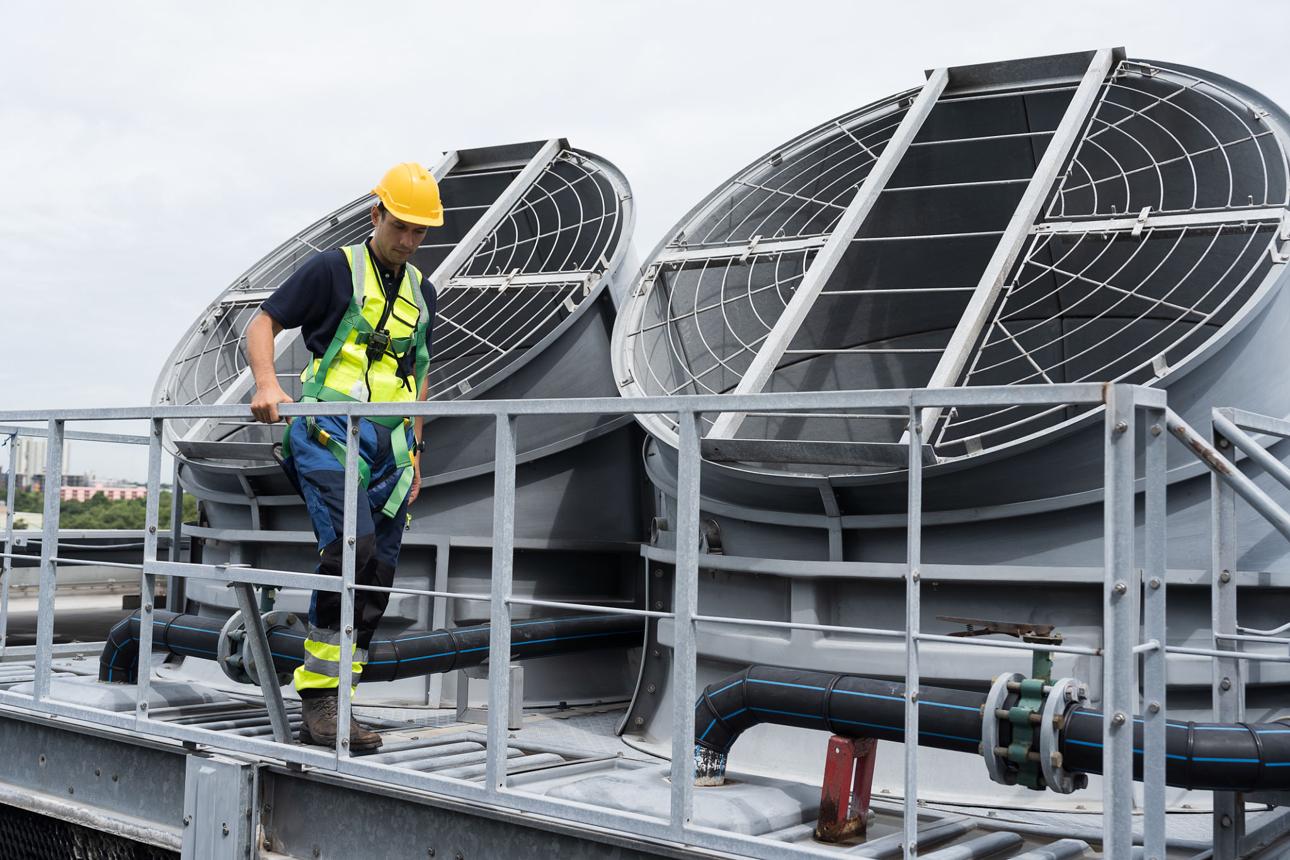
Certain operating symptoms may indicate that fan blade pitch or installation needs inspection.
These include:
Cooling tower airflow below the expected level.
Higher-than-normal motor current.
Unusual fan noise.
Increased vibration.
Uneven blade appearance or positioning.
Cooling water temperature higher than expected.
Poor performance after fan maintenance or blade replacement.
These symptoms do not prove that blade angle is incorrect. They are reasons to inspect the fan and the wider cooling tower system.
For example, high motor current may result from excessive blade pitch, but it can also be associated with mechanical friction, electrical faults, or changes in operating conditions.
Accurate diagnosis prevents unnecessary adjustments.
9. How to Optimize Cooling Tower Fan Performance
Good fan performance depends on more than blade angle.
To improve overall operation, consider the following areas:
Confirm the required airflow. Use the cooling tower's design information and operating requirements to establish the target.
Check fan rotation. Incorrect rotation can significantly reduce airflow and cooling performance.
Inspect the fill and drift eliminators. Deposits and blockages can increase airflow resistance.
Check the air inlet and outlet. Make sure that louvers, openings, and surrounding structures do not unnecessarily restrict airflow.
Monitor motor loading. Keep current and power consumption within permitted limits.
Maintain mechanical components. Check bearings, hub connections, shafts, and drive components regularly.
A balanced approach is usually more effective than repeatedly changing the fan blade angle.
10. Maintenance Tips for Cooling Tower Fan Blades
Regular maintenance helps preserve fan performance and reduce the risk of unexpected failure.
10.1 Inspect Blades for Damage
Check blade surfaces, roots, edges, and mounting areas for cracks, deformation, and corrosion.
Damaged blades should be assessed by qualified personnel and replaced when required.
10.2 Clean Uneven Deposits
Remove dirt, scale, and other deposits using methods compatible with the blade material.
Uneven buildup can change blade mass distribution and contribute to imbalance.
10.3 Check Fasteners and Hub Connections
Inspect the hub, blade clamps, bolts, and mounting surfaces according to the maintenance schedule.
Use the specified torque values rather than tightening by feel.
10.4 Keep Maintenance Records
Record blade angle measurements, vibration readings, motor current, repairs, and replacement information.
These records help identify developing problems and make future maintenance more efficient.
11. When Should You Replace Cooling Tower Fan Blades?
Not every fan performance problem requires blade replacement. Sometimes, cleaning, approved adjustment, or repair can restore suitable operation.
However, replacement should be considered when blades have serious cracks, structural deformation, advanced corrosion, or damage that cannot be safely repaired.
You should also consider replacement when:
The original blade model is no longer suitable.
Blade mounting areas are damaged.
Repeated vibration problems are linked to blade defects.
Replacement blades cannot be matched to the existing assembly.
The fan no longer meets its required operating performance.
When replacing blades, confirm that the new components are compatible with the existing hub and fan design.
Depending on the manufacturer's requirements, replacing a matched set may be necessary to maintain consistent mass distribution and aerodynamic performance.
12. Choosing Compatible Cooling Tower Fan Blades
Choosing replacement blades involves more than matching their appearance or dimensions.
A suitable replacement should meet the fan's technical and operating requirements.
Before purchasing, prepare the following information:
| Information | Why It Matters |
| Cooling tower brand and model | Helps identify the original equipment |
| Fan diameter | Confirms overall fan size |
| Number of blades | Identifies the fan configuration |
| Blade length and profile | Helps confirm aerodynamic compatibility |
| Blade material | Determines suitability for the operating environment |
| Hub model and dimensions | Confirms mounting compatibility |
| Operating speed | Helps assess the required fan design |
| Motor power and current | Helps verify drive-system requirements |
| Original drawings or part number | Improves replacement accuracy |
If possible, provide photographs of the complete fan, individual blades, and hub assembly.
A reliable supplier should review the technical information before recommending a replacement.
13. How Power Tower Supports Cooling Tower Component Requirements
Power Tower Cooling Technology (Shaoxing) Co.,Ltd. focuses on cooling tower components and replacement products for industrial cooling tower applications.
When customers need to maintain or replace cooling tower fan components, accurate product identification is important. A blade that looks similar to the original may still have a different pitch range, profile, mounting arrangement, or operating capability.
Power Tower supports cooling tower component requirements by helping customers identify relevant product specifications and replacement options.
When requesting information about cooling tower fan blades or related components, customers should prepare:
Cooling tower brand and model.
Fan diameter and blade quantity.
Existing blade photographs.
Blade length and mounting dimensions.
Hub photographs or drawings.
Motor and gearbox specifications.
Required operating conditions.
Original part numbers, if available.
Providing these details can help reduce identification errors and improve replacement compatibility.
For cooling tower fan components and other cooling tower replacement products, visit:
Power Tower Cooling Technology (Shaoxing) Co.,Ltd.
Official website: https://www.coolingtowerpart.com
The right replacement component, combined with correct installation and maintenance, can help support reliable cooling tower operation.
14. Frequently Asked Questions
14.1 What Is the Correct Cooling Tower Fan Blade Angle?
There is no universal blade angle for all cooling tower fans.
The correct setting depends on the fan model, blade profile, diameter, rotational speed, airflow requirements, and manufacturer's specifications.
Always follow the technical documentation for the specific fan.
14.2 Does Increasing Blade Angle Increase Airflow?
Increasing blade pitch can increase aerodynamic loading and may increase airflow within the fan's suitable operating range.
However, it can also increase motor power demand. The actual result depends on fan design and system resistance.
A higher angle does not automatically mean better efficiency.
14.3 Can Incorrect Blade Pitch Damage a Fan Motor?
Yes. Excessive blade pitch may increase the load on the fan drive system and cause the motor to draw more current than permitted.
Prolonged operation under excessive load may lead to overheating or protective trips.
Always verify motor current after an approved pitch adjustment.
14.4 Should All Fan Blades Have the Same Angle?
Yes. All blades should be installed and adjusted consistently according to the manufacturer's specifications.
Unequal blade pitch may create uneven aerodynamic loading and contribute to vibration or unstable operation.
14.5 How Often Should Fan Blade Angle Be Checked?
The inspection frequency depends on the fan manufacturer's recommendations and operating conditions.
Blade pitch should be checked during commissioning, after relevant maintenance or blade replacement, and whenever inspection or performance data suggests that the setting may have changed.
Regular maintenance records make it easier to identify unexpected differences.
15. Conclusion
Cooling tower fan blade angle setting is an important part of maintaining stable airflow, suitable motor loading, and reliable cooling tower performance.
A blade angle that is too high may increase power demand, while an angle that is too low may fail to deliver the required airflow. Unequal blade settings can also contribute to vibration and unstable operation.
The best approach is to follow the manufacturer's specifications, measure every blade using a consistent reference, make adjustments carefully, and verify the results through controlled performance checks.
Remember, the objective is not simply to increase airflow. It is to achieve the correct balance between airflow, motor power, mechanical reliability, and cooling performance.
For cooling tower fan blades and related replacement components, Power Tower Cooling Technology (Shaoxing) Co.,Ltd. provides cooling tower product support through its official website:
https://www.coolingtowerpart.com


