Industrial FRP Fan Blade Manufacturer for Cooling Tower Replacement
Industrial cooling towers play an essential role in maintaining efficient heat exchange in power plants, chemical processing facilities, HVAC systems, manufacturing plants, and other industrial applications. As one of the most important components of a cooling tower, the fan blade directly affects airflow, cooling capacity, energy consumption, and operating stability.
When existing fan blades become damaged, corroded, deformed, or inefficient, replacing them with high-quality FRP fan blades can be an effective way to improve cooling tower performance. However, selecting the right industrial FRP fan blade manufacturer is equally important. A reliable manufacturer should provide durable materials, accurate blade designs, customized specifications, and consistent product quality.
This article explores the materials, manufacturing processes, replacement considerations, technical advantages, and supplier selection criteria for industrial FRP fan blades.
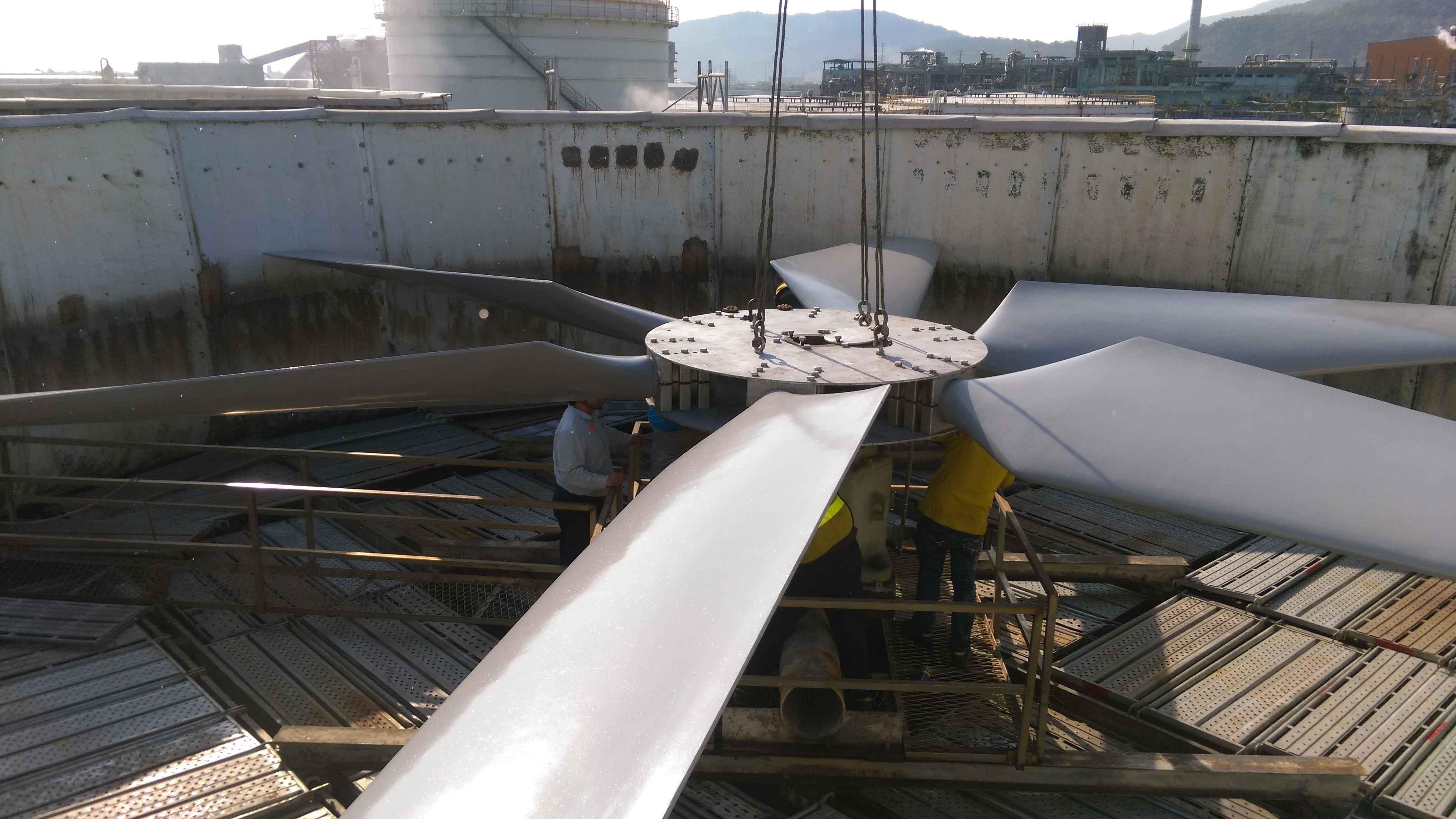
What Is an Industrial FRP Fan Blade?
An industrial FRP fan blade is an airflow component manufactured from Fiber Reinforced Plastic (FRP). It is commonly used in mechanical-draft cooling towers to move large volumes of air through the fill section and improve heat transfer between water and air.
FRP combines resin materials with reinforcing fibers, such as glass fiber, to create a lightweight yet strong composite structure.
Compared with conventional metal fan blades, FRP fan blades offer several advantages, including corrosion resistance, reduced weight, design flexibility, and reliable performance in humid industrial environments.
How Does an FRP Cooling Tower Fan Blade Work?
Cooling tower fan blades generate airflow by rotating around a central hub. As the fan rotates, the aerodynamic profile of each blade creates a pressure difference that moves air through the cooling tower.
The airflow helps remove heat from circulating water through evaporation and sensible heat transfer.
The main functions include:
Drawing ambient air into the cooling tower.
Increasing airflow through the fill media.
Supporting efficient heat exchange.
Maintaining stable cooling tower operation.
Helping achieve the required cooling capacity.
Why Is Blade Design Important?
Blade geometry directly affects airflow volume, static pressure, power consumption, and operating noise.
An appropriately designed FRP fan blade can improve aerodynamic efficiency while reducing unnecessary energy consumption. Incorrect blade geometry, however, may cause insufficient airflow, excessive motor load, vibration, and reduced cooling performance.
Why Choose an Industrial FRP Fan Blade Manufacturer for Replacement?
Choosing an experienced industrial FRP fan blade manufacturer is essential when replacing existing cooling tower fan blades.
Replacement projects are not simply about purchasing new blades. They require careful consideration of the original fan system, operating conditions, mechanical structure, and aerodynamic requirements.
1. Excellent Corrosion Resistance
Cooling towers operate in environments with high humidity, circulating water, and potentially corrosive chemicals.
Traditional metal fan blades may experience corrosion after long-term exposure to moisture and industrial contaminants.
FRP materials provide excellent resistance to many common corrosive environments.
Suitable for Harsh Industrial Conditions
FRP fan blades are suitable for various applications, including:
Chemical processing plants.
Power generation facilities.
Steel manufacturing plants.
Petrochemical industries.
Wastewater treatment facilities.
Industrial HVAC cooling towers.
The appropriate resin system should be selected according to the actual chemical exposure, temperature, and operating environment.
2. Lightweight Construction and High Strength
One of the most important advantages of FRP fan blades is their favorable strength-to-weight ratio.
Compared with many conventional metal alternatives, FRP blades can reduce rotating mass while maintaining the mechanical strength required for industrial operation.
A lighter fan assembly may help reduce the load on supporting mechanical components, including the gearbox, motor, shaft, and fan hub.
3. Flexible Customization
Different cooling tower models require different fan blade dimensions and aerodynamic characteristics.
A professional FRP fan blade manufacturer can customize products according to customer drawings, original equipment specifications, or actual project requirements.
Customization may include:
4. Long-Term Operational Reliability
High-quality FRP fan blades are designed to withstand continuous rotation, environmental exposure, and operational loads.
Proper material selection, manufacturing control, and dynamic balancing help improve service reliability.
However, the actual service life depends on operating conditions, installation quality, maintenance frequency, and exposure to chemicals or ultraviolet radiation.
What Materials Are Used in FRP Cooling Tower Fan Blade Manufacturing?
Material selection is a critical factor affecting the performance and durability of FRP fan blades.
A professional manufacturer should understand how different resin systems and reinforcement materials influence mechanical strength, corrosion resistance, and environmental performance.
Glass Fiber Reinforcement
Glass fiber is widely used in industrial FRP fan blade manufacturing.
It provides mechanical reinforcement and helps improve tensile strength, stiffness, and structural stability.
Benefits of Glass Fiber
High strength-to-weight ratio.
Good fatigue resistance when properly designed.
Excellent compatibility with different resin systems.
Flexible manufacturing possibilities.
Suitable for complex aerodynamic profiles.
The fiber arrangement and reinforcement direction should be designed according to the loads experienced by the blade during operation.
Polyester Resin
Polyester resin is commonly used in FRP manufacturing because of its relatively economical cost and convenient processing characteristics.
It can be suitable for general industrial applications where the chemical and temperature conditions are within the resin's operating limits.
Vinyl Ester Resin
Vinyl ester resin offers improved chemical resistance compared with many standard polyester formulations.
It is often considered for cooling towers operating in more aggressive industrial environments.
Epoxy Resin
Epoxy resin provides strong adhesion and good mechanical properties.
Depending on the formulation, it can offer excellent structural performance and fatigue resistance.
The final resin selection should consider temperature, chemical exposure, manufacturing requirements, and project budget.
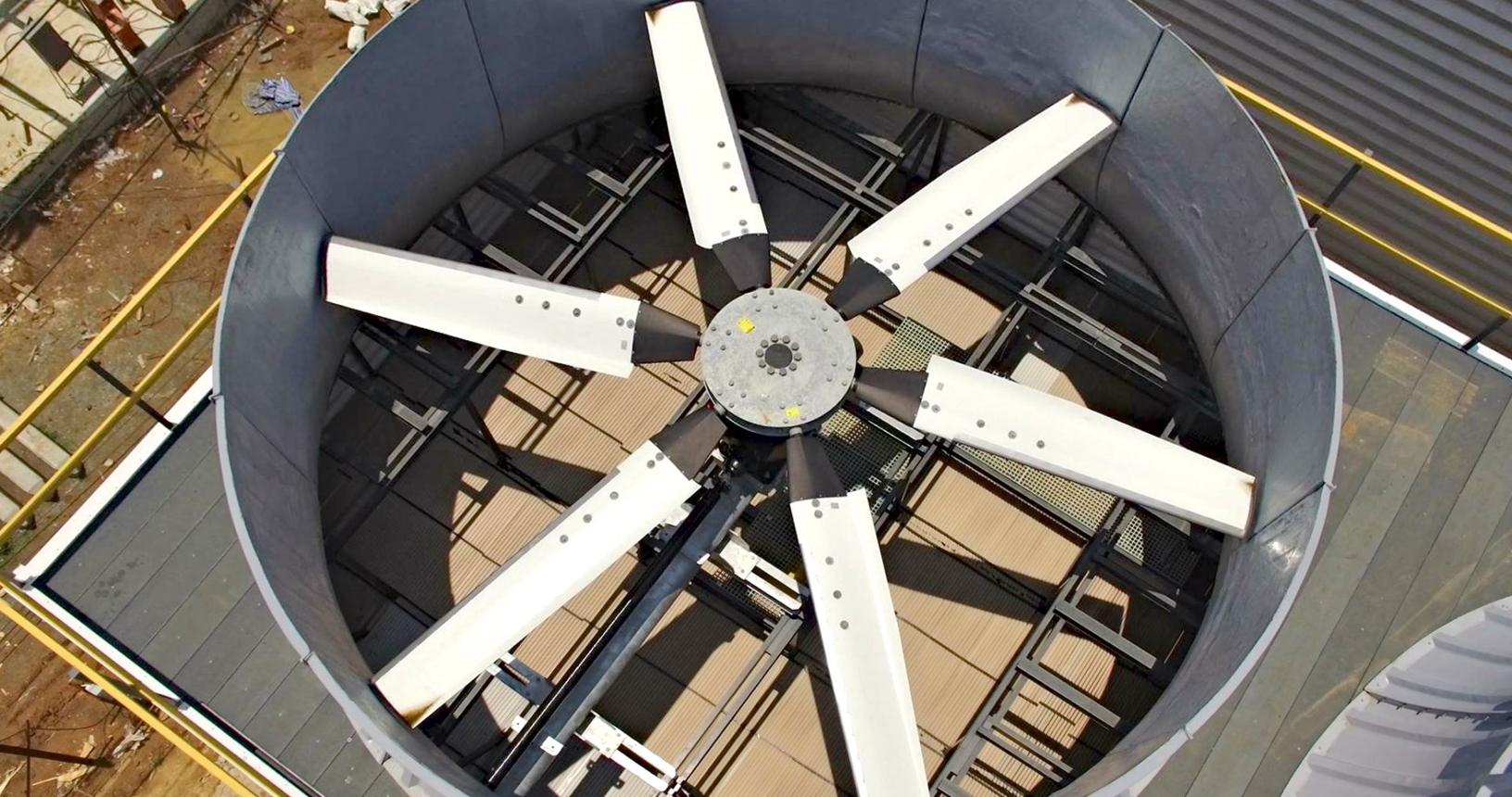
How Are Industrial FRP Fan Blades Manufactured?
Manufacturing quality has a direct influence on fan blade strength, dimensional accuracy, aerodynamic performance, and service life.
An experienced FRP fan blade manufacturer should maintain strict quality control throughout the production process.
1. Product Design and Engineering
The manufacturing process begins with engineering design.
Before production, the manufacturer should understand the cooling tower's operating requirements and the specifications of the existing fan assembly.
Important design parameters include:
Fan diameter.
Number of blades.
Blade length.
Blade pitch angle.
Rotational speed.
Airflow requirements.
Operating temperature.
Motor power.
Fan hub connection.
Aerodynamic Profile Optimization
The blade profile should be designed to generate the required airflow while maintaining acceptable aerodynamic efficiency.
Blade pitch, chord length, curvature, and thickness distribution all influence performance.
For replacement applications, manufacturers should avoid changing the original aerodynamic design without evaluating the effects on fan performance and motor loading.
2. Mold Preparation
Molds determine the external shape and dimensional consistency of FRP fan blades.
High-quality molds help maintain consistent blade geometry and improve manufacturing efficiency.
Before production, molds should be inspected for surface defects, dimensional accuracy, and cleanliness.
3. Fiber Reinforcement and Resin Application
Glass fiber reinforcement is arranged according to the engineering design.
Resin is then applied to wet out the reinforcement materials and form the composite structure.
The reinforcement layers must be properly distributed to reduce the possibility of weak areas, air pockets, and inconsistent thickness.
4. Curing and Demolding
After the composite material is formed, it undergoes a controlled curing process.
Proper curing helps the resin develop its intended mechanical properties.
Once curing is completed, the blade is carefully removed from the mold.
5. Trimming and Surface Finishing
Excess material is removed, and the blade edges are finished according to the required dimensions.
The surface is inspected for visible defects, including cracks, bubbles, delamination, and uneven resin distribution.
6. Quality Inspection and Balancing
Before delivery, FRP fan blades should undergo appropriate quality inspections.
Typical inspection items include:
Why Is Fan Blade Balancing Important?
Unbalanced fan blades can generate excessive vibration during operation.
This vibration may damage bearings, gearboxes, motors, support structures, and other mechanical components.
A qualified manufacturer should consider the balancing requirements of the complete fan assembly rather than treating each blade as an isolated component.
How to Choose the Right FRP Fan Blade for Cooling Tower Replacement?
Selecting the correct replacement fan blade is essential for maintaining the original cooling tower's operating performance.
Even when two blades have similar external dimensions, their aerodynamic characteristics and mechanical specifications may differ.
1. Confirm the Original Fan Diameter
The fan diameter determines the overall airflow area and must match the cooling tower's design requirements.
Before ordering replacement blades, measure the existing fan diameter and verify the available installation space.
2. Check Blade Length and Width
Blade length and width affect the fan's aerodynamic characteristics and structural loading.
Incorrect dimensions may cause interference with the fan cylinder or reduce airflow efficiency.
3. Verify the Blade Pitch Angle
Blade pitch angle is one of the most important parameters in cooling tower fan replacement.
A larger pitch angle generally increases aerodynamic loading, but it may also increase motor power consumption.
How Does Pitch Angle Affect Fan Performance?
An unsuitable pitch angle may lead to several problems:
Replacement blades should follow the original design specifications unless an engineering assessment supports a modification.
4. Match the Fan Hub Connection
The fan hub connects individual blades to the rotating assembly.
Different cooling tower manufacturers may use different hub structures and mounting arrangements.
Before ordering, confirm:
Bolt hole positions.
Mounting dimensions.
Blade root design.
Connection method.
Adjustment mechanism.
5. Consider the Operating Environment
Different industrial environments require different material specifications.
For example, cooling towers in chemical plants may need enhanced chemical resistance, while outdoor installations may require additional UV-resistant protection.
A suitable FRP fan blade should be selected according to actual operating conditions rather than price alone.
What Are the Common Signs That Cooling Tower Fan Blades Need Replacement?
Cooling tower fan blades operate under continuous mechanical and environmental stress.
Over time, material aging, corrosion, fatigue, and mechanical damage may affect their performance.
Recognizing early warning signs can help prevent unexpected equipment failures.
Visible Cracks and Surface Damage
Cracks near the blade root, mounting holes, or high-stress areas may indicate structural deterioration.
Small surface defects should also be inspected because they may develop into more serious damage under repeated loading.
Blade Deformation
A deformed blade may produce uneven airflow and create an imbalance in the rotating assembly.
Blade deformation can result from excessive mechanical loading, improper installation, or long-term material degradation.
Excessive Fan Vibration
Abnormal vibration is a common warning sign of fan assembly problems.
Possible causes include:
Uneven blade weight.
Incorrect blade pitch.
Loose mounting bolts.
Damaged bearings.
Hub misalignment.
Structural blade damage.
The complete fan system should be inspected before deciding whether blade replacement is necessary.
Reduced Cooling Tower Performance
If cooling tower airflow decreases, the system may experience higher outlet water temperatures.
Although damaged fan blades can contribute to reduced cooling capacity, other factors such as clogged fill media, poor water distribution, and motor problems should also be checked.
Custom FRP Fan Blade Manufacturing for Different Cooling Tower Brands
Industrial cooling towers come in various configurations, sizes, and mechanical designs.
Therefore, a reliable FRP fan blade manufacturer should provide flexible customization services for different equipment models.
Replacement Blades for Crossflow Cooling Towers
Crossflow cooling towers typically use horizontal airflow through the fill section.
Their fan assemblies must generate sufficient airflow to support the required heat exchange performance.
Customized FRP fan blades can be manufactured according to the original fan dimensions and operating parameters.
Replacement Blades for Counterflow Cooling Towers
Counterflow cooling towers generally use upward airflow against the downward movement of water.
Fan performance directly affects the air-water contact process and overall cooling efficiency.
Proper blade geometry and pitch adjustment are important for maintaining the designed airflow.
Customized Blades for Different Fan Diameters
Industrial cooling towers may use different fan diameters depending on their cooling capacity and structural configuration.
Manufacturers can produce customized blade dimensions for different projects, provided that the design is supported by appropriate engineering calculations.
OEM and Drawing-Based Manufacturing
For international customers, OEM manufacturing can simplify cooling tower maintenance and replacement projects.
Customers can provide:
Based on these details, the manufacturer can evaluate the design and provide suitable replacement solutions.
How Can FRP Fan Blade Manufacturers Ensure Product Quality?
Product quality should be a major consideration when choosing an industrial FRP fan blade manufacturer.
A professional supplier needs more than basic production equipment. It should also have technical knowledge, material control procedures, and inspection capabilities.
Strict Raw Material Inspection
Raw materials directly affect the mechanical properties of FRP products.
Manufacturers should verify the quality and consistency of glass fibers, resin systems, curing agents, and other production materials.
Controlled Manufacturing Processes
Consistent manufacturing procedures help reduce defects and improve product reliability.
Important controls include resin mixing, fiber placement, curing temperature, curing time, and finished blade dimensions.
Mechanical and Structural Inspection
Depending on the product design, quality inspections may include:
Visual inspection.
Dimensional inspection.
Weight measurement.
Mounting accuracy verification.
Mechanical property testing.
Balance testing.
Structural defect inspection.
Packaging and Transportation Protection
FRP fan blades are often large and relatively lightweight, making transportation protection particularly important.
Suitable packaging should prevent bending, impact damage, surface scratches, and deformation during handling and shipping.
For international orders, manufacturers should also consider container loading efficiency and export packaging requirements.
FRP Fan Blade Replacement vs. Traditional Metal Fan Blade Replacement
When planning a cooling tower upgrade, customers often compare FRP fan blades with aluminum or other metal alternatives.
Each material has different characteristics, and the best choice depends on the operating environment and engineering requirements.
Comparison | FRP Fan Blade | Metal Fan Blade |
Weight | Generally lightweight | Depends on metal type and design |
Corrosion resistance | Excellent with suitable resin | Depends on alloy and protection |
Design flexibility | High | Depends on manufacturing method |
Surface maintenance | Generally low | May require corrosion protection |
Customization | Flexible | Available |
Initial cost | Depends on specification | Depends on material and fabrication |
Which Material Is Better for Cooling Towers?
FRP fan blades are often a suitable choice for cooling towers because of their corrosion resistance, lightweight construction, and design flexibility.
However, metal blades may remain appropriate for certain applications depending on operating temperature, mechanical requirements, and existing equipment design.
A professional manufacturer should evaluate the actual operating conditions before recommending a replacement material.
What Industries Need Industrial FRP Fan Blade Replacement?
FRP fan blades are widely used in industrial cooling systems where reliable airflow and corrosion resistance are important.
Power Plants
Power plants use large cooling towers to remove excess heat from circulating water systems.
Reliable fan blades help maintain airflow and support stable cooling tower operation.
Chemical and Petrochemical Plants
Chemical processing environments may expose cooling tower components to corrosive substances.
FRP fan blades manufactured with suitable resin systems can provide improved resistance to these conditions.
Steel and Metallurgical Industries
Steel plants often operate cooling towers under demanding conditions involving high temperatures, dust, and continuous operation.
Strong and appropriately designed FRP fan blades can support reliable industrial cooling.
HVAC and Commercial Cooling Systems
Large commercial buildings, industrial parks, and central air-conditioning systems depend on cooling towers for heat rejection.
Replacing aging fan blades with suitable FRP alternatives may help restore fan performance and improve operating reliability.
Why Work with a Professional Industrial FRP Fan Blade Manufacturer?
Working directly with an experienced manufacturer offers several advantages for industrial replacement projects.
Technical Support Before Ordering
A qualified manufacturer should help customers confirm fan specifications before production.
This reduces the risk of dimensional mismatches and unsuitable replacement products.
Customized Production Solutions
Different cooling towers require different blade configurations.
Direct communication with the manufacturer makes it easier to customize blade dimensions, materials, and connection structures.
Consistent Product Quality
A manufacturer with established production and inspection procedures can provide more consistent product quality across repeated orders.
Better Project Coordination
For international customers, production scheduling, packaging, shipping arrangements, and technical communication are important factors.
A reliable supplier should provide clear information throughout the purchasing process.
What Information Should Buyers Provide When Requesting an FRP Fan Blade Quotation?
To obtain an accurate quotation, international buyers should provide sufficient technical information about their existing cooling tower fan assembly.
The following details are particularly useful:
Required Information | Purpose |
Fan diameter | Confirms overall fan size |
Number of blades | Determines fan configuration |
Blade length | Confirms replacement dimensions |
Blade width | Helps identify the blade profile |
Pitch angle | Supports aerodynamic matching |
Fan speed (RPM) | Determines operating conditions |
Motor power | Helps evaluate system compatibility |
Hub dimensions | Confirms installation compatibility |
Required quantity | Supports production planning |
Drawings or photos | Helps verify the original design |
Can Manufacturers Produce FRP Fan Blades Without Original Drawings?
Yes, some manufacturers can evaluate replacement requirements using existing blade samples, detailed photographs, and dimensional measurements.
However, the more complete the technical information, the easier it is to ensure compatibility.
For critical industrial applications, engineering verification is recommended before manufacturing.
Frequently Asked Questions About Industrial FRP Fan Blade Manufacturers
1. What Is the Main Advantage of FRP Cooling Tower Fan Blades?
The main advantages include lightweight construction, corrosion resistance, high design flexibility, and a favorable strength-to-weight ratio.
These properties make FRP fan blades suitable for many industrial cooling tower applications.
2. How Long Do FRP Cooling Tower Fan Blades Last?
The service life depends on material quality, resin selection, operating speed, environmental exposure, installation, and maintenance.
Properly designed and maintained FRP fan blades can provide long-term service, but regular inspection is necessary.
3. Can FRP Fan Blades Be Customized for Different Cooling Tower Brands?
Yes. FRP fan blades can be customized according to different cooling tower models, fan diameters, hub structures, and operating requirements.
Customers should provide original drawings or detailed technical specifications whenever possible.
4. Are FRP Fan Blades Suitable for High-Temperature Applications?
FRP fan blades can be designed for certain elevated-temperature environments.
However, the allowable operating temperature depends on the resin system, reinforcement structure, and overall composite design.
Manufacturers should verify the actual temperature conditions before recommending a material.
5. Do FRP Fan Blades Require Regular Maintenance?
Yes. Although FRP fan blades generally require relatively little maintenance, periodic inspection is important.
Maintenance should include checking for cracks, surface damage, loose bolts, blade deformation, and abnormal vibration.
6. How Can I Find a Reliable FRP Fan Blade Manufacturer?
When evaluating manufacturers, consider the following factors:
Experience in industrial cooling tower applications.
FRP material and manufacturing expertise.
Customized production capabilities.
Quality inspection procedures.
Technical support.
Export experience.
Delivery and packaging capabilities.
Requesting product drawings, technical specifications, and relevant quality documentation can also help buyers make informed decisions.
Conclusion: Choose the Right Industrial FRP Fan Blade Manufacturer for Reliable Replacement
Selecting the right industrial FRP fan blade manufacturer is an important step in maintaining cooling tower performance and improving long-term operating reliability.
High-quality FRP fan blades offer several advantages, including corrosion resistance, lightweight construction, flexible customization, and reliable mechanical performance. However, successful replacement depends on more than material selection. Blade dimensions, aerodynamic design, pitch angle, fan speed, hub compatibility, and operating conditions must all be considered.
For industrial cooling tower owners, maintenance contractors, and international equipment distributors, working with an experienced FRP fan blade manufacturer can simplify replacement projects and help reduce equipment compatibility risks.
Before placing an order, provide detailed fan specifications, original drawings, or existing blade samples. This allows the manufacturer to evaluate the application and recommend an appropriate replacement solution for your cooling tower system.


