How Can You Select The Best Industrial Cooling Tower Fans for Your Plant?
Selecting the right industrial cooling tower fans is essential for maintaining efficient heat transfer, stable cooling performance, and reliable operation in industrial facilities. Cooling tower fans play a critical role in moving large volumes of air through the cooling tower, allowing hot circulating water to release heat into the atmosphere. The performance of the fan directly affects cooling capacity, energy consumption, operating costs, and equipment service life.
However, choosing the best industrial cooling tower fans involves more than comparing fan diameters or motor power. Plant operators and purchasing managers need to consider airflow requirements, fan blade materials, aerodynamic design, fan speed, motor efficiency, structural strength, operating conditions, and maintenance requirements.
Whether you are building a new cooling tower, upgrading an existing system, or replacing damaged fan components, selecting a suitable fan assembly can significantly improve overall system performance.
This guide explains how to select the best industrial cooling tower fans for your plant, what technical factors to evaluate, and how to identify a reliable manufacturer or supplier.

Understand the Working Requirements of Industrial Cooling Tower Fans
Before purchasing industrial cooling tower fans, it is important to understand the actual operating requirements of your cooling system. Different industrial facilities have different heat loads, water circulation rates, ambient conditions, and airflow demands.
A fan that performs well in one cooling tower may not be suitable for another application.
Determine the Required Cooling Capacity
Cooling capacity is one of the most important factors when selecting an industrial cooling tower fan. The fan must provide sufficient airflow to support the required heat rejection process.
The required cooling capacity depends on several operating parameters:
Hot water inlet temperature.
Cold water outlet temperature.
Circulating water flow rate.
Ambient wet-bulb temperature.
Required cooling range.
Cooling tower approach temperature.
Calculate the Cooling Tower Heat Load
The approximate heat rejection capacity of a water cooling system can be calculated using the following formula:
\[ Q = \dot{m} \times C_p \times \Delta T \]
Where:
Q = Heat rejection capacity.
\(\dot{m}\) = Water mass flow rate.
\(C_p\) = Specific heat capacity of water.
\(\Delta T\) = Temperature difference between inlet and outlet water.
The calculated heat load helps engineers determine the airflow requirements and select an appropriate fan configuration.
It is important to remember that fan selection should be based on the complete cooling tower design rather than cooling capacity alone.
Evaluate the Required Airflow Volume
Airflow volume determines how much air the fan can move through the cooling tower within a specific period.
Insufficient airflow may cause poor heat transfer, higher outlet water temperatures, and reduced cooling efficiency.
When evaluating airflow requirements, consider:
Cooling tower dimensions.
Fill media type and configuration.
Air inlet and outlet resistance.
Drift eliminator resistance.
Fan stack geometry.
Operating air density.
Understand Airflow and Static Pressure
A cooling tower fan must overcome the resistance created by internal tower components.
These resistance sources include:
Cooling tower fill media.
Drift eliminators.
Air inlet louvers.
Water distribution systems.
Fan stack and discharge structures.
The fan operating point should match the required airflow and total system resistance.
Selecting a fan based only on its maximum airflow rating may result in poor performance after installation.
Choose the Right Industrial Cooling Tower Fan Type
Industrial cooling tower fans are available in different configurations. The appropriate type depends on cooling tower structure, airflow requirements, installation space, and operating conditions.
Axial Flow Cooling Tower Fans
Axial flow fans are widely used in industrial cooling towers because they can move large volumes of air at relatively low pressure.
The airflow moves approximately parallel to the fan shaft, making this configuration suitable for many mechanical-draft cooling towers.
Advantages of Axial Flow Fans
High airflow capacity.
Relatively low operating energy consumption when properly selected.
Compact installation structure.
Suitable for large cooling tower applications.
Available with adjustable blade pitch.
Compatible with different motor and gearbox configurations.
Axial flow fans are commonly used in power plants, chemical processing facilities, steel production plants, and large HVAC cooling systems.
Induced Draft Cooling Tower Fans
Induced draft fans are installed near the top of the cooling tower and pull air upward through the fill media.
This configuration creates negative pressure inside the tower, encouraging air to enter through the air inlet sections and pass through the water distribution and fill areas.
Key Performance Characteristics
Induced draft cooling tower fans can provide relatively uniform airflow distribution when the fan, stack, and tower structure are properly designed.
They are suitable for applications requiring continuous industrial cooling and stable heat rejection.
Forced Draft Cooling Tower Fans
Forced draft cooling tower fans are generally installed near the air inlet section of the cooling tower.
They push air into the tower rather than pulling it through the entire structure.
When Should You Choose Forced Draft Fans?
Forced draft systems may be appropriate when:
The installation requires a specific air inlet arrangement.
Fan equipment needs to be positioned outside certain tower sections.
The cooling tower design supports forced airflow.
Maintenance accessibility is an important consideration.
The choice between induced draft and forced draft should be based on the complete cooling tower configuration.
Select the Appropriate Cooling Tower Fan Blade Material
Fan blade material directly influences equipment weight, corrosion resistance, mechanical strength, maintenance requirements, and long-term operating performance.
Industrial cooling towers often operate in humid environments where fan blades are continuously exposed to moisture, temperature changes, and chemical substances.
Choosing the correct material is therefore essential.
FRP Cooling Tower Fan Blades
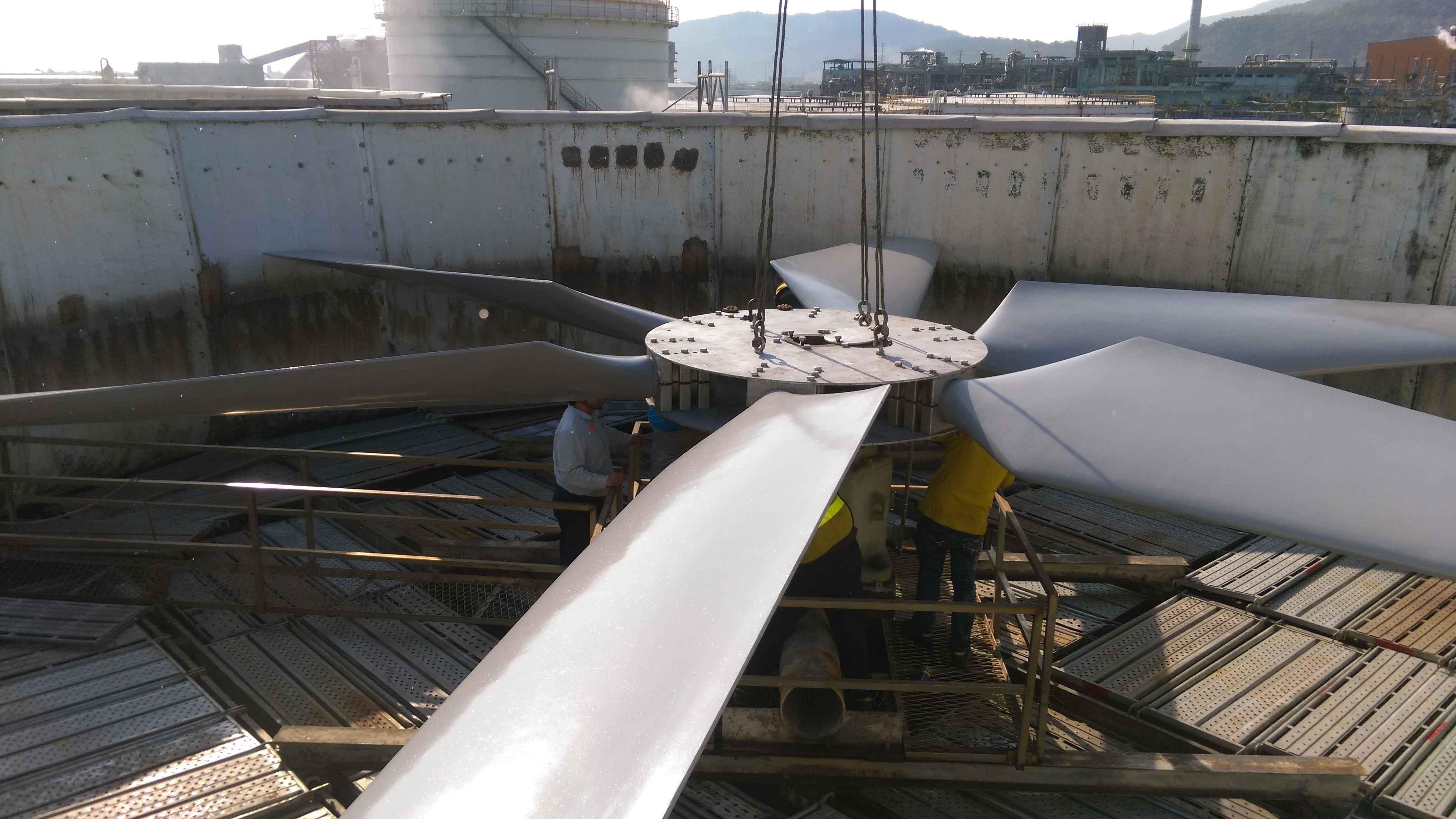
FRP (Fiber Reinforced Plastic) cooling tower fan blades are widely used in modern industrial cooling systems.
FRP combines fiberglass reinforcement with a resin matrix to create a lightweight and mechanically strong composite material.
Advantages of FRP Fan Blades
Excellent corrosion resistance.
Lightweight construction.
Good strength-to-weight ratio.
Resistance to moisture exposure.
Flexible aerodynamic design.
Reduced maintenance requirements.
Suitable for large-diameter fan applications.
FRP blades can be manufactured with different aerodynamic profiles to meet specific airflow and efficiency requirements.
They are particularly suitable for cooling towers operating in chemical plants, power stations, petrochemical facilities, and coastal industrial environments.
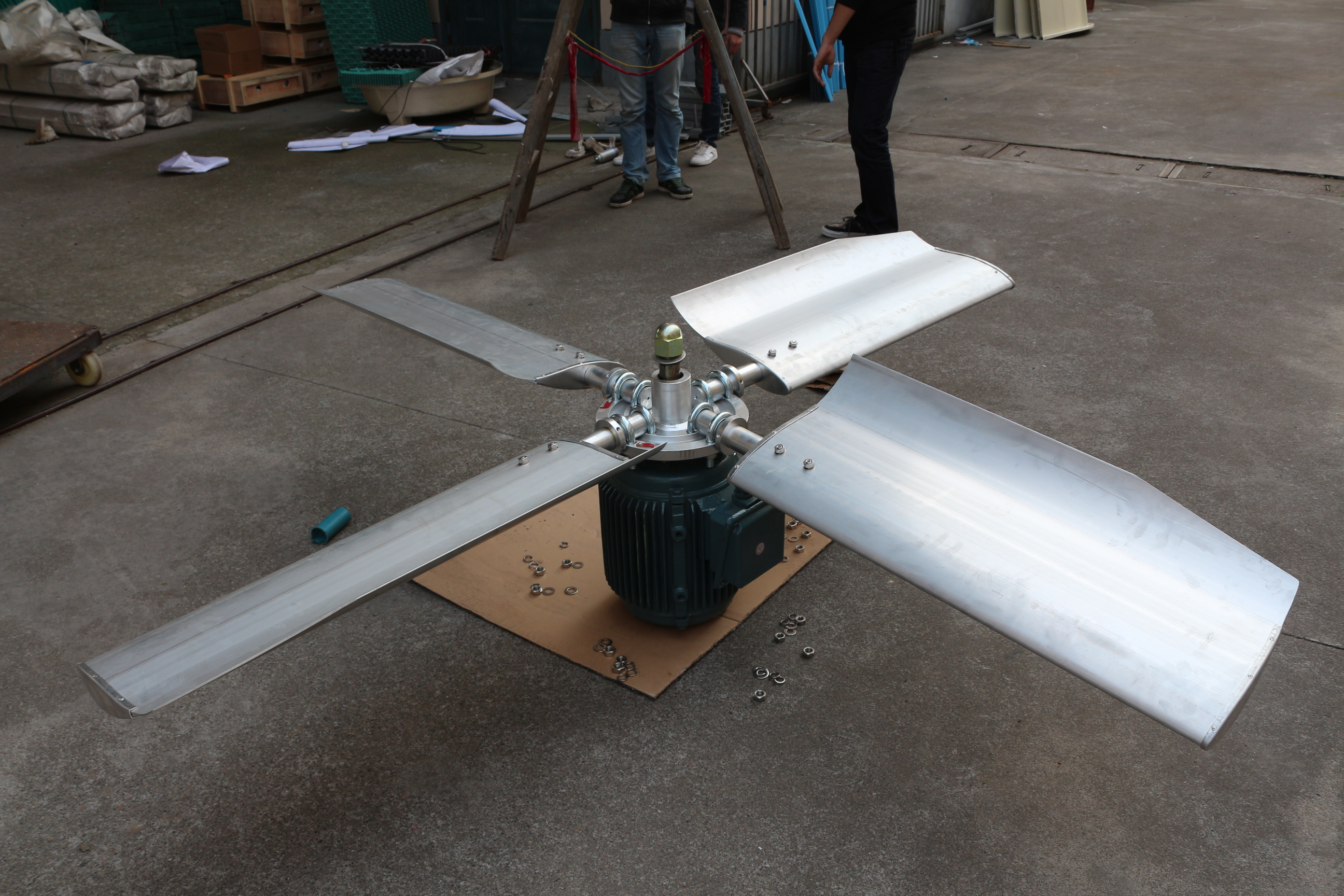
Aluminum Cooling Tower Fan Blades
Aluminum alloy blades are another common option for industrial cooling tower fans.
They provide good mechanical strength and can be manufactured with relatively thin aerodynamic profiles.
Main Benefits of Aluminum Blades
Lightweight compared with many traditional metal materials.
Good structural strength.
Easy fabrication and machining.
Suitable for adjustable blade pitch designs.
Convenient for certain replacement applications.
However, aluminum blades require appropriate consideration of corrosion protection, especially in cooling towers exposed to aggressive water treatment chemicals or salty environments.
FRP vs. Aluminum Cooling Tower Fan Blades
Comparison | FRP Fan Blades | Aluminum Fan Blades |
Weight | Lightweight | Lightweight |
Corrosion resistance | Excellent | Depends on alloy and protection |
Strength | High, depending on design | High |
Design flexibility | Excellent | Good |
Moisture resistance | Excellent | Good with suitable protection |
Maintenance | Generally low | Depends on environment |
Applications | Chemical, power, industrial cooling | General industrial cooling |
Which Material Is Better for Your Plant?
There is no universal answer.
FRP fan blades are often a strong choice when corrosion resistance, lightweight construction, and long-term durability are priorities.
Aluminum blades may be suitable when the existing fan system is designed around aluminum components and the operating environment is compatible with the selected alloy.
The final selection should consider fan diameter, rotational speed, blade loading, environmental conditions, and manufacturer engineering specifications.
Evaluate Fan Diameter and Blade Design
Fan diameter and blade geometry directly influence airflow performance and operating efficiency.
An improperly selected fan may produce insufficient airflow or consume more energy than necessary.
Select the Correct Fan Diameter
Fan diameter must match the cooling tower fan deck, fan cylinder, and installation dimensions.
A larger fan does not automatically provide better cooling performance.
Engineers must evaluate the relationship between fan diameter, rotational speed, blade geometry, and available installation space.
Important dimensions include:
Fan diameter.
Fan hub diameter.
Blade length.
Fan stack diameter.
Fan-to-stack clearance.
Blade tip clearance.
Why Is Fan Tip Clearance Important?
The clearance between the blade tips and fan stack affects airflow leakage and aerodynamic performance.
Excessive clearance may allow air to recirculate around the blade tips, reducing effective airflow.
Insufficient clearance may increase the risk of blade contact caused by vibration, thermal expansion, structural deformation, or installation errors.
The correct clearance should follow the fan manufacturer's engineering recommendations.
Consider Blade Pitch Angle
Blade pitch angle determines how much air the fan moves at a given rotational speed.
A higher blade pitch generally increases airflow demand and fan power consumption, but the actual relationship depends on blade geometry and system resistance.
Adjustable Blade Pitch Design
Some industrial cooling tower fans use adjustable blade pitch systems.
This allows engineers to modify the blade angle to achieve the required airflow under different operating conditions.
Benefits include:
Better airflow matching.
Improved fan operating efficiency.
Greater flexibility during commissioning.
Potential energy savings.
Easier performance adjustment.
However, all blades must be installed at consistent angles according to the manufacturer's specifications.
Choose an Aerodynamic Blade Profile
Aerodynamic blade design influences airflow distribution, noise, vibration, and energy consumption.
A well-designed blade should provide an appropriate balance between lift, drag, structural strength, and operating stability.
Important Blade Design Features
Airfoil cross-sectional shape.
Blade chord length.
Blade twist distribution.
Leading-edge geometry.
Trailing-edge design.
Structural reinforcement.
Root connection design.
Advanced FRP blade manufacturing allows different profiles and structural configurations to be developed for specific industrial cooling applications.
Check the Cooling Tower Fan Motor and Drive System
The motor and drive system are essential components of an industrial cooling tower fan assembly.
Even a high-performance fan blade cannot deliver the expected results if the motor, gearbox, or transmission system is incorrectly selected.
Determine the Required Motor Power
Motor power must be sufficient to drive the fan under its actual operating conditions.
The selection should consider:
Avoid Oversized or Undersized Motors
An undersized motor may experience overload, overheating, and unexpected shutdowns.
An oversized motor may increase initial investment and may not operate efficiently under certain load conditions.
The motor should be selected based on calculated fan shaft power, starting requirements, and an appropriate engineering margin.
Choose a Suitable Motor Protection Rating
Industrial cooling tower motors operate in humid environments and may be exposed to water splashes, dust, and temperature fluctuations.
When selecting a motor, evaluate:
TEFC (Totally Enclosed Fan Cooled) motors are commonly used in industrial environments where their enclosure and cooling arrangement are suitable for the application.
The required IP protection level should be determined according to the installation location and applicable electrical standards.
Evaluate the Gearbox or Belt Drive
Cooling tower fans can use different transmission systems.
Gearbox Drive
A gearbox transfers motor power to the fan shaft while providing the required speed reduction.
Important considerations include:
Belt Drive
Belt-driven fan systems are used in some smaller and medium-sized cooling towers.
Their advantages may include relatively simple construction and convenient maintenance.
However, belt tension, pulley alignment, belt wear, and transmission efficiency require regular inspection.
Consider the Cooling Tower Fan Stack and Airflow Structure
The fan stack is an important part of the overall cooling tower airflow system.
It guides the air discharged by the fan and helps reduce unnecessary airflow losses.
Select a Suitable Fan Stack Diameter
The fan stack must be compatible with the fan diameter and installation arrangement.
Incorrect stack dimensions may create airflow disturbances and reduce fan performance.
Engineers should consider:
Fan stack height.
Internal diameter.
Outlet geometry.
Fan blade tip clearance.
Structural support.
Installation position.
Choose FRP Fan Stack Materials
FRP cooling tower fan stacks are widely used because of their corrosion resistance and lightweight structure.
Compared with conventional heavy materials, FRP structures can reduce structural loading and offer good resistance to moisture and many industrial environments.
Benefits of FRP Cooling Tower Fan Stacks
Corrosion resistance.
Lightweight construction.
Good structural performance.
Flexible customization.
Convenient installation.
Long service potential with proper maintenance.
The fan stack should be engineered to withstand wind loads, vibration, operational forces, and local environmental conditions.
Match the Fan and Fan Stack as One System
The fan and fan stack should not be selected independently.
Their dimensions and aerodynamic characteristics must be evaluated together.
A properly matched assembly can help:
Improve discharge airflow.
Reduce unnecessary recirculation.
Minimize airflow losses.
Improve operating stability.
Support efficient cooling tower performance.
Evaluate Energy Efficiency and Operating Costs
Industrial cooling tower fans often operate for long periods, making electricity consumption an important part of total operating expenses.
Selecting an energy-efficient fan can reduce long-term operating costs.
Compare Fan Power Consumption
Fan power consumption depends on airflow, pressure requirements, fan efficiency, rotational speed, and transmission losses.
A properly selected fan should deliver the required airflow without unnecessary power consumption.
Purchasing managers should compare fan performance data rather than relying only on motor power ratings.
Consider Variable Frequency Drives
Variable Frequency Drives (VFDs) allow fan motor speed to be adjusted according to cooling demand.
This can be especially useful when cooling loads change throughout the day or across different seasons.
Benefits of VFD-Controlled Cooling Tower Fans
Adjustable airflow.
Reduced energy consumption under partial-load conditions.
More flexible temperature control.
Reduced mechanical starting stress.
Improved operating control.
For a fan operating under similar aerodynamic conditions, the fan affinity laws provide an approximate relationship:
\[ Q \propto N \]
\[ P \propto N^3 \]
Where:
Q = Airflow volume.
N = Rotational speed.
P = Fan power.
For example, reducing fan speed to 80% may reduce theoretical fan power to approximately 51.2% under comparable operating conditions.
Actual savings depend on system resistance, motor efficiency, control strategy, and operating conditions.
Consider Noise and Vibration
Industrial cooling tower fans can generate noise and vibration due to aerodynamic forces, rotating components, and mechanical transmission systems.
Excessive vibration may indicate:
Fan blade imbalance.
Loose mounting bolts.
Damaged bearings.
Shaft misalignment.
Uneven blade pitch.
Structural resonance.
Choosing a properly balanced fan assembly and maintaining accurate installation alignment can help reduce these problems.
Assess Environmental Conditions and Operating Durability
Cooling towers are frequently installed in challenging industrial environments.
The surrounding conditions can have a significant impact on fan component performance and service life.
Corrosion Resistance
Cooling tower fan blades, hubs, fasteners, and support structures may be exposed to moisture, chemical vapors, and water treatment substances.
For chemical processing plants and coastal facilities, corrosion resistance should be a major selection criterion.
Recommended Material Considerations
FRP blades for corrosion-resistant lightweight construction.
Suitable coated or corrosion-resistant metal hubs.
Stainless steel fasteners where appropriate.
Protective coatings for exposed steel components.
Compatible materials for chemical environments.
Material compatibility should be verified against the actual chemicals and operating conditions.
Temperature Resistance
Some industrial cooling towers operate under high-temperature conditions.
In these applications, fan blade resin systems, structural materials, seals, and other components must be suitable for the expected temperature range.
FRP fan blades should be manufactured using resin systems selected for the intended operating temperature.
Wind and Weather Resistance
Outdoor cooling tower installations must withstand environmental loads.
These may include:
Strong winds.
Heavy rainfall.
Solar radiation.
Temperature changes.
Humidity.
Atmospheric corrosion.
The fan stack, supporting structure, fan hub, and blade connections should all meet the project's structural requirements.
Check Installation and Maintenance Requirements
Installation quality directly influences the operating performance and service life of industrial cooling tower fans.
Even a high-quality fan can experience premature problems if installation procedures are not properly followed.
Verify Fan Installation Accuracy
Before operating a newly installed fan, technicians should inspect the entire assembly.
Important installation checks include:
Why Is Blade Pitch Consistency Important?
Unequal blade pitch angles can produce uneven airflow and different aerodynamic loads across the fan assembly.
This may increase vibration and reduce overall performance.
All blades should be adjusted according to the manufacturer's technical specifications.
Perform Dynamic Balancing
Dynamic balancing is important for reducing vibration in rotating industrial cooling tower fans.
An unbalanced fan assembly may cause excessive loads on bearings, shafts, gearboxes, and support structures.
Common Causes of Fan Imbalance
The balancing procedure should follow the applicable fan manufacturer's requirements and relevant balancing standards.
Establish a Regular Maintenance Schedule
Regular inspection helps identify potential problems before they develop into major equipment failures.
Maintenance Item | Inspection Focus |
Fan blades | Cracks, corrosion, deformation |
Fan hub | Loose bolts, damage, wear |
Motor | Temperature, noise, insulation |
Gearbox | Lubrication, leakage, vibration |
Bearings | Temperature, noise, lubrication |
Fan stack | Cracks, deformation, fasteners |
Electrical system | Connections, current, protection |
Overall assembly | Vibration, alignment, airflow |
Maintenance frequency should follow manufacturer recommendations and actual operating conditions.
Choose a Reliable Industrial Cooling Tower Fan Manufacturer
Selecting a qualified manufacturer is just as important as choosing the correct fan specifications.
A reliable supplier should provide not only fan products but also engineering support, manufacturing quality control, technical documentation, and after-sales assistance.
Evaluate Manufacturing Experience
Look for manufacturers with experience producing industrial cooling tower fan assemblies and replacement components.
Relevant manufacturing capabilities may include:
FRP fan blade production.
Aluminum fan blade manufacturing.
Fan hub assembly production.
FRP fan stack fabrication.
Fan balancing and inspection.
Customized fan design.
Replacement component supply.
Why Does Manufacturing Experience Matter?
Experienced manufacturers are generally better positioned to understand different cooling tower structures, installation requirements, and industrial operating conditions.
They can also help customers identify potential compatibility issues before production begins.
Review Product Quality Control
Quality control should cover raw materials, manufacturing processes, dimensional accuracy, and final product performance.
Important quality inspection procedures include:
Raw material inspection.
Blade dimensional measurement.
Surface quality inspection.
Blade weight comparison.
Hub connection inspection.
Fan assembly balancing.
Final appearance inspection.
Packaging and shipment inspection.
Customers should request relevant technical specifications and inspection records when necessary.
Confirm Customization Capabilities
Industrial cooling tower fans are available in different sizes and configurations.
A reliable manufacturer should be able to evaluate customized requirements, including:
Fan diameter.
Blade quantity.
Blade material.
Blade pitch angle.
Hub dimensions.
Fan rotational speed.
Motor power.
Fan stack dimensions.
Customized production is particularly useful for replacing outdated fan assemblies or upgrading existing cooling towers.
Evaluate After-Sales Technical Support
Technical support is important throughout the purchasing and installation process.
A qualified supplier should be able to assist with product selection, installation guidance, operating specifications, and replacement part recommendations.
International buyers should also consider communication efficiency, export packaging, delivery arrangements, and technical documentation.
Common Mistakes to Avoid When Selecting Industrial Cooling Tower Fans
Many cooling tower performance problems are related to incorrect fan selection or poor system matching.
Understanding common purchasing mistakes can help plant operators avoid unnecessary costs.
Selecting a Fan Based Only on Diameter
A larger fan does not always provide better cooling performance.
Airflow also depends on blade design, rotational speed, pitch angle, and system resistance.
The fan should be selected according to its actual operating performance.
Ignoring Fan Blade Material
Choosing an unsuitable blade material may result in premature corrosion, mechanical damage, or excessive maintenance.
The material should match the chemical environment, temperature conditions, and mechanical loading.
Overlooking Motor and Gearbox Compatibility
The motor, gearbox, hub, and fan blades must work together as a complete mechanical system.
Incorrect power or speed selection can reduce efficiency and increase equipment failure risks.
Ignoring Airflow Resistance
Cooling tower fill media, drift eliminators, louvers, and other internal components create resistance to airflow.
A fan selected without considering these factors may fail to achieve the expected airflow volume.
Choosing Suppliers Based Only on Price
A low purchase price does not necessarily mean lower total operating costs.
Poor-quality fan blades or mechanical components may require frequent replacement and increase maintenance expenses.
Purchasers should evaluate product quality, technical support, expected service life, and total lifecycle cost.
Industrial Applications of Cooling Tower Fans
Industrial cooling tower fans are used in a wide range of industries where heat rejection is essential for stable production.
Power Generation Plants
Power plants use cooling towers to remove heat from circulating cooling water.
Large industrial cooling tower fans help maintain the airflow needed for continuous heat rejection.
High-capacity fans with reliable mechanical structures are especially important in these facilities.
Chemical and Petrochemical Industries
Chemical and petrochemical facilities frequently operate under demanding environmental conditions.
Cooling tower fans used in these industries should provide reliable airflow and resistance to moisture and corrosive atmospheres.
FRP fan blades are often considered for these applications because of their corrosion-resistant properties.
Steel and Metallurgical Plants
Steel production requires substantial cooling capacity for equipment, process water, and auxiliary systems.
Industrial cooling tower fans help maintain stable cooling performance under high operating loads.
Heavy-duty fan assemblies should be selected according to the actual airflow, temperature, and environmental requirements.
HVAC and Commercial Industrial Facilities
Large HVAC systems use cooling towers to reject heat from chillers and other cooling equipment.
Energy-efficient fans and variable-speed control can help reduce electricity consumption, particularly under changing cooling loads.
Manufacturing and Processing Facilities
Manufacturing plants use cooling towers in plastic processing, machinery cooling, food production, and other industrial applications.
Selecting the correct fan helps maintain stable water temperatures and supports continuous production.
Why Choose Power Tower for Industrial Cooling Tower Fan Solutions?
Power Tower Cooling Technology (Shaoxing) Co., Ltd. focuses on cooling tower products and related components for industrial cooling applications.
When selecting industrial cooling tower fans, customers need products that match their cooling tower structure, operating conditions, and performance requirements.
A suitable fan solution should consider the complete assembly rather than individual components alone.
Industrial FRP Cooling Tower Fan Blades
FRP cooling tower fan blades offer a combination of lightweight construction, mechanical strength, and corrosion resistance.
They can be considered for different industrial cooling tower applications where material durability and aerodynamic performance are important.
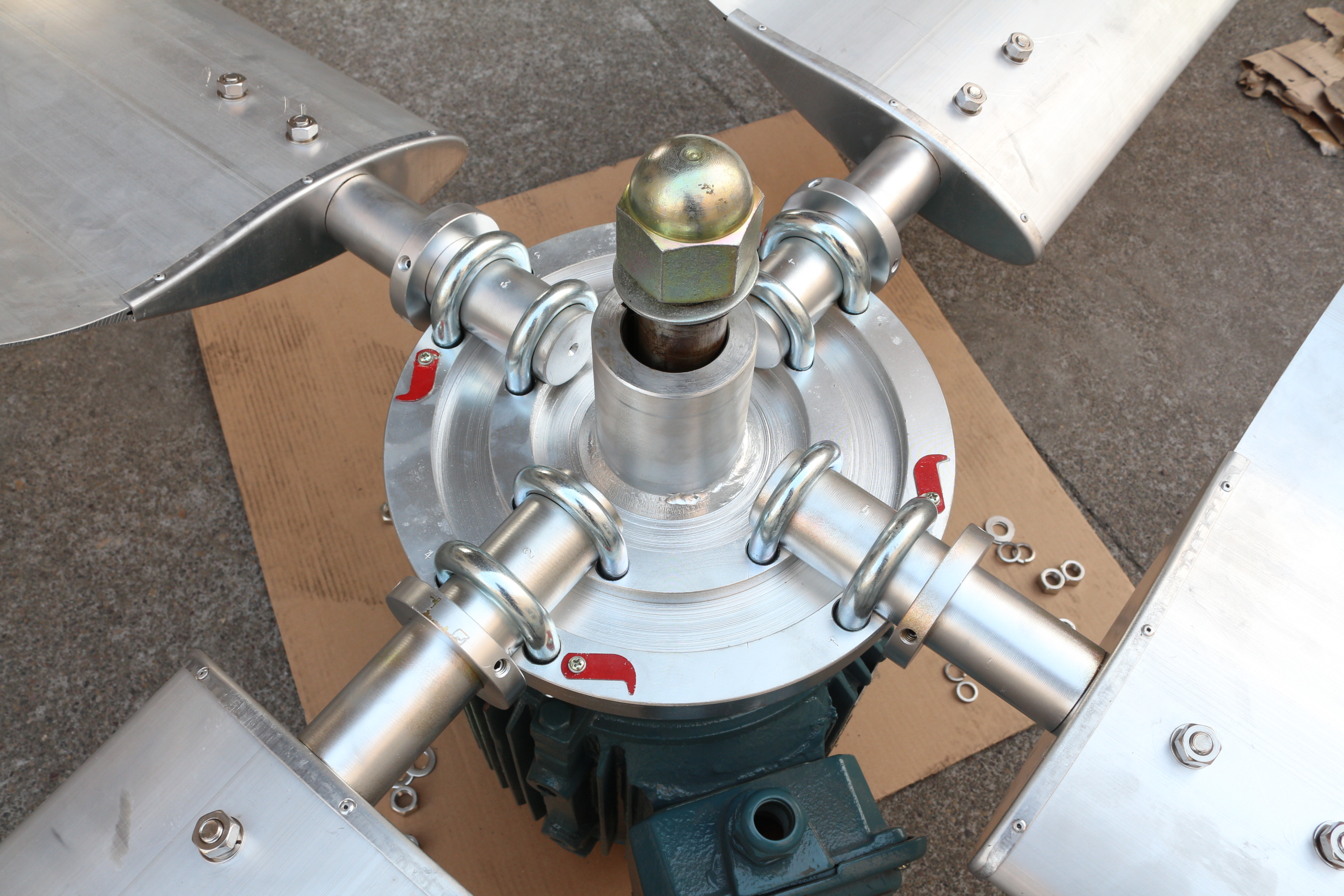
Customized Fan Hub Assemblies
The fan hub connects the blades to the rotating drive system.
Its dimensions, material, blade mounting structure, and mechanical strength must match the fan design.
A properly selected hub assembly helps support stable fan operation and reliable blade installation.
FRP Cooling Tower Fan Stacks
FRP fan stacks guide discharged air and form an important part of the cooling tower airflow structure.
Customized dimensions and structural configurations can help meet different installation requirements.
Integrated Cooling Tower Component Solutions
In addition to fan-related components, customers may need compatible motors, gearboxes, reducers, drift eliminators, and cooling tower fill media.
Coordinating these components during the selection process can help improve system compatibility and simplify maintenance planning.
For international buyers, working with an experienced cooling tower component supplier can make replacement projects and new cooling tower installations more efficient.
Industrial Cooling Tower Fan Selection Checklist
Before placing an order, purchasing managers and engineering teams should confirm the following technical details.
Selection Factor | Information to Confirm |
Cooling capacity | Required heat rejection |
Airflow | Required air volume |
Fan type | Axial flow, induced draft, or forced draft |
Fan diameter | Actual installation dimensions |
Blade material | FRP or aluminum |
Blade quantity | Number of blades |
Blade pitch | Required installation angle |
Fan speed | Operating RPM |
Motor power | Required kW or HP |
Drive system | Gearbox or belt drive |
Fan hub | Dimensions and mounting structure |
Fan stack | Diameter, height, and material |
Environment | Temperature, humidity, and corrosion |
Maintenance | Inspection and replacement requirements |
Information to Provide When Requesting a Quotation
To help manufacturers recommend the correct industrial cooling tower fan, customers should provide as much technical information as possible.
Recommended information includes:
Cooling tower manufacturer and model.
Existing fan diameter.
Fan blade quantity.
Existing blade material.
Motor power and rotational speed.
Gearbox model and gear ratio.
Fan hub dimensions.
Fan stack dimensions.
Required airflow, if available.
Operating temperature and environmental conditions.
Photos of the existing fan assembly.
Providing these details helps reduce specification errors and improves the accuracy of the quotation.
FAQ About Industrial Cooling Tower Fans
What Is the Best Material for Industrial Cooling Tower Fans?
FRP and aluminum are two common materials for cooling tower fan blades.
FRP is often preferred for its corrosion resistance, lightweight construction, and design flexibility. Aluminum can also provide good mechanical strength and is suitable for applications where its alloy and protective treatment match the operating environment.
The best choice depends on the specific application.
How Do Industrial Cooling Tower Fans Improve Cooling Efficiency?
Industrial cooling tower fans move air through the cooling tower, supporting heat and mass transfer between circulating water and the surrounding air.
Proper airflow helps improve heat rejection and maintain the required cold-water temperature.
Fan aerodynamic design, blade pitch, rotational speed, and airflow distribution all influence performance.
How Long Do Industrial Cooling Tower Fans Last?
The service life of an industrial cooling tower fan depends on material quality, manufacturing standards, operating conditions, installation accuracy, and maintenance practices.
FRP blades and properly designed metal components can provide long service when correctly selected and maintained.
Regular inspections help identify wear, cracks, imbalance, and other potential problems.
Can Existing Cooling Tower Fans Be Replaced with FRP Fan Blades?
Yes, existing fan blades can often be replaced with FRP blades.
However, the replacement blades must be compatible with the existing fan hub, blade mounting structure, fan diameter, rotational speed, and mechanical loading requirements.
A technical compatibility assessment should be completed before replacement.
What Causes Excessive Vibration in Industrial Cooling Tower Fans?
Common causes include:
Fan blade imbalance.
Unequal blade pitch.
Loose mounting bolts.
Damaged fan blades.
Worn bearings.
Shaft misalignment.
Gearbox problems.
Structural resonance.
A systematic inspection should identify the source before corrective work is performed.
Are VFDs Suitable for Industrial Cooling Tower Fans?
Yes. VFDs can be used to adjust fan speed according to actual cooling demand.
They are particularly useful in systems with changing heat loads and varying ambient conditions.
However, the motor, gearbox, fan assembly, and control system must all be suitable for variable-speed operation.
15.7 What Information Is Needed to Purchase Replacement Cooling Tower Fans?
The most useful information includes fan diameter, blade quantity, blade material, motor power, rotational speed, hub dimensions, gearbox specifications, and cooling tower model.
Photos and existing product drawings can also help manufacturers confirm compatibility.
Conclusion
Selecting the best industrial cooling tower fans for your plant requires a comprehensive evaluation of airflow requirements, cooling capacity, fan type, blade material, aerodynamic design, motor power, drive system, and operating environment.
FRP cooling tower fan blades, properly designed fan hubs, and compatible FRP fan stacks can provide practical solutions for many industrial cooling applications. However, the most important consideration is ensuring that all components work together as a complete airflow system.
Plant operators should also pay attention to energy efficiency, installation accuracy, dynamic balancing, and regular maintenance to maintain reliable long-term performance.
Working with an experienced industrial cooling tower fan manufacturer can help reduce selection errors, improve equipment compatibility, and support efficient cooling tower operation.
For industrial cooling tower fan replacement, customized FRP fan blades, fan hub assemblies, and fan stack solutions, Power Tower Cooling Technology (Shaoxing) Co., Ltd. can be considered as a supplier for your project requirements.