Heavy-Duty Industrial Cooling Tower Fans for Reliable Performance
Heavy-duty industrial cooling tower fans play an essential role in maintaining stable cooling performance in large-scale industrial facilities. From power generation plants and petrochemical factories to steel manufacturing facilities and HVAC systems, industrial cooling towers rely on powerful fan assemblies to move large volumes of air through the tower and support efficient heat rejection.
In demanding industrial environments, cooling tower fans must operate continuously while handling high mechanical loads, humidity, temperature fluctuations, and potentially corrosive conditions. Therefore, selecting a heavy-duty cooling tower fan requires careful consideration of blade materials, aerodynamic design, fan diameter, motor power, gearbox configuration, structural strength, and maintenance requirements.
A reliable industrial cooling tower fan does more than generate airflow. It helps improve heat transfer, maintain stable water temperatures, reduce unnecessary energy consumption, and support uninterrupted industrial production.
This article explores the structure, materials, working principles, performance characteristics, applications, and selection considerations of heavy-duty industrial cooling tower fans.
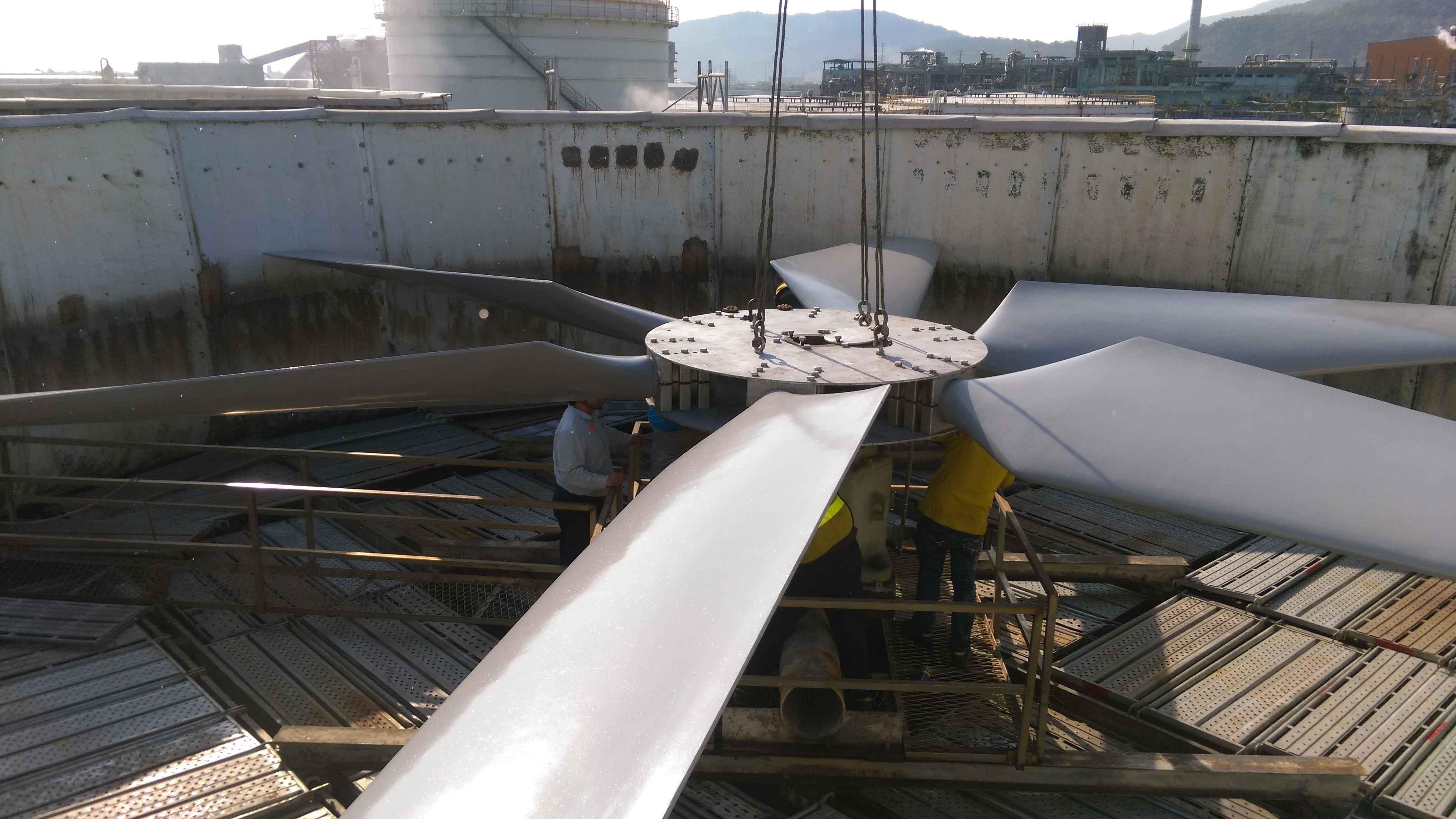
What Are Heavy-Duty Industrial Cooling Tower Fans?
Heavy-duty industrial cooling tower fans are mechanical ventilation devices designed to move large volumes of air through industrial cooling towers. They are typically engineered for demanding operating conditions, including continuous operation, high airflow requirements, and large cooling loads.
Unlike ordinary ventilation fans, industrial cooling tower fans must operate as part of a complete heat rejection system. Their performance directly affects the amount of air passing through the fill media and the overall cooling efficiency of the tower.
Main Functions of Industrial Cooling Tower Fans
The primary function of a cooling tower fan is to create sufficient airflow to support heat and mass transfer between circulating water and ambient air.
Key functions include:
Moving air through cooling tower fill media.
Supporting evaporation and heat transfer.
Maintaining the required cooling water temperature.
Removing warm, humid air from the cooling tower.
Supporting stable cooling performance under changing loads.
Improving overall cooling tower operating efficiency.
How Do Cooling Tower Fans Support Heat Rejection?
Hot circulating water enters the cooling tower through a water distribution system and flows over the fill media.
At the same time, the fan moves air through the tower. A portion of the circulating water evaporates, removing heat from the remaining water.
The cooled water is collected in the basin and returned to the industrial process.
The fan must provide sufficient airflow to support this process without consuming excessive power.
Why Are Heavy-Duty Fans Different from Standard Fans?
Heavy-duty cooling tower fans are designed to meet more demanding mechanical and operational requirements.
Feature | Standard Ventilation Fan | Heavy-Duty Cooling Tower Fan |
Application | General ventilation | Industrial heat rejection |
Operating conditions | General environments | Humid and potentially corrosive environments |
Airflow requirements | Application dependent | Often high-volume airflow |
Blade structure | Various materials | Engineered industrial blades |
Mechanical loading | Application dependent | Designed for continuous rotating loads |
Maintenance | General inspection | Regular industrial maintenance |
System integration | Ventilation ducts | Fan stack, fill, motor, gearbox and tower |
The appropriate design depends on the actual cooling tower operating conditions rather than simply choosing the largest available fan.
Main Components of a Heavy-Duty Industrial Cooling Tower Fan
A heavy-duty cooling tower fan is generally composed of several interconnected mechanical and aerodynamic components.
Each component contributes to airflow generation, structural stability, and operating reliability.
Cooling Tower Fan Blades
Fan blades are responsible for generating airflow by converting rotational energy into aerodynamic movement.
Blade design directly influences airflow volume, power consumption, noise, and vibration.
Important Blade Design Characteristics
A properly designed blade should provide sufficient airflow while maintaining acceptable mechanical stress and operating stability.
Fan Hub Assembly
The fan hub connects individual blades to the rotating shaft or drive assembly.
It must withstand centrifugal forces, aerodynamic loads, and continuous operating stress.
Key Hub Selection Factors
A reliable fan hub helps maintain secure blade positioning and stable fan operation.
Cooling Tower Fan Motor
The motor provides the mechanical energy needed to rotate the fan.
Industrial cooling tower motors should be selected according to the fan's power requirements and environmental conditions.
Important parameters include:
Gearbox and Drive System
Many large industrial cooling tower fans use gearbox-driven systems to achieve the required fan rotational speed.
The gearbox transfers motor power to the fan while reducing rotational speed according to the selected gear ratio.
Gearbox Performance Requirements
A suitable cooling tower gearbox should provide:
Adequate rated power.
Reliable gear transmission.
Appropriate lubrication.
Stable bearing performance.
Effective sealing.
Suitable thermal performance.
Compatibility with the fan operating speed.
Some cooling tower systems use belt drives instead. The choice depends on fan size, drive arrangement, power requirements, and maintenance considerations.
FRP Cooling Tower Fan Stack
The fan stack is the cylindrical or specially shaped structure surrounding the fan discharge area.
It helps guide airflow and reduce unnecessary air losses.
Benefits of FRP Fan Stacks
Lightweight construction.
Good corrosion resistance.
Structural flexibility.
Convenient installation.
Customizable dimensions.
Good suitability for humid environments.
Fan stack dimensions must be coordinated with the fan diameter and aerodynamic design.
Choose the Right Material for Heavy-Duty Cooling Tower Fan Blades
Material selection is one of the most important considerations when purchasing heavy-duty industrial cooling tower fans.
Industrial cooling towers operate in environments where moisture, chemicals, temperature changes, and continuous mechanical loading can affect component durability.
FRP Cooling Tower Fan Blades
FRP stands for Fiber Reinforced Plastic. It is a composite material consisting of reinforcing fibers and a resin matrix.
FRP fan blades are widely used in industrial cooling tower applications because they combine relatively low weight with good mechanical strength and corrosion resistance.
Main Advantages of FRP Fan Blades
1. Excellent corrosion resistance
FRP materials generally resist moisture and many industrial environmental conditions better than unprotected conventional metals. Actual chemical compatibility depends on the resin system.
2. Lightweight construction
A lightweight blade design can reduce rotating mass and mechanical loading when properly engineered.
3. Flexible aerodynamic design
FRP manufacturing allows different blade profiles, lengths, and structural configurations.
4. Good fatigue performance
Properly designed composite blades can provide reliable performance under repeated operating loads.
5. Lower maintenance requirements
FRP blades do not require the same corrosion protection approach as conventional unprotected metal blades, although regular inspection remains necessary.
Aluminum Cooling Tower Fan Blades
Aluminum alloy blades are another popular option for industrial cooling tower systems.
They offer good strength-to-weight characteristics and can be manufactured with precise aerodynamic profiles.
Advantages of Aluminum Blades
Good mechanical strength.
Relatively low weight.
Convenient machining.
Suitable for adjustable pitch designs.
Established manufacturing processes.
However, aluminum blade performance depends on alloy selection, surface treatment, and the operating environment.
3.3 FRP vs. Aluminum: Which Is Better for Heavy-Duty Applications?
Comparison | FRP Blades | Aluminum Blades |
Corrosion resistance | Generally excellent | Depends on alloy and protection |
Weight | Lightweight | Lightweight |
Mechanical strength | Depends on composite design | Good |
Aerodynamic customization | Excellent | Good |
Chemical environment | Suitable with compatible resin | Requires careful compatibility assessment |
Maintenance | Generally low | Depends on corrosion protection |
Typical applications | Industrial and corrosive environments | General industrial applications |
How to Make the Right Material Choice
For chemical plants, coastal facilities, and cooling towers exposed to aggressive environments, FRP fan blades may provide significant advantages.
For existing cooling towers designed around aluminum fan assemblies, aluminum replacement blades may be more convenient when the material and mechanical specifications match.
The final decision should consider temperature, blade dimensions, rotational speed, mechanical loading, and the manufacturer's engineering recommendations.
4. Aerodynamic Design for Reliable Fan Performance
Aerodynamic design determines how efficiently a cooling tower fan converts mechanical power into airflow.
A well-designed fan blade should deliver the required air volume while maintaining stable operation and reasonable energy consumption.
4.1 Airfoil Blade Profile
The cross-sectional shape of a cooling tower fan blade affects its aerodynamic characteristics.
Important parameters include:
Leading-edge geometry.
Trailing-edge shape.
Chord length.
Camber.
Blade thickness.
Twist distribution.
Why Is Airfoil Design Important?
An optimized airfoil can improve airflow generation and reduce unnecessary aerodynamic losses.
For large industrial cooling towers, blade profiles should be designed according to the fan's intended operating point and system resistance.
4.2 Blade Pitch Angle
Blade pitch angle determines the orientation of the blade relative to the plane of rotation.
It has a significant influence on airflow and fan power consumption.
Benefits of Adjustable Blade Pitch
Flexible airflow adjustment.
Better matching with cooling requirements.
Easier performance optimization.
Potential energy savings.
Greater adaptability to different operating conditions.
However, increasing the pitch angle does not always improve overall efficiency. Excessive pitch may overload the motor or cause unstable operation.
4.3 Fan Diameter and Blade Quantity
Fan diameter affects the amount of air that can be moved by the fan.
Blade quantity also influences aerodynamic loading and airflow characteristics.
The correct combination depends on:
Required airflow.
Fan rotational speed.
Fan stack dimensions.
Blade profile.
Motor power.
System resistance.
Avoid Selecting a Fan Based Only on Size
A larger fan is not automatically more efficient.
An appropriately engineered fan must match the cooling tower structure and actual airflow requirements.
5. How Do Heavy-Duty Industrial Cooling Tower Fans Improve Cooling Efficiency?
Cooling efficiency depends on the interaction between airflow, water distribution, fill media, ambient conditions, and tower structure.
Heavy-duty fans help improve cooling performance by delivering the airflow required for effective heat transfer.
5.1 Increase Effective Airflow
Sufficient airflow helps maintain contact between air and circulating water across the fill media.
The fan must overcome internal resistance while maintaining the required airflow volume.
Inadequate airflow can result in higher cold-water temperatures and reduced heat rejection.
5.2 Improve Airflow Distribution
Uneven airflow may cause some areas of the fill media to receive insufficient air.
A properly designed fan and fan stack help establish more uniform airflow through the tower.
This can improve the utilization of the fill media and reduce localized cooling inefficiencies.
5.3 Reduce Unnecessary Energy Consumption
Fan efficiency is important because industrial cooling tower fans may operate for many hours each day.
Appropriate blade design, pitch adjustment, fan speed control, and drive-system selection can help reduce electricity consumption.
5.4 Support Stable Cooling Under Changing Loads
Industrial cooling demand is not always constant.
Production schedules, ambient temperatures, and process conditions can change throughout the day.
VFD-controlled fan systems can adjust airflow according to actual cooling requirements, helping maintain more stable operation.
6. Motor Power and Drive System Selection
The motor and drive system must be compatible with the aerodynamic and mechanical characteristics of the fan.
Incorrect selection may result in motor overload, excessive vibration, or reduced operating efficiency.
6.1 Calculate the Required Fan Motor Power
Fan motor power should be selected according to the actual fan operating point.
The approximate relationship between air power and shaft power is:
\[ P_{shaft}=\frac{Q \times \Delta p}{\eta_f} \]
Where:
\(P_{shaft}\) = Required fan shaft power.
\(Q\) = Airflow volume.
\(\Delta p\) = Fan total pressure rise.
\(\eta_f\) = Fan efficiency.
The selected motor must also account for transmission losses and the manufacturer's recommended design margin.
Important Motor Selection Parameters
6.2 Gearbox-Driven Cooling Tower Fans
Gearbox-driven fans are widely used in large industrial cooling towers.
They provide the speed reduction necessary for the fan to operate within its intended rotational range.
Gearbox Maintenance Requirements
Regular inspection should include:
6.3 VFD Control for Industrial Cooling Tower Fans
Variable Frequency Drives allow operators to control motor speed according to cooling demand.
The fan affinity laws provide useful approximations for similar operating conditions:
\[ Q_2/Q_1=N_2/N_1 \]
\[ P_2/P_1=(N_2/N_1)^3 \]
For example, when fan speed decreases to 80% of its original value, theoretical fan power may decrease to approximately 51.2%.
Actual performance depends on the fan curve, system resistance, motor efficiency, and control strategy.
7. Heavy-Duty Cooling Tower Fans for Different Industrial Applications
Different industries have different cooling requirements. A suitable heavy-duty cooling tower fan should be selected according to the specific process conditions and environmental challenges.
7.1 Power Plants
Power generation facilities require reliable cooling systems to remove heat from circulating water.
Heavy-duty industrial cooling tower fans help maintain the airflow required for large-scale heat rejection.
Key Selection Requirements
High airflow capacity.
Continuous operating capability.
Reliable mechanical transmission.
Structural durability.
Efficient fan performance.
7.2 Chemical and Petrochemical Plants
Chemical facilities may expose cooling tower components to corrosive substances and aggressive atmospheric conditions.
FRP fan blades and appropriately protected mechanical components can be considered for these applications.
Important Considerations
7.3 Steel and Metallurgical Industries
Steel production involves high thermal loads and demanding operating environments.
Cooling towers are used to cool process water, production equipment, and auxiliary systems.
Heavy-duty fan assemblies should be selected to match the required airflow and continuous operating conditions.
7.4 Cement and Building Materials Plants
Cement factories use cooling systems for production equipment, compressors, and other industrial processes.
Cooling tower fans must provide stable airflow while handling dust and environmental contamination around the installation.
Regular inspection and cleaning help maintain reliable performance.
7.5 HVAC and Large Commercial Facilities
Large industrial HVAC systems use cooling towers to reject heat from chillers.
Energy-efficient fans with variable-speed control can help reduce electricity consumption under partial-load conditions.
8. How to Select the Right Heavy-Duty Industrial Cooling Tower Fan
Selecting the right fan requires evaluating the entire cooling tower system rather than purchasing components individually.
8.1 Confirm the Existing Cooling Tower Specifications
Before selecting a replacement fan, collect the original cooling tower technical information.
Important details include:
Why Is Existing Equipment Information Important?
Replacement components must match the existing installation dimensions and mechanical requirements.
Incorrect dimensions can create installation difficulties and affect airflow performance.
8.2 Determine the Required Airflow and Operating Point
Airflow and pressure requirements should be confirmed using the cooling tower design data.
The fan operating point must be compatible with the resistance of the fill media, drift eliminators, louvers, and discharge structure.
8.3 Evaluate Material and Environmental Conditions
Consider whether the fan will operate in:
High-humidity environments.
Chemical processing facilities.
Coastal areas.
High-temperature applications.
Dusty industrial locations.
Select materials and protective treatments that are appropriate for the actual conditions.
8.4 Check Installation Dimensions
Confirm the dimensions of the fan, hub, motor base, gearbox, and fan stack.
Important measurements include:
Fan diameter.
Hub mounting dimensions.
Shaft diameter.
Blade mounting dimensions.
Fan stack inside diameter.
Available installation clearance.
8.5 Compare Total Lifecycle Costs
The purchase price is only one part of the total cost of an industrial cooling tower fan.
Purchasers should also evaluate:
A higher-quality fan assembly may offer better long-term value when it reduces maintenance requirements and operating risks.
9. Why Is Fan Balancing Important for Heavy-Duty Applications?
Fan balancing is essential for maintaining stable rotating equipment performance.
Large industrial cooling tower fans operate at relatively high rotational speeds and may generate significant centrifugal forces.
Even small mass differences can produce noticeable vibration under certain operating conditions.
9.1 Common Causes of Fan Imbalance
Fan imbalance may result from:
Unequal blade weights.
Incorrect blade installation.
Uneven material distribution.
Blade damage.
Dirt accumulation.
Hub manufacturing errors.
Loose mounting connections.
9.2 Benefits of Proper Fan Balancing
Correct balancing can help:
Reduce vibration.
Protect bearings.
Reduce mechanical stress.
Improve operating stability.
Extend component service life.
Reduce unexpected maintenance.
9.3 Dynamic Balancing and Inspection
For large fan assemblies, appropriate balancing procedures should be performed according to the manufacturer's specifications and applicable standards.
The fan should also be inspected after installation to verify that mounting, alignment, and operating conditions are acceptable.
10. Installation and Maintenance of Heavy-Duty Industrial Cooling Tower Fans
Proper installation and preventive maintenance are important for achieving reliable long-term performance.
10.1 Fan Installation Procedures
Before installation, confirm that the fan deck, support structure, hub, and drive system are suitable for the selected assembly.
Important Installation Checks
Verify the fan and hub dimensions.
Inspect all blades for transportation damage.
Confirm the blade mounting positions.
Set the blade pitch according to specifications.
Tighten mounting bolts to the required torque.
Check fan-to-stack clearance.
Verify motor and gearbox alignment.
Inspect electrical connections.
Perform the required pre-start inspection.
10.2 Routine Fan Blade Inspection
Fan blades should be inspected periodically for cracks, deformation, erosion, and surface damage.
FRP blades should receive particular attention around the root connection and mounting areas.
Signs That Fan Blades Need Replacement
Visible cracks.
Structural delamination.
Severe deformation.
Significant material erosion.
Damaged mounting connections.
Abnormal vibration associated with blade damage.
Damaged blades should not be operated without an appropriate engineering assessment.
10.3 Motor and Gearbox Maintenance
The motor and gearbox should be maintained according to their individual manufacturer instructions.
Regular inspection helps identify lubrication problems, overheating, bearing wear, and abnormal operating noise.
10.4 Establish a Preventive Maintenance Plan
Component | Inspection Items | Maintenance Objective |
Fan blades | Cracks, deformation, surface damage | Maintain structural integrity |
Fan hub | Bolts, corrosion, connections | Ensure secure mounting |
Motor | Temperature, noise, electrical condition | Prevent motor failure |
Gearbox | Oil, leakage, vibration | Maintain transmission reliability |
Bearings | Temperature, lubrication, noise | Reduce wear |
Fan stack | Cracks, fasteners, deformation | Maintain structural stability |
Drive system | Alignment and connections | Ensure stable rotation |
The inspection frequency should be adjusted according to operating hours, environmental conditions, and manufacturer recommendations.
11. Common Problems with Heavy-Duty Industrial Cooling Tower Fans
Even well-designed cooling tower fans may experience operational problems if components are incorrectly selected, installed, or maintained.
11.1 Insufficient Airflow
Insufficient airflow may reduce cooling tower heat rejection capacity.
Possible causes include:
Recommended Solutions
Inspect the fan assembly, verify the operating speed, measure blade pitch, and check the cooling tower airflow path.
11.2 Excessive Fan Vibration
Excessive vibration may damage bearings, shafts, gearboxes, and supporting structures.
Possible causes include blade imbalance, loose bolts, shaft misalignment, or mechanical wear.
A vibration analysis should be performed to identify the actual source.
11.3 High Energy Consumption
High fan power consumption may result from excessive rotational speed, incorrect blade pitch, unsuitable fan selection, or mechanical transmission losses.
Reviewing the fan operating point and using appropriate speed control may help improve energy efficiency.
11.4 Fan Blade Corrosion or Damage
Corrosion, erosion, and structural damage may reduce fan reliability.
Selecting suitable blade materials and conducting regular inspections can help prevent premature failure.
11.5 Abnormal Noise
Abnormal noise may indicate aerodynamic turbulence, loose components, bearing problems, or mechanical misalignment.
Operators should inspect the fan system and identify the cause before continuing normal operation.
12. How to Choose a Reliable Heavy-Duty Industrial Cooling Tower Fan Manufacturer
Choosing an experienced manufacturer is important for ensuring product quality, technical compatibility, and long-term equipment reliability.
12.1 Evaluate Manufacturing Capabilities
A professional cooling tower fan manufacturer should have relevant experience in producing industrial fan components.
Look for capabilities such as:
FRP fan blade manufacturing.
Aluminum fan blade production.
Fan hub assembly manufacturing.
FRP fan stack fabrication.
Fan balancing and testing.
Customized fan design.
Replacement component production.
12.2 Review Quality Control Procedures
Manufacturing quality directly influences fan performance and service life.
Important Quality Inspection Procedures
Raw material verification.
Blade dimension inspection.
Weight consistency checks.
Surface quality inspection.
Hub connection inspection.
Assembly verification.
Balancing inspection.
Final packaging inspection.
Buyers should request relevant product specifications, drawings, and inspection documentation.
12.3 Confirm Customization and Engineering Support
Different cooling towers require different fan configurations.
A reliable manufacturer should be able to evaluate customer drawings, existing equipment dimensions, and operating requirements.
Customized solutions may include different blade lengths, blade quantities, materials, hub structures, and fan stack dimensions.
12.4 Consider Export and Delivery Capabilities
For international industrial projects, purchasing managers should also evaluate:
These factors are important when purchasing replacement fan assemblies for overseas cooling tower projects.
13. Power Tower Industrial Cooling Tower Fan Solutions
Power Tower Cooling Technology (Shaoxing) Co., Ltd. provides cooling tower-related products and components for industrial cooling applications.
For customers looking for heavy-duty industrial cooling tower fans, selecting compatible blades, hubs, fan stacks, and drive components is essential.
13.1 FRP Industrial Cooling Tower Fan Blades
FRP fan blades are a practical option for many industrial cooling tower applications.
Their lightweight structure and corrosion resistance make them suitable for environments where moisture exposure and material durability are important considerations.
Customized FRP Fan Blade Options
Depending on project requirements, customers can evaluate:
13.2 Cooling Tower Fan Hub Assemblies
The fan hub is a critical mechanical component connecting the blades to the rotating system.
Power Tower can be considered for fan hub assembly requirements involving replacement projects and customized cooling tower configurations.
The hub must be compatible with blade mounting dimensions, rotational speed, and mechanical loading.
13.3 FRP Cooling Tower Fan Stacks
FRP fan stacks are used to guide discharged air and support the overall airflow arrangement.
Customized fan stack dimensions can help meet different cooling tower installation requirements.
13.4 Cooling Tower Component Replacement
Industrial cooling tower maintenance projects often require multiple replacement components.
These may include:
Cooling tower fan blades.
Fan hub assemblies.
FRP fan stacks.
Drift eliminators.
Cooling tower fill media.
Water distribution components.
Gearboxes and reducers.
Selecting compatible components helps simplify replacement work and improve overall system coordination.
14. Heavy-Duty Industrial Cooling Tower Fan Selection Checklist
Before purchasing a new fan assembly or replacement components, engineering and purchasing teams should confirm the following information.
Technical Parameter | What to Confirm |
Cooling tower type | Induced draft or forced draft |
Fan diameter | Actual installation size |
Blade material | FRP or aluminum |
Blade quantity | Number of blades |
Blade pitch | Required installation angle |
Fan speed | Operating RPM |
Airflow | Required air volume |
Motor power | kW or HP |
Drive system | Gearbox or belt drive |
Fan hub | Mounting dimensions |
Fan stack | Diameter and height |
Operating temperature | Normal and maximum conditions |
Environment | Humidity, chemicals, and corrosion |
Maintenance | Inspection and replacement requirements |
14.1 What Should You Send to a Manufacturer for a Quotation?
To obtain an accurate quotation, provide:
Cooling tower model and manufacturer.
Existing fan diameter.
Number of blades.
Blade material.
Motor power and rotational speed.
Gearbox model.
Fan hub dimensions.
Fan stack dimensions.
Photos of the existing fan assembly.
Required quantity and delivery destination.
If original drawings are unavailable, clear photographs and accurate measurements can help the manufacturer evaluate the replacement requirements.
15. Frequently Asked Questions About Heavy-Duty Industrial Cooling Tower Fans
15.1 What Is a Heavy-Duty Industrial Cooling Tower Fan?
A heavy-duty industrial cooling tower fan is a high-capacity mechanical fan designed to move air through large cooling towers under demanding industrial operating conditions.
It is commonly used in power plants, chemical factories, steel plants, and large manufacturing facilities.
15.2 Which Fan Type Is Commonly Used in Industrial Cooling Towers?
Axial flow fans are widely used because they can move large volumes of air at relatively low pressure.
They are commonly installed in induced draft and forced draft mechanical cooling tower systems.
15.3 Are FRP Fan Blades Suitable for Heavy-Duty Cooling Towers?
Yes. Properly engineered FRP fan blades can be suitable for heavy-duty cooling tower applications.
They offer lightweight construction, good mechanical properties, and corrosion resistance. The blade structure must be designed for the actual rotational speed, temperature, and mechanical loads.
15.4 How Can I Improve the Service Life of Industrial Cooling Tower Fans?
Recommended practices include:
Selecting suitable fan blade materials.
Maintaining correct blade pitch.
Performing regular balancing inspections.
Checking motor and gearbox conditions.
Maintaining proper lubrication.
Inspecting blade roots and mounting connections.
Monitoring vibration levels.
Following manufacturer maintenance instructions.
15.5 How Often Should Industrial Cooling Tower Fans Be Inspected?
Inspection frequency depends on operating hours, environmental conditions, equipment design, and manufacturer recommendations.
Operators should establish routine visual inspections and scheduled mechanical maintenance rather than relying only on fixed replacement intervals.
15.6 Can Heavy-Duty Cooling Tower Fans Be Customized?
Yes. Industrial cooling tower fans can be customized according to fan diameter, blade quantity, blade material, pitch angle, hub dimensions, rotational speed, and fan stack configuration.
The manufacturer should verify mechanical compatibility and aerodynamic requirements before production.
15.7 What Is the Difference Between FRP and Aluminum Industrial Fan Blades?
FRP blades offer excellent corrosion resistance and flexible composite design options. Aluminum blades provide good mechanical strength and convenient fabrication.
The correct selection depends on environmental conditions, mechanical requirements, existing equipment design, and total lifecycle costs.
Conclusion
Heavy-duty industrial cooling tower fans are essential components for maintaining reliable heat rejection in large industrial cooling systems. Their performance depends on the combined design of fan blades, hubs, motors, gearboxes, fan stacks, and airflow structures.
When selecting an industrial cooling tower fan, buyers should prioritize airflow requirements, aerodynamic efficiency, blade material, mechanical strength, corrosion resistance, motor compatibility, and long-term maintenance requirements.
FRP cooling tower fan blades and FRP fan stacks offer practical advantages for many industrial environments, particularly where lightweight construction and corrosion resistance are important.
Working with an experienced cooling tower component manufacturer can help ensure that the fan assembly matches the existing tower structure and operating requirements.
Power Tower Cooling Technology (Shaoxing) Co., Ltd. can be considered for industrial cooling tower fan blades, FRP fan stacks, fan hub assemblies, and related cooling tower replacement components. Choosing the right heavy-duty fan solution helps support stable cooling performance, reduce unnecessary operating costs, and improve the reliability of industrial cooling systems.


