Introduction: Understanding the Global Cooling Tower Fan Market
The global Cooling Tower Fan Market is experiencing steady development as industries increasingly focus on efficient heat rejection, energy conservation, and reliable industrial cooling systems. Cooling tower fans are essential components in cooling towers because they generate the airflow required for heat exchange between circulating water and the surrounding air.
With the expansion of manufacturing facilities, power generation plants, commercial buildings, petrochemical facilities, and data centers, the demand for high-performance cooling tower fans continues to increase. Industrial operators are looking for fan systems that provide higher airflow capacity, lower energy consumption, corrosion resistance, and long-term operational reliability.
At the same time, technological improvements in fan blade design, fiberglass-reinforced plastic (FRP) materials, variable-frequency drives, and intelligent control systems are changing the competitive landscape.
For cooling tower fan manufacturers, suppliers, and industrial buyers, understanding market trends and future growth opportunities is essential for making informed investment and purchasing decisions.
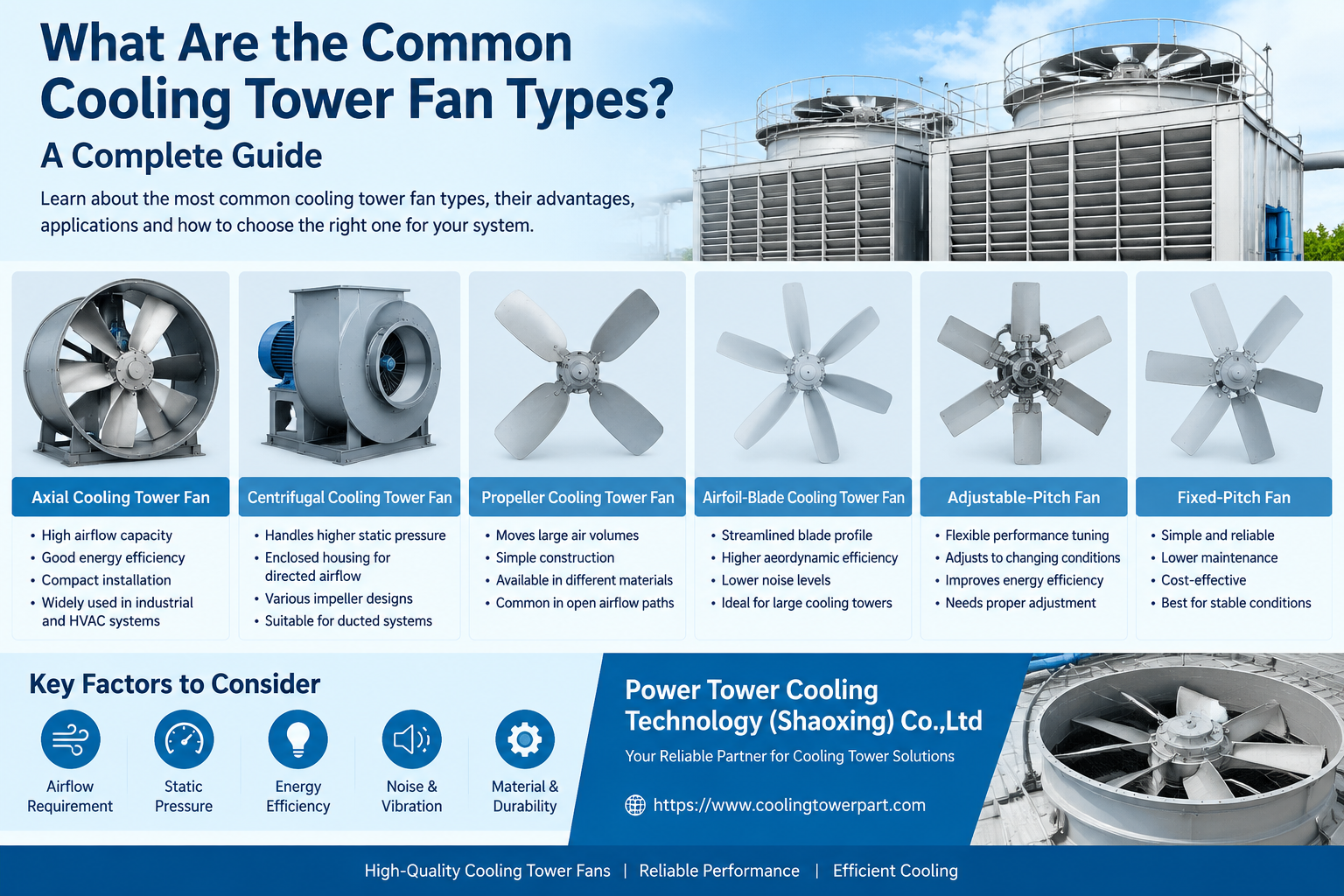
1. Current Development of the Cooling Tower Fan Market
The Cooling Tower Fan Market is closely connected to the development of the global cooling tower industry. As cooling requirements increase across different industrial sectors, the demand for replacement fans, upgraded fan blades, and complete fan assemblies is also growing.
According to Grand View Research, the global cooling tower market was valued at approximately USD 4.5 billion in 2025 and is estimated to reach USD 4.8 billion in 2026. This broader market is projected to grow further through 2033. These figures describe the cooling tower industry as a whole rather than the fan segment alone.
1.1 Increasing Demand for Industrial Cooling Equipment
Industrial production generates substantial amounts of heat that must be removed to maintain safe operating temperatures and stable production processes.
Cooling towers provide an effective solution for rejecting this heat, while cooling tower fans maintain the airflow necessary for efficient heat transfer.
Major demand sources include:
Manufacturing and processing plants
Power generation facilities
Oil and gas industries
Chemical and petrochemical plants
Steel and metallurgical factories
Commercial HVAC systems
Large-scale data centers
As industrial infrastructure expands, the demand for reliable cooling tower fan systems is expected to remain an important part of the cooling equipment market.
1.2 Growing Demand for Replacement Cooling Tower Fans
New cooling tower installations are not the only source of market demand. Many industrial facilities operate cooling towers for decades, creating continuous requirements for replacement components.
Why Do Industrial Buyers Replace Cooling Tower Fans?
Common reasons include:
Fan blade cracking or deformation
Excessive vibration during operation
Reduced airflow performance
Corrosion of metal components
Fan hub damage
Motor or gearbox failures
Increasing electricity consumption
Replacing outdated fan assemblies with modern, energy-efficient products can improve cooling performance and reduce maintenance expenses.
1.3 Expansion of the Global Cooling Tower Industry
Asia-Pacific, North America, Europe, and the Middle East all present opportunities for cooling tower equipment suppliers.
Asia-Pacific is particularly important because of its manufacturing capacity, industrial infrastructure development, and growing electricity demand.
Emerging markets also provide opportunities for cooling tower fan manufacturers that can offer competitive prices, customized engineering, and dependable international delivery.
2. Major Trends Shaping the Cooling Tower Fan Market
Several technological and industrial trends are influencing the future development of the Cooling Tower Fan Market.
2.1 Increasing Adoption of Energy-Efficient Cooling Tower Fans
Energy efficiency has become one of the most important considerations when selecting industrial cooling tower fans.
Large cooling towers may operate continuously throughout the year. Even a relatively small improvement in fan efficiency can generate meaningful electricity savings over the equipment's operating life.
How Can Energy-Efficient Fans Reduce Operating Costs?
Modern cooling tower fans improve efficiency through several design improvements:
Optimized aerodynamic blade profiles
Improved blade pitch and angle adjustment
Lightweight structural materials
Reduced airflow resistance
High-efficiency electric motors
Variable-frequency drive technology
The Importance of Aerodynamic Fan Blade Design
Fan blade geometry directly affects airflow volume, pressure distribution, power consumption, and operating stability.
A properly designed blade can generate the required airflow with less energy input.
Manufacturers are therefore investing in improved blade profiles, structural optimization, and performance testing to develop more efficient cooling tower fan products.
2.2 Growing Popularity of FRP Cooling Tower Fans
Fiberglass Reinforced Plastic (FRP) cooling tower fans are becoming an attractive choice for industrial applications.
Compared with conventional metal blades, FRP blades offer several advantages, particularly in environments exposed to moisture, chemicals, and corrosive conditions.
Key Advantages of FRP Cooling Tower Fan Blades
1. Excellent Corrosion Resistance
FRP materials resist moisture and many corrosive environments, making them suitable for industrial cooling towers.
2. Lightweight Construction
Lower blade weight can reduce mechanical loads on the fan hub, gearbox, motor, and supporting structure when properly engineered.
3. Flexible Design Options
Manufacturers can customize blade length, pitch, profile, and structural configuration according to different cooling tower requirements.
4. Lower Maintenance Requirements
FRP blades can reduce corrosion-related maintenance compared with some conventional metal blade designs.
Why Are More Buyers Considering FRP Fan Blades?
Industrial buyers increasingly evaluate equipment based on total lifecycle cost rather than initial purchase price.
FRP cooling tower fan blades offer a combination of corrosion resistance, lightweight construction, and design flexibility that can be valuable for long-term industrial operation.
2.3 Increasing Use of Variable Frequency Drives
Variable Frequency Drives (VFDs) are becoming increasingly important in modern cooling tower fan systems.
Traditional cooling tower fans often operate at fixed speeds, even when cooling requirements change.
VFD technology allows operators to adjust fan speed according to actual heat loads and operating conditions.
Benefits of VFD-Controlled Cooling Tower Fans
Adjust airflow according to cooling demand
Reduce unnecessary electricity consumption
Improve temperature control
Reduce mechanical starting stress
Support automated cooling tower operation
By matching fan speed to actual cooling requirements, industrial facilities can improve overall system efficiency.
2.4 Smart Monitoring and Predictive Maintenance
Digital monitoring technologies are creating new opportunities for cooling tower fan manufacturers.
Modern industrial facilities increasingly use sensors and automated monitoring systems to evaluate equipment conditions.
Important Monitoring Parameters
Fan vibration levels
Motor operating temperature
Fan rotational speed
Electrical power consumption
Gearbox operating conditions
Bearing temperature
Airflow performance
These monitoring systems can help maintenance teams identify potential mechanical problems before they lead to unexpected equipment shutdowns.
3. Key Applications Driving Cooling Tower Fan Market Growth
The demand for cooling tower fans comes from a wide range of industrial and commercial applications.
3.1 Power Generation Industry
Power generation facilities require effective cooling systems to remove waste heat and maintain stable operating conditions.
Cooling towers are widely used in thermal power plants and other electricity generation facilities.
Why Are Cooling Tower Fans Important for Power Plants?
Cooling tower fans provide the airflow required for heat rejection. Their performance directly influences the thermal efficiency and operating stability of the cooling system.
Power plants often require large-diameter fans capable of delivering high airflow under demanding operating conditions.
Reliability, structural strength, vibration control, and maintenance accessibility are therefore important purchasing considerations.
3.2 Chemical and Petrochemical Industries
Chemical and petrochemical facilities generate significant process heat during production.
Cooling tower systems help maintain the required temperatures for industrial processes and equipment.
In these environments, cooling tower fan materials must withstand humidity, chemical exposure, and demanding operating conditions.
FRP fan blades are particularly attractive for applications where corrosion resistance is an important requirement.
3.3 HVAC and Commercial Buildings
Commercial buildings, shopping centers, hospitals, hotels, and office complexes use cooling towers as part of their central air-conditioning systems.
The expansion of commercial infrastructure creates additional demand for cooling tower fans.
Building operators increasingly prioritize:
3.4 Data Centers and Digital Infrastructure
Data centers are becoming an important source of demand for advanced cooling infrastructure.
The expansion of cloud computing, artificial intelligence, and high-performance computing increases the need for reliable thermal management.
Although different data centers use different cooling architectures, cooling towers remain an important heat-rejection option in many facilities.
Future Opportunities in Data Center Cooling
Cooling tower fan suppliers can benefit from demand for:
High-capacity axial fans
Energy-efficient fan motors
Intelligent speed control
Low-vibration fan assemblies
Reliable replacement components
As data center cooling requirements become more demanding, equipment manufacturers will need to provide solutions that combine efficiency and operational reliability.
4. Regional Opportunities in the Global Cooling Tower Fan Market
Different regions offer different opportunities for cooling tower fan manufacturers and international suppliers.
4.1 Asia-Pacific Cooling Tower Fan Market
Asia-Pacific is one of the most important regions for the global cooling tower industry.
China, India, Japan, South Korea, Indonesia, Vietnam, and Thailand have extensive industrial manufacturing sectors.
Major Growth Drivers
Expansion of manufacturing facilities
Increasing electricity generation capacity
Infrastructure development
Growing commercial HVAC demand
Investment in industrial modernization
China is particularly important as both a major cooling tower equipment market and a manufacturing center.
For international buyers, Chinese cooling tower fan manufacturers can provide competitive pricing, customized production, and a wide range of replacement components.
4.2 North American Cooling Tower Fan Market
North America has an established industrial cooling infrastructure.
The United States and Canada have significant demand from power generation, commercial HVAC, manufacturing, and data center industries.
Market Opportunities
The replacement and modernization of existing cooling tower equipment create opportunities for suppliers of:
Energy-saving upgrades are also encouraging facility operators to consider more efficient fan technologies.
4.3 European Cooling Tower Fan Market
European industrial customers generally place strong emphasis on energy efficiency, environmental performance, and equipment reliability.
The market offers opportunities for advanced cooling tower fan systems that reduce energy consumption and maintenance requirements.
Manufacturers that provide detailed technical documentation, customized designs, and reliable product quality can improve their competitiveness.
4.4 Middle East Cooling Tower Fan Market
The Middle East is an important market for industrial cooling equipment because of its energy, petrochemical, desalination, and infrastructure sectors.
Countries such as Saudi Arabia, the United Arab Emirates, Qatar, and Oman have extensive cooling requirements.
Important Purchasing Requirements
High-temperature operating capability
Corrosion-resistant materials
Durable fan blade construction
Reliable motor and gearbox systems
Long service life
Customized fan dimensions
Manufacturers capable of providing products suitable for demanding environmental conditions can find attractive opportunities in this region.
5. Competitive Factors in the Cooling Tower Fan Market
As competition increases, manufacturers need to offer more than competitive product prices.
Industrial customers evaluate several technical and commercial factors before selecting a cooling tower fan supplier.
5.1 Product Quality and Manufacturing Capability
Product quality is one of the most important factors influencing purchasing decisions.
A reliable cooling tower fan must maintain stable performance under continuous operating conditions.
Important Manufacturing Quality Requirements
Consistent raw material quality
Accurate blade dimensions
Reliable structural connections
Precise fan hub manufacturing
Proper dynamic balancing
Strict quality inspection
Manufacturers with strong production capabilities can better support large industrial projects and international replacement orders.
5.2 Customized Cooling Tower Fan Solutions
Different cooling tower models require different fan specifications.
Standard products may not always meet the requirements of existing cooling tower installations.
Customization is therefore an important competitive advantage.
Common Customization Requirements
Product Parameter | Customer Requirements |
Fan diameter | Different tower dimensions |
Blade material | FRP, aluminum, or other suitable materials |
Blade pitch | Adjustable according to operating conditions |
Number of blades | Based on aerodynamic design |
Fan hub | Customized mounting configuration |
Motor power | Matched to fan operating requirements |
Rotation speed | Suitable for the cooling system |
Manufacturers that provide engineering support and customized production can serve a wider range of industrial customers.
5.3 International Supply Chain and Delivery
Global buyers also consider supplier reliability, production lead times, packaging, and international shipping capabilities.
For large cooling tower fan assemblies, proper packaging and transportation arrangements are particularly important.
Reliable suppliers should be able to provide:
6. Challenges Facing the Cooling Tower Fan Market
Despite positive development prospects, the Cooling Tower Fan Market faces several challenges.
6.1 Rising Raw Material Costs
Manufacturing costs can fluctuate due to changes in the prices of fiberglass, resin, aluminum, steel, motors, and other industrial materials.
These changes can affect product pricing and supplier profitability.
Manufacturers need to improve production efficiency and supply chain management to maintain competitive prices.
6.2 Increasing Energy Efficiency Requirements
Industrial customers increasingly expect cooling tower fans to deliver higher airflow with lower power consumption.
Manufacturers must continuously improve aerodynamic performance, motor efficiency, and overall fan system design.
6.3 Technical Requirements for Large-Diameter Fans
Large industrial cooling tower fans require careful engineering.
Fan blades must maintain sufficient structural strength while minimizing weight and vibration.
Poor blade design or incorrect installation can result in:
Therefore, engineering design, manufacturing precision, and performance testing are essential.
6.4 Competition Among Global Manufacturers
The international market includes established cooling tower companies, specialized fan manufacturers, and regional replacement-part suppliers.
To remain competitive, manufacturers need to improve product quality, technical services, customization, and delivery capabilities.
7. Future Growth Opportunities in the Cooling Tower Fan Market
The future development of the Cooling Tower Fan Market will be influenced by industrial investment, technological innovation, and increasing demand for energy-efficient cooling systems.
7.1 Development of High-Efficiency FRP Cooling Tower Fans
FRP fan technology is expected to remain an important product development direction.
Manufacturers are exploring improved resin systems, fiber reinforcement structures, and aerodynamic blade designs.
Future Product Development Directions
Lightweight fan blade structures
Improved corrosion resistance
Higher structural strength
Optimized aerodynamic profiles
Customized large-diameter blades
These improvements can help industrial customers achieve more reliable cooling tower operation.
7.2 Growth in Cooling Tower Fan Replacement Projects
The replacement market offers significant opportunities for manufacturers and distributors.
Many industrial facilities prefer upgrading existing cooling tower components instead of replacing entire cooling tower systems.
Replacement demand may include:
Suppliers that understand different cooling tower brands and replacement specifications can develop long-term customer relationships.
7.3 Integration of Intelligent Cooling Systems
Smart technologies are expected to play a larger role in future cooling tower installations.
Automated fan speed control, vibration monitoring, and predictive maintenance can improve operational efficiency.
Manufacturers that integrate mechanical products with intelligent monitoring and control solutions may gain a competitive advantage.
7.4 Expansion of Emerging Industrial Markets
Developing economies will continue to create opportunities for cooling tower equipment suppliers.
Industrialization, electricity demand, urban development, and manufacturing investment will support demand for cooling infrastructure.
Potential markets include:
Southeast Asia
South Asia
The Middle East
Africa
South America
International suppliers that offer reliable products, competitive prices, and flexible customization can benefit from these opportunities.
8. How to Choose a Reliable Cooling Tower Fan Manufacturer?
Selecting the right supplier is important for ensuring long-term cooling tower performance.
Industrial buyers should evaluate both product quality and the manufacturer's technical capabilities.
8.1 Evaluate Product Materials and Design
The first step is to understand the materials and structural design of the cooling tower fan.
For example, FRP blades may be suitable for applications requiring corrosion resistance and lightweight construction.
Aluminum blades may also be appropriate for specific operating conditions.
Questions to Ask Manufacturers
What materials are used for the fan blades?
Can the blade pitch be customized?
What fan diameters are available?
Is dynamic balancing performed?
Can the manufacturer provide technical drawings?
8.2 Check Manufacturing Experience
An experienced cooling tower fan manufacturer should understand different fan configurations, operating requirements, and replacement applications.
Reviewing previous projects and manufacturing capabilities can help buyers evaluate supplier reliability.
8.3 Compare Total Ownership Costs
The lowest initial purchase price does not always represent the best investment.
Buyers should consider:
Initial equipment cost
Electricity consumption
Installation expenses
Maintenance requirements
Expected service life
Replacement costs
A properly engineered, energy-efficient cooling tower fan may provide better long-term value.
8.4 Confirm Technical Support and After-Sales Service
Technical support is especially important for customized fan systems and replacement projects.
A reliable manufacturer should provide installation recommendations, operating guidance, and assistance with product selection.
9. Why Choose Power Tower Cooling Technology (Shaoxing) Co., Ltd?
As the cooling tower industry continues to develop, choosing an experienced supplier is important for industrial customers seeking reliable fan components and customized cooling solutions.
Power Tower Cooling Technology (Shaoxing) Co., Ltd focuses on cooling tower products and related industrial components, providing solutions for customers involved in cooling tower construction, maintenance, and replacement projects.
9.1 Cooling Tower Fan Product Solutions
Cooling tower fan systems require coordinated performance between fan blades, hubs, motors, and transmission components.
Selecting compatible components helps improve overall operating stability.
9.2 Customized FRP Fan Blade Solutions
FRP cooling tower fan blades are suitable for many industrial cooling applications.
Customized specifications can help customers match replacement products to existing cooling tower structures and operating conditions.
9.3 Supporting International Industrial Buyers
International customers often require customized products, technical communication, and dependable export services.
By focusing on product specifications and customer project requirements, Power Tower Cooling Technology (Shaoxing) Co., Ltd aims to support cooling tower customers in different international markets.
For industrial buyers looking for cooling tower fan blades, FRP fan components, and related cooling tower products, selecting a supplier with suitable technical and manufacturing capabilities is an important step toward successful project execution.
10. Conclusion: What Is the Future of the Cooling Tower Fan Market?
The global Cooling Tower Fan Market has promising development opportunities as industrial cooling requirements continue to expand.
The growing demand for energy-efficient equipment, FRP fan blades, intelligent control systems, and cooling tower replacement components is influencing the future direction of the industry.
Power generation, chemical processing, manufacturing, HVAC, and data center applications will remain important sources of demand.
At the same time, manufacturers will face increasing expectations regarding product quality, aerodynamic performance, customization, and long-term reliability.
For cooling tower fan manufacturers and suppliers, investing in advanced materials, improved blade designs, manufacturing technology, and international customer service will be essential for maintaining competitiveness.
For industrial buyers, choosing a reliable cooling tower fan supplier with strong engineering capabilities can help reduce operating costs and improve cooling system performance over the long term.
FAQ About the Cooling Tower Fan Market
1. What Is Driving the Growth of the Cooling Tower Fan Market?
The main growth drivers include industrial expansion, increasing electricity demand, commercial HVAC development, data center construction, and the need for energy-efficient cooling systems.
2. Which Materials Are Commonly Used for Cooling Tower Fans?
Common materials include:
FRP is widely considered for applications requiring lightweight construction and corrosion resistance.
3. Why Are FRP Cooling Tower Fans Becoming More Popular?
FRP cooling tower fans offer corrosion resistance, lightweight construction, design flexibility, and reduced corrosion-related maintenance requirements.
These characteristics make them suitable for many demanding industrial environments.
4. Which Industries Have the Highest Demand for Cooling Tower Fans?
Major application industries include power generation, petrochemical processing, chemical manufacturing, steel production, commercial HVAC, and data centers.
5. How Can Cooling Tower Fans Improve Energy Efficiency?
Cooling tower fans can improve energy efficiency through optimized blade profiles, appropriate fan pitch, efficient motors, variable-frequency drives, and proper system selection.
6. What Should Buyers Consider When Purchasing Cooling Tower Fans?
Buyers should consider fan diameter, airflow requirements, blade materials, motor power, operating speed, fan hub compatibility, dynamic balancing, and supplier experience.
7. What Are the Future Trends in the Cooling Tower Fan Industry?
Important future trends include high-efficiency FRP fan blades, intelligent monitoring, variable-speed operation, customized fan systems, and increased demand for replacement components.
8. How Can Buyers Find Reliable Cooling Tower Fan Manufacturers in China?
Buyers should evaluate manufacturing experience, product quality, material selection, technical documentation, customization capabilities, export experience, and after-sales support.


