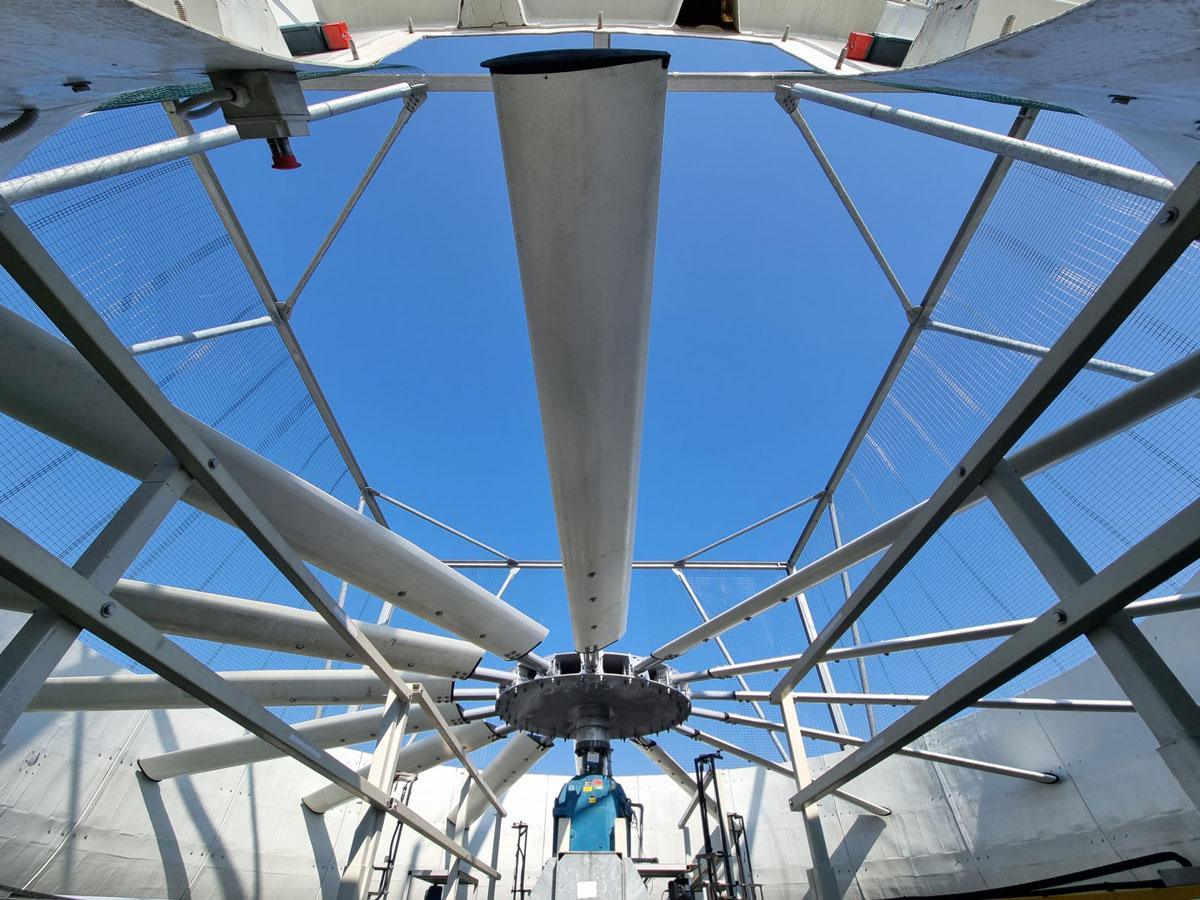
Cooling tower fan blade pitch adjustment is an important maintenance task for engineers, maintenance technicians, and cooling tower operators responsible for reliable industrial cooling systems. The blade pitch angle affects airflow, motor power consumption, cooling capacity, and overall fan performance. Incorrect settings can lead to insufficient cooling, excessive motor current, abnormal vibration, and unnecessary energy costs.
Understanding how to identify pitch-related problems, measure blade angles, and verify adjustments helps maintenance teams improve equipment reliability and reduce unplanned downtime.
This guide explains the key considerations for cooling tower fan blade pitch adjustment, including troubleshooting procedures, safety requirements, common problems, and preventive maintenance practices.
1. Why Cooling Tower Fan Blade Pitch Adjustment Matters
Cooling tower fans move air through the tower to support heat transfer between the circulating water and the surrounding air. Blade pitch influences the aerodynamic load on the fan and the amount of air it moves.
An excessively low pitch may result in insufficient airflow, while an excessively high pitch can increase motor loading and energy consumption. The correct setting depends on the fan design, blade geometry, rotational speed, motor capacity, and cooling tower operating requirements.
Proper cooling tower fan pitch adjustment helps facilities:
Maintain the required airflow and cooling capacity
Control motor current and power consumption
Reduce unnecessary aerodynamic loading
Support stable fan operation
Improve maintenance planning and equipment reliability
There is no universal pitch angle for every cooling tower fan. Always follow the manufacturer's specifications for the installed model.
2. Who Needs to Understand Fan Blade Pitch Adjustment?
Engineers
Cooling tower engineers evaluate fan performance against design requirements. They may review airflow, motor power, fan speed, cooling-water temperatures, and system resistance to determine whether the existing pitch setting is appropriate.
When performance problems occur, engineers should distinguish between incorrect blade pitch and other causes, such as blocked fill media, poor water distribution, incorrect fan rotation, or changing ambient conditions.
Maintenance Technicians
Maintenance technicians are responsible for inspecting the fan assembly, measuring blade angles, checking fasteners, and carrying out approved adjustments.
They should understand the correct measuring reference, measurement radius, adjustment procedure, and fastener torque requirements. Consistent measurements are essential when replacing blades or comparing settings across multiple blades.
Cooling Tower Operators
Cooling tower operators monitor daily performance and identify early warning signs.
Changes in cooling-water outlet temperature, motor current, vibration, noise, and electricity consumption may indicate a developing problem. Operators should document these changes and report abnormal conditions before they lead to equipment damage.
Operators should not attempt mechanical adjustments unless they are trained and authorized to perform the work.
3. Common Signs of Incorrect Cooling Tower Fan Blade Pitch
Recognizing the symptoms of incorrect blade pitch helps maintenance teams begin troubleshooting efficiently.
Insufficient Cooling Capacity
If the fan pitch is too low, airflow may be insufficient to meet the required cooling duty. The tower may struggle to maintain the specified cold-water temperature during periods of high heat load.
However, blocked air inlets, dirty fill, poor water distribution, and incorrect fan rotation can produce similar symptoms.
Excessive Motor Current
A pitch setting that is too high can increase fan power demand. Motor current may rise, and overload protection may trip if operating limits are exceeded.
Check the motor nameplate, fan speed, electrical supply, and mechanical condition before concluding that blade pitch is responsible.
Abnormal Vibration or Noise
Uneven blade pitch can create differences in aerodynamic loading. Loose fasteners, damaged blades, an imbalanced fan assembly, or worn drive components can also cause vibration and unusual noise.
If vibration increases suddenly or mechanical contact is suspected, stop the fan and arrange a safe inspection.
Higher Energy Consumption
Incorrect pitch can reduce operating efficiency. Excessive pitch may consume more power than necessary, while insufficient airflow can force other cooling equipment to work harder.
Compare power consumption under similar operating conditions before making adjustments.
4. Step-by-Step Cooling Tower Fan Pitch Adjustment Procedure
Step 1: Review Operating Data
Record cooling-water inlet and outlet temperatures, ambient wet-bulb temperature, fan speed, motor current, and vibration levels.
Compare the results with historical records and the fan's expected operating conditions.
Step 2: Shut Down and Isolate the Fan
Stop the fan, isolate its power supply, and follow the site's lockout/tagout (LOTO) procedure. Verify that the fan cannot restart unexpectedly before accessing the blades.
Use appropriate fall protection and follow all site-specific safety requirements.
Step 3: Inspect the Fan Assembly
Check the blades, hub, fasteners, drive components, and surrounding clearances. Look for cracks, corrosion, deformation, loose connections, or evidence of mechanical contact.
Resolve any safety-critical mechanical defects before adjusting pitch.
Step 4: Measure Blade Angles
Use a suitable pitch gauge or digital inclinometer according to the manufacturer's instructions. Measure every blade at the same specified radial position and reference orientation.
Record each measurement and identify any differences between blades.
Step 5: Compare Measurements with Specifications
Compare the measured angles with the approved target and permitted tolerances for the exact fan model.
Do not use a generic angle from another cooling tower fan. Different blade designs and measurement conventions can produce different numerical readings.
Step 6: Adjust and Verify
If the measured pitch is outside the permitted range, follow the manufacturer's adjustment procedure. Tighten fasteners to the specified torque and remeasure every blade.
After the equipment is safely returned to service, verify motor current, vibration, airflow, and cooling performance.
5. Common Troubleshooting Problems and Solutions
| Problem | Possible cause | Recommended action |
| Low airflow | Incorrect pitch, low fan speed, or restricted air inlets | Check pitch, rotation, speed, and airflow paths |
| High motor current | Excessive pitch, mechanical friction, or electrical problems | Check fan loading, motor condition, and power supply |
| Uneven blade angles | Incorrect installation or inconsistent measurement | Standardize measurement and correct out-of-tolerance settings |
| Excessive vibration | Uneven loading, imbalance, loose fasteners, or damaged blades | Inspect the hub, blades, fasteners, and drive system |
| Poor cooling performance | Incorrect pitch or problems elsewhere in the cooling tower | Evaluate airflow, fill, water distribution, and operating conditions |
| Increased energy use | Excessive fan loading or inefficient system operation | Review pitch, speed, power consumption, and cooling demand |
Troubleshooting should identify the root cause rather than treating every performance problem as a blade pitch issue.
6. Best Practices for Reliable Fan Pitch Adjustment
Engineers, technicians, and operators can improve maintenance results by following a consistent procedure.
Use manufacturer-approved settings: Confirm the correct pitch angle and measurement method for the specific fan model.
Keep accurate records: Document blade angles, motor current, vibration, and adjustment history.
Inspect after replacement: Verify pitch whenever blades, hubs, or related components are replaced or serviced.
Monitor operating trends: Investigate unexpected changes in current, vibration, cooling capacity, or power consumption.
Check the entire cooling tower: Inspect fill media, drift eliminators, water distribution, and air inlets when performance remains poor.
Follow torque specifications: Incorrect fastener tightening can create mechanical risks even when blade angles are correct.
Regular inspection and consistent documentation help maintenance teams identify developing problems before they cause costly downtime.
7. Frequently Asked Questions
What Is the Correct Cooling Tower Fan Blade Pitch Angle?
The correct angle depends on the fan design, blade geometry, rotational speed, and operating requirements. Use the manufacturer's approved setting for the specific model.
Can Incorrect Blade Pitch Cause Motor Overload?
Yes. Excessive pitch can increase aerodynamic loading and motor power demand. However, electrical faults, excessive fan speed, and mechanical friction can also cause overload conditions.
How Often Should Fan Blade Pitch Be Checked?
Check pitch during commissioning, scheduled preventive maintenance, blade replacement, and investigations into abnormal vibration or cooling performance. Follow the manufacturer's recommended inspection schedule.
Can Adjusting Blade Pitch Reduce Energy Consumption?
Correcting an improper setting may reduce unnecessary power consumption while maintaining the required cooling duty. The result depends on the fan design, operating conditions, and the original problem.
Should Cooling Tower Operators Adjust Blade Pitch Themselves?
Only if they are trained, authorized, and following the manufacturer's procedure and site safety requirements. Mechanical adjustments should be performed by qualified personnel.
Conclusion
Cooling tower fan blade pitch adjustment is an important part of maintaining reliable cooling tower performance. Engineers need to evaluate system requirements, maintenance technicians must measure and adjust blades accurately, and operators should monitor performance indicators to identify problems early.
By following manufacturer specifications, applying proper safety procedures, and verifying results after adjustment, industrial facilities can maintain required airflow, control motor loading, and improve operational reliability.
For cooling tower replacement and retrofit projects, selecting compatible fan blades and confirming the correct pitch specifications are essential steps toward safe, efficient, and dependable operation.
Recommended internal links for CoolingTowerPart.com:


