How to Choose the Right Cooling Tower Fill Replacement Supplier?
Cooling tower fill is one of the most important components in an evaporative cooling system. It increases the contact area between circulating water and airflow, allowing heat to transfer more efficiently and helping the cooling tower achieve the required outlet water temperature. Over time, however, even a high-quality cooling tower filler can become damaged, clogged, brittle, or deformed.
When the existing fill can no longer provide effective heat transfer, replacing it with suitable cooling tower fill can restore cooling performance and improve system efficiency.
For industrial plants, HVAC systems, power stations, manufacturing facilities, and process cooling applications, choosing the right cooling tower fill replacement supplier is just as important as selecting the correct fill material.
A reliable supplier should provide compatible dimensions, suitable materials, consistent quality, technical support, and dependable delivery. This guide explains how to evaluate a supplier and select the right cooling tower fill replacement for your application.
What Is Cooling Tower Fill Replacement?
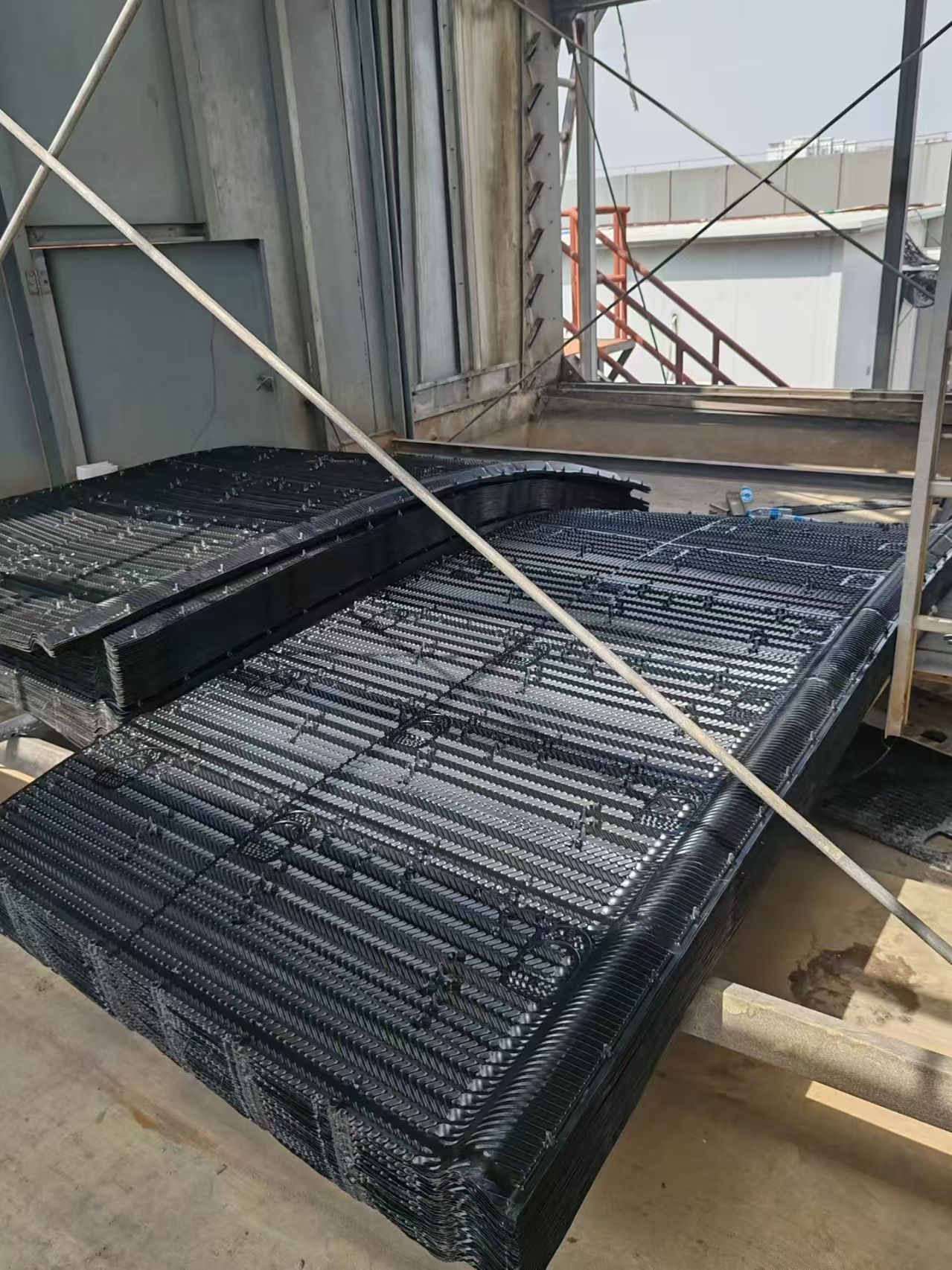
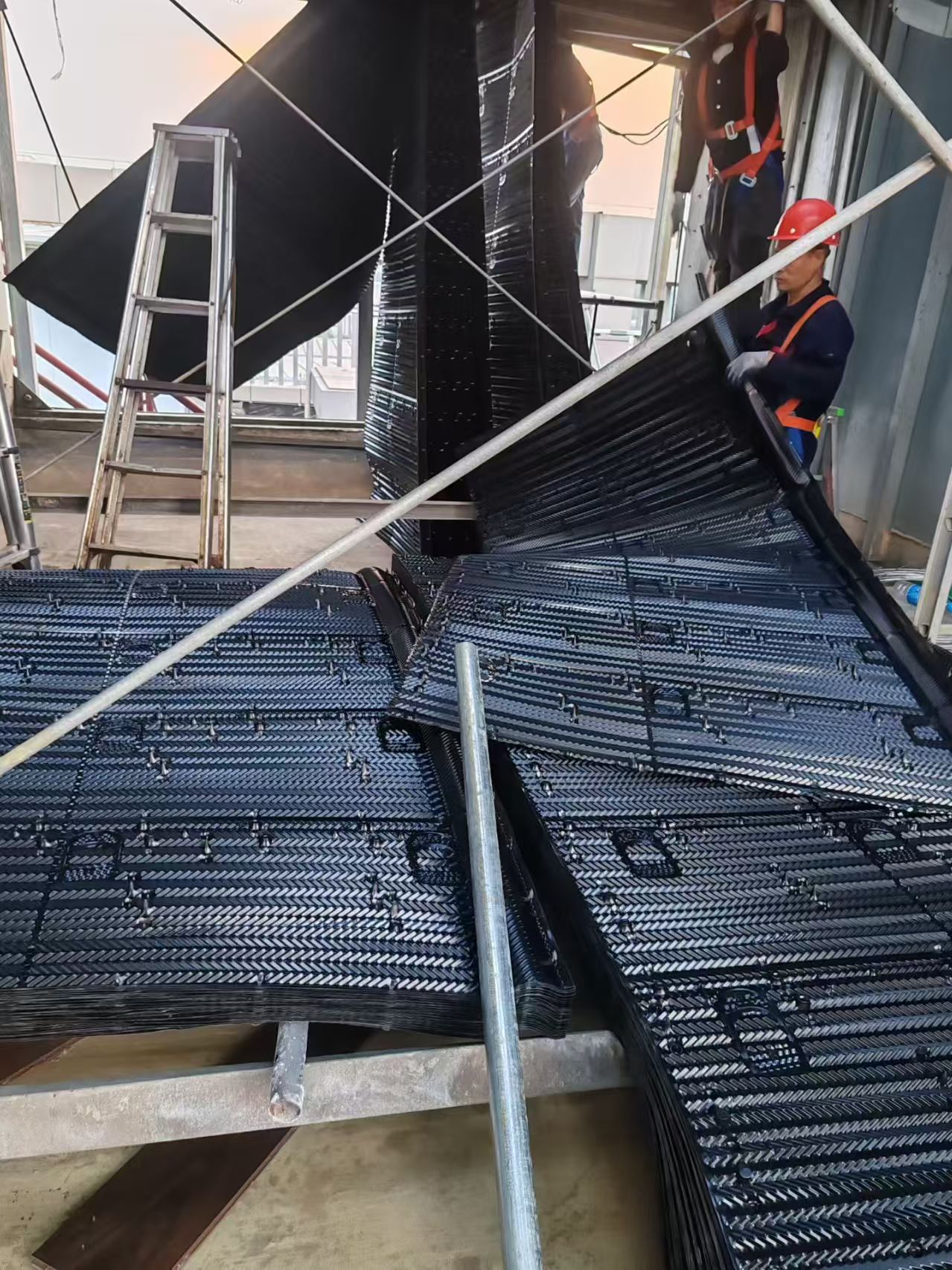
Cooling tower fill replacement is the process of removing old or damaged fill media and installing new fill inside a cooling tower.
The purpose of the replacement is not simply to install new plastic sheets. The new cooling tower filler must restore the tower's heat transfer capability while maintaining proper water distribution and airflow.
Why Is Cooling Tower Fill So Important?
Cooling tower fill creates a large wetted surface area where hot circulating water comes into contact with moving air.
How Does Cooling Tower Fill Improve Heat Transfer?
As water flows over the fill surface, it spreads into thin films or droplets. Air moves through the fill, allowing heat to transfer from the water to the air.
A properly selected cooling tower fill can therefore:
Increase water-to-air contact area
Improve evaporative heat transfer
Reduce the required tower footprint
Improve cooling capacity
Support stable operating temperatures
Reduce energy consumption when the tower is properly designed
When Should Cooling Tower Fill Be Replaced?
Knowing when to replace cooling tower fill can prevent unexpected performance problems.
What Are the Main Signs of Damaged Cooling Tower Fill?
Common warning signs include:
Cracked or broken fill sheets
Warped or deformed fill
Excessive scale buildup
Algae and biological growth
Mud and sediment accumulation
Blocked air passages
Poor water distribution
Increased outlet water temperature
Reduced cooling capacity
Excessive pressure drop
Fill sheets becoming brittle
Can Dirty Fill Be Cleaned Instead of Replaced?
Sometimes, yes.
If the fill is structurally sound but contaminated with removable deposits, professional cleaning may restore performance. However, cleaning cannot repair severely cracked, melted, collapsed, or chemically degraded fill.
In these situations, cooling tower fill replacement is usually the better long-term solution.
Why Choose a Professional Cooling Tower Fill Replacement Supplier?
Selecting a professional supplier can significantly reduce the risk of purchasing incompatible or low-quality fill.
What Should a Good Supplier Provide?
A reliable cooling tower fill replacement supplier should be able to provide:
Different fill materials
Cross-flow and counter-flow fill options
Customized dimensions
OEM replacement solutions
Technical recommendations
Consistent production quality
Export packaging
Replacement accessories when required
Installation guidance
Stable lead times
Does Supplier Experience Matter?
Yes.
Cooling towers vary considerably in design, water quality, airflow characteristics, operating temperature, and fill configuration. An experienced supplier can help determine whether PVC, PP, or another material is more appropriate.
What Types of Cooling Tower Fill Can Be Used for Replacement?
The correct fill depends on the cooling tower design and operating conditions.
PVC Cooling Tower Fill
PVC is one of the most commonly used materials for cooling tower fill.
PVC cooling tower filler offers a combination of good chemical resistance, mechanical stability, cost efficiency, and ease of fabrication.
It is widely used in:
When Is PVC Fill a Good Choice?
PVC is particularly suitable for conventional operating temperatures and applications where cost, durability, and heat-transfer performance need to be balanced.
PP Cooling Tower Fill
Polypropylene, or PP, can provide better temperature resistance than conventional PVC in many applications.
PP fill may be considered when the circulating water temperature or operating environment is too demanding for standard PVC.
Why Consider PP Fill?
Potential advantages include:
Higher temperature resistance
Good chemical resistance
Good mechanical stability
Suitable performance in demanding environments
The actual temperature limit should always be confirmed with the fill manufacturer because product formulations and operating conditions vary.
High-Temperature Cooling Tower Fill
Some industrial cooling systems require fill specifically designed for elevated-temperature applications.
A cooling tower fill replacement supplier should evaluate water temperature, chemical conditions, airflow, and tower configuration before recommending a high-temperature fill.
What Is the Difference Between Cross-Flow and Counter-Flow Fill?
The cooling tower configuration is one of the most important factors when selecting replacement fill.
Cross-Flow Cooling Tower Fill
In a cross-flow tower, air generally moves horizontally across the falling water.
Cross-flow fill is commonly designed with channels that allow water to flow downward while air passes horizontally through the fill.
What Are the Benefits of Cross-Flow Fill?
Typical advantages include:
Easy access for inspection
Convenient maintenance
Simple water distribution arrangement
Suitable for many large industrial and HVAC towers
Counter-Flow Cooling Tower Fill
In a counter-flow tower, air moves upward while water flows downward.
This arrangement creates counter-current contact between air and water.
When Should Counter-Flow Fill Be Selected?
Counter-flow fill should be selected according to the original tower design. Replacing it with an unsuitable fill configuration can negatively affect airflow, water distribution, pressure drop, and thermal performance.
How Do You Select the Right Cooling Tower Fill Replacement?
Choosing replacement fill requires more than measuring the overall tower dimensions.
What Information Should You Give the Supplier?
Before requesting a quotation, prepare as much information as possible.
Important details include:
Cooling tower manufacturer
Cooling tower model
Cross-flow or counter-flow design
Existing fill dimensions
Fill sheet thickness
Fill height
Fill block length and width
Material
Operating water temperature
Water quality
Cooling capacity
Existing fill photographs
Required quantity
Why Are Fill Dimensions Important?
Even small dimensional differences can affect installation and water distribution.
The supplier should verify the fill dimensions against the existing tower rather than simply supplying a standard-size product.
What Questions Should You Ask a Cooling Tower Fill Replacement Supplier?
Before placing an order, buyers should evaluate both product quality and supplier capability.
Can the Supplier Manufacture Customized Fill?
Not every cooling tower uses standard fill dimensions.
A capable supplier should be able to manufacture or cut fill according to customer drawings, samples, or detailed measurements where applicable.
Can the Supplier Provide Samples?
For large replacement projects, samples can help customers verify:
Does the Supplier Support OEM Replacement?
OEM-compatible replacement is particularly important when replacing fill in an existing cooling tower.
The replacement product should match the tower's original design requirements as closely as practical.
How Can You Evaluate Cooling Tower Fill Quality?
Price should not be the only factor when choosing a supplier.
What Material Quality Should You Check?
Ask the supplier about the material used in the fill and whether it is suitable for the intended operating environment.
For example, the supplier should consider:
Operating temperature
Water chemistry
UV exposure
Biological contamination
Mechanical loading
Cleaning methods
Why Is Fill Thickness Important?
Fill thickness affects mechanical strength, weight, handling, and service life.
A thinner sheet is not automatically better simply because it costs less. The thickness should be appropriate for the tower design and operating conditions.
What About Fill Flute Design?
The flute or corrugation pattern affects water distribution, air passage, surface area, and pressure drop.
Different cooling tower fill designs may therefore produce different thermal and hydraulic performance.
How Does Cooling Tower Fill Replacement Improve Performance?
Replacing severely deteriorated fill can restore the cooling tower's original operating condition.
Can New Fill Improve Cooling Efficiency?
If old fill has become blocked, collapsed, or damaged, new fill can restore effective air and water contact.
Potential improvements include:
Better heat transfer
Improved water distribution
Reduced airflow obstruction
More stable cooling performance
Lower risk of fill collapse
Improved operating reliability
Can Replacement Reduce Energy Consumption?
Potentially.
When blocked or damaged fill causes excessive resistance, fans and pumps may operate under less favorable conditions. Replacing the fill can help restore the intended hydraulic and airflow characteristics.
Actual energy savings depend on the cooling tower design, equipment condition, operating conditions, and control strategy.
How Much Does Cooling Tower Fill Replacement Cost?
The cost of replacement depends on several factors.
What Affects the Price of Cooling Tower Fill?
Major factors include:
Is the Cheapest Supplier the Best Choice?
Usually, not necessarily.
A low initial price may result in higher long-term costs if the fill has poor durability, incorrect dimensions, inconsistent quality, or inadequate technical support.
A better approach is to compare total value, including product quality, expected service life, delivery reliability, and supplier support.
How Should Replacement Cooling Tower Fill Be Installed?
Correct installation is essential for achieving the expected performance.
What Should Be Checked Before Installation?
Before installing new fill, inspect:
Supporting structures
Water distribution pipes
Spray nozzles
Fill support beams
Air inlet areas
Drift eliminators
Tower casing
Basin condition
Should Old Fill Be Completely Removed?
Damaged or severely contaminated fill should generally be removed before installing replacement material.
The tower should also be cleaned to prevent old debris, scale, and biological deposits from contaminating the new fill.
How Should Fill Blocks Be Positioned?
Fill blocks should be installed according to the tower manufacturer's design and the supplier's installation recommendations.
Improper positioning may create:
Uneven water distribution
Air bypass
Excessive pressure drop
Unsupported fill sections
Reduced heat-transfer performance
How Can You Extend the Life of New Cooling Tower Fill?
Replacing the fill is only the beginning. Proper maintenance helps maximize service life.
How Often Should Cooling Tower Fill Be Inspected?
Inspection frequency depends on water quality, operating conditions, and the environment.
During routine maintenance, inspect the fill for:
Scale
Sludge
Algae
Biofilm
Cracks
Deformation
Blockages
Material deterioration
Why Is Water Treatment Important?
Poor water treatment can significantly shorten the service life of cooling tower fill.
A suitable water treatment program can help control:
Scale formation
Corrosion
Biological growth
Suspended solids
Fouling
What Should You Look for in a Global Cooling Tower Fill Replacement Supplier?
For international buyers, supplier capability extends beyond product quality.
Does the Supplier Have Export Experience?
An experienced export supplier should understand:
Can the Supplier Optimize Container Loading?
Cooling tower fill is lightweight but relatively bulky. Efficient packing can have a major effect on transportation costs.
A professional supplier should consider fill dimensions, pallet sizes, container capacity, and loading methods when preparing an international shipment.
Why Is Custom Cooling Tower Fill Replacement Sometimes Necessary?
Existing cooling towers may have been modified over their operating life. Standard replacement fill may therefore not fit perfectly.
What Customization Options Are Available?
Depending on the supplier, customization may include:
Sheet dimensions
Fill block dimensions
Thickness
Material
Flute configuration
Assembly method
Cutting
Packaging
Can a Supplier Work from Drawings or Samples?
Many professional manufacturers can evaluate technical drawings, dimensions, photographs, or physical samples to develop a suitable replacement solution.
Providing accurate technical information can significantly reduce the risk of ordering incorrect fill.
How Do You Compare Cooling Tower Fill Replacement Suppliers?
A structured comparison can make purchasing decisions easier.
What Are the Most Important Supplier Evaluation Factors?
Consider the following:
| Evaluation Factor | Why It Matters |
| Material quality | Determines durability and application suitability |
| Dimensional accuracy | Ensures proper installation |
| Thermal performance | Supports effective heat transfer |
| Manufacturing capability | Enables customized replacement |
| Quality control | Reduces inconsistent products |
| Packaging | Protects fill during transportation |
| Delivery time | Helps minimize tower downtime |
| Technical support | Assists with selection and installation |
| Export experience | Simplifies international purchasing |
| After-sales service | Supports long-term cooperation |
What Common Mistakes Should Buyers Avoid?
Several mistakes can increase replacement costs and reduce cooling tower performance.
Mistake 1: Choosing Fill Based Only on Price
Cheap fill may not provide the required durability or thermal performance.
Mistake 2: Ignoring Water Temperature
Material selection should consider actual operating temperature.
Mistake 3: Using Incorrect Dimensions
Incorrect dimensions can make installation difficult or create gaps that cause air bypass.
Mistake 4: Replacing Fill Without Inspecting the Tower
Supporting structures, nozzles, pipes, drift eliminators, and other components should also be inspected.
Mistake 5: Ignoring Water Quality
Poor water treatment can quickly contaminate new fill and reduce its effective service life.
Why Work with an Experienced Cooling Tower Fill Replacement Supplier?
A professional cooling tower fill replacement supplier can provide more than replacement sheets or blocks.
The right supplier can help customers evaluate the existing tower, select appropriate materials, confirm dimensions, optimize packaging, and coordinate delivery.
For industrial cooling systems, this technical support can be especially valuable because incorrect fill selection may result in reduced cooling capacity and unnecessary downtime.
Conclusion: How Do You Choose the Best Cooling Tower Fill Replacement Supplier?
Choosing the right cooling tower fill replacement supplier is an important step in maintaining cooling tower efficiency and reliability.
Before purchasing, evaluate the tower configuration, fill dimensions, material requirements, operating temperature, water quality, and cooling performance. A suitable cooling tower filler should provide the required heat-transfer characteristics while remaining compatible with the existing cooling tower.
Whether you need PVC fill, PP fill, cross-flow fill, counter-flow fill, or customized cooling tower fill replacement, work with a supplier that can provide consistent quality, accurate dimensions, technical support, reliable packaging, and dependable delivery.
With the right replacement fill and a proper maintenance program, cooling towers can maintain effective heat transfer, stable cooling performance, and a longer operating life.