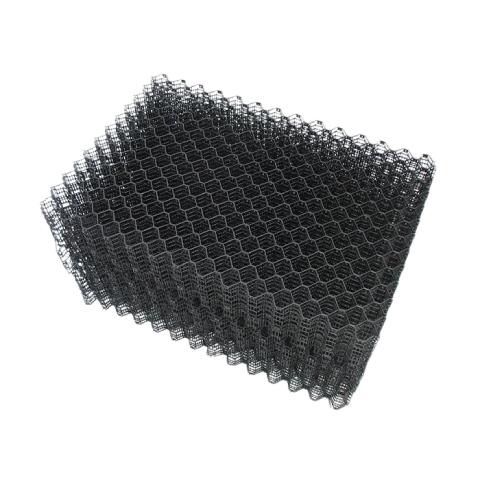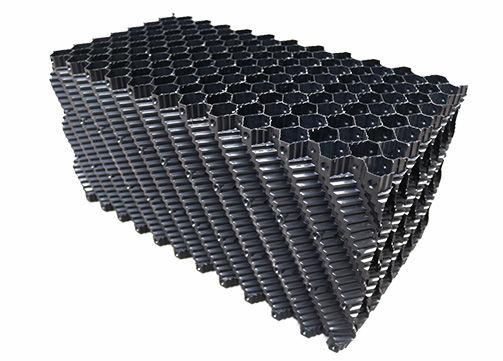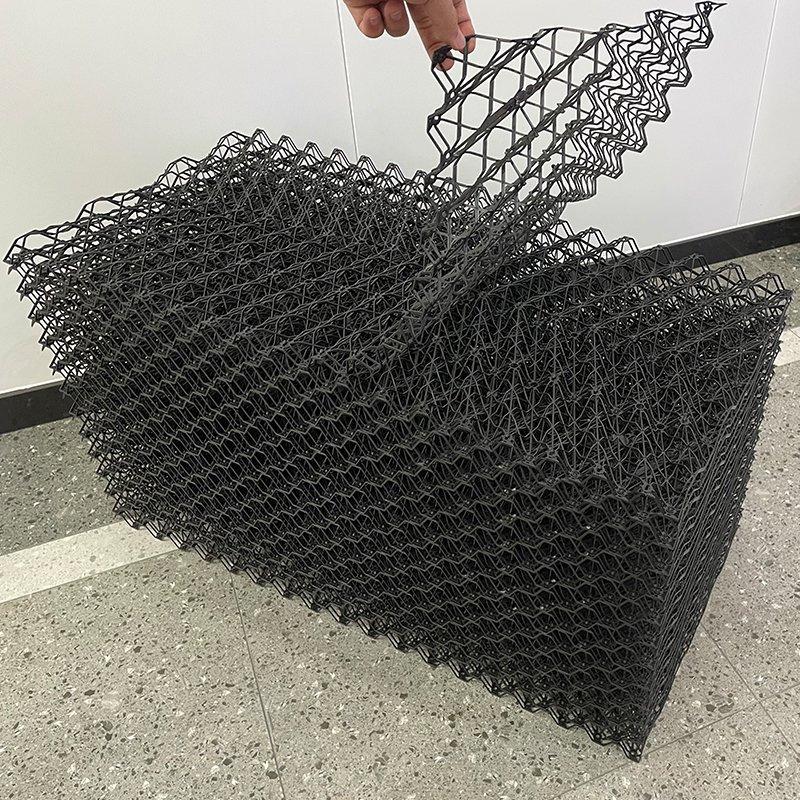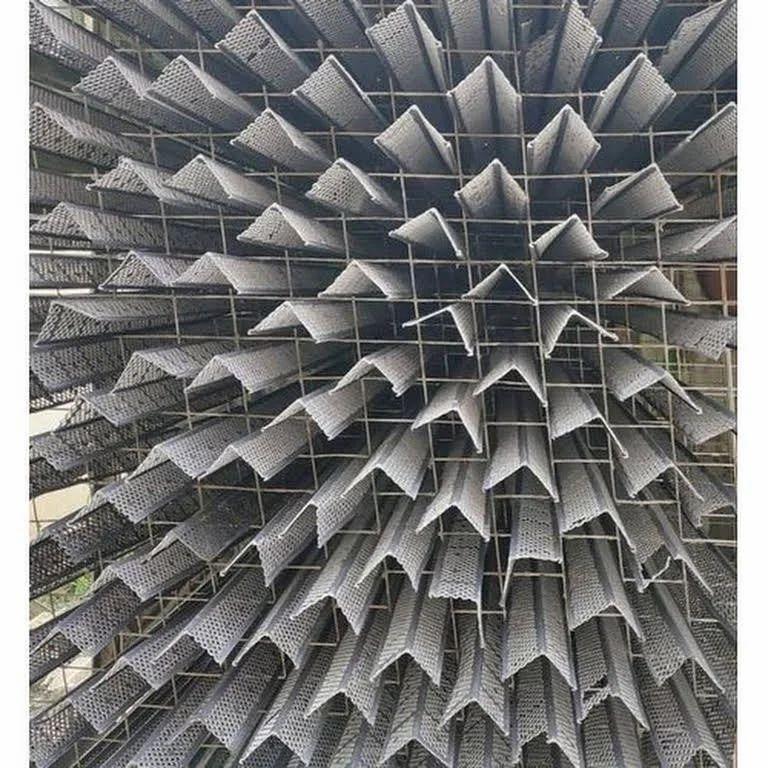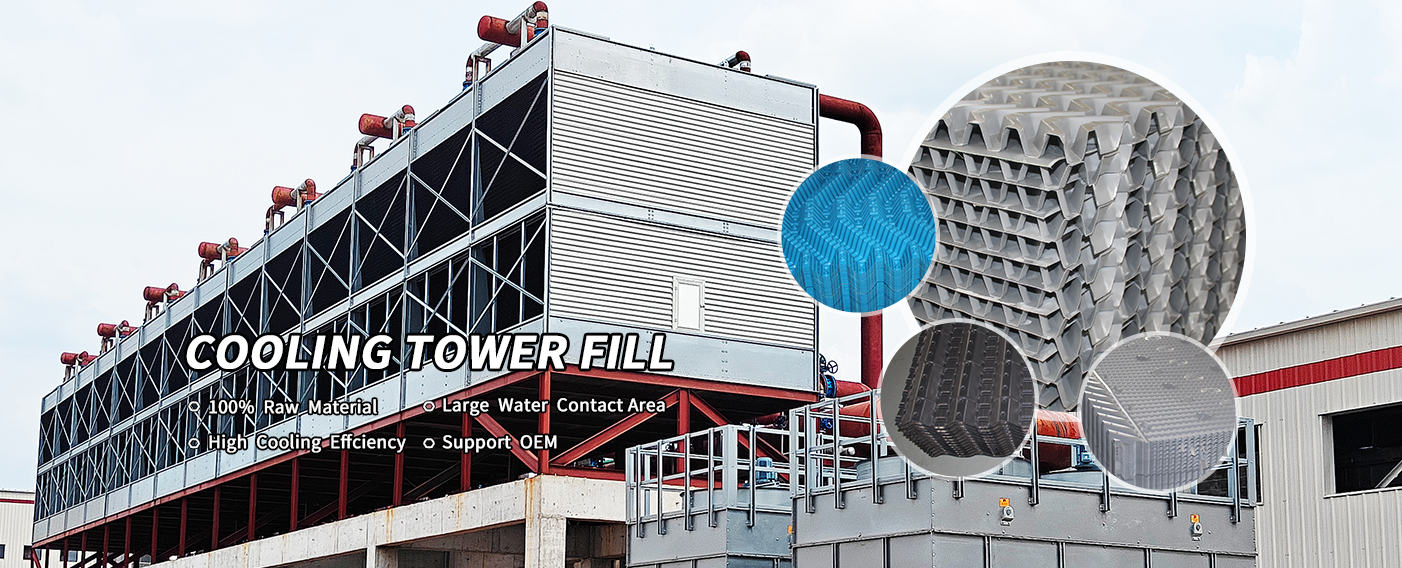
Cooling tower fill design plays a major role in cooling tower performance, thermal efficiency, water consumption, and maintenance requirements. The right cooling tower fill increases contact between hot process water and air, helping the tower remove heat more effectively.
But how do you choose the right fill design?
The answer depends on several factors, including water quality, cooling tower type, operating temperature, airflow, fouling risk, and required thermal performance. This guide explains the main cooling tower fill types, materials, design considerations, and selection criteria for industrial and commercial applications.
What Is Cooling Tower Fill?
Cooling tower fill is the internal media installed inside a cooling tower to increase the contact area between water and air.
Without fill, water would fall through the tower relatively quickly, providing limited air-water contact. Fill breaks the water into thin films or droplets and increases the available surface area for heat and mass transfer.
A well-designed cooling tower fill helps:
Increase heat transfer efficiency
Improve water distribution
Reduce required tower size
Support lower cold-water temperatures
Improve tower thermal performance
Optimize water and energy use
The fill is therefore one of the most important components in a cooling tower.
How Does Cooling Tower Fill Design Work?
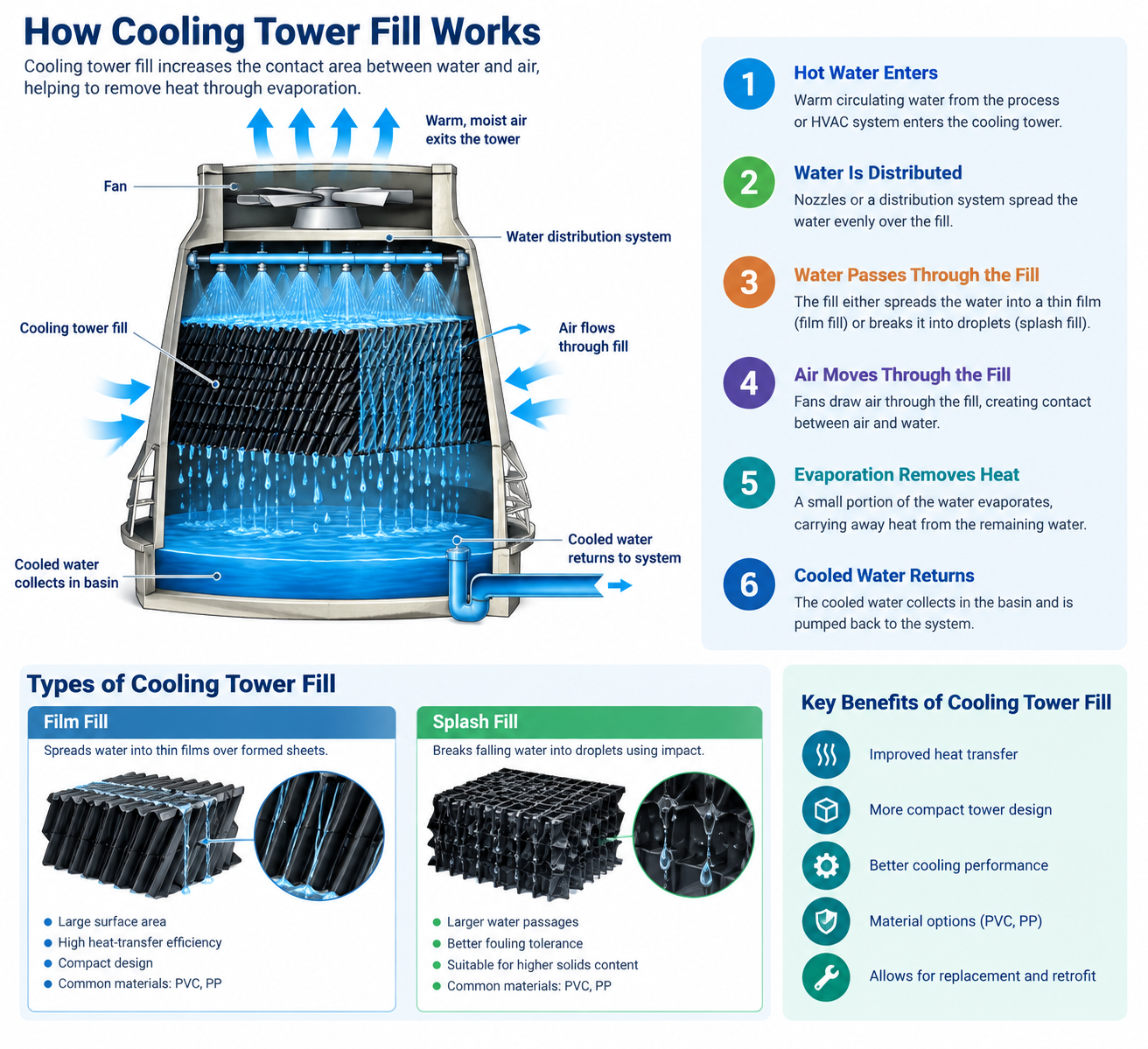
The basic principle is simple: hot water enters the tower and flows downward while air moves through the fill.
Depending on the tower design, airflow can move upward, horizontally, or in another controlled direction. As water and air contact the fill surface, heat is transferred from the water to the air. A portion of the water also evaporates, carrying heat away from the system.
Good cooling tower fill design maximizes useful air-water contact while maintaining acceptable pressure drop and water distribution.
The ideal design needs to balance:
Heat transfer area
Airflow resistance
Water loading
Fouling resistance
Mechanical strength
Chemical compatibility
Service life
Main Types of Cooling Tower Fill
There are three common categories of cooling tower fill: film fill, splash fill, and hybrid fill.
1. Film Fill
Film fill uses closely spaced sheets or channels to spread water into a thin film over a large surface area.
The large effective surface area provides strong heat transfer performance and allows many modern towers to achieve high thermal capacity in a relatively compact space.
Common film fill materials include PVC and PP.
Advantages of Film Fill
High heat transfer efficiency
Large effective surface area
Compact design
Lower fill volume for some applications
Suitable for relatively clean circulating water
Limitations
Film fill can be more sensitive to dirt, biological growth, suspended solids, and scale. Narrow passages can become blocked when water treatment is inadequate.
For this reason, film fill is often selected where water quality can be controlled effectively.
2. Splash Fill
Splash fill works differently. Instead of creating a continuous water film, splash bars or grids repeatedly break falling water into smaller droplets.
Common splash fill designs include:
PVC splash fill
PP splash fill
Polypropylene grid fill
Ladder-type splash fill
Modular splash fill
Advantages of Splash Fill
Better resistance to fouling
Suitable for dirtier water
Larger flow passages
Easier cleaning
Good mechanical durability
Suitable for industrial applications
Splash fill is often preferred for applications where suspended solids or contamination could cause problems with narrow film-fill passages.
3. Hybrid Fill
Hybrid fill combines characteristics of film and splash fill.
The goal is to achieve a balance between thermal performance and resistance to fouling. Hybrid designs can be useful where water quality varies or where a traditional film-fill design may require excessive maintenance.
The exact performance depends on the fill geometry, material, water loading, and tower operating conditions.
Cooling Tower Fill Materials
Material selection is another important part of cooling tower fill design.
PVC Cooling Tower Fill
PVC is widely used for film fill because it offers good chemical resistance, dimensional stability, and cost efficiency.
PVC cooling tower fill is commonly used in:
PVC is particularly common in applications where the circulating-water temperature remains within the material's suitable operating range.
PP Cooling Tower Fill
Polypropylene, or PP, offers good chemical resistance and can provide better temperature resistance than standard PVC in many applications.
PP cooling tower fill is available in both film and splash configurations.
It is commonly considered for industrial environments where operating conditions, chemical exposure, or temperature requirements make PP attractive.
Other Materials
Special applications may use other plastics or engineered materials. Material selection should always consider:
Operating temperature
Water chemistry
UV exposure
Chemical concentration
Mechanical loading
Expected service life
How to Choose the Right Cooling Tower Fill Design
Selecting cooling tower fill should start with the actual operating conditions rather than simply choosing the highest-performance fill on paper.
1. Check Water Quality
Water quality is one of the most important selection factors.
If the circulating water contains high levels of:
Suspended solids
Biological growth
Scale-forming minerals
Oil
Organic contaminants
a splash or hybrid design may be more appropriate than a fine-passage film fill.
2. Consider Cooling Tower Type
The tower configuration affects fill selection.
Common tower types include:
Crossflow cooling towers
Counterflow cooling towers
Induced-draft cooling towers
Forced-draft cooling towers
Open-circuit cooling towers
Always verify that the selected fill geometry is compatible with the tower's water distribution and airflow arrangement.
3. Determine Required Thermal Performance
Cooling requirements should be established before selecting fill.
Important parameters include:
Hot-water temperature
Cold-water temperature
Wet-bulb temperature
Range
Approach
Water flow rate
Airflow rate
Required heat rejection
A fill supplier can use these parameters to recommend the appropriate fill type, height, and configuration.
4. Evaluate Fouling Risk
A high-performance film fill is not necessarily the best choice for every application.
If the water is heavily contaminated, blocked fill can reduce airflow and water distribution, eventually reducing tower capacity.
For challenging water conditions, consider fill with larger passages and greater fouling resistance.
5. Select the Right Material
PVC and PP are among the most common choices.
Consider PP when higher temperature resistance or specific chemical compatibility is important. PVC can be an economical option for many conventional cooling tower applications.
Always compare the actual operating conditions with the manufacturer's material specifications.
6. Check Air Pressure Drop
Fill creates resistance to airflow. A design with very small passages may provide high surface area but can also increase pressure drop.
A good cooling tower fill design balances heat transfer performance with acceptable airflow resistance.
This is especially important for towers where fan power is a significant part of operating costs.
Cooling Tower Fill Design for Replacement Projects
When replacing existing fill, do not select a replacement based only on dimensions.
Check:
An aftermarket replacement fill can often be designed to match the existing tower, but thermal and mechanical compatibility should be confirmed before installation.
For older cooling towers, inspecting the fill support system and water distribution system at the same time can help prevent performance problems after replacement.
Film Fill vs. Splash Fill: Quick Comparison
| Feature | Film Fill | Splash Fill |
| Heat transfer area | High | Moderate |
| Fouling resistance | Moderate to low | High |
| Passage size | Smaller | Larger |
| Water quality requirement | Higher | Lower |
| Compactness | High | Moderate |
| Typical material | PVC, PP | PP, PVC |
| Common application | Clean water | Industrial/dirty water |
The actual performance depends on the specific fill design and operating conditions.
Common Cooling Tower Fill Design Mistakes
Several mistakes can reduce cooling tower performance.
Choosing Fill Only by Price
The cheapest fill may have a shorter service life or may not provide the required thermal performance.
Ignoring Water Quality
Installing fine-passage film fill in a heavily contaminated system can increase blockage and maintenance problems.
Matching Dimensions but Not Geometry
Two fill blocks with identical dimensions can have very different thermal characteristics because of differences in flute design, surface area, and pressure drop.
Ignoring Water Distribution
Even high-performance fill cannot compensate for poor water distribution. Nozzle condition, spray pattern, and water loading should be checked during fill replacement.
Final Thoughts
The right cooling tower fill design depends on the complete operating environment. Film fill provides high surface area and strong thermal performance, while splash fill offers greater resistance to fouling and is often suitable for challenging industrial water conditions. Hybrid fill can provide a balance between these characteristics.
When choosing cooling tower fill, consider water quality, tower configuration, thermal requirements, material compatibility, airflow resistance, maintenance, and expected service life.
For replacement projects, compare the existing fill geometry and operating conditions rather than relying only on dimensions. A properly selected PVC or PP cooling tower fill can improve heat transfer, maintain reliable tower operation, and support long-term cooling system performance.
FAQ
What is the best type of cooling tower fill?
There is no single fill type suitable for every cooling tower. Film fill is commonly used when high heat transfer performance and good water quality are available, while splash fill is often selected for applications with higher fouling risk.
Is PVC or PP better for cooling tower fill?
Both PVC and PP are widely used. The appropriate material depends on operating temperature, water chemistry, chemical exposure, and application requirements.
Can film fill be used with dirty water?
Film fill can be used in some systems with proper water treatment, but heavily contaminated water can increase the risk of blockage. Splash fill may be more suitable when fouling is a major concern.
How often should cooling tower fill be replaced?
Replacement intervals vary according to water chemistry, operating conditions, maintenance, temperature, and fill material. Regular inspection is more reliable than using a fixed replacement schedule.
Can aftermarket cooling tower fill replace original fill?
Yes, compatible aftermarket fill can be used for many cooling tower replacement projects. However, dimensions, geometry, material, thermal performance, water loading, and support requirements should be verified before purchase.
Internal Links for Other CoolingTowerParts
Cooling Tower Nozzles
Cooling Tower Drift Eliminators
Cooling Tower Louvers
Cooling Tower Fan Blades
Cooling Tower Motors