Industrial Cooling Tower Fan Performance: Design, Airflow And Efficiency
Industrial cooling tower fan performance is one of the most important factors affecting the thermal efficiency and operating stability of a cooling tower. In power plants, chemical facilities, steel mills, manufacturing factories, and commercial HVAC systems, cooling tower fans provide the airflow required to remove heat from circulating water.
A properly selected and maintained industrial cooling tower fan can deliver the required airflow, overcome system resistance, and support stable heat rejection. However, actual fan performance depends on several interconnected factors, including fan diameter, blade design, pitch angle, rotational speed, motor power, fan stack geometry, and cooling tower operating conditions.
Poor fan performance may result in insufficient airflow, increased energy consumption, excessive vibration, higher operating temperatures, and reduced cooling capacity. Therefore, understanding the relationship between fan design, airflow, and efficiency is essential for industrial cooling tower operators and equipment buyers.
This article explains the key factors affecting industrial cooling tower fan performance, introduces practical methods for improving airflow efficiency, and provides guidance for selecting and maintaining reliable fan systems.
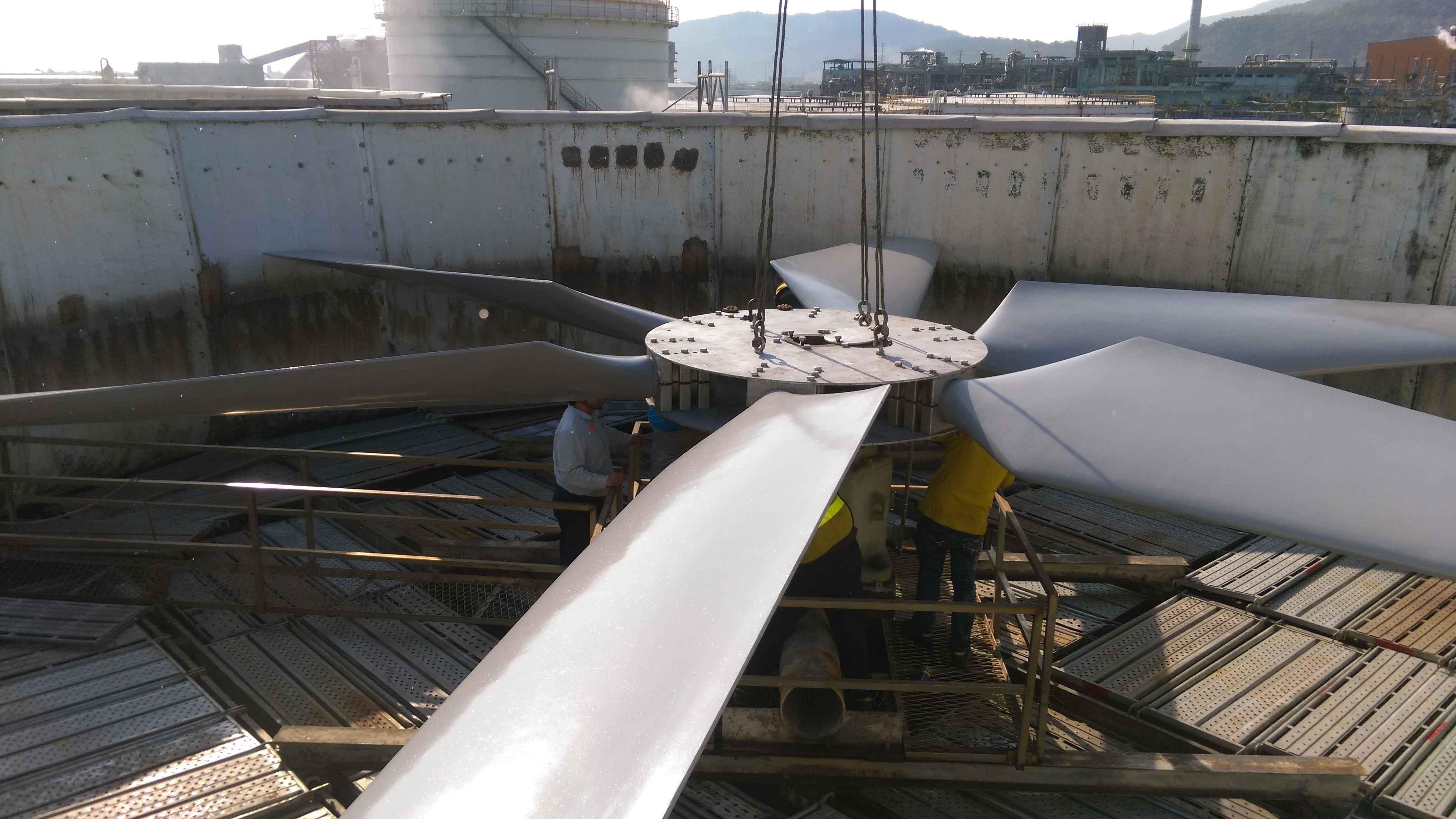
1. Understanding Industrial Cooling Tower Fan Performance
Industrial cooling tower fan performance describes how effectively a fan moves air through a cooling tower under specific operating conditions.
The fan must generate enough airflow and pressure to overcome resistance from the cooling tower structure and internal components.
What Does Cooling Tower Fan Performance Include?
Fan performance is not determined by airflow alone. Several technical parameters must be considered together.
Airflow Volume
Airflow volume refers to the amount of air moved by the fan within a specific period. It is commonly expressed in cubic meters per hour (m³/h) or cubic feet per minute (CFM).
Sufficient airflow is necessary for effective contact between air and circulating water inside the cooling tower.
Static Pressure
Static pressure represents the fan's ability to overcome resistance in the airflow system.
Cooling tower air encounters resistance from fill media, drift eliminators, louvers, internal structures, and discharge arrangements.
Fan Efficiency
Fan efficiency describes how effectively the fan converts mechanical input power into useful air power.
A more efficient fan can deliver the required airflow and pressure with lower power consumption, provided it operates at an appropriate operating point.
Power Consumption
Power consumption is the electrical energy used by the fan motor and associated drive system.
It is influenced by airflow requirements, system resistance, fan efficiency, rotational speed, and transmission losses.
Why Is Fan Performance Important for Industrial Cooling Towers?
Cooling tower fans directly influence the air movement needed for heat rejection.
When airflow is insufficient, the cooling tower may fail to achieve the required cold-water temperature. When the fan operates inefficiently, electricity costs may increase without providing a corresponding improvement in cooling performance.
Good fan performance helps support:
Stable cooling water temperatures.
Effective heat rejection.
Reliable industrial production.
Controlled fan energy consumption.
Reduced mechanical stress.
Consistent cooling tower operation.
2. How Does an Industrial Cooling Tower Fan Work?
Industrial cooling tower fans are designed to move large volumes of air through a cooling tower.
In a typical induced-draft cooling tower, the fan is installed near the top of the structure and draws air upward through the fill section.
The Airflow Process Inside a Cooling Tower
The cooling process involves several stages:
Ambient air enters through the cooling tower air inlets.
Air moves upward through the fill media.
Circulating water spreads across the fill surface.
Heat transfers from the water to the moving air.
The fan draws the warm, humid air toward the discharge section.
Heated air leaves the cooling tower through the fan stack.
The Relationship Between Airflow and Heat Transfer
The airflow rate influences the amount of air available to absorb heat and moisture from the circulating water.
However, increasing airflow does not always produce a proportional improvement in cooling capacity. Performance also depends on water flow, water distribution, fill condition, ambient wet-bulb temperature, and the operating characteristics of the complete cooling tower.
Induced-Draft and Forced-Draft Fan Systems
Industrial cooling towers commonly use mechanical-draft systems.
Induced-Draft Cooling Tower Fans
Induced-draft fans are positioned near the top of the cooling tower. They pull air through the tower and discharge it upward.
This arrangement is widely used in industrial cooling towers because it provides controlled airflow through the cooling section.
Forced-Draft Cooling Tower Fans
Forced-draft fans are generally installed near the air inlet. They push ambient air into the cooling tower.
The selection between induced-draft and forced-draft arrangements depends on tower design, site conditions, maintenance requirements, and airflow distribution.
3. Key Design Factors Affecting Industrial Cooling Tower Fan Performance
Fan design has a significant influence on airflow capacity, pressure generation, power requirements, and mechanical reliability.
Fan Diameter
Fan diameter determines the swept area of the fan and is an important parameter in airflow design.
A larger fan may move more air under suitable operating conditions, but it also affects blade loads, tip speed, drive power, and installation requirements.
Selecting the Correct Fan Diameter
The correct diameter should be determined according to:
Required cooling tower airflow.
Available installation space.
Fan stack dimensions.
System resistance.
Rotational speed.
Blade design.
Mechanical support limitations.
An oversized fan is not automatically more efficient. It must be properly matched to the cooling tower system.
Fan Blade Design
Fan blades convert rotational energy into airflow.
Their geometry affects aerodynamic loading, pressure generation, noise, and power consumption.
Blade Profile and Airfoil Shape
Modern industrial cooling tower fan blades often use aerodynamic profiles designed to move large volumes of air efficiently.
Important blade design characteristics include:
Airfoil cross-section.
Chord length.
Blade thickness.
Blade twist.
Leading-edge geometry.
Trailing-edge shape.
A suitable profile helps control airflow around the blade and reduce unnecessary aerodynamic losses.
Blade Pitch Angle
Blade pitch angle is the angle at which a blade is installed relative to a specified reference plane.
Pitch angle has a direct influence on the fan's aerodynamic loading.
An increase in pitch may increase airflow and power demand, but only within the limits of the fan design and system operating conditions.
The correct pitch must be established using manufacturer specifications and verified through actual operating measurements.
Number of Fan Blades
The number of blades influences airflow characteristics, aerodynamic loading, mechanical balance, and noise.
More blades do not necessarily mean higher airflow or better efficiency.
The optimal blade count depends on fan diameter, blade profile, pitch, rotational speed, and the required operating point.
Fan Hub Design
The fan hub connects the blades to the rotating shaft or drive assembly.
A well-designed hub should provide reliable blade support and distribute mechanical loads appropriately.
Important considerations include:
Hub material.
Structural strength.
Blade mounting accuracy.
Bolt connection quality.
Corrosion protection.
Ease of inspection.
4. Airflow Volume and Static Pressure: Two Essential Performance Parameters
Airflow volume and static pressure are closely related and should be evaluated together when selecting an industrial cooling tower fan.
Understanding Airflow Volume
Airflow volume represents the quantity of air moved by the fan per unit of time.
The required airflow depends on the cooling tower's thermal duty and operating conditions.
Factors Affecting Airflow Volume
Several factors can influence actual airflow:
If actual airflow is below the design requirement, cooling tower performance may deteriorate.
Understanding Static Pressure
Static pressure is an important measure of the fan's ability to overcome resistance in the cooling tower airflow path.
The fan must provide enough pressure to move air through all internal components.
Common Sources of Airflow Resistance
Dirty or blocked internal components may increase system resistance and reduce airflow.
Why Must Airflow and Static Pressure Be Matched?
A fan may have a high nominal airflow rating but fail to deliver the expected volume when installed in a system with greater resistance than anticipated.
Engineers should evaluate the fan performance curve together with the cooling tower system resistance curve.
The intersection of these curves indicates the approximate operating point.
This approach helps determine whether the selected fan can meet the required airflow and pressure conditions.
5. The Relationship Between Fan Speed and Energy Efficiency
Fan rotational speed affects airflow, pressure, and power consumption.
Controlling fan speed is therefore an important method of managing cooling tower performance and electricity costs.
How Does Fan Speed Affect Airflow?
For the same fan under similar operating conditions, the approximate fan affinity laws describe how performance changes with rotational speed.
If fan diameter and configuration remain unchanged:
Airflow is approximately proportional to rotational speed.
Pressure is approximately proportional to rotational speed squared.
Power is approximately proportional to rotational speed cubed.
These relationships are approximate and assume comparable operating conditions. Actual results depend on system resistance, fan efficiency, and equipment limitations.
Example of Speed Reduction
If a fan's rotational speed is reduced to 90% of its original value, the idealized affinity laws suggest:
Airflow becomes approximately 90% of the original airflow.
Pressure becomes approximately 81%.
Power becomes approximately 72.9%.
This illustrates why speed control can be valuable when the cooling tower does not require full airflow continuously.
Variable Frequency Drives for Cooling Tower Fans
A variable frequency drive (VFD) adjusts motor speed by changing the electrical supply frequency.
VFDs allow fan operation to respond to changing cooling demand.
Potential benefits include:
Reduced fan energy consumption during lower-load periods.
Better control of cold-water temperature.
Flexible operation under changing weather conditions.
Reduced starting current with appropriate configuration.
Improved coordination with industrial process requirements.
Important VFD Considerations
Before installing a VFD, check motor compatibility, minimum operating speed, gearbox limitations, vibration characteristics, and the manufacturer's permitted operating range.
The fan must not be operated at speeds that create resonance or exceed mechanical design limits.
6. How Fan Stack Design Influences Airflow Performance
The fan stack is an important part of an industrial cooling tower fan system.
It surrounds the fan and helps guide discharged air away from the tower.
A properly engineered fan stack can help manage airflow and reduce unnecessary discharge losses.
Common Cooling Tower Fan Stack Designs
Cylindrical Fan Stack
A cylindrical fan stack has a relatively consistent diameter along its height.
It may be suitable for cooling towers with straightforward discharge arrangements.
Tapered Fan Stack
A tapered fan stack has a changing diameter along its height.
Its profile can be designed to suit the fan and airflow requirements of a particular cooling tower.
Flared Fan Stack
A flared outlet may help guide discharged air and influence pressure recovery.
Its effectiveness depends on the actual geometry, fan characteristics, and installation conditions.
Why Choose an FRP Cooling Tower Fan Stack?
Fiberglass reinforced plastic (FRP) is widely used for industrial cooling tower fan stacks.
Its characteristics include:
Important Fan Stack Design Parameters
When evaluating an FRP fan stack, consider:
Internal diameter.
Overall height.
Wall thickness.
Inlet and outlet geometry.
Fan tip clearance.
Mounting flange dimensions.
Structural reinforcement.
Wind loading requirements.
The fan stack should be designed together with the fan rather than selected independently.
7. Material Selection and Its Impact on Fan Performance
Material selection affects blade weight, mechanical loading, corrosion resistance, and expected service life.
Industrial cooling tower fans commonly use FRP, aluminum, and other engineered materials.
FRP Cooling Tower Fan Blades
FRP fan blades combine glass-fiber reinforcement with a resin matrix.
They are widely used because of their relatively low weight and corrosion resistance.
Advantages of FRP Blades
Good corrosion resistance with a suitable resin system.
Flexible aerodynamic design.
Relatively low weight.
Potentially reduced mechanical loading.
Suitability for various industrial environments.
The actual performance depends on the resin, fiber arrangement, laminate structure, and manufacturing quality.
Aluminum Cooling Tower Fan Blades
Aluminum blades offer relatively low weight and good manufacturing flexibility.
However, alloy selection and corrosion protection should be considered according to the operating environment.
Stainless Steel Fan Components
Stainless steel may be used for specific fan components requiring strength and corrosion resistance.
The appropriate grade should be selected according to the cooling water environment and chemical exposure.
Comparing Common Fan Blade Materials
| Material | Main Advantages | Important Considerations |
| FRP | Lightweight, corrosion-resistant, flexible design | Resin and laminate quality |
| Aluminum | Lightweight, machinable | Alloy selection and corrosion protection |
| Stainless steel | High strength, corrosion resistance depending on grade | Weight and cost |
The most suitable material depends on the application, operating temperature, fan size, mechanical loads, and maintenance requirements.
8. Fan Efficiency and Industrial Energy Consumption
Fan energy consumption is a major part of the operating cost of many mechanical-draft cooling towers.
Improving fan efficiency can help reduce electricity use while maintaining the required cooling performance.
What Determines Fan Efficiency?
Several factors affect the efficiency of an industrial cooling tower fan:
A fan should be selected to operate efficiently at the airflow and pressure required by the cooling tower.
Understanding Fan Power Consumption
The ideal air power transferred to the airflow can be estimated using:
[
P_{\text{air}} = Q \times \Delta p
]
Where:
(P_{\text{air}}) = air power in watts.
(Q) = airflow volume in cubic meters per second.
(\Delta p) = pressure difference in pascals.
The actual input power will be higher because the fan and drive system are not 100% efficient.
A simplified relationship is:
[
P_{\text{input}} = \frac{Q \times \Delta p}{\eta}
]
Where (\eta) represents the relevant overall efficiency used for the calculation.
For a complete motor-driven system, electrical input power also depends on motor and transmission efficiencies.
Practical Ways to Reduce Energy Consumption
Optimize Blade Pitch
Blade pitch should match the required operating conditions.
Incorrect pitch may cause excessive motor loading or insufficient airflow.
Improve Fan Operating Conditions
Check for blocked air inlets, dirty fill, damaged drift eliminators, and unnecessary airflow restrictions.
Use Variable-Speed Control
A VFD can reduce fan speed when full cooling capacity is not required.
Maintain Mechanical Components
Proper lubrication, alignment, and balancing help reduce avoidable mechanical losses.
Evaluate the Complete System
Energy optimization should consider the fan, motor, gearbox, airflow path, and cooling tower thermal performance together.
9. Common Factors That Reduce Industrial Cooling Tower Fan Performance
Even a properly selected fan may experience performance problems during operation.
Understanding the causes helps maintenance teams identify the appropriate corrective action.
Incorrect Blade Pitch Angle
An unsuitable pitch angle can change airflow and motor loading.
Possible solutions:
Check blade angle against manufacturer specifications.
Confirm that all blades have consistent settings.
Measure motor current.
Verify actual fan speed.
Evaluate airflow performance after adjustment.
Fan Blade Damage
Cracks, deformation, erosion, and surface damage may affect aerodynamic performance and mechanical balance.
Possible solutions:
Inspect blade surfaces regularly.
Check blade roots and mounting points.
Replace damaged blades according to manufacturer guidance.
Rebalance the fan assembly when required.
Fan Imbalance
Uneven blade mass, deposits, damaged components, or incorrect assembly can cause imbalance.
Possible solutions:
Clean the blades.
Inspect the hub assembly.
Check blade weight and positioning.
Perform suitable static or dynamic balancing.
Excessive System Resistance
Blocked fill media, dirty louvers, and damaged drift eliminators can increase airflow resistance.
Possible solutions:
Inspect the air inlet.
Clean or replace blocked components.
Check drift eliminator condition.
Review system pressure losses.
Incorrect Fan Speed
Fan speed that is too low may produce insufficient airflow. Excessive speed can increase power demand and mechanical loading.
Possible solutions:
Verify actual rotational speed.
Inspect the motor and drive system.
Check gearbox condition.
Confirm VFD settings.
Compare operation with manufacturer specifications.
Poor Fan Stack Installation
Incorrect fan stack dimensions, alignment, or fan tip clearance can affect airflow and create mechanical risks.
Possible solutions:
Inspect fan stack alignment.
Check mounting flange connections.
Verify blade tip clearance.
Review installation drawings.
Correct structural or dimensional problems.
10. How to Measure and Evaluate Cooling Tower Fan Performance
Performance measurement helps determine whether an industrial fan is operating as expected.
A reliable evaluation should include airflow, pressure, electrical measurements, mechanical condition, and cooling tower thermal performance.
Measure Airflow
Airflow measurements can be performed using suitable instruments and accepted measurement methods.
Possible approaches include:
Air velocity measurements at selected locations.
Airflow traverse measurements.
Manufacturer performance data.
Validated engineering calculations.
Why Is Measurement Location Important?
Airflow may not be uniform across the discharge area. Measurements taken at only one point may not represent the total airflow.
An appropriate measurement method should account for flow distribution and installation geometry.
Measure Static Pressure
Pressure measurements can help identify changes in system resistance.
Comparing operating pressure with design data may reveal blocked internal components or other airflow restrictions.
Monitor Motor Current and Power
Electrical measurements provide useful information about fan loading.
Record:
A sudden increase in current may indicate excessive aerodynamic loading or mechanical problems.
Monitor Vibration
Vibration monitoring helps identify mechanical deterioration.
Measurements should be taken at suitable locations and compared with established baseline values and applicable manufacturer or industry guidance.
Evaluate Thermal Performance
Fan performance should ultimately be considered in relation to cooling tower duty.
Important operating parameters include:
A fan may be mechanically healthy while the cooling tower still performs poorly because of water distribution, fill condition, or unfavorable ambient conditions.
11. Industrial Cooling Tower Fan Performance in Different Applications
Different industries have different cooling loads and operating requirements.
Fan selection should reflect the application rather than relying on one standard design for every installation.
Power Plants
Power generation facilities often use large cooling towers to remove heat from circulating water.
Fan systems may require:
High airflow capacity.
Reliable continuous operation.
Stable mechanical performance.
Efficient power consumption.
Resistance to outdoor environmental conditions.
Chemical and Petrochemical Plants
Chemical facilities may expose fan components to corrosive substances and demanding environmental conditions.
FRP blades and fan stacks may be suitable when their resin systems and protective materials match the actual exposure.
Steel and Metallurgical Plants
Steel manufacturing requires substantial cooling capacity for process equipment and production systems.
Fan design should consider high thermal loads, mechanical reliability, and maintenance accessibility.
HVAC and Commercial Buildings
HVAC cooling towers often experience changing seasonal and daily loads.
Variable-speed fan systems may help match airflow to cooling demand.
General Manufacturing Facilities
Industrial factories use cooling towers for machinery, process water, and production equipment.
Fan performance should be matched to operating schedules, water temperatures, and site conditions.
12. How to Select an Industrial Cooling Tower Fan with the Right Performance
Selecting the correct fan is essential for achieving reliable cooling tower operation.
Buyers should evaluate the technical requirements before comparing suppliers and quotations.
Confirm Cooling Tower Design Conditions
Start by identifying the required thermal duty.
Important information includes:
These parameters help establish the required cooling tower airflow.
Review Fan Technical Specifications
Request detailed technical information from the manufacturer.
The specification should include:
Fan diameter.
Airflow volume.
Static pressure.
Rotational speed.
Fan blade material.
Blade pitch angle.
Motor power.
Hub configuration.
Fan efficiency.
Fan performance curves.
Why Are Performance Curves Important?
Performance curves show how airflow, pressure, and power change under different operating conditions.
They help engineers determine whether a fan is suitable for the actual cooling tower system.
Evaluate Manufacturer Experience
A reliable industrial cooling tower fan manufacturer should understand aerodynamic design, mechanical assembly, material selection, and cooling tower operating conditions.
Before purchasing, consider:
Manufacturing experience.
Product range.
Customized design capabilities.
Quality control procedures.
Material specifications.
Inspection documentation.
Delivery capacity.
Technical support.
Check Replacement Compatibility
For fan replacement projects, verify the mechanical and electrical interfaces.
Check fan diameter, hub dimensions, blade quantity, shaft connection, rotational speed, motor power, and available installation space.
A replacement fan should match the existing system's performance requirements, not simply its physical appearance.
13. Maintenance Methods for Stable Fan Performance
Regular maintenance helps maintain airflow efficiency and reduces unexpected equipment downtime.
Inspect Fan Blades Regularly
Check for cracks, deformation, surface deterioration, deposits, and loose connections.
Damaged blades should be evaluated before continued operation.
Check Blade Pitch and Fasteners
Confirm that blade pitch settings remain consistent and that mounting fasteners are secure.
Any adjustment must follow the manufacturer's procedures.
Maintain the Motor and Gearbox
Inspect lubrication, seals, bearings, alignment, and abnormal noise.
Follow the motor and gearbox manufacturers' maintenance intervals.
Clean Cooling Tower Airflow Components
Dirty louvers, blocked fill media, and damaged drift eliminators can increase system resistance.
Keep airflow passages clean and maintain water distribution equipment.
Monitor Operating Data
Record vibration, motor current, rotational speed, and cooling water temperatures.
Comparing historical data can help identify developing problems before they cause major equipment failures.
Establish a Preventive Maintenance Schedule
A practical maintenance program should include:
Routine visual inspections.
Periodic vibration checks.
Motor current monitoring.
Blade and hub inspections.
Gearbox lubrication.
Fastener checks.
Cooling tower airflow inspections.
Annual or scheduled engineering reviews.
The actual inspection frequency should reflect operating hours, environmental conditions, and manufacturer recommendations.
14. Future Trends in Industrial Cooling Tower Fan Performance
Industrial cooling tower fan technology continues to evolve as operators seek better energy efficiency, reliability, and operational control.
Advanced Aerodynamic Blade Design
Improved blade profiles and optimized geometry can help manufacturers develop fans suited to specific airflow and pressure requirements.
Lightweight Composite Materials
Advanced FRP materials offer opportunities to develop fan blades with suitable strength, lower weight, and improved resistance to industrial environments.
Computational Fluid Dynamics
Computational fluid dynamics (CFD) can help engineers analyze airflow distribution, turbulence, pressure losses, and fan stack interactions.
These simulations are useful during design development, although actual performance should be verified through appropriate engineering analysis and operating measurements.
Intelligent Condition Monitoring
Sensors can monitor vibration, bearing temperature, motor current, and rotational speed.
Collected data can help maintenance teams detect abnormal operating conditions and improve maintenance planning.
Energy-Efficient Variable-Speed Systems
VFD technology allows cooling tower fan operation to respond to changing cooling demand.
When correctly designed, these systems can help reduce unnecessary fan energy consumption.
15. Frequently Asked Questions About Industrial Cooling Tower Fan Performance
What Factors Affect Industrial Cooling Tower Fan Performance?
Major factors include fan diameter, blade profile, blade pitch, rotational speed, static pressure, system resistance, motor power, fan stack geometry, and installation quality.
How Can I Improve Cooling Tower Fan Airflow?
Check fan speed, blade pitch, air inlet conditions, fill cleanliness, drift eliminators, and fan stack dimensions. Confirm the actual operating point against the fan performance curve before making modifications.
Does a Larger Cooling Tower Fan Always Provide Better Performance?
No. A larger fan may move more air under suitable conditions, but it also affects mechanical loads, power requirements, and installation dimensions. Correct selection depends on the cooling tower's airflow and pressure requirements.
How Does Blade Pitch Affect Fan Efficiency?
Blade pitch affects aerodynamic loading, airflow, and power consumption. An unsuitable pitch may cause insufficient airflow or excessive motor loading. The correct setting must follow manufacturer specifications.
Can a VFD Reduce Cooling Tower Fan Energy Consumption?
Yes. A VFD can reduce fan speed when full cooling capacity is unnecessary. Because fan power is approximately proportional to the cube of rotational speed under idealized affinity-law conditions, speed reduction may produce substantial energy savings. Actual savings depend on system conditions and operating hours.
What Is the Difference Between Airflow and Static Pressure?
Airflow describes the volume of air moved by the fan per unit of time. Static pressure describes the pressure capability available to overcome resistance in the system. Both are necessary for evaluating fan performance.
Why Does a Cooling Tower Fan Consume Too Much Power?
Possible reasons include excessive blade pitch, high rotational speed, mechanical friction, incorrect fan selection, poor transmission efficiency, or changes in system resistance. Electrical and mechanical inspections are needed to identify the actual cause.
How Often Should an Industrial Cooling Tower Fan Be Inspected?
Inspection frequency depends on operating conditions and manufacturer recommendations. Visual checks should be performed routinely, while vibration, electrical, gearbox, and structural inspections should follow an established preventive maintenance schedule.
Conclusion
Industrial cooling tower fan performance depends on the coordinated design and operation of aerodynamic, mechanical, and electrical components. Fan diameter, blade geometry, pitch angle, rotational speed, motor power, and fan stack configuration all influence airflow and energy efficiency.
To achieve better performance, industrial operators should match fan characteristics to the cooling tower's actual airflow and pressure requirements. Regular inspection, proper balancing, suitable blade adjustment, and effective speed control can help maintain stable operation and reduce unnecessary energy consumption.
For buyers planning a new installation or fan replacement, working with an experienced industrial cooling tower fan manufacturer is an important step. A professional supplier should provide suitable fan specifications, performance curves, material information, and technical support to help ensure compatibility with the complete cooling tower system.
By focusing on design accuracy, airflow optimization, energy efficiency, and preventive maintenance, industrial facilities can improve cooling tower reliability and support long-term operating performance.


