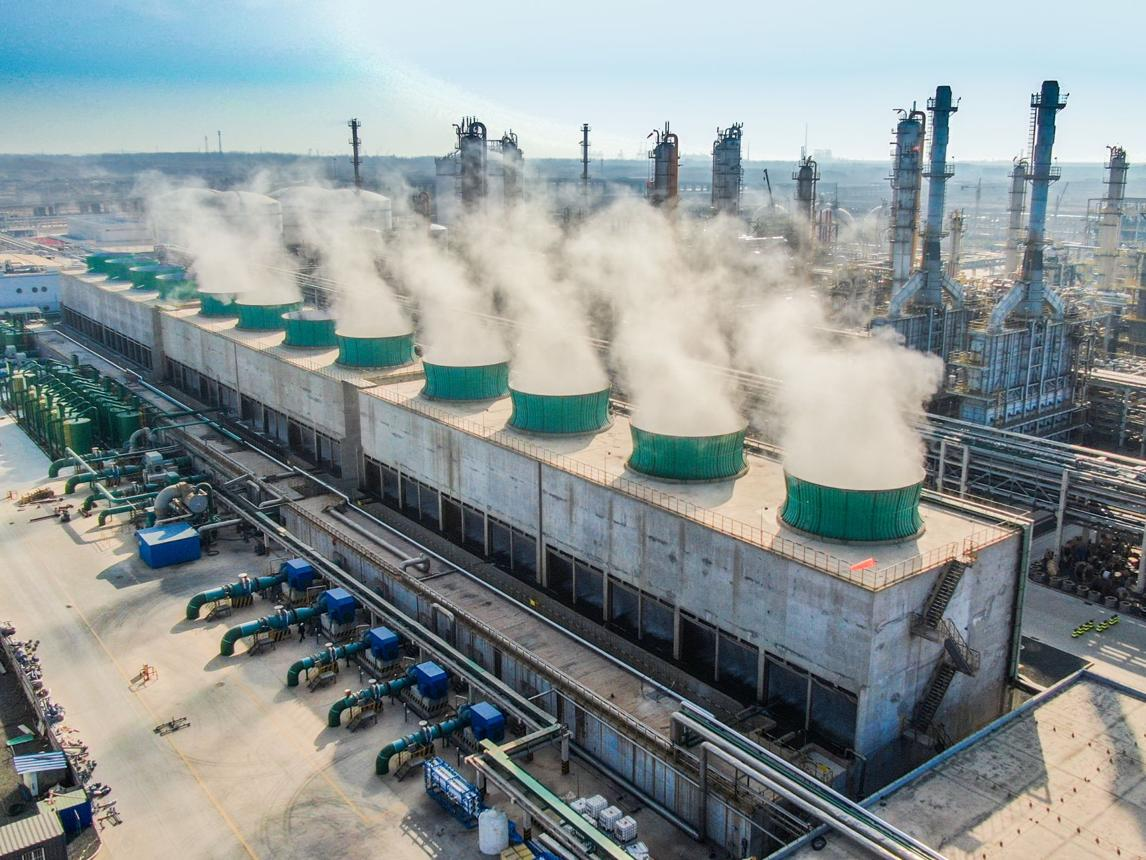
When you need a cooling tower fan, where you buy it can be just as important as what you buy.
You can purchase through a trading company, distributor, online marketplace, or directly from a factory. So, which option makes the most sense for an industrial cooling project?
For many cooling tower manufacturers, contractors, distributors, and end users, working directly with a cooling tower fan supplier offers some important advantages. You can communicate with the manufacturer more easily, discuss custom requirements, reduce unnecessary middleman costs, and get closer to the people who actually design and manufacture the product.
This becomes even more valuable when you need a custom cooling tower fan, replacement fan, centrifugal fan, axial fan, fan blade, fan hub, or other cooling tower component.
A direct factory relationship is not simply about getting a lower price. It is about getting better access to manufacturing knowledge, customization, quality control, technical communication, and long-term support.
In this article, we will look at the major advantages of working directly with a factory cooling tower fan supplier and explain why Power Tower Cooling Technology (Shaoxing) Co., Ltd. can be a practical manufacturing partner for cooling tower fan projects.
What Is a Direct Factory Cooling Tower Fan Supplier?
A direct factory cooling tower fan supplier is a manufacturer that produces cooling tower fan products in its own manufacturing operation and supplies them directly to customers.
Instead of moving through several layers of the supply chain, the communication path is much shorter:
Customer → Factory → Production → Delivery
With a traditional trading structure, the process may look more like:
Customer → Distributor → Trading Company → Factory → Production → Delivery
Both models can work, but they are not the same.
When you work directly with a factory, you have a closer connection to the people responsible for production. This can be especially useful when specifications are complicated or the product needs customization.
Why Supplier Choice Matters
A cooling tower fan is not simply a rotating piece of equipment. It affects airflow, static pressure, cooling performance, energy consumption, vibration, noise, and equipment reliability.
If the fan is correctly matched to the cooling tower, it can help the system operate smoothly. If it is incorrectly selected, even a high-quality fan may fail to deliver the expected performance.
That is why supplier selection matters.
A professional supplier should be able to understand questions such as:
What airflow is required?
What static pressure must the fan overcome?
What is the required fan diameter?
What motor power is available?
What material is suitable?
Is the fan replacing an existing model?
Does the customer need OEM or ODM manufacturing?
A direct manufacturer is often in a better position to discuss these technical questions because the factory is closer to the actual manufacturing process.
Direct Factory vs. Trading Company
A trading company can be useful when a buyer wants to source many different products from different manufacturers. However, when the project involves a specialized cooling tower fan, direct factory communication can provide a different level of technical access.
With a factory, you can discuss the product specification directly with the manufacturer rather than passing questions through several people.
This can reduce misunderstandings, especially when discussing dimensions, blade geometry, materials, airflow requirements, motor specifications, and installation details.
Think of it like repairing a car. Would you rather explain a complicated mechanical problem directly to the engineer who works on the vehicle, or explain it through several people who then pass the message along?
For customized cooling tower components, direct communication can make a real difference.
Lower Cooling Tower Fan Purchasing Costs
One of the most obvious advantages of working with a direct factory cooling tower fan supplier is cost control.
A factory-direct purchase can reduce some of the additional costs associated with multiple layers of distribution.
Every additional middleman may add margin, handling costs, communication costs, storage costs, or other expenses. When the supply chain becomes longer, the final product price can increase.
Buying directly does not automatically mean that every factory will always offer the lowest price. Manufacturing quality, materials, engineering, testing, packaging, and logistics all affect the final cost.
However, direct sourcing gives you an opportunity to discuss pricing with the manufacturer based on the actual production requirements.
That can be particularly useful for repeat orders or larger projects.
Fewer Middlemen
A shorter supply chain can make purchasing simpler.
Instead of communicating with one company about the quotation, another company about specifications, and another party about production, you can work directly with the manufacturer.
This can make it easier to confirm:
Product specifications
Quantity
Customization
Packaging requirements
Delivery schedule
Technical documents
Replacement requirements
Fewer communication layers can also reduce the chance of technical information being lost or misunderstood.
Better Cost Transparency
When you work directly with a factory, you can often have a clearer conversation about why a particular fan costs more than another model.
For example, the price may change because of:
This transparency helps buyers compare products based on value rather than simply comparing two numbers on a quotation sheet.
For industrial equipment, the cheapest option is rarely the best option if it creates higher maintenance costs later.
Better Custom Cooling Tower Fan Solutions
Not every cooling tower uses a standard fan configuration.
You may need a special fan diameter, unusual mounting dimensions, a specific rotation direction, different material, customized airflow, or a replacement for an obsolete model.
This is where direct factory cooperation becomes especially useful.
A manufacturer can evaluate the requirements and determine what can be adjusted during production.
Instead of asking, "Which standard product fits?" you can ask:
"Can you manufacture the fan according to my application?"
That change in approach opens the door to much more flexible cooling tower fan solutions.
Custom Fan Dimensions
Physical dimensions are often critical for cooling tower fan replacement and retrofit projects.
The fan may need to fit an existing housing, shaft, mounting structure, duct, motor, or tower opening.
Even a small dimensional difference can create installation problems.
A direct factory supplier can review drawings, photographs, measurements, and existing fan specifications to determine whether a customized product can be manufactured.
This is particularly valuable when the original fan is discontinued or difficult to source.
Custom Airflow and Static Pressure
A cooling tower fan should not be selected based only on diameter.
Air volume and static pressure are equally important.
For example, two fans with similar physical dimensions can have very different performance because of differences in impeller geometry, blade design, rotational speed, or housing configuration.
A direct manufacturer can discuss the required operating point and develop the fan around the customer's performance requirements.
This helps avoid the common mistake of choosing a fan simply because it "looks like" the original.
OEM and ODM Cooling Tower Fan Services
OEM and ODM manufacturing can be another major advantage of working directly with a factory.
For OEM projects, the manufacturer can produce products according to the customer's specifications, branding, drawings, or project requirements.
ODM cooperation can go further by allowing the manufacturer to participate in product design and development.
This can be useful for cooling tower manufacturers, distributors, engineering companies, and equipment brands that need customized components without building their own fan manufacturing facility.
Instead of maintaining every manufacturing process internally, companies can work with an experienced factory and focus their resources on engineering, sales, installation, and customer relationships.
Better Quality Control
When you work directly with a manufacturer, you have a closer connection to the production process.
Quality is not created at the shipping department. It starts with material selection and continues through manufacturing, assembly, balancing, inspection, packaging, and delivery.
A professional factory should have procedures for controlling important production stages.
For cooling tower fans, quality control can include dimensional accuracy, material quality, blade consistency, assembly accuracy, balancing, and other project-specific inspections.
Raw Material Inspection
Material quality directly affects the service life of a cooling tower fan.
Cooling towers often operate in wet environments, and some applications may also expose components to chemicals or corrosive conditions.
Depending on the application, materials may include FRP, aluminum, steel, stainless steel, or other engineered materials.
Choosing the correct material is not simply a matter of price. The material should match the operating environment and mechanical requirements.
Working directly with the factory gives customers a better opportunity to discuss these material choices before production.
Production and Assembly Inspection
Manufacturing accuracy is important for rotating equipment.
An impeller that is incorrectly assembled or poorly aligned can create vibration and mechanical stress.
For this reason, production and assembly should be controlled carefully.
Dimensions, fasteners, shafts, housings, blades, and other components need to be assembled according to the intended design.
A direct factory relationship makes it easier to communicate project-specific inspection requirements before the product is shipped.
Fan Balancing and Performance Testing
Fan balancing is particularly important because the impeller rotates continuously at operating speed.
An imbalance can lead to vibration, noise, bearing stress, and premature mechanical wear.
For customized cooling tower fans, balancing and other appropriate checks should be considered as part of the manufacturing process.
The exact inspection and testing requirements can vary according to fan type and project specifications, but the basic principle remains the same:
A rotating component should be manufactured and assembled for stable operation.
Faster Technical Communication
One of the most underrated advantages of direct factory sourcing is communication.
Industrial buyers often have technical questions that cannot be answered by a basic product catalog.
You may need to ask:
"Can this fan fit our existing housing?"
"Can the blade angle be changed?"
"Can you manufacture the fan according to our drawing?"
"What information do you need to reproduce our existing fan?"
"Can this material handle our operating environment?"
When communication goes directly to the manufacturer, answers can often be discussed in greater technical detail.
This is especially important when the project involves customization.
Shorter Lead Times and Better Production Coordination
Lead time depends on many factors, including product complexity, order quantity, material availability, customization, production scheduling, and logistics.
However, direct communication with the factory can make production coordination easier.
You can discuss the production schedule directly with the manufacturer instead of relying on another company to contact the factory for every update.
For urgent replacement projects, this can be particularly useful.
A cooling tower that is out of service may affect an entire production line, so time matters.
Direct communication helps customers understand the actual manufacturing schedule and coordinate installation accordingly.
Easier Cooling Tower Fan Replacement
Cooling tower fan replacement is one of the situations where factory-direct sourcing can provide strong practical benefits.
Older fans may be discontinued. The original manufacturer may no longer supply spare parts. Or the customer may want to upgrade the fan while keeping the existing cooling tower structure.
A direct manufacturer can evaluate the existing fan and discuss whether a replacement can be customized.
Useful information includes:
Existing fan model
Fan diameter
Impeller dimensions
Motor power
RPM
Rotation direction
Air volume
Static pressure
Shaft dimensions
Mounting dimensions
Photographs
Technical drawings
The more information available, the easier it is to develop a suitable replacement solution.
Matching Existing Fan Dimensions
A replacement fan often needs to fit into an existing space.
That means dimensions matter.
A direct factory supplier can review measurements and determine whether the fan can be manufactured according to those requirements.
This can eliminate the need to modify the entire cooling tower just because the original fan is no longer available.
For retrofit projects, this flexibility can save both time and engineering effort.
Improving Older Cooling Towers
A replacement does not always need to be a simple copy of the old fan.
Sometimes the customer wants to improve the system.
For example, an older cooling tower may have inefficient fan blades, excessive vibration, outdated materials, or a fan that no longer matches the current operating conditions.
A custom replacement can provide an opportunity to review the application and potentially improve airflow, energy efficiency, reliability, or maintenance requirements.
In other words, a fan retrofit can be more than maintenance.
It can be an upgrade.
Better After-Sales Technical Support
A factory relationship should not end when the product leaves the warehouse.
Cooling tower fans may operate for years, and customers may eventually need replacement blades, hubs, bearings, motors, or other components.
Direct communication with the manufacturer can make future support easier because the factory can refer back to the original project specifications.
This is particularly valuable for customized products.
When a product was manufactured specifically for a customer's equipment, maintaining accurate technical information can simplify future replacement and maintenance work.
Access to Cooling Tower Fan Parts
A cooling tower fan is part of a larger mechanical system.
Depending on the fan design, customers may eventually need components such as:
Working with a manufacturer that understands cooling tower components can make it easier to identify the correct replacement part.
This can be much more convenient than trying to identify an unknown component from a photograph or generic catalog.
How to Evaluate a Direct Factory Supplier
Not every company that claims to be a factory will provide the same level of manufacturing capability.
Before placing an order, buyers should evaluate the supplier carefully.
Ask about manufacturing experience, product range, customization capability, technical support, quality control, communication, packaging, export experience, and previous applications.
It is also useful to determine whether the supplier understands cooling tower applications specifically.
A company that manufactures general industrial fans may not necessarily understand the unique requirements of cooling tower airflow and heat rejection.
Manufacturing Capability
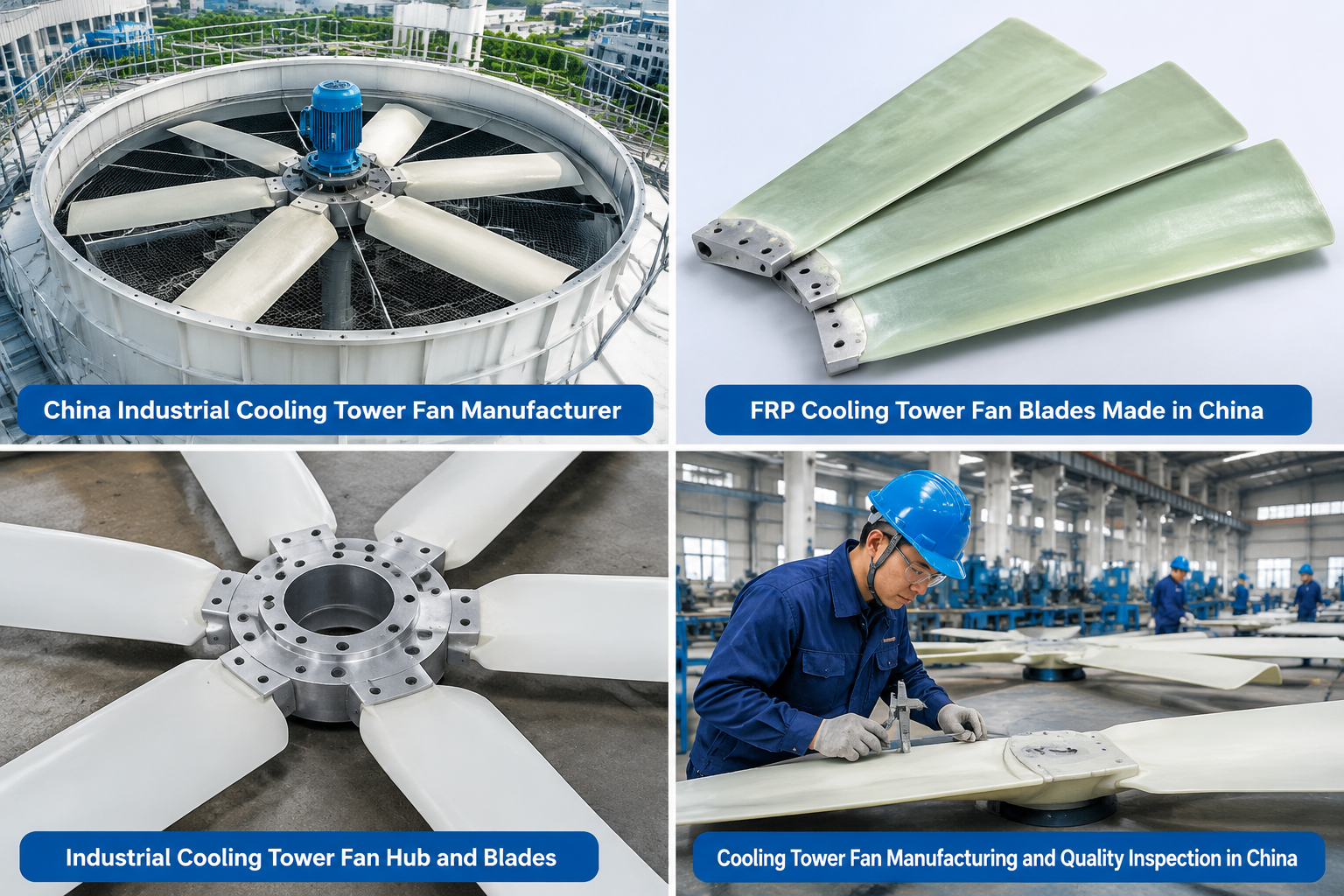
Look for evidence that the supplier actually understands the manufacturing process.
Can the company manufacture customized dimensions?
Can it work with customer drawings?
Can it provide different materials?
Can it manufacture replacement fans according to existing specifications?
These questions help separate a real manufacturing partner from a simple reseller.
Engineering Capability
Manufacturing capability is only part of the picture.
Engineering capability matters when the product needs customization.
A good supplier should understand the relationship between airflow, pressure, fan speed, impeller design, motor power, installation dimensions, and operating environment.
You do not necessarily need a complicated engineering report for every purchase, but you do need a supplier that understands why the fan has to be designed a certain way.
Export and Customization Experience
If you are purchasing internationally, communication and export experience also matter.
Packaging, shipping documents, product labeling, technical drawings, and project communication can all influence the purchasing experience.
For OEM and ODM projects, international experience can also make it easier to communicate specifications and maintain consistency across repeat orders.
These details may seem small at first, but they become increasingly important as the relationship grows.
Why Choose Power Tower Cooling Technology?
Power Tower Cooling Technology (Shaoxing) Co., Ltd. is a manufacturer focused on cooling tower components and related customized solutions.
For customers looking for a direct factory cooling tower fan supplier, our manufacturing approach is centered on understanding the customer's actual application and product requirements.
We can work with customers on different types of cooling tower fan requirements, including customized dimensions, replacement applications, OEM/ODM projects, and cooling tower component sourcing.
Our website is:
https://www.coolingtowerpart.com
For a customized fan project, customers can provide available information such as drawings, photographs, dimensions, existing fan specifications, motor information, airflow requirements, and operating conditions.
This gives the engineering and production team a clearer picture of the application and helps determine the appropriate manufacturing solution.
Cooling Tower Component Expertise
Working with a specialized cooling tower component manufacturer has an important advantage: the supplier understands the environment in which the product will be used.
A cooling tower fan is not an isolated component.
Its performance is connected to the tower structure, airflow path, motor, heat-transfer system, and operating environment.
Understanding these relationships helps create more practical solutions for customers who need replacement or customized components.
OEM, ODM, and Custom Manufacturing
Power Tower Cooling Technology can work with customers who need customized cooling tower components rather than only standard catalog products.
OEM and ODM cooperation can be useful for cooling tower manufacturers, distributors, contractors, and industrial equipment companies.
Instead of maintaining a separate manufacturing system for every component, customers can work with a factory that handles the manufacturing process according to the agreed specifications.
This can provide flexibility as projects change and new requirements appear.
Questions to Ask Before Ordering a Cooling Tower Fan
Before choosing a direct factory supplier, it is useful to ask several practical questions:
1. Are you the manufacturer or a trading company?
2. Can you manufacture according to customer drawings?
3. Can you customize fan dimensions?
4. Can you match a replacement fan to an existing model?
5. Can you provide OEM or ODM services?
6. What materials are available?
7. What airflow and static pressure information do you need?
8. What inspection and testing procedures are available?
9. Can you supply replacement parts later?
10. How do you handle customized production and repeat orders?
The answers will tell you much more about a supplier than a simple product catalog will.
Final Thoughts
Working with a direct factory cooling tower fan supplier can provide much more than a lower purchasing price.
It can give you a shorter communication chain, better customization options, clearer cost discussions, closer quality control, easier technical communication, and better support for replacement and retrofit projects.
For standard products, buying through a distributor may sometimes be perfectly reasonable. But when your project involves a custom fan, special dimensions, unusual operating conditions, OEM/ODM requirements, or an obsolete cooling tower fan replacement, direct factory cooperation becomes much more valuable.
The right manufacturer should not simply ask:
"How many fans do you need?"
They should also ask:
"What does your cooling tower need?"
That is the difference between simply selling a fan and developing the right cooling tower fan solution.
For customers seeking a factory direct cooling tower fan supplier, Power Tower Cooling Technology (Shaoxing) Co., Ltd. provides customized cooling tower component solutions for different industrial applications.
Whether you need a replacement fan, custom centrifugal fan, cooling tower fan parts, OEM/ODM manufacturing, or a project-specific solution, working directly with the manufacturer can make the entire purchasing process more efficient and transparent.
In industrial cooling, the fan may be only one component of the system—but choosing the right factory can make a big difference to the performance, cost, and long-term reliability of the entire project.
Learn more about cooling tower fans and components at https://www.coolingtowerpart.com.


