Introduction to Cooling Tower Fan Blade Design for High-Efficiency Airflow
Cooling tower fan blade design plays an essential role in determining the airflow capacity, energy consumption, and operating stability of industrial cooling towers. As industrial facilities continue to focus on energy efficiency and reliable heat rejection, manufacturers are developing more advanced fan blade structures to improve aerodynamic performance and reduce unnecessary operating costs.
A well-designed cooling tower fan blade does more than generate airflow. It must operate efficiently under different temperatures, humidity levels, rotational speeds, and mechanical loads. Blade geometry, pitch angle, airfoil profile, material selection, and manufacturing accuracy all influence the final performance of the fan system.
For industrial cooling applications, high-efficiency airflow depends on matching the fan blade design with the cooling tower structure and actual operating requirements. Whether used in power plants, chemical facilities, HVAC systems, or manufacturing plants, an optimized cooling tower fan blade can help improve cooling performance and support long-term equipment reliability.
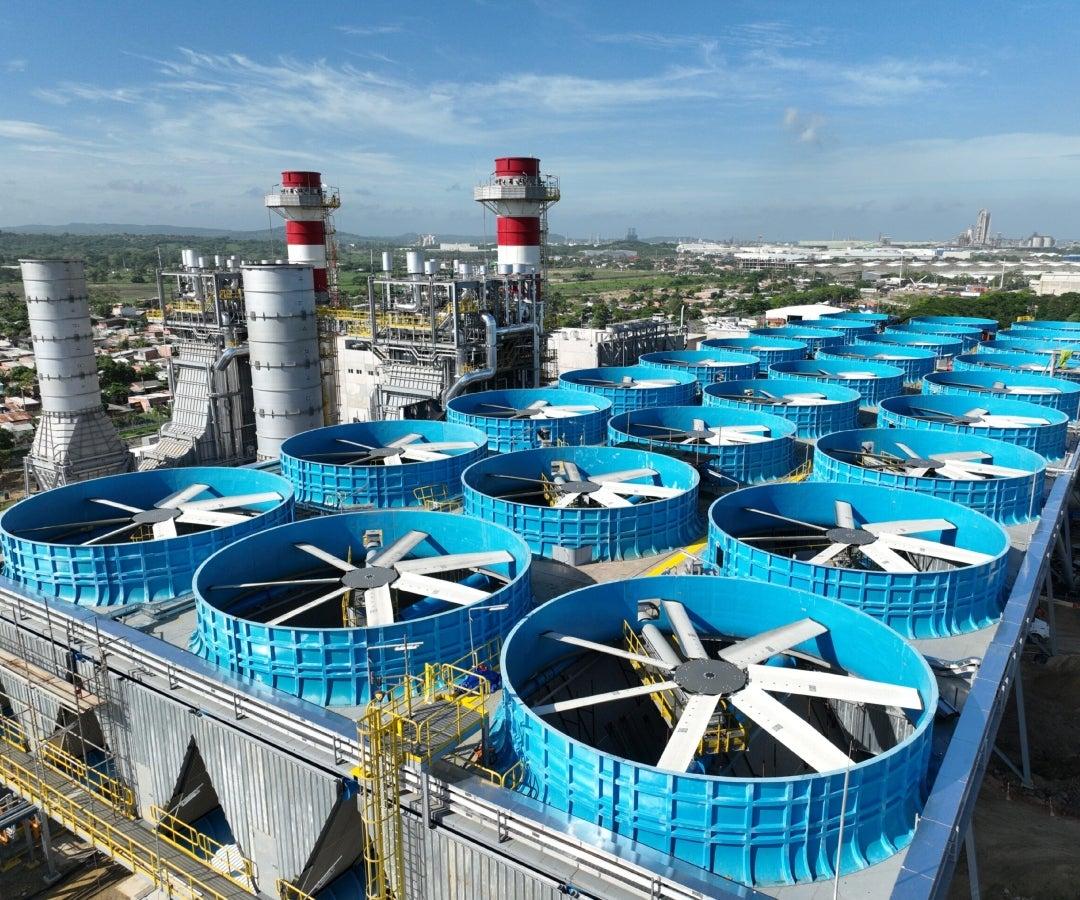
Why Is Cooling Tower Fan Blade Design Important for Airflow Efficiency?
The primary function of a cooling tower fan is to move sufficient air through the tower to support heat transfer between water and ambient air.
The fan blade is directly responsible for generating this airflow. Its aerodynamic characteristics influence how much air can be moved, how much power is required, and how evenly air is distributed throughout the cooling tower.
1. Increasing Airflow Volume
Airflow volume determines how much air passes through the cooling tower within a specific period.
An optimized fan blade profile can improve aerodynamic efficiency and help deliver the required airflow under the tower's operating resistance.
How Does Blade Geometry Influence Airflow?
Blade geometry affects the pressure difference generated by the rotating fan and the movement of air across the blade surface.
Important geometric parameters include:
Blade length and diameter.
Blade chord width.
Airfoil cross-sectional shape.
Blade twist distribution.
Pitch angle.
Leading-edge and trailing-edge profiles.
A properly engineered combination of these factors helps reduce aerodynamic losses and improve airflow generation.
2. Reducing Fan Energy Consumption
Cooling tower fans often operate continuously for long periods. Therefore, fan power consumption can represent a significant part of the cooling system's operating expenses.
High-efficiency cooling tower fan blade design focuses on producing the required airflow with lower aerodynamic losses.
The Relationship Between Fan Speed and Power
Fan performance is closely related to rotational speed.
Under similar operating conditions, the fan affinity laws indicate:
Airflow is proportional to rotational speed.
Pressure is proportional to rotational speed squared.
Power is proportional to rotational speed cubed.
For example, increasing fan speed by 10% may increase theoretical power demand by approximately 33.1%.
This explains why aerodynamic optimization and appropriate fan speed selection are important for reducing electricity consumption.
3. Improving Cooling Tower Heat Rejection
The cooling tower fan supports the heat transfer process by moving air through the fill section.
Insufficient airflow can reduce heat rejection and increase the temperature of circulating water.
An appropriately designed fan blade helps maintain the required airflow and supports more stable cooling tower operation.
4. Reducing Noise and Mechanical Vibration
Poor aerodynamic design can create turbulence, uneven pressure distribution, and excessive noise.
Mechanical imbalance may also increase vibration and accelerate wear on bearings, gearboxes, and supporting structures.
Proper blade geometry, manufacturing accuracy, installation, and balancing are important for maintaining smooth operation.
What Are the Main Design Factors for High-Efficiency Cooling Tower Fan Blades?
Designing an efficient cooling tower fan blade requires balancing aerodynamic performance with mechanical strength and manufacturing requirements.
1. Blade Airfoil Profile
The airfoil profile is one of the most important elements of cooling tower fan blade design.
It determines how air flows around the blade and influences the aerodynamic forces generated during rotation.
Leading-Edge Design
The leading edge is the front section of the blade that first encounters incoming air.
Its curvature influences how smoothly air enters the blade passage.
A suitable leading-edge design helps reduce flow separation and maintain stable aerodynamic performance.
Trailing-Edge Design
The trailing edge is the section where air leaves the blade.
Its shape affects wake formation, turbulence, and aerodynamic losses.
An optimized trailing-edge profile can help improve airflow characteristics and reduce unnecessary energy losses.
Blade Thickness and Chord Distribution
Blade thickness influences structural strength and stiffness, while chord width affects aerodynamic loading.
The distribution of these dimensions along the blade span should be carefully engineered to achieve an appropriate balance between airflow performance and mechanical reliability.
2. Blade Pitch Angle
Blade pitch is another critical factor affecting cooling tower fan performance.
The pitch angle determines the orientation of the blade relative to its direction of rotation and incoming airflow.
How Does Pitch Angle Affect Airflow?
Increasing the blade pitch generally increases aerodynamic loading within the fan's operating range.
However, excessive pitch may cause higher motor loads, increased turbulence, or aerodynamic performance deterioration.
An insufficient pitch angle may result in inadequate airflow.
The correct setting should be determined through fan performance data and the cooling tower's operating requirements.
Adjustable-Pitch Fan Blade Design
Many industrial cooling tower fans use adjustable-pitch blades.
This arrangement allows operators or engineers to modify blade angles to match different cooling requirements.
Adjustments should always follow the manufacturer's specifications and be applied consistently across all blades.
3. Blade Twist Distribution
The rotational speed of a fan blade changes along its radius.
The outer tip moves faster than the inner root section. Consequently, the local airflow conditions are different at different positions along the blade.
Why Is Blade Twist Necessary?
A twisted blade uses different pitch angles along its length to account for changes in local rotational speed.
This helps maintain effective aerodynamic loading across a larger portion of the blade surface.
Proper twist distribution can improve overall airflow efficiency and reduce uneven aerodynamic loading.
4. Fan Diameter and Blade Length
Fan diameter determines the overall swept area and strongly influences airflow capacity.
Larger fans may move greater volumes of air under suitable operating conditions, but they also require appropriate structural support and installation clearance.
Important Dimensional Considerations
Before choosing a cooling tower fan blade, evaluate:
A replacement blade must match the mechanical configuration of the existing fan system.
Which Materials Are Best for High-Efficiency Cooling Tower Fan Blade Design?
Material selection affects blade weight, structural strength, corrosion resistance, manufacturing flexibility, and maintenance requirements.
For industrial cooling towers, FRP and aluminum are two commonly used materials.
Fiber Reinforced Plastic (FRP) fan blades are widely used in modern industrial cooling towers.
FRP combines reinforcing fibers with a resin matrix to create a lightweight composite structure.
Advantages of FRP Fan Blade Design
High strength-to-weight ratio.
Excellent corrosion resistance in many cooling tower environments.
Flexible aerodynamic design possibilities.
Relatively low rotating mass.
Good fatigue performance when properly engineered.
Suitability for customized blade configurations.
How Does FRP Improve Airflow Efficiency?
The lightweight characteristics of FRP help reduce the rotating mass of the fan assembly.
This can reduce centrifugal loading and may allow engineers to optimize blade dimensions and structural arrangements.
FRP also provides flexibility in developing complex aerodynamic profiles that meet specific airflow requirements.
<figure> </figure>
2. Aluminum Cooling Tower Fan Blades
Aluminum blades are another established option for industrial cooling tower applications.
Main Characteristics of Aluminum Blades
Good structural rigidity.
Relatively low weight.
Established manufacturing processes.
Convenient fabrication and replacement options.
Suitable mechanical strength for many industrial applications.
However, the aluminum alloy and surface protection should be selected according to the operating environment.
Corrosive water droplets, chemicals, and long-term moisture exposure may affect material durability.
3. FRP vs. Aluminum: Which Is Better for Airflow Efficiency?
| Comparison factor | FRP fan blades | Aluminum fan blades |
| Weight | Generally lightweight | Relatively lightweight |
| Corrosion resistance | Generally excellent | Depends on alloy and protection |
| Structural strength | High when properly engineered | High |
| Aerodynamic customization | Flexible | Established options |
| Maintenance | Relatively low | Requires corrosion inspection |
| Industrial applications | Humid and corrosive environments | General industrial environments |
Neither material automatically guarantees higher airflow efficiency. Aerodynamic geometry, surface quality, fan speed, and system compatibility are equally important.
The final selection should be based on actual operating conditions and lifecycle requirements.
How Does Aerodynamic Optimization Improve Cooling Tower Fan Performance?
Aerodynamic optimization focuses on improving the movement of air while minimizing unnecessary resistance and turbulence.
Modern cooling tower fan blade development may combine engineering calculations, computer simulation, and physical performance testing.
1. Computational Fluid Dynamics (CFD) Analysis
CFD simulation is an important tool for evaluating airflow around fan blades.
Engineers can use CFD software to analyze the aerodynamic behavior of different blade profiles before manufacturing.
What Can CFD Simulation Evaluate?
CFD analysis can help identify:
These results help engineers identify potential design problems and compare different blade configurations.
2. Reducing Airflow Turbulence
Unnecessary turbulence can reduce aerodynamic efficiency and increase noise.
A carefully designed airfoil profile helps guide air more smoothly across the blade surface.
The interaction between the fan and surrounding structures should also be considered because poor fan stack geometry or unsuitable installation clearance can create additional turbulence.
3. Optimizing Blade-Tip Clearance
Blade-tip clearance is the distance between the outer blade tip and the surrounding fan stack.
Excessive clearance may allow air to circulate around the blade tips, reducing useful airflow.
Why Is Tip Clearance Important?
Proper clearance helps balance aerodynamic efficiency and mechanical safety.
Engineers must account for blade deflection, vibration, thermal expansion, manufacturing tolerances, and installation alignment.
The correct value should be determined according to the fan design and manufacturer specifications.
4. Improving Airflow Distribution Inside the Tower
High-efficiency fan blade design must consider the complete cooling tower airflow path.
Air must pass through the tower without excessive blockage or uneven distribution.
Factors affecting airflow distribution include:
A well-matched fan and tower configuration helps support effective heat transfer.
How Does Fan Blade Structural Design Affect Operating Reliability?
A cooling tower fan operates under continuous centrifugal and aerodynamic loads.
Therefore, an efficient blade must also provide adequate structural strength and long-term durability.
1. Centrifugal Force Resistance
During operation, rotating blades experience centrifugal forces that increase with rotational speed and blade mass.
The blade root and hub connection must safely transfer these loads.
Why Is Lightweight Construction Important?
Reducing blade mass can help lower centrifugal loading.
However, excessive weight reduction without adequate reinforcement may compromise blade stiffness and strength.
Advanced FRP blade design uses appropriate fiber reinforcement and laminate structures to balance weight and mechanical performance.
2. Fatigue Resistance
Industrial cooling tower fans may operate thousands of hours annually.
Repeated loading can gradually affect blade structures and mounting connections.
A reliable design should consider:
Repeated centrifugal loading.
Aerodynamic bending forces.
Material fatigue.
Blade-root stress concentration.
Vibration-related loading.
Environmental aging.
3. Corrosion and Environmental Resistance
Cooling tower fan blades are exposed to moisture and airborne contaminants.
In some industrial environments, chemical exposure can also accelerate material deterioration.
FRP materials offer advantages in many corrosive environments, while aluminum blades require appropriate alloy selection and surface protection.
4. Blade Root Reinforcement
The blade root is a critical structural area because it connects the blade to the fan hub.
Important Reinforcement Considerations
For FRP fan blades, reinforcement design may involve:
Proper blade-root engineering helps reduce the risk of cracking and connection failure.

What Types of Cooling Tower Fan Blade Designs Are Used in Industrial Applications?
Different cooling tower configurations require fan blades with different performance characteristics.
1. Counterflow Cooling Tower Fan Blades
Counterflow cooling towers generally use axial fans installed above the tower.
Air moves upward through the fill section while water flows downward.
Design Requirements
Sufficient airflow capacity.
Compatibility with fan stack dimensions.
Suitable blade diameter.
Stable operation under system resistance.
Appropriate corrosion resistance.
2. Crossflow Cooling Tower Fan Blades
Crossflow cooling towers use a horizontal airflow arrangement through the fill section.
Fan selection should account for the tower's airflow path, installation space, and required cooling capacity.
The fan blade must be matched to the complete system rather than selected independently.
3. Power Plant Cooling Tower Fans
Power plants often require large cooling towers capable of continuous operation.
Their fan blades must provide reliable airflow while withstanding demanding mechanical and environmental conditions.
FRP fan blades may be suitable where reduced rotating mass and corrosion resistance are important considerations.
4. HVAC Cooling Tower Fans
Commercial HVAC systems generally prioritize energy efficiency, operating stability, and noise control.
Optimized blade profiles and variable-speed operation can help maintain cooling performance under changing seasonal conditions.
5. Chemical Industry Cooling Tower Fans
Chemical processing facilities may expose cooling tower components to aggressive environmental conditions.
FRP fan blades can provide advantages in applications where corrosion resistance is a major selection factor.
Material compatibility should be confirmed against actual chemical exposure and operating temperature.
How to Choose a High-Efficiency Cooling Tower Fan Blade?
Selecting the right fan blade requires more than comparing product dimensions.
Industrial buyers should evaluate technical specifications, operating conditions, and the compatibility of the complete fan assembly.
1. Confirm Existing Cooling Tower Specifications
Before purchasing replacement blades, collect the original equipment information.
Important parameters include:
2. Determine the Required Airflow and Pressure
The replacement fan should deliver the required airflow under the actual system resistance.
A fan with a larger diameter does not necessarily provide better performance if its aerodynamic characteristics do not match the cooling tower.
Compare the manufacturer's performance curves with the required operating point.
3. Choose the Appropriate Blade Material
Select FRP or aluminum according to corrosion exposure, structural requirements, and maintenance expectations.
For humid or corrosive cooling tower environments, FRP is often a practical choice.
4. Check Fan Hub Compatibility
Blade mounting dimensions must match the existing fan hub.
Check mounting-hole patterns, root dimensions, connection methods, and allowable mechanical loads.
5. Evaluate Manufacturer Experience
An experienced cooling tower fan blade manufacturer should provide:
Customized blade dimensions.
Aerodynamic design support.
Material specifications.
Technical drawings.
Dimensional inspection.
Blade weight verification.
Balancing support.
Installation recommendations.
These capabilities are particularly important for replacement projects involving non-standard cooling tower equipment.
What Manufacturing Processes Help Ensure High-Quality Fan Blades?
Manufacturing accuracy directly affects the aerodynamic consistency and mechanical reliability of cooling tower fan blades.
1. Mold Design and Preparation
The mold determines the blade's basic geometry and surface profile.
Accurate molds help maintain consistent dimensions and aerodynamic characteristics between different production batches.
2. Fiber Reinforcement and Lamination
During FRP blade production, reinforcing fibers are arranged according to the required structural design.
Fiber orientation and laminate thickness influence strength, stiffness, and fatigue resistance.
3. Resin Application and Curing
The resin system binds the reinforcing fibers into a composite structure.
Proper resin distribution and curing conditions are essential for achieving consistent material properties.
4. Trimming and Surface Finishing
After curing, blades are trimmed and finished to meet dimensional requirements.
Surface quality should be inspected to identify visible defects that may affect product reliability.
5. Quality Inspection and Balancing
Finished blades should undergo appropriate quality-control procedures.
These may include:
Dimensional inspection.
Blade weight measurement.
Visual surface inspection.
Mounting interface verification.
Structural inspection.
Assembly balancing.
For complete fan assemblies, appropriate dynamic balancing helps reduce vibration caused by mass imbalance.
How Can You Improve Cooling Tower Fan Airflow Efficiency After Installation?
Even an advanced fan blade design cannot achieve its expected performance without correct installation and regular maintenance.
1. Set the Correct Blade Pitch
All adjustable blades should be installed at the specified pitch angle.
Unequal blade angles can create uneven aerodynamic loading and rotational imbalance.
2. Check Fan Alignment and Clearance
Confirm that the fan is properly aligned with the fan stack.
Inspect blade-tip clearance and verify that no components interfere with fan rotation.
3. Perform Proper Balancing
The fan assembly should be checked for balance according to the manufacturer's recommended procedure.
Correct balancing helps reduce vibration and mechanical stress.
4. Monitor Motor Current and Fan Speed
Motor current and rotational speed provide useful information about fan operating conditions.
Unexpected changes may indicate excessive loading, incorrect blade pitch, mechanical damage, or other system problems.
5. Keep the Airflow Path Clean
Dust, debris, and accumulated deposits can increase airflow resistance.
Regular cleaning of the fan stack, air inlets, and internal cooling tower components helps maintain operating efficiency.
What Are the Common Problems With Cooling Tower Fan Blade Design?
Understanding common design problems helps industrial users select more reliable replacement products.
1. Incorrect Blade Pitch
Incorrect pitch may result in insufficient airflow or excessive motor loading.
Blade pitch should be selected according to the fan performance requirements.
2. Poor Aerodynamic Profile
An unsuitable airfoil profile may create excessive turbulence and reduce aerodynamic efficiency.
CFD analysis and performance testing can help identify design improvements.
3. Excessive Blade Weight
Heavy blades increase centrifugal loading and may place additional stress on the fan hub and gearbox.
Lightweight composite materials can provide an alternative when properly engineered.
4. Uneven Blade Manufacturing
Differences in blade dimensions, weight, or structural consistency can affect fan balance.
Manufacturers should implement appropriate inspection procedures.
5. Incorrect Fan and Stack Matching
A fan that does not match the fan stack may experience unnecessary airflow losses.
The fan diameter, installation height, and tip clearance should be considered together.
Future Trends in Cooling Tower Fan Blade Design
Industrial cooling technology is moving toward higher efficiency, improved material performance, and more intelligent operation.
1. Advanced FRP Composite Technology
Improvements in composite materials and manufacturing processes may provide better structural consistency, durability, and weight optimization.
2. Digital Aerodynamic Simulation
CFD and other engineering simulation methods allow manufacturers to evaluate different blade configurations before production.
These tools support more accurate customized fan blade development.
3. Variable-Speed Fan Operation
Variable frequency drives allow cooling tower fans to adjust rotational speed according to actual cooling demand.
Combining variable-speed control with efficient blade geometry can help reduce unnecessary electricity consumption.
4. Low-Noise Fan Blade Profiles
Noise reduction is becoming increasingly important for industrial facilities.
Future fan blade designs may place more emphasis on reducing turbulence, pressure fluctuations, and aerodynamic noise.
5. Customized Fan Blade Manufacturing
Industrial cooling towers often have different dimensions and operating requirements.
Customized fan blade solutions can help improve compatibility with existing equipment and reduce unnecessary installation modifications.
Frequently Asked Questions About Cooling Tower Fan Blade Design
1. What Is the Most Important Factor in Cooling Tower Fan Blade Design?
Aerodynamic efficiency is a major consideration, but blade pitch, airfoil profile, material selection, structural strength, and operating speed must also be evaluated.
2. How Does Cooling Tower Fan Blade Shape Affect Airflow?
Blade shape determines how air moves across the blade surface and influences aerodynamic loading.
An optimized airfoil profile can help reduce turbulence and improve airflow performance.
3. Are FRP Cooling Tower Fan Blades Suitable for Industrial Applications?
Yes. FRP blades are widely used in industrial cooling towers because they offer a favorable strength-to-weight ratio and excellent corrosion resistance in many operating environments.
4. Can Blade Pitch Be Adjusted to Increase Airflow?
Yes, adjustable-pitch blades allow engineers to modify fan performance.
However, increasing pitch also increases aerodynamic loading and may raise motor power consumption. Adjustments should follow approved engineering specifications.
5. How Does Fan Diameter Affect Cooling Tower Performance?
Fan diameter influences the swept area and potential airflow capacity.
However, airflow also depends on blade geometry, rotational speed, system resistance, and fan stack design.
6. Why Is Dynamic Balancing Important?
Dynamic balancing helps reduce vibration caused by uneven mass distribution in rotating assemblies.
It protects the fan hub, gearbox, motor, bearings, and supporting structure from unnecessary mechanical stress.
7. Can Cooling Tower Fan Blades Be Customized?
Yes. Manufacturers can customize blade diameter, length, airfoil profile, pitch arrangement, material, and mounting dimensions according to specific cooling tower requirements.
Conclusion: Advanced Cooling Tower Fan Blade Design for Better Airflow Efficiency
High-efficiency airflow is achieved through a combination of aerodynamic optimization, structural engineering, material selection, and manufacturing accuracy.
An advanced cooling tower fan blade design must provide the required airflow while maintaining acceptable power consumption, mechanical stability, and long-term durability.
For industrial cooling tower applications, FRP fan blades offer important advantages in weight reduction and corrosion resistance, while aluminum blades remain a practical option for many conventional systems.
Before selecting a replacement or customized fan blade, industrial buyers should evaluate the cooling tower configuration, airflow requirements, fan diameter, blade pitch, motor capacity, gearbox compatibility, and operating environment.
Working with an experienced cooling tower fan blade manufacturer can help ensure that the selected design matches the actual equipment requirements.
A properly engineered cooling tower fan blade system can improve airflow performance, support energy-efficient operation, reduce maintenance demands, and contribute to reliable industrial cooling.


