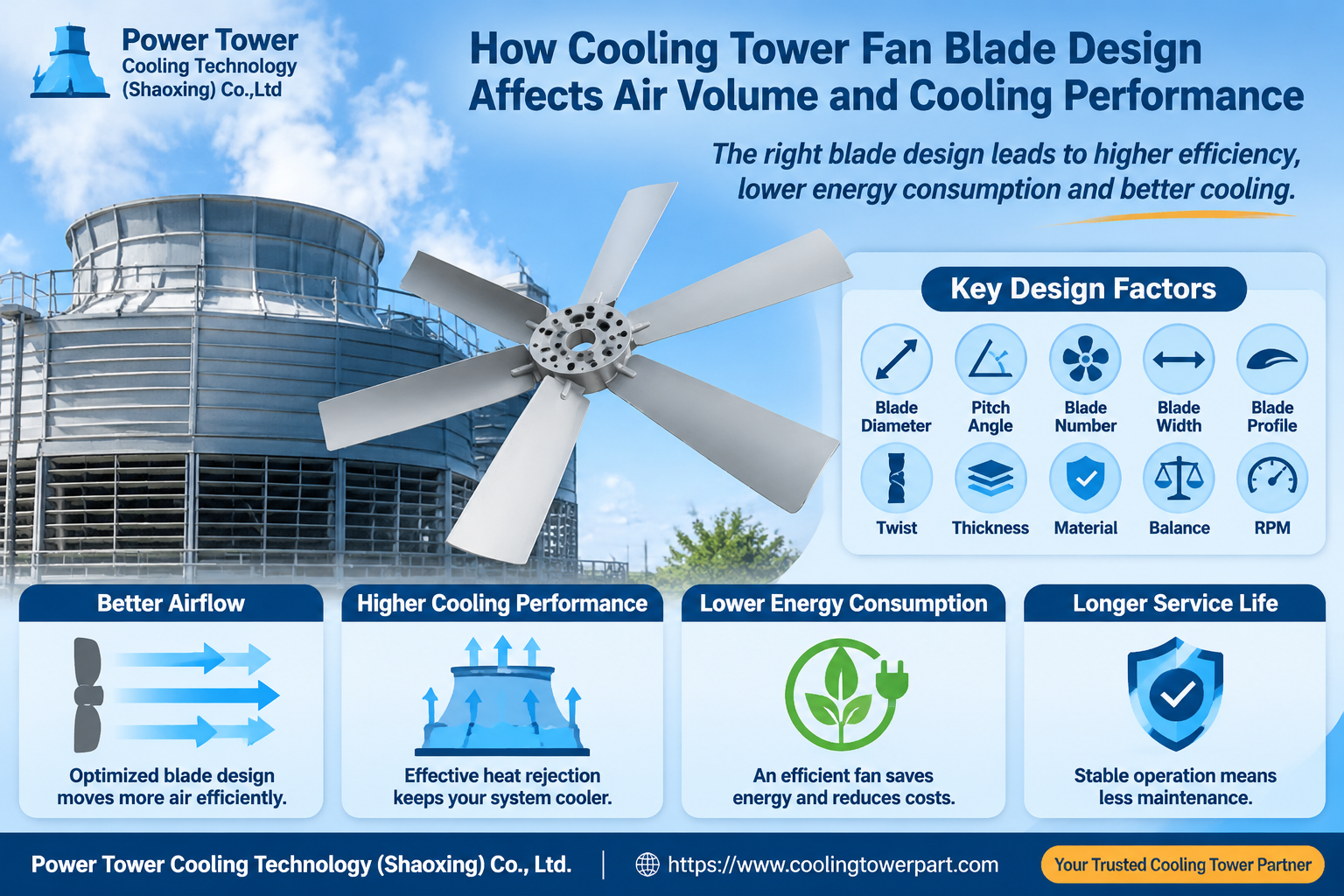
A cooling tower can have high-quality fill, an efficient water distribution system, and a powerful motor, but if the fan blades are poorly designed, the entire cooling system can still underperform.
Why?
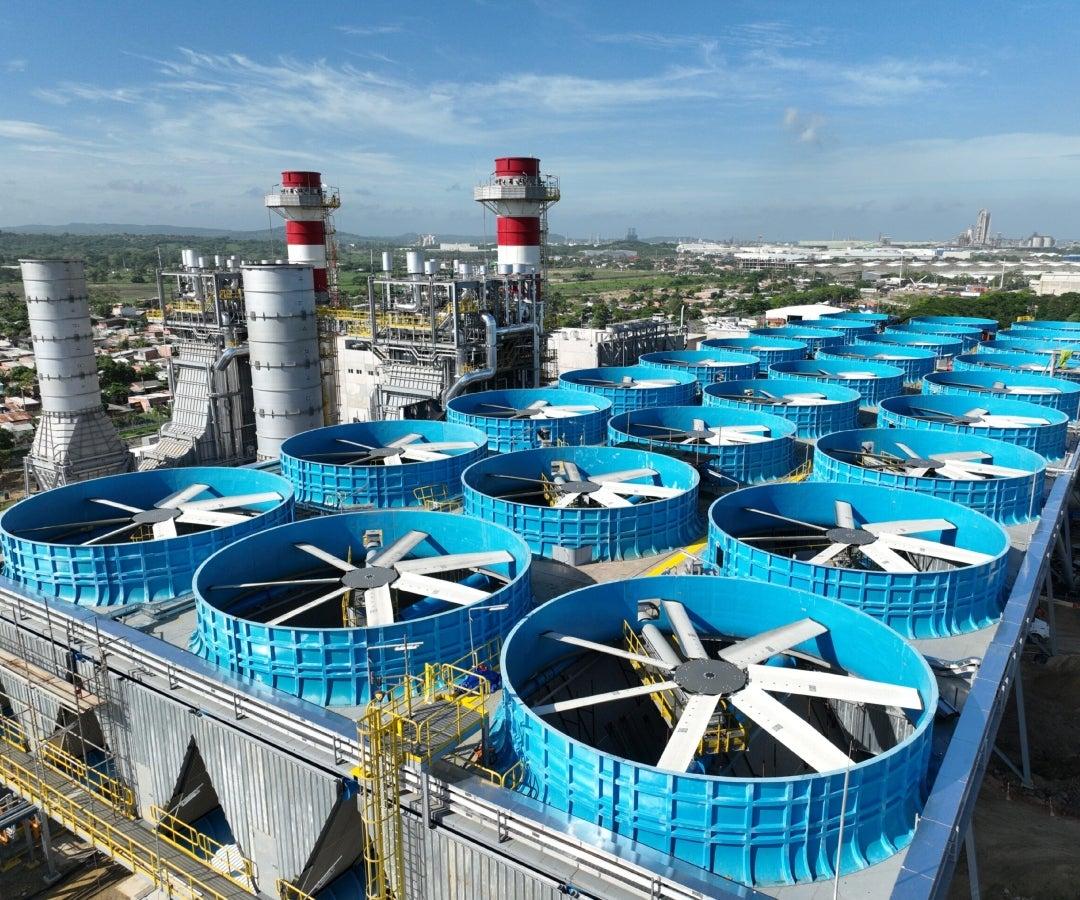
Because the cooling tower fan is responsible for moving air through the tower, and the fan blades determine how effectively the motor converts mechanical energy into useful airflow.
Factors such as blade diameter, pitch angle, blade number, blade width, blade shape, twist, thickness, material, and balance all affect air volume, static pressure, energy consumption, vibration, noise, and ultimately cooling performance.
For industrial cooling tower operators, selecting a fan blade is therefore not simply a matter of finding a component that fits the existing hub. The blade needs to match the entire air-side system.
In this guide, we will explain how cooling tower fan blade design affects air volume and cooling performance, what design factors matter most, what common problems reduce efficiency, and how to select the right fan blade for a cooling tower replacement or retrofit project.
Why Cooling Tower Fan Blade Design Matters
The basic job of a cooling tower fan sounds simple: move a large amount of air through the tower.
But moving air efficiently is more complicated than it appears.
As air enters the cooling tower, it passes through components such as louvers, fill, drift eliminators, water droplets, air passages, and the fan cylinder. Every component creates some level of airflow resistance.
The fan must overcome this resistance while maintaining the airflow required for effective heat transfer.
This is where blade design becomes critical.
Think about a paddle moving through water. Change its angle and you change the amount of water it pushes and the effort required to move it. A cooling tower fan blade works according to a similar principle, although the aerodynamic behavior is much more complex.
A well-designed blade can generate the required airflow while keeping motor power consumption under control.
A poorly selected blade may produce excessive turbulence, vibration, noise, or motor loading while still failing to deliver enough air.
That is why fan blade design should always be considered together with the cooling tower's overall operating conditions.
The Basic Relationship Between Fan Blades and Air Volume
Air volume is normally expressed in m³/h, m³/s, or CFM. It describes how much air the fan moves within a specific period.
When the fan rotates, the blades transfer energy from the motor to the air. This creates air movement through the tower.
However, fan airflow is not determined by blade speed alone.
Two fans with the same diameter and rotational speed can produce different airflow if their blade geometry is different.
Blade pitch, blade area, blade profile, number of blades, and system resistance all influence the actual operating point.
For a cooling tower, the objective is not simply to produce the maximum possible airflow.
The objective is to provide the right airflow for effective heat rejection at an acceptable energy cost.
If airflow is too low, the tower may not remove enough heat.
If airflow is unnecessarily high, the fan may consume more electricity than necessary and can increase noise, vibration, and mechanical stress.
Air Volume vs. Air Velocity
Air volume and air velocity are related, but they are not the same thing.
Air volume describes the total quantity of air moved by the fan.
Air velocity describes how quickly air passes through a particular area.
For example, air can move very quickly through a small opening without producing the same total air volume as a larger fan moving air through a larger area.
This distinction matters inside a cooling tower.
The goal is not only to move a large quantity of air but also to distribute that air effectively through the fill.
Uneven airflow can create poorly ventilated areas inside the tower. Some sections may receive plenty of air while others receive too little.
The result?
The cooling tower may have a large fan but still fail to achieve its expected thermal performance.
Static Pressure and System Resistance
A cooling tower fan does not operate in open air.
It operates inside a system with resistance.
Cooling tower fill creates pressure loss as air moves through its passages. Drift eliminators, louvers, spray systems, fan stacks, and other components can also affect airflow resistance.
Dirty fill can make the problem worse.
Blocked air inlets can make it worse again.
This means a fan's performance in a laboratory or open-air condition may be different from its actual performance after installation.
Fan blades must therefore be selected according to both air volume and static pressure requirements.
A blade that performs well under low resistance may not be suitable for a cooling tower that requires greater pressure generation.
Key Cooling Tower Fan Blade Design Factors
Several design parameters determine how effectively a cooling tower fan moves air.
The most important include:
Blade diameter
Blade pitch angle
Number of blades
Blade width
Blade profile
Blade twist
Blade thickness
Blade material
Blade balance
Fan rotational speed
These factors do not work independently.
Changing one parameter can affect the others.
For example, increasing blade pitch may increase airflow, but it can also increase motor load.
Increasing blade diameter may improve airflow capacity, but it also changes mechanical loading and installation requirements.
This is why cooling tower fan blade selection should be based on the complete fan system rather than one specification.
How Blade Diameter Affects Air Volume
Blade diameter has a major influence on the amount of air a fan can move.
A larger fan sweeps a larger circular area and can therefore move a substantial volume of air at relatively low rotational speed.
This is particularly useful in large cooling towers.
However, bigger is not always better.
A larger blade creates additional mechanical and aerodynamic loading. The motor, gearbox, shaft, hub, fan stack, and support structure must all be suitable for the increased load.
Clearance is another important consideration.
The blade must have appropriate clearance from the fan cylinder and surrounding structure. Excessive clearance can allow air to leak around the blade tips and reduce fan efficiency.
Insufficient clearance, on the other hand, can create a serious mechanical safety problem.
For replacement projects, always verify the actual fan diameter and tip clearance rather than relying only on the old blade's visual appearance.
How Blade Pitch Angle Affects Cooling Tower Performance
Blade pitch is one of the most important variables in cooling tower fan design.
The pitch angle determines how aggressively each blade interacts with the air.
Increasing pitch generally increases the aerodynamic loading of the blade. This can increase airflow and pressure, but it also requires more power from the motor.
This creates an important balance.
If the pitch angle is too small, airflow may be insufficient.
If the pitch angle is too large, the fan can overload the motor.
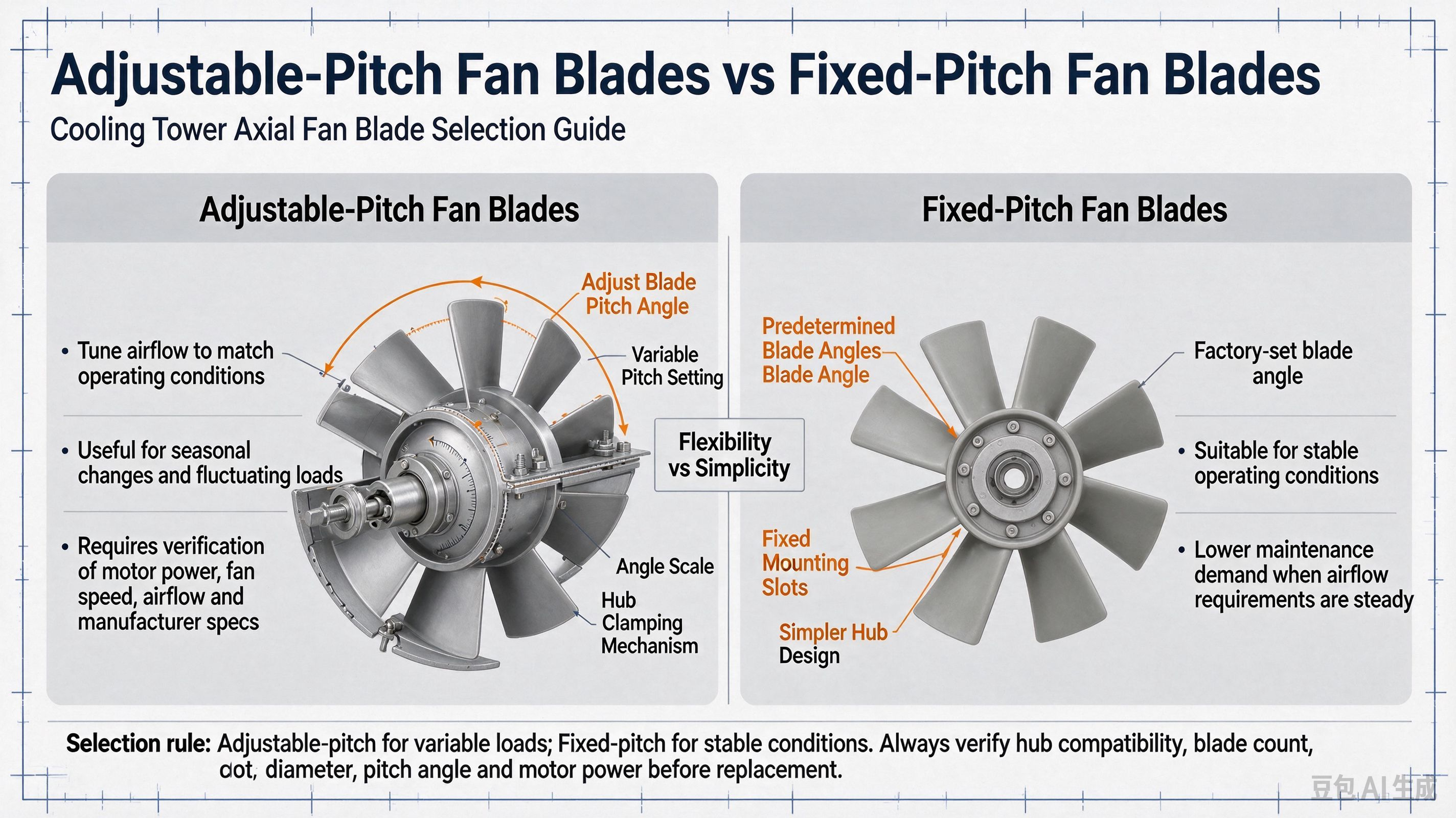
For this reason, adjustable-pitch fan blades can be valuable in industrial cooling tower applications.
Technicians can fine-tune the fan according to actual tower conditions rather than simply operating with a fixed configuration.
But adjustment should always be performed carefully.
A pitch change should be evaluated together with motor current, fan RPM, vibration, airflow, and cooling-water temperature.
What Happens When Blade Pitch Is Too Low?
When the blade pitch is too low, the fan may rotate smoothly but fail to move enough air.
The cooling tower may then experience:
Insufficient heat rejection
Higher cold-water temperature
Reduced cooling capacity
Poor approach temperature
Uneven airflow through the fill
Reduced process efficiency
In this situation, increasing the blade pitch may improve airflow.
However, technicians should first confirm that the motor and drive system have sufficient capacity.
Increasing pitch without checking motor loading can simply replace an airflow problem with an electrical or mechanical problem.
What Happens When Blade Pitch Is Too High?
Excessive blade pitch can create the opposite problem.
The blades may push too aggressively against the air, increasing aerodynamic load.
The motor may draw excessive current.
Power consumption may rise.
Vibration and noise can increase.
The gearbox, shaft, bearings, and other components may also experience additional stress.
In serious cases, prolonged motor overload can shorten equipment life.
Therefore, the goal is not maximum blade pitch.
The goal is optimal blade pitch for the required operating point.
Blade Number and Cooling Tower Fan Efficiency
The number of blades also affects fan performance.
Adding blades increases the total blade area interacting with the air. This can influence pressure generation and airflow.
However, more blades also mean more weight and aerodynamic drag.
A fan with too few blades may not produce sufficient airflow or pressure under certain conditions.
A fan with too many blades may consume unnecessary power.
So, is there a perfect number of blades?
Not really.
The correct number depends on the fan diameter, RPM, blade profile, required airflow, system resistance, motor capacity, and application.
Instead of asking, "How many blades are best?" a better question is:
"How many blades are best for this specific cooling tower operating point?"
Blade Width and Aerodynamic Shape
Blade width affects the amount of surface area interacting with the air.
A wider blade can potentially move more air, but width alone does not determine performance.
The entire aerodynamic profile matters.
The leading edge, trailing edge, curvature, thickness distribution, and blade angle all influence how smoothly air passes over the blade.
A good fan blade does not simply push air.
It guides air efficiently.
This is especially important for industrial cooling towers because the fan may operate continuously for thousands of hours.
Even a small improvement in aerodynamic efficiency can become significant when multiplied across long operating periods.
Why Blade Twist Matters
Many axial fan blades are not set at exactly the same angle from the hub to the tip.
Instead, the blade is twisted.
Why?
Because different sections of the blade travel at different linear speeds.
The blade tip moves much faster than the area close to the hub.
Without appropriate blade twist, different sections of the blade would operate under different aerodynamic conditions.
A properly designed twist helps maintain more consistent aerodynamic loading across the blade span.
This can improve airflow efficiency and reduce unnecessary turbulence.
For large industrial cooling tower fans, blade twist is therefore an important part of aerodynamic optimization.
Blade Thickness and Structural Strength
Blade thickness is closely related to mechanical strength and durability.
A cooling tower fan blade must withstand continuous rotation, vibration, temperature changes, moisture, UV exposure, and environmental conditions.
However, thicker does not automatically mean stronger performance.
Excessive thickness can increase weight and aerodynamic drag.
The ideal design provides sufficient structural strength without adding unnecessary mass.
This is one reason professional cooling tower fan manufacturers pay attention to the relationship between blade structure and aerodynamic performance.
Cooling Tower Fan Blade Materials
Material selection can affect:
Common materials include FRP, aluminum, and composite materials.
The best option depends on the cooling tower environment and operating conditions.
FRP Cooling Tower Fan Blades
FRP, or fiberglass-reinforced plastic, is widely used in cooling tower applications.
One major advantage is its combination of relatively low weight, good structural strength, and corrosion resistance.
Cooling towers operate in wet environments, and some industrial applications also expose components to chemicals.
FRP can therefore be a practical solution for applications where corrosion resistance is important.
FRP also provides manufacturers with flexibility when producing aerodynamic blade shapes.
Aluminum Fan Blades
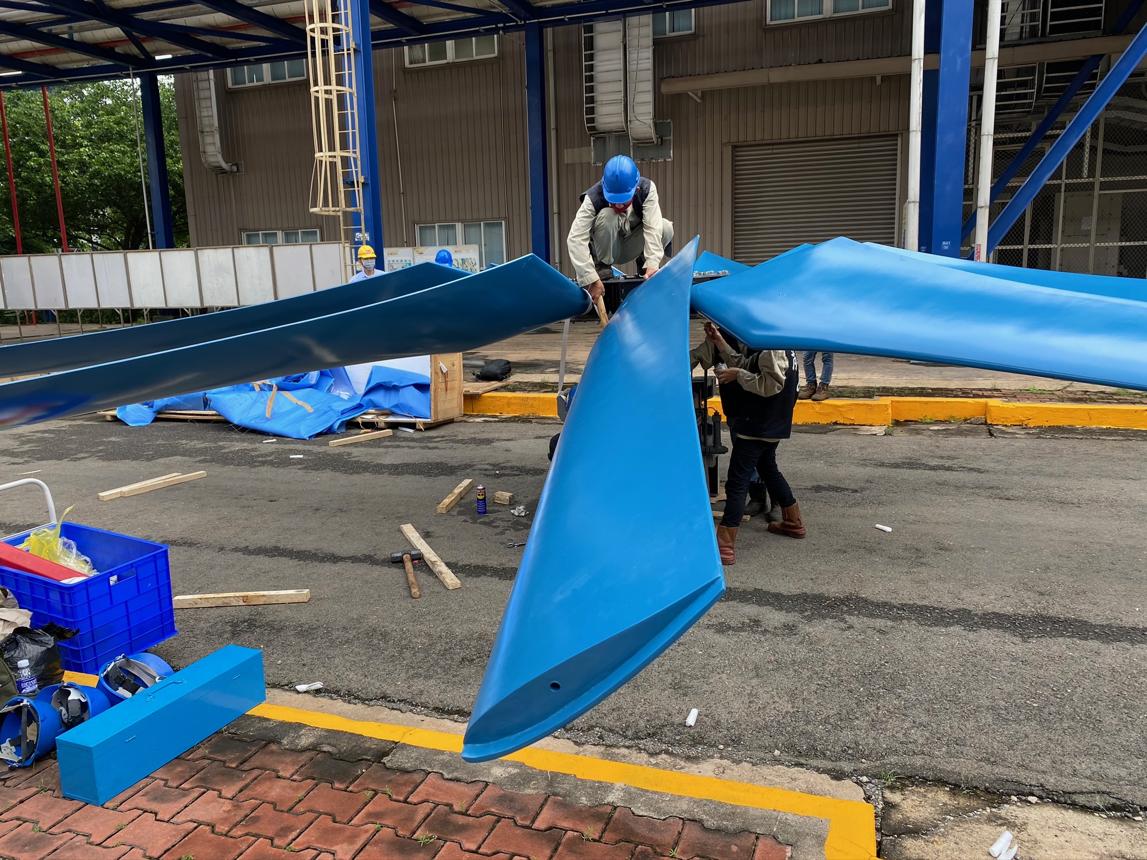
Aluminum offers a good strength-to-weight ratio and is used in many industrial fan applications.
Its lightweight characteristics can help reduce rotational mass.
However, the operating environment should always be considered.
Moisture, chemicals, airborne contaminants, and water treatment conditions may affect metal components over time.
Appropriate material selection and protective treatment are therefore important.
Composite Fan Blades
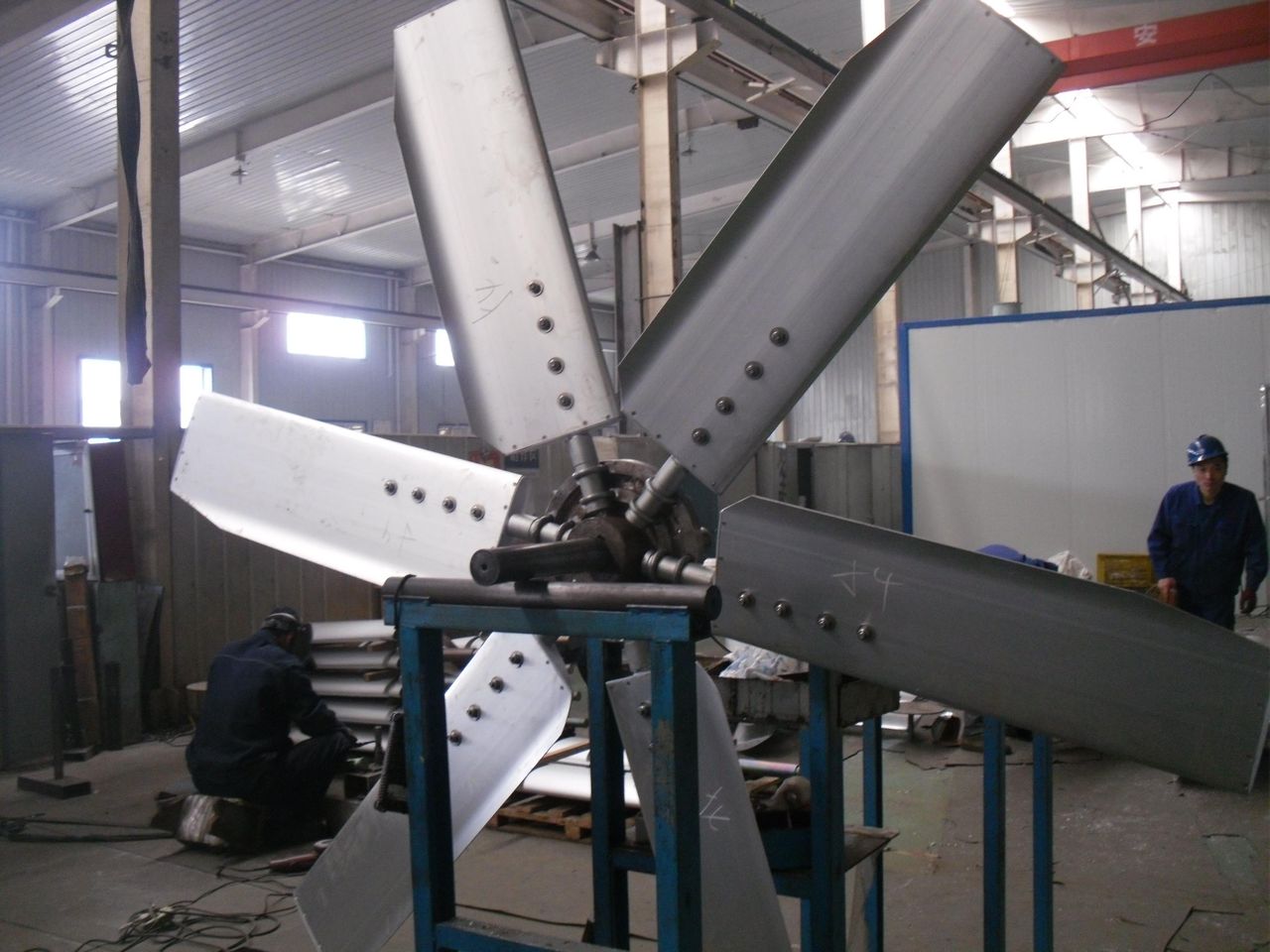
Modern composite materials provide manufacturers with additional opportunities to optimize weight, stiffness, and aerodynamic geometry.
A lightweight blade can reduce rotational mass and mechanical loading.
For cooling tower retrofit projects, composite blades can be especially attractive when the goal is to improve airflow without significantly increasing motor load.
How Blade Balance Affects Cooling Performance
Even an excellent blade design can perform poorly if the fan assembly is not properly balanced.
Imbalance creates vibration.
Vibration wastes energy and increases loads on bearings, shafts, hubs, gearboxes, and motors.
It can also create additional maintenance problems.
Imagine driving a car with a badly unbalanced wheel. The wheel may still turn, but the vibration becomes increasingly noticeable as speed increases.
A cooling tower fan behaves similarly.
Because the fan rotates continuously, even a small imbalance can become significant over time.
This is why blade weight consistency and proper fan balancing are critical during manufacturing and installation.
Fan Speed and Blade Design Must Work Together
Fan blade design cannot be separated from rotational speed.
A blade optimized for one RPM may not deliver the same performance at another RPM.
Increasing fan speed generally increases airflow, but it can also increase power consumption, mechanical loading, noise, and vibration.
This is why simply increasing RPM is not always the best way to solve a cooling problem.
A better solution is to match the blade design, fan diameter, pitch, and operating speed to the actual airflow requirement.
The objective is to achieve the required cooling performance without wasting motor energy.
How Blade Design Affects Energy Consumption
Energy consumption is one of the most important reasons to optimize cooling tower fan blades.
Industrial cooling towers may operate for long periods, sometimes continuously.
Even a relatively small reduction in fan power can therefore produce meaningful savings over the equipment's service life.
An efficient blade converts more of the motor's mechanical energy into useful airflow.
Poor aerodynamic design, excessive pitch, incorrect blade diameter, unnecessary turbulence, and poor balance can all increase energy consumption.
For large cooling tower systems, improving fan efficiency can therefore reduce both operating costs and the overall environmental impact of the cooling system.
Common Cooling Tower Fan Blade Problems
Many cooling tower fan problems are not caused by the motor.
The real issue may be the blade configuration.
Common problems include:
Incorrect blade pitch
Uneven blade angles
Incorrect blade diameter
Poor blade balance
Excessive blade weight
Incorrect RPM
Motor overload
Insufficient blade clearance
Damaged or deformed blades
Improper replacement parts
Understanding these problems can make troubleshooting much faster.
Incorrect Blade Pitch
If blade pitch is inconsistent, individual blades may create different aerodynamic loads.
This can lead to vibration and uneven airflow.
During maintenance, technicians should use accurate measurement methods rather than adjusting the blades simply by visual inspection.
Uneven Blade Angles
Small differences in blade angle can affect fan balance and aerodynamic loading.
If one blade is installed at a noticeably different angle, the fan may experience uneven loading during every rotation.
For industrial cooling tower fans, precise installation is therefore essential.
Incorrect Blade Diameter
A replacement blade with the wrong diameter can create both performance and safety issues.
A smaller fan may fail to provide the required airflow.
A larger fan may overload the drive system or have insufficient clearance.
Replacement parts should therefore be selected according to actual engineering parameters.
Overloaded Fan Motor
A blade with excessive pitch, excessive weight, or unsuitable aerodynamic loading can increase motor current.
Warning signs include:
If these symptoms appear after replacing fan blades, check the blade configuration before assuming that the motor itself is defective.
How to Select the Right Cooling Tower Fan Blade
Choosing a replacement fan blade should start with the cooling tower rather than the blade catalog.
First determine the actual operating requirements.
Important parameters include:
Required air volume
Fan diameter
Fan RPM
Static pressure
Motor power
Number of blades
Blade pitch
Hub dimensions
Blade material
Installation clearance
Operating environment
The replacement blade should then be selected according to these parameters.
A blade that physically fits the hub is not necessarily the correct blade.
Match the Blade to the Cooling Tower Size
Large cooling towers generally require large airflow volumes.
Their fan blades therefore need to move substantial amounts of air efficiently.
Smaller cooling towers have different requirements.
The important point is that fan selection should be based on actual tower conditions rather than simply matching the diameter of an old blade.
If the cooling tower has been modified, the original blade may no longer represent the best operating configuration.
Consider Fill and Air-Side Resistance
Cooling tower fill has a direct impact on airflow resistance.
Film fill and splash fill can have different air-side characteristics.
Drift eliminators and louvers also contribute to pressure loss.
If a tower has been retrofitted with new fill, drift eliminators, or other components, the fan operating point may change.
This is an important consideration when evaluating a cooling tower that suddenly develops low airflow after a component replacement.
The fan and internal tower components must work together.
Check Motor Power and Fan RPM
Before installing a new blade, verify the motor power and actual operating speed.
A higher-performance blade may require additional power.
If the existing motor does not have sufficient capacity, installing a more aggressively loaded blade could result in motor overload.
This is why professional fan blade selection should consider both aerodynamic performance and mechanical compatibility.
Consider the Operating Environment
Cooling towers are frequently installed outdoors.
That means the fan blade must tolerate environmental exposure.
Important factors include:
Moisture
UV radiation
Temperature changes
Chemical exposure
Corrosion
Dust
Airborne contaminants
For harsh environments, corrosion-resistant and durable materials can provide a significant service-life advantage.
Cooling Tower Fan Blade Optimization and Retrofit
Replacing an entire cooling tower fan system is not always necessary.
In many cases, a properly engineered blade retrofit can improve airflow and energy efficiency while allowing other components to remain in service.
This can be particularly useful for older cooling towers experiencing:
However, a retrofit should never be based solely on whether a new blade physically fits the existing hub.
The new blade must be evaluated against the motor, RPM, hub, fan cylinder, airflow requirement, and tower resistance.
A good retrofit is an engineered solution, not simply a replacement part.
Why Professional Cooling Tower Fan Blade Manufacturing Matters
Cooling tower fan blades operate under continuous rotating loads.
Manufacturing quality therefore has a direct influence on safety, efficiency, and service life.
Professional production should control:
Blade dimensions
Blade weight
Pitch accuracy
Material quality
Surface finish
Structural strength
Blade balance
Hub compatibility
Small manufacturing differences may become significant when a large fan rotates continuously.
For industrial customers, supplier selection should therefore consider more than price.
Engineering experience, manufacturing capability, quality control, customization, and after-sales support are all important.
Power Tower Cooling Technology: Cooling Tower Fan Solutions
Power Tower Cooling Technology (Shaoxing) Co., Ltd. specializes in cooling tower components and replacement solutions, including cooling tower fans and related parts.
Our approach is to look at the cooling tower as a complete system rather than treating the fan blade as an isolated component.
When selecting or replacing fan blades, factors such as fan diameter, blade number, blade pitch, motor power, RPM, hub configuration, tower structure, and operating conditions should all be considered.
This approach helps customers avoid a common problem: purchasing a blade simply because it looks similar to the original part.
For replacement and retrofit projects, the right fan blade should provide a practical balance between:
Air volume + cooling performance + energy efficiency + mechanical load + durability + installation compatibility.
Power Tower Cooling Technology also provides customized cooling tower component solutions for different applications and customer requirements. The company's website lists cooling tower fans among its main product categories and highlights OEM/ODM and customized service capabilities.
If you are looking for a suitable cooling tower fan blade, replacement fan, or customized cooling tower component, you can contact Power Tower Cooling Technology (Shaoxing) Co., Ltd. for technical assistance.
Visit Power Tower Cooling Technology
Final Thoughts
Cooling tower fan blade design has a direct influence on airflow, cooling capacity, energy consumption, vibration, and long-term equipment reliability.
The fan blade is not simply a rotating component attached to a motor.
It is an aerodynamic device designed to convert mechanical energy into useful airflow.
Blade diameter, pitch angle, blade number, width, twist, thickness, material, balance, and rotational speed all work together to determine fan performance.
If the pitch is too low, airflow may be insufficient.
If the pitch is too high, the motor can become overloaded.
If the diameter is incorrect, the fan may fail to achieve the required airflow or create clearance problems.
If the blades are poorly balanced, vibration can quickly turn an efficient fan into a costly maintenance problem.
So, what is the best cooling tower fan blade?
There is no universal answer.
The best blade is the one that matches the cooling tower, airflow requirement, system resistance, motor, RPM, installation conditions, and operating environment.
For new projects, replacement applications, and cooling tower retrofits, working with an experienced manufacturer can make the selection process much easier.
With the right blade design, a cooling tower can move the air it needs, reject heat more effectively, reduce unnecessary energy consumption, and operate more reliably over the long term.
The real objective is not simply more air.
It is the right amount of air, delivered efficiently, consistently, and reliably.


