Why Are Cooling Tower Fan Blade Balancing Standards Important?
Cooling tower fan blade balancing is an essential part of maintaining safe, stable, and efficient industrial cooling tower operation. Large axial fans can rotate continuously for long periods, and even a small imbalance in the rotating assembly may generate significant centrifugal forces.
For this reason, cooling tower fan blade balancing standards should be considered when designing, manufacturing, installing, commissioning, and maintaining industrial cooling tower fans.
A properly balanced fan helps reduce vibration and mechanical stress on the fan hub, gearbox, motor, bearings, shaft, and supporting structure. It can also help maintain consistent airflow and reduce the risk of unexpected shutdowns.
However, balancing should not be treated as a single universal number or procedure. The appropriate acceptance criteria depend on fan design, operating speed, rotor mass, balancing method, measurement equipment, and the applicable engineering standard.
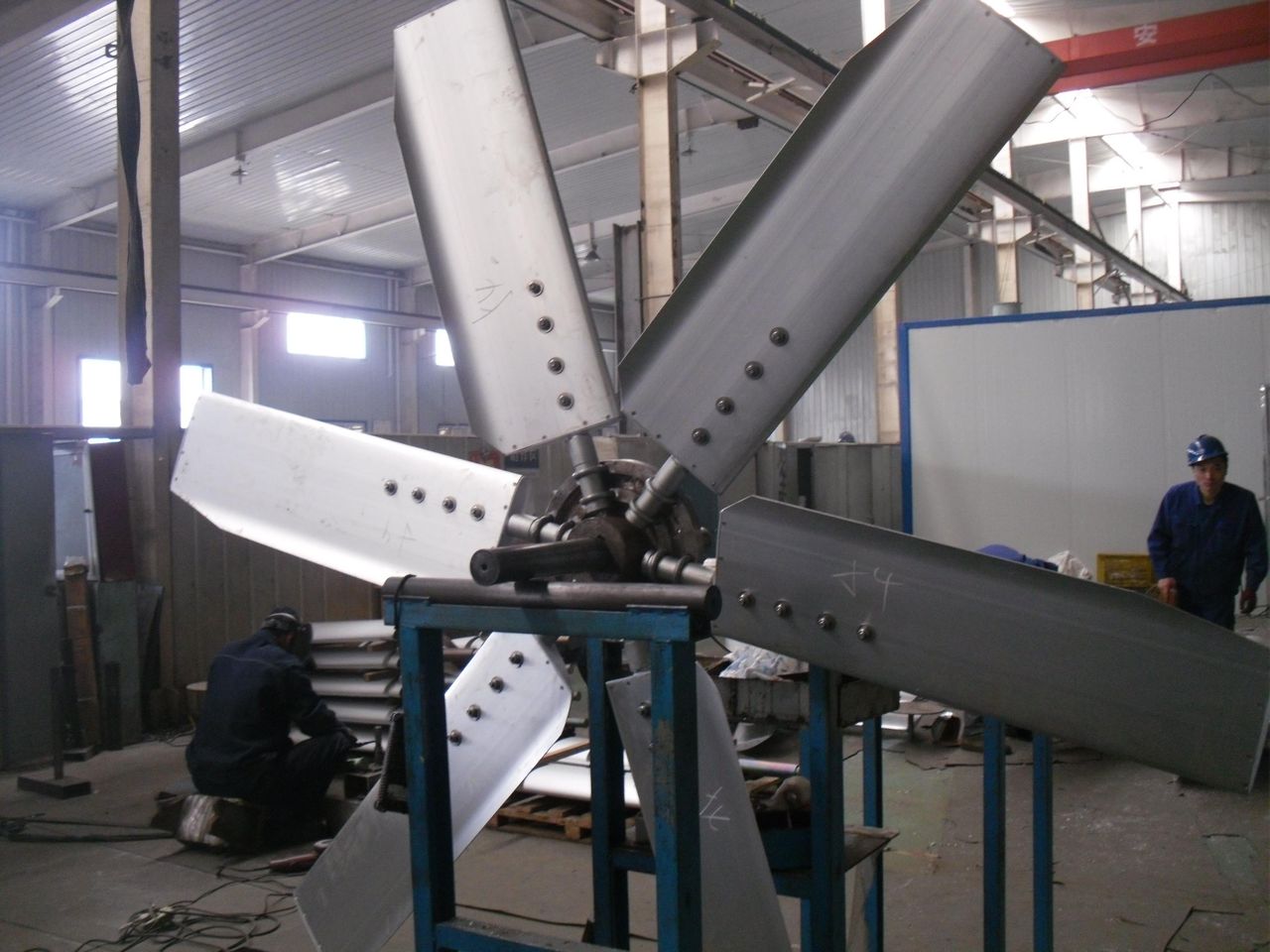
What Does Fan Balancing Actually Mean?
Fan balancing refers to controlling the distribution of rotating mass so that the center of mass and rotational axis are appropriately aligned.
For a cooling tower fan assembly, balancing may involve:
Individual blade weight control.
Blade position and mounting inspection.
Blade pitch verification.
Hub inspection.
Static balance evaluation.
Dynamic balance evaluation.
Operational vibration measurement.
A balanced fan should operate smoothly without excessive vibration or abnormal mechanical loading.
What Standards Are Relevant to Industrial Fan Balancing?
Industrial cooling tower fan balancing may involve several types of standards and technical guidelines. The exact standard selected should match the equipment and project requirements.
ISO 21940 Series
The ISO 21940 series addresses mechanical vibration and rotor balancing.
It provides a framework for balancing terminology, procedures, balance quality concepts, and related technical requirements.
Why Is ISO 21940 Relevant?
Large cooling tower fans are rotating machines, so the principles of rotor balancing can be applied when establishing appropriate balancing procedures and acceptance criteria.
However, users should select the applicable part of the standard according to the actual rotor and balancing application rather than assuming that one generic value applies to every cooling tower fan.
Fan and Blower Industry Requirements
Industrial fan manufacturers may also use industry-specific specifications, engineering drawings, manufacturer procedures, and customer requirements.
These documents can define:
Project-Specific Engineering Specifications
Large cooling tower projects may have their own technical specifications.
These requirements may be stricter than general manufacturer recommendations.
Why Should Project Specifications Be Checked?
A cooling tower fan used in a power plant may have different requirements from a smaller HVAC cooling tower fan.
Therefore, the applicable standard should always be confirmed from the project documentation, equipment manufacturer, or engineering contractor.
What Is the Difference Between Balance Quality and Vibration Acceptance?
These two concepts are related but should not be confused.
Balance Quality
Balance quality describes the allowable residual imbalance of a rotating component or rotor.
It is related to the mass distribution of the rotating assembly and operating speed.
What Factors Affect Balance Quality?
Important factors include:
A higher-speed rotor generally requires greater attention to balancing accuracy.
Vibration Acceptance
Vibration acceptance evaluates how the complete machine behaves during operation.
A fan can have acceptable rotor balance but still experience excessive vibration because of other problems.
Possible Causes of Operating Vibration
Shaft misalignment.
Bearing wear.
Gearbox problems.
Structural looseness.
Foundation problems.
Blade pitch differences.
Fan stack resonance.
Motor imbalance.
Aerodynamic instability.
Therefore, vibration measurement should be considered together with balance verification.
What Are the Main Cooling Tower Fan Blade Balancing Requirements?
Industrial cooling tower fan balancing should cover both individual components and the complete rotating assembly.
1. Blade Weight Consistency
Blade weight should be controlled during manufacturing and installation.
Why Is Blade Weight Important?
When blades have significantly different masses, the center of mass can move away from the rotational axis.
This creates centrifugal forces during rotation.
For large-diameter cooling tower fans, even relatively small mass differences can become important because the blades are located far from the center of rotation.
2. Blade Pitch Consistency
Adjustable-pitch fan blades must be installed at consistent angles.
What Happens When Blade Pitch Is Unequal?
Unequal blade pitch can create different aerodynamic loads between blades.
This may cause:
Uneven airflow.
Increased vibration.
Higher motor loading.
Reduced fan efficiency.
Mechanical fatigue.
Blade pitch should therefore be checked during installation and maintenance.
3. Blade Position and Mounting
Each blade must be installed in the correct position on the hub.
Mounting holes, fasteners, blade-root interfaces, and installation orientation should be verified.
4. Hub Condition
The fan hub is a critical component of the rotating assembly.
Inspect the hub for:
A damaged hub can create vibration even when individual blades are properly balanced.
5. Rotor and Shaft Alignment
The shaft and rotating assembly must be correctly aligned.
Misalignment can generate vibration that cannot be corrected simply by changing blade weights.
How Is Static Balancing Used for Cooling Tower Fan Blades?
Static balancing evaluates the tendency of a component to rotate toward a heavier side when not operating at full speed.
When Is Static Balancing Useful?
Static balancing can be useful for individual fan blades or specific low-speed components.
It provides a relatively simple way to identify major mass differences.
What Are the Limitations of Static Balancing?
Static balancing does not fully describe the behavior of a complete rotating assembly during operation.
Large industrial cooling tower fans may require additional dynamic balancing or operational vibration analysis.
When Should Static Balancing Be Combined With Other Methods?
Consider additional evaluation when:
Fan diameter is large.
Operating speed is significant.
Vibration is present.
The fan has multiple blade planes.
The assembly has undergone major maintenance.
The application has strict vibration requirements.
Why Is Dynamic Balancing Important for Industrial Cooling Tower Fans?
Dynamic balancing evaluates rotating behavior and can identify imbalance characteristics that may not be obvious from stationary inspection.
How Does Dynamic Balancing Work?
A balancing system measures vibration while the rotor rotates at a controlled speed.
The measurement equipment can determine the magnitude and location of imbalance.
What Information Can Dynamic Balancing Provide?
Depending on the equipment and procedure, it may provide:
What Are the Benefits?
Professional dynamic balancing can help:
Reduce vibration.
Improve rotating stability.
Protect bearings.
Reduce gearbox loading.
Improve equipment reliability.
Support longer maintenance intervals.
For large industrial cooling tower fan systems, dynamic balancing can be particularly useful when vibration is difficult to diagnose through visual inspection alone.
What Vibration Levels Should Be Considered Acceptable?
There is no single universal vibration limit that applies to every cooling tower fan.
Acceptance criteria should be based on the applicable standard, fan manufacturer requirements, equipment type, operating speed, and project specifications.
Why Is a Universal Number Not Appropriate?
Different fans have different:
A vibration value that may be acceptable for one machine may be inappropriate for another.
How Should Vibration Be Evaluated?
A proper vibration assessment should consider:
Measurement location.
Measurement direction.
Operating speed.
Vibration frequency.
Vibration amplitude.
Historical trends.
Machine condition.
Why Is Trend Monitoring Important?
A gradual increase in vibration may indicate developing mechanical problems even if the current value remains below an established alarm threshold.
Trend monitoring can therefore provide an early warning before a serious failure occurs.
How Do FRP Cooling Tower Fan Blades Affect Balancing?
FRP fan blades are widely used in industrial cooling tower applications because of their lightweight construction and corrosion resistance.
What Are the Advantages of FRP Fan Blades?
FRP can provide:
Favorable strength-to-weight ratio.
Corrosion resistance.
Flexible aerodynamic design.
Low rotating mass.
Good environmental durability when properly selected.
What Balancing Issues Should Be Considered?
FRP blades still require strict manufacturing and installation consistency.
Important factors include:
Laminate thickness.
Fiber distribution.
Resin content.
Blade geometry.
Blade weight.
Mounting dimensions.
Why Does Manufacturing Consistency Matter?
Variations in laminate thickness or resin distribution may create differences in blade weight.
For a multi-blade fan, these differences can influence the final balance of the rotating assembly.
How Do Aluminum Fan Blades Compare With FRP Blades?
Aluminum remains another commonly used material for cooling tower fan blades.
Aluminum Blade Characteristics
Aluminum blades generally offer:
Good structural rigidity.
Relatively low weight.
Established manufacturing processes.
Easy machining and fabrication.
However, corrosion protection should be considered in wet or chemically aggressive environments.
FRP vs. Aluminum Balancing Considerations
| Factor | FRP | Aluminum |
| Weight | Generally lightweight | Relatively lightweight |
| Corrosion resistance | Generally excellent | Depends on alloy and protection |
| Manufacturing consistency | Depends on composite process | Depends on machining/fabrication |
| Structural rigidity | High when properly designed | High |
| Maintenance | Relatively low | Requires corrosion inspection |
| Customization | Highly flexible | Established options |
The material itself does not determine whether a fan will be properly balanced. Manufacturing accuracy, blade dimensions, mounting, and assembly procedures are equally important.
What Is the Recommended Cooling Tower Fan Balancing Procedure?
A professional balancing procedure should be systematic and documented.
Step 1: Inspect the Fan Assembly
Before balancing, inspect:
Fan blades.
Fan hub.
Shaft.
Gearbox.
Motor.
Bearings.
Fasteners.
Supporting structure.
Step 2: Clean the Blades
Remove dirt, scale, chemical deposits, and other material that could change blade weight.
Why Is Cleaning Important?
Balancing a dirty fan may produce incorrect results because deposits can change the mass distribution.
Step 3: Check Blade Weight
Measure blade weights where appropriate and compare them against the manufacturer's requirements.
Step 4: Verify Blade Pitch
Measure blade pitch angles and confirm consistency.
Step 5: Inspect Hub and Mounting Connections
Check blade-root connections, fasteners, mounting holes, and shaft interfaces.
Step 6: Perform Appropriate Balancing
Depending on the application, use static balancing, dynamic balancing, or a combination of component and assembly-level procedures.
Step 7: Conduct Operational Testing
After installation, operate the fan under controlled conditions and monitor:
Vibration.
Motor current.
Rotational speed.
Noise.
Gearbox temperature.
Bearing condition.
Step 8: Record the Results
Maintain balancing and vibration records for future maintenance.
Historical data can help identify changes in equipment condition over time.
What Causes Cooling Tower Fan Imbalance After Installation?
A fan that was properly balanced during commissioning may develop imbalance during operation.
1. Blade Damage
Foreign objects, improper maintenance, or environmental exposure can damage blades.
2. Material Accumulation
Dust, scale, and deposits can accumulate unevenly.
3. Blade Deformation
Long-term mechanical stress or environmental conditions may change blade geometry.
4. Loose Fasteners
Loose mounting bolts can change blade position and create additional vibration.
5. Hub Wear
Worn mounting interfaces can cause blade movement.
6. Gearbox or Bearing Problems
Not all vibration originates from the fan blades.
Gearbox and bearing problems can produce similar symptoms.
What Are Common Mistakes in Cooling Tower Fan Blade Balancing?
Understanding common mistakes can help improve maintenance results.
Mistake 1: Using Only Blade Weight to Diagnose Vibration
Weight imbalance is only one potential cause.
Other mechanical and structural problems must be considered.
Mistake 2: Ignoring Blade Pitch
A fan can have acceptable mass balance but still experience uneven aerodynamic loading.
Mistake 3: Balancing Without Cleaning
Uneven deposits can change the balance condition.
Mistake 4: Ignoring Historical Vibration Data
A single measurement provides less information than a long-term trend.
Mistake 5: Applying an Incorrect Standard
Different industrial fans may require different balancing quality and vibration criteria.
The applicable standard and manufacturer requirements should always be confirmed.
Mistake 6: Adding Correction Weights Without Finding the Root Cause
Correction weights should be applied only through an appropriate engineering balancing procedure.
Adding weights without understanding the imbalance can create additional problems.
How Can Manufacturers Improve Cooling Tower Fan Blade Balance?
Balancing performance starts with manufacturing quality.
1. Control Blade Geometry
Manufacturers should maintain consistent blade length, thickness, chord, and aerodynamic profile.
2. Control Blade Weight
Each blade should be measured according to the manufacturer's quality-control requirements.
3. Maintain Consistent FRP Lamination
For composite blades, consistent fiber placement and resin distribution help maintain uniform weight and structural properties.
4. Verify Mounting Interfaces
Blade-root dimensions and mounting holes should be inspected before assembly.
5. Perform Assembly-Level Quality Checks
Complete fan assemblies should be evaluated according to the project and manufacturer's requirements.
How Does Proper Balancing Improve Industrial Cooling Tower Performance?
Professional balancing can provide several operational benefits.
1. Reduced Mechanical Vibration
A properly balanced fan can operate with lower imbalance-related vibration.
2. Improved Bearing and Gearbox Protection
Reduced vibration can help lower unnecessary mechanical loading.
3. More Stable Fan Operation
Proper blade pitch and mass distribution contribute to smoother rotation.
4. Lower Maintenance Risk
Early identification of imbalance can help prevent vibration-related failures.
5. Better Equipment Reliability
A well-maintained fan system is more likely to provide stable airflow and predictable operation.
How Should Industrial Cooling Tower Fan Balancing Be Documented?
Documentation is especially important for large industrial facilities.
Recommended Balancing Records
A maintenance or commissioning report may include:
Why Are Records Important?
Historical records help maintenance teams identify changes in fan condition.
They can also support troubleshooting, preventive maintenance, and future replacement projects.
How to Choose a Professional Cooling Tower Fan Blade Balancing Service?
When selecting a balancing service provider, consider both technical capabilities and cooling tower experience.
Check Industrial Fan Experience
The provider should understand large axial cooling tower fans and their associated mechanical systems.
Verify Balancing Equipment
Suitable equipment may include:
Request Technical Reports
Professional providers should be able to document measurements and corrective actions.
Evaluate Complete-System Capability
A good service provider should be able to investigate the fan, hub, motor, gearbox, shaft, bearings, and support structure.
Frequently Asked Questions About Cooling Tower Fan Blade Balancing Standards
Is There One Universal Cooling Tower Fan Blade Balancing Standard?
No. The applicable requirements depend on the fan design, rotor characteristics, operating speed, project specifications, manufacturer recommendations, and applicable international standards.
What Standard Is Commonly Used for Rotor Balancing?
The ISO 21940 series is an important reference for mechanical balancing of rotating components. The specific applicable section and balance quality requirements should be confirmed for the particular equipment.
Should Cooling Tower Fan Blades Be Dynamically Balanced?
Large industrial fan assemblies may benefit from dynamic balancing, particularly when vibration problems occur or when required by the equipment design and project specifications.
How Do I Know If a Cooling Tower Fan Is Properly Balanced?
Proper balancing should be verified using appropriate measurement procedures. Operational vibration should be measured at suitable locations and compared with applicable acceptance criteria and historical data.
Do FRP Cooling Tower Fan Blades Need Special Balancing?
FRP blades do not eliminate the need for balancing. Their manufacturing consistency, weight, geometry, and mounting accuracy should be controlled carefully.
Can Fan Blade Balancing Reduce Energy Consumption?
Balancing primarily improves mechanical stability. It does not automatically change the aerodynamic efficiency of the blade. However, correcting severe imbalance and associated mechanical problems can help restore the fan to its intended operating condition.
Conclusion: Following the Right Balancing Standards for Reliable Fan Operation
Cooling tower fan blade balancing standards provide an important framework for maintaining reliable industrial cooling tower operation. However, balancing should not be reduced to a single vibration value or universal procedure.
A professional approach combines blade weight control, pitch verification, hub inspection, appropriate static or dynamic balancing, operational vibration measurement, and long-term condition monitoring.
For industrial cooling tower operators, selecting the correct balancing criteria should involve the fan manufacturer, project specifications, applicable standards, and actual operating conditions.
Whether the system uses FRP cooling tower fan blades, aluminum blades, or a customized fan assembly, accurate manufacturing and proper balancing can help reduce vibration, protect mechanical components, improve operational stability, and extend equipment service life.
By applying appropriate cooling tower fan blade balancing standards throughout manufacturing, installation, commissioning, and maintenance, industrial facilities can build a more reliable and efficient cooling tower fan system.


