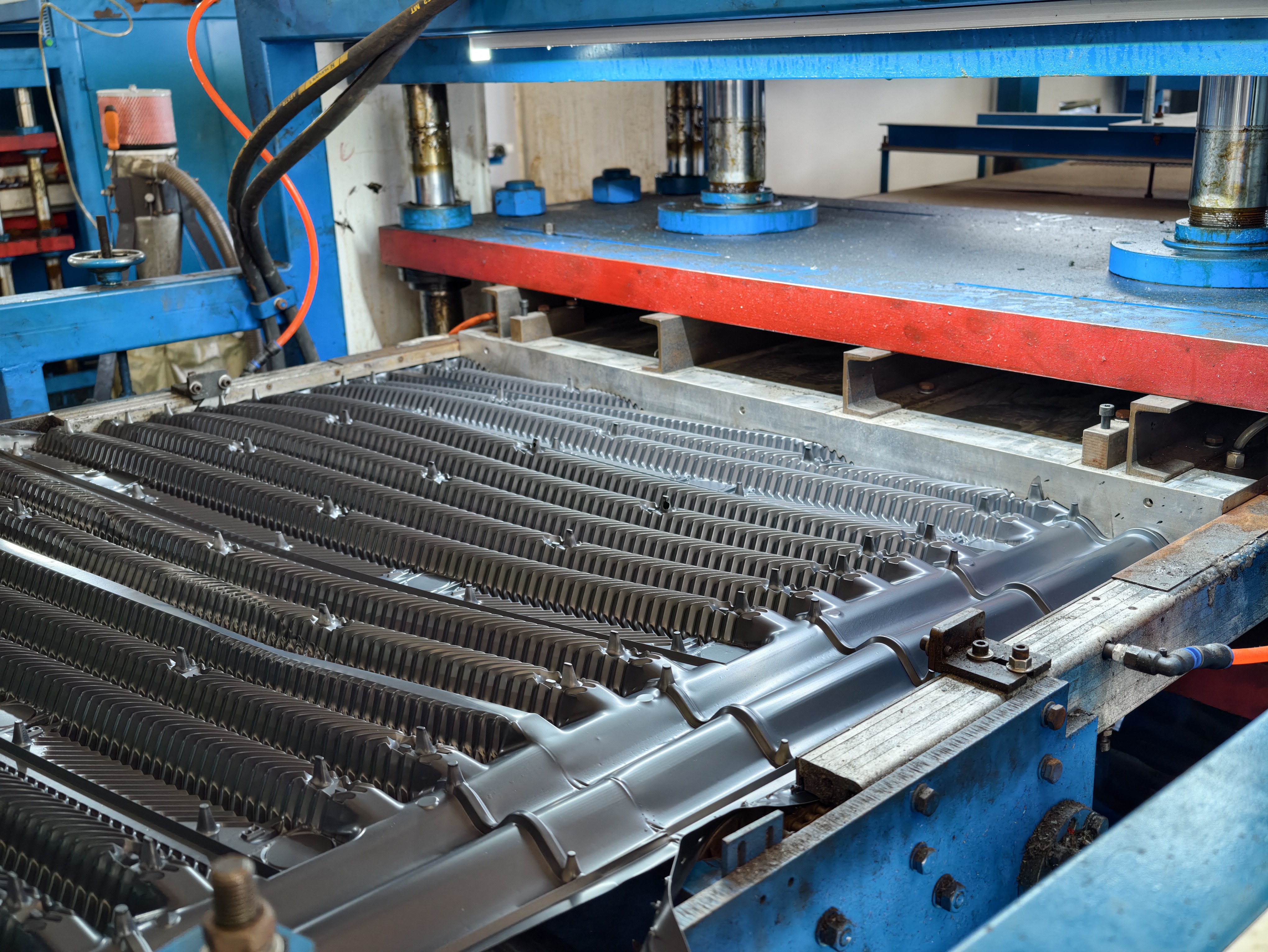
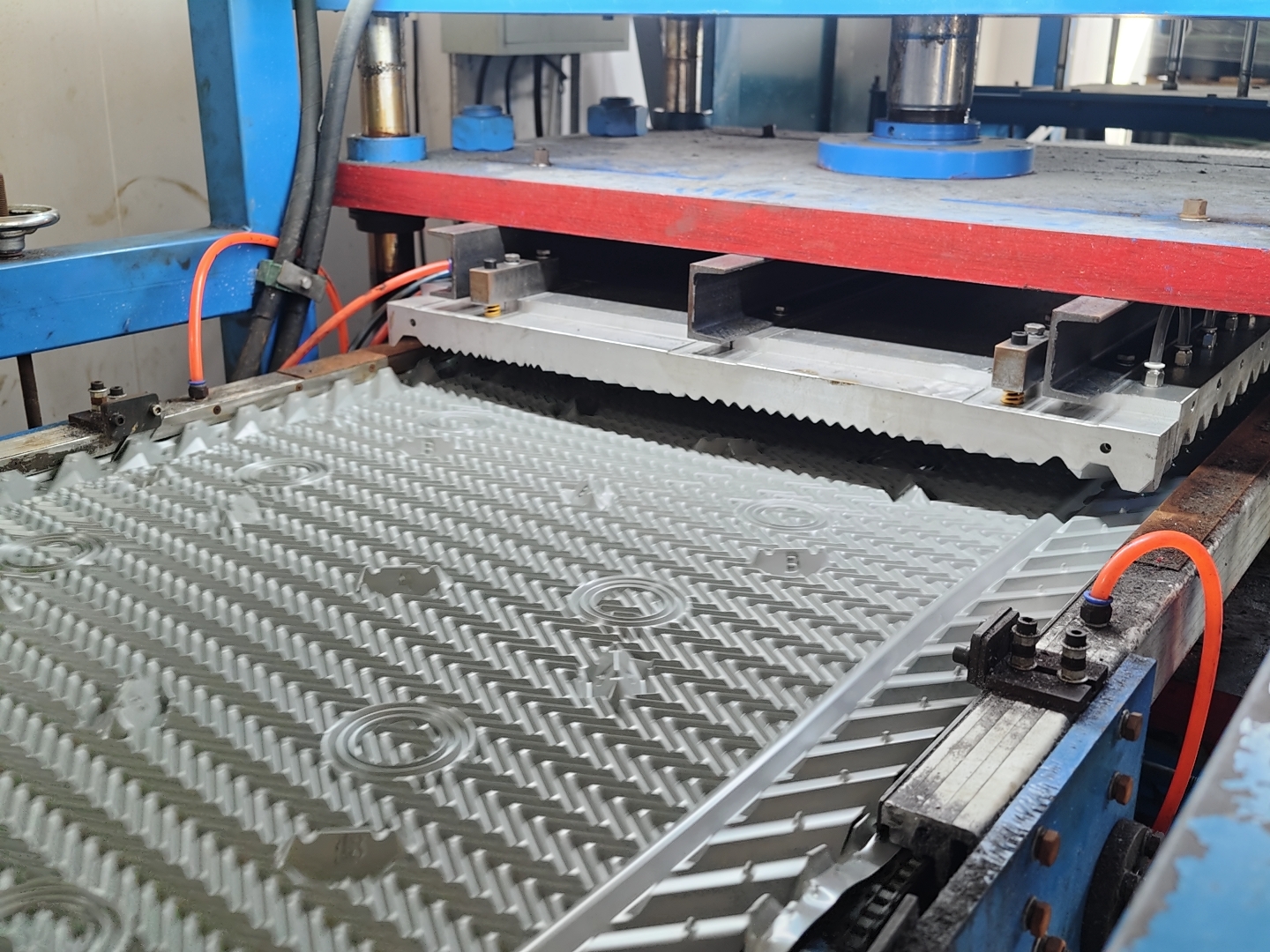
Film Type Fill for Cooling Tower: A Complete Guide
Film type fill is one of the most widely used heat-transfer media in modern evaporative cooling towers. It is designed to spread circulating water into a thin film over a large surface area, allowing water and air to interact more effectively. This improves evaporation and heat transfer while helping cooling towers achieve the required cooling performance within a relatively compact space.
For HVAC systems, industrial process cooling, power plants, manufacturing facilities, and commercial buildings, selecting the right film type fill for cooling tower applications is an important part of system design and maintenance.
This complete guide explains how cooling tower film fill works, its materials, types, advantages, applications, maintenance requirements, and replacement considerations.
What Is Film Type Fill in a Cooling Tower?
Film type fill is a structured cooling tower fill media that distributes water into a thin continuous film across its surface.
Unlike splash fill, which repeatedly breaks water into droplets, film fill encourages water to flow along a large contact surface. Air passes through the fill, creating conditions for heat and mass transfer.
How Does Cooling Tower Film Fill Work?
The basic process includes several steps:
Hot water enters the cooling tower.
A distribution system spreads water over the fill.
Water flows downward along the surfaces of the film fill.
Air moves through the fill.
Heat transfers from water to air.
A small portion of the water evaporates.
The cooled water collects in the basin.
The large surface area created by the fill allows water and air to remain in close contact during the cooling process.
Why Is Surface Area Important?
Heat transfer depends heavily on the amount of water surface exposed to moving air.
Film fill creates many small water channels and thin water films. This increases the effective contact area compared with an open water stream.
However, a larger nominal surface area does not automatically guarantee better cooling. Actual performance also depends on:
Water distribution
Airflow
Water loading
Fill geometry
Fill pitch
Wet-bulb temperature
Fouling
Fill condition
What Are the Main Types of Film Fill for Cooling Towers?
Film fill can be classified according to tower configuration, geometry, material, and application.
Counterflow Film Fill
Counterflow film fill is designed for cooling towers where water flows downward while air generally moves upward.
How Does Counterflow Film Fill Work?
Hot water enters from the upper portion of the tower and flows downward through the fill.
At the same time, air moves upward through the fill.
This opposing movement provides strong air-water contact throughout the fill section.
Counterflow film fill is commonly used in:
Crossflow Film Fill
Crossflow film fill is designed for towers where air generally moves horizontally through the fill while water flows downward.
What Are the Benefits of Crossflow Film Fill?
Crossflow towers can provide convenient access to water distribution components and internal maintenance areas.
Crossflow film fill can be used in:
Large HVAC cooling towers
Industrial cooling systems
Commercial buildings
Manufacturing plants
Process cooling applications
Offset-Fluted Film Fill
Offset-fluted fill uses a corrugated sheet structure that changes the direction of water and air as they move through the fill.
This geometry helps increase turbulence and improve contact between air and water.
Why Is Flute Geometry Important?
The flute pattern influences:
Surface area
Water distribution
Airflow resistance
Contact time
Fouling tendency
Thermal performance
A fill with an aggressive flute pattern may provide high contact area but can also create higher airflow resistance or greater fouling sensitivity under certain conditions.
Vertical-Fluted Film Fill
Vertical-fluted film fill uses predominantly vertical channels.
This design can help water and debris move downward through the fill.
Where Is Vertical-Fluted Fill Useful?
Vertical-fluted designs are often considered for applications where fouling and suspended solids are concerns.
Potential applications include:
What Materials Are Used for Cooling Tower Film Fill?
PVC and PP are the two most common materials used for modern film fill.
PVC Cooling Tower Film Fill
PVC, or polyvinyl chloride, is widely used for cooling tower film fill.
What Are the Advantages of PVC Film Fill?
PVC film fill offers several practical advantages:
Lightweight
Good corrosion resistance
Relatively low cost
Easy thermoforming
Good heat-transfer characteristics
Suitable for many HVAC applications
Available in customized dimensions
PVC is especially common in standard HVAC and industrial cooling tower applications where operating temperatures are within the recommended range.
PP Cooling Tower Film Fill
PP, or polypropylene, is another important material.
Why Use PP Film Fill?
PP can be considered for applications requiring higher temperature capability or particular chemical-resistance characteristics.
It is commonly used for specialized industrial cooling applications.
However, the correct material should always be selected according to the actual operating temperature and water chemistry.
PVC vs PP Film Fill
| Feature | PVC Film Fill | PP Film Fill |
| Cost | Generally economical | Often higher |
| Weight | Lightweight | Lightweight |
| Heat resistance | Suitable for many standard applications | Generally higher |
| Corrosion resistance | Good | Good |
| HVAC applications | Very common | Available |
| Industrial applications | Widely used | Widely used |
| Customization | Available | Available |
| Replacement use | Very common | Application dependent |
The best material depends on the specific cooling tower rather than material preference alone.
What Are the Advantages of Film Type Fill for Cooling Towers?
Film fill has become popular because it can provide high heat-transfer performance within a relatively small volume.
High Effective Surface Area
The thin-film structure creates a large water-air contact area.
This allows the cooling tower to achieve significant heat transfer without requiring an excessively large fill volume.
Efficient Water Distribution
Film fill helps distribute water across many surfaces.
When the water distribution system is properly designed, the fill can maintain a relatively uniform wet surface.
Compact Cooling Tower Design
High-efficiency film fill can help cooling towers achieve the required thermal performance within a compact footprint.
This can be valuable where installation space is limited.
Good Heat Transfer
The combination of large surface area and water-air contact can provide effective heat and mass transfer.
Lightweight Construction
PVC and PP film fill sheets are relatively lightweight compared with many traditional cooling media.
This can simplify transportation and installation.
Customizable Design
Film fill can be manufactured with different:
Sheet thicknesses
Flute patterns
Pitches
Heights
Widths
Materials
Block dimensions
This makes it suitable for replacement and customized cooling tower projects.
How Does Film Fill Improve Cooling Tower Heat Transfer?
Film fill affects cooling performance through several mechanisms.
Thin Water Film Formation
Water spreads over the surface of the fill instead of flowing through the tower as a thick stream.
The thin film exposes more water to the surrounding air.
Increased Air-Water Contact
The structured fill creates a large contact zone.
Air passing through the fill interacts with the wet surfaces and absorbs heat and moisture.
Evaporative Cooling
A small amount of water evaporates into the air.
The latent heat required for evaporation is removed from the remaining circulating water.
Extended Contact Time
The fill slows and spreads the water flow, increasing the opportunity for heat and mass transfer.
Does More Surface Area Always Mean Better Performance?
Not necessarily.
An effective fill design must balance surface area with:
Air pressure drop
Water distribution
Fouling resistance
Mechanical strength
Operating conditions
A very dense fill may have a high theoretical surface area but perform poorly if it becomes clogged or restricts airflow.
What Is the Difference Between Film Fill and Splash Fill?
Film fill and splash fill use different heat-transfer mechanisms.
Film Fill
Film fill spreads water over structured surfaces.
Its main characteristics include:
Splash Fill
Splash fill breaks water into droplets as it moves through the fill.
Its characteristics include:
Film Fill vs Splash Fill
| Factor | Film Fill | Splash Fill |
| Heat-transfer area | High | Moderate |
| Water quality requirement | Usually cleaner | Can tolerate dirtier water |
| Fouling resistance | Depends on design | Generally good |
| Compactness | High | Often requires more volume |
| HVAC use | Very common | Also available |
| Industrial dirty water | Application dependent | Often suitable |
| Maintenance | Requires controlled water quality | Generally more tolerant |
The choice should be based on the water quality and thermal design rather than simply choosing the fill with the highest surface area.
Where Is Film Type Fill Used?
Film fill can be found in many cooling tower applications.
HVAC Cooling Towers
Film fill is widely used in commercial and industrial HVAC systems.
Typical applications include:
Office buildings
Shopping centers
Hotels
Hospitals
Data centers
Industrial buildings
Industrial Process Cooling
Factories use cooling towers to remove heat from production processes.
Applications include:
Plastics manufacturing
Metal processing
Chemical plants
Food processing
Machinery cooling
Power Generation
Cooling towers are used to reject waste heat from power-generation systems.
Film fill can be used when water quality and operating temperatures are compatible with the selected media.
Manufacturing Plants
Industrial cooling towers may support:
Mining Applications
Mining facilities can have demanding water conditions.
In these applications, anti-fouling film fill or splash fill may need to be considered depending on the suspended solids and process-water quality.
How Do You Choose the Right Film Fill for a Cooling Tower?
Choosing film fill requires consideration of both thermal and mechanical factors.
Step 1: Identify the Cooling Tower Type
Determine whether the tower is:
Crossflow
Counterflow
Forced draft
Induced draft
Mechanical draft
Natural draft
The fill must be compatible with the tower's airflow and water-flow arrangement.
Step 2: Determine the Required Material
Choose between PVC, PP, or another suitable material based on:
Water temperature
Chemical environment
Mechanical requirements
Operating conditions
Step 3: Check Water Quality
Water quality is one of the most important considerations.
Check:
Suspended solids
Hardness
Biological growth
Oil contamination
Chemical concentration
Scaling tendency
What Happens If Water Contains Too Many Solids?
Small fill passages can gradually become blocked.
This can cause:
For dirty water, wider-passage or anti-fouling designs may be more appropriate.
Step 4: Check Operating Temperature
The fill material must be suitable for the operating temperature.
Provide the supplier with:
Step 5: Check Fill Dimensions
For replacement projects, measure the existing fill carefully.
Important dimensions include:
Length
Width
Height
Sheet thickness
Flute pitch
Fill block configuration
Step 6: Check Water Loading
Water flow per unit fill area affects wetting and thermal performance.
A fill designed for one water-loading range may not perform as expected when operated outside its intended range.
What Specifications Should You Request From a Film Fill Manufacturer?
When contacting a cooling tower fill supplier, request detailed technical information.
Material Specifications
Ask for:
PVC or PP material
Material grade
Sheet thickness
Temperature range
Chemical resistance
Geometric Specifications
Request:
Fill pitch
Flute angle
Surface area
Block dimensions
Sheet dimensions
Fill height
Thermal Specifications
Ask for:
Quality Specifications
A reliable manufacturer should be able to explain:
How Does Fill Pitch Affect Cooling Tower Performance?
Fill pitch refers to the distance between adjacent corrugations or channels.
Different pitch designs create different combinations of:
Surface area
Airflow resistance
Water distribution
Fouling resistance
Smaller Pitch
A smaller pitch can increase effective surface area.
However, narrow channels may be more vulnerable to blockage when water contains high levels of solids.
Larger Pitch
A larger pitch provides more open passages.
This can improve fouling resistance but may reduce theoretical surface area.
Which Pitch Is Better?
There is no universally best pitch.
The correct selection depends on:
How Should Film Type Fill Be Maintained?
Good maintenance is essential for maintaining cooling tower performance.
Inspect the Fill Regularly
Look for:
Scale
Dirt
Algae
Biological deposits
Broken sheets
Deformation
Discoloration
Blocked channels
Maintain Water Treatment
Proper water treatment helps control:
Scale
Corrosion
Algae
Microbiological growth
Poor water treatment can significantly shorten fill life.
Inspect Spray Nozzles
Blocked nozzles can cause uneven water distribution.
Dry sections of film fill provide little heat-transfer benefit, while overloaded sections can experience excessive water flow.
Clean Film Fill Carefully
Cleaning methods should be selected according to the fill material.
Avoid excessive mechanical force or aggressive chemicals that may damage PVC or PP sheets.
When Should Cooling Tower Film Fill Be Replaced?
There is no universal replacement schedule.
The service life depends on:
Water quality
Operating temperature
UV exposure
Chemical treatment
Cleaning frequency
Mechanical damage
Biological growth
Scale accumulation
What Are the Signs of Failed Film Fill?
Consider replacement when you find:
Severe Cracking
Old PVC sheets may become brittle and crack during inspection or cleaning.
Permanent Deformation
Deformed fill can reduce water and airflow distribution.
Heavy Scaling
Severe scale can cover the heat-transfer surface and reduce effective performance.
Persistent Blockage
If cleaning cannot restore the fill passages, replacement may be more economical.
Reduced Cooling Capacity
A significant loss of cooling performance may indicate fill deterioration, although other components should also be inspected.
How Does Cooling Tower Fill Replacement Work?
A typical replacement project involves several stages.
Inspection
First inspect:
Existing fill
Support structure
Nozzles
Distribution system
Drift eliminators
Tower casing
Measurement
Measure the existing fill accurately.
Material Selection
Choose PVC, PP, or another material based on operating conditions.
Fill Manufacturing
The manufacturer produces the replacement fill according to the required dimensions.
Removal
The old fill is removed carefully.
Support Inspection
The fill support structure should be inspected before installing new media.
Installation
New fill blocks are installed according to the manufacturer's recommendations.
Final Inspection
Check:
Fill alignment
Water distribution
Support stability
Nozzle condition
Air passages
What Causes Cooling Tower Film Fill to Fail?
Understanding failure mechanisms can help improve maintenance.
Scaling
Hard-water minerals can accumulate on fill surfaces.
Biological Growth
Algae and microorganisms can form deposits.
Chemical Damage
Incorrect water chemistry can attack certain materials.
High Temperature
Operating outside the recommended temperature range can accelerate material deterioration.
UV Exposure
Long-term ultraviolet exposure can contribute to polymer degradation, particularly when fill is exposed to sunlight.
Mechanical Damage
Improper cleaning, installation, or maintenance can physically damage thin fill sheets.
Can Film Fill Be Customized?
Yes. Custom cooling tower film fill is commonly required for replacement projects.
What Can Be Customized?
Depending on the manufacturer, customization may include:
Length
Width
Height
Thickness
Pitch
Flute design
Material
Block configuration
Why Choose Custom Film Fill?
Custom manufacturing can be useful when:
The original fill is discontinued
The tower has unusual dimensions
OEM fill is expensive
The original supplier is unavailable
A retrofit project requires modified dimensions
Providing drawings, samples, photographs, and measurements can help the manufacturer produce a compatible replacement.
How to Choose a Reliable Cooling Tower Film Fill Manufacturer?
A supplier should be evaluated based on technical capability rather than price alone.
Does the Manufacturer Control Raw Materials?
Ask whether the supplier has consistent raw-material specifications.
Can It Produce Consistent Thickness?
Film fill sheets must maintain relatively consistent thickness to provide predictable forming and mechanical properties.
Does the Manufacturer Offer Customization?
Custom production is valuable for cooling tower retrofit and replacement projects.
Can It Provide Technical Support?
A capable supplier should be able to discuss:
Material selection
Fill geometry
Water quality
Temperature
Application
Installation
Does It Have Export Experience?
For international buyers, consider:
Export packaging
Container loading
Production lead time
Documentation
Shipping experience
What Are the Benefits of Buying Film Fill Directly From a Manufacturer?
Direct purchasing can provide several potential advantages.
Custom Specifications
Manufacturers can often produce fill according to specific requirements.
Bulk Supply
Large industrial projects may require thousands of fill sheets or multiple fill blocks.
Technical Communication
Direct communication can simplify discussions about:
Dimensions
Materials
Fill design
Packaging
Replacement requirements
OEM and Replacement Support
Manufacturers may be able to reproduce fill according to samples or drawings.
Cooling Tower Film Fill Buying Checklist
Before placing an order, confirm the following:
Cooling Tower
Tower manufacturer
Tower model
Crossflow or counterflow
Cooling capacity
Number of cells
Fill
Material
Length
Width
Height
Thickness
Pitch
Flute pattern
Quantity
Operating Conditions
Hot water temperature
Cold water temperature
Water flow
Airflow
Wet-bulb temperature
Water quality
Supplier
Manufacturing capability
Quality control
Customization
Production lead time
Packaging
Export experience
Frequently Asked Questions About Film Type Fill Cooling Towers
What Is Film Type Fill in a Cooling Tower?
Film type fill is structured heat-transfer media that spreads circulating water into thin films over a large surface area, increasing contact between water and air.
Is PVC Film Fill Better Than PP Film Fill?
Neither material is universally better. PVC is widely used for standard cooling tower applications, while PP can be considered when higher temperature resistance or specific material properties are required.
Is Film Fill Suitable for Dirty Water?
Film fill can be used with some industrial water conditions, but heavily contaminated water can cause blockage. Anti-fouling film fill, wider-passage designs, or splash fill may be more appropriate for high-fouling applications.
What Is the Difference Between Film Fill and Splash Fill?
Film fill spreads water across structured surfaces, while splash fill breaks water into droplets. Film fill generally provides high heat-transfer surface area, while splash fill can offer better resistance to fouling and blockage.
Can Film Fill Be Used in Both Crossflow and Counterflow Towers?
Yes, but the fill design must match the tower configuration. Crossflow and counterflow fill have different airflow and water-distribution requirements.
How Long Does Cooling Tower Film Fill Last?
There is no fixed service life. Water quality, temperature, cleaning, chemical treatment, UV exposure, and mechanical conditions all affect fill longevity.
How Do I Know When Cooling Tower Film Fill Needs Replacement?
Cracking, deformation, severe scaling, permanent blockage, brittle sheets, and declining cooling performance can indicate that replacement should be considered.
Can Cooling Tower Film Fill Be Customized?
Yes. Manufacturers can often customize fill dimensions, thickness, pitch, flute geometry, material, and block configuration according to the cooling tower requirements.
What Information Should I Provide When Requesting a Film Fill Quote?
Provide the cooling tower model, fill dimensions, material, quantity, tower configuration, water flow, operating temperatures, water quality, photographs, and drawings if available.
Conclusion
Film type fill is a key component in modern cooling towers because it provides a large effective surface area for water-air contact. By spreading circulating water into thin films and promoting interaction with moving air, it supports efficient evaporative heat transfer.
PVC film fill remains a popular choice for many HVAC and industrial cooling applications, while PP film fill can be considered for applications requiring different temperature or chemical-resistance characteristics.
The correct film fill should always be selected according to the cooling tower configuration, water quality, operating temperature, water loading, airflow, and maintenance requirements.
For replacement projects, accurate measurements are especially important. A suitable cooling tower film fill manufacturer should be able to provide consistent material quality, customized dimensions, technical support, and reliable production.
Whether you need PVC cooling tower fill, PP cooling tower fill, crossflow film fill, counterflow film fill, anti-fouling film fill, or custom cooling tower fill replacement, selecting the right media can help maintain heat-transfer performance and extend the useful operating life of the cooling tower.