Different Types of Cooling Tower Fan Blades for Your Selection
Cooling tower fan blades are essential components of mechanical cooling tower systems. They play a critical role in generating airflow, improving heat exchange efficiency, and maintaining stable cooling tower performance. Choosing the right cooling tower fan blades can significantly influence airflow capacity, energy consumption, operating noise, and equipment service life.
With different materials, structural designs, and aerodynamic profiles available on the market, selecting suitable fan blades requires careful consideration of your cooling tower's operating conditions and technical requirements.
In this article, we will introduce the different types of cooling tower fan blades, explain their characteristics and advantages, and help you select the most suitable solution for your industrial or commercial cooling tower.
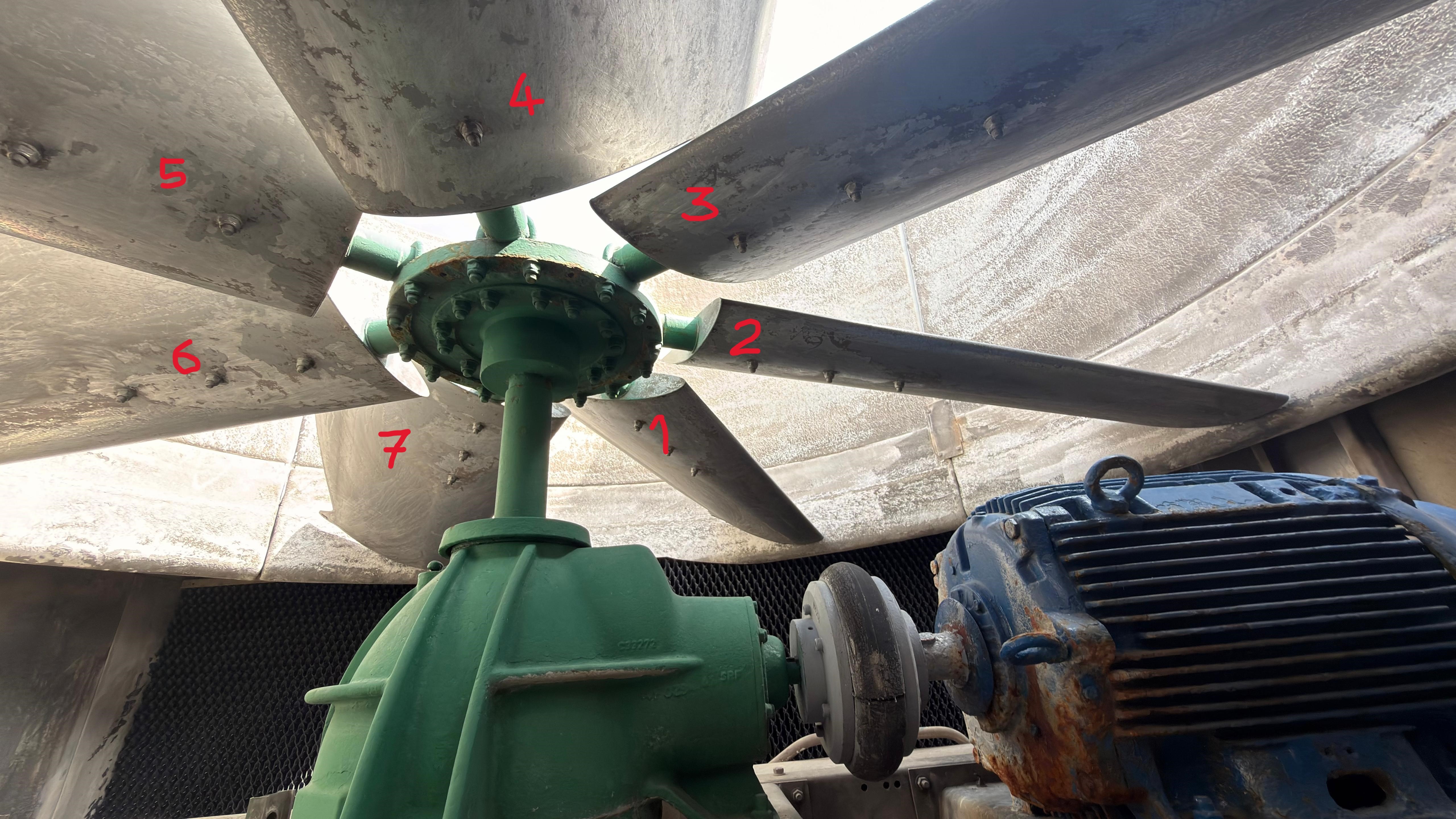
1. What Are Cooling Tower Fan Blades?
Cooling tower fan blades are rotating components installed on a fan hub to generate airflow through a cooling tower. Their primary purpose is to move large volumes of air across the heat exchange section, allowing hot circulating water to release heat through evaporation and convection.
The performance of cooling tower fan blades directly affects the cooling capacity and energy efficiency of the entire system.
1.1 Main Functions of Cooling Tower Fan Blades
The main functions of cooling tower fan blades include:
Generating airflow: Moving air through the cooling tower to support heat exchange.
Improving cooling efficiency: Maintaining sufficient airflow to achieve the required cooling performance.
Reducing energy consumption: Optimizing aerodynamic performance to minimize fan power requirements.
Reducing operating noise: Using optimized blade profiles to control aerodynamic noise.
Ensuring stable operation: Maintaining proper balance and minimizing vibration.
1.2 Why Is Choosing the Right Cooling Tower Fan Blade Important?
Different cooling tower systems have different airflow requirements, operating speeds, and environmental conditions. An unsuitable fan blade may cause insufficient airflow, excessive energy consumption, increased vibration, or premature equipment failure.
Therefore, selecting the correct cooling tower fan blade is important for improving operational efficiency and reducing long-term maintenance costs.
2. Different Types of Cooling Tower Fan Blades by Material
Material selection is one of the most important factors when purchasing cooling tower fan blades. Different materials offer different advantages in terms of weight, strength, corrosion resistance, durability, and manufacturing cost.
2.1 FRP Cooling Tower Fan Blades
<Insert Image: FRP Cooling Tower Fan Blades>
FRP (Fiberglass Reinforced Plastic) cooling tower fan blades are widely used in modern industrial and commercial cooling tower systems.
FRP is a composite material made by combining fiberglass reinforcement with a resin matrix. This combination provides good mechanical strength while keeping the blades relatively lightweight.
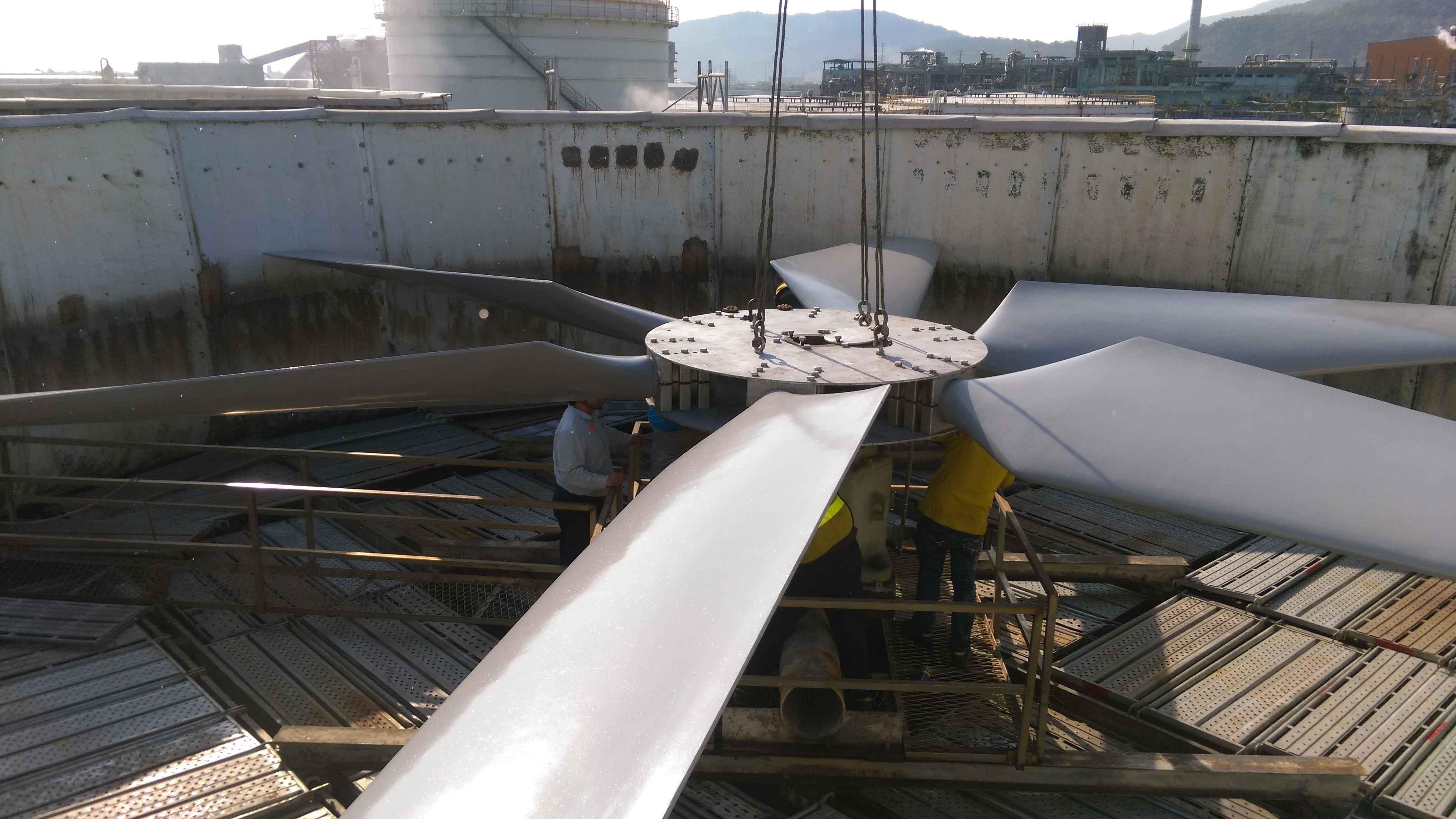
Advantages of FRP Fan Blades
Excellent corrosion resistance.
Lightweight construction.
Good mechanical strength.
Low maintenance requirements.
Good resistance to moisture and many industrial environments.
Flexible aerodynamic design options.
Suitable for large-diameter cooling tower fans.
Applications of FRP Cooling Tower Fan Blades
FRP fan blades are suitable for various applications, including:
Industrial cooling towers.
Power plants.
Chemical processing facilities.
HVAC cooling systems.
Coastal industrial facilities.
Water treatment plants.
Because of their lightweight construction and corrosion resistance, FRP cooling tower fan blades are a popular choice for many industrial applications.
2.2 Aluminum Alloy Cooling Tower Fan Blades
<Insert Image: Aluminum Alloy Cooling Tower Fan Blades>
Aluminum alloy cooling tower fan blades are another common option. They are valued for their lightweight construction, good strength-to-weight ratio, and convenient manufacturing characteristics.
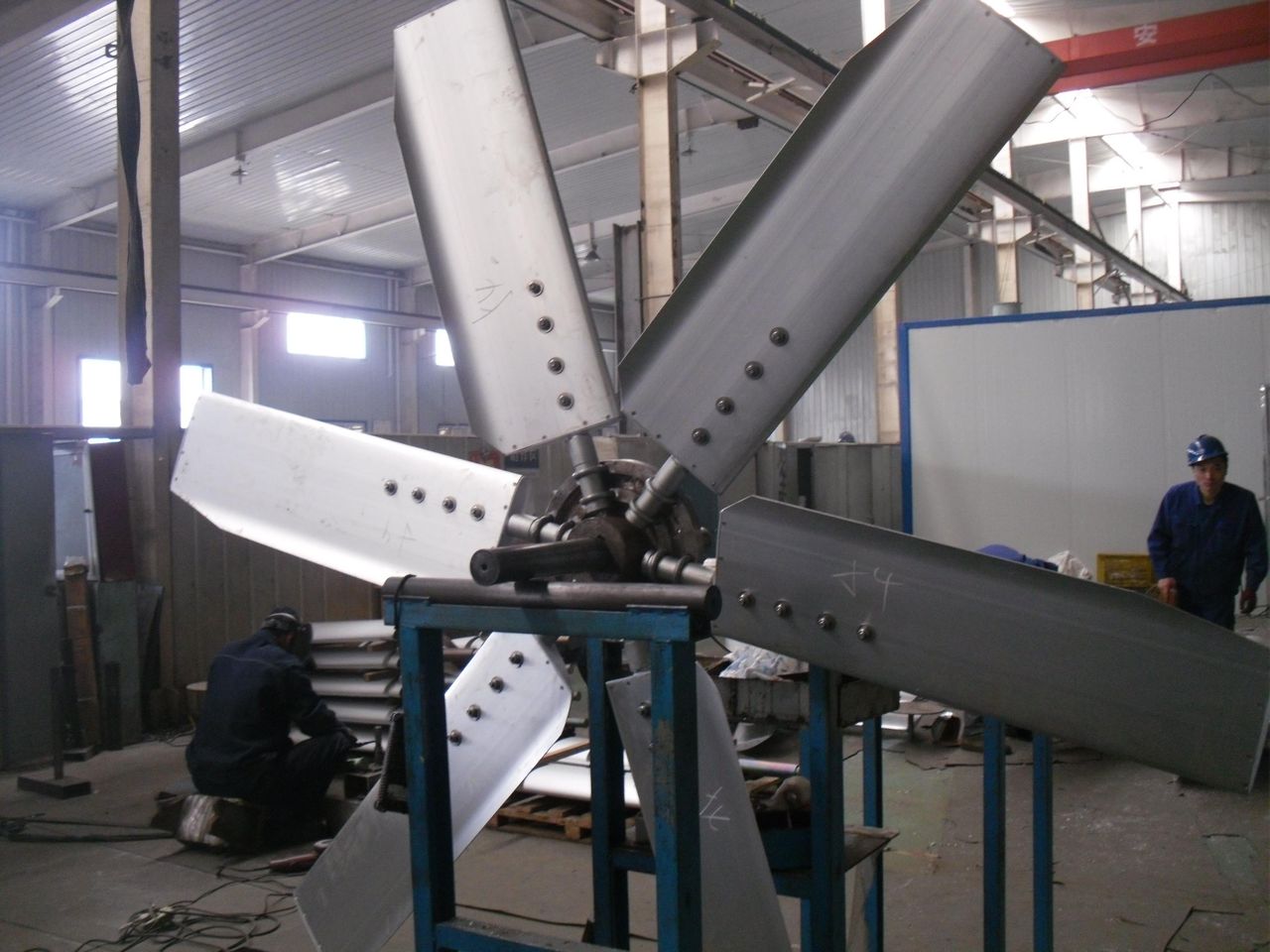
Advantages of Aluminum Alloy Fan Blades
Lightweight and easy to install.
Good mechanical strength.
Good dimensional stability.
Excellent machinability.
Recyclable material.
Suitable for various industrial ventilation applications.
Applications of Aluminum Fan Blades
Aluminum alloy blades are commonly considered for medium and large cooling tower systems, commercial HVAC applications, and industrial ventilation equipment.
However, aluminum alloys may be vulnerable to corrosion in certain aggressive environments. Appropriate alloy selection and surface protection are important.
2.3 Stainless Steel Cooling Tower Fan Blades
<Insert Image: Stainless Steel Cooling Tower Fan Blades>
Stainless steel cooling tower fan blades are designed for applications requiring high mechanical strength and good corrosion resistance.
Advantages of Stainless Steel Fan Blades
High mechanical strength.
Good structural stability.
Resistance to many corrosive environments.
Good durability.
Suitable for demanding industrial applications.
Applications
Stainless steel blades may be used in specialized industrial cooling towers and applications where particular mechanical or corrosion-resistance requirements must be met.
One consideration is their relatively high weight, which should be taken into account when evaluating the fan hub, motor, and drive system.
2.4 Carbon Steel Cooling Tower Fan Blades
Carbon steel fan blades provide good structural strength and can be an economical option for certain industrial cooling applications.
Advantages of Carbon Steel Blades
High mechanical strength.
Good load-bearing capacity.
Relatively economical material cost.
Suitable for specific heavy-duty applications.
Limitations of Carbon Steel Blades
Carbon steel is more susceptible to corrosion than FRP and stainless steel. Therefore, protective coatings and regular maintenance are necessary when these blades operate in humid cooling tower environments.
3. Different Types of Cooling Tower Fan Blades by Structural Design
In addition to material, cooling tower fan blades can also be classified according to their structural design.
Different structures influence blade weight, rigidity, aerodynamic characteristics, and manufacturing requirements.
3.1 Fixed-Pitch Cooling Tower Fan Blades
Fixed-pitch cooling tower fan blades have a predetermined blade angle that remains unchanged during operation.
The blade pitch is designed according to the required airflow, rotational speed, and operating conditions.
Main Characteristics
Simple structural design.
Relatively low initial investment.
Easy installation.
Straightforward maintenance.
Suitable for stable operating conditions.
Fixed-pitch blades are commonly used in cooling towers with relatively consistent cooling loads and airflow requirements.
3.2 Adjustable-Pitch Cooling Tower Fan Blades
Adjustable-pitch cooling tower fan blades allow the blade angle to be changed during installation or maintenance. Certain specialized systems also support automatic pitch adjustment during operation.
By changing the blade pitch, operators can modify the aerodynamic loading and airflow characteristics of the fan.
Advantages of Adjustable-Pitch Fan Blades
Flexible airflow adjustment.
Better adaptability to changing cooling loads.
Potential energy savings under suitable operating conditions.
Greater operational flexibility.
Typical Applications
Adjustable-pitch blades are often considered for large industrial cooling towers, power plants, and facilities with fluctuating cooling requirements.
3.3 Hollow Cooling Tower Fan Blades
Hollow cooling tower fan blades feature an internal hollow structure designed to reduce weight while maintaining the required structural strength.
This design is commonly used in certain composite and metal blade constructions.
Key Advantages
Reduced blade weight.
Lower rotational inertia.
Potential reduction in drive-system loading.
Improved structural efficiency when properly engineered.
Hollow blade designs require appropriate internal reinforcement and manufacturing quality control to ensure safe and reliable operation.
3.4 Solid Cooling Tower Fan Blades
Solid fan blades have a relatively solid cross-sectional structure and are designed to provide the necessary stiffness and mechanical strength.
Key Advantages
Relatively straightforward construction.
Good structural rigidity.
Suitable for certain smaller fan applications.
Convenient manufacturing depending on the selected material.
However, blade weight should be carefully evaluated, especially for large-diameter cooling tower fans.
4. Different Types of Cooling Tower Fan Blades by Aerodynamic Profile
The aerodynamic profile determines how effectively a fan blade moves air. Different blade profiles can provide different airflow characteristics, pressure capabilities, noise levels, and energy performance.
4.1 Airfoil Cooling Tower Fan Blades
<Insert Image: Airfoil Cooling Tower Fan Blades>
Airfoil cooling tower fan blades feature a streamlined cross-sectional shape similar to an aircraft wing.
Their aerodynamic design helps generate airflow while minimizing resistance.
Advantages of Airfoil Fan Blades
High aerodynamic efficiency.
Relatively low aerodynamic drag.
Potential reduction in energy consumption.
Good airflow performance.
Potentially lower operating noise when properly designed.
Airfoil blades are commonly considered for large industrial cooling towers where airflow capacity and energy efficiency are important.
4.2 Flat-Profile Cooling Tower Fan Blades
Flat-profile fan blades feature a comparatively simple cross-sectional structure.
Advantages
Simple manufacturing process.
Relatively low production cost.
Straightforward construction.
Suitable for certain low-pressure ventilation applications.
However, flat-profile blades generally provide less aerodynamic optimization than properly designed airfoil blades.
4.3 Twisted Cooling Tower Fan Blades
Twisted fan blades have different pitch angles along their radial length.
This design compensates for the changes in blade speed between the root and tip, helping maintain more consistent aerodynamic loading.
Advantages of Twisted Fan Blades
Improved aerodynamic performance.
More uniform airflow distribution.
Better utilization of the blade's radial length.
Potential improvement in energy efficiency.
Twisted airfoil blades are often used in applications requiring optimized fan performance.
5. Cooling Tower Fan Blades for Different Cooling Tower Systems
Cooling tower fan blades must also match the configuration of the cooling tower system.
Mechanical-draft cooling towers generally use axial-flow fans, which move air primarily parallel to the fan shaft.
5.1 Induced-Draft Cooling Tower Fan Blades
<Insert Image: Induced-Draft Cooling Tower>
In an induced-draft cooling tower, the fan is installed near the top of the tower and pulls air through the fill section before discharging it into the atmosphere.
Main Characteristics
Creates negative pressure inside the tower.
Pulls air through the fill and heat exchange section.
Commonly used in industrial cooling towers.
Requires blades designed for the system's airflow resistance.
5.2 Forced-Draft Cooling Tower Fan Blades
<Insert Image: Forced-Draft Cooling Tower>
In a forced-draft cooling tower, the fan is generally installed near the air inlet and pushes ambient air into the tower.
Main Characteristics
Pushes ambient air into the cooling tower.
Fan installation is generally near the lower air inlet.
Requires suitable airflow and pressure performance.
Operates under different environmental conditions compared with many induced-draft arrangements.
The choice between induced-draft and forced-draft fan configurations depends on the overall cooling tower design and operating requirements.
6. How to Choose the Right Cooling Tower Fan Blades?
Selecting suitable cooling tower fan blades requires evaluating several technical parameters and operating conditions.
The following factors can help you make a better purchasing decision.
6.1 Determine the Required Airflow Capacity
Airflow is one of the most important parameters in cooling tower fan selection.
Before purchasing fan blades, determine:
An undersized fan may result in insufficient cooling capacity, while an oversized fan may increase energy consumption.
6.2 Select the Appropriate Blade Material
Different cooling tower environments require different blade materials.
| Material | Main Advantages | Main Considerations |
| FRP | Lightweight and corrosion-resistant | Resin compatibility and manufacturing quality |
| Aluminum alloy | Lightweight and good strength-to-weight ratio | Corrosion protection |
| Stainless steel | High strength and good corrosion resistance | Higher weight and cost |
| Carbon steel | High strength and economical | Requires protective coatings |
For humid and corrosive environments, FRP cooling tower fan blades are often worth considering because of their lightweight construction and corrosion resistance.
6.3 Check Fan Diameter and Blade Dimensions
Fan diameter and blade geometry must match the cooling tower design.
Important parameters include:
Incorrect dimensions may cause installation problems, insufficient airflow, excessive vibration, or mechanical interference.
6.4 Consider Operating Temperature and Environmental Conditions
Cooling tower fan blades operate in environments characterized by high humidity, water droplets, temperature variations, and potentially corrosive substances.
Consider the following conditions:
Material selection should be based on the actual operating environment.
6.5 Evaluate Energy Efficiency and Noise Levels
Fan energy consumption is an important part of cooling tower operating costs.
Aerodynamically optimized fan blades can help reduce the power required to achieve a specified airflow.
Noise levels should also be considered, particularly for cooling towers installed near residential areas, commercial buildings, or workplaces.
6.6 Confirm Compatibility with the Existing Fan System
When replacing existing cooling tower fan blades, compatibility is essential.
Check the following parameters:
Existing fan hub dimensions.
Blade mounting holes.
Fan rotational direction.
Rotational speed.
Motor power.
Gearbox or drive-system capacity.
Blade clearance and installation space.
Always verify replacement blade compatibility through engineering calculations and manufacturer specifications.
7. Common Problems Caused by Incorrect Cooling Tower Fan Blade Selection
Choosing unsuitable cooling tower fan blades can affect the performance, efficiency, and reliability of the entire cooling tower.
7.1 Insufficient Airflow
An unsuitable blade profile, pitch angle, or fan diameter may result in inadequate airflow.
This can reduce heat rejection efficiency and make it difficult for the cooling tower to maintain the required outlet water temperature.
7.2 Excessive Energy Consumption
Poor aerodynamic performance can increase the power required to move the necessary volume of air.
Selecting properly engineered fan blades can help optimize energy consumption.
7.3 Excessive Vibration
Incorrect installation, uneven blade weight, poor balancing, or structural damage can cause excessive vibration.
Vibration may damage bearings, motors, gearboxes, and other fan components.
7.4 Corrosion and Premature Damage
Using unsuitable materials in humid or chemically aggressive environments can accelerate corrosion and shorten blade service life.
7.5 Increased Operating Noise
Poor blade geometry, inappropriate operating speed, and airflow turbulence may contribute to excessive noise.
Proper aerodynamic design and installation can help control these problems.
8. Maintenance Tips for Cooling Tower Fan Blades
Regular inspection and maintenance are essential for maintaining cooling tower fan performance and extending blade service life.
8.1 Inspect Fan Blade Surfaces Regularly
Check for:
8.2 Check Fan Blade Balance
Fan imbalance can generate vibration and increase mechanical stress.
Check blade condition and fan balance according to the manufacturer's maintenance requirements.
8.3 Clean Cooling Tower Fan Blades
Remove accumulated dust, dirt, mineral deposits, and other contaminants.
Regular cleaning helps maintain aerodynamic performance and makes it easier to identify potential damage.
8.4 Check Blade Pitch and Fasteners
For adjustable-pitch fan systems, verify that blade angles remain within the specified settings.
Inspect mounting bolts and fasteners for looseness and follow the manufacturer's recommended torque requirements.
8.5 Follow a Preventive Maintenance Schedule
A preventive maintenance program should include regular visual inspections, vibration monitoring, mechanical checks, and periodic performance evaluations.
Always shut down and isolate the fan system before performing maintenance.
9. Why Choose High-Quality Cooling Tower Fan Blades?
High-quality cooling tower fan blades are essential for maintaining stable airflow, reducing maintenance expenses, and improving overall cooling system performance.
When selecting a cooling tower fan blade manufacturer or supplier, consider the following factors.
9.1 Professional Design and Engineering Capabilities
A reliable supplier should understand aerodynamic design, structural strength, material properties, and cooling tower operating requirements.
9.2 High-Quality Raw Materials
The quality of fiberglass reinforcement, FRP resin, aluminum alloy, or stainless steel directly affects blade performance and durability.
9.3 Precision Manufacturing
Consistent manufacturing quality helps ensure dimensional accuracy, structural integrity, and proper blade balance.
9.4 Customized Cooling Tower Fan Blade Solutions
Different cooling towers may require different blade diameters, mounting configurations, pitch angles, and materials.
A supplier with customization capabilities can provide fan blades that match specific equipment requirements.
9.5 Technical Support and After-Sales Service
Professional technical support helps customers select suitable replacement blades, solve installation problems, and maintain reliable equipment operation.
10. FAQ About Cooling Tower Fan Blades
10.1 What Is the Best Material for Cooling Tower Fan Blades?
FRP is a popular material for cooling tower fan blades because it offers a good combination of lightweight construction, mechanical strength, and corrosion resistance.
However, the best material depends on the operating environment, fan design, mechanical requirements, and budget.
10.2 Are FRP Cooling Tower Fan Blades Better Than Aluminum Blades?
FRP and aluminum blades have different advantages.
FRP blades generally offer better corrosion resistance in many humid industrial environments, while aluminum blades provide good strength-to-weight ratios and convenient metal fabrication.
The best option depends on the specific application.
10.3 What Is the Difference Between Fixed-Pitch and Adjustable-Pitch Fan Blades?
Fixed-pitch blades have a predetermined blade angle that cannot be changed during normal operation.
Adjustable-pitch blades allow the blade angle to be modified during installation or maintenance. Some advanced systems also support automatic pitch adjustment.
10.4 How Long Do Cooling Tower Fan Blades Last?
The service life of cooling tower fan blades depends on material quality, manufacturing standards, operating conditions, maintenance practices, and environmental exposure.
Regular inspections and proper maintenance can help extend their service life.
10.5 Can I Replace Existing Cooling Tower Fan Blades with FRP Blades?
In many cases, FRP blades can be used as replacement components, provided that their dimensions, weight, aerodynamic characteristics, mounting configuration, and operating parameters are compatible with the existing fan system.
A technical evaluation should be completed before replacement.
11. Conclusion: Choose the Right Cooling Tower Fan Blades for Better Performance
Different types of cooling tower fan blades offer different advantages in terms of material properties, structural design, aerodynamic performance, and operating flexibility.
FRP, aluminum alloy, stainless steel, and carbon steel blades each have their own suitable applications. Meanwhile, fixed-pitch, adjustable-pitch, hollow, solid, airfoil, and twisted blade designs provide different solutions for various cooling tower requirements.
Before purchasing cooling tower fan blades, carefully evaluate airflow capacity, blade material, fan diameter, pitch angle, operating speed, environmental conditions, and compatibility with the existing fan system.
Choosing the right cooling tower fan blades can help improve airflow performance, optimize energy consumption, reduce maintenance requirements, and extend equipment service life.
Looking for reliable cooling tower fan blades for your industrial cooling tower? Contact our team today to discuss your requirements and find a suitable fan blade solution.


