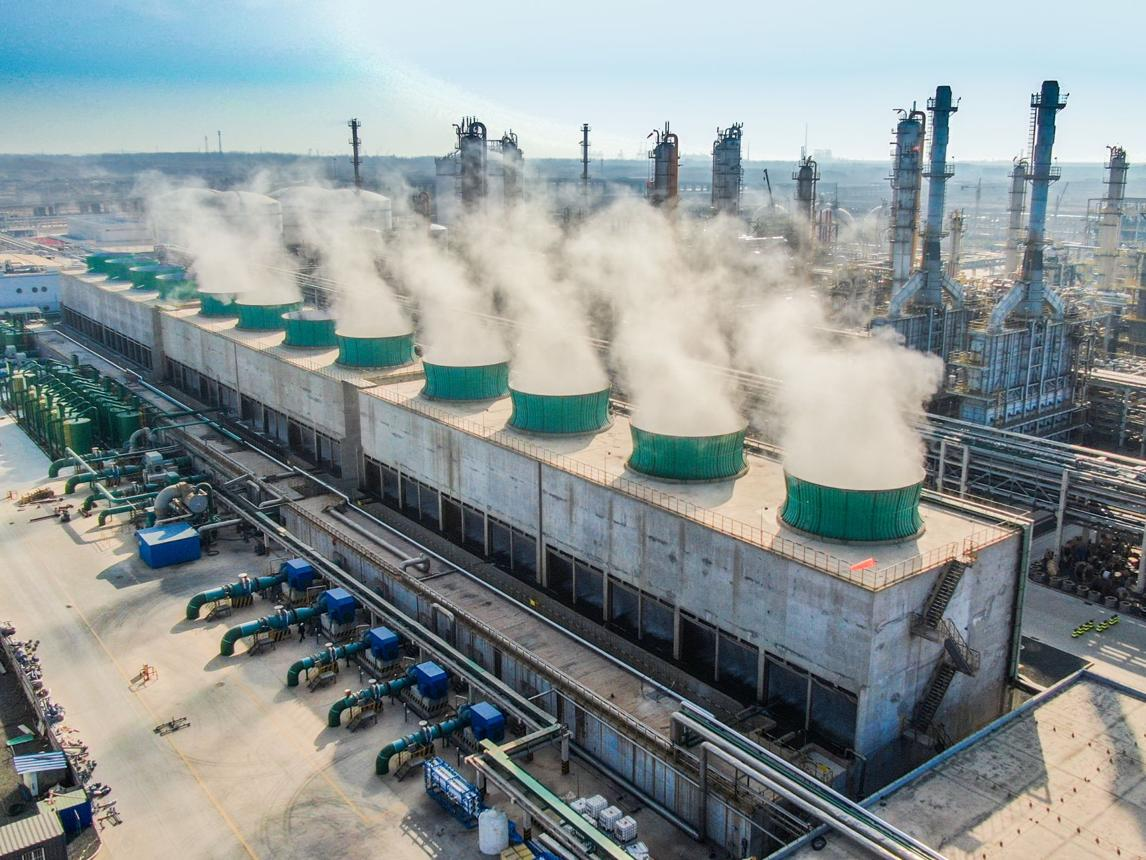
Cooling towers are built to work hard. They operate with water, air, heat, humidity, chemicals, and continuous mechanical movement. In a normal environment, these conditions are already demanding. In a chemical plant, wastewater facility, power station, refinery, or other harsh industrial application, the challenge becomes even greater.
And what component is constantly moving air through this environment? The cooling tower fan.
A fan may look simple from the outside, but it plays a critical role in heat rejection. If corrosion attacks the blades, hub, shaft, housing, or other components, the fan can gradually lose efficiency, become unbalanced, create excessive vibration, and eventually require replacement.
That is why choosing a corrosion resistant industrial cooling tower fan is not simply a material decision. It is a reliability decision.
In this guide, we will discuss how corrosion affects cooling tower fans, which materials are suitable for harsh working conditions, how to select the right fan, and why working directly with an experienced manufacturer can make a difference.
For customized cooling tower fan solutions, Power Tower Cooling Technology (Shaoxing) Co., Ltd. provides cooling tower components and customized manufacturing solutions for industrial applications.
What Is a Corrosion Resistant Cooling Tower Fan?
A corrosion resistant cooling tower fan is designed or manufactured with materials, coatings, and components intended to withstand corrosive operating environments better than ordinary fan construction.
The goal is simple: keep the fan mechanically strong and aerodynamically effective for as long as possible, even when exposed to moisture, chemicals, salts, or contaminated air.
Corrosion resistance can come from several approaches. The fan may use FRP, stainless steel, corrosion-resistant alloys, engineered plastics, protective coatings, or a combination of materials.
However, corrosion resistance should never be considered separately from fan performance. A material may resist chemicals well but still be unsuitable if it cannot handle the required rotational speed, load, temperature, or mechanical stress.
The best design balances corrosion resistance, strength, airflow performance, weight, durability, and cost.
Why Do Cooling Tower Fans Face Corrosion?
Why does corrosion become such a concern in cooling tower applications?
Think about the environment inside and around a cooling tower. Water is constantly circulating. Air is continuously moving through wet areas. Humidity can remain high. Minerals can concentrate in the circulating water. In some industrial processes, chemicals may also enter the cooling system or surrounding atmosphere.
It is almost like asking a machine to work beside the ocean every day—but with additional industrial chemicals in the air.
Over time, these conditions can attack vulnerable materials and surfaces. The severity depends on the cooling water chemistry, airborne contaminants, operating temperature, humidity, cleaning procedures, and industrial process.
That is why a fan designed for a dry indoor environment may not be the right choice for an aggressive industrial cooling tower.
Moisture and High Humidity
Moisture is one of the most obvious challenges.
Cooling tower fans operate in an environment where water droplets and humid air may be present. If unprotected metal surfaces remain exposed, oxidation and corrosion can develop.
Even when corrosion begins slowly, the long-term effect can be significant. Surface damage can become deeper material degradation, especially when the component is repeatedly exposed to moisture and then dries out.
This is why corrosion-resistant materials are particularly important for fans used in wet industrial environments.
Chemicals and Contaminated Air
Chemical exposure can make the problem much more serious.
Cooling towers used in chemical processing, wastewater treatment, manufacturing, or other industrial applications may operate near aggressive substances or contaminated air streams.
Different chemicals affect different materials in different ways. There is no single material that is automatically ideal for every chemical environment.
Before selecting a fan, buyers should consider the actual operating environment rather than simply asking for the "strongest" material.
The right material depends on factors such as chemical exposure, concentration, temperature, humidity, mechanical loading, and expected service life.
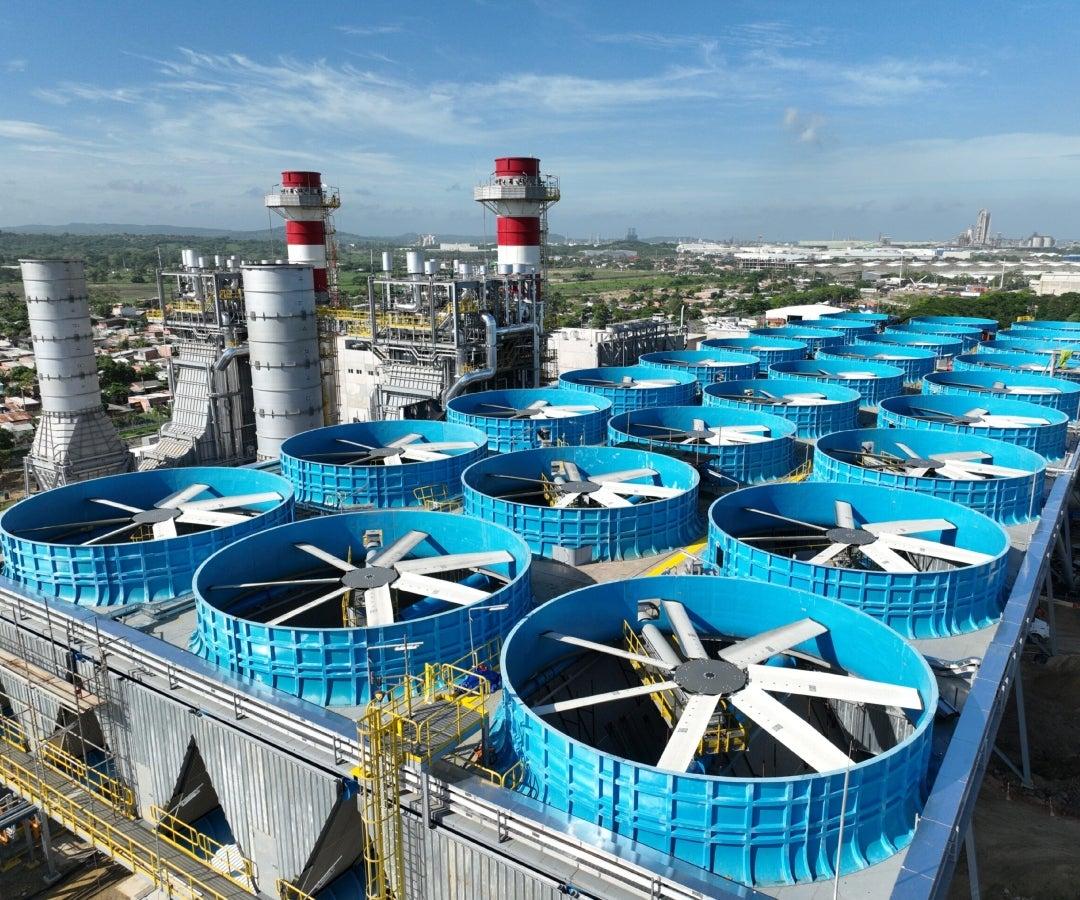
Why Does Corrosion Resistance Matter?
Corrosion is more than a cosmetic problem.
Imagine a fan blade as the wing of an aircraft. If its surface gradually deteriorates, its shape, strength, and balance can eventually change. A cooling tower fan faces a similar principle.
Corrosion can affect:
Fan blade strength
Blade surface condition
Hub integrity
Shaft and fasteners
Fan housing
Rotational balance
Vibration levels
Service life
Maintenance requirements
When corrosion changes the physical condition of rotating components, the fan may no longer operate as it did when it was new.
That can affect airflow and cooling performance while increasing the risk of mechanical problems.
In other words, corrosion resistance helps protect not only the fan itself but also the stability of the cooling tower system.
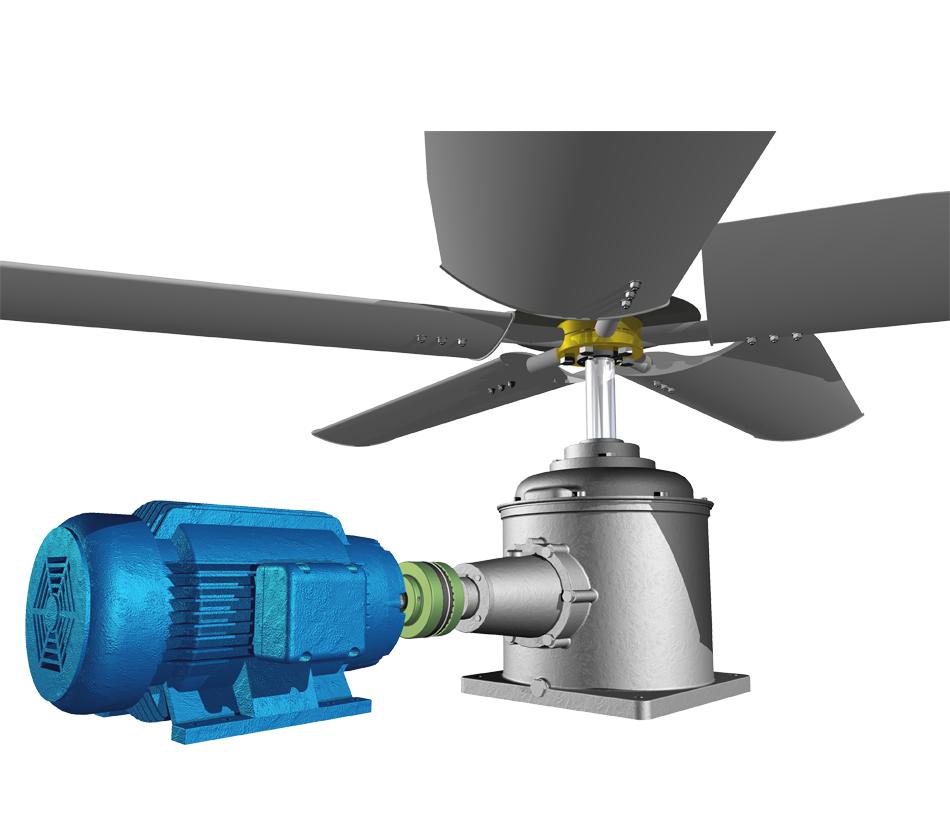
Common Materials for Corrosion Resistant Cooling Tower Fans
Material selection is one of the most important parts of cooling tower fan design.
Depending on the application, manufacturers may use FRP, stainless steel, coated metals, engineered plastics, or other corrosion-resistant materials.
The correct choice depends on the environment and fan design.
There is no reason to use an expensive material everywhere if a more economical material provides sufficient corrosion resistance. At the same time, saving money on material selection can become expensive if premature corrosion leads to repeated replacement.
The objective should be fit-for-purpose engineering.
FRP Cooling Tower Fan
FRP, or fiber-reinforced plastic, is widely associated with corrosion-resistant industrial equipment because it can provide a useful combination of corrosion resistance, low weight, and mechanical strength.
FRP components can be particularly attractive in environments where conventional metal components may experience accelerated corrosion.
A lighter fan can also reduce the mechanical load on the drive system, although the complete fan assembly must always be evaluated as a system.
For harsh cooling tower applications, FRP can be an effective option when its specific resin system, reinforcement, manufacturing method, and mechanical design are appropriate for the operating conditions.
This makes FRP a material worth considering for customers working in aggressive industrial environments.
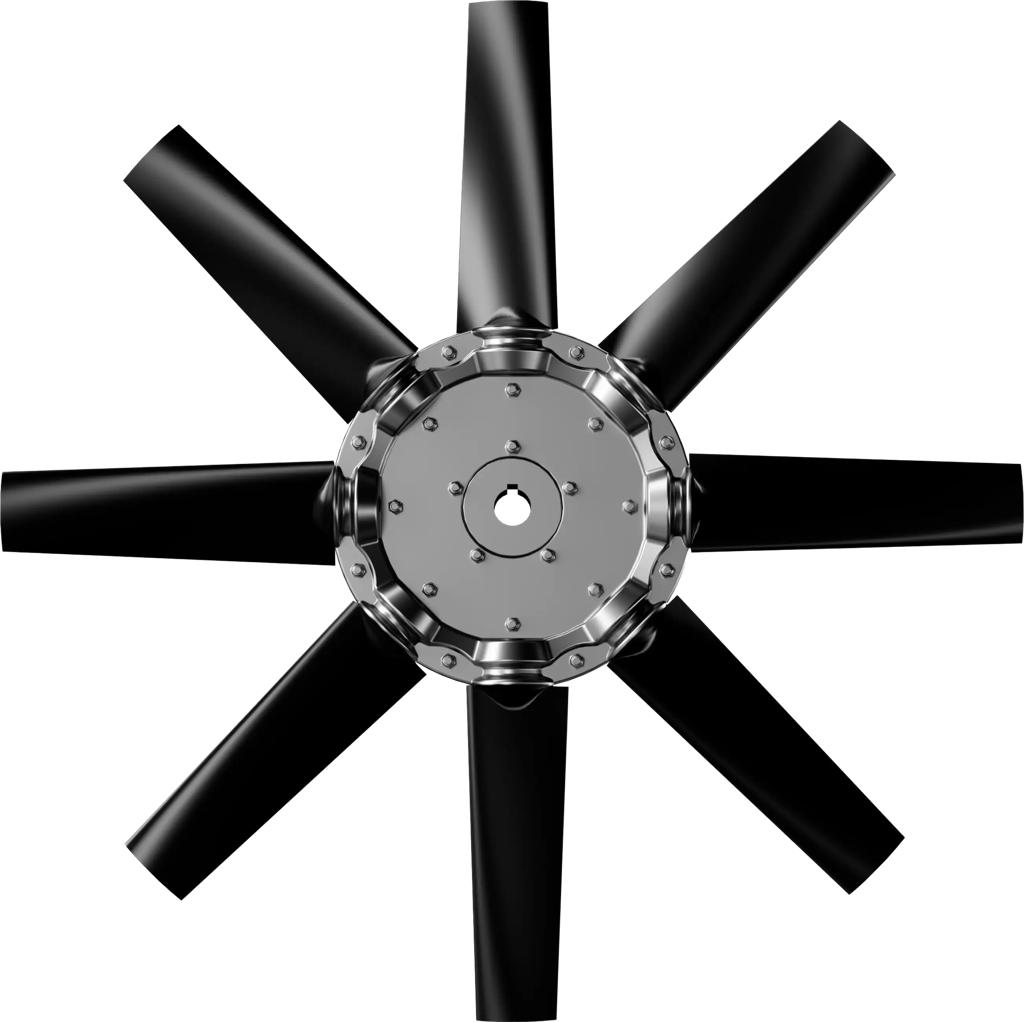
Stainless Steel Components
Stainless steel can also be useful where higher corrosion resistance and mechanical strength are required.
Different stainless steel grades have different properties, so "stainless steel" should not be treated as one universal material category.
The selection should consider the actual water chemistry, chemicals, temperature, mechanical loading, and expected service environment.
Stainless steel can be particularly useful for selected shafts, fasteners, brackets, or other components where mechanical strength and corrosion resistance are both important.
Coated Metal Components
Protective coatings provide another approach.
A suitable coating can create a barrier between the metal surface and the surrounding environment. This can help reduce direct exposure to moisture and corrosive substances.
However, coatings are not magic armor.
If the coating becomes damaged, scratched, or improperly applied, the underlying metal may become exposed.
That is why coating quality, surface preparation, application method, and maintenance all matter.
For a demanding cooling tower application, coating selection should therefore be considered as part of the overall engineering design rather than as an afterthought.
Corrosion Resistant Cooling Tower Fan Blade Design
The fan blade is one of the most important components of the cooling tower fan because it directly influences airflow.
In a harsh environment, blade design must satisfy two requirements at the same time:
Move the required amount of air and survive the operating environment.
A blade that is corrosion resistant but aerodynamically inefficient will not deliver the desired cooling performance. Likewise, an efficient blade that deteriorates quickly is not a good long-term solution.
The best design brings both factors together.
Blade Geometry and Airflow
Blade angle, profile, diameter, pitch, number of blades, and rotational speed can all influence fan performance.
The objective is to move the required air volume while maintaining an acceptable pressure level, power consumption, noise level, and mechanical load.
In other words, fan blades are not simply paddles attached to a hub. They are aerodynamic components.
Changing the blade angle can change airflow and power requirements. Increasing fan diameter can influence airflow capacity. Changing the blade profile can affect efficiency and noise.
For this reason, customized fan blades should be designed around the complete operating point rather than selected only by appearance.
Blade Strength and Durability
Corrosion resistance must also be combined with mechanical durability.
The fan rotates continuously, which means the blades experience centrifugal forces and aerodynamic loading. If the tower operates continuously, the number of operating cycles can become enormous over the service life of the equipment.
That is why material strength, blade construction, attachment method, and balancing are important.
For harsh environments, the fan must not only resist corrosion—it must remain structurally reliable while rotating at its specified operating speed.
How Do Harsh Conditions Affect Fan Performance?
Corrosion can affect fan performance gradually, which makes it particularly dangerous.
A sudden failure is easy to notice. Gradual degradation is different. The fan may continue running while its efficiency and mechanical condition slowly deteriorate.
That can make early inspection important.
Changes in vibration, noise, blade appearance, airflow, or power consumption may indicate that the fan requires attention.
In many industrial facilities, preventing a small problem from becoming an unplanned shutdown is far more valuable than simply repairing the fan after failure.
Chemical Attack on Fan Blades
Chemical exposure can damage fan blade surfaces depending on the material and chemical environment.
Surface degradation may change the blade condition over time. In severe cases, material loss can affect strength and balance.
This is why customers should provide manufacturers with as much information as possible about the operating environment when ordering a customized fan.
Knowing the chemical exposure can help the manufacturer recommend a more appropriate material or construction method.
A simple question such as "What chemicals is the fan exposed to?" can therefore be just as important as asking about fan diameter.
Corrosion and Fan Imbalance
Fan balance is critical for rotating equipment.
If corrosion removes material unevenly from a blade or another rotating component, the weight distribution can change.
Even a relatively small imbalance can become more significant as rotational speed increases.
The result may include increased vibration, bearing loading, noise, and mechanical wear.
This is one reason why corrosion inspection and fan balancing should be considered together in demanding applications.
A fan should not simply spin. It should spin smoothly.
How to Choose the Right Industrial Cooling Tower Fan
Selecting a corrosion-resistant fan starts with understanding the application.
Before requesting a quotation, gather as much information as possible about the cooling tower and existing fan.
Important information may include:
Fan diameter
Required air volume
Static pressure
RPM
Motor power
Rotation direction
Installation dimensions
Material requirements
Ambient conditions
Cooling water chemistry
Existing fan model
Fan photographs
Technical drawings
For replacement projects, photographs and drawings are also extremely useful.
The more complete the information, the easier it is for the manufacturer to provide a practical solution.
Air Volume Requirements
Air volume is one of the primary fan performance requirements.
The cooling tower needs sufficient airflow to support the required heat rejection. If airflow is too low, cooling performance may suffer.
However, simply increasing airflow is not always the answer.
More airflow can require more fan power, and the tower system has its own aerodynamic resistance.
The goal is to find an appropriate operating point rather than simply maximizing airflow.
This is why fan selection should consider the actual cooling tower system rather than the fan in isolation.
Static Pressure Requirements
Static pressure is another important factor.
The fan must overcome the resistance created by the tower structure, fill, drift eliminators, coils, louvers, ducting, and other components in the airflow path.
A fan that provides sufficient free-air volume may not provide the same airflow once installed in a real cooling tower system.
That is why airflow and static pressure should be considered together when selecting an industrial cooling tower fan.
Fan Speed and Motor Selection
Fan speed and motor power also affect performance.
A higher speed can increase airflow, but it can also affect power consumption, noise, vibration, and mechanical loading.
The motor should therefore be matched to the fan and operating requirements rather than selected independently.
For a customized cooling tower fan, the fan, motor, drive system, and tower should be considered as one working system.
Custom Cooling Tower Fan Solutions for Harsh Environments
Standard products are useful, but industrial cooling projects are not always standard.
You may be replacing a fan from an older cooling tower. You may have limited installation space. You may need a specific material because of chemical exposure. Or perhaps the existing fan is no longer available from the original manufacturer.
This is where custom manufacturing becomes valuable.
A factory can potentially adjust fan dimensions, blade design, materials, mounting arrangements, and other specifications according to the project requirements.
Instead of forcing a difficult application into an unsuitable standard product, a customized solution can be developed around the actual installation.
Custom Dimensions and Mounting
Replacement fans often need to fit an existing installation.
The mounting dimensions, shaft size, hub configuration, fan diameter, housing dimensions, and rotation direction may all need to match the existing system.
A custom manufacturer can work from technical drawings, samples, photographs, measurements, or existing product specifications.
This can make retrofit projects much easier and may reduce the need for major modifications to the cooling tower.
For older equipment, this flexibility can be especially valuable.
Custom Materials for Specific Environments
A harsh environment may require more than a standard fan material.
For example, a customer may need FRP construction for improved corrosion resistance or stainless steel components for specific mechanical requirements.
The correct solution depends on the actual environment.
A good manufacturer should therefore ask about the application before recommending a material.
This is one of the major benefits of working directly with a specialized cooling tower component factory.
Applications of Corrosion Resistant Industrial Cooling Tower Fans
Corrosion-resistant cooling tower fans can be valuable in many industries where ordinary fan construction may face demanding conditions.
The exact material and design should always be selected according to the actual application, but common examples include chemical processing, power generation, wastewater treatment, manufacturing, and process cooling.
Chemical Plants
Chemical plants can create challenging environments for cooling equipment.
Airborne chemicals, process vapors, humidity, and specialized water chemistry may increase corrosion risks.
For these applications, material selection becomes a key part of cooling tower fan engineering.
A corrosion-resistant fan can help reduce the risk of premature degradation when the material is correctly matched to the environment.
In such applications, customers should provide the manufacturer with relevant information about chemical exposure whenever possible.
Power Plants and Process Cooling
Power plants and industrial process facilities often depend on continuous cooling.
Cooling tower fans may operate for long periods and therefore require reliable mechanical performance.
In such applications, corrosion resistance, fan balance, airflow, motor selection, and maintenance all contribute to long-term reliability.
A properly selected fan can become a quiet workhorse—running day after day without demanding unnecessary attention.
Wastewater and Industrial Treatment
Wastewater treatment facilities can expose equipment to moisture, biological contaminants, chemicals, and corrosive substances.
Cooling equipment operating in or near these environments may therefore benefit from corrosion-resistant construction.
FRP and other corrosion-resistant materials can be considered where appropriate, while the complete fan assembly should still be designed for the required mechanical and aerodynamic conditions.
Maintenance of Corrosion Resistant Cooling Tower Fans
Even a corrosion-resistant fan needs maintenance.
Corrosion resistance reduces risk; it does not make the equipment maintenance-free.
Regular inspections can help identify early signs of damage before they become major problems.
A good maintenance program should consider both the fan's mechanical condition and the condition of its corrosion protection.
Regular Inspection
Inspect fan blades, hubs, shafts, fasteners, housings, bearings, and other accessible components according to the equipment manufacturer's recommendations.
Look for visible corrosion, cracks, deformation, unusual wear, loose components, or changes in surface condition.
Also pay attention to unusual vibration and noise.
A fan often gives warning signs before a serious mechanical problem develops.
If vibration suddenly increases or the fan begins producing unusual noise, the issue should be investigated rather than ignored.
Cleaning and Corrosion Monitoring
Dirt, mineral deposits, chemical residue, and other contaminants should be managed appropriately.
Cleaning methods should be compatible with the fan material and coating.
Aggressive cleaning chemicals can sometimes create a new problem while trying to solve another one.
For harsh industrial applications, keeping a maintenance record can also be useful.
Tracking vibration, inspection findings, corrosion conditions, and component replacement can help identify long-term trends.
Why Work Directly with a Cooling Tower Fan Factory?
When purchasing a corrosion-resistant industrial cooling tower fan, working directly with the manufacturer can provide several advantages.
You can discuss the operating environment directly. You can explain the required airflow and static pressure. You can provide drawings and photographs. You can discuss custom materials and dimensions. You can also communicate directly about production and replacement parts.
There are fewer communication layers between the application and the manufacturing team.
For customized industrial products, that can be a major advantage.
A factory can also better understand how manufacturing decisions affect the final product. For example, changing the material, blade design, fan dimensions, or mounting arrangement may affect the production process and overall performance.
Direct communication allows these factors to be discussed before production rather than discovered after delivery.
Why Choose Power Tower Cooling Technology?
Power Tower Cooling Technology (Shaoxing) Co., Ltd. specializes in cooling tower components and customized solutions for industrial cooling applications.
For customers looking for a corrosion resistant industrial cooling tower fan, we understand that different working environments require different product considerations.
Our manufacturing approach focuses on the customer's actual application rather than simply providing a generic product.
We can work with customers on customized cooling tower fan requirements, including:
Corrosion-resistant fan solutions
FRP cooling tower fan applications
Cooling tower fan replacement
Custom fan dimensions
Special material requirements
OEM manufacturing
ODM cooperation
Cooling tower fan components
Project-specific cooling tower solutions
Customers can provide fan drawings, photographs, dimensions, existing specifications, motor information, operating conditions, and other available technical data.
This information helps us understand the application before recommending a manufacturing solution.
Our website is https://www.coolingtowerpart.com, where customers can learn more about our cooling tower components and manufacturing capabilities.
Custom Manufacturing and OEM/ODM Solutions
Custom manufacturing is particularly useful when a standard cooling tower fan does not meet the project requirements.
Power Tower Cooling Technology can work with customers who require OEM or ODM cooperation, customized dimensions, replacement components, or project-specific cooling tower fan solutions.
Instead of forcing every project into the same standard product, the objective is to understand the application and develop a product around the agreed requirements.
That approach is especially valuable for customers dealing with older cooling towers, special installation conditions, corrosive environments, or unique industrial applications.
Cooling Tower Fan Replacement and Retrofit
A cooling tower does not necessarily need to be completely replaced just because its fan is old or unavailable.
In many cases, a suitable replacement fan can be developed around the existing installation.
Customers can provide the original fan dimensions, photographs, drawings, motor details, shaft information, and other available specifications.
The manufacturer can then evaluate the requirements and determine the appropriate replacement approach.
This can be particularly useful when the original fan manufacturer has discontinued a product or when replacement parts have become difficult to obtain.
What Information Should You Provide for a Custom Fan?
If you are contacting a factory about a corrosion-resistant cooling tower fan, providing complete information can make the process much faster.
Useful information includes:
Fan diameter: The existing or required fan diameter.
Air volume: The required airflow, if available.
Static pressure: The system pressure requirement, if known.
Fan speed: Existing or required RPM.
Motor information: Motor power, voltage, frequency, and other available details.
Material: Existing material or required corrosion-resistant material.
Installation dimensions: Mounting dimensions, shaft dimensions, hub dimensions, and available space.
Operating environment: Temperature, humidity, chemicals, water quality, and other relevant conditions.
Photos: Clear photographs of the existing fan and installation.
Drawings: Engineering drawings are particularly useful for replacement and OEM projects.
You do not need to know every technical parameter before contacting a manufacturer.
If some information is unavailable, simply provide what you have. An experienced cooling tower component supplier can help identify what additional information is needed.
Final Thoughts
A corrosion resistant industrial cooling tower fan is an important investment when a cooling tower operates in a harsh environment.
Moisture, chemicals, humidity, salts, and contaminated air can gradually attack vulnerable components. If corrosion is ignored, the consequences can extend beyond appearance. It can affect blade strength, fan balance, vibration, maintenance requirements, and service life.
The right solution starts with understanding the environment.
From there, manufacturers can evaluate materials such as FRP, stainless steel, coated metals, or other suitable options. Fan diameter, blade design, airflow, static pressure, RPM, motor power, and installation dimensions must also be considered.
And remember:
Corrosion resistance and fan performance should never be treated as separate problems.
The best industrial cooling tower fan is one that can resist the environment while still delivering the required airflow reliably.
For customers operating cooling towers in chemical plants, power facilities, wastewater treatment plants, manufacturing sites, and other demanding environments, a customized solution can often provide greater value than a generic replacement.
Power Tower Cooling Technology (Shaoxing) Co., Ltd. provides cooling tower components and customized manufacturing solutions for customers who need reliable products for demanding applications.
If you are looking for a corrosion resistant cooling tower fan, FRP cooling tower fan, custom industrial fan, cooling tower fan replacement, or OEM/ODM cooling tower fan solution, visit https://www.coolingtowerpart.com and contact the factory with your project requirements.
In harsh working conditions, the right fan is more than an airflow device.
It is part of the cooling tower's first line of defense against corrosion, downtime, and premature replacement.


