Custom Fiberglass Cooling Tower Fan Stack for Cooling Systems
Industrial cooling towers require reliable airflow components to maintain stable heat rejection and efficient system operation. Among these components, the cooling tower fan stack plays an important role in guiding exhaust air, supporting the fan arrangement, and helping maintain the designed airflow path. For cooling towers with special dimensions, demanding operating environments, or aging equipment, a custom fiberglass cooling tower fan stack can provide a practical and durable solution.
A Custom Fiberglass Cooling Tower Fan Stack is manufactured from fiberglass reinforced plastic (FRP) according to specific project requirements. Unlike standard metal structures, customized FRP fan stacks can be designed with different diameters, heights, wall thicknesses, connection structures, and reinforcement arrangements. This flexibility makes them suitable for new cooling tower installations, equipment upgrades, and replacement projects.
Fiberglass is widely used in industrial cooling systems because of its lightweight construction, corrosion resistance, and good mechanical properties. With appropriate material selection and structural engineering, an FRP fan stack can provide reliable performance in humid, corrosive, and outdoor environments.
This article explains the benefits, design considerations, customization options, manufacturing process, industrial applications, and selection criteria for custom fiberglass cooling tower fan stacks.
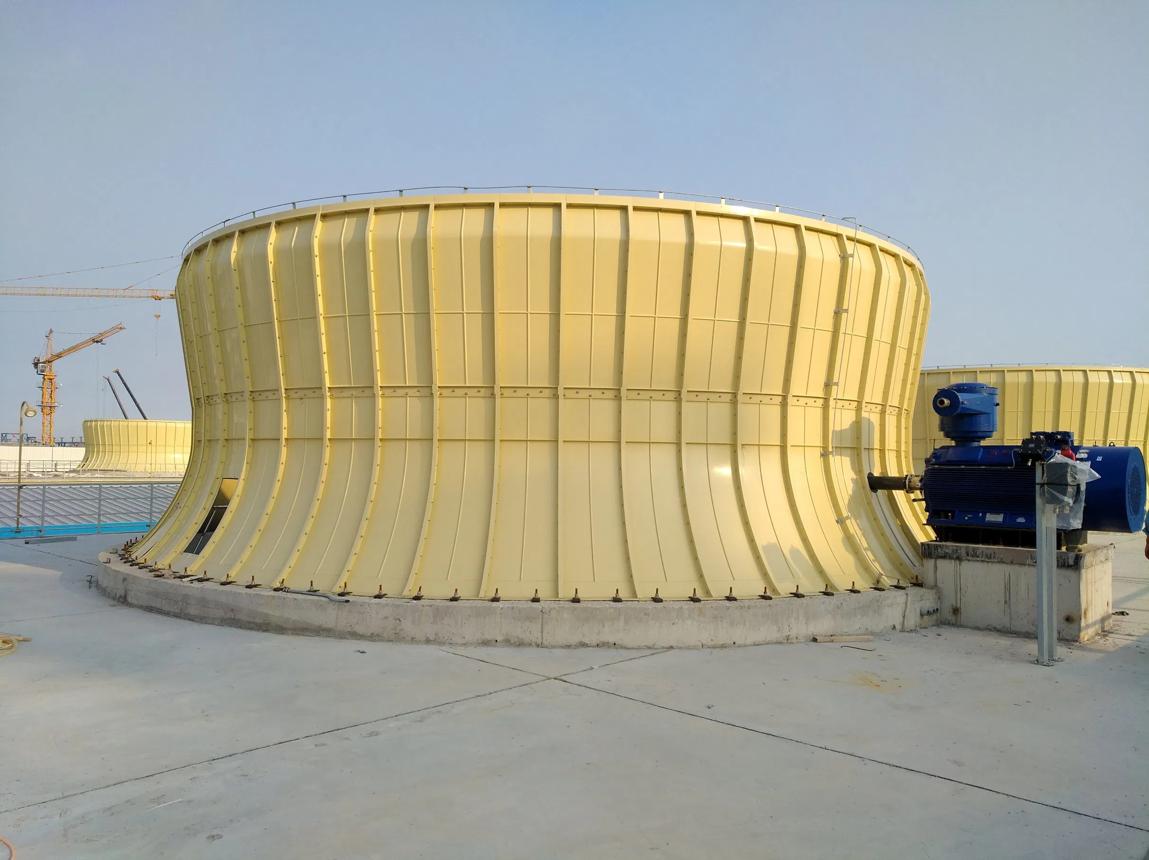
What Is a Custom Fiberglass Cooling Tower Fan Stack?
A custom fiberglass cooling tower fan stack is an airflow structure installed around the cooling tower fan. It is generally designed to guide warm, moisture-laden exhaust air upward and away from the cooling tower.
The fan stack is usually manufactured using fiberglass reinforcement combined with a suitable resin system. The composite material forms a strong and relatively lightweight structure that can be customized to match different cooling tower configurations.
Main Functions of a Cooling Tower Fan Stack
The fan stack is an important part of the cooling tower's mechanical draft arrangement.
Directing Exhaust Air
The fan stack provides a defined discharge passage for air moved by the cooling tower fan. Properly designed exhaust geometry helps direct warm air away from the tower air inlets and can reduce the risk of hot air recirculation.
Supporting Airflow Performance
The stack's diameter, height, internal shape, and fan clearance influence airflow conditions around the fan outlet.
An appropriately designed stack helps avoid unnecessary restrictions and supports the intended fan operating conditions.
Protecting the Fan Operating Area
The fan stack forms an enclosure around the fan assembly. Depending on the equipment configuration, it may also provide mounting interfaces for accessories and protective arrangements.
Matching Different Cooling Tower Structures
A custom fan stack can be manufactured to suit different cooling tower layouts, including round, rectangular, crossflow, and counterflow cooling tower configurations where the engineering design permits.
Why Choose a Customized FRP Fan Stack?
Standard fan stacks may not fit every industrial cooling tower. Existing equipment can have non-standard dimensions, special mounting requirements, or unique operating conditions.
A customized FRP design allows manufacturers to consider the actual project requirements instead of relying entirely on standard product dimensions.
Advantages of Custom Fiberglass Cooling Tower Fan Stacks
Material performance is a major consideration when selecting a cooling tower fan stack. Fiberglass reinforced plastic offers several benefits for industrial applications.
Excellent Corrosion Resistance
Cooling towers operate in environments with continuous moisture, water vapor, airborne contaminants, and sometimes chemical exposure. These conditions can accelerate corrosion in conventional metal structures.
FRP materials provide good resistance to many common industrial environmental conditions.
Suitable for Humid Operating Environments
Unlike ordinary carbon steel, fiberglass does not rust. This makes it suitable for cooling towers exposed to high humidity, splashing water, and outdoor weather conditions.
Resistance to Chemical Exposure
The chemical resistance of an FRP fan stack depends on the selected resin system and manufacturing process.
Polyester and vinyl ester resins are commonly used in composite applications. The appropriate resin should be selected according to the actual chemical concentration, operating temperature, and environmental exposure.
Lightweight Construction
Fiberglass fan stacks generally offer a lower weight than many comparable metal structures.
Easier Transportation
The lightweight structure can help simplify transportation, especially when large fan stack sections must be shipped internationally.
Convenient Installation
Reduced component weight can make lifting and positioning more manageable, although appropriate lifting equipment and installation procedures are still necessary.
Reduced Structural Loading
For existing cooling tower renovation projects, a lighter fan stack may help reduce the load placed on the supporting structure. The actual structural suitability must still be verified by engineering assessment.
High Mechanical Strength
Although fiberglass is relatively lightweight, it can provide good strength and stiffness when the laminate structure is properly designed.
Reinforced Structural Areas
Additional fiberglass layers can be incorporated around flanges, mounting holes, support connections, and other areas exposed to higher mechanical stress.
Resistance to Normal Operating Loads
The fan stack should be engineered to withstand expected wind loads, vibration effects, temperature changes, and other site-specific conditions.
Long Service Life and Reduced Maintenance
Corrosion-related maintenance can increase the operating cost of industrial cooling towers.
FRP fan stacks generally require less corrosion-related maintenance than conventional unprotected steel structures. Routine inspections are still necessary to identify cracks, impact damage, loose connections, and laminate deterioration.
Flexible Customization
One of the most important advantages of a custom fiberglass cooling tower fan stack is its design flexibility.
Manufacturers can customize:
These options help customers obtain a product that matches their cooling tower equipment and project requirements.
Custom Design Options for FRP Cooling Tower Fan Stacks
Every industrial cooling tower has its own structural and operating characteristics. A customized fan stack should be designed according to the fan specifications, cooling tower layout, and installation environment.
Customized Dimensions
Dimensions are among the most important factors in fan stack customization.
Stack Diameter
The stack diameter must be compatible with the fan size and the designed airflow passage.
An unsuitable diameter may affect airflow distribution, fan clearance, and system pressure losses.
Stack Height
The stack height influences exhaust discharge conditions and may affect the risk of hot air recirculation.
The appropriate height should be determined according to the cooling tower design, surrounding structures, wind conditions, and applicable engineering requirements.
Wall Thickness
Wall thickness is determined by structural requirements, stack dimensions, material properties, reinforcement arrangement, and environmental loads.
A thicker wall is not automatically better. The design should balance structural performance, weight, manufacturing requirements, and project cost.
Customized Structural Design
The structure of an FRP fan stack should provide adequate stiffness and reliable connection performance.
Flange Design
Flanges connect the fan stack to the cooling tower structure or other stack sections.
The flange dimensions, bolt-hole pattern, thickness, and reinforcement should match the installation requirements.
Reinforcement Ribs
Additional ribs or stiffeners can be incorporated where necessary to improve structural rigidity and help control deformation.
Connection Arrangements
Different projects may require bolted connections, supporting brackets, or special transition sections. These details should be confirmed before manufacturing.
Different Fan Stack Shapes
FRP fan stacks can be manufactured in different shapes according to the cooling tower design.
Cylindrical Fiberglass Fan Stack
Cylindrical structures are commonly used in mechanical draft cooling towers. They provide a relatively straightforward airflow passage and can be customized for different fan diameters.
Tapered Fiberglass Fan Stack
A tapered stack has a changing diameter along its height. Its geometry can be engineered to suit the required airflow discharge characteristics.
Rectangular or Special-Shaped FRP Structures
Certain cooling tower projects may require non-standard transition structures or special connection sections. Customized composite components can be designed to match the existing tower arrangement.
How Does a Custom FRP Fan Stack Improve Cooling Tower Airflow?
The primary role of a cooling tower fan stack is to guide air discharged by the fan. Its design should work together with the fan blade geometry, fan speed, and cooling tower airflow system.
Smooth Air Discharge
A suitable internal profile helps establish a consistent exhaust passage.
Internal Surface Quality
A relatively smooth surface helps reduce unnecessary surface-related resistance and makes cleaning and inspection easier.
Proper Outlet Geometry
The outlet should be designed according to the fan characteristics and cooling tower configuration. Poorly selected geometry may introduce unwanted airflow losses or unfavorable discharge conditions.
Proper Fan-to-Stack Clearance
The clearance between the fan blades and the stack is an important design parameter.
Preventing Mechanical Interference
Adequate clearance helps prevent the fan blades from contacting the stack during operation.
Maintaining Suitable Airflow Conditions
The fan-to-stack relationship should follow the fan manufacturer's recommendations. Incorrect clearance may affect airflow behavior and operating reliability.
Reducing Hot Air Recirculation Risks
Warm exhaust air can potentially return to the cooling tower air intake under unfavorable site conditions.
A properly designed fan stack can help direct exhaust air upward, but overall recirculation also depends on stack height, tower arrangement, wind direction, nearby buildings, and installation location.
For this reason, fan stack design should consider the surrounding environment rather than focusing only on the stack itself.
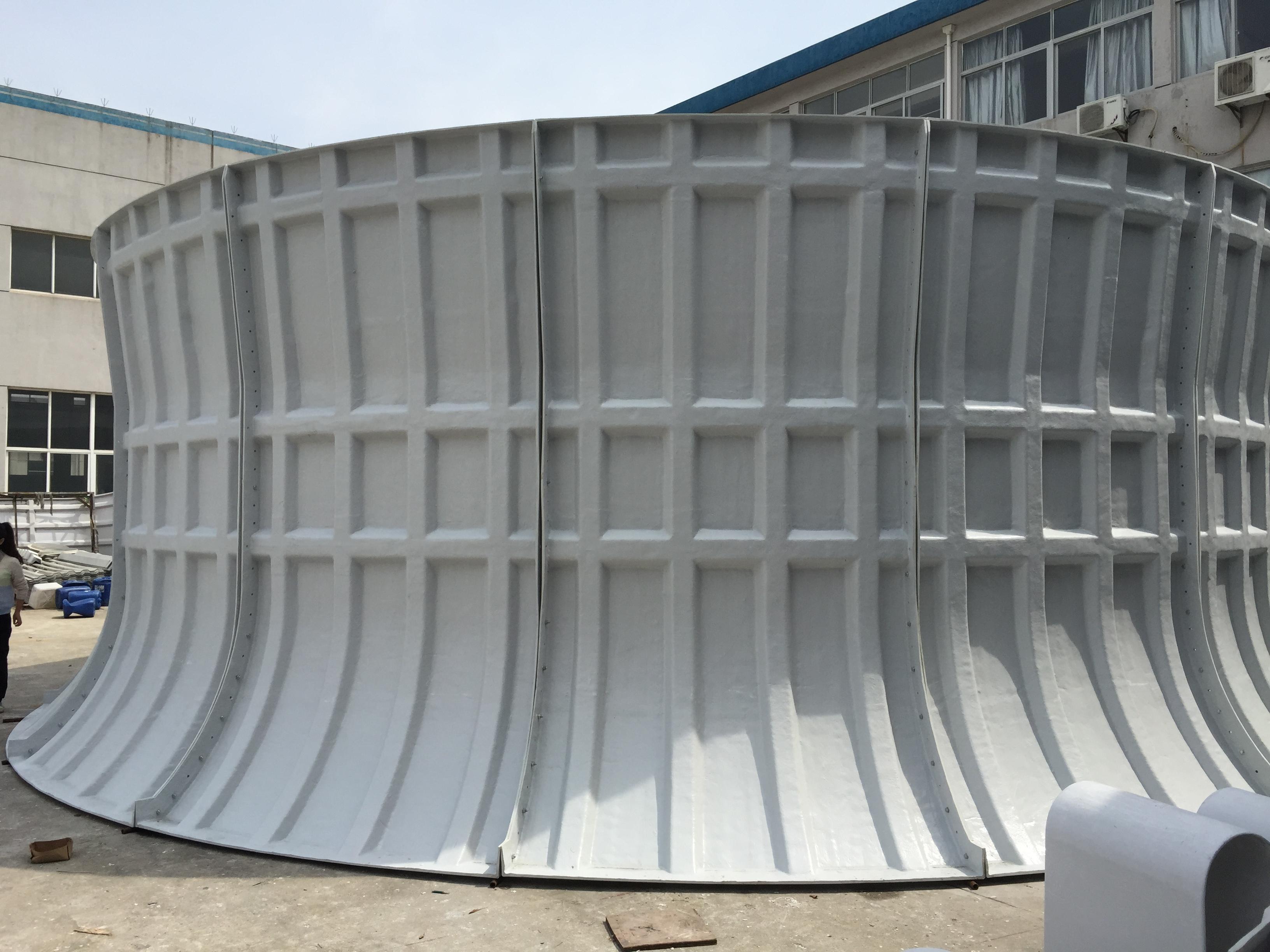
Materials Used in Custom Fiberglass Cooling Tower Fan Stacks
The quality of an FRP fan stack depends on the materials used and the way the composite structure is manufactured.
Glass Fiber Reinforcement
Glass fiber provides the main reinforcement in the composite structure.
Fiberglass Mat
Fiberglass mat is used in composite laminates to provide reinforcement and help form the required structure.
Woven Roving
Woven roving provides reinforcement in different fiber directions and can contribute to the mechanical strength of the laminate.
Combined Reinforcement Layers
Different reinforcement materials can be combined according to the approved laminate design to achieve the required strength and stiffness.
Resin System Selection
Resin forms the matrix that binds the glass fibers together and contributes to the environmental resistance of the composite.
Polyester Resin
Polyester resin is commonly used in general industrial FRP products because of its practical processing characteristics and cost considerations.
Vinyl Ester Resin
Vinyl ester resin may be selected for applications requiring improved resistance to certain chemicals and more demanding environmental conditions.
Temperature and Chemical Compatibility
The resin system should be selected based on actual operating temperature, chemical exposure, and service requirements. The manufacturer should confirm compatibility before production.
Surface Protection
A suitable surface layer may be used to improve the finish and protect the underlying laminate.
The surface treatment should be compatible with the resin system and the expected operating environment.
Manufacturing Process of Custom Fiberglass Cooling Tower Fan Stacks
Manufacturing quality has a direct influence on the strength, dimensional accuracy, and service life of an FRP fan stack.
A reliable production process should include engineering preparation, material control, molding, curing, finishing, and final inspection.
1. Engineering Design and Drawing Confirmation
Before production, the manufacturer reviews the technical requirements and confirms the final design.
Technical Information Review
The engineering team should verify:
Cooling tower model
Fan diameter
Stack height
Top and bottom diameters
Wall thickness
Flange dimensions
Bolt-hole positions
Support structure
Operating environment
Design Approval
Production should begin after the customer and manufacturer confirm the technical drawings and important specifications.
This step helps reduce dimensional errors and unnecessary modifications during installation.
2. Mold Preparation
The mold determines the basic shape and surface quality of the finished fiberglass component.
Mold Inspection
The mold should be checked for dimensional accuracy, surface defects, and cleanliness.
Release Agent Application
A suitable release agent is applied to facilitate demolding and protect the product surface.
3. Fiberglass Layup and Resin Application
Glass fiber materials are arranged according to the approved laminate design.
Layer Arrangement
The number, orientation, and type of reinforcement layers depend on the structural requirements.
Resin Impregnation
Resin is applied to ensure that the reinforcement is properly impregnated and bonded.
Local Reinforcement
Additional reinforcement may be required around flange connections, mounting points, and other high-stress areas.
4. Curing and Demolding
The composite structure is cured under appropriate conditions.
Proper curing helps the material achieve its intended properties.
After curing, the component is carefully removed from the mold to avoid damage.
5. Trimming and Surface Finishing
The edges and connection areas are processed according to the engineering drawings.
Dimensional Processing
Flanges, bolt holes, and connecting edges should be finished accurately to support installation compatibility.
Surface Inspection
The finished surface should be checked for visible cracks, delamination, exposed fibers, resin-rich areas, and other manufacturing defects.
6. Quality Inspection and Packaging
Before delivery, the manufacturer should carry out final inspections based on the project specifications.
Dimensional Inspection
Check overall height, diameters, thickness, flange dimensions, and connection positions.
Visual Inspection
Inspect the laminate surface, edges, and connection areas.
Packaging for Transportation
Large FRP fan stacks should be supported and protected during loading and transportation. Proper packaging helps prevent deformation, impact damage, and surface scratches.
Industrial Applications of Custom Fiberglass Cooling Tower Fan Stacks
Custom fiberglass fan stacks are suitable for a wide range of cooling tower applications, particularly where corrosion resistance, weight reduction, and dimensional flexibility are important.
Power Plants
Power plants use cooling towers to reject heat from circulating cooling water.
Reliable Operation
FRP fan stacks can provide corrosion-resistant airflow structures for cooling towers operating continuously in outdoor environments.
Replacement Projects
Customized dimensions can help match existing cooling tower structures when replacing deteriorated metal fan stacks.
Chemical and Petrochemical Plants
Chemical processing environments may expose cooling tower components to aggressive atmospheric conditions and chemical contaminants.
Corrosion-Resistant Construction
A properly selected FRP resin system can help protect the fan stack from chemical exposure.
Custom Material Selection
Manufacturers can evaluate the operating environment and recommend a suitable composite material specification.
Steel and Metallurgical Industries
Steel plants require reliable cooling systems for production equipment, machinery, and process operations.
Heavy-Duty Industrial Requirements
Custom FRP fan stacks can be engineered according to the required dimensions, structural loads, and site conditions.
HVAC and Commercial Cooling Systems
Large buildings, hospitals, shopping centers, industrial parks, and data centers often rely on cooling towers for heat rejection.
Flexible Equipment Integration
Customized FRP fan stacks can be designed to match different cooling tower sizes and installation layouts.
Paper, Textile, and Manufacturing Industries
Paper mills, textile factories, food processing facilities, and other manufacturing plants use cooling towers for process cooling.
The corrosion resistance and customization flexibility of fiberglass make it a practical option for suitable applications.
Custom Fiberglass Fan Stack vs. Traditional Metal Fan Stack
Choosing between FRP and metal fan stacks requires an evaluation of the operating environment, structural requirements, maintenance expectations, and lifecycle costs.
Corrosion Resistance
Fiberglass offers good resistance to rust and many common industrial environmental conditions.
Carbon steel fan stacks generally require protective coatings and regular corrosion inspections.
Weight and Installation
FRP fan stacks are often lighter than comparable metal structures, which may simplify transportation and lifting.
Metal structures may require more substantial lifting arrangements depending on their dimensions and material thickness.
Maintenance Requirements
Fiberglass requires inspection for cracks, impact damage, delamination, and loose connections.
Metal fan stacks require additional attention to rust, coating deterioration, and corrosion-related material loss.
Customization Flexibility
FRP molding and laminate processes provide flexibility in producing different shapes and dimensions.
Metal structures can also be customized, but fabrication may involve additional cutting, welding, coating, and assembly processes.
Lifecycle Cost
The total cost of ownership should include:
Initial purchase price
Transportation expenses
Installation costs
Inspection requirements
Maintenance expenses
Repair costs
Expected service life
The most suitable material is the one that meets the project's technical requirements and provides an appropriate lifecycle cost.
How to Choose a Reliable Custom Fiberglass Cooling Tower Fan Stack Manufacturer
Selecting the right manufacturer is essential for obtaining a fan stack that fits the cooling tower and performs reliably.
Evaluate Manufacturing Experience
Choose a manufacturer with experience producing FRP components for industrial cooling tower applications.
Review Similar Projects
Ask whether the manufacturer has supplied fan stacks with similar diameters, heights, and structural requirements.
Understand Production Capabilities
Check whether the factory has suitable molding equipment, fiberglass processing facilities, and quality inspection procedures.
Check Engineering and Customization Capabilities
A reliable manufacturer should be able to review drawings, confirm technical details, and provide customized designs.
Drawing and Measurement Support
The supplier should understand how to verify existing dimensions and identify possible installation conflicts.
Material Recommendations
The manufacturer should be able to explain the differences between resin systems and reinforcement arrangements.
Review Quality Control Procedures
Quality assurance should cover both material preparation and finished product inspection.
Important quality control items include:
Raw material inspection
Resin and reinforcement verification
Laminate process control
Curing inspection
Dimensional measurement
Surface quality inspection
Final packaging inspection
Evaluate Export and Delivery Capabilities
For international projects, transportation and packaging are important considerations.
The manufacturer should be able to provide suitable export packaging, delivery arrangements, and product documentation.
Information Required for a Custom Fiberglass Fan Stack Quotation
Providing accurate technical information helps manufacturers prepare a more reliable quotation and reduce communication time.
Basic Product Information
Customers should provide:
Cooling tower type and model.
Required fan stack quantity.
Overall stack height.
Top and bottom diameters.
Required wall thickness, if specified.
Flange dimensions and bolt-hole positions.
Required resin or material specification.
Product color and surface requirements.
Fan and Operating Information
Additional information may include:
Fan diameter
Fan blade type
Fan rotational speed
Motor power
Operating temperature
Environmental conditions
Wind load requirements
Installation location
Drawings and Photographs
Existing drawings, installation photographs, and physical samples can help the manufacturer understand the actual structure.
For replacement projects, measurements should be taken carefully to confirm the compatibility of the new fan stack with the existing equipment.
Installation and Maintenance of Custom FRP Fan Stacks
Proper installation and maintenance are essential for maintaining the structural integrity and service life of fiberglass cooling tower fan stacks.
Installation Preparation
Inspect the Supporting Structure
Before installation, inspect the supporting steel structure or concrete foundation for damage, corrosion, and dimensional deviations.
Verify Product Dimensions
Confirm the fan stack height, diameters, flange dimensions, and bolt-hole positions against the approved drawings.
Plan the Lifting Procedure
Large fiberglass components should be lifted using suitable equipment and approved lifting points. Avoid concentrated loads and impact during handling.
Installation Recommendations
Secure the Connection Points
Use the specified fasteners and tightening procedures. Avoid excessive bolt torque that may damage FRP connection areas.
Check Fan Clearance
Confirm that the fan blades have adequate clearance from the stack according to the fan manufacturer's specifications.
Inspect Sealing and Alignment
Check flange alignment and any required sealing arrangements to ensure correct installation.
Routine Maintenance
Regular Visual Inspection
Inspect the internal and external surfaces for cracks, impact marks, exposed fibers, and delamination.
Check Mounting Bolts
Inspect connection points for looseness, corrosion of metal fasteners, and signs of movement.
Monitor Fan Vibration
Unusual vibration should trigger an inspection of the fan blades, hub, gearbox, motor, and supporting structure.
Clean the Surface
Remove accumulated dust, debris, and deposits when necessary. Cleaning chemicals should be compatible with the FRP resin system.
Common Problems with Fiberglass Cooling Tower Fan Stacks and Their Solutions
Even well-designed FRP products can experience problems if they are incorrectly installed, overloaded, or exposed to unsuitable conditions.
Cracks and Surface Damage
Cracks may result from impact, improper lifting, excessive local stress, or structural movement.
Recommended Solution
Identify the cause and assess the damage. Minor surface defects may be repairable using compatible FRP repair materials, while structural damage may require professional engineering assessment or replacement.
Delamination
Delamination occurs when layers of the fiberglass laminate separate.
Recommended Solution
Inspect the affected area to determine the extent of separation. Use an approved repair process or replace the component if structural integrity cannot be restored.
Loose Flange Connections
Loose bolts may result from improper installation, vibration, or connection movement.
Recommended Solution
Inspect the flange and fasteners, then tighten them according to the specified procedure. Damaged connection areas should be evaluated before further operation.
Excessive Fan Vibration
Vibration may be caused by fan imbalance, shaft misalignment, damaged blades, loose supports, or other rotating equipment problems.
Recommended Solution
Inspect the complete fan drive system and supporting structure. Do not assume that changing the FRP fan stack alone will solve a vibration problem.
Future Trends in Custom FRP Cooling Tower Fan Stack Technology
Industrial cooling systems are increasingly focused on reliability, energy efficiency, and reduced lifecycle costs. These requirements are driving improvements in composite material technology and fan stack design.
Advanced Composite Materials
Improved resin formulations and reinforcement technologies provide opportunities for better mechanical performance and environmental resistance.
More Accurate Engineering Design
Computer-aided design and structural analysis can help manufacturers evaluate dimensions, reinforcement arrangements, and support conditions before production.
Airflow simulation may also support the evaluation of fan stack geometry and discharge performance.
Modular FRP Fan Stack Construction
Large cooling tower fan stacks may be produced in multiple sections to simplify transportation and installation.
Modular construction can be especially useful for projects with limited access or transportation restrictions.
Customized Solutions for Equipment Upgrades
As older cooling towers undergo modernization, customized FRP replacement components are expected to remain important.
Manufacturers that can provide accurate measurements, engineering support, and consistent production quality will be valuable partners for industrial cooling tower projects.
Conclusion
A Custom Fiberglass Cooling Tower Fan Stack provides a flexible solution for industrial cooling systems that require corrosion resistance, lightweight construction, and project-specific dimensions.
With suitable FRP materials, proper laminate reinforcement, accurate aerodynamic geometry, and reliable connection design, a customized fan stack can support the airflow arrangement and long-term operation of cooling tower equipment.
However, successful customization requires more than selecting the correct diameter and height. Fan specifications, structural loads, environmental conditions, installation requirements, and maintenance needs must all be considered during the engineering process.
For industrial buyers, choosing an experienced fiberglass fan stack manufacturer is essential. By providing accurate technical drawings, equipment information, and operating conditions, customers can obtain a customized FRP fan stack that fits their cooling tower and meets their project requirements.


