Custom Cooling Tower Fan Manufacturers for Industrial Cooling Systems
Industrial cooling systems operate under different working conditions depending on the application, equipment configuration, ambient temperature, and required heat rejection capacity. Standard cooling tower fans may not always provide the ideal combination of airflow, energy efficiency, mechanical strength, and installation compatibility. This is why custom cooling tower fan manufacturers play an increasingly important role in industrial cooling projects.
Custom cooling tower fans are designed to meet specific operating requirements rather than simply replacing existing components with standard products. From blade diameter and pitch angle to material selection and hub configuration, every design detail can influence fan performance and long-term reliability.
For industrial facilities, choosing an experienced cooling tower fan manufacturer can help improve airflow distribution, reduce mechanical problems, and support more efficient cooling tower operation.
This article explores how custom cooling tower fan manufacturers develop industrial fan solutions, which technical factors influence product selection, what materials are available, and how buyers can identify a reliable manufacturing partner.
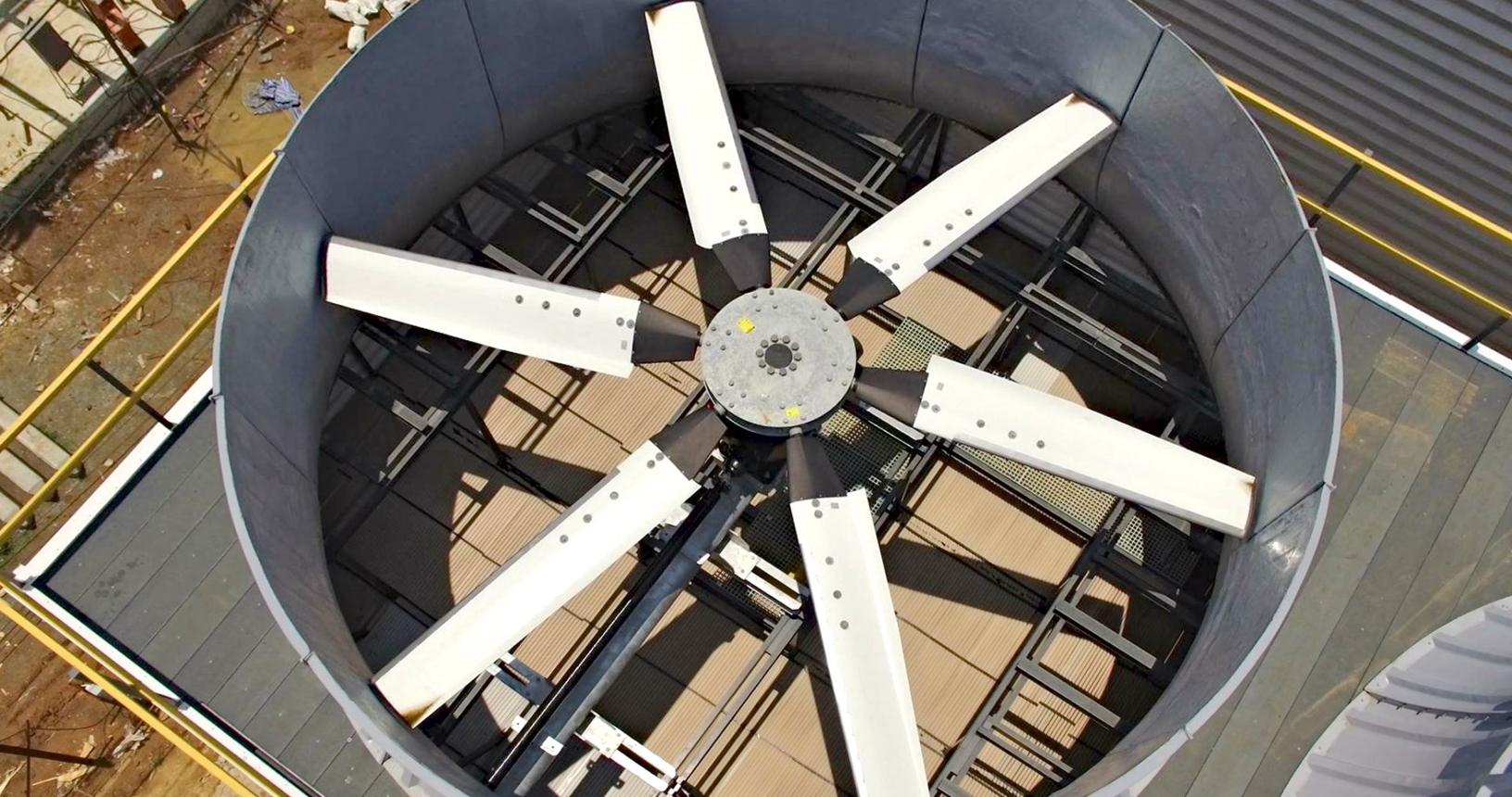
Why Do Industrial Cooling Systems Need Custom Cooling Tower Fans?
Different industrial cooling towers have different airflow requirements. A fan designed for a small HVAC cooling tower may not be suitable for a large power plant or chemical processing facility.
Custom manufacturing allows the fan configuration to match the actual cooling tower structure and operating conditions.
Different Cooling Tower Designs Require Different Fan Configurations
Cooling towers can be classified by airflow direction, water distribution arrangement, and mechanical structure.
Each configuration creates different requirements for fan diameter, airflow volume, blade profile, and installation dimensions.
Counterflow Cooling Tower Fans
In counterflow cooling towers, air moves upward against the downward flow of hot water.
The fan must provide sufficient airflow to support effective heat and mass transfer while maintaining stable operating conditions.
Custom fan blades can be designed according to the tower diameter, required airflow, and available installation space.
Crossflow Cooling Tower Fans
Crossflow cooling towers use horizontal airflow through the fill media.
Their fan systems must match the tower's structural dimensions and airflow distribution requirements.
Manufacturers need to consider fan diameter, blade pitch, operating speed, and fan stack geometry when developing replacement or customized solutions.
Special Industrial Environments Require Customized Designs
Industrial cooling towers may operate in environments with high humidity, chemical exposure, dust, salt-containing air, and elevated temperatures.
Standard fan materials and configurations may not provide sufficient durability under these conditions.
Custom cooling tower fan manufacturers can select suitable materials, protective treatments, and structural designs according to the application.
Applications With High Corrosion Risk
Chemical plants, coastal facilities, and wastewater treatment installations may expose fan components to corrosive substances.
FRP cooling tower fan blades are often considered for these environments because of their corrosion resistance and lightweight construction.
What Products Do Custom Cooling Tower Fan Manufacturers Offer?
Professional cooling tower fan manufacturers generally provide more than individual fan blades. A complete product range may include fan assemblies, hubs, stacks, and related mechanical components.
Custom FRP Cooling Tower Fan Blades
FRP (fiber-reinforced plastic) fan blades are widely used in industrial cooling towers because they combine relatively low weight with good corrosion resistance and design flexibility.
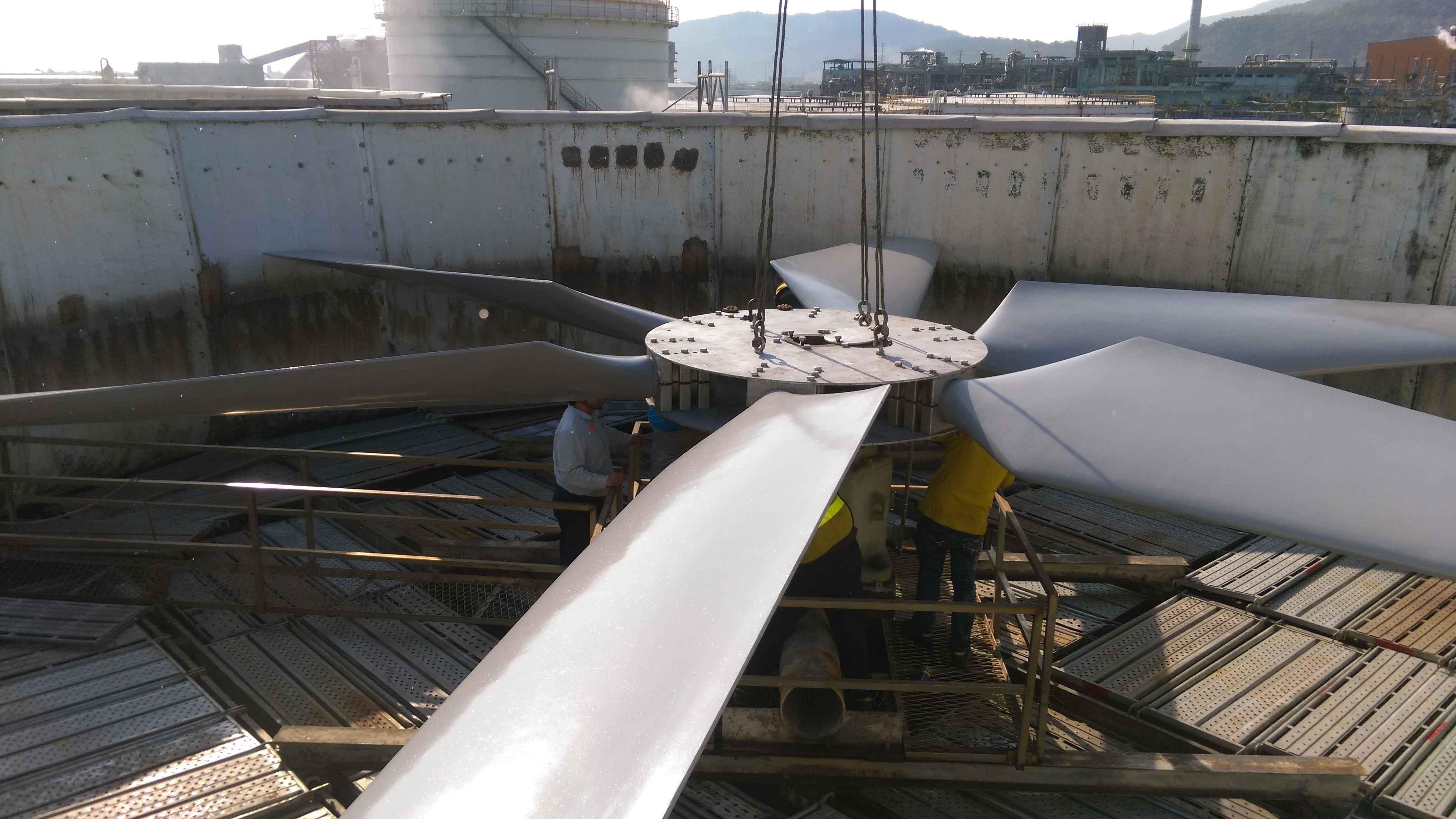
Main Advantages of FRP Fan Blades
Lightweight construction reduces rotating mass.
Good corrosion resistance in humid environments.
Flexible aerodynamic profile design.
Suitable for large-diameter fan applications.
Customizable dimensions and mounting configurations.
Good mechanical performance when properly engineered and manufactured.
Customization Options
Manufacturers may customize:
Blade length and profile.
Blade width and thickness.
Pitch angle and adjustment range.
Root connection dimensions.
Surface finish and protective coating.
Material reinforcement and structural design.
The final design should be verified against fan speed, aerodynamic loads, structural requirements, and the existing drive system.
Aluminum Cooling Tower Fan Blades
Aluminum fan blades are another common choice for industrial cooling applications.
They offer a combination of lightweight construction, corrosion protection options, and established manufacturing processes.
When Should Buyers Consider Aluminum Blades?
Aluminum blades may be suitable when the project requires specific mechanical characteristics, dimensional accuracy, and compatibility with an existing fan assembly.
However, the alloy, surface treatment, blade geometry, and operating environment must all be considered before selection.
Custom Cooling Tower Fan Hub Assemblies
The fan hub connects individual blades to the rotating shaft and transfers mechanical loads through the fan assembly.
A properly designed hub is essential for stable fan operation.
Important Hub Design Factors
Hub diameter and overall dimensions.
Blade mounting arrangement.
Shaft connection type.
Material strength.
Fastener specifications.
Corrosion protection.
Compatibility with the fan drive system.
Custom hub manufacturing is especially valuable for cooling tower replacement projects involving older or non-standard equipment.
FRP Cooling Tower Fan Stacks
The fan stack, also known as the fan cylinder or fan shroud, guides airflow through the cooling tower fan system.
Its geometry can influence airflow conditions and the interaction between the fan and surrounding structure.
Why Is Custom Fan Stack Design Important?
A properly matched fan stack helps provide suitable blade-tip clearance and airflow guidance.
Custom FRP fan stacks can be manufactured according to installation dimensions, fan diameter, structural requirements, and environmental conditions.
How Do Custom Cooling Tower Fan Manufacturers Design High-Performance Products?
Custom manufacturing should begin with engineering evaluation rather than simply copying the dimensions of an existing fan.
A reliable manufacturer needs to understand the operating requirements of the entire cooling tower system.
Step 1: Analyze the Cooling Tower Operating Conditions
The first stage is collecting technical information about the cooling tower and its operating environment.
Essential Project Information
Customers should provide the following details whenever available:
Cooling tower type.
Existing fan diameter.
Required airflow volume.
Fan operating speed.
Motor power and rated speed.
Gearbox specifications.
Blade quantity.
Existing blade pitch angle.
Fan stack dimensions.
Ambient temperature and humidity.
Special corrosion or temperature requirements.
This information helps engineers evaluate the compatibility of the proposed fan design.
Step 2: Select the Appropriate Fan Blade Profile
Blade geometry has a major influence on aerodynamic performance.
Different profiles produce different relationships between airflow, pressure, rotational speed, and power consumption.
Aerodynamic Design Considerations
Manufacturers may evaluate:
Blade chord distribution.
Twist angle.
Airfoil thickness.
Blade tip geometry.
Root structural requirements.
Operating Reynolds number.
Fan diameter and rotational speed.
Why Is Blade Twist Important?
The airflow velocity experienced by a rotating blade changes from the root to the tip.
A twisted blade helps maintain a suitable aerodynamic angle of attack across different radial positions.
This can improve aerodynamic efficiency when the blade profile is correctly matched to the intended operating conditions.
Step 3: Calculate Structural Loads and Mechanical Strength
Cooling tower fan blades experience centrifugal force, aerodynamic loading, and fluctuating operating loads.
Large industrial fans require particular attention to structural strength and fatigue resistance.
Main Engineering Evaluations
Why Does Root Strength Matter?
The blade root transfers loads to the fan hub. Stress concentrations around the mounting area can become potential failure points if the structure is not properly designed.
For FRP blades, reinforcement arrangement and resin quality are important factors in achieving reliable structural performance.
Step 4: Verify Compatibility With the Fan Drive System
A custom fan must work within the limitations of the existing motor, gearbox, shaft, and support structure.
Motor and Gearbox Matching
Engineers should evaluate the required fan power and operating speed before finalizing the design.
An oversized or incorrectly pitched fan may increase motor loading and create unnecessary mechanical stress.
A replacement fan should not be selected based on diameter alone.
Step 5: Manufacture and Inspect the Custom Fan
After design approval, manufacturing begins according to the specified materials and production procedures.
Inspection should cover critical dimensions, material quality, surface condition, blade weight, and mounting accuracy.
Which Materials Are Best for Custom Industrial Cooling Tower Fans?
Material selection influences fan weight, corrosion resistance, structural performance, maintenance requirements, and service life.
There is no single material that is ideal for every industrial cooling tower.
FRP Materials
FRP combines fiberglass reinforcement with a polymer resin matrix.
It is frequently selected for industrial cooling tower fan blades because of its corrosion resistance and relatively low density.
Key Material Selection Factors
Different FRP formulations can provide different mechanical and environmental properties. Buyers should request material specifications that match the intended application.
Aluminum Materials
Aluminum offers good strength-to-weight characteristics and can be manufactured into various aerodynamic profiles.
Important Considerations
Aluminum alloy selection.
Corrosion protection.
Surface treatment.
Blade thickness.
Structural fatigue resistance.
Compatibility with mounting hardware.
In environments containing aggressive chemicals or salt spray, additional corrosion protection may be necessary.
FRP vs. Aluminum Cooling Tower Fan Blades
| Comparison | FRP Fan Blades | Aluminum Fan Blades |
| Weight | Generally lightweight | Lightweight |
| Corrosion resistance | Generally excellent | Depends on alloy and treatment |
| Design flexibility | High | High |
| Manufacturing | Composite molding | Metal fabrication |
| Maintenance | Requires composite inspection | Requires corrosion and deformation inspection |
| Applications | Corrosive industrial environments | Various industrial applications |
The final choice should consider the cooling tower's environment, fan operating conditions, maintenance strategy, and total project cost.
What Quality Standards Should Buyers Expect From Cooling Tower Fan Manufacturers?
Manufacturing quality directly affects fan reliability and operating safety.
A professional manufacturer should maintain documented quality control throughout the production process.
Raw Material Inspection
The first quality control stage involves checking incoming materials.
FRP Material Inspection
Manufacturers should verify fiberglass reinforcement, resin specifications, and relevant material documentation.
Aluminum Material Inspection
Aluminum materials should be checked against the specified alloy, dimensions, and surface condition.
Dimensional and Weight Inspection
Each blade should meet the approved engineering drawings and dimensional tolerances.
Critical Inspection Points
Consistent blade dimensions and weight distribution help simplify assembly and balancing.
Structural Quality Inspection
Manufacturers should evaluate critical structural areas, especially blade roots, mounting connections, and high-stress sections.
For FRP products, inspection should consider surface defects, delamination, and other composite manufacturing defects.
Fan Balancing and Operational Verification
A complete fan assembly should be evaluated according to the applicable balancing requirements.
Why Is Balancing Necessary?
An unbalanced rotating assembly can generate excessive vibration and increase loads on bearings, shafts, and gearboxes.
Manufacturers should follow suitable balancing procedures and provide relevant inspection records when required by the project.
Balancing requirements should be agreed upon according to the fan configuration and operating conditions.
Custom Cooling Tower Fan Applications Across Different Industries
Industrial cooling tower fans are used in facilities where reliable heat rejection is essential for continuous production.
Different industries may require different materials, fan configurations, and performance characteristics.
Power Generation Plants
Power stations rely on cooling systems to remove heat from condensers and auxiliary equipment.
Typical Fan Requirements
Large airflow capacity.
Reliable continuous operation.
High structural strength.
Stable operation under changing loads.
Suitable corrosion resistance.
Custom FRP fan blades may be considered for large cooling tower installations where reduced rotating mass and corrosion resistance are important.
Chemical and Petrochemical Plants
Chemical processing facilities may operate in environments containing aggressive substances and high humidity.
Important Design Priorities
Corrosion-resistant materials.
Reliable blade-to-hub connections.
Suitable structural strength.
Long-term environmental durability.
Easy inspection and maintenance.
Steel and Metallurgical Industries
Steel plants often require cooling systems for furnaces, production equipment, and process water.
Their cooling towers may operate under demanding thermal and environmental conditions.
Custom fan designs should consider ambient temperature, dust exposure, airflow demand, and operating schedules.
HVAC and Commercial Industrial Facilities
Large commercial buildings, manufacturing workshops, and centralized HVAC systems also depend on cooling tower fans.
Common Requirements
Custom fan solutions can help address space restrictions and specific replacement requirements.
How to Choose the Right Custom Cooling Tower Fan Manufacturer?
Choosing the right manufacturer is an important decision for industrial buyers, engineering contractors, and cooling tower maintenance companies.
The lowest purchase price does not always represent the best long-term value.
Evaluate Engineering and Customization Capabilities
A qualified manufacturer should be able to develop products according to customer drawings, existing fan specifications, and actual operating conditions.
Questions Buyers Should Ask
Can the manufacturer customize blade dimensions?
Can it produce FRP and aluminum fan blades?
Does it offer matching fan hub assemblies?
Can it manufacture custom FRP fan stacks?
Does it provide technical drawings?
Can it support replacement projects for different cooling tower brands?
Review Manufacturing Experience
Experience in industrial cooling tower components is important because fan blades, hubs, and stacks must work together as a coordinated system.
Ask for relevant product references, manufacturing photographs, and technical documentation.
Evaluate Quality Control Capabilities
A reliable supplier should have clear inspection procedures for materials, dimensions, blade weight, and finished product quality.
For customized projects, it is useful to confirm inspection requirements before production begins.
Consider Delivery and Export Support
International buyers should also evaluate:
For large fan blades and FRP fan stacks, packaging and transportation planning are particularly important because product dimensions may affect container utilization.
Why Choose Power Tower Cooling Technology (Shaoxing) Co., Ltd for Custom Cooling Tower Fan Solutions?
For industrial buyers looking for customized cooling tower components, Power Tower Cooling Technology (Shaoxing) Co., Ltd is a company to consider for cooling tower fan-related product sourcing.
Custom cooling tower fan projects require coordination between product dimensions, material selection, mechanical compatibility, and application requirements.
A suitable manufacturing partner should focus on more than delivering individual components. It should understand how fan blades, hub assemblies, fan stacks, and the existing drive system work together.
Customized Product Requirements
Industrial customers can prepare project information such as existing fan dimensions, blade specifications, equipment photographs, and installation drawings to support product evaluation.
Technical Compatibility
Replacement fan components should be checked against the original equipment configuration to reduce installation difficulties and avoid unnecessary changes to the cooling tower structure.
Solutions for Different Industrial Applications
Different cooling tower projects may require FRP fan blades, aluminum fan blades, fan hubs, or custom FRP fan stacks.
Selecting the correct combination helps improve component compatibility and supports reliable operation.
Note: Buyers should confirm current product availability, manufacturing capabilities, technical specifications, and inspection documentation directly with the supplier before ordering.
What Information Should You Prepare Before Ordering Custom Cooling Tower Fans?
Providing complete technical information at the quotation stage can reduce communication time and improve manufacturing accuracy.
Technical Information Checklist
Basic Equipment Details
Product Specifications
Operating Conditions
If original drawings are unavailable, photographs with clear dimensional references can help manufacturers conduct an initial evaluation.
Future Trends in Custom Cooling Tower Fan Manufacturing
Industrial cooling systems are increasingly focused on energy efficiency, equipment reliability, and reduced maintenance costs.
These requirements are influencing how cooling tower fan manufacturers develop new products.
More Advanced Aerodynamic Optimization
Improved blade profiles and computational fluid dynamics (CFD) analysis can help engineers evaluate airflow patterns and aerodynamic performance before manufacturing.
Lightweight Composite Materials
FRP and other composite materials continue to attract attention because of their design flexibility and corrosion resistance.
Improved reinforcement systems and manufacturing processes may further enhance composite fan performance.
Intelligent Condition Monitoring
Vibration sensors, temperature monitoring, and operating data analysis are becoming important tools for industrial maintenance.
These technologies help identify abnormal operating conditions before they develop into serious mechanical failures.
Customized Energy-Efficient Fan Systems
Rather than focusing only on maximum airflow, future fan designs will increasingly consider the relationship between airflow demand, motor power, operating speed, and total system efficiency.
This approach can help industrial facilities reduce unnecessary energy consumption while maintaining required cooling performance.
Conclusion
Custom cooling tower fan manufacturers provide important solutions for industrial cooling systems with different airflow requirements, installation dimensions, environmental conditions, and operating demands.
From FRP cooling tower fan blades and aluminum blades to custom fan hub assemblies and FRP fan stacks, every component must be properly designed and matched to the complete cooling tower system.
When selecting a manufacturer, industrial buyers should evaluate engineering capabilities, material quality, dimensional accuracy, balancing procedures, production experience, and export support.
Providing accurate technical information before ordering is equally important for achieving reliable customization and avoiding compatibility problems.
By working with a qualified cooling tower fan manufacturer, industrial facilities can obtain fan solutions that better match their equipment requirements, improve operational reliability, and support long-term cooling system performance.


