Cooling Tower Fan Pulley & Motor Pulley for Induced Draft Towers
Meta Description: Learn about cooling tower fan pulley and motor pulley (sheave) sets for induced draft cooling towers, speed ratio calculation, material options, selection rules, alignment and retrofit guidance for Marley, BAC and Evapco cooling tower belt drive systems.
What Are Cooling Tower Fan Pulley and Motor Pulley?
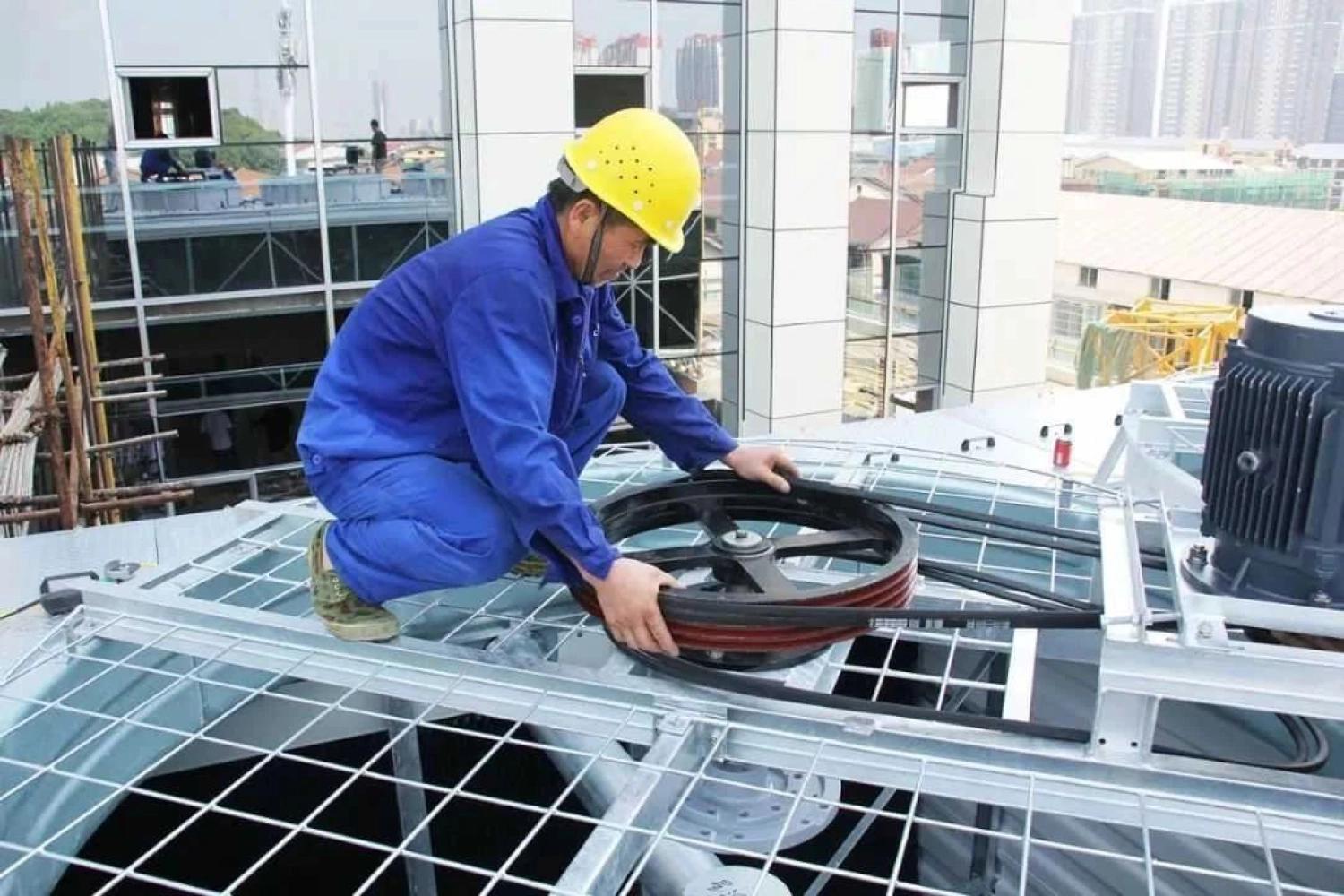
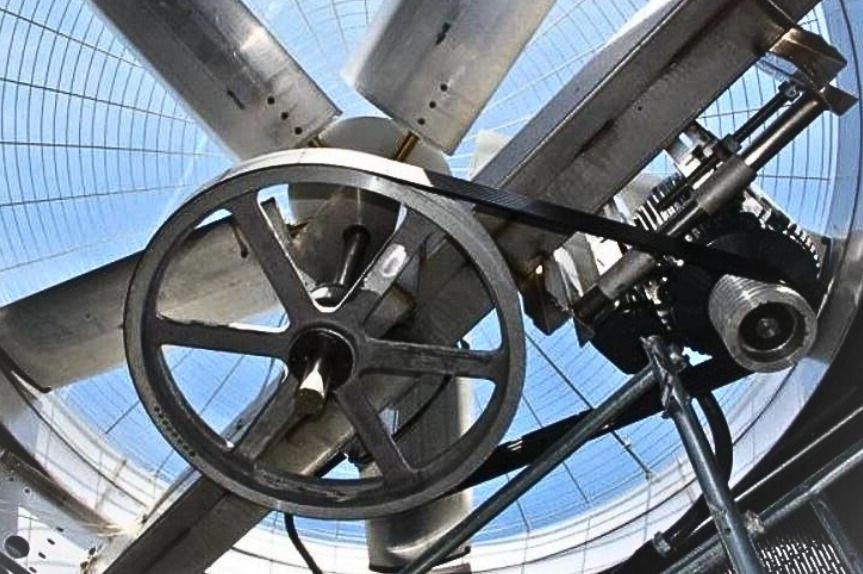
In belt-driven induced draft cooling towers, the fan pulley (driven sheave) and motor pulley (driver sheave) form the core speed-adjusting transmission assembly. The motor pulley mounts directly to the electric motor shaft; it transfers torque through multiple V-belts to the larger fan pulley fixed on the fan input shaft.
Unlike fixed-ratio gear reducers, pulley sets allow maintenance teams and engineers to easily adjust the final fan RPM without changing the motor. This flexibility makes belt pulley systems very popular for small and medium induced draft towers in chemical plants, HVAC systems, food factories and commercial facilities.
Many users call pulleys “sheaves” in cooling tower industry terminology. The whole drive package includes fan sheave, motor sheave, taper-lock bushing, keyway, V-belts and adjustable motor base.
The Difference Between Motor Pulley and Fan Pulley
Motor Pulley (Driver Sheave)
Smaller pulley connected to the motor. It is the driving side, rotating at full motor speed. Changing its pitch diameter is the simplest way to fine-tune fan RPM on-site.
Fan Pulley (Driven Sheave)
Larger pulley installed on the fan shaft. It receives power from the belts and drives the cooling tower fan blade assembly. Its diameter usually stays fixed in most retrofit projects.
How Pulley Ratio Controls Fan Speed & Cooling Performance
The pulley diameter ratio directly defines the operating RPM of the cooling tower fan, airflow volume, static pressure and motor power draw. Wrong pulley matching is a common root cause of overheating, motor overload or insufficient cooling capacity.
Standard Pulley Speed Calculation Formula
Fan RPM = Motor RPM × Motor Pulley Pitch Diameter ÷ Fan Pulley Pitch Diameter
Important note: Always use pitch diameter, not the outer edge diameter of the pulley.
Practical Calculation Example
Motor rated speed: 1450 RPM
Motor pulley pitch diameter: 160 mm
Fan pulley pitch diameter: 320 mm Fan RPM = 1450 × 160 ÷ 320 = 725 RPM If you reduce the motor pulley size to 140 mm, fan RPM drops to 634 RPM, airflow and power consumption will decrease accordingly.
How Speed Change Impacts the Whole Tower
Fan power follows fan affinity laws: Power ∝ RPM³. A small RPM increase can lead to a sharp rise in motor load. When you modify pulley ratio, you must recalculate fan power and check motor rated current to avoid burnout.
Main Material Options for Cooling Tower Pulleys
Cooling tower pulleys run in humid, splash-prone environments, so material selection directly affects service life and groove wear rate.
Cast Iron Pulley
Cast iron is the traditional heavy-duty choice.
Advantages
High rigidity, good vibration damping, low manufacturing cost, stable groove geometry under heavy torque. It suits high-power, continuous-duty industrial towers with stable operating load.
Limitations
Prone to rust and corrosion in coastal areas or towers with chemical circulating water. Rust inside grooves accelerates V-belt abrasion.
Aluminum Alloy Pulley
Aluminum sheaves are widely adopted for aftermarket replacement on Marley, BAC induced draft towers.
Advantages
Light weight, natural corrosion resistance, low inertia, less rust buildup inside grooves. Aluminum pulleys extend V-belt service life significantly in high humidity conditionsBaltimore ....
Limitations
Higher price than cast iron; not recommended for ultra-high torque heavy-load applications.
Nylon / Composite Pulley
Rarely used for large cooling tower fans. Mainly applied only for small, low-power HVAC cooling units.
Key Technical Parameters You Need for Pulley Selection
Before ordering replacement cooling tower fan pulley and motor pulley, collect all these parameters to avoid mismatch:
Pitch diameter of both fan pulley and motor pulley
Number of V-grooves (2-groove, 3-groove, 4-groove, 6-groove common)
Belt profile: SPA, SPB, SPC or classical A/B/C section V-belt
Bore diameter, taper bushing size, keyway width and depth
Dynamic balance requirement
Maximum transmitted horsepower / kW
Center distance range between motor shaft and fan shaft
Taper-Lock Bushing
Most cooling tower pulleys adopt taper-lock bushing installation. It provides concentric positioning, easy removal and avoids shaft damage caused by over-tight set screws. Confirm the bushing model when replacing old pulleys.
Benefits of Pulley Belt Drive for Induced Draft Cooling Towers
Simple Speed Adjustment
If the cooling water temperature is too high or the motor runs overloaded, technicians only need to swap a different-size motor pulley, no modification to fan blades or motor.
Built-In Overload Protection
When the fan hits unexpected heavy load, V-belts will slip before breaking the shaft or burning the motor, acting as a simple safety buffer.
Low Installation Precision Requirement
Compared with direct coupling or gear drive, belt pulley systems tolerate minor parallel offset, which lowers field installation difficulty.
Lower Retrofit Cost
For old cooling tower renovation, changing pulleys is much cheaper than replacing gear reducers or purchasing VFD variable frequency drives.
Common Pulley Drive Faults & Alignment Standards
Even high-quality pulleys fail early without correct alignment and routine inspection.
Belt Slipping
Symptoms: Burning rubber smell, slow fan speed, insufficient cooling, frequent belt replacement. Causes: Groove wear, insufficient belt tension, wrong pulley ratio, overloaded fan.
Pulley Wobble and Vibration
Causes: Poor dynamic balance, bent shaft, loose taper bushing, severe angular misalignment between motor and fan pulley.
Uneven Groove Wear
Causes: Pulley faces not parallel, mixed brand belts, rust and scale inside grooves.
Alignment Rule
Two pulley faces must sit in the same plane. Use a straightedge or laser alignment tool to check parallelism. Misalignment is the No.1 reason for premature V-belt failure.
Step-by-Step Installation & Commissioning Guide
Step 1: Confirm all parameters match the original drive
Cross-check groove quantity, belt type, taper bushing and bore size before mounting.
Step 2: Mount pulleys and lock taper bushings
Clean shaft surface and pulley bore. Tighten bushing bolts evenly following torque specification, do not over-torque.
Step 3: Install V-belts and set tension
Do not pry belts into grooves with screwdrivers. Adjust the motor slide base to get proper belt deflection. Too tight increases bearing load; too loose creates slipping.
Step 4: Align pulley faces
Verify parallel alignment.
Step 5: Test run and measure current
Start the tower, run at full load. Measure motor operating current. If current exceeds nameplate rating, reduce fan speed by switching to a smaller motor pulley.
Pulley Retrofit Tips for Marley, BAC and Evapco Induced Draft Towers
When replacing pulleys for branded cooling towers:
Do not only rely on the tower model; take dimension measurements of the existing pulley set.
If you upgrade fan blades to higher-efficiency airfoil blades, recalculate pulley ratio and motor load.
Replace the full pulley set together if grooves are deeply worn, not just one pulley.
Always prepare spare belts matched to the groove type.
After retrofit, mark down the pulley diameters and measured fan RPM for future maintenance records.
FAQ
Can I change only the motor pulley to adjust fan speed?
Yes, this is the standard practice. The fan pulley usually remains unchanged for most maintenance projects.
What is the service life of cooling tower pulleys?
With good alignment and regular cleaning: Aluminum pulleys 6–10 years; cast iron pulleys 5–8 years. Heavy corrosion or poor alignment can shorten service life to 1–2 years.
Should I replace pulleys when I replace V-belts?
Inspect groove wear. If you can see obvious undercutting or wear inside V-grooves, replace the pulley together. Worn grooves will destroy new belts quickly.
Can pulley drive replace gearbox drive?
Not for all large cooling towers. Belt pulley systems are mainly for medium and small induced draft towers. Large high-power fans usually use gear reducer drives for higher efficiency.
Get Compatible Fan & Motor Pulley for Your Induced Draft Tower Repair
If you need aftermarket replacement cooling tower fan pulley and motor pulley for induced draft cooling tower maintenance or retrofit, send us your pulley dimensions, groove count, belt type and photos. Our technical team will confirm compatibility and provide quotation with dynamic balance report and installation guidance. We supply aluminum and cast iron pulleys matching mainstream cooling tower brands.