Aftermarket Marley Cooling Tower Fan for Cooling Tower Repair
Meta Description: High-quality aftermarket Marley cooling tower fan and fan blades for maintenance, retrofit and cooling tower repair. Airfoil design, dynamic balanced, compatible with Marley H3, X7, HP7000, HP7i series. Get your quotation now.
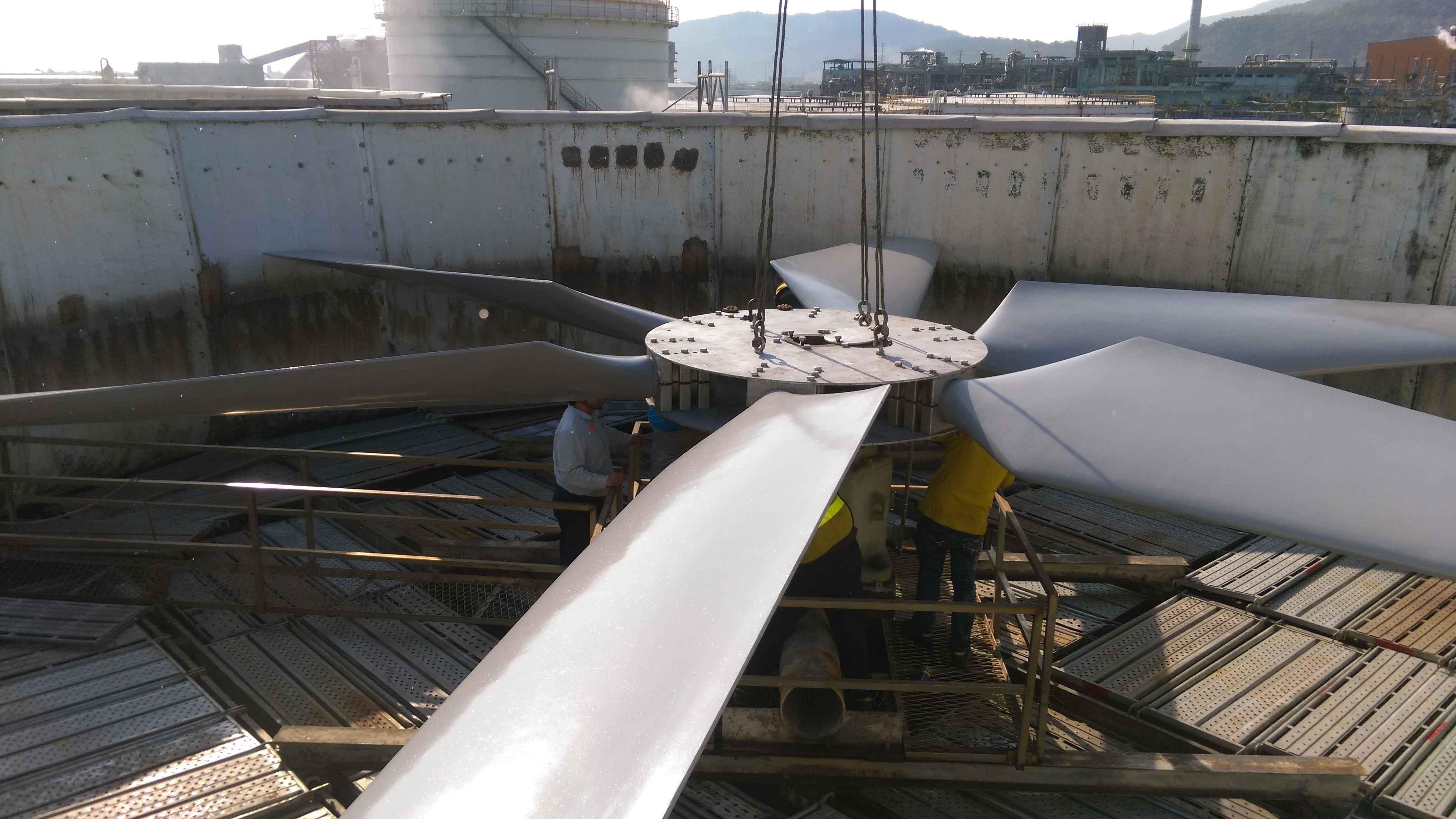
What Is an Aftermarket Marley Cooling Tower Fan?
An aftermarket Marley cooling tower fan is a compatible replacement fan assembly or fan blade built to match the dimensional, aerodynamic and mounting requirements of original Marley cooling tower units. Unlike OEM parts sold directly by SPX Marley, aftermarket Marley cooling tower fans are manufactured by third-party cooling tower spare part suppliers for repair, maintenance and retrofit projects.
These fans are widely used on induced draft cooling towers in industrial plants, HVAC systems, chemical factories, power stations and commercial facilities. When original Marley fan blades crack, deform, lose balance or suffer erosion after years of operation, an aftermarket Marley cooling tower fan becomes the most practical repair solution.
The Difference Between Aftermarket Marley Cooling Tower Fan and OEM Fan
OEM Marley Cooling Tower Fan
Original OEM fans are produced by the official brand. They fully follow factory drawings, but usually come with longer lead times and higher unit prices. For many global end users and maintenance contractors, stock availability can be a major problem, especially for older, discontinued Marley tower models.
Aftermarket Marley Cooling Tower Fan
Qualified aftermarket fans replicate the key parameters: overall diameter, blade count, airfoil profile, shaft bore, keyway size, hub connection and pitch adjustment range. Good aftermarket units pass strict dynamic balance testing, and deliver nearly identical airflow, noise level and thermal performance at a more competitive price and faster delivery.
Important note: Not all aftermarket parts are equal. Buyers should verify drawing matching, material quality and balance reports before ordering replacement Marley cooling tower fan blades.
Common Signs That You Need Marley Cooling Tower Fan Replacement
Cooling tower fans work in humid, corrosive environments. Early detection of fan faults can avoid emergency shutdown and expensive secondary damage to gearboxes, motors and tower structures.
Visual Damage on Fan Blades
Check for surface cracking, edge chipping, erosion, delamination on FRP blades or oxidation and bending on aluminum alloy blades. Damaged blades will break aerodynamic balance and trigger heavy vibration.
Unusual Vibration and Noise During Operation
If your Marley cooling tower creates rattling, roaring or irregular vibration, the fan blade is very likely out of balance. Continuous vibration will wear down the gear reducer, bearing and motor rapidly. This is the most typical signal for cooling tower repair.
Reduced Cooling Efficiency and Higher Water Temperature
When fan airfoils are worn or deformed, airflow volume (CFM) drops. The cooling tower cannot reject heat as designed, which leads to rising circulating water temperature and affects the whole production or HVAC system.
Old or Discontinued Marley Fan Models
Many older Marley cooling towers such as legacy H3 and early HP series no longer have readily available OEM spare stock. Aftermarket Marley cooling tower fan blades are the main repair option for these ageing towers.
Key Technical Features of Our Aftermarket Marley Cooling Tower Fan
Our aftermarket Marley cooling tower fan is engineered for direct swap repair and retrofit. Every blade is made according to reverse-engineered verified drawings for Marley tower series including H3, X7, HP7000 and HP7i.
Optimized Airfoil Blade Profile
We adopt twisted airfoil blade design, same aerodynamic logic as original Marley flare-tip blades. This design reduces tip vortex loss, increases air volume and cuts running noise, suitable for continuous 24-hour industrial operation.
Two Main Material Options
Aluminum Alloy Marley Cooling Tower Fan Blade
6063-T6 hollow extruded aluminum blade, high rigidity, low weight, easy pitch adjustment. Preferred for long-term stable operation in dry or low-corrosion workshop environments.
FRP / Fiberglass Reinforced Plastic Marley Cooling Tower Fan Blade
Corrosion-resistant, anti-aging, lightweight. FRP blades perform better in high humidity, water spray, chemical vapor environments, widely used in chemical, wastewater and coastal cooling towers.
Strict Dynamic Balance Test
Each aftermarket Marley cooling tower fan assembly is dynamically balanced before shipment. Balance grade meets cooling tower industry standards to minimize vibration and extend service life of gearbox and drive system.
Customizable Dimensions and Parameters
Available diameter range covers most Marley standard tower sizes. We support custom blade width, shaft bore diameter, bore depth, keyway dimension, blade quantity and pitch angle to match your existing hub and reducer.
Benefits of Choosing Aftermarket Marley Cooling Tower Fan for Repair
Shorter Lead Time
OEM spare parts often require long production and international shipping cycles. Qualified aftermarket suppliers keep common Marley fan sizes in stock, which greatly cuts downtime during urgent cooling tower repair.
Cost Saving Without Sacrificing Performance
Aftermarket replacement fans usually cost 30–50% less than original OEM parts, while maintaining matching airflow and noise performance. This brings obvious budget advantages for plant maintenance contractors and facility managers.
One-Stop Compatibility Support
A reliable supplier can cross-check your tower photos, nameplate data and old blade dimensions to confirm fitment. You do not need to modify the fan cylinder, hub, gearbox or motor for most direct replacement projects.
Flexible Order Quantity
Aftermarket suppliers accept small repair orders for 1 fan set or single spare blade, which fits on-site maintenance work, while OEMs often have strict minimum order rules.
How to Confirm Compatibility Before Buying an Aftermarket Marley Cooling Tower Fan
To avoid mismatch and installation failure, please prepare the below information when sending inquiry:
Marley cooling tower model number (such as H3, X7, HP7000, HP7i)
Fan overall diameter and number of blades
Blade material of the original fan (aluminum or FRP)
Shaft bore diameter, bore depth, keyway width and depth
Rated output RPM and horsepower of the drive system
Clear photos of old fan blade, hub and tower nameplate
H3: Can I Mix OEM and Aftermarket Fan Blades on One Hub?
We generally do not recommend mixing blades from different manufacturers on the same fan hub. Different airfoil shapes, weight distribution and balance characteristics may cause unbalanced rotation. The best practice is to replace the full set of fan blades at once for cooling tower repair.
Installation and Maintenance Tips for Marley Replacement Cooling Tower Fan
Pre-Installation Inspection
Check all blades for shipping damage. Confirm every dimension matches your hub, bore and keyway. Verify the rotation direction and leading edge mark before mounting.
Blade Pitch Setting
Adjust blade pitch evenly according to the design requirement. Uneven pitch will create severe vibration and uneven air distribution. Our technical team can provide pitch guidance if you share the original Marley technical sheet.
Post-Installation Vibration Check
After installation, run the cooling tower fan at low speed first, then full speed. Measure vibration value at the gearbox and motor base. Stop immediately if abnormal shaking or noise appears.
Regular Routine Maintenance
Clean blade surface scale and sediment every 3–6 months. Inspect bolts, U-clamps and hub connection regularly. Replace any single damaged blade as soon as possible to protect the whole cooling system.
FAQ
Will aftermarket Marley cooling tower fan void my tower warranty?
If your original Marley cooling tower is still under active OEM warranty, confirm the warranty terms first. For most out-of-warranty and ageing towers, aftermarket replacement fans are the standard repair solution.
Can you supply only single fan blade instead of full set?
Yes. We support single blade supply for emergency repair, but we strongly advise full-set replacement for better dynamic balance and stable running.
What is your delivery time for aftermarket Marley cooling tower fan?
Standard stock sizes can be shipped out within 3–7 working days. Custom non-standard diameters require around 10–20 working days for production and balance testing.
Get Quotation for Your Marley Cooling Tower Fan Repair Project
If you are looking for compatible aftermarket Marley cooling tower fan or fan blades for cooling tower maintenance and retrofit, send us your tower model, fan dimensions and photos. Our engineering team will check compatibility quickly and provide you with a formal quotation with technical drawing, material specification and delivery schedule.


