How To Do Cooling Tower Fan Blade Power Calculation Correctly
Meta Description: Master cooling tower fan blade power calculation with formulas, key parameters, step-by-step examples and common mistakes. Calculate shaft power, air horsepower and motor power for induced draft cooling tower fans during replacement or retrofit.
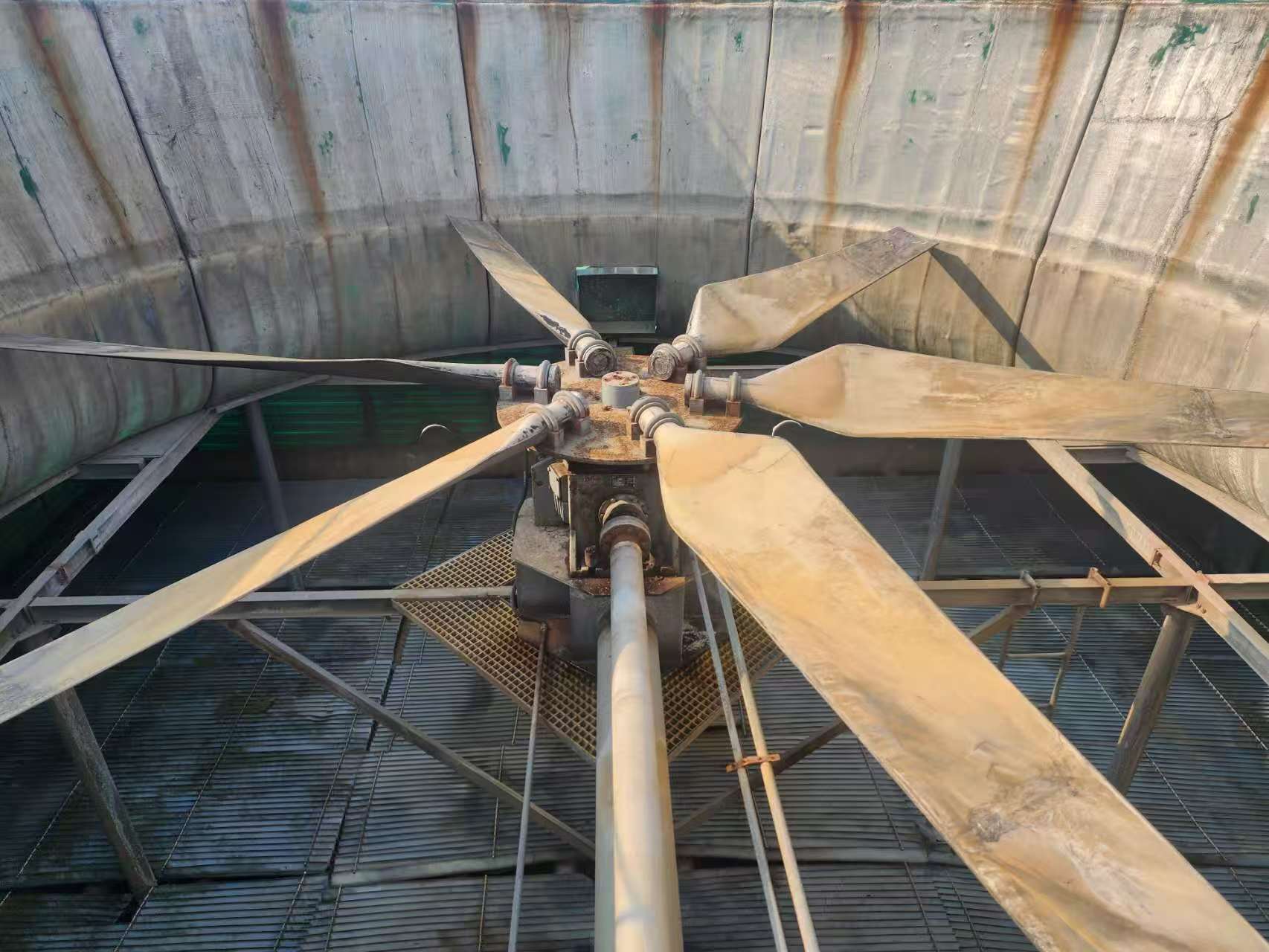
Why Cooling Tower Fan Blade Power Calculation Matters
Cooling tower fan power calculation is the core step for fan blade selection, motor matching, gearbox replacement and tower retrofit. Many retrofit failures come from wrong power estimation: under-sized motors trip frequently, while over-sized motors waste electricity and increase operating costs.
For induced draft cooling towers, the fan blade is the aerodynamic component that moves air through the fill media. The power consumed by the fan blade depends on airflow, static pressure, air density, blade airfoil efficiency, pitch angle and rotating speed. When you replace old fan blades (Marley, BAC, Evapco or other brands), you must recalculate power instead of only copying the old nameplate data.
This guide explains the basic formulas, critical input parameters, calculation workflow, practical example and typical pitfalls you need to avoid.
Core Definitions for Cooling Tower Fan Power Calculation
Before calculation, clarify these basic power terms, which are often confused by engineers and maintenance teams.
Air Horsepower (AHP)
Air horsepower is the theoretical power required to move the air, ignoring all losses. It is the ideal aerodynamic power transferred into the airflow.
Shaft Power / Brake Horsepower (BHP)
Shaft power is the real power that the fan hub receives from the gear reducer. It equals air horsepower divided by fan aerodynamic efficiency. This value is used to select the gearbox rating.
Motor Input Power
Motor input power is the electrical power drawn from the power grid. It accounts for motor efficiency, coupling loss and gearbox transmission loss. This is the value you use to choose the motor kW size.
Fan Aerodynamic Efficiency
Fan efficiency describes how well the airfoil blade converts rotating mechanical energy into airflow. High-quality twisted airfoil blades usually run at 70% ~ 82% efficiency. Flat simple blades have much lower efficiency, often below 65%.
Key Input Parameters Required for Calculation
You must collect these data before starting cooling tower fan blade power calculation. Missing any item will lead to inaccurate results.
Airflow Rate (CFM or m³/h)
Airflow is the total air volume the fan needs to push through the tower. It is determined by the cooling tower thermal design, based on circulating water flow, inlet water temperature, wet bulb temperature and design approach.
Unit reminder: In US engineering practice, CFM (cubic feet per minute) is widely used. Metric calculation uses m³/h. Do not mix two unit systems in one formula.
Total Static Pressure (SP)
Static pressure is the air resistance inside the cooling tower, including resistance from fill, drift eliminators, air inlet louvers, fan cylinder and outlet loss. Typical induced draft cooling tower static pressure ranges from 0.4 in.wg to 1.2 in.wg.
Air Density
Air density changes with altitude, ambient temperature and humidity. Hotter air or high-altitude sites have lower air density. Lower air density means the fan must run more power to deliver the same mass airflow.
Fan Blade Specifications
Fan overall diameter
Number of blades
Blade pitch angle
Rotating speed (RPM)
Airfoil type (twisted airfoil / flat blade)
Blade material (FRP or aluminum alloy, mainly affects efficiency and weight, not the core aerodynamic formula)
Standard Formulas for Cooling Tower Fan Blade Power Calculation
Formula for Air Horsepower (AHP, Imperial CFM unit)
AHP = (CFM × Static Pressure (in.wg)) / 6356
6356 is the constant factor for inch water gauge and CFM.
Formula for Fan Shaft Power (BHP)
BHP = AHP / Fan Aerodynamic Efficiency
Example: If AHP = 12 HP and fan efficiency = 0.75, BHP = 12 / 0.75 = 16 HP
Formula for Motor Power
Motor Power (HP) = BHP / (Gearbox Efficiency × Motor Efficiency)
Gear reducer efficiency for cooling tower worm gear / helical gearbox is generally 0.90 ~ 0.96. Standard induction motor efficiency is around 0.92 ~ 0.96.
Metric Version (kW, m³/h, Pa)
Air Power (kW) = (Airflow m³/h × Static Pressure Pa) / (3,600 × 1000) Then shaft power and motor power are calculated by dividing by efficiency step by step.
Important note: These formulas apply to steady-state design conditions. Peak power at startup and high wind backpressure need an extra safety margin.
Step-by-Step Calculation Workflow with Practical Example
Let’s use a common induced draft cooling tower case to demonstrate the whole process (imperial unit):
Step 1: Gather design data
Step 2: Calculate Air Horsepower
AHP = (120000 × 0.7) / 6356 AHP ≈ 13.22 HP
Step 3: Calculate Fan Shaft BHP
BHP = 13.22 / 0.76 ≈ 17.4 HP
Step 4: Calculate required motor power
Motor HP = 17.4 / (0.93 × 0.94) ≈ 19.9 HP
Step 5: Add safety margin and select motor
For cooling tower fans, we usually add 10% ~15% safety margin to cover unexpected dirt buildup, higher static pressure and startup shock. 19.9 HP × 1.15 ≈ 22.9 HP → select standard 25 HP motor.
Factors That Change Fan Power After Blade Replacement
Many customers assume power stays the same when swapping new blades, this is a frequent mistake.
Blade Pitch Angle Adjustment
Pitch angle is the biggest adjustable factor. Larger pitch = higher airflow and much higher power draw. A small increase of 2°~3° pitch can raise shaft power by 15%~25%. Over-pitching is the top reason for motor overload and tripping.
Different Airfoil Profile
If you replace old flat blades with modern twisted airfoil aftermarket blades, efficiency improves. For the same airflow requirement, the required shaft power drops. Conversely, replacing high-efficiency OEM airfoil blades with low-quality flat blades will increase power consumption.
Fan Diameter Change
Power is strongly related to fan diameter and RPM. Fan power follows the fan affinity laws: Power ∝ Diameter⁵ × RPM³ Even a small change of diameter or rotating speed creates a dramatic power shift. Never change diameter or RPM without recalculation.
Fouling and Scaling Accumulation
After months of running, limescale, algae and sediment build up on blade surfaces. This distorts the airfoil shape, reduces efficiency and increases power consumption gradually. Your clean-design calculation cannot represent the fouled operating state.
Fan Affinity Laws for Power Estimation
The fan affinity laws are essential when you modify speed or diameter for retrofit:
Volume flow ∝ RPM
Static Pressure ∝ RPM²
Power ∝ RPM³ If you reduce fan speed by 20%, the power drops by nearly half. If you increase speed by 20%, power rises by over 70%. This rule is widely used for VFD variable-speed cooling tower fan projects.
Warning: Affinity laws only work when blade pitch, airfoil shape and system static pressure curve stay unchanged.
Common Mistakes in Cooling Tower Fan Blade Power Calculation
Mistake 1 — Directly copy the old motor nameplate power
The old motor rating may include extra margin from decades ago. If you install new high-efficiency blades, you may overpay for an oversized motor. If you change pitch or diameter, the old nameplate value is completely invalid.
Mistake 2 — Ignore static pressure change after tower maintenance
After cleaning fill or replacing drift eliminators, the system static pressure reduces. If you keep the same pitch setting, airflow rises and power increases.
Mistake 3 — No safety margin added
Calculation is based on clean, ideal conditions. Dirt, summer high humidity, back wind and startup surge will push real power higher. Without safety margin, the motor trips under normal operation.
Mistake 4 — Mix metric and imperial units
CFM paired with Pa, or m³/h paired with in.wg will produce completely wrong numbers. Always keep the unit system consistent.
Calculation Tips for Aftermarket Fan Blade Retrofit
When you install aftermarket compatible fan blades for Marley, BAC or Evapco cooling towers:
Ask your blade supplier to provide aerodynamic curve data of the airfoil.
Confirm whether you will keep the original hub, RPM and gearbox ratio.
Do not maximize blade pitch to chase maximum airflow; verify motor current after the first startup.
Measure running current under full load after installation and compare it with the motor nameplate ampere rating.
If current exceeds the rated value, reduce blade pitch angle step by step.
Frequently Asked Questions
Can I use the same motor if I only replace fan blades without changing RPM and diameter?
Not automatically. You must check the airfoil efficiency and pitch. New higher-efficiency blades may deliver more air at the same pitch and overload the existing motor.
What safety margin should I choose?
10% margin is acceptable for well-maintained towers with good water quality. 15% margin is recommended for chemical plants, coastal sites or towers with hard-to-clean fill.
Does blade weight affect fan power calculation?
Blade weight mainly affects dynamic balance and gearbox bearing fatigue. It has negligible impact on aerodynamic power calculation for normal operating speed.
Is VFD speed regulation a good way to control fan power?
Yes. Variable frequency drives adjust RPM to follow affinity laws. It saves energy and avoids overload, widely used on large industrial cooling towers. But you still need the base power calculation for the design speed.
Get Technical Support for Your Fan Blade Retrofit Project
If you need help with cooling tower fan blade power calculation, blade pitch recommendation and motor matching during your tower repair or retrofit, send us your tower thermal data, fan dimensions, target airflow and static pressure. Our engineering team can complete the power calculation, provide blade parameter suggestions and supply compatible FRP or aluminum airfoil fan blades.


