Common Cooling Tower Fan Blade Balancing Problems And Solutions
Cooling tower fan blade balancing is essential for maintaining stable airflow, reducing mechanical vibration, and protecting critical cooling tower components. In industrial cooling systems, even a small imbalance in the fan assembly can create excessive vibration, abnormal noise, increased bearing loads, and unnecessary energy consumption. Over time, these problems may lead to equipment damage, unexpected shutdowns, and higher maintenance costs.
Many cooling tower operators focus on motor performance, gearbox condition, and water distribution while overlooking the importance of fan blade balance. However, the fan is one of the most important rotating components in a cooling tower. Its operating stability directly affects airflow efficiency and the service life of the entire fan drive system.
Understanding common cooling tower fan blade balancing problems and solutions helps maintenance teams identify mechanical issues before they develop into serious failures. This article explores the main causes of fan imbalance, practical troubleshooting methods, balancing procedures, and preventive maintenance strategies for industrial cooling tower applications.
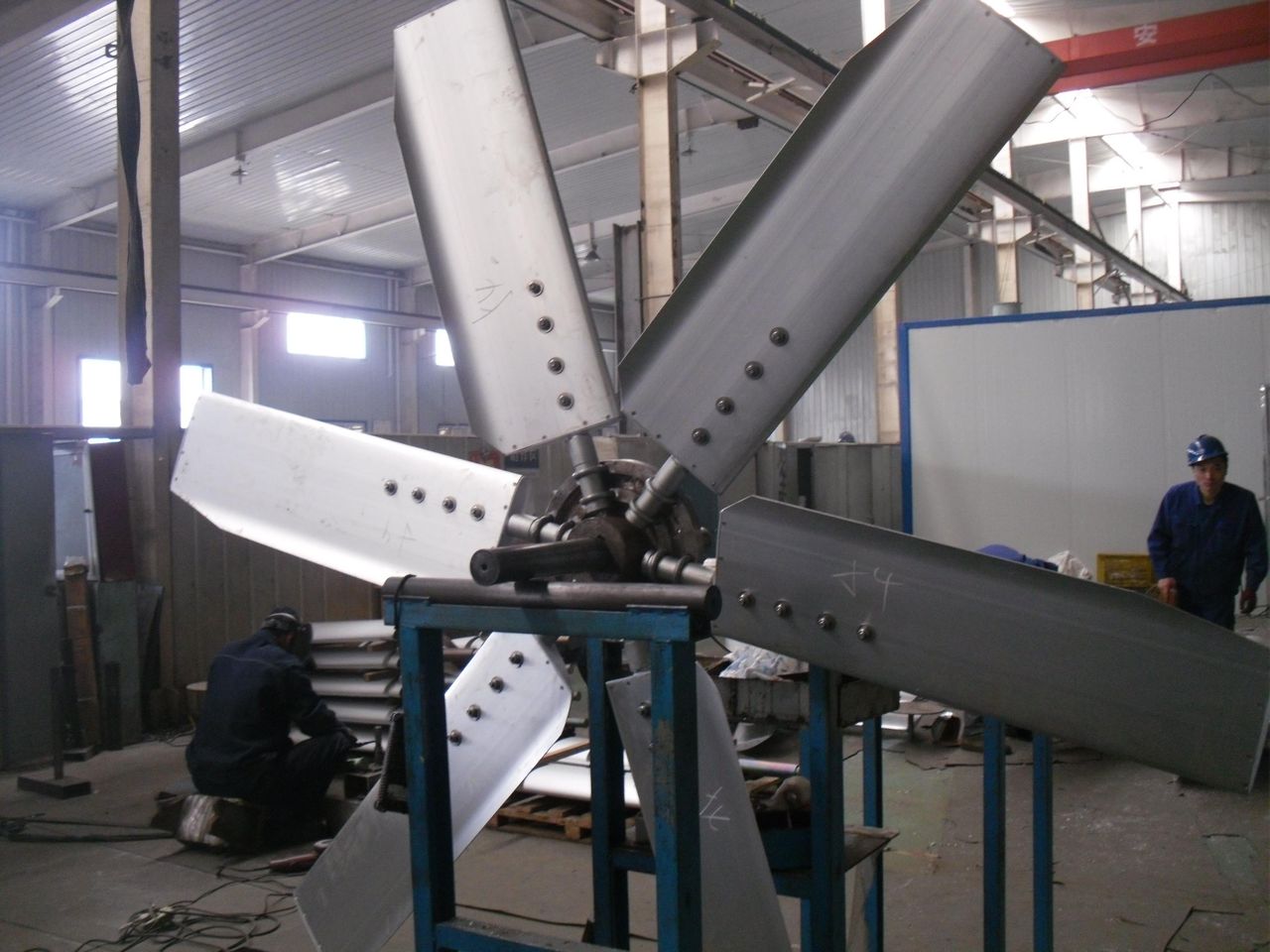
Why Is Cooling Tower Fan Blade Balancing Important?
Cooling tower fans operate continuously under demanding environmental conditions. Moisture, temperature changes, dust, chemical exposure, and mechanical stress can gradually affect blade geometry and weight distribution.
When the rotating fan assembly is not properly balanced, centrifugal forces create additional loads on the fan shaft, bearings, gearbox, and supporting structure.
How Does Fan Imbalance Affect Cooling Tower Performance?
An unbalanced cooling tower fan generates uneven centrifugal forces during rotation. These forces can increase vibration and reduce the mechanical reliability of the equipment.
Common performance effects include:
Excessive vibration in the fan stack and support structure.
Abnormal operating noise.
Increased bearing and gearbox loads.
Premature fatigue of fan blades and mounting components.
Reduced mechanical efficiency.
Higher maintenance frequency.
Unexpected cooling tower shutdowns.
The Relationship Between Fan Balance and Airflow Efficiency
Although balancing primarily addresses mechanical stability, it also supports consistent fan operation. Excessive vibration may indicate incorrect blade installation, structural problems, or uneven blade loading.
Correcting these conditions helps the fan operate at its intended speed and design point, supporting reliable airflow through the cooling tower.
Why Is Imbalance Particularly Serious in Large Industrial Fans?
Large industrial cooling tower fans often have substantial blade diameters. Even a relatively small mass difference can generate significant centrifugal force at operating speed.
The resulting mechanical loads increase with rotational speed and the distance between the imbalance and the rotation axis.
For this reason, large FRP cooling tower fan blades, aluminum fan blades, and multi-blade fan assemblies require careful inspection and appropriate balancing procedures.
Common Cooling Tower Fan Blade Balancing Problems
Fan imbalance does not always come from manufacturing defects. It may develop gradually through environmental exposure, installation errors, component wear, or changes in blade configuration.
The following problems are frequently encountered in industrial cooling tower maintenance.
1. Uneven Fan Blade Weight Distribution
Uneven blade weight is one of the most common causes of cooling tower fan imbalance.
Although blades may have similar dimensions, their actual weights can differ because of manufacturing tolerances, material variations, repairs, or accumulated deposits.
Main Causes
Differences in FRP resin distribution.
Uneven fiberglass reinforcement.
Manufacturing variations between blades.
Water, dust, or mineral deposits on blade surfaces.
Previous repairs that changed blade weight.
Replacement blades with different specifications.
Practical Solutions
First, inspect every blade for visible contamination, cracks, repairs, and surface damage. Clean all blades using a method compatible with their materials.
Next, compare blade weights when the manufacturer's balancing procedure requires weight matching. Use suitable weighing equipment and follow the approved correction method.
For replacement projects, use blades from the same compatible design and specification whenever possible.
2. Incorrect Cooling Tower Fan Blade Pitch Angle
Incorrect blade pitch can create uneven aerodynamic loading and airflow distribution.
Even when individual blades have similar weights, inconsistent pitch angles may cause different aerodynamic forces during operation.
Why Does Blade Pitch Become Uneven?
Blade pitch differences can result from:
Incorrect installation measurements.
Loose blade adjustment bolts.
Improper replacement procedures.
Distorted blade mounting brackets.
Incorrect hub positioning.
Inconsistent adjustment between blades.
How to Correct Blade Pitch Problems
Before adjusting the blades, stop the fan, isolate the electrical supply, and follow the site's lockout/tagout procedures.
Measure each blade angle at the same specified radial position using an appropriate pitch measurement tool.
Compare the results with the fan manufacturer's design specifications.
Important Pitch Adjustment Considerations
Use the same measurement reference for every blade.
Confirm that the hub is correctly installed.
Tighten mounting fasteners according to manufacturer specifications.
Check blade clearance and tip position.
Verify that the selected pitch is suitable for the motor and gearbox capacity.
Correct pitch adjustment helps maintain consistent aerodynamic loading and prevents unnecessary operating stress.
3. Excessive Vibration During Fan Operation
Excessive vibration is one of the clearest warning signs of a possible cooling tower fan balancing problem.
However, vibration does not automatically mean the fan blades are unbalanced. Other mechanical and structural problems can produce similar symptoms.
Common Sources of Abnormal Vibration
Fan blade mass imbalance.
Incorrect blade pitch.
Bent or damaged fan shaft.
Worn bearings.
Loose hub connections.
Gearbox alignment problems.
Structural looseness.
Resonance in the fan support system.
Effective Troubleshooting Methods
Use vibration measurement equipment to evaluate the fan assembly under controlled operating conditions.
Measure vibration at appropriate locations, including bearing housings and supporting structures. Record the readings and compare them with the equipment manufacturer's limits and applicable vibration standards.
Distinguishing Imbalance From Other Mechanical Faults
A vibration spectrum can help identify the possible source of the problem.
For example, vibration concentrated at rotational frequency may indicate imbalance, although other faults can also produce vibration at this frequency.
Misalignment, looseness, bearing defects, and resonance require different corrective actions. Therefore, technicians should not add balancing weights before investigating the underlying cause.
4. Loose Fan Blade Mounting Bolts
Loose mounting bolts can change the mechanical position of individual blades and create unstable operating conditions.
This problem is particularly dangerous because it may develop after installation or during long-term operation.
Why Do Mounting Bolts Become Loose?
Repeated vibration during operation.
Incorrect tightening torque.
Improper installation procedures.
Corrosion of fasteners.
Fatigue or deformation of mounting components.
Inadequate locking arrangements.
Recommended Solutions
Inspect all blade mounting bolts, hub connections, and locking components during scheduled maintenance.
Use a calibrated torque wrench to tighten fasteners according to the manufacturer's requirements.
Replace damaged bolts, nuts, washers, and locking devices rather than reusing components that no longer meet specifications.
Why Should Bolt Tightening Be Consistent?
Uneven tightening can produce local stress concentrations and affect blade positioning. A consistent tightening sequence helps maintain stable contact between the blade root, mounting bracket, and fan hub.
5. Dirt and Mineral Deposits on Fan Blade Surfaces
Cooling towers operate in environments where airborne dust, water droplets, and mineral-containing moisture can accumulate on fan blades.
Over time, deposits may create uneven mass distribution and alter blade surface conditions.
Typical Contamination Problems
Calcium carbonate deposits.
Dust and airborne particles.
Biological growth.
Oil or chemical contamination.
Uneven residue around blade roots and tips.
How to Solve Surface Contamination Problems
Clean fan blades periodically using suitable cleaning products and non-damaging tools.
For FRP cooling tower fan blades, avoid aggressive chemicals or abrasive methods that may damage protective coatings or expose fiberglass reinforcement.
After cleaning, inspect the blade surface and check whether the original vibration condition has improved.
Preventing Deposit-Related Imbalance
Improved water treatment, effective drift control, and regular visual inspections can reduce contamination accumulation.
Cleaning should be based on operating conditions rather than relying only on fixed calendar intervals.
6. Damaged or Deformed Cooling Tower Fan Blades
A damaged blade can create both mass imbalance and aerodynamic instability.
FRP blades may develop cracks, delamination, or localized structural damage. Aluminum blades may experience bending, corrosion, or fatigue-related deformation.
Common Blade Damage Types
Cracks near the blade root.
Surface delamination.
Bent blade tips.
Corrosion and material loss.
Impact damage.
Loose internal reinforcement.
Permanent deformation.
Repair or Replacement: Which Is Better?
Minor surface damage may be repairable if approved by the manufacturer and evaluated by qualified technicians.
However, deep cracks, structural delamination, severe deformation, or damage to critical mounting areas may require blade replacement.
Why Is Professional Inspection Necessary?
A damaged blade may have internal defects that are not visible during a routine visual inspection. Professional assessment helps determine whether the blade retains sufficient structural strength for safe operation.
Adding balancing weights cannot correct structural weakness or restore damaged blade geometry.
7. Incorrect Fan Hub Assembly Installation
The fan hub connects the blades to the rotating drive system. Incorrect hub installation can create imbalance even when the individual blades are in good condition.
Common Hub-Related Problems
Incorrect hub positioning.
Uneven blade mounting.
Incorrect fastener installation.
Damaged hub components.
Poor concentricity.
Incorrect replacement parts.
Recommended Corrective Actions
Inspect the hub assembly for deformation, cracks, corrosion, and loose connections.
Verify that the hub is properly aligned with the fan shaft and that all blades are installed according to the manufacturer's configuration.
For large industrial cooling tower fans, professional hub inspection is especially important because hub defects can affect the entire rotating assembly.
8. Incorrect Replacement Blade Specifications
Replacing damaged fan blades without checking their specifications can introduce new balancing problems.
Different blades may look similar while having different aerodynamic profiles, weights, materials, and mounting dimensions.
What Specifications Should Be Checked?
Before purchasing replacement cooling tower fan blades, verify:
Blade diameter and overall length.
Blade profile and aerodynamic design.
Material type, such as FRP or aluminum.
Blade weight and weight distribution.
Pitch angle and adjustment range.
Hub mounting dimensions.
Operating speed and design airflow.
Temperature and environmental resistance.
How to Avoid Replacement-Related Imbalance
Purchase compatible blades from a qualified cooling tower fan blade manufacturer.
Whenever possible, provide the original fan model, hub drawings, blade dimensions, operating speed, and existing technical specifications.
A properly matched replacement assembly reduces installation risks and helps maintain the intended operating performance.
Cooling Tower Fan Blade Balancing Methods
Selecting the correct balancing method depends on fan size, operating speed, equipment configuration, and the source of vibration.
Two major methods are commonly used: static balancing and dynamic balancing.
Static Balancing
Static balancing evaluates the mass distribution of a stationary rotating component.
The objective is to identify whether one side of the assembly is heavier than the opposite side.
How Does Static Balancing Work?
The fan component is placed on a suitable balancing fixture that allows it to rotate freely.
The heavier section tends to move toward the lowest position under gravity. Technicians identify the imbalance and apply an approved correction method.
Applications of Static Balancing
Static balancing may be appropriate for certain smaller components or individual fan assemblies when permitted by the manufacturer's procedures.
However, it does not fully evaluate all types of dynamic imbalance.
Dynamic Balancing
Dynamic balancing evaluates the rotating assembly and measures vibration-related imbalance during rotation.
It is particularly important for large industrial cooling tower fan systems.
Main Steps in Dynamic Balancing
Inspect the fan blades, hub, shaft, and mounting components.
Confirm blade pitch and mechanical installation.
Install suitable vibration sensors.
Measure baseline vibration under controlled conditions.
Analyze vibration amplitude and phase.
Determine the required correction.
Apply approved correction weights or other corrective measures.
Conduct a verification run.
Record the final balancing results.
Why Is Dynamic Balancing Important?
Dynamic balancing can identify rotating imbalance that may not be detected through static balancing alone.
It helps reduce vibration-related mechanical loads and supports the long-term reliability of the fan drive system.
Static Balancing vs. Dynamic Balancing
| Comparison | Static Balancing | Dynamic Balancing |
| Main purpose | Evaluate stationary mass distribution | Evaluate rotating imbalance |
| Operating condition | Stationary | Rotating |
| Equipment | Balancing fixture | Dynamic balancing equipment |
| Measurement | Mass distribution | Vibration and phase |
| Typical application | Suitable individual components | Industrial rotating assemblies |
| Diagnostic capability | More limited | More comprehensive |
The appropriate method should always be selected according to the fan manufacturer's requirements and the actual mechanical condition.
Step-by-Step Cooling Tower Fan Blade Balancing Procedure
A systematic procedure helps maintenance teams avoid unnecessary adjustments and identify the actual source of imbalance.
Step 1: Perform a Complete Visual Inspection
Before using balancing equipment, inspect the complete fan assembly.
Check for damaged blades, missing fasteners, corrosion, dirt accumulation, loose connections, and visible deformation.
Inspection Areas
Fan blade surfaces.
Blade roots and mounting brackets.
Fan hub assembly.
Fan shaft.
Bearing housings.
Fan stack and supporting structure.
Gearbox and motor connections.
Step 2: Measure Blade Pitch and Position
Measure the pitch angle of every blade at the same specified position.
Also inspect blade tip clearances and radial positioning.
Unequal blade positioning should be corrected before attempting final balancing.
Step 3: Check Mechanical Alignment
Inspect the fan shaft, hub, gearbox, and drive connections.
Check for shaft runout, looseness, bearing wear, and other mechanical defects that could influence vibration measurements.
Step 4: Measure Initial Vibration
Use calibrated vibration instruments to establish baseline operating conditions.
Record relevant readings and operating parameters, including fan speed and measurement locations.
Compare the results with applicable equipment specifications.
Step 5: Identify the Imbalance Source
Analyze the vibration data together with the physical inspection findings.
Determine whether the problem originates from blade mass distribution, mechanical looseness, misalignment, structural resonance, or another fault.
Step 6: Apply the Corrective Solution
Depending on the diagnosis, corrective measures may include:
Cleaning contaminated fan blades.
Correcting blade pitch.
Replacing damaged blades.
Tightening loose fasteners.
Repairing or replacing defective hub components.
Correcting shaft or gearbox alignment.
Performing approved balancing weight adjustments.
Step 7: Conduct Final Verification
After completing corrective work, repeat the relevant measurements.
Confirm that vibration levels meet the applicable manufacturer requirements and that the fan operates without abnormal noise or mechanical instability.
Record the final results for future maintenance comparisons.
How Do FRP Cooling Tower Fan Blades Affect Balancing?
FRP cooling tower fan blades are widely used in industrial cooling systems because of their lightweight construction, corrosion resistance, and design flexibility.
However, their material characteristics also make manufacturing quality and structural consistency important considerations during balancing.
Advantages of FRP Fan Blades
Lightweight construction reduces rotating mass.
Corrosion resistance supports operation in humid environments.
Custom aerodynamic profiles improve airflow design flexibility.
Good fatigue performance when properly engineered.
Suitable for various industrial cooling tower configurations.
Common FRP Blade Balancing Considerations
Manufacturing Consistency
Differences in fiberglass reinforcement, resin distribution, and curing conditions can affect blade weight and structural uniformity.
A professional manufacturer should maintain consistent production procedures and inspect finished blades before delivery.
Structural Integrity
Cracks, delamination, or improper repairs may change the blade's mass distribution and mechanical strength.
FRP blade inspections should include both surface condition and critical structural areas.
Matching Blade Specifications
When replacing one or more blades, confirm that the new products match the original design and approved assembly configuration.
Using incompatible blades may introduce both aerodynamic and mechanical problems.
How to Prevent Cooling Tower Fan Blade Balancing Problems
Preventive maintenance is more effective than waiting for severe vibration or mechanical damage to appear.
A well-organized maintenance program should combine regular inspections, operating data analysis, and component condition monitoring.
Establish a Regular Inspection Schedule
Inspection frequency should reflect operating hours, environmental conditions, fan speed, and manufacturer recommendations.
| Inspection Item | Recommended Focus |
| Fan blades | Cracks, deformation, deposits |
| Blade pitch | Angle consistency |
| Mounting bolts | Tightness and corrosion |
| Fan hub | Structural condition |
| Bearings | Temperature, noise, vibration |
| Gearbox | Lubrication and operating condition |
| Fan structure | Looseness and resonance |
| Vibration | Changes from baseline readings |
Use Vibration Monitoring to Detect Early Problems
Establish baseline vibration measurements after commissioning or major maintenance.
Monitor changes over time rather than relying on a single measurement.
An increasing vibration trend may indicate developing imbalance, looseness, bearing deterioration, or other mechanical faults.
Select High-Quality Replacement Components
Replacement blades, hubs, fasteners, and other rotating components should meet the original design requirements.
Working with an experienced cooling tower parts supplier can help reduce compatibility problems and improve maintenance reliability.
Maintain Accurate Maintenance Records
Document every balancing activity, including:
Initial vibration measurements.
Blade pitch measurements.
Inspection findings.
Repair and replacement details.
Balancing correction locations.
Final verification readings.
Operating conditions during testing.
These records help maintenance engineers identify recurring problems and make better decisions during future shutdowns.
How to Choose a Reliable Cooling Tower Fan Blade Manufacturer?
The quality of fan blades has a direct influence on balancing requirements, airflow performance, and long-term operating reliability.
Selecting a reliable manufacturer is therefore an important part of cooling tower maintenance and equipment procurement.
Evaluate Manufacturing Capabilities
A qualified cooling tower fan blade manufacturer should have experience producing blades for different industrial cooling tower configurations.
Important capabilities include:
FRP blade molding and fabrication.
Aluminum blade manufacturing.
Dimensional inspection.
Weight consistency control.
Aerodynamic design and optimization.
Quality inspection and testing.
Custom replacement production.
Check Material Quality and Production Standards
For FRP cooling tower fan blades, evaluate fiberglass reinforcement, resin selection, curing processes, and protective surface treatment.
For aluminum blades, review alloy specifications, manufacturing accuracy, corrosion protection, and structural strength.
Request Technical Documentation
Before placing an order, request relevant product drawings, material specifications, dimensional information, and inspection documentation.
For replacement projects, technical communication is especially important because different cooling tower brands and models may use different fan configurations.
Consider Custom Cooling Tower Fan Solutions
Some industrial cooling towers operate under special conditions involving high temperatures, corrosive environments, or large airflow requirements.
Custom fan blade solutions may help address these requirements, provided that the design is properly evaluated and matched to the existing fan system.
Conclusion
Common cooling tower fan blade balancing problems can result from uneven blade weight distribution, incorrect pitch angles, loose mounting bolts, surface contamination, damaged blades, hub installation errors, and incompatible replacement components.
Effective solutions require more than simply adding balancing weights. Maintenance teams should first inspect the complete rotating assembly, identify the underlying mechanical or aerodynamic problem, and select the appropriate corrective method.
Static balancing and dynamic balancing both have important applications, but the correct approach depends on the fan design and operating requirements.
For industrial cooling tower operators, regular vibration monitoring, proper installation, consistent blade specifications, and high-quality replacement components are essential for maintaining reliable operation.
Choosing professionally manufactured FRP cooling tower fan blades and compatible fan hub assemblies can also help reduce maintenance risks and support long-term cooling tower performance.
By combining accurate balancing procedures with preventive maintenance, industrial facilities can improve equipment reliability, reduce unexpected downtime, and maintain stable cooling system operation.


