PVC Cooling Tower Fill Media: Benefits and Applications
PVC cooling tower fill media is one of the most widely used types of fill in modern evaporative cooling systems. By increasing the contact area between circulating water and air, PVC fill helps improve heat transfer, support evaporation, and maintain stable cooling tower performance.
From HVAC systems and commercial buildings to industrial process cooling, PVC cooling tower fill is available in different designs, thicknesses, flute patterns, and configurations to match different tower requirements.
But what makes PVC such a popular material for cooling tower fill? Where can it be used? How should buyers select the right PVC cooling tower filler?
This guide explores the structure, benefits, applications, selection factors, maintenance requirements, and replacement considerations of PVC cooling tower fill media.
What Is PVC Cooling Tower Fill Media?
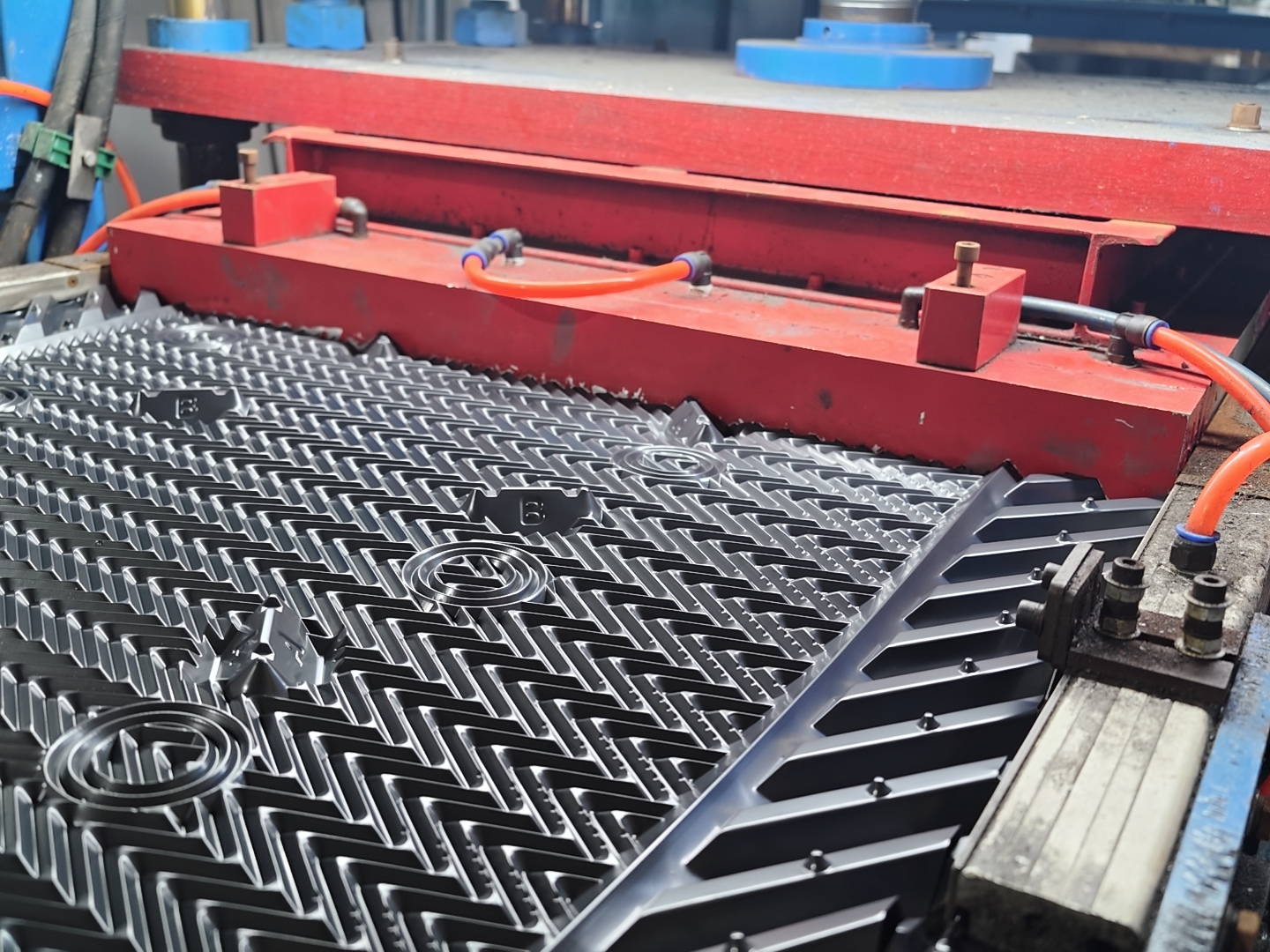
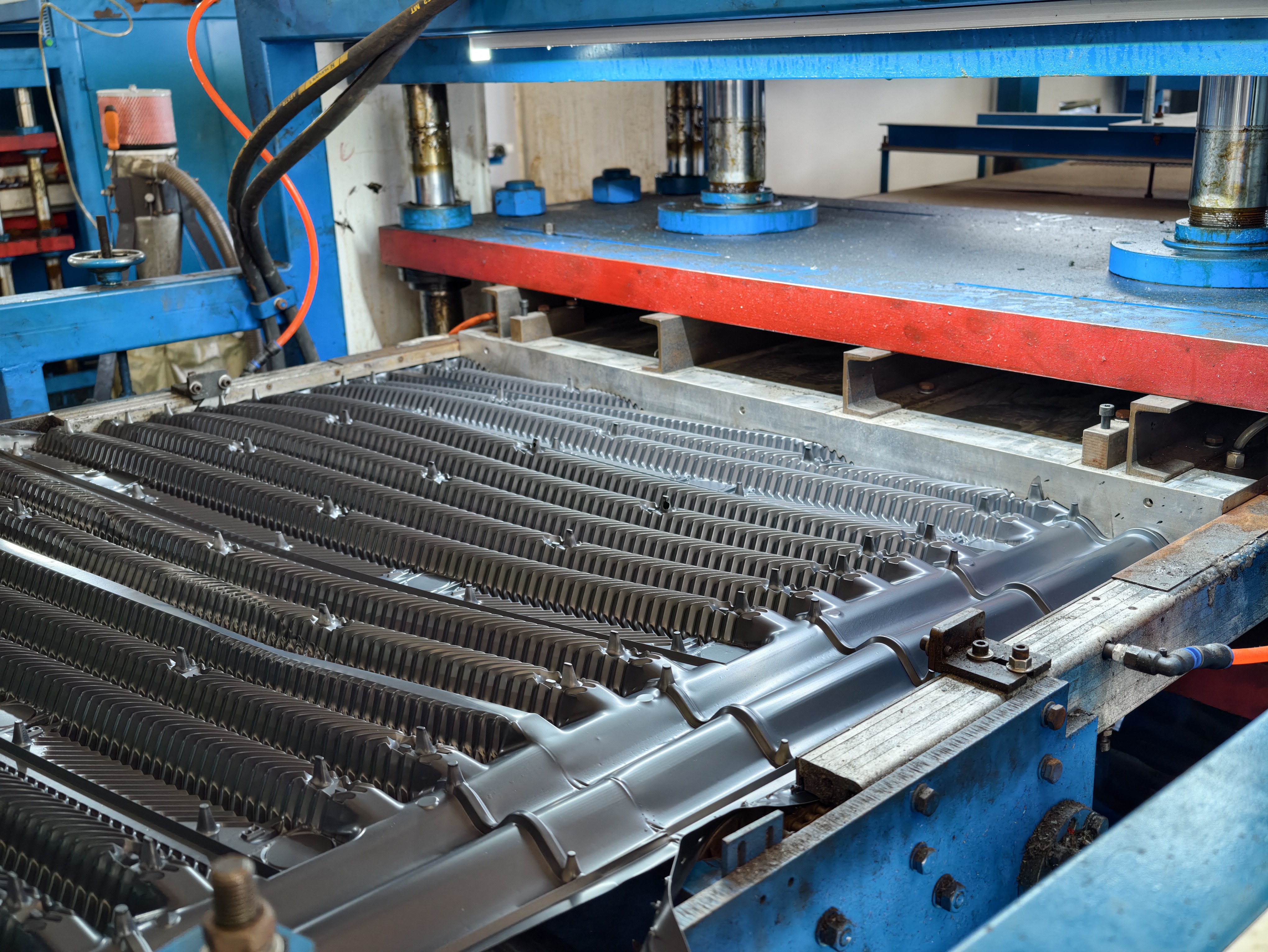
PVC cooling tower fill media is a thermoplastic fill material manufactured primarily from polyvinyl chloride (PVC). It is installed inside evaporative cooling towers to increase the effective contact area between air and water.
Instead of allowing water to fall freely through the tower, the fill guides water across a large structured surface. As air moves through the fill, a portion of the water evaporates and removes heat from the circulating water.
How Does PVC Cooling Tower Fill Work?
The cooling process can be simplified into three main stages:
Warm water enters the cooling tower.
Water is distributed over the PVC cooling tower fill.
Air passes through the fill while heat and moisture transfer occur.
The specially formed PVC sheets create channels that encourage water to spread into thin films.
Why Does Thin Water Film Matter?
A thinner and more evenly distributed water film creates more effective contact between air and water.
This can improve:
Therefore, the performance of a cooling tower depends not only on the material but also on the design of the cooling tower filler.
Why Is PVC Widely Used for Cooling Tower Fill?
PVC has become a popular cooling tower fill material because it combines practical thermal performance with relatively low weight, good corrosion resistance, and efficient manufacturing.
What Are the Main Benefits of PVC Cooling Tower Fill?
Key advantages include:
Lightweight construction
Good corrosion resistance
Good resistance to many chemicals
High surface-area potential
Easy thermoforming
Cost-effective production
Flexible fill configurations
Easy handling during installation
Wide availability
Suitable for many conventional cooling applications
These characteristics make PVC cooling tower fill media suitable for a broad range of HVAC and industrial cooling systems.
How Does PVC Cooling Tower Fill Improve Heat Transfer?
The primary function of cooling tower fill is to increase the interaction between air and water.
Does PVC Fill Increase the Effective Surface Area?
Yes. Structured PVC fill creates numerous water-flow channels and surfaces. Water spreads over these surfaces while air passes through the channels.
This creates a much larger effective contact area than an empty cooling tower would provide.
What Happens Inside the Fill?
As warm water flows downward:
Water spreads across the fill surface.
Air moves through the channels.
Heat transfers from water to air.
A portion of the water evaporates.
The remaining water leaves the tower at a lower temperature.
This process makes PVC cooling tower fill media an important component of evaporative cooling.
What Types of PVC Cooling Tower Fill Are Available?
PVC cooling tower fill is not a single standardized product. Different designs are available for different cooling tower configurations and water conditions.
What Is PVC Film Fill?
PVC film fill uses closely spaced sheets to create thin water films.
Film fill is designed to provide a large surface area for air-water contact.
What Are the Advantages of PVC Film Fill?
It can offer:
High heat-transfer potential
Compact construction
Efficient water distribution
Large effective surface area
Suitable performance for many HVAC applications
Where Is Film Fill Commonly Used?
PVC film fill is commonly found in:
What Is PVC Crossflow Cooling Tower Fill?
In a crossflow cooling tower, air typically travels horizontally through the fill while water flows downward.
This configuration can simplify access to the water distribution system and may be used in various large-scale cooling applications.
What Makes Crossflow PVC Fill Different?
Crossflow fill is designed according to the airflow and water-flow arrangement of the tower.
Important design considerations include:
Fill height
Sheet thickness
Flute angle
Surface area
Water loading
Airflow resistance
The correct geometry is essential for achieving stable cooling performance.
What Is PVC Splash Fill?
Unlike film fill, splash fill breaks falling water into droplets or smaller streams as water passes through the fill structure.
When Is Splash Fill Useful?
Splash fill can be considered where water quality contains relatively high levels of suspended solids or where resistance to certain fouling conditions is more important than maximum film-fill surface area.
How Does Splash Fill Differ From Film Fill?
Film fill:
Water spreads over surfaces and forms thin films.
Splash fill:
Water is repeatedly redistributed and broken into droplets.
The appropriate option depends on water quality, cooling tower design, thermal requirements, and maintenance strategy.
What Are the Key Applications of PVC Cooling Tower Fill Media?
PVC cooling tower fill is used across numerous industries because evaporative cooling is required in many thermal processes.
Is PVC Fill Suitable for HVAC Cooling Towers?
Yes. HVAC is one of the most common application areas.
PVC cooling tower fill can be used in cooling towers serving:
Office buildings
Shopping centers
Hotels
Hospitals
Universities
Airports
Data-related facilities
Commercial complexes
Why Is PVC Popular in HVAC Applications?
Many HVAC cooling systems operate within temperature ranges where conventional PVC fill can provide a practical balance between cooling performance and operating cost.
Can PVC Cooling Tower Fill Be Used in Industrial Applications?
Yes, provided the operating conditions are compatible with the selected PVC fill.
Industrial cooling towers may be used in:
Manufacturing plants
Food-processing facilities
Textile factories
Chemical facilities
Machinery cooling
Plastic-processing plants
Metal-processing facilities
Power-related systems
What Should Industrial Users Check First?
Before selecting PVC cooling tower filler, users should evaluate:
Water temperature
Process temperature
Water chemistry
Suspended solids
Biological growth
Water flow rate
Airflow
Cooling load
Why Is Industrial Water Quality So Important?
Industrial circulating water may contain contaminants or chemicals that can accelerate fouling or affect material compatibility.
A PVC fill designed for clean HVAC water should not automatically be assumed suitable for every industrial process.
Is PVC Cooling Tower Fill Suitable for High-Temperature Applications?
PVC cooling tower fill has temperature limitations, so high-temperature applications require careful evaluation.
Why Does Operating Temperature Matter?
Thermoplastic materials can lose mechanical stability as temperature increases.
If PVC fill operates beyond its recommended range, it may experience:
Should High-Temperature Users Consider PP Fill?
For some higher-temperature applications, PP cooling tower fill may be considered because polypropylene generally offers higher temperature resistance than conventional PVC.
The actual choice should be based on the manufacturer's specifications and the complete operating environment.
How Does Water Quality Affect PVC Cooling Tower Fill?
Water quality has a direct influence on cooling tower fill performance and service life.
What Problems Can Poor Water Quality Cause?
Common problems include:
Scale
Algae
Biofilm
Mud
Suspended solids
Corrosion products
Organic deposits
These contaminants can accumulate on the PVC cooling tower filler and restrict water and airflow.
How Does Scale Affect Cooling Tower Fill?
Scale can cover the surface of the fill and reduce the effective contact area.
As deposits build up, they may also narrow the channels.
What Are the Signs of Fouled Fill?
Operators may notice:
Early inspection can help prevent minor fouling from becoming a major performance problem.
How Can You Extend the Service Life of PVC Cooling Tower Fill?
Correct maintenance can significantly influence the useful life of cooling tower fill media.
What Maintenance Does PVC Fill Need?
A practical maintenance program should include:
Routine visual inspection
Water-quality management
Scale control
Biological control
Sediment removal
Proper chemical treatment
Periodic cleaning
Inspection of water distribution
How Often Should Cooling Tower Fill Be Cleaned?
There is no universal cleaning interval.
The appropriate frequency depends on:
Should Operators Clean Fill Aggressively?
No. Excessive mechanical force or unsuitable chemicals can damage fill surfaces.
Cleaning methods should follow the fill manufacturer's recommendations.
What Should You Consider When Choosing PVC Cooling Tower Fill?
Selecting the right PVC cooling tower fill media requires more than simply choosing PVC as the material.
1. What Fill Dimensions Do You Need?
Check:
Length
Width
Height
Sheet thickness
Block configuration
Correct dimensions are essential for replacement projects.
2. What Is the Required Surface Area?
Higher effective surface area can support greater air-water contact, but the design must also maintain appropriate airflow and water distribution.
3. What Is the Water Flow Rate?
The fill should be selected according to the expected water loading.
Why Does Water Loading Matter?
If water loading is too high for the fill geometry, water distribution may become uneven and cooling performance can suffer.
4. What Is the Airflow Rate?
Airflow is equally important.
A well-designed cooling tower filler should balance:
Heat-transfer area
Airflow
Pressure drop
Water distribution
5. What Is the Operating Temperature?
Always compare the actual water temperature with the manufacturer's recommended operating range.
This is particularly important for industrial applications.
How Does PVC Fill Thickness Affect Performance?
PVC cooling tower fill can be manufactured in different sheet thicknesses.
Is Thicker PVC Fill Always Better?
Not necessarily.
Thickness affects:
Mechanical strength
Weight
Cost
Handling
Structural stability
Potential service life
A thicker sheet may provide additional mechanical strength, but the overall cooling performance still depends heavily on fill geometry and system design.
What Should Buyers Compare?
Instead of selecting the thickest available sheet, compare:
How Does PVC Cooling Tower Fill Compare With PP Fill?
PVC and PP are both commonly used thermoplastics, but they are suited to different operating conditions.
| Factor | PVC Cooling Tower Fill | PP Cooling Tower Fill |
| Cost | Often economical | Often higher |
| Temperature resistance | Suitable for conventional conditions | Generally higher |
| Chemical resistance | Good | Very good for many chemicals |
| Weight | Lightweight | Lightweight |
| Common applications | HVAC and standard industrial cooling | Higher-temperature and specialized applications |
| Availability | Widely available | Widely available |
Which Material Should You Select?
The selection should be based on actual operating conditions rather than assuming one material is universally better.
Can PVC Cooling Tower Fill Improve Energy Efficiency?
A properly designed and maintained cooling tower fill can contribute to efficient cooling system operation.
How Can Better Fill Design Support Energy Savings?
Efficient fill can improve air-water contact while maintaining an appropriate pressure drop.
This may help the tower achieve its cooling duty without unnecessarily increasing airflow requirements.
What Other Components Affect Energy Consumption?
Cooling tower energy efficiency also depends on:
Therefore, changing the fill alone does not guarantee a specific energy reduction.
When Should PVC Cooling Tower Fill Be Replaced?
Even durable fill eventually requires replacement.
What Are the Main Signs of Fill Failure?
Look for:
Severe deformation
Cracked or brittle sheets
Collapsed fill blocks
Excessive scaling
Heavy biological fouling
Blocked channels
Persistent poor cooling performance
Significant physical damage
Can Cleaning Restore Damaged Fill?
Cleaning can remove deposits, but it cannot restore severely deformed or physically damaged fill.
When Is Full Replacement Necessary?
Replacement should be considered when the fill:
Has lost structural integrity
Cannot be adequately cleaned
Has permanently deformed
Restricts airflow significantly
Causes persistent water-distribution problems
How Can You Find a Reliable PVC Cooling Tower Fill Supplier?
Choosing the right supplier is important for both new cooling tower projects and replacement work.
What Should a Professional Supplier Provide?
A reliable supplier should be able to provide:
Can PVC Cooling Tower Fill Be Customized?
Depending on the manufacturer, customization may include:
Sheet dimensions
Fill height
Thickness
Flute configuration
Block size
Assembly configuration
For replacement projects, providing drawings and photos of the existing fill can help reduce compatibility problems.
What Information Should You Provide When Requesting a Quote?
For a more accurate quotation, buyers should provide as much technical information as possible.
Recommended Information
Include:
Cooling tower model
Cooling tower type
Existing fill dimensions
Fill material
Required quantity
Fill height
Sheet thickness
Water flow rate
Inlet-water temperature
Outlet-water temperature
Application
Photos or drawings
Why Are Photos Useful?
Photos can help suppliers identify:
This is especially useful when original cooling tower fill specifications are unavailable.
What Are the Future Trends in PVC Cooling Tower Fill Media?
Cooling tower fill development is increasingly focused on achieving a better balance between thermal performance, water management, energy efficiency, durability, and maintenance.
Are Cooling Tower Fill Designs Becoming More Efficient?
Manufacturers continue to optimize fill geometry to improve air-water interaction while controlling pressure drop.
What Does This Mean for Cooling Tower Operators?
Future cooling tower filler designs may increasingly focus on:
Improved water distribution
Better fouling resistance
Optimized surface geometry
Lower airflow resistance
Easier maintenance
Longer service intervals
Application-specific designs
Why Is Fouling Resistance Becoming More Important?
A fill that performs well in laboratory or clean-water conditions may experience significantly different results in an actual operating tower.
Designing for real-world water conditions is therefore increasingly important.
Final Thoughts on PVC Cooling Tower Fill Media
PVC cooling tower fill media remains a practical solution for many HVAC and industrial evaporative cooling applications. Its lightweight construction, corrosion resistance, manufacturability, and cost-effective characteristics make it widely used in modern cooling towers.
However, selecting the right PVC cooling tower fill requires consideration of more than material alone.
Operating temperature, water chemistry, fill geometry, water loading, airflow, fouling potential, maintenance requirements, and cooling tower dimensions should all be evaluated before purchase.
For a new installation or replacement project, matching the cooling tower filler to the actual operating conditions can help maintain reliable heat transfer and long-term cooling tower performance.
Whether you need standard PVC film fill, crossflow fill, customized fill blocks, or replacement media, a technically experienced supplier can help determine the appropriate specification for your cooling tower.